

Quick Answer
Most treadmill running shoes deserve close inspection after about 300–500 miles (480–800 km), though some last less or longer. Treadmill belts may spare outsole rubber, but the running shoe midsole still compresses every step, so replace shoes when cushioning, fit, or traction deteriorates.
Five practical checks
- Track every mile: Indoor miles count toward total shoe use.
- Inspect cushioning: Notice a flatter, harder, or uneven underfoot feel.
- Check belt grip: Watch for smoothing or slippery outsole patches.
- Notice fit changes: Loose heels, torn lining, or new rubbing warrant attention.
- Compare familiar runs: A newer pair can help reveal gradual changes.
Wondering whether treadmill miles are easier on your running shoes than road miles? They often are, but a clean-looking sole can hide worn cushioning.
I prefer treating the mileage estimate as a reminder to inspect shoes, not an automatic expiration date. Here’s how to judge wear, estimate replacement timing, and choose a suitable next pair.
How Many Miles Do Treadmill Running Shoes Usually Last?

About 300–500 miles is the commonly used running-shoe replacement range, including shoes used on treadmills. It is a general checkpoint, not a tested lifespan guarantee for every model.
REI’s running-shoe replacement guide uses that range while emphasizing midsole cushioning and individual wear. Your own mileage may fall outside it.
- Before 300 miles: Replace sooner if the shoe becomes uncomfortable, unstable, damaged, or slippery.
- At 300 miles: Start checking cushioning, tread, lining, and fit regularly.
- Between 300 and 500 miles: Look for multiple changes instead of relying on the number alone.
- Beyond 500 miles: Extra life is possible, particularly with light indoor use, but inspect the pair carefully.
No manufacturer can promise that all treadmill runners will get 500 miles from one shoe. Running style, foam construction, and total use create too much variation.
What Does Running Shoe Lifespan Mean on a Treadmill?
Treadmill running shoe lifespan is the period during which a shoe still provides acceptable fit, traction, cushioning, and structural integrity for indoor running. It is not simply the time before the upper tears or the outsole develops a hole.
Three major shoe components age differently during training:
- Midsole: The cushioning layer repeatedly compresses and recovers, eventually changing its feel and response.
- Outsole: The bottom rubber grips the moving belt and can smooth down through contact.
- Upper and lining: Fabric, heel padding, stitching, and lace eyelets experience stretching and friction.
Why Can the Midsole Wear Out Before the Tread?
The treadmill belt can spare some outsole rubber while leaving repeated midsole loading largely unavoidable. A sole may look excellent even after the foam starts feeling less comfortable.
That is why I would never judge a treadmill shoe by tread depth alone. The way it feels during a normal run matters just as much.
Do Running Shoes Last Longer on a Treadmill Than Outdoors?
Often, yes. A consistent indoor belt is typically less abrasive than asphalt or concrete, and it avoids many outdoor hazards.
Nike’s treadmill-shoe guidance describes the indoor environment as gentler on footwear. However, it does not establish one universal extra-mileage allowance.
| Running surface | Typical outsole exposure | Key replacement concern |
|---|---|---|
| Treadmill belt | Smooth, consistent contact; usually less abrasion | Hidden midsole fatigue, localized wear, grip |
| Road or sidewalk | Rougher pavement, variable weather | Outsole abrasion and midsole changes |
| Rocky or uneven trail | Stones, dirt, obstacles, possible cuts | Tread damage, upper damage, secure footing |
Runner’s World explains that smoother belts may reduce outsole wear, while repetitive foot placement can concentrate wear. These are tendencies, not a way to calculate an exact replacement date.
If you also run outside, keep one combined mileage total for that pair. Explore our guide to running shoes for concrete floors when outdoor durability matters.
What Makes Treadmill Running Shoes Wear Out Faster?
Treadmill use is fairly predictable, but not every runner loads a shoe in the same way. Personal mechanics and footwear design can outweigh the benefit of a smoother surface.
- Weekly mileage: More sessions mean more repeated compression, even when the tread still looks clean.
- Body mass and landing pattern: Loading differs between runners and can concentrate wear at the heel or forefoot.
- Intervals and incline: Faster efforts and uphill settings change foot loading and where the sole experiences stress.
- Foam and construction: Lightweight shoes, daily trainers, and racing models may age differently.
- Fit problems: Heel movement and excess internal rubbing can damage the lining or upper early.
- Heat and moisture: Storing sweaty shoes in a hot, damp bag can worsen odor and material aging.
- Other activities: Walking, errands, and gym sessions also contribute to a shoe’s total wear.
Does Treadmill Speed or Incline Change Shoe Lifespan?
It can change the loading pattern, although there is no reliable percentage to subtract for a particular speed or grade. Higher intensity may wear some pairs faster, depending on how you run.
Do not automatically assume that a steep walking workout equals a flat running workout in wear. Track both kinds of use and inspect the sole where your foot strikes.
What Are the Signs That Treadmill Running Shoes Need Replacing?
Look for changes in how the shoes perform, not just cosmetic wrinkles. Several warning signs together are more convincing than any single mark.
- Flattened cushioning: Familiar runs feel noticeably harder or less comfortable underfoot.
- Uneven midsole: One side appears permanently compressed or the shoe feels tilted.
- New discomfort: You develop unusual foot or leg soreness on otherwise familiar workouts.
- Smooth outsole patches: Worn rubber reduces confidence in the shoe’s grip on the treadmill belt.
- Loose heel hold: The back of the shoe moves more than it used to despite normal lacing.
- Damaged interior: Torn heel lining or exposed hard edges cause rubbing.
- Structural damage: Separation, broken eyelets, ripped fabric, or serious sole cracks compromise the shoe.
New pain does not prove the shoe caused it. Training changes, recovery, and medical conditions can also contribute.
If discomfort persists, stop the aggravating workout and seek appropriate professional advice. Cleveland Clinic’s running guidance also discusses footwear and training recovery.
Can Treadmill Shoes Be Worn Out Even When They Look New?
Yes. Indoor use can leave the outsole relatively clean while cushioning and fit change underneath or around your foot.
Try comparing the old pair with a newer example of the same model, if available. Notice obvious differences in stability, comfort, and response during a short, easy test.
How Many Months Will Treadmill Running Shoes Last?
Months depend mainly on weekly distance. Divide your chosen mileage checkpoint by the miles you run each week to estimate when to start checking.
| Treadmill miles per week | To 300 miles | To 500 miles |
|---|---|---|
| 10 miles | 30 weeks | 50 weeks |
| 15 miles | 20 weeks | About 33 weeks |
| 20 miles | 15 weeks | 25 weeks |
| 30 miles | 10 weeks | About 17 weeks |
For example, three four-mile treadmill runs each week add up to 12 miles. That reaches 300 miles after 25 weeks and 500 miles after roughly 42 weeks.
These figures estimate a checking window, not a mandatory replacement schedule. Shoe condition still makes the final decision.
How Do You Track Treadmill Shoe Mileage Accurately?
A simple training log is enough for most people. Record mileage by shoe, because one runner may rotate several pairs during the same week.
- Record the first-use date: Note when you begin wearing the pair.
- Create a separate shoe entry: Use a running app, spreadsheet, or phone note.
- Add each session’s distance: Include treadmill miles and any outdoor running in the same pair.
- Use one consistent distance source: A treadmill and wristwatch can disagree indoors, so avoid double-counting.
- Schedule wear checks: Inspect more often as the total approaches 300 miles.
What If You Use the Shoes for Treadmill Walking Too?
Walking contributes to material wear even though its loading differs from running. Include it in your activity log instead of treating those miles as free.
You don’t need a complex conversion formula. Note how much you walk and run, then pay attention to comfort and condition.
How Can You Make Running Shoes Last Longer on a Treadmill?
Good care can prevent avoidable damage, but it cannot stop foam from aging. The most useful habits protect fit, materials, and outsole cleanliness.
- Keep one pair for workouts: Reducing unrelated wear makes running mileage easier to track.
- Air-dry after use: Remove the insole when appropriate and let moisture escape naturally.
- Avoid direct heaters: High heat can harm adhesives, foam, and upper materials.
- Clean the outsole: Remove debris that might reduce contact with the treadmill belt.
- Untie before removal: Protect the heel collar from repeated crushing.
- Consider rotating pairs: This gives each pair time to dry, although it does not magically multiply total mileage.
- Check the fit regularly: See our guide to how tight running shoes should feel before compensating with excessive lace tension.
Brooks’ replacement advice likewise recommends checking feel and visible condition. A tidy-looking shoe is not necessarily a healthy running shoe.
What Mistakes Should You Avoid With Old Treadmill Shoes?
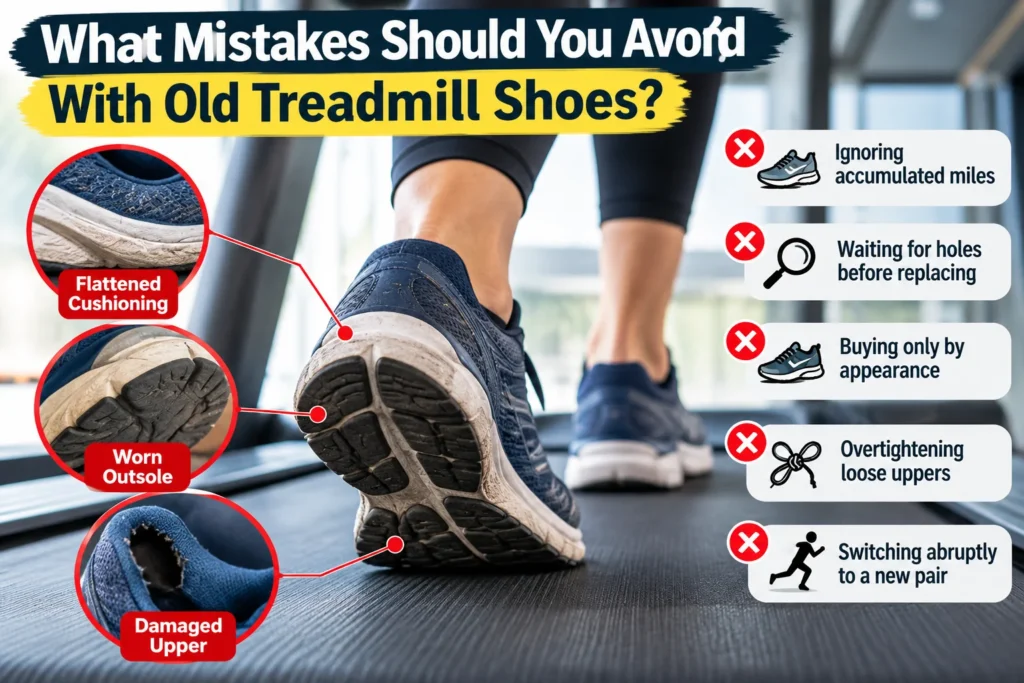
The biggest mistake is expecting a low-abrasion surface to eliminate shoe wear. Indoor conditions can delay visible damage without preventing the sole from aging.
- Ignoring accumulated miles: A pair used indoors still has a real training history.
- Waiting for holes: Cushioning may change long before rubber wears through.
- Buying only by appearance: A stylish gym shoe may not provide suitable running fit and comfort.
- Overtightening loose uppers: If a shoe has lost its hold, lacing cannot fix every problem.
- Switching abruptly: A new shoe with a different heel drop or feel may need a gradual transition.
If your heels slide or the upper feels roomy, confirm whether wear or incorrect sizing is responsible. Our running-shoes-too-big checklist can help separate the two.
Which Running Shoes Are Worth Considering for Treadmill Use in 2026?
Most comfortable road-running daily trainers also work on a treadmill. Prioritize secure fit, breathable uppers, appropriate grip, and cushioning that feels stable at your normal pace.
These 2026 models illustrate three different priorities rather than promises of exceptional mileage. The stars are editorial fit-for-purpose impressions based on published specifications, not customer ratings or hands-on test scores.
Affiliate disclosure: As an Amazon Associate, we may earn from qualifying purchases. Availability and listed versions can change.
🏆 Balanced daily trainer
Brooks Ghost 18
★★★★½ · 4.5/5
This daily trainer uses nitrogen-infused DNA LOFT v3 cushioning and a listed 10 mm drop. I would shortlist its familiar, balanced design for steady treadmill runs before paying extra for racing features.
☁️ Cushioned everyday feel
Asics Gel-Cumulus 28
★★★★☆ · 4.0/5
FF BLAST MAX cushioning, a neutral design, and an updated upper aim for smooth daily training. I would consider it if comfortable landings matter more than a firm, low-profile feel.
🚶 Run-walk versatility
Saucony Ride 19
★★★★☆ · 4.0/5
Its reformulated PWRRUN+ foam, flex grooves, and engineered mesh suit varied daily sessions. I would compare this model when alternating treadmill jogging, walking, and longer steady efforts.
Frequently Asked Questions About Treadmill Shoe Lifespan
Do treadmill miles count the same as outdoor running miles?
Count both toward the same shoe’s total mileage. A treadmill may cause less outsole abrasion, but running still flexes and compresses the midsole.
There is no established conversion that makes one treadmill mile count as only half an outdoor mile. Track actual distance and assess wear.
Can treadmill running shoes last 600 miles?
Some pairs may remain comfortable beyond 500 miles, including at 600 miles, but that is not guaranteed. Inspect the upper, outsole, midsole feel, and stability before continuing.
Replace the pair sooner if it slips, feels uneven, loses comfort, or shows structural damage.
Should you replace treadmill running shoes every six months?
Not automatically. A runner covering 30 miles weekly accumulates distance much faster than someone running five.
Base your checkups on total use, shoe condition, and changes in comfort. Calendar age also matters after prolonged storage in heat or humidity.
Are regular road running shoes suitable for treadmills?
Yes. Many everyday road running shoes work well for treadmills when they fit securely and offer comfortable cushioning and grip.
Dedicated trail lugs usually are unnecessary on a smooth belt. Test the shoe at your normal pace before committing to long sessions.
Can worn treadmill shoes cause knee or foot pain?
Worn shoes may contribute to discomfort if cushioning, stability, or fit has changed, but they are not the only possible cause. A sudden increase in training or an underlying condition may also matter.
Do not diagnose pain from shoe age alone; seek clinical advice for persistent symptoms.
Final Takeaway: When Should You Replace Treadmill Running Shoes?
Start checking most treadmill running shoes closely around 300 miles, and use 300–500 miles as a practical reference range. A treadmill may protect the outsole from some abrasion, but repeated running still ages the cushioning.
My recommendation is simple: log your mileage and compare how your shoes feel on familiar workouts. Replace them when fit, comfort, grip, or structural condition declines—whether that happens before or after the usual range.


