

Quick Answer
It depends. The New Balance FuelCell SuperComp Elite v4 is a strong marathon choice if comfort matters more than minimum weight. Its PEBA foam and carbon plate feel smooth over long efforts, but its heavier build limits sharp, fast racing. It best suits neutral runners who want a forgiving plated shoe.
What decides whether the Elite v4 fits you?
- RTINGS measured 239.9 g, versus 200.7 g for the Nike Alphafly 3.
- The roomy forefoot and soft ride favor long, steady races.
- A short tongue and modest grip deserve attention before buying.
Scores above come from OutdoorGearLab’s independent tests, not FootwearHiker testing.
| Best for | Half-marathon and marathon runners seeking softer cushioning |
| Skip if | You prioritize the lightest possible racing shoe |
| Launch MSRP | $250; current prices vary by size and color |
Independent Category Scores — OutdoorGearLab
Bars represent reported category scores out of ten; they are not percentile ranks.
I’m Steven Tyler. For FootwearHiker, I studied independent lab results and manufacturer specs without testing the shoes myself.
What Is the New Balance FuelCell SuperComp Elite v4?
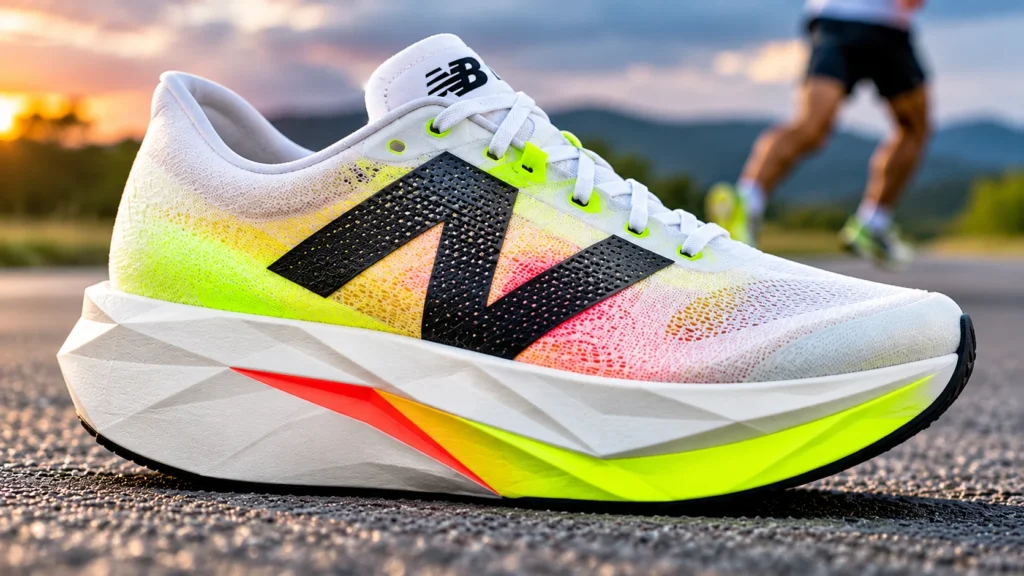
The Elite v4 is a neutral, carbon-plated road racing shoe built mainly for half marathons and marathons. It combines PEBA-based FuelCell foam with an Energy Arc carbon plate and a rocker sole.
Its main appeal is a cushioned ride that stays comfortable through long efforts. Unlike some sharply tuned racers, it does not demand an aggressive stride to feel useful.
- Value comfort across long road races
- Want a less harsh carbon-plated ride
- Need more forefoot room than typical racing shoes
- Low weight is your main priority
- You need secure footing on wet turns
- You expect a razor-sharp 5K racing feel
New Balance FuelCell SuperComp Elite v4 Pros and Cons
Comfort and bounce are its strongest traits. Extra mass and a short, thin tongue are its clearest compromises.
- PEBA foam delivers a soft, resilient long-distance ride.
- Measured forefoot energy return reaches 72.7% in lab testing.
- Roomy forefoot feels less restrictive than many supershoes.
- Carbon plate and rocker encourage smooth forward transitions.
- RTINGS measured 239.9 g, much heavier than key rivals.
- Thin tongue can shift and cause lace pressure.
- Lab forefoot grip trails the tested shoe average.
- Less explosive at very fast, short-distance racing paces.
New Balance FuelCell SuperComp Elite v4 Key Features
Does the PEBA FuelCell foam protect your legs?
Yes, cushioning is the shoe’s clearest advantage. RunRepeat measured heel shock absorption at 146 SA against a tested average of 131 SA.
Takeaway: The soft platform suits longer efforts more than minimal ground feel.
Softness helps comfort, not guaranteed speed.
Use a long tempo session to check whether the plush ride stays comfortable as you tire.
How much energy does its carbon setup return?
The Elite v4 rebounds strongly under compression. RunRepeat measured 72.7% forefoot energy return, above its 61.6% database average.
Measured Forefoot Energy Return
Measured percentages, not subjective performance scores.
Takeaway: Strong rebound does not offset every gram of extra weight.
Energy Arc geometry favors smooth transitions.
Is the rocker aggressive enough for racing?
It suits steady racing better than explosive surges. OutdoorGearLab rated responsiveness 8.7/10 but still reported weaker performance above threshold pace.
Takeaway: Efficient marathon rhythm is its stronger use case.
Does the Elite v4 fit wide feet?
Its forefoot is roomy for a carbon racer. RunRepeat measured 96.0 mm at the widest interior point, compared with a 95.2 mm shoe average.
Takeaway: Forefoot space is generous, but length needs checking.
RunRepeat’s voter-based fit summary leans half a size small; RTINGS found true-to-size fit. Try your usual size and the next half size when possible.
The 1.8 mm tongue padding and non-gusseted design can make lacing sensitive.
Is the extra weight noticeable?
Yes, compared with other premium racers. RTINGS weighed the Elite v4 at 239.9 g and the Nike Alphafly 3 at 200.7 g.
Takeaway: Comfort carries a measurable mass penalty.
Fast runners may notice the extra mass more.
How good are its grip and durability?
Grip is adequate for dry road racing, not a standout. RunRepeat measured forefoot traction at 0.46 against an average of 0.53.
Takeaway: Test corners and wet surfaces before race day.
The thin outsole suits racing better than everyday wear.
How Does the New Balance Elite v4 Perform in Lab Tests?
The strongest measured results involve cushioning and rebound. The main limitations involve grip and weight against elite racing peers.
Published Test Measurements
These are third-party tests; methods and sample sizes differ.
New Balance FuelCell SuperComp Elite v4 Full Specifications
These manufacturer details describe the shoe’s intended construction; laboratory measurements can differ.
| Purpose and fit | |
|---|---|
| Category | Road racing |
| Support | Neutral |
| Best distances | Half marathon / marathon |
| Midsole and geometry | |
| Foam | PEBA-based FuelCell |
| Plate | Full-length carbon fiber |
| Plate design | Energy Arc |
| Advertised heel stack | 40 mm |
| Advertised forefoot stack | 36 mm |
| Advertised drop | 4 mm |
| Manufacturer-listed weight | 237 g (listed variant) |
| Upper and outsole | |
| Upper | FantomFit mesh |
| Outsole | Solid rubber |
| Laces | Standard lace-up |
Actual drop varies by method: RunRepeat measured 9.3 mm; RTINGS found 4.7 mm.
How Does the New Balance Elite v4 Compare to Competitors?
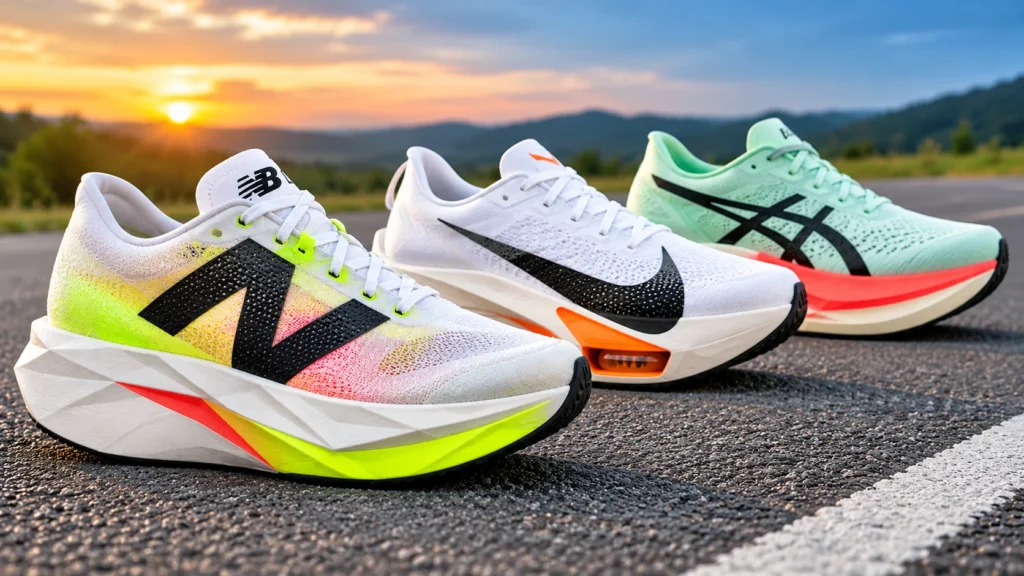
Nike and ASICS win on weight; New Balance emphasizes a softer fit.
New Balance Elite v4 vs Nike Alphafly 3
Choose the lighter Alphafly 3 for sharper race-day speed.
New Balance Elite v4 vs ASICS Metaspeed Sky Paris
Choose ASICS for low mass: RTINGS measured just 176.6 g.
These are original prices and published lab measurements.
| Feature | Elite v4 | Alphafly 3 | Sky Paris |
|---|---|---|---|
| Launch MSRP | $250 | $285 | $250 |
| RTINGS weight | 239.9 g | 200.7 g | 176.6 g |
| RTINGS drop | 4.7 mm | 6.4 mm | 4.8 mm |
| Plate | Carbon | Carbon | Carbon |
| Ride emphasis | Plush comfort | Race efficiency | Light, direct turnover |
Fit still matters more than a small specification gap.
New Balance FuelCell SuperComp Elite v4 Pricing — Worth It?
It offers better value below its $250 launch price.
A deal tracker listed an Amazon offer of $184.99 on November 10, though size and color were not specified. Another tracker recorded $124.99 for a particular Amazon variant during a past December sale.
Offers vary by size, color, seller, and shipping.
New Balance FuelCell SuperComp Elite v4 Carbon Racing Shoe
Value improves when discounted below its original $250 price.
Who Should Buy the New Balance Elite v4?
Choose it for comfortable distance racing, not minimum weight.
- Marathon runners wanting a forgiving ride late in races
- Neutral runners seeking more toe room than most supershoes
- Buyers finding a discounted pair in their proven size
- You race short distances at high, aggressive speeds
- You frequently run wet corners or uneven road surfaces
Bottom line: Prioritize comfort and fit; test the tongue and heel hold before race day.
What Are Runners Saying About the Elite v4?
Runners praise comfort but flag weight.
A tracker reports 9/10 from 146 ratings for one variant; live Amazon ratings were unavailable.
- Soft cushioning remains pleasant over long road efforts
- Roomier toe area helps runners avoid cramped forefeet
- Rocker delivers smooth transitions at steady marathon pace
- Heavy feel becomes clearer against faster racing rivals
- Thin tongue and heel fit can cause irritation
These themes combine published road reviews and public runner feedback; they are not a verified Amazon-only sample.
Final Verdict — Is Comfort Worth the Weight?
For many marathon runners, yes. The SuperComp Elite v4 makes carbon-plated racing comfortable with generous PEBA foam, a roomier fit, and smooth transitions. It is not the fastest choice in its class. Independent labs document its extra weight, while road reviewers report less urgency at harder paces. Buy it for comfort at a meaningful discount. Choose a lighter racer if outright speed matters most. Test the tongue, heel fit, and rocker at race pace before paying full price.
New Balance FuelCell SuperComp Elite v4 Carbon Racing Shoe
Check the listed size and current seller price before buying.
Frequently Asked Questions
Is the New Balance SuperComp Elite v4 good for marathons?
Yes. Its PEBA foam, carbon plate, and soft rocker all suit sustained long-distance work. GearLab scored cushioning 8.1/10, while independent testers praised its comfort. It is less appealing to runners who want the sharpest response during fast surges.
Does the SuperComp Elite v4 run true to size?
Fit feedback is mixed. RTINGS found it true to size, but RunRepeat’s user votes lean half a size small. Its forefoot is unusually roomy for a racing shoe. Test both your standard size and a half size up if possible.
How much does the New Balance SuperComp Elite v4 weigh?
New Balance lists 237 g for one men’s version. RTINGS measured 239.9 g, while RunRepeat measured 232 g for its test pair. These differences reflect variations in test pair size and method between independent sources. Compare the same size when possible.
Does the SuperComp Elite v4 have a carbon plate?
Yes. New Balance uses a full-length carbon fiber plate with Energy Arc geometry. The plate works alongside PEBA-based FuelCell foam and a rocker profile. That design supports forward rolling transitions, though the shoe still feels softer than many aggressive racers.
Is the SuperComp Elite v4 suitable for everyday running?
It can handle runs, but daily mileage is not its strongest value. Its $250 original price and race-focused construction make it a costly everyday option. Use a daily trainer for most miles and save this pair for long tempo sessions and races.
What is the difference between the Elite v4 and faster supershoes?
The biggest difference is its comfort-first performance balance. RTINGS weighed the Elite v4 at 239.9 g versus 200.7 g for the Alphafly 3. The New Balance offers a roomier feel, while Nike’s lighter setup targets stronger race-day efficiency.
Sources and Review Method
Sources include New Balance specs, OutdoorGearLab, and RunRepeat testing. RTINGS supplied rival weights; price trackers supplied historical offers.
Affiliate Disclosure: As an Amazon Associate, I earn from qualifying purchases. Links may earn a commission at no extra cost to you.