

Quick Answer
To prevent toe rubbing in running shoes, choose shoes with enough toe space, secure your heel, and wear moisture-wicking socks. Reduce friction with protective tape or anti-chafing balm when needed. Start by checking the correct toe room in running shoes, because protective products cannot fix shoes that are too small.
5 Quick Steps to Stop Toe Rubbing
- 1. Check toe clearance: Leave approximately half an inch of space beyond your longest toe.
- 2. Check shoe width: Choose a toe box that allows natural toe movement without squeezing.
- 3. Secure your heel: Try runner’s-loop lacing to reduce excessive forward sliding.
- 4. Change your socks: Wear properly fitted, moisture-wicking running socks with smooth toe seams.
- 5. Protect rubbing spots: Apply suitable blister-prevention tape or anti-friction balm to intact skin.
One Important Rule
- Never run through worsening toe pain: Stop and correct the source of friction before a painful blister develops.
Toe rubbing can ruin an otherwise comfortable run. A small hot spot on your pinky toe may turn into a painful blister before you finish your route.
I prefer solving the cause before adding more protective products. This guide explains how to identify the problem, improve shoe fit, and protect your toes without unnecessary purchases.
What Causes Toe Rubbing in Running Shoes?
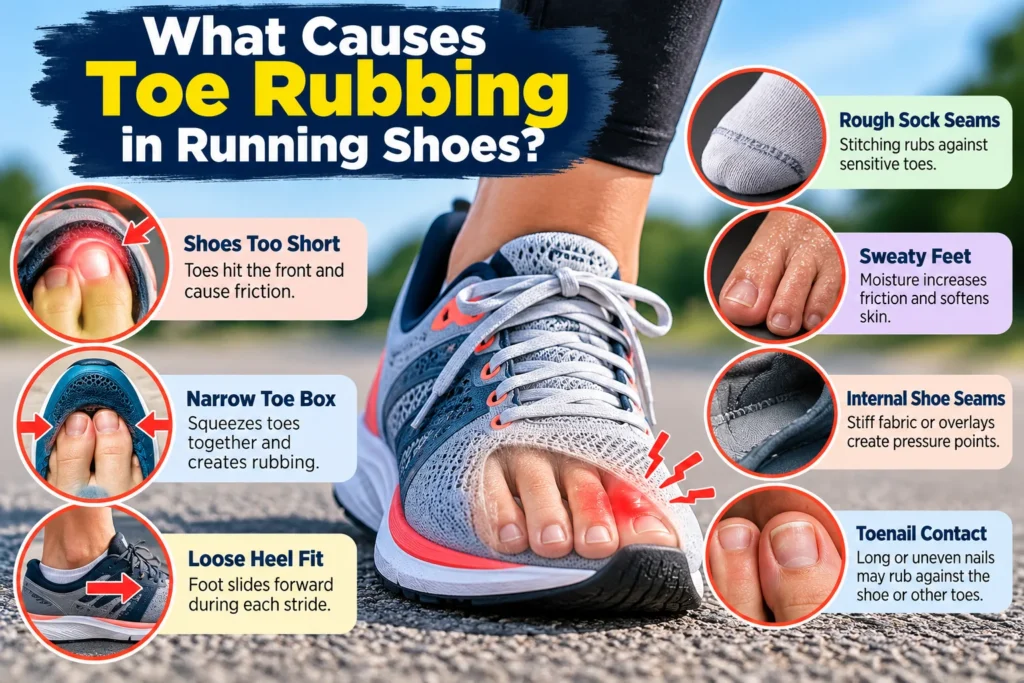
Toe rubbing happens when repeated pressure and friction irritate the skin around your toes. It can occur between neighboring toes or where your toes contact the shoe’s interior.
A friction hot spot is an early area of irritation that may feel warm, tender, or uncomfortable. Continued rubbing can damage the skin and create a fluid-filled blister.
The most common causes include:
- Short running shoes: Your longest toe repeatedly contacts the front of the shoe.
- Narrow toe boxes: The shoe squeezes neighboring toes together.
- Loose heel fit: Your foot slides forward during each stride.
- Rough sock seams: Raised stitching rubs against sensitive toe areas.
- Sweaty feet: Moisture makes the skin more vulnerable to friction damage.
- Internal shoe seams: Stiff fabric, folds, or overlays create localized pressure.
- Toenail contact: Long or poorly trimmed nails may rub against neighboring toes or the upper.
The American Academy of Dermatology’s blister-prevention guidance recommends proper footwear, moisture-wicking socks, and protection for friction-prone areas.
My first troubleshooting question is simple: where does the rubbing happen? The answer usually points toward the most useful adjustment.
How Do You Prevent Toe Rubbing in Running Shoes? 7 Practical Fixes
Start with shoe fit, then adjust lacing and socks. Use protective products only after identifying the pressure or movement causing irritation.
1. Make Sure Your Running Shoes Have Enough Toe Room
Running shoes need enough front clearance to prevent your toes from striking the shoe repeatedly. A common fitting guideline is approximately half an inch beyond your longest toe.
Your second toe might be longer than your big toe. Always measure from whichever toe extends farthest.
Follow this quick fitting routine:
- Put on your normal running socks.
- Stand with your full weight on both feet.
- Settle your heel comfortably into the back of the shoe.
- Check the gap beyond your longest toe.
- Wiggle your toes without lifting or curling them.
- Walk and jog briefly to check for contact.
The American Academy of Orthopaedic Surgeons’ athletic shoe guidance recommends sufficient toe space and trying shoes on when your feet are largest.
Important: Do not automatically buy a larger size when only the sides of your toes hurt. You might need more width rather than additional length.
2. Choose the Correct Toe Box Width and Depth
A running shoe can have sufficient length but still squeeze your toes. The toe box must provide enough width and height for comfortable movement.
A roomy toe box should let your toes lie naturally without forcing them together. However, excessive space can allow unwanted foot movement.
Look for these characteristics:
- A rounded or foot-shaped toe box.
- No sustained pressure against the pinky toe.
- Enough upper height to avoid rubbing toenails.
- A secure fit around the middle of your foot.
- A heel that stays comfortably in position.
Check the distinction between anatomical toe boxes and full-width sizing in this running shoe width guide.
If your forefoot is crowded but your heel already fits well, consider a roomier toe-box shape. A full-width shoe may feel unnecessarily loose around your heel.
3. Adjust Your Laces to Stop Forward Sliding
Loose running shoes can cause toe rubbing even when their length is correct. Your foot slides forward and contacts the front during braking or downhill running.
A runner’s loop, also called a heel-lock lacing technique, can improve heel security. It uses the extra eyelets near the shoe’s collar.
Try these adjustments:
- Keep the lower laces comfortably relaxed.
- Use the final eyelets to create a runner’s loop.
- Tighten around the ankle without restricting circulation.
- Check whether the heel stays seated during jogging.
The Johns Hopkins Medicine shoe-lacing guidance explains how better lacing can improve athletic shoe fit.
Stop tightening if your toes tingle or your upper foot feels compressed. Tight lacing can create another pressure problem.
4. Wear Moisture-Wicking Running Socks
Running socks create a protective layer between your skin and the shoe. Their fit, thickness, moisture management, and seams all matter.
Choose socks that offer:
- Moisture-wicking polyester, nylon, or suitable wool blends.
- Flat or seamless toe construction.
- A secure heel pocket without bunching.
- Enough stretch to avoid squeezing individual toes.
- Thickness appropriate for your shoe’s available space.
The American Academy of Podiatric Sports Medicine’s sock-fitting guidance highlights smooth toe seams, proper sizing, and minimizing fabric wrinkles.
Toe socks can help when neighboring toes rub together. However, avoid thick toe socks if your existing shoes already feel cramped.
5. Apply Blister-Prevention Tape or Anti-Friction Balm
Protective products can reduce localized friction when your shoes otherwise fit correctly. They work best when applied before irritation becomes painful.
For recurring toe hot spots, consider:
- Blister tape: Place suitable smooth tape over intact, dry skin before running.
- Anti-chafing balm: Apply a thin layer to friction-prone areas according to its directions.
- Toe sleeves: Try a thin, correctly sized sleeve if it does not create extra pressure.
- Low-friction shoe patches: Protect a specific internal shoe area if the manufacturer permits that use.
Do not combine thick padding with a shoe that already squeezes your toes. Extra material may increase pressure instead of relieving it.
My general rule is to use the least bulky solution that addresses the actual rubbing point. If the shoe itself is restrictive, replacement is usually the better answer.
6. Keep Your Feet and Shoes Dry
Wet socks and damp shoes can make toe irritation more likely. Moisture control becomes especially important during warm weather and longer runs.
Use this simple routine:
- Start each run with clean, dry socks.
- Choose shoes with breathable uppers suitable for the conditions.
- Carry spare socks during particularly long or wet outings.
- Remove damp shoes promptly after running.
- Allow shoes to dry fully between uses.
Check whether your socks bunch around the toes after becoming damp. A wrinkled sock can create concentrated rubbing even inside a correctly fitted shoe.
7. Trim Toenails and Inspect the Shoe Interior
Sometimes a small detail causes a stubborn rubbing problem. An uneven toenail edge or folded insole can irritate the same toe repeatedly.
Check these areas before your next run:
- Toenails that extend beyond the toe tips.
- Sharp nail edges that catch neighboring toes.
- Folded or displaced insoles.
- Raised stitching or stiff overlays inside the shoe.
- Damaged lining around the toe box.
Trim toenails straight across without cutting them excessively short. Smooth sharp edges carefully and avoid digging into the corners.
If rubbing comes from a hard internal seam, a different shoe model may work better. Do not assume that a painful pressure point will disappear with use.
Are Your Running Shoes Too Small, Too Narrow, or Too Loose?
Different fit problems can produce similar blisters. The location of irritation, combined with how your foot moves, provides useful clues.
Use this comparison table before changing sizes or buying accessories.
| Rubbing Location | Likely Fit Issue | First Fix to Try |
|---|---|---|
| Tips of the toes | Short shoe or forward sliding | Check 0.5-inch toe clearance and heel security |
| Pinky toe side | Narrow toe box | Try a wider or rounder forefoot shape |
| Between the toes | Toe contact or sock friction | Check width and consider lightweight toe socks |
| Tops of the toes | Low toe-box height or upper seam | Choose a deeper toe box |
| Toe rubbing on descents | Forward movement or inadequate length | Test heel-lock lacing and front clearance |
Remember: These are clues, not definite diagnoses. One shoe can be too narrow at the toes and too loose at the heel simultaneously.
If your toes feel numb, your forefoot feels compressed, or the pain continues after fitting adjustments, stop using that pair. A professional fitting or podiatry assessment may help.
Which Lacing Technique Prevents Your Toes from Hitting the Front?
Runner’s-loop lacing can reduce excessive forward movement by holding your heel more securely. It helps most when the shoe has adequate length but the heel feels loose.
How to Tie a Runner’s Loop
- Lace your shoes normally until you reach the uppermost extra eyelets.
- Feed each lace into the final eyelet on the same side, leaving a small loop.
- Cross each lace through the loop on the opposite side.
- Pull the ends gently to tighten the loops around the heel area.
- Tie your usual knot and test the fit while walking.
Your heel should feel secure without painful pressure around the ankle. If the technique causes numbness or discomfort, loosen it.
The REI running shoe fit guide also emphasizes combining a snug heel and midfoot with adequate toe room.
A runner’s loop cannot make a short shoe longer. If your toes still hit the front, reassess shoe length before another run.
How Can You Prevent Toe Blisters During Long Runs?
Long runs require extra attention because repeated movement gives small rubbing problems more time to develop. A comfortable first kilometer does not guarantee a comfortable final kilometer.
Use a three-stage prevention routine.
Before Your Run
- Inspect your toes for redness or existing irritation.
- Choose clean running socks that fit without wrinkles.
- Check shoe lacing and heel security.
- Protect recurring hot spots on intact skin.
- Avoid testing unfamiliar shoes on race day.
During Your Run
- Stop when you notice a developing hot spot.
- Remove any grit or debris from your shoe.
- Smooth twisted socks and correct loose lacing.
- Change wet socks when practical.
- End the run if toe pain continues or increases.
After Your Run
- Remove shoes and damp socks promptly.
- Check the toe tips, sides, and spaces between toes.
- Clean irritated skin gently.
- Allow shoes and socks to dry.
- Record which shoe and toe developed the problem.
Recording the rubbing location can reveal patterns. For example, discomfort only during downhill running suggests checking forward sliding and front clearance.
Can You Stop Toe Rubbing Without Buying New Running Shoes?
Yes, minor friction problems may improve with different socks, lacing, or targeted protection. However, these adjustments cannot reliably correct shoes with insufficient toe space.
Try inexpensive changes in this order:
- Remove the insole and inspect the shoe for folds or damage.
- Try properly fitted running socks with smoother toe seams.
- Adjust lacing to improve heel security.
- Use a suitable protective product on a recurring hot spot.
- Test the adjustment during a short, comfortable run.
If you use orthotics, check whether they reduce the available space above your toes. Our guide to arch support in running shoes explains when inserts may be useful.
Changing one thing at a time makes troubleshooting easier. If you replace your socks, insoles, and lacing simultaneously, you may not know which change helped.
When Should You Replace Running Shoes That Rub Your Toes?
Replace running shoes when their shape consistently causes pressure or excessive movement that reasonable adjustments cannot fix. You should not have to tolerate pain while waiting for shoes to break in.
Consider a different shoe when:
- Your toes touch the front while standing or running.
- Your pinky toe remains compressed against the sidewall.
- You repeatedly develop blisters in the same location.
- Your foot slides excessively despite appropriate lacing.
- The lining has damaged or raised areas that irritate your skin.
- Discomfort continues after changing socks and checking fit.
For a replacement pair, measure both feet while standing and try shoes later in the day. Bring the socks and any inserts you normally use.
Judge shoes by comfort and fit, not the printed size alone. Different models can feel noticeably different even when their labels match.
What Should You Do If Your Toes Already Have Blisters?
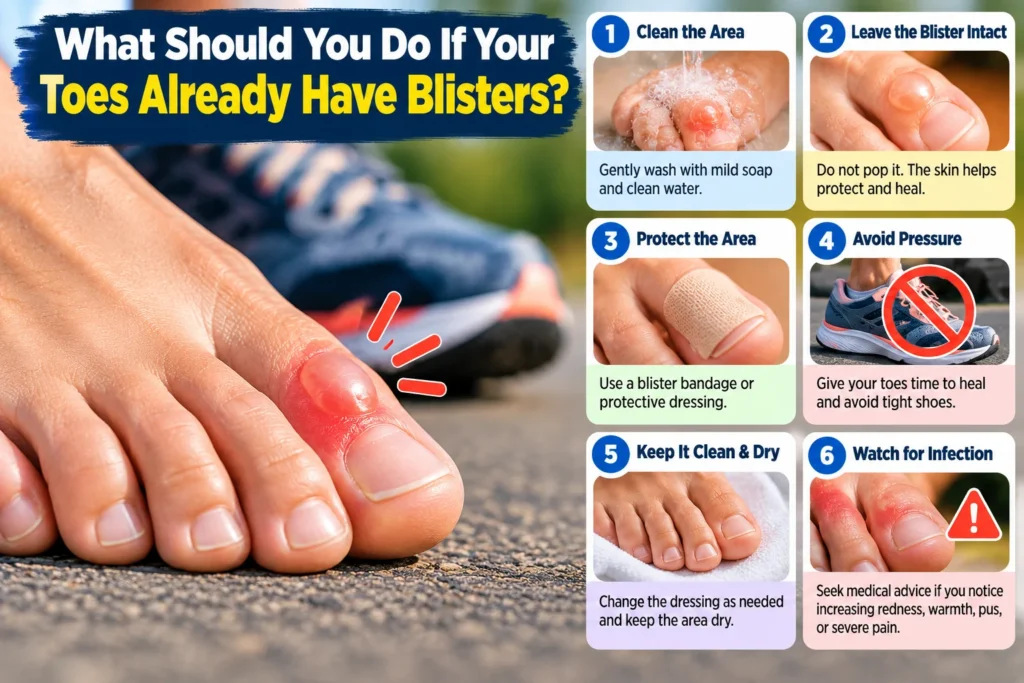
Stop the activity that caused the blister and protect the affected skin. Most uncomplicated friction blisters improve without invasive treatment.
Follow these basic care steps:
- Gently clean the affected area with mild soap and water.
- Leave an intact blister roof in place whenever possible.
- Cover the area with a suitable protective dressing.
- Avoid direct pressure and further rubbing while it heals.
- Change dressings as directed and watch for infection.
Do not deliberately pop a small, uncomplicated blister. If a blister opens, keep the area clean and avoid tearing away the remaining protective skin.
Seek medical advice for increasing redness, spreading warmth, pus, fever, severe pain, or repeated unexplained blisters. People with diabetes, poor circulation, or reduced foot sensation should seek professional advice promptly for foot wounds.
Helpful Products for Preventing Toe Rubbing
These three products address different friction problems. I would choose based on the rubbing location rather than buying all three.
The suitability scores below are editorial estimates based on product features and intended use, not hands-on test results or marketplace customer ratings.
🏆 Best for Toe-to-Toe Rubbing
Injinji Run Lightweight No-Show Toe Socks
★★★★★ 4.5/5 editorial suitability
These lightweight socks wrap each toe separately and use moisture-wicking fibers. I would consider them first when friction occurs between neighboring toes, provided the shoe has enough room.
🧦 Best Cushioned Sock Option
Balega Hidden Comfort No-Show Socks
★★★★☆ 4/5 editorial suitability
These socks combine plush cushioning, smooth toe construction, and moisture-wicking fabric. They are worth considering when ordinary sock seams irritate your toes, although the added thickness may not suit tight shoes.
💰 Best for Localized Hot Spots
Body Glide Foot Glide Anti-Blister Balm
★★★★☆ 4/5 editorial suitability
This portable anti-chafing stick is designed for friction-prone areas of the feet. I would consider it for minor recurring hot spots on intact skin after confirming the shoes fit correctly.
Affiliate disclosure: As an Amazon Associate, we earn from qualifying purchases. Product availability and prices may change.
Frequently Asked Questions
Why do my toes rub together when I run?
Toes may rub together because of natural toe positioning, a narrow toe box, damp skin, or excessive friction during movement. Properly fitted toe socks may help create separation between neighboring toes.
Start by checking whether your shoes squeeze your forefoot. Toe socks alone will not solve pressure caused by shoes that are too narrow.
Should I size up if my toes rub in running shoes?
Size up only when your running shoes lack sufficient length. If the toe tips hit the front, a longer shoe may help.
If the sides of your toes feel squeezed, choose a roomier toe box or appropriate width instead. Increasing length unnecessarily can cause sliding and additional rubbing.
Can thick socks prevent toe rubbing?
Thicker socks may reduce contact with rough surfaces, but they also occupy more space inside the shoe. In a tight toe box, additional sock thickness can increase pressure and make rubbing worse.
Choose socks based on available shoe space, moisture management, and seam construction rather than thickness alone.
How do I prevent my pinky toe from rubbing against my running shoe?
First, check whether the outer edge of your foot presses against the shoe. Persistent pinky-toe rubbing often suggests insufficient forefoot width or an unsuitable toe-box shape.
Try a roomier model, inspect the lining, and use suitable protection for minor friction. Do not rely on padding to correct significant pressure.
Will running shoes eventually stop rubbing after breaking in?
Some materials may soften slightly with use, but a shoe that is too short or narrow should not be expected to become properly fitted. Continued rubbing may worsen skin irritation or cause blisters.
Running shoes should feel comfortable from the beginning. Replace or exchange a poorly fitting pair instead of running through pain.
Final Takeaway: Stop the Rubbing Before Your Next Run
Preventing toe rubbing starts with the right balance of space and security. Your toes need room to move, while your heel and midfoot should remain comfortably stable.
Start with shoe length and width, then check your lacing and socks. Save anti-friction products for minor remaining hot spots rather than using them to compensate for poor shoe fit.
Your next step: Put on your running shoes, check your longest toe clearance, and walk around for several minutes. If you notice pressure or rubbing, fix it before your next workout.ৎ


