

Quick Answer
How many pairs of running shoes do you need? Most beginners need just one comfortable pair. Regular runners may benefit from rotating two pairs, while runners doing speed workouts, long runs, and trails may prefer three specialized pairs. The best number depends on your mileage, surfaces, budget, and training schedule. If you’re just starting, focus on choosing the right running shoe type before buying extras.
Recommended Running Shoe Rotation
- New runners: One versatile daily trainer is usually sufficient.
- Casual runners: One or two pairs can cover three weekly runs.
- Regular runners: Two pairs allow rotation and drying between sessions.
- Marathon trainees: Two or three pairs can serve different workouts.
- Road and trail runners: Separate shoes may improve traction and suitability.
Before Buying Another Pair
- Check your needs: Add a second pair when it offers a useful benefit rather than simply increasing your collection.
Buying running shoes raises an interesting question: is one good pair enough, or should you rotate several? The answer isn’t the same for someone jogging twice weekly and someone training for a marathon.
I prefer a practical approach that starts with how often you run and what your current shoes can’t do. This guide explains when additional pairs make sense, how rotation works, and where your money is best spent.
What Does Having Multiple Pairs of Running Shoes Mean?

Having multiple pairs of running shoes means keeping two or more suitable pairs available for your running workouts. You can alternate them across days or assign different shoes to different training sessions.
This practice is commonly called running shoe rotation. It doesn’t require owning expensive racing shoes or buying several identical models.
How Does Running Shoe Rotation Work?
A rotation spreads your running sessions across different shoes. For example, you might wear one cushioned trainer on Monday and another comfortable pair on Wednesday.
- Daily trainer: Handles normal, comfortable runs.
- Alternative trainer: Gives you another option for regular mileage.
- Speed shoe: May feel lighter or more responsive for faster sessions.
- Trail shoe: Provides traction suited to off-road surfaces.
The goal is to give every shoe a useful job. You don’t need to own every category.
How Many Pairs of Running Shoes Should You Own Based on Your Running Level?
One pair is enough for many beginners, while two pairs offer flexibility for regular training. Three pairs become useful when your workouts have clearly different demands.
These are practical recommendations, not medical requirements or fixed rules.
| Running Level | Weekly Mileage | Suggested Pairs | Recommended Setup |
|---|---|---|---|
| Beginner | 0–10 miles | 1 | Daily trainer |
| Casual | 10–20 miles | 1–2 | Daily trainer plus optional backup |
| Regular | 20–40 miles | 2 | Two complementary trainers |
| High-mileage | 40+ miles | 2–3 | Daily, long-run, and optional speed shoes |
| Mixed terrain | Any mileage | 2 | Road shoes and trail shoes |
Note: Mileage categories are illustrative planning guidelines. Comfort, terrain, drying needs, and available budget can matter more than reaching a particular distance.
Do Beginners Need More Than One Pair of Running Shoes?
No, most beginners don’t need multiple pairs. A well-fitting daily trainer can handle easy jogging, walking intervals, and gradual mileage increases.
Before buying a second pair, learn how the first pair performs over several weeks. Pay attention to fit, cushioning, and comfort after each workout.
- Choose shoes designed for your usual running surface.
- Prioritize a comfortable heel and midfoot fit.
- Allow enough space for natural toe movement.
- Increase your running distance gradually.
- Replace unsuitable shoes rather than buying extra copies.
For fit guidance, read our explanation of how much toe room running shoes need.
How Many Pairs Should You Have for Marathon Training?
Two pairs can be sufficient for marathon training. A third pair may help when your program includes regular speed sessions or specialized race preparation.
The most useful setup separates comfortable everyday mileage from workouts requiring different characteristics.
- Pair one: Reliable everyday trainer for easy runs.
- Pair two: Comfortable option for long runs or alternating training days.
- Pair three: Optional lightweight workout or racing shoe.
Don’t introduce unfamiliar racing shoes during your marathon. Test them during shorter sessions and selected training runs first.
Is It Better to Have One or Two Pairs of Running Shoes?
Two pairs provide more flexibility, but one comfortable pair can serve a low-mileage runner perfectly well. The second pair becomes worthwhile when you run frequently or need different performance characteristics.
Benefits of Owning One Pair
- Lower upfront cost: You make one purchase instead of two.
- Simpler decisions: There’s no rotation schedule to manage.
- Consistent feel: Every run uses familiar footwear.
- Less storage: You avoid keeping unnecessary equipment.
The main disadvantage is having no dedicated backup when your shoes become wet or damaged. A single pair also accumulates every mile you run.
Benefits of Owning Two Pairs
- Better flexibility: Choose shoes based on the workout.
- Drying time: Wet or sweaty shoes can air out between runs.
- Different sensations: Complementary designs offer some variation.
- Backup availability: Another suitable pair is ready when needed.
- Distributed mileage: Wear accumulates across both pairs.
Rotating shoes may increase the calendar time before either individual pair reaches its replacement point. However, buying two pairs doesn’t necessarily double their combined mileage capacity.
Does Rotating Running Shoes Help Prevent Injuries?
Running shoe rotation may help some runners manage varied training loads, but the evidence doesn’t prove that everyone needs multiple pairs. Comfortable footwear and sensible training progression remain important.
A prospective study of 264 recreational runners found an association between using multiple shoe pairs and fewer running-related injuries over 22 weeks.
The study reported an adjusted hazard ratio of 0.614 for runners using multiple pairs. Because it was observational, it couldn’t establish that rotation itself caused the lower injury risk.
Why Might Different Shoes Affect Training Loads?
Different shoe designs can change how forces act on your feet and lower limbs. Cushioning firmness, heel-to-toe drop, and sole geometry all influence the running experience.
- Cushioning: Changes the sensation and response underfoot.
- Heel-to-toe drop: Describes the height difference between heel and forefoot.
- Midsole geometry: Influences how the shoe rolls or bends.
- Support design: Can affect how stable or guided a shoe feels.
However, switching abruptly between drastically different shoes can create unfamiliar demands. Introduce a new model gradually rather than assuming every difference is beneficial.
Research published in Sports Medicine – Open also identified frequent footwear changes among factors associated with running injury in its analysis.
Does Rotating Running Shoes Make Them Last Longer?
Rotation can help you manage shoe wear and allow each pair time to dry. It doesn’t guarantee that the same shoes will provide more total miles simply because you alternate them.
According to REI’s shoe replacement guidance, alternating pairs allows shoes to dry and gives compressed cushioning time between sessions.
How Long Should Running Shoes Last?
Many conventional running shoes are evaluated for replacement around 300–500 miles. Your actual replacement point can be earlier or later depending on construction, use, terrain, and wear.
For example, consider a runner completing 20 miles per week:
- One pair: Reaches 400 miles after approximately 20 weeks.
- Two equal-use pairs: Each reaches 400 miles after approximately 40 weeks.
- Total mileage: Both pairs together provide 800 miles at that assumed lifespan.
This is a mileage-distribution example, not a promise of increased durability. Monitor the condition of each pair instead of relying on the calendar.
What Are the Signs You Need New Running Shoes?
- The outsole has substantial wear or exposed midsole material.
- Cushioning feels noticeably different from its previous condition.
- The heel structure or upper no longer holds your foot securely.
- New discomfort consistently appears with one particular pair.
- The shoe has visible damage affecting its function.
Don’t assume every ache comes from worn shoes. Persistent or worsening pain deserves appropriate assessment.
Should You Use Different Running Shoes for Different Workouts?
Different shoes can be worthwhile when your training includes distinct surfaces or workout types. A comfortable daily trainer still handles a surprisingly broad range of activities.
Daily Runs
For everyday running, choose predictable comfort over aggressive performance features. The shoe should feel natural at your normal pace.
A versatile daily trainer often becomes the foundation of a two-shoe rotation.
Long-Distance Runs
For long runs, prioritize a secure fit and cushioning that remains comfortable as you tire. Greater softness isn’t automatically better for every runner.
Test long-run footwear during training rather than selecting shoes based on appearance or maximum cushioning alone.
Speed Workouts
Some runners appreciate lighter, more responsive shoes during intervals and tempo sessions. These shoes may feel different from everyday trainers.
Speed-specific footwear remains optional for beginners. Build consistent training habits before investing in specialized equipment.
Trail Running
Trail running creates different traction demands from smooth road running. Uneven ground, loose gravel, mud, and steep sections may justify dedicated trail shoes.
For runners regularly using both surfaces, a road-and-trail combination may be more useful than two nearly identical road trainers.
How Do You Build a Running Shoe Rotation Without Overspending?
Build your rotation one pair at a time. Start with a comfortable daily trainer and add another shoe only when you identify a genuine need.
Step 1: Review Your Weekly Running Schedule
Write down your usual number of running days, distances, and surfaces. This helps reveal whether you need additional footwear.
Step 2: Identify What Your Current Shoes Cannot Do
Look for practical gaps rather than minor cosmetic differences. An extra pair should solve a problem your current shoes don’t address.
- Are your shoes frequently wet between runs?
- Do you regularly train on trails?
- Would you benefit from another fit or cushioning option?
- Are you completing frequent specialized workouts?
Step 3: Choose a Complementary Second Pair
Your second pair doesn’t need to be dramatically different. It could offer a slightly different ride while keeping a comfortable fit.
If stability feels important, review our guide to running shoes and arch support before choosing a new model.
Step 4: Introduce the New Pair Gradually
Start with a short, easy run. Increase its use only if the fit and running experience remain comfortable.
Avoid introducing several major changes to shoes and training volume at once.
Step 5: Track Mileage Separately
Record approximate mileage for each pair using a running app, spreadsheet, or notebook. This makes it easier to recognize when a heavily used shoe needs inspection.
Step 6: Store and Maintain Both Pairs Properly
Allow shoes to air-dry naturally after wet runs. Avoid direct high heat, which can damage materials and adhesives.
Remove trapped dirt, loosen the laces, and store shoes in a dry, ventilated place.
What Mistakes Should You Avoid When Buying Multiple Running Shoes?
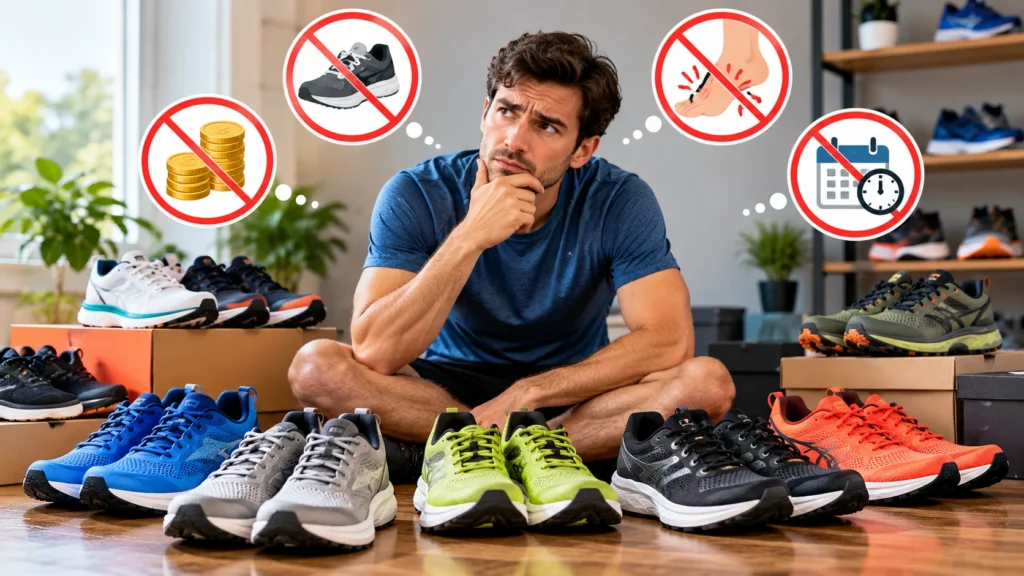
The biggest mistake is buying more shoes without understanding your running needs. A useful rotation should improve convenience or suitability, not create unnecessary expense.
- Buying everything immediately: Start with one reliable pair.
- Ignoring fit: Expensive shoes can still be uncomfortable.
- Making abrupt changes: Transition gradually between unfamiliar designs.
- Using road shoes everywhere: Consider suitable traction for challenging trails.
- Forgetting individual mileage: Track wear for each pair separately.
- Keeping damaged shoes: Retire footwear that no longer functions properly.
- Assuming rotation prevents injury: Pay attention to workload, recovery, and persistent discomfort.
Here’s a practical rule I recommend: don’t buy a third pair until you can clearly explain what it will do differently from your first two pairs. That keeps the rotation purposeful.
Which Running Shoes Are Worth Considering for a Two- or Three-Pair Rotation in 2026?
Three established running shoes worth comparing are the Brooks Ghost 17, Saucony Ride 18, and ASICS Novablast 5. Each offers a different daily-training feel, although none is universally best.
These are model-based recommendations, not claims of personal testing or live customer ratings. Try your preferred size and check the latest version before purchasing.
Affiliate disclosure: As an Amazon Associate, we may earn from qualifying purchases.
🏆 Everyday Training Pick
Brooks Ghost 17
★★★★☆
The Ghost 17 is a neutral daily trainer with DNA LOFT v3 cushioning and a traditional running feel. I’d shortlist it for runners who want a dependable everyday option rather than an aggressive speed-focused shoe. The stars represent an editorial suitability assessment, not customer review data.
💰 Versatile Rotation Pick
Saucony Ride 18
★★★★☆
The Ride 18 is a versatile neutral road trainer with PWRRUN+ cushioning. I’d consider it as a primary trainer or complementary second pair, especially when its price and fit make sense. Stars are an editorial suitability assessment, not verified customer ratings.
⚡ Responsive Training Pick
ASICS Novablast 5
★★★★☆
The Novablast 5 uses FF BLAST MAX cushioning for a soft, energetic ride. I’d shortlist it for someone seeking a livelier alternative to a conventional daily trainer. The rating shown is editorial, not a customer review average.
Choose the shoe that fits your feet and intended workouts, not the model with the most marketing features. None of these products is a necessary purchase if your current shoes already work well.
Frequently Asked Questions
Is One Pair of Running Shoes Enough?
Yes, one pair is enough for many beginners and occasional runners. Choose a comfortable, properly fitted daily trainer designed for your regular surface. A second pair becomes useful when you run frequently, need an alternative for wet days, or regularly complete specialized workouts.
Should You Rotate Running Shoes Every Day?
You can alternate shoes between running days, but daily rotation isn’t mandatory. A practical approach is to wear one pair for a session and another at your next run. This allows drying time and may provide some variation in the running experience.
Do You Need Separate Shoes for Running and Walking?
Not always. Many comfortable daily running shoes also work for walking. However, walking extensively in your running shoes adds wear. If you frequently walk long distances outside your workouts, a separate walking pair may help preserve your dedicated running shoes.
Can You Run in Two Different Brands of Running Shoes?
Yes, you can rotate running shoes from different brands if both fit and feel comfortable. Differences in cushioning, geometry, and heel-to-toe drop may require adjustment. Introduce each unfamiliar model gradually instead of immediately using it for long or demanding workouts.
Is Owning Three Pairs of Running Shoes Too Many?
Not necessarily. Three pairs can be practical for high-mileage runners, marathon training, or mixed terrain. However, occasional runners rarely need that many. Each additional pair should have a clear purpose and offer meaningful value beyond your existing footwear.
Final Verdict: How Many Pairs of Running Shoes Do You Really Need?
For most beginners, one good pair of running shoes is enough. For runners training several days each week, two comfortable pairs can provide useful flexibility.
Three pairs make sense when you regularly combine long runs, faster workouts, or different surfaces. More shoes aren’t automatically better.
Start with proper fit, choose footwear suited to your training, and introduce additional pairs only when they serve a real purpose. Your running habits should determine your shoe collection—not the other way around.


Steven is a former sportsperson and now a full-time businessman and research writer. He is the mastermind of this site, and he created this site to help people who need specialized shoes for different activities. When he was a sportsperson, he was very passionate about different types of shoes for his sports purpose. The passion he had for shoes at that time now turned into his profession. Besides his shoe business, he loves sharing his knowledge and experience with people and helping them maintain healthy feet.
More Posts
