
Quick Answer
Running shoes are probably too big if your heel repeatedly slips, your feet slide forward, or you must overtighten the laces to feel secure. Properly fitted shoes generally leave about a thumb’s width of space beyond your longest toe while holding your heel and midfoot comfortably. The REI running shoe fit guide recommends checking both toe room and heel security.
Six signs your running shoes may be too big:
- Heel slipping: Your heel repeatedly lifts or rubs against the shoe collar.
- Excessive toe space: You have substantially more than a thumb’s width beyond your longest toe.
- Foot sliding: Your foot moves forward or sideways during running.
- Loose midfoot: Your shoe feels unstable even after normal lacing.
- Excess fabric: The upper bunches noticeably when you tighten the laces.
- Repeated friction: Your feet develop rubbing or blisters associated with movement inside the shoe.
The easiest way to confirm:
- Wear your normal running socks: Lace both shoes comfortably, stand, walk, and jog briefly on a safe surface.
- Check foot movement: If your foot keeps shifting after adjusting the laces, the shoe may be too long, wide, or high-volume.
Wondering whether your running shoes are too big? An oversized pair can feel comfortable when standing still but unstable once you start moving.
I prefer checking how the entire shoe holds the foot instead of trusting the printed size. This guide explains the warning signs, simple home tests, and practical ways to fix a loose fit.
What Does It Mean When Running Shoes Are Too Big?
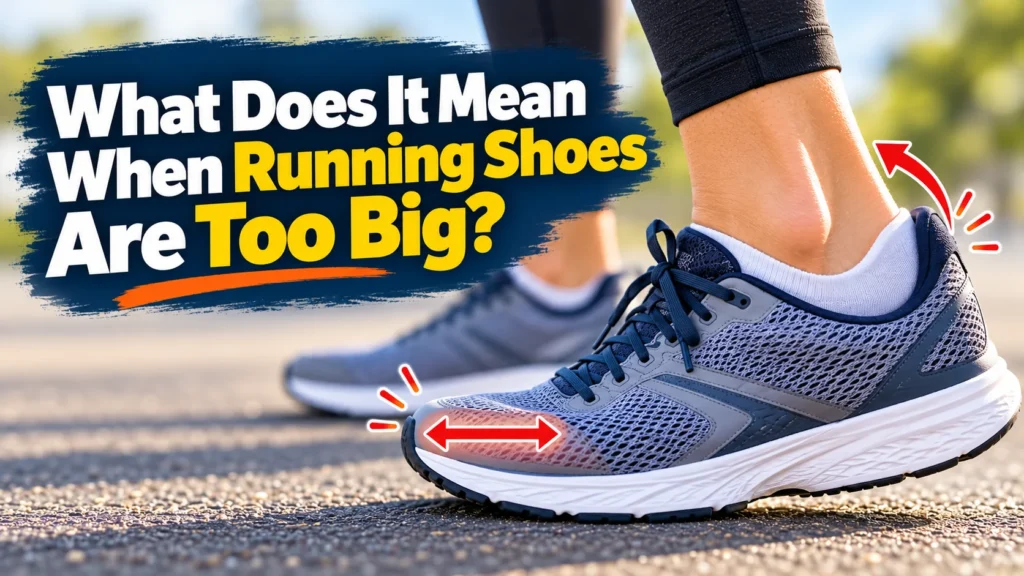
Running shoes are too big when their internal length, width, or volume allows excessive foot movement. A shoe may be too roomy even when its labeled size matches your usual size.
Running shoes need space for natural toe movement and some foot expansion. However, that room shouldn’t come at the expense of heel security or midfoot control.
The Three Parts of Running Shoe Fit
- Length: The distance between your heel and the front of the shoe must provide enough toe clearance.
- Width: The forefoot should have room to spread without sliding excessively from side to side.
- Volume: The space around the top of your foot should allow comfortable lacing without leaving the shoe loose.
A wider shoe isn’t necessarily a longer shoe. Likewise, a roomy toe box doesn’t automatically mean the entire shoe is oversized.
What Are the Most Common Signs Your Running Shoes Are Too Big?
The most reliable warning signs involve unwanted movement during walking or running. One symptom alone doesn’t confirm oversized shoes, so look for several signs together.
1. Your Heel Keeps Slipping
Repeated heel movement is one of the clearest signs of a poor fit. Your heel may rise, rub against the collar, or feel as though it’s escaping the shoe.
A little natural movement can occur, especially with certain shoe designs. Persistent slipping after comfortable lacing deserves closer attention.
2. Your Toes Have Too Much Empty Space
Running shoes generally need approximately 10–15 mm of clearance beyond the longest toe. That’s roughly the width of an adult thumb.
Consider a smaller size if the gap is substantially larger and your foot also slides. Toe space alone shouldn’t determine your decision.
3. Your Feet Slide Forward While Running
Your feet should remain reasonably secure as you accelerate, slow down, or descend a hill. Repeated forward sliding suggests that the shoe isn’t holding your foot properly.
Check whether your toes approach the front despite plenty of space when standing. This combination may indicate excessive length or insufficient midfoot hold.
4. You Must Tighten Your Laces Excessively
If you must pull the laces unusually tight, the shoe may contain too much internal space. You might also notice the eyelet rows nearly touching or the upper folding underneath the laces.
Lacing should secure your foot without creating pressure or numbness. A shoe that needs painful tightening probably needs a different fit.
5. Your Foot Moves Sideways
Side-to-side sliding usually suggests excessive width or volume rather than excessive length. You may notice this movement while turning or changing direction.
A secure running shoe holds your midfoot while allowing comfortable forefoot expansion. It shouldn’t feel like your foot is floating inside.
6. You Develop Heel Blisters or Hot Spots
Excessive movement can create repeated friction against the heel or other areas. That rubbing may contribute to blisters, irritation, or damaged socks.
However, blisters have several causes, including socks, moisture, shoe shape, and insufficient space. Check movement before blaming the shoe size.
7. The Upper Bunches When You Lace Up
Noticeable folding around the midfoot can suggest that the upper has more volume than your foot needs. It often becomes obvious when the laces are tightened.
Some creasing is normal in flexible running shoes. Treat bunching as a warning sign only when it’s accompanied by poor lockdown or movement.
How Can You Test Whether Running Shoes Are Too Big at Home?
You can assess running shoe fit using a short series of standing and movement tests. Perform them indoors first, especially if the shoes are still eligible for return.
Step 1: Put On Your Regular Running Socks
Use the socks you normally wear while training. Thickness can change how securely your feet sit inside the shoe.
Step 2: Lace Both Shoes Normally
Place your heels against the back of each shoe before tightening the laces. Adjust the tension until the midfoot feels comfortably secure.
Avoid deliberately overtightening to hide a poor fit. The shoe should feel stable under normal tension.
Step 3: Check the Space Beyond Your Longest Toe
Stand with your weight distributed normally, then feel for the longest toe through the upper. Check the gap between that toe and the shoe’s front edge.
Around one thumb’s width is a useful starting point. The exact amount can vary with foot shape and running preference.
Step 4: Walk and Pay Attention to Your Heel
Walk several laps across a clean indoor surface. Notice whether your heel remains seated or repeatedly lifts inside the shoe.
Some heel motion doesn’t prove the shoes are too big. Significant slipping that continues after a lacing adjustment is more concerning.
Step 5: Try a Short Jog
Jog gently in place or across a safe area. Your feet should feel secure without the toes being squeezed.
Notice any movement during acceleration or when changing direction. Stop if the shoes feel unstable or uncomfortable.
Step 6: Check the Removable Insole
If the shoes have removable insoles, take them out and place your feet on them while standing. Compare the outline with your heel, forefoot, and longest toe.
This helps reveal mismatched shape or excessive space. Remember that an insole check is only a guide, not a complete fit measurement.
Step 7: Repeat the Test Later in the Day
Feet can expand throughout the day and during exercise. A shoe that feels slightly roomy in the morning may fit differently later.
Measure both feet and consider your larger foot when choosing a size. The American Podiatric Medical Association provides additional guidance on selecting appropriate running footwear.
How Much Room Should Running Shoes Have?
Most running shoes should provide approximately a thumb’s width of space beyond the longest toe. The heel and midfoot should remain comfortably secure without pinching.
According to the Fleet Feet running shoe fit guide, roomy toes and a secure heel are both important. Neither should be sacrificed to achieve the other.
Running Shoe Fit Comparison Chart
| Fit Area | Proper Fit | Possible Too-Big Sign |
|---|---|---|
| Toe clearance | About 10–15 mm | Much more space, combined with sliding |
| Heel | Comfortably secure | Repeated lifting or slipping |
| Midfoot | Snug without pressure | Loose even after normal lacing |
| Forefoot width | Room for natural toe spread | Excessive sideways movement |
| Lacing | Comfortable, moderate tension | Requires extreme tightening |
Important: These are practical fitting guidelines, not absolute medical measurements. Foot anatomy, shoe construction, and personal comfort can affect the ideal fit.
Are Your Running Shoes Too Big or Just Too Wide?
A shoe can have the correct length but still feel oversized because its width or volume doesn’t match your foot. Distinguishing the problem helps you avoid unnecessary size changes.
- Too long: Excessive empty space extends beyond your longest toe, often with forward sliding.
- Too wide: Your foot moves sideways although the toe clearance appears correct.
- Too much volume: Excess material gathers over your foot when the laces are tightened.
- Wrong heel shape: Your heel slips despite reasonable length and midfoot fit.
If only the heel slips, a different heel shape may solve the problem better than a smaller size. Downsizing could make the toe box too short.
Should Running Shoes Be Half a Size Bigger?
Some runners need running shoes that are half a size larger than their everyday footwear. However, there’s no universal rule that every runner must size up.
The key is how the shoe fits your actual foot, not how its label compares with casual shoes. Shoe sizing and shape differ between brands and models.
When Does Sizing Up Make Sense?
- Your toes touch the front while running.
- Your toenails experience repeated pressure during descents.
- Your feet expand noticeably during longer runs.
- The current model feels short despite having enough width.
Conversely, sizing down may help when excess length causes persistent movement. Always recheck width, toe clearance, and heel security after changing sizes.
Can Running Shoes That Are Too Big Cause Problems?
Oversized running shoes may increase rubbing, discomfort, and the feeling of instability. The consequences depend on how much your feet move and how the shoes fit elsewhere.
Friction and Blisters
Repeated movement can produce rubbing around the heel or forefoot. Moisture and sock choice can make that irritation worse.
Reduced Confidence While Running
Loose shoes may feel less predictable during turns or quick pace changes. This can be especially noticeable on uneven terrain.
Excessive Lace Pressure
Some runners compensate by pulling the laces extremely tight. That pressure can make the top of the foot uncomfortable.
Altered Running Comfort
A loose fit may cause a runner to tense their toes or adjust their stride to keep the shoe in place. These are warning signs to reassess the fit rather than proof of a specific injury.
Persistent pain, numbness, or recurring blisters warrant advice from a qualified healthcare professional. Don’t continue running through increasing discomfort.
How Do You Fix Running Shoes That Are Slightly Too Big?
Minor looseness may improve with lacing adjustments or appropriate socks. However, these solutions cannot reliably correct shoes that are substantially too long or wide.
Try a Runner’s Loop
A runner’s loop, also called heel-lock lacing, uses the extra eyelets near the ankle. It can improve heel hold without squeezing the entire forefoot.
- Lace your running shoes normally until you reach the final two eyelets.
- Feed each lace through the upper eyelet on the same side to create a small loop.
- Pass each lace end through the loop on the opposite side.
- Pull gently to secure your heel without adding painful pressure.
- Tie the laces and test the fit while walking.
The ASICS running shoe fit advice also emphasizes secure heel and midfoot support. If heel-lock lacing doesn’t help, reconsider the shoe’s shape or size.
Try Different Running Socks
Slightly more cushioned socks may improve the feel of a marginally loose shoe. Choose moisture-managing running socks that don’t cause uncomfortable compression.
Don’t rely on multiple thick sock layers to compensate for a badly oversized pair. The correct shoe fit should remain the priority.
Consider a Suitable Insole
An appropriately fitted replacement insole may reduce unwanted internal volume in some shoes. Make sure it doesn’t raise your heel excessively or crowd your toes.
Insoles won’t shorten a shoe or reliably solve a major width mismatch. Test comfort before using them for a long run.
Know When to Exchange Your Shoes
Exchange the shoes when your heel keeps slipping, your toes sit far from the front, or your foot moves despite reasonable adjustments. A different size, width, or model may be necessary.
My preferred approach is to fix the underlying fit problem before buying accessories. A properly fitting pair usually needs fewer adjustments.
When Should You Replace or Exchange Oversized Running Shoes?
New running shoes should feel comfortable and reasonably secure from the beginning. They shouldn’t require a long break-in period to become wearable.
- Consider keeping them: Toe room is appropriate, the heel stays secure, and running feels comfortable.
- Try a lacing adjustment: Fit is otherwise good, but mild heel movement persists.
- Try another width: Length is correct, but the forefoot or midfoot feels excessively loose.
- Exchange the size: There’s excessive length plus repeated forward movement.
- Try another model: Different sizes still fail to match your foot shape.
If your shoes are new, check the retailer’s return policy before wearing them outdoors. Indoor fitting checks are useful when returns require clean, unworn shoes.
What Mistakes Should You Avoid When Checking Running Shoe Size?
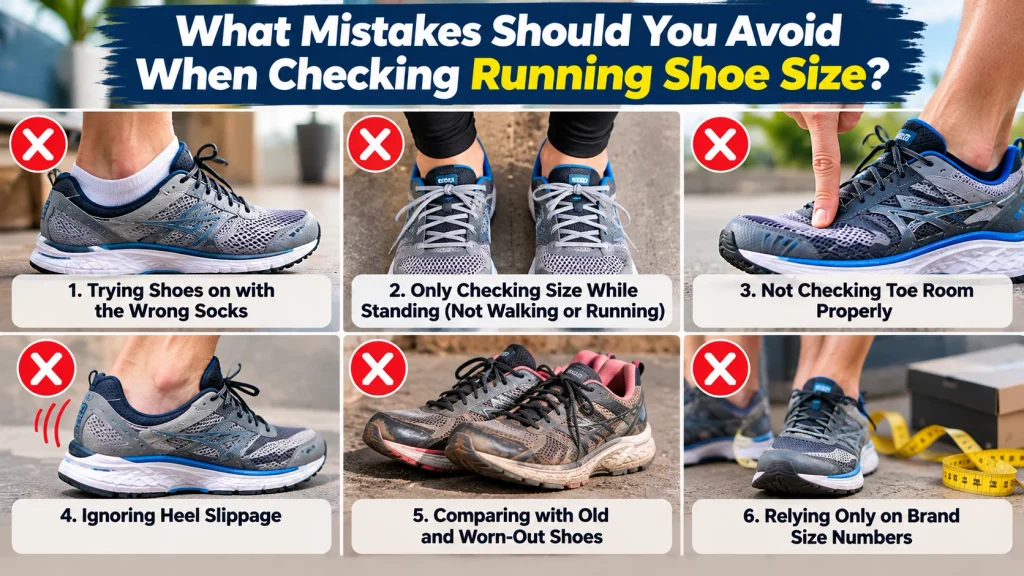
A few common mistakes make oversized shoes harder to recognize. Avoid relying on a single measurement or fitting trick.
- Checking only toe room: Heel and midfoot hold matter just as much.
- Using your casual shoe size: Running shoe sizing can vary by brand and model.
- Trying shoes without socks: Your normal running socks affect fit.
- Ignoring your larger foot: Measure both feet and fit the larger one.
- Judging only while sitting: Standing and movement reveal different fit issues.
- Overtightening the laces: Excessive pressure can hide a size problem temporarily.
- Assuming every heel slip means oversized shoes: Heel shape and lacing can also contribute.
For more precise measurements, the Brannock Device fitting instructions explain heel-to-toe length, arch length, and width. These measurements can provide a useful starting point for shoe fitting.
Useful Products for Checking and Improving Running Shoe Fit
Before replacing your shoes, a measuring tool or simple fit accessory may help identify the problem. These three products address different fitting needs.
Product ratings below are editorial usefulness estimates for these specific tasks, not customer review scores or laboratory test results.
📏 Best for measuring foot size
Genuine Brannock Device Adult Foot Measuring Device
★★★★☆ 4/5
This professional-style measuring tool checks foot length, arch length, and width. I consider it most useful for repeat measurements, although a fitting session at a shoe store may be more economical for occasional purchases.
👟 Best for adjustable lacing
Lock Laces Original No-Tie Elastic Shoelaces
★★★★☆ 4/5
These adjustable elastic laces use a locking system that lets you change tension without traditional knots. I would consider them for convenient adjustment in an otherwise well-fitting shoe, not as a fix for excessive length.
🧦 Best for cushioned sock comfort
Balega Hidden Comfort No-Show Running Socks
★★★☆☆ 3/5
These socks feature plush cushioning and moisture-managing fabric. They may improve comfort in a slightly roomy shoe, but their cushioning shouldn’t be mistaken for a permanent sizing solution.
Shopping tip: Check product dimensions and compatibility before ordering. A fit accessory can improve comfort, but it cannot turn a significantly oversized running shoe into the correct size.
Frequently Asked Questions
How do I know if my running shoes are half a size too big?
Your running shoes may be half a size too big if they have excessive toe clearance and repeatedly allow your foot to slide. However, shoe shapes vary, so try a smaller size and compare heel security, forefoot comfort, and toe room before deciding.
Is it normal for your heel to slip slightly in running shoes?
Minor heel movement can occur in some running shoes. Repeated lifting, rubbing, or a feeling that your heel is escaping suggests a fit problem, especially when it continues after appropriate lacing adjustments.
Can I wear running shoes that are slightly too big?
Possibly, if the shoes remain secure and comfortable during running. Mild looseness may improve with lacing or socks, but persistent sliding, friction, or instability is a reason to try another size or model.
Should my toes touch the front of running shoes?
Your toes generally shouldn’t press against the front during normal running. About a thumb’s width of space beyond your longest toe provides a useful starting point, while the heel and midfoot should remain securely held.
Will running shoes that are too big cause blisters?
They can contribute to blisters when excess movement causes repeated rubbing. However, moisture, socks, shoe shape, and shoes that are too small can also cause blisters, so identify the source of friction before changing sizes.
Final Verdict: How Can You Tell If Running Shoes Are Too Big?
Running shoes are likely too big when excessive internal space causes heel slipping, foot sliding, or a loose midfoot. The most useful check combines toe clearance with real movement rather than relying on size labels alone.
Start by measuring both feet, checking roughly a thumb’s width of toe space, and testing heel security. If you still need extreme lace tension to keep the shoes stable, consider another size, width, or model.
My final recommendation: Choose running shoes that feel secure without squeezing your feet. Comfortable toes, a stable heel, and a supported midfoot are more important than the number printed on the box.


Steven is a former sportsperson and now a full-time businessman and research writer. He is the mastermind of this site, and he created this site to help people who need specialized shoes for different activities. When he was a sportsperson, he was very passionate about different types of shoes for his sports purpose. The passion he had for shoes at that time now turned into his profession. Besides his shoe business, he loves sharing his knowledge and experience with people and helping them maintain healthy feet.
More Posts