

Quick Answer
To clean white running shoes, remove loose dirt, take out the laces and insoles, and gently scrub with mild detergent and lukewarm water. Wipe away soap with a damp microfiber cloth, then let the shoes air dry completely. Hand cleaning is the safest starting point for most mesh and knit running shoes, as explained in New Balance’s shoe care guidance.
6 Quick Cleaning Steps
- Remove accessories: Take out the laces and removable insoles.
- Brush away dirt: Use a dry, soft-bristled brush.
- Prepare the cleaner: Mix a few drops of mild, dye-free detergent into lukewarm water.
- Clean gently: Work on the mesh, midsoles, and outsoles separately.
- Remove residue: Wipe with a clean, slightly damp cloth.
- Air dry: Keep shoes away from direct heat and wear them only when completely dry.
Important Safety Tips
- Avoid chlorine bleach: It can damage materials or cause discoloration.
- Skip the dryer: Excessive heat may affect adhesives and shoe structure.
- Test first: Check every cleaning product on a small, hidden area.
White running shoes look great until everyday dirt starts covering their bright uppers. Road dust, grass stains, sweat, and muddy water can quickly change their appearance.
The good news is that most everyday stains don’t require expensive cleaners. I’ll explain the cleaning methods I’d prioritize, which products make sense, and how to avoid damaging delicate running shoe materials.
What Does Cleaning White Running Shoes Actually Involve?

Cleaning white running shoes means removing dirt, stains, sweat residue, and surface buildup without damaging their materials. The goal is to restore a cleaner appearance while preserving the shoe’s comfort, fit, and construction.
Running shoes aren’t built exactly like ordinary leather sneakers. They often combine breathable fabrics, cushioning foam, synthetic overlays, rubber outsoles, and adhesives.
Each material responds differently to moisture and scrubbing.
Why Do White Running Shoes Get Dirty So Quickly?
White fabric makes dirt more visible than darker materials. Even a small amount of dust can create noticeable gray or brown marks.
Running also exposes shoes to repeated contact with outdoor surfaces.
- Road dust: Fine particles collect around the toe box and mesh openings.
- Mud: Wet soil penetrates fabric and settles around the outsole.
- Grass: Plant pigments may leave green marks.
- Sweat: Moisture and body oils collect around the lining and insoles.
- Surface scuffs: Rubber and synthetic parts develop dark marks from contact.
Understanding the stain helps you choose a suitable cleaning method. It also prevents unnecessary scrubbing.
What Supplies Do You Need to Clean White Running Shoes?
You can clean most white running shoes with basic household supplies. A mild cleaning solution and soft tools are usually enough for routine maintenance.
Gather everything before getting started.
- A bowl of lukewarm water
- Mild, dye-free liquid laundry detergent or dish soap
- A soft-bristled toothbrush or shoe brush
- Two clean microfiber cloths
- A small towel
- White paper towels for drying
- A separate brush for rubber outsoles
- Optional: baking soda for compatible, spot-tested stain treatment
I recommend keeping one soft brush specifically for shoe uppers. Using a dirty outsole brush on white mesh can transfer grime directly into the fabric.
Which Cleaning Supplies Are Safest for Mesh?
A microfiber cloth and soft-bristled brush are the safest starting tools for most mesh uppers. They remove surface dirt without the aggressive friction caused by stiff brushes.
Use only a small amount of cleaning solution. Saturating mesh may spread dirt deeper into its layers.
Always follow the manufacturer’s material-specific instructions. Special finishes and waterproof membranes may need different care.
How to Clean White Running Shoes Step by Step
The most reliable approach is to clean your running shoes by hand in stages. Start with dry dirt before introducing moisture.
These six steps work well as a general routine for synthetic mesh and knit shoes, provided the manufacturer allows gentle water-based cleaning.
Step 1: Remove the Shoelaces and Insoles
Take the laces out and remove the insoles if they’re designed to come out. This gives you better access to the tongue, eyelets, and inner edges.
It also prevents dirty laces from rubbing against freshly cleaned fabric.
- Place shoelaces in a separate bowl of mild soapy water.
- Gently rub them by hand to loosen dirt.
- Rinse until the soap is gone.
- Clean removable insoles separately with a damp cloth and mild cleaner.
- Allow both items to dry completely before reinstalling.
Don’t soak insoles unless their care instructions allow it. Some layered foam insoles retain water and take longer to dry.
Step 2: Brush Off Loose Dirt
Use a dry brush to remove dust and debris from the upper, midsole, and outsole. This prevents loose dirt from becoming a muddy mixture during wet cleaning.
If the shoes have thick mud, let it dry first. Dried mud is generally easier to brush away.
- Use gentle strokes over the mesh.
- Brush around stitching and overlays.
- Remove trapped debris from the outsole grooves.
- Avoid pulling at loose threads or damaged fabric.
Step 3: Make a Mild Cleaning Solution
Fill a small bowl with lukewarm water and add a few drops of mild, dye-free detergent. Mix until the soap disperses evenly.
A lightly soapy solution is enough for ordinary dirt. Strong concentrations may leave residue after drying.
Test the solution inside the shoe or on another inconspicuous area. Check for discoloration before continuing.
Step 4: Gently Clean the White Uppers
Dip the soft brush into the solution, then shake off the excess. Work across the upper using light strokes without saturating the fabric.
Focus on the toe box, tongue, sides, and areas around the laces.
- Clean small sections rather than soaking the entire upper.
- Use very gentle pressure over open-knit or mesh fabric.
- Lift loosened dirt with a clean microfiber cloth.
- Repeat only where necessary.
On delicate mesh, a damp microfiber cloth may work better than a brush. Avoid aggressive circular scrubbing if the fabric starts to fuzz.
Step 5: Clean the Midsoles and Outsoles
White foam midsoles often collect stubborn gray scuff marks. A separate brush helps clean these areas without contaminating the upper.
Apply a little mild solution and gently brush the rubber or appropriate synthetic surfaces.
For tight grooves, use a small toothbrush. Remove pebbles carefully without cutting or gouging the rubber.
Wipe the surfaces with a clean damp cloth. Avoid scrubbing painted midsole details aggressively because their finish may wear away.
Step 6: Wipe and Air Dry Completely
Wipe the shoes with a clean, damp microfiber cloth until the visible soap residue disappears. Blot remaining moisture with a dry towel.
Place the shoes in a well-ventilated indoor area. Keep them away from radiators, tumble dryers, and other concentrated heat sources.
- Loosely stuff the shoes with plain white paper towels to help retain their shape.
- Replace damp paper if necessary.
- Leave the laces and insoles outside the shoes while drying.
- Check the toe box, tongue, and interior for moisture before wearing.
Drying often takes many hours, and 24 hours is a sensible allowance for damp shoes. The actual time depends on fabric thickness, ventilation, and humidity.
How Do You Clean Different Types of White Running Shoes?
The best cleaning technique depends on the shoe’s upper material. Mesh, knit, synthetic leather, and suede require different levels of moisture and friction.
Use this comparison before choosing your tools.
| Material | Recommended Method | Avoid |
|---|---|---|
| Mesh | Mild soap with a soft cloth or gentle brush | Hard scrubbing and soaking |
| Knit | Light dabbing with a damp microfiber cloth | Stiff brushes and fabric pulling |
| Synthetic leather | Damp cloth and mild cleaning solution | Abrasive cleaners |
| Suede or nubuck | Material-specific brush and approved cleaner | Ordinary wet washing |
| Rubber outsole | Separate brush with mild soap | Sharp tools and excessive abrasion |
How Do You Clean White Mesh Running Shoes?
White mesh running shoes are best cleaned with minimal water and gentle pressure. Their open fabric structure can trap dirt while remaining vulnerable to abrasion.
Use a soft brush or damp microfiber cloth to loosen grime. Blot the fabric rather than repeatedly scrubbing one spot.
Clean the surrounding overlays separately. This helps prevent dirty water from spreading across the white mesh.
How Do You Clean White Knit Running Shoes?
Knit running shoes require an especially gentle approach. Their flexible loops can snag when exposed to stiff brushes or rough surfaces.
Use a damp cloth with a small amount of mild detergent. Dab the material and follow the direction of the knit where possible.
Never pull at loose yarn or fibers. If the knit is already damaged, avoid rubbing the affected area.
How Do You Remove Stubborn Stains From White Running Shoes?
Stubborn stains need targeted treatment rather than harder scrubbing. Identify the stain, test a gentle cleaner, and work only on the affected area.
Some stains become permanent after prolonged exposure. Cleaning can improve their appearance without necessarily restoring the original white color.
How Do You Remove Mud and Dirt Stains?
Allow mud to dry before brushing off the loose material. Then use a slightly damp cloth with mild detergent to remove the remaining marks.
Repeat gently if necessary. Don’t push muddy water into clean sections of the upper.
How Do You Remove Grass Stains?
Grass stains contain pigments that can cling to shoe fabrics. Start with a small amount of mild liquid detergent applied to the affected area.
Gently dab the stain, then remove the detergent with a damp cloth. Avoid bleach and aggressive treatment on delicate or colored overlays.
Can Baking Soda Clean White Running Shoes?
Baking soda may help with some surface stains, but it isn’t suitable for every shoe material. Its mild abrasive texture can be problematic for delicate knits or finishes.
For compatible durable areas, you can test a small paste made from baking soda and water. Avoid hard scrubbing and remove the residue thoroughly.
I would prioritize mild detergent for mesh before trying baking soda. Preserving the fabric matters more than chasing a perfectly white finish.
How Do You Remove Yellow Stains?
Yellow stains can result from aging, residue, oxidation, or material changes. Their cause determines whether cleaning will help.
First remove any detergent buildup with a lightly dampened cloth. If the yellow color remains after drying, it may not be removable through ordinary cleaning.
Avoid chlorine bleach or unverified whitening mixtures. They can damage fabrics, foam, adhesives, and colored components.
Can You Put White Running Shoes in the Washing Machine?
Hand washing is generally the safer option for white running shoes. Several major manufacturers discourage machine washing because water exposure and mechanical movement may damage materials or construction.
For example, Adidas recommends gentle manual cleaning and advises against machine washing in its shoe care guidance.
New Balance also advises against putting its shoes in the washing machine or dryer.
Why Can Machine Washing Damage Running Shoes?
Machine washing combines water, movement, detergent, and repeated impacts. Those conditions may affect delicate uppers and bonded components.
- Adhesive weakening: Excessive water exposure may affect some bonded areas.
- Fabric damage: Repeated tumbling may snag mesh or knit uppers.
- Shape changes: Saturated padding and repeated movement can affect shoe structure.
- Color transfer: Colored components may bleed onto white fabric.
- Long drying: Moisture can remain trapped inside thick sections.
If the shoe manufacturer specifically allows machine washing, follow its instructions exactly. Otherwise, choose hand cleaning.
How Can You Keep White Running Shoes Clean Longer?
Regular light cleaning helps prevent dirt from building up. It also reduces the need for frequent intensive cleaning.
A simple routine is more practical than trying to restore heavily stained shoes every few months.
What Should You Do After Every Run?
- Brush off loose dust and visible debris.
- Wipe fresh marks from durable outer surfaces.
- Allow damp shoes to air out.
- Remove removable insoles when extra drying is needed.
- Store dry shoes in a ventilated area.
How Often Should You Deep Clean White Running Shoes?
Clean your shoes whenever visible dirt, odor, or buildup requires attention. There isn’t one fixed schedule that suits every runner.
Daily pavement runners may need frequent light cleaning. Occasional indoor runners may need much less maintenance.
Reserve deeper cleaning for persistent dirt and stains. Repeated unnecessary scrubbing can wear down delicate materials.
What Cleaning Mistakes Should You Avoid?
Many shoe-cleaning problems come from using too much force, moisture, or heat. Avoiding those mistakes can protect your shoes even when stains are difficult to remove.
- Using chlorine bleach: Harsh chemicals may cause discoloration or material damage.
- Scrubbing mesh aggressively: Stiff brushes can fuzz or tear lightweight fabric.
- Soaking the entire shoe: Excess moisture may affect layered construction and increase drying time.
- Using a hair dryer: Concentrated heat may distort components or affect adhesives.
- Skipping the patch test: Even mild cleaners may react differently with finishes and dyes.
- Leaving detergent behind: Residue can attract dirt or cause visible marks.
- Wearing damp shoes: Trapped moisture can encourage unpleasant odors.
For general shoe care, Nike’s running shoe cleaning guide provides another useful reference.
When Should You Replace White Running Shoes Instead of Cleaning Them?
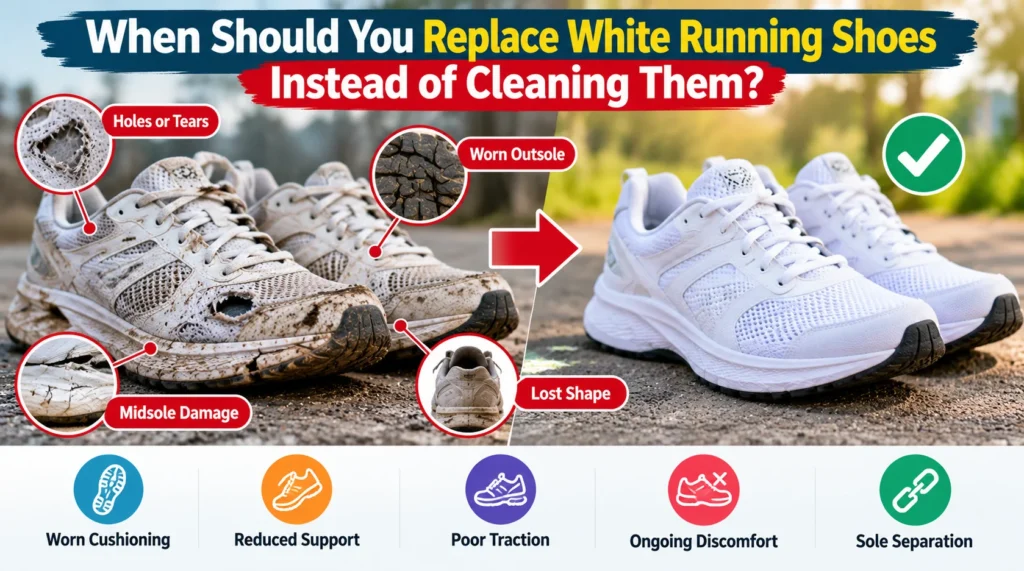
Cleaning can improve appearance, but it cannot restore worn cushioning or damaged structure. A white shoe may look dirty while still performing well, or look clean despite serious wear.
Inspect the shoes after cleaning and drying.
- The outsole has worn smooth in important traction areas.
- The midsole feels noticeably different or has structural damage.
- The upper has holes, tears, or broken support areas.
- The heel structure no longer holds its shape properly.
- The shoes repeatedly cause discomfort despite appropriate fit.
- Sections of the sole have started separating.
Don’t replace a functional pair simply because it isn’t perfectly white. But don’t assume a clean appearance means worn-out running shoes remain suitable for running.
Which Shoe Cleaning Products Are Worth Considering in 2026?
For basic cleaning, household detergent and a soft cloth are often enough. Dedicated shoe care products become useful when you want convenient tools or regularly clean several pairs.
These two options address different needs. The ratings below are editorial suitability assessments, not customer-review averages or hands-on test scores.
🏆 Best for Durable Shoe Surfaces
Jason Markk Essential Kit
★★★★☆ — 4/5 editorial fit
This kit includes a 4-ounce concentrated cleaning solution and a stiff Durables Brush. I’d choose it mainly for rubber midsoles, outsoles, and other suitable durable surfaces. Its included brush is not my first choice for delicate running shoe mesh.
⭐ Best for Delicate Knit Uppers
Jason Markk Care Kit
★★★★☆ — 4.5/5 editorial fit
The Care Kit includes a ready-to-use foam cleaner, Delicates Brush, water-repellent spray, and wipes. I’d favor its softer brush for suitable knit uppers, using minimal moisture and checking material compatibility first.
Affiliate disclosure: As an Amazon Associate, we may earn from qualifying purchases made through eligible links, at no additional cost to you.
Frequently Asked Questions About Cleaning White Running Shoes
What Is the Best Homemade Cleaner for White Running Shoes?
A small amount of mild, dye-free detergent mixed with lukewarm water is a good starting choice for many synthetic running shoe uppers. Apply it with a soft cloth or gentle brush, then wipe away the residue. Always test a hidden area first and follow material-specific care instructions.
Can You Use Toothpaste to Clean White Running Shoes?
Toothpaste isn’t my recommended cleaner for white running shoes. Some formulas contain abrasives, dyes, or whitening ingredients that may leave residue or affect delicate surfaces. Mild detergent is a more predictable starting choice, especially for mesh and knit uppers.
Can You Use Baking Soda and Vinegar on White Running Shoes?
Baking soda and vinegar aren’t necessary for routine shoe cleaning. Combining them creates fizz but doesn’t automatically produce a better cleaner. Some materials may also react poorly to acidic or abrasive treatments. Start with mild detergent and reserve specialty methods for manufacturer-approved surfaces.
How Long Do White Running Shoes Take to Dry After Cleaning?
Lightly cleaned running shoes may dry within several hours, while wetter shoes can require 24 hours or longer. Drying depends on humidity, airflow, materials, and how much water was used. Leave the shoes in a ventilated location and check for internal moisture before wearing them.
Can White Running Shoes Look New Again After Cleaning?
Cleaning can remove surface dirt and improve the appearance of white running shoes, but it cannot always reverse yellowing, permanent stains, abrasion, or material aging. The best results come from gentle, regular cleaning rather than aggressive whitening treatments.
Final Thoughts: What Is the Safest Way to Clean White Running Shoes?
The safest general method is simple: remove loose dirt, use mild detergent with a soft cloth or brush, wipe away residue, and air dry thoroughly. This approach helps preserve delicate uppers while removing common everyday stains.
Pay extra attention to the shoe’s materials and manufacturer instructions. A clean pair is worth keeping, but protecting its structure matters more than achieving a flawless white finish.
Make light maintenance part of your running routine, and you’ll have a better chance of keeping your white shoes looking fresh for longer.