
Quick Answer
Neutral running shoes provide cushioning and a relatively unrestricted ride, while stability running shoes add features that guide excessive foot movement. Choose neutral shoes when they feel comfortable and supportive enough; consider stability shoes if you prefer extra guidance during your stride. Explore our running shoe guides for more footwear advice.
Key Differences
- Primary purpose: Neutral shoes prioritize natural movement; stability shoes add guidance.
- Foot movement: Stability features can help manage excessive inward rolling, called overpronation.
- Cushioning: Both categories offer soft, moderate, and highly cushioned models.
- Support level: Neutral shoes can still feel stable, while stability shoes provide more targeted structure.
- Best choice: Prioritize comfort, secure fit, running mechanics, and your individual needs.
Before Buying
- Compare both: Try neutral and stability models during a short jog rather than choosing by arch shape alone.
- Check comfort: Avoid shoes that cause pressure, heel slipping, or an unnatural feeling.
Choosing between neutral vs stability running shoes can feel confusing, especially when every brand promises a better stride. The important difference isn’t simply how much cushioning a shoe provides.
I prefer to start with how a shoe fits and feels, then consider whether its support features solve a specific problem. This guide explains the differences, common misconceptions, and practical steps for finding your match.
What Is the Difference Between Neutral and Stability Running Shoes?
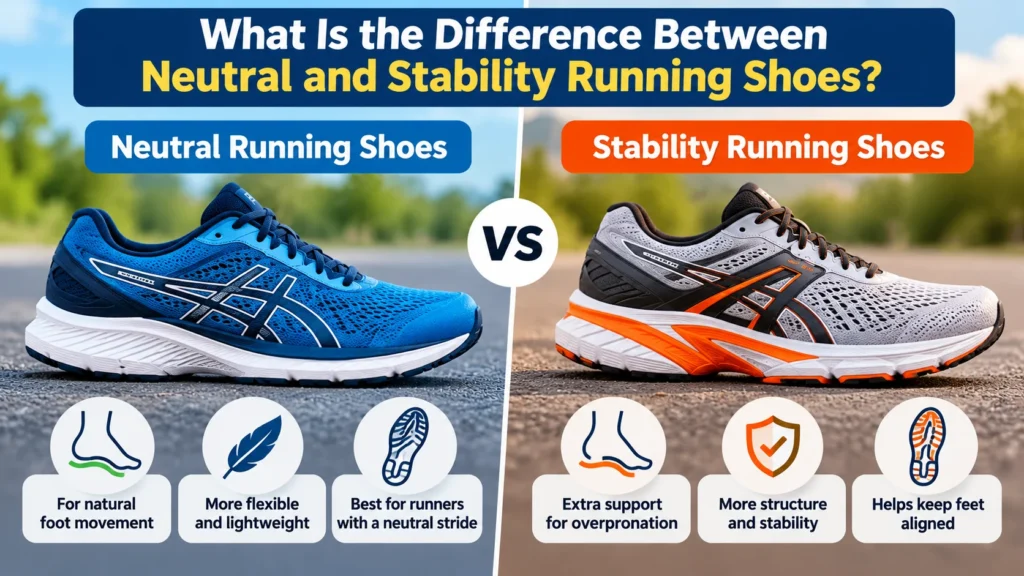
The main difference is how each category manages foot movement. Neutral running shoes generally avoid dedicated motion-control systems, while stability models use design features that provide extra guidance.
Neither category guarantees better comfort or fewer injuries. Your running mechanics and personal preferences still matter.
What Are Neutral Running Shoes?
Neutral running shoes are athletic shoes designed without prominent corrective motion-control features. They usually allow the foot to move through its natural landing and push-off pattern.
Many neutral models include broad platforms, secure heel counters, and supportive cushioning. Neutral does not mean unstable or completely unsupported.
- Movement: Generally permits a natural range of foot motion.
- Support: Relies on shoe geometry, fit, cushioning, and construction.
- Cushioning: Available from firm and responsive to soft and plush.
- Typical users: Runners who feel comfortable without extra movement guidance.
- Example: Brooks Ghost 18.
What Are Stability Running Shoes?
Stability running shoes are running shoes with additional features intended to guide foot motion. These features may include sidewalls, wider bases, structured foam, or specialized support systems.
Traditional stability shoes frequently used firm medial posts along the inner midsole. Modern models can deliver guidance through geometry and adaptive cushioning instead.
- Movement: Provides extra guidance during the running stride.
- Support: May reduce or manage unwanted inward or sideways movement.
- Cushioning: Can be equally plush or responsive.
- Typical users: Runners who feel better with additional structure.
- Examples: Brooks Adrenaline GTS 25 and ASICS GEL-KAYANO 33.
The American Academy of Podiatric Sports Medicine emphasizes individualized footwear selection rather than relying on foot type alone.
Neutral vs Stability Running Shoes: Side-by-Side Comparison
This comparison highlights the practical differences. Remember that individual models can overlap considerably.
| Feature | Neutral Shoes | Stability Shoes |
|---|---|---|
| Main purpose | Cushioning and natural movement | Cushioning with additional guidance |
| Motion guidance | Limited dedicated correction | Built-in guidance features |
| Midsole | Often uniform or tuned for cushioning | May use specialized foam or support geometry |
| Weight | Varies widely | May weigh more, but not always |
| Cushioning | Low to maximum | Low to maximum |
| Suitable runners | Those comfortable without extra guidance | Those who prefer added movement control |
| Example | Brooks Ghost 18 | Brooks Adrenaline GTS 25 |
Important: Cushioning, heel-to-toe drop, and shoe weight cannot reliably identify a shoe’s support category. Examine the actual design and how it feels during movement.
What Is Pronation, and Why Does It Matter for Running Shoes?
Pronation is the natural inward rolling motion of the foot after landing. This movement helps the foot adapt to the ground and distribute loading.
Pronation itself is normal. Problems may arise when an individual’s movement pattern combines with discomfort, inadequate capacity, or other contributing factors.
Three Common Foot Movement Patterns
- Neutral pronation: The foot rolls inward through a relatively typical movement pattern.
- Overpronation: The foot rolls inward more than expected or desired during part of the stride.
- Supination: The foot rolls inward relatively little or remains more toward its outer edge.
These categories simplify a complex movement pattern. Two runners with similar-looking arches can move differently while running.
The American Podiatric Medical Association’s shoe-selection guidance explains traditional recommendations based on arch type, but arch shape is only one consideration.
How Do You Know If You Need Stability Running Shoes?
Consider stability shoes if you feel more comfortable, controlled, or confident with extra guidance. You do not need to diagnose overpronation before trying them.
Several observations can help guide your decision. None establishes your ideal shoe type by itself.
Signs Worth Investigating
- Visible inward rolling: Your foot appears to roll substantially inward during running.
- Uncomfortable movement: Your foot feels less controlled in certain neutral shoes.
- Uneven wear: Your shoes show an unusual wear pattern, although this alone cannot diagnose overpronation.
- Support preference: A stability model feels smoother and more secure during repeated strides.
- Recurring discomfort: Persistent foot or lower-leg symptoms warrant professional assessment rather than self-diagnosis.
A Five-Step Shoe Comparison Test
- Choose comparable shoes. Select one neutral and one stability model with similar cushioning and intended use.
- Check standing comfort. Make sure neither shoe creates pressure around your arch, toes, or heel.
- Walk briefly. Notice heel security, flexibility, and how naturally your foot rolls forward.
- Jog if possible. Compare the shoes at an easy pace on a safe, permitted test surface.
- Review the differences. Prefer the pair that feels comfortable and consistent without forcing your stride.
I treat the short-jog comparison as more useful than a simple shoe label. A support feature has little practical value if it makes your foot uncomfortable.
Do Flat Feet Automatically Need Stability Running Shoes?
No. Flat feet do not automatically mean you need stability shoes, and high arches do not guarantee that neutral shoes are best.
Arch height describes your foot’s shape, but running involves dynamic movement. Comfort, strength, mobility, and individual mechanics can influence your footwear needs.
Three Common Misconceptions
- Myth: Every runner with flat feet overpronates excessively.
Reality: Flat arches do not reveal the complete running movement pattern. - Myth: All high-arched runners require soft neutral shoes.
Reality: Shoe preferences and mechanics vary between individuals. - Myth: Stability shoes automatically fix poor running form.
Reality: They influence movement but cannot correct every underlying issue.
If you have comfortable flat feet and run without symptoms, changing shoe categories may not be necessary. If you experience recurring pain, consult a qualified clinician.
Are Stability Running Shoes Better for Preventing Injuries?
Current evidence does not establish that stability shoes consistently prevent more injuries than neutral shoes for all runners. That distinction matters when manufacturers emphasize protection.
A Cochrane review of running shoes and injuries found very low-certainty evidence for the stability-versus-neutral injury comparison.
The review also found that prescribing shoes based on static foot posture probably makes little or no difference to injury rates. This does not mean footwear characteristics are irrelevant.
What Matters Beyond the Shoe Category?
- Training progression: Increase distance and intensity at a manageable rate.
- Fit: Avoid excessive movement, rubbing, and concentrated pressure.
- Strength: Build appropriate capacity in your legs and feet.
- Recovery: Adjust workloads when fatigue or persistent symptoms develop.
- Individual comfort: Choose footwear that works with your preferred movement pattern.
A shoe can change how forces are distributed without guaranteeing a better medical outcome. Avoid interpreting a stability label as an injury-prevention promise.
Can Neutral Running Shoes Still Provide Good Support?
Yes. Neutral running shoes can provide substantial inherent stability through their shape and construction.
Support is not limited to firm arch posts or corrective systems. Many modern neutral shoes feel secure despite having no dedicated motion-control technology.
Supportive Features Found in Neutral Shoes
- Wide platform: Provides more space beneath the foot.
- Heel counter: Helps secure the rearfoot inside the shoe.
- Midsole geometry: Influences how the foot transitions forward.
- Upper construction: Helps prevent unwanted movement inside the shoe.
- Outsole design: Supports traction and a consistent landing.
This is why some runners who once wore traditional stability shoes may prefer a stable-feeling neutral model. The distinction depends on the specific shoe.
Should Beginners Choose Neutral or Stability Running Shoes?
Beginners can start with either category. A comfortable fit and appropriate cushioning matter more than automatically choosing the shoe with the most structure.
If you’re buying your first pair, compare two or three daily trainers before committing. Avoid treating an arch test as a definitive prescription.
Beginner Buying Priorities
- Fit first: Allow room for your toes without excessive heel movement.
- Easy comfort: Choose cushioning that feels pleasant at your normal pace.
- Predictable transitions: The shoe should not feel awkward as you move forward.
- Appropriate support: Try added guidance if a neutral shoe feels uncomfortable or uncontrolled.
- Simple purpose: Start with a daily road-running trainer for road running.
Does Running Surface or Distance Change Which Shoe You Need?
Running surface and distance influence your overall shoe choice, but neither automatically determines neutral versus stability. Consider traction, cushioning, fatigue, and intended use separately.
Running on Roads and Concrete
On pavement, prioritize comfortable cushioning, outsole durability, and reliable fit. Our guide to running shoes for concrete floors explores footwear considerations for hard surfaces.
Long-Distance Running
Long runs increase the importance of consistent comfort as fatigue develops. Some runners appreciate added guidance later in a run, while others prefer the movement of neutral footwear.
Walking and Everyday Use
Both categories can work for walking when the shoes fit your needs. Read our guide on using running shoes for walking on concrete for related considerations.
Uneven or Trail Surfaces
Trail running introduces different demands involving grip, footing, and terrain. A dedicated trail shoe may matter more than the neutral-versus-stability label.
How Important Are Cushioning, Weight, and Heel Drop?
These features influence how a shoe feels, but they exist across both categories. Compare them independently of support classification.
- Cushioning: Softness affects comfort and perception, but softer is not always better.
- Weight: Lighter shoes may feel easier to move, although weight varies substantially by model.
- Heel-to-toe drop: The height difference between the heel and forefoot can change loading and running feel.
- Platform width: A broad base can add inherent stability without a corrective post.
- Rocker shape: A curved sole may influence how smoothly you roll forward.
For example, the Brooks Ghost 18 and Adrenaline GTS 25 both have a manufacturer-listed 10 mm drop. Their support designs differ despite sharing that measurement.
Which Running Shoe Models Illustrate the Difference in 2026?
These three road-running models demonstrate how different brands approach cushioning and support. Specifications below use manufacturer-listed men’s model figures and may vary by size or region.
| Model | Category | Drop | Men’s Weight |
|---|---|---|---|
| Brooks Ghost 18 | Neutral | 10 mm | 289.2 g |
| Brooks Adrenaline GTS 25 | Stability | 10 mm | 300.5 g |
| ASICS GEL-KAYANO 33 | Stability | 8 mm | 298 g |
Brooks uses GuideRails technology in the Adrenaline GTS 25. The GEL-KAYANO 33 uses ASICS FLUIDSUPPORT technology for adaptive guidance.
These differences illustrate competing approaches rather than proving which shoe is best. Trying the models remains important.
What Mistakes Should You Avoid When Choosing Running Shoes?
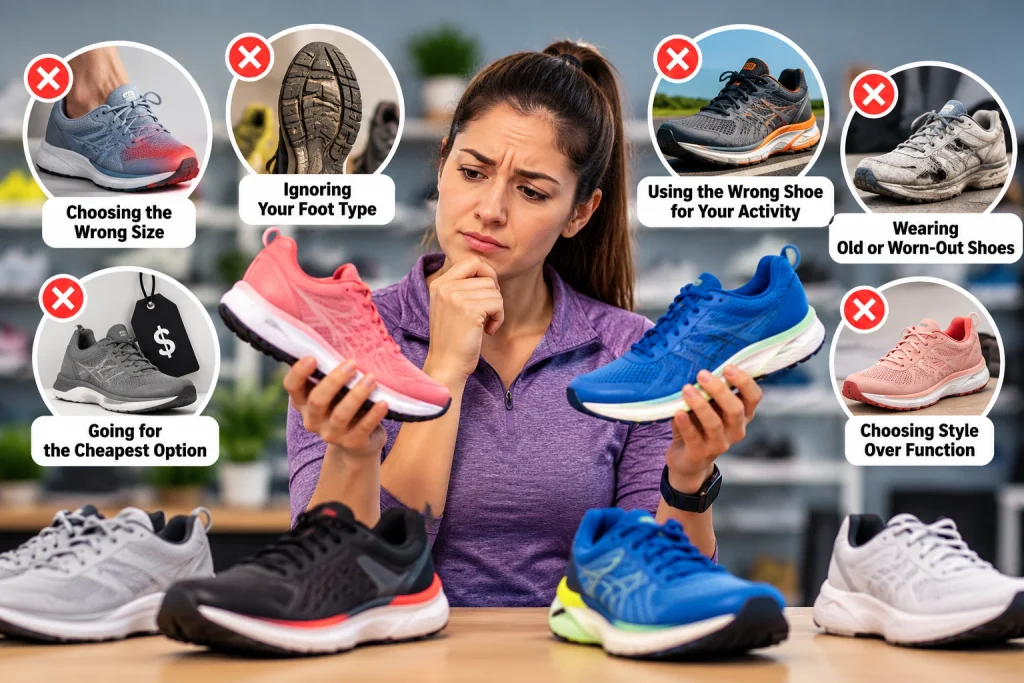
The biggest mistake is trusting a category label more than your feet. Shoe design is personal, and marketing terms rarely describe the full experience.
- Buying by arch height alone: Your static arch does not determine your full running mechanics.
- Assuming stability prevents injury: Research does not support that guarantee.
- Ignoring toe room: A cramped toe box can make either category uncomfortable.
- Choosing maximum support automatically: More structure is not always more comfortable.
- Buying without moving: Standing comfort cannot reveal everything about running feel.
- Ignoring persistent pain: Recurring symptoms deserve appropriate professional evaluation.
The American Academy of Orthopaedic Surgeons’ athletic shoe guidance explains that professional gait evaluation can help assess running foot mechanics.
Recommended Neutral and Stability Running Shoes for 2026
If you’re comparing real models, these three are useful starting points. My selections focus on each shoe’s intended function and verified design, not claims of personal wear testing.
Editorial ratings below reflect feature suitability for the stated use case, not customer review averages or independent laboratory scores.
🏆 Best Neutral Daily Trainer
Brooks Ghost 18
★★★★☆ 4/5 editorial fit
This neutral daily trainer features DNA LOFT v3 cushioning, a 10 mm drop, and a secure heel design. I’d shortlist it for runners seeking a familiar, balanced ride without dedicated stability guidance.
🛡️ Best Structured Daily Support
Brooks Adrenaline GTS 25
★★★★½ 4.5/5 editorial fit
GuideRails support combines with balanced cushioning and a 10 mm drop. I’d compare this model against the Ghost when extra movement guidance is the deciding priority.
☁️ Best Plush Stability Option
ASICS GEL-KAYANO 33
★★★★½ 4.5/5 editorial fit
The GEL-KAYANO 33 combines FLUIDSUPPORT with FF BLAST PLUS and FF BLAST MAX cushioning. I’d consider it when plush underfoot comfort and adaptive support are both important.
Affiliate disclosure: As an Amazon Associate, we may earn from qualifying purchases. Product availability, prices, and sizing can change.
Frequently Asked Questions
Can You Wear Neutral Running Shoes If You Overpronate?
Yes, some runners who overpronate are comfortable in neutral shoes. Overpronation alone does not establish which shoe will prevent injuries or feel best, so compare models based on running comfort and seek professional guidance for recurring symptoms.
Are Stability Shoes Better for Flat Feet?
Stability shoes may feel more supportive for some runners with flat feet, especially those who prefer additional movement guidance. However, flat arches do not automatically require stability footwear, and a comfortable neutral model may also be suitable.
Do Stability Running Shoes Have More Cushioning?
Not necessarily. Neutral and stability running shoes are both available with soft, moderate, and maximum cushioning, so the support category does not reveal how plush a shoe will feel. Compare the actual midsole and underfoot experience.
Can Stability Shoes Cause Discomfort?
Yes, stability shoes can feel uncomfortable when their support features do not suit your feet or movement pattern. Pressure around the arch, an awkward transition, or persistent discomfort are reasons to reassess the fit rather than force yourself to adapt.
Which Is Better for Long-Distance Running: Neutral or Stability?
Neither category is universally better for long distances. Choose a shoe that stays comfortable as fatigue increases, fits securely, and suits your training demands; compare neutral and stability models during longer easy runs before making a final decision.
Final Verdict: Neutral vs Stability Running Shoes
Choose neutral running shoes when you want a comfortable running experience without extra motion-guidance features. Choose stability running shoes when additional structure feels beneficial during your stride.
Neither category is automatically safer or superior. Start with fit, compare the running experience, and avoid choosing footwear based on arch shape alone.
My final advice is simple: let comfort and your actual running needs guide the decision. A shoe that works well for your stride is more valuable than a support label that looks impressive on the box.


Steven is a former sportsperson and now a full-time businessman and research writer. He is the mastermind of this site, and he created this site to help people who need specialized shoes for different activities. When he was a sportsperson, he was very passionate about different types of shoes for his sports purpose. The passion he had for shoes at that time now turned into his profession. Besides his shoe business, he loves sharing his knowledge and experience with people and helping them maintain healthy feet.
More Posts