

Quick Answer
The HOKA Mach 6 offers better overall value than the Nike Pegasus Plus for most road runners. Its $140 original retail price is $40 lower than the Nike’s $180 price. Choose the Pegasus Plus for responsive ZoomX foam and a 10 mm drop, or the Mach 6 for versatile daily training.
Which lightweight running shoe deserves your money?
- HOKA Mach 6 offers strong value at its original $140 price.
- Nike Pegasus Plus features responsive, full-length ZoomX foam.
- Mach 6 combines lightweight cushioning with a smooth rocker design.
By Steven Tyler | Research-based running shoe comparison
This article contains affiliate links. As an Amazon Associate, I earn from qualifying purchases.
⚡ Quick Verdict — Nike Pegasus Plus vs HOKA Mach 6
Nike Pegasus Plus
Editorial assessment
$180 (original retail price)
✅ Best for:
Runners who want flexible ZoomX cushioning, fast transitions, and a higher heel drop.
HOKA Mach 6
Editorial assessment
$140 (original retail price)
✅ Best for:
Runners seeking one lightweight shoe for daily miles, tempo runs, and steady workouts.
| Category | Pegasus Plus | Mach 6 |
|---|---|---|
| Overall Winner | — | 🏆 |
| Best Value | — | ✅ |
| Flexible Running Feel | ✅ | — |
| Premium Foam Technology | ✅ | — |
| Daily Training Versatility | — | ✅ |
Bottom line: HOKA Mach 6 wins for most daily runners through better reference-price value, while Nike Pegasus Plus suits runners who prefer flexible ZoomX cushioning and a higher drop.
Scores reflect editorial judgments, not Amazon customer ratings. Original retail prices are reference figures. Check current listings for availability and sale prices.
Key Takeaways
- HOKA Mach 6 wins overall thanks to its versatile ride and lower reference price.
- Mach 6 originally costs $40 less than the Nike Pegasus Plus.
- Nike Pegasus Plus offers full-length ZoomX foam without a carbon plate.
- Mach 6 offers wide-size options for runners who need extra room.
- The biggest design difference is Nike’s 10 mm drop versus HOKA’s 5 mm drop.
Choosing between two lightweight running shoes should feel easy. Yet the Nike Pegasus Plus and HOKA Mach 6 make it tricky.
Both shoes aim to help you run fast without carrying extra weight. Both can handle daily miles and harder training sessions.
However, these shoes take different paths toward the same goal. Nike uses its premium ZoomX foam and a flexible shoe design.
HOKA takes a different approach with supercritical EVA foam. Its curved sole helps create smooth steps at different running speeds.
I’m Steven Tyler, and this Nike Pegasus Plus review focuses on practical buying choices. The comparison draws on published specifications and independent running shoe tests.
Rather than claiming personal mileage, I use available evidence to explain each shoe’s strengths. I also consider fit, running habits, and the cost of ownership.
The biggest question is whether Nike’s premium foam deserves the extra money. That answer depends on how you run and what you expect.
Let your training needs guide the purchase, not just the foam name.
What Is the Nike Pegasus Plus Designed to Do?
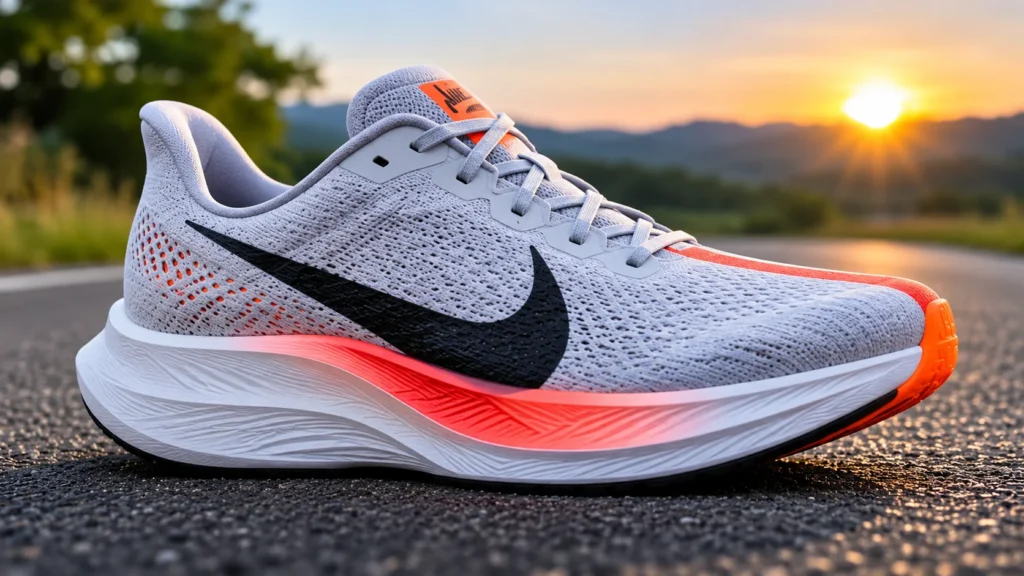
Quick Verdict — Nike Pegasus Plus
Best for: Flexible tempo runs and runners who enjoy responsive foam.
Not ideal for: Runners seeking maximum cushioning, broad toe room, or dedicated stability.
Reference retail price: $180
Research-based editorial scores.
The Nike Pegasus Plus is a lightweight road running shoe designed for daily miles and faster workouts. Its full-length ZoomX midsole provides responsive cushioning without relying on a stiff carbon plate.
Nike pairs this foam with a breathable Flyknit upper. A midfoot support band helps hold your foot during faster steps.
The men’s shoe weighs about 245 grams, depending on size. Its stated 10 mm heel-to-toe drop offers a more traditional running shape.
This higher drop can appeal to runners switching from conventional daily trainers. However, the shoe does not provide the support of a dedicated stability model.
The Pegasus Plus originally retails for $180. That price places it among premium lightweight road trainers.
Its main strength is the mix of responsive foam and natural flexibility. Runners who dislike rigid plated shoes can find this design appealing.
The Pegasus Plus makes the most sense when you enjoy a close connection with the road. It is less suited to runners who want a deep, plush ride.
✅ Nike Pegasus Plus Pros
- Full-length ZoomX foam.
- Lightweight road running design.
- Flexible ride without a carbon plate.
- Breathable Flyknit upper.
- Responsive feel during faster workouts.
- Familiar 10 mm heel drop.
❌ Nike Pegasus Plus Cons
- Higher original retail price.
- Limited room for some wide feet.
- Less cushioning depth than some max-stack trainers.
- No dedicated stability system.
- Premium price may be hard to justify.
AMAZON PRODUCT SEARCH
Nike Pegasus Plus Road Running Shoes
A premium lightweight road trainer with ZoomX cushioning, a Flyknit upper, and a flexible running feel.
Reference price: $180
Confirm the original Pegasus Plus model, size, seller, and current price before ordering.
What Is the HOKA Mach 6 Designed to Do?
Quick Verdict — HOKA Mach 6
Best for: Daily running, steady workouts, and versatile road training.
Not ideal for: Runners who need maximum stability or dislike low-drop shoes.
Reference retail price: $140
Research-based editorial scores.
The HOKA Mach 6 is a lightweight neutral trainer built for both daily running and speed sessions. It combines supercritical EVA foam with a curved sole that supports smooth forward movement.
The midsole provides cushioning without a stiff plate. HOKA uses its MetaRocker design to help the foot move through each step.
RunRepeat measured the men’s Mach 6 at just 232 grams. That makes it light enough for workouts while remaining practical for regular miles.
The shoe features a 5 mm stated heel drop. This lower drop creates a different running feel from the Pegasus Plus.
A creel jacquard mesh upper helps manage airflow during training. The internal tongue design also helps secure the foot.
Our detailed HOKA Mach 6 review covers its toe box and fit limitations. Runners with broad feet should consider the wide version.
The Mach 6 originally costs $140. Its balance of weight, ride quality, and price makes it a strong all-round option.
✅ HOKA Mach 6 Pros
- Lightweight supercritical EVA foam.
- Smooth rocker-based transitions.
- Strong reference-price value.
- Suitable for several training speeds.
- Available in wide sizes.
- Strategic rubber outsole coverage.
❌ HOKA Mach 6 Cons
- Standard toe box can feel snug.
- Thin tongue may cause lace pressure.
- Lower drop requires adjustment for some runners.
- No dedicated stability features.
- Not designed for technical trails.
🏆 EDITOR’S CHOICE
HOKA Mach 6 Road Running Shoes
A lightweight performance trainer with supercritical EVA cushioning, smooth transitions, and versatile road running performance.
Reference price: $140
Confirm the Mach 6 generation, width, seller, and current price before ordering.
Nike Pegasus Plus vs HOKA Mach 6: How Do the Specs Compare?
The Nike Pegasus Plus offers premium ZoomX foam and a higher heel drop. The HOKA Mach 6 counters with lower weight, rocker geometry, and a lower original retail price.
| Feature | Nike Pegasus Plus | HOKA Mach 6 | Winner |
|---|---|---|---|
| Brand | Nike | HOKA | Tie |
| Men’s model number | FQ7262 | 1147790 | — |
| Original retail price | $180 | $140 | Mach 6 |
| Approximate men’s weight | 245 g / 8.6 oz | 232 g / 8.2 oz | Mach 6 |
| Stated heel drop | 10 mm | 5 mm | Preference |
| Midsole foam | Full-length ZoomX | Supercritical EVA | Preference |
| Upper material | Flyknit | Creel jacquard mesh | Preference |
| Carbon plate | No | No | Tie |
| Ride geometry | Traditional and flexible | MetaRocker | Preference |
| Support category | Neutral | Neutral | Tie |
| Midfoot lockdown | Midfoot band | Internal tongue gusset | Fit dependent |
| Outsole | High-abrasion rubber | Strategic rubber coverage | Surface dependent |
| Wide-size options | Limited | Available in selected sizes | Mach 6 |
| Best terrain | Roads and treadmills | Roads and treadmills | Tie |
| Best training use | Tempo and daily runs | Daily and mixed training | Use dependent |
| Overall value | Premium option | Better reference-price value | Mach 6 |
Specifications refer to the original models. Weight varies by shoe size, and laboratory measurements can differ from brand specifications. Prices shown are original retail prices rather than verified live offers.
The numbers reveal two distinct shoe designs. Nike emphasizes responsive foam and a traditional shape, while HOKA focuses on efficient rolling transitions.
The weight difference is about 13 grams using these reference figures. That difference matters less than how well each shoe fits your foot.
Runners should pay close attention to the 5 mm difference in heel drop. It can create a more noticeable change than a small weight difference.
Which Shoe Has Better Cushioning and Running Performance?
Nike Pegasus Plus wins for runners who prefer flexible, responsive cushioning. HOKA Mach 6 wins for runners who want a balanced ride across different training speeds.
Nike’s ZoomX midsole compresses and rebounds as you move. Its flexible structure lets your foot bend through the front of the shoe.
That design can feel useful when you increase your running pace. However, responsive foam alone does not guarantee better running economy.
The Mach 6 uses supercritical EVA foam to create a light platform. HOKA combines this foam with its curved sole shape.
The result is a shoe that encourages a rolling transition. Some runners prefer this feel when maintaining a steady pace.
Our guide to supercritical foam running shoes explains how modern foam processing changes cushioning properties. Foam density and shoe geometry both affect the final ride.
Neither shoe relies on a carbon plate. This makes both models worth considering if rigid racing shoes feel uncomfortable.
Which Shoe Is Better for Daily Training?
The HOKA Mach 6 is my preferred daily trainer between these two models. Its lighter reference weight and lower price make it a practical choice.
Daily training usually includes more than fast running. You may need easy miles, short recovery runs, and longer steady sessions.
The Mach 6 handles these varied needs without adding much weight. Its rocker shape can help runners maintain smooth transitions.
The Nike Pegasus Plus also works well for regular training. It makes particular sense if you already prefer higher-drop running shoes.
However, spending more on ZoomX foam does not guarantee greater daily comfort. Your preferred ride and fit should guide that choice.
For a runner buying one shoe for three weekly sessions, the Mach 6 offers an appealing starting point.
Runners who need a softer, deeper recovery shoe should also consider dedicated cushioned trainers.
Which Shoe Is Better for Tempo Runs?
The Nike Pegasus Plus is a strong tempo shoe for runners who enjoy flexibility and responsive foam. The Mach 6 remains a competitive choice for faster workouts.
A tempo run usually means holding a challenging but controlled pace. You want the shoe to feel secure when your stride changes.
The Pegasus Plus offers a traditional forefoot bend rather than a rigid plate. That design can feel natural during short bursts of speed.
The Mach 6 approaches speed through low weight and smooth rolling movement. Its geometry suits runners who enjoy a more guided transition.
Consider a workout containing four faster one-kilometer efforts. The best shoe is the one that feels secure from warm-up through recovery.
Choose the Pegasus Plus for a flexible ride. Choose the Mach 6 if a rocker-based transition feels better.
💡 Running Tip: Try a shoe at both your easy pace and your normal tempo pace before deciding. A shoe that feels exciting during a short sprint may feel less comfortable during regular training.
Which Shoe Offers Better Fit and Comfort?
HOKA Mach 6 offers more fit flexibility through selected wide-size options. Nike Pegasus Plus suits runners who prefer a snug knitted upper and traditional heel geometry.
The Pegasus Plus uses Flyknit to wrap the foot. Its midfoot band helps reduce unwanted movement inside the shoe.
A close fit can improve confidence during faster training. However, too much pressure across the toes can make longer runs uncomfortable.
HOKA uses a creel jacquard mesh upper on the Mach 6. The material works alongside a gusseted tongue to secure the foot.
The standard Mach 6 can feel narrow for some runners. Choosing the wide version may help, but width alone does not solve every fit problem.
Foot shape matters more than the size printed on the box. A broad forefoot, high instep, or narrow heel can change how a shoe feels.
Try both models with the socks you normally wear for running.
Which Running Shoe Is Better for Wide Feet?
The HOKA Mach 6 Wide is the better starting point for runners with wide feet. Its selected wide-size options provide more choice than the standard Pegasus Plus range.
However, you should not assume every wide shoe will fit. Toe box shape and midfoot volume also affect comfort.
A wider forefoot needs room for natural toe movement. A high instep may require extra space beneath the laces.
Try standing in each shoe before walking around. Your toes should not press against the front or sides.
Buying a shoe that is too long just to gain width can create heel movement. That movement may lead to rubbing during a run.
Always compare width options before changing shoe length.
Does the Heel-to-Toe Drop Make a Difference?
Yes, heel-to-toe drop creates an important difference between these two running shoes. Nike Pegasus Plus has a stated 10 mm drop, while HOKA Mach 6 has a 5 mm drop.
Heel drop describes the height difference between the heel and forefoot. A higher drop raises the heel relative to the front of the foot.
Changing to a lower-drop shoe can alter demands on your calves and Achilles tendons. The effect depends on your running mechanics and past footwear.
Runners accustomed to higher drops may prefer the Pegasus Plus immediately. Those comfortable in lower-drop shoes may enjoy the Mach 6.
Neither drop is automatically healthier or faster. The right choice depends on comfort, training history, and how your body adapts.
⚠️ Important: Avoid moving all your weekly running miles into a lower-drop shoe at once. Start with short, easy runs. Stop if you develop persistent or worsening pain, and seek advice from a qualified healthcare professional when needed.
Nike Pegasus Plus vs HOKA Mach 6: Which Offers Better Value?
The HOKA Mach 6 offers better value at the original retail prices. It costs $140 compared with $180 for the Nike Pegasus Plus.
That creates a $40 price difference. You save about 22 percent by choosing the Mach 6 at those prices.
The extra money for the Pegasus Plus mainly buys its distinct foam and ride design. These features matter if you prefer how the Nike feels.
However, a premium midsole does not automatically lead to faster race times. Comfort and consistency often matter more during everyday training.
Consider how many weekly runs you plan to complete. Buying a comfortable trainer can support a regular training routine.
The Mach 6 covers many common training needs without a premium price. The Pegasus Plus becomes more attractive when a discount narrows the gap.
Since both are older shoe generations, compare actual sale prices before making your final decision.
Which Shoe Has Better Grip and Durability?
HOKA Mach 6 has a strong case for outsole durability based on published abrasion testing. However, total shoe lifespan depends on more than outsole rubber.
Nike uses high-abrasion rubber in key areas of the Pegasus Plus outsole. The rubber protects parts of the midsole that contact the ground.
The Mach 6 also includes targeted rubber coverage. This design helps protect high-wear zones without adding unnecessary weight.
Independent testing from RunRepeat recorded just 0.6 mm of outsole damage during its controlled Mach 6 abrasion test. This result provides useful evidence about rubber resistance.
Laboratory abrasion does not predict an exact running lifespan. Road texture, body weight, running form, and training volume influence wear.
Check the outsole and midsole together as your shoes age. A shoe may lose its preferred ride before its rubber completely wears away.
Both models work best on ordinary paved surfaces rather than rough mountain trails.
Which Shoe Is Better for Wet Roads?
Both shoes can handle ordinary wet pavement, but neither guarantees slip-free running. Surface type and weather conditions strongly influence real-world grip.
Wet painted road markings can become slippery. Metal drain covers and smooth tiles also need extra care.
The Mach 6 has demonstrated useful road traction in independent testing. The Pegasus Plus also uses rubber in key contact areas.
Choose a shorter stride when the ground becomes slick. Avoid sharp turns and sudden speed changes on uncertain surfaces.
Neither shoe replaces proper trail footwear when running through deep mud. They also lack the specialized grip needed for ice.
For normal rainy road runs, either model can work when conditions remain safe.
Which Running Shoe Lasts Longer?
Neither model has a guaranteed mileage advantage for every runner. The Mach 6 has promising outsole abrasion results, while actual cushioning wear varies with use.
Many conventional road running shoes have a rough replacement range of 300 to 500 miles. This is a guide rather than a fixed expiration point.
Some runners notice changes in foam feel before reaching that range. Others continue using their shoes comfortably for longer.
Watch for uneven compression, damaged rubber, and changes in fit. These signs can provide more useful information than mileage alone.
Keep a simple mileage log if you run regularly. It helps you notice how shoe condition changes alongside your training.
Which Shoe Wins in Real-World Running Situations?
HOKA Mach 6 wins more everyday training situations because of its price and versatile design. Nike Pegasus Plus earns its place when flexible cushioning and higher-drop geometry matter more.
| Running Situation | Recommended Shoe | Why? |
|---|---|---|
| Daily road running | Mach 6 | Versatile ride and lower price. |
| Flexible tempo workouts | Pegasus Plus | Responsive ZoomX foam and traditional flexibility. |
| Budget-focused training | Mach 6 | $40 lower original retail price. |
| Higher-drop preference | Pegasus Plus | Familiar 10 mm heel drop. |
| Wide-foot runners | Mach 6 Wide | Selected wide-size options. |
| Treadmill running | Either | Both offer lightweight road shoe designs. |
| Cold-weather road running | Either | Choose according to grip, weather, and sock fit. |
| Running club bulk purchases | Mach 6 | Lower reference price, subject to group discounts. |
Which Shoe Is Better for Long-Distance Running?
The HOKA Mach 6 is my preferred option for steady long runs between these models. Its rolling shape and light build suit runners who enjoy lower-drop shoes.
However, the Mach 6 is not a maximum-cushioning trainer. Some runners may want more protection during extended training sessions.
The Pegasus Plus also supports long-distance training when its fit feels comfortable. Its relatively modest forefoot cushioning may not suit everyone over longer distances.
Consider the distance of your usual weekend run. A shoe that works for five miles may feel different after fifteen miles.
Runners seeking deeper cushioning can explore our HOKA Clifton shoe comparison for alternatives.
Choose long-run comfort over a small reduction in shoe weight.
Which Shoe Is Better for Beginners?
The HOKA Mach 6 offers better starting value for beginners who feel comfortable in its fit. Its versatility can reduce the need for several specialized trainers.
New runners often benefit from simple equipment choices. One comfortable shoe can handle easy runs and gradual increases in pace.
However, beginners should not choose the Mach 6 solely because it costs less. Its lower heel drop and snug standard fit deserve attention.
The Pegasus Plus can suit beginners who prefer a higher-drop shoe. Its price may feel less attractive when building a first running kit.
Comfort remains the first priority for either model. A shoe should feel secure without creating painful pressure.
Is the Nike Pegasus Plus Worth the Extra Money?
The Nike Pegasus Plus is worth the extra money if you strongly prefer its ZoomX cushioning and flexible ride. Otherwise, the HOKA Mach 6 offers a more economical choice at their original prices.
The price difference becomes clearer when you consider replacement costs. Runners who replace shoes twice a year face repeated buying decisions.
| Ownership Example | Pegasus Plus | Mach 6 |
|---|---|---|
| One pair | $180 | $140 |
| Two pairs | $360 | $280 |
| Three pairs | $540 | $420 |
| Example cost per mile at 400 miles | $0.45 | $0.35 |
These calculations use original retail prices and an illustrative 400-mile lifespan. They do not predict actual shoe durability or current purchase costs.
Buying three pairs at these prices creates a $120 difference. That money could cover other useful running gear.
Still, choosing the cheaper shoe makes little sense if its fit causes discomfort. A good deal should also meet your training needs.
If clearance pricing puts the Pegasus Plus below the Mach 6, the value verdict can change. Always compare the actual prices for your size.
Who Should Buy the Nike Pegasus Plus or HOKA Mach 6?
Buy the Nike Pegasus Plus if you value flexible ZoomX cushioning and a higher heel drop. Buy the HOKA Mach 6 if you want a light, versatile trainer at a lower reference price.
Choose Nike Pegasus Plus If:
- You enjoy responsive ZoomX cushioning.
- You prefer a 10 mm heel drop.
- You like flexible, non-plated shoes.
- You want a snug Flyknit upper.
- You often include tempo runs.
- You find it at a competitive sale price.
Skip it if:
- You need extra-wide toe room.
- You want maximum cushioning.
- You require dedicated stability support.
- You cannot justify the price premium.
Choose HOKA Mach 6 If:
- You want one versatile running shoe.
- You prefer rocker-based transitions.
- You enjoy a lower heel drop.
- You need selected wide-size options.
- You want strong price-to-performance value.
- You run at several different paces.
Skip it if:
- You dislike snug standard toe boxes.
- You cannot comfortably adapt to lower drops.
- You prefer deeply padded tongues.
- You want a dedicated racing shoe.
When Should You Avoid Both Running Shoes?
Avoid both shoes if you need specialized stability, maximum cushioning, or technical trail protection. The Pegasus Plus and Mach 6 serve neutral road runners.
Don’t Buy Either If:
- You regularly run on rocky trails or deep mud.
- You need specialized winter traction.
- You require a dedicated stability running shoe.
- Neither model fits your foot comfortably.
- You specifically want a plated racing shoe.
Runners seeking more support should explore stability models such as HOKA Arahi. Those who want deeper cushioning can consider the HOKA Bondi range.
For faster structured workouts, the plated HOKA Mach X 2 offers a different training design.
Other lightweight alternatives include the New Balance FuelCell Rebel v4 and ASICS Novablast 4. Their different shapes and foam properties provide useful choices.
If you want newer technology, compare the Pegasus Plus 2 and HOKA Mach 7 separately. Newer versions can change fit, geometry, and price.
What Are Real Runners and Reviewers Saying About Both Shoes?
Published running shoe reviews praise the Pegasus Plus for its lively, flexible ride. Reviewers also highlight the Mach 6 for its useful balance of performance and price.
These patterns come from independent reviews and public runner discussions. They do not represent a verified sample of Amazon customer ratings.
Runner and Reviewer Sentiment
Nike Pegasus Plus
Common positive observations
- Lively response during faster runs.
- Flexible feel without a plate.
- Lightweight knitted upper.
- Useful for regular road training.
Common concerns
- Premium price compared with rivals.
- Limited cushioning depth for some long runs.
- Fit may feel restrictive on broader feet.
HOKA Mach 6
Common positive observations
- Good balance of weight and cushioning.
- Versatility across training sessions.
- Smooth forward transitions.
- Competitive original retail price.
Common concerns
- Snug standard forefoot fit.
- Thin tongue padding.
- Lower drop may not suit everyone.
These observations summarize published reviews. Amazon-specific customer feedback and current customer star ratings remain unverified.
One useful theme appears across running shoe discussions: personal preference changes the verdict. Runners can disagree about cushioning without either assessment being wrong.
A runner who enjoys a close road feel may favor the Nike. Someone who prefers smooth rolling movement may choose the HOKA.
Read reviews from runners who share your distance and foot shape. Their comments will be more useful than a general star rating.
How Should You Care for Nike and HOKA Running Shoes?

Clean both running shoes by hand using mild soap, water, and a soft brush. Let them dry naturally away from direct heat to protect their materials.
ZoomX and supercritical EVA midsoles both need sensible care. Excess heat and harsh chemicals can damage foam, rubber, and bonding materials.
The Nike Flyknit upper also benefits from gentle cleaning. Avoid pulling hard on the knitted fabric while removing dirt.
The Mach 6 mesh upper needs similar treatment. A soft brush helps remove dry dust from the fabric.
Regular care does not stop natural foam wear. It does help keep the shoes clean and lets you spot damage sooner.
Make shoe care part of your normal training routine. Small habits can prevent dirt from building up around the outsole.
What Is the Best Way to Clean Running Shoes?
Hand washing is the safest general method for both models. Follow the manufacturer’s care guidance if it differs from these steps.
- Remove the laces and removable insoles.
- Brush away loose dirt with a soft, dry brush.
- Mix a small amount of mild soap with lukewarm water.
- Clean the upper gently using a soft cloth.
- Brush dirt from the outsole and rubber grooves.
- Wipe away excess soap with a damp cloth.
- Let all parts air-dry fully before reassembly.
Avoid soaking the entire shoe unless the manufacturer allows it. Machine washing and tumble drying may damage the shoe’s structure.
Clean the shoes after muddy runs rather than after every ordinary outing. Excess washing provides little benefit when the shoes remain clean.
How Should You Store Nike Pegasus Plus and HOKA Mach 6?
Store both models in a cool, dry room with adequate airflow. Avoid hot car trunks, damp bags, and direct sunlight.
After a wet run, remove excess moisture as soon as possible. Loosen the laces and allow the upper to dry naturally.
Stuffing the shoes loosely with clean absorbent paper can help manage moisture. Replace the paper if it becomes soaked.
Do not place running shoes directly against a heater. Strong heat can affect foam, fabric, and adhesive bonds.
If you buy clearance shoes, inspect the materials before your first run. Older unused shoes may have experienced poor storage conditions.
When Should You Replace Your Running Shoes?
Replace running shoes when their cushioning, grip, or structure no longer works well for you. Mileage provides a useful guide but should not control the decision alone.
Look for rubber worn smooth beneath your usual landing areas. Check whether the midsole leans or compresses unevenly.
Pay attention when a familiar route begins to feel less comfortable. Changes in training load can also cause discomfort, so investigate the wider situation.
For many conventional running shoes, 300 to 500 miles serves as a rough inspection range. Some pairs wear out earlier or remain usable longer.
💡 Maintenance Tip: Record your running shoe mileage in a training app or notebook. Inspect the outsole, upper, and midsole regularly instead of waiting for visible failure.
What About Returns, Warranty, and Older Shoe Models?
Check the seller’s return policy before buying either running shoe. Warranty and return conditions can vary by retailer, country, and product condition.
Older models often appear at attractive clearance prices. However, some discounted listings may offer limited returns or unusual size availability.
Confirm that the listing matches the original Pegasus Plus or Mach 6. Their newer generations can have different technical specifications.
Buy from a reputable seller and keep your purchase receipt. Inspect the pair for defects before taking it outdoors.
Good return terms can be worth more than a small discount. They provide a chance to correct a poor fit without replacing the shoe at your own expense.
How Was This Nike Pegasus Plus vs HOKA Mach 6 Comparison Researched?
This comparison uses published product specifications, independent laboratory measurements, professional running shoe reviews, and public runner feedback. It does not claim direct hands-on testing by the author.
The research considers cushioning, fit, weight, outsole performance, heel drop, and reference retail pricing. These factors help explain each model’s practical strengths.
Independent laboratory findings provide objective evidence about specific shoe properties. Professional review observations add context about how each shoe feels during use.
However, no single test can predict comfort for every runner. Individual foot shape and running habits remain important.
The editorial scores reflect a qualitative assessment of available evidence. They are not laboratory scores, verified purchase ratings, or guaranteed performance results.
Live Amazon prices and customer feedback could not be verified. For that reason, the article uses original retail prices and clearly identified Amazon search links.
Research Sources
- RunRepeat — Nike Pegasus Plus laboratory review
- RunRepeat — HOKA Mach 6 laboratory review
- RTINGS — Nike Pegasus Plus performance review
- RTINGS — HOKA Mach 6 performance review
- Road Trail Run — Nike Pegasus Plus multi-tester comparison
- RunningShoeGeeks — Pegasus Plus runner discussion
These sources provide different types of evidence. The final recommendation combines that evidence with practical buying considerations rather than relying on a single score.
Final Verdict: Is the Nike Pegasus Plus Worth Buying?
The Nike Pegasus Plus is worth buying if you enjoy flexible ZoomX cushioning and a higher-drop running shoe. However, the HOKA Mach 6 remains my overall value choice at their original retail prices.
Nike delivers a lightweight design without adding a carbon plate. Its traditional flexibility offers a useful alternative to stiff performance shoes.
The Mach 6 provides a different experience through supercritical EVA and rocker geometry. Its lighter reference weight and lower price strengthen its appeal.
The $40 original price difference gives HOKA an advantage. That advantage becomes less important if discounts bring both shoes closer together.
For runners who want one shoe for mixed training, I would start with the Mach 6. For those who prefer a flexible higher-drop ride, I would consider the Pegasus Plus.
Do not let foam marketing make the decision for you. The right shoe should fit comfortably and suit the runs you complete most often.
Best for Flexible ZoomX Cushioning
Nike Pegasus Plus
4.3/5
★★★★☆
Original retail price: $180
Choose it for responsive foam, a flexible forefoot, and a traditional heel drop.
🏆 Best Overall Value
HOKA Mach 6
4.6/5
★★★★☆
Original retail price: $140
Choose it for daily miles, smooth transitions, and versatile training performance.
Editorial scores are research-based judgments. Check current prices, product generation, width, and seller details before purchasing.
Frequently Asked Questions
Which is better, Nike Pegasus Plus or HOKA Mach 6?
The HOKA Mach 6 offers better overall value for most daily road runners at original retail prices. The Nike Pegasus Plus suits runners who prefer flexible ZoomX cushioning and a higher heel drop. Choose according to your foot shape, training needs, preferred running feel, and actual purchase price.
What is the difference between Nike Pegasus Plus and HOKA Mach 6?
The Nike Pegasus Plus uses full-length ZoomX foam and a stated 10 mm heel drop. HOKA Mach 6 uses supercritical EVA foam with a stated 5 mm drop and rocker geometry. Both shoes lack carbon plates, but their cushioning materials and shapes create distinct running experiences.
Is the Nike Pegasus Plus good for daily running?
Yes, the Nike Pegasus Plus works well for daily road running and faster training sessions. Its lightweight construction and flexible cushioning suit runners who enjoy a more traditional ride. Those seeking deep recovery cushioning, extra-wide sizing, or dedicated stability should consider other running shoe options before buying.
Is the HOKA Mach 6 suitable for long runs?
Yes, the HOKA Mach 6 can handle long runs for runners who enjoy its cushioning and lower-drop geometry. Its lightweight construction and smooth transitions make it a versatile trainer. However, runners seeking maximum cushioning for extended distances may prefer a deeper, softer shoe from another product range.
Does the Nike Pegasus Plus have a carbon plate?
No, the original Nike Pegasus Plus does not contain a carbon plate. It uses responsive ZoomX foam and a flexible shoe structure to support faster road running. This design makes it appealing to runners who prefer a natural forefoot bend instead of the rigid feel of plated racing shoes.
Affiliate Disclosure:
As an Amazon Associate, I earn from qualifying purchases.
If you click a link on this page and make a purchase,
I may receive a small commission — at no extra cost to you.
I only recommend products I genuinely believe will help you.
This helps keep the site free and running. Thank you for your support.


