

Quick Answer
The HOKA Mach 6 wins for most runners with its lightweight design and $140 retail price. The $230 Nike Vomero Premium offers deeper cushioning with a 55 mm heel stack. Choose the Nike for relaxed recovery runs. Pick the HOKA for daily training, faster workouts, and better overall value.
Which shoe offers the right balance of cushioning, speed, and value?
- Nike Vomero Premium delivers maximum cushioning through ZoomX and dual Air Zoom units.
- HOKA Mach 6 offers a lighter platform for varied training paces.
- The Mach 6 costs $90 less at reference retail prices.
⚡ Quick Verdict — Nike Vomero Premium vs HOKA Mach 6
Nike Vomero Premium
Editorial assessment
$230 (Reference retail price)
✅ Best for:
Runners seeking deep cushioning for recovery days and relaxed road miles.
HOKA Mach 6
Editorial assessment
$140 (Reference retail price)
✅ Best for:
Runners who want one lightweight shoe for daily miles and faster workouts.
| Category | Vomero Premium | Mach 6 |
|---|---|---|
| Overall Winner | — | 🏆 |
| Best Value | — | ✅ |
| Maximum Cushioning | ✅ | — |
| Lightweight Performance | — | ✅ |
| Recovery Runs | ✅ | — |
Bottom line: The Mach 6 wins for versatile daily training, while the Vomero Premium suits runners who prioritize deep cushioning above weight and price.
Ratings reflect editorial judgments based on published specifications and independent reviews, not Amazon customer ratings or firsthand testing. Prices and stock may change. As an Amazon Associate, I earn from qualifying purchases.
- HOKA Mach 6 wins overall thanks to its lightweight and versatile design.
- The Mach 6 saves $90 compared with the Vomero Premium at retail prices.
- Nike Vomero Premium offers a 55 mm heel stack for maximum cushioning.
- Mach 6 suits runners who want one shoe for several workout types.
- The Nike uses dual Air Zoom units, while HOKA uses supercritical EVA foam.
Buying running shoes gets harder when comfort and performance point in different directions. A thick sole looks inviting when your legs feel tired.
But extra cushioning also adds weight to your running shoes. That trade-off matters when your training includes both slow and fast miles.
I’m Steven Tyler, and this Nike Vomero Premium review focuses on practical buying decisions. I compare published shoe specifications, independent reviews, and available retail information.
The Nike Vomero Premium brings an unusually tall cushioning platform to road running. Its ZoomX foam and dual Air Zoom units create a distinct ride.
The HOKA Mach 6 takes a different approach to daily training. It combines a lighter build with responsive foam and simpler construction.
Both shoes offer neutral support for road runners. However, their weight, heel drop, and intended uses differ in important ways.
A $90 price gap also makes this comparison worth a closer look. Spending more only makes sense when the extra features serve your needs.
Your best choice depends on how you train throughout the week. Start with your most frequent workouts before considering the premium features.
What Is the Nike Vomero Premium Designed to Do?
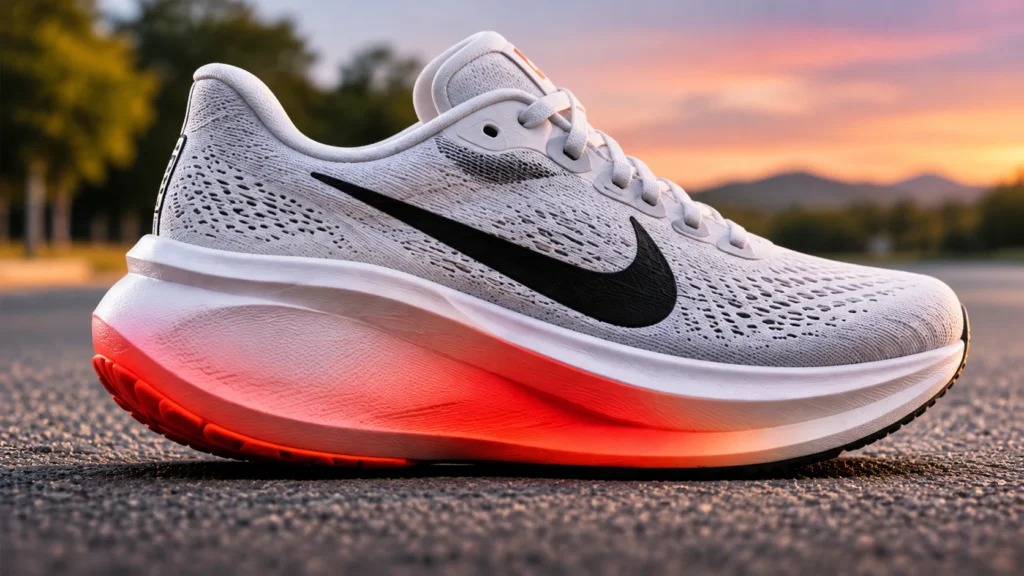
A specialized road running shoe for runners who prioritize deep cushioning and relaxed mileage.
Best for: Recovery runs, easy miles, and relaxed long runs.
Not ideal for: Speed-focused runners or buyers seeking a lightweight trainer.
Reference retail price: $230
Subjective editorial scores based on research, not controlled test measurements.
Primarily, the Nike Vomero Premium delivers maximum cushioning for comfortable road running. Its design targets easy sessions rather than fast race efforts.
The shoe features a 55 mm heel and 45 mm forefoot stack. Full-length ZoomX foam surrounds two separate Air Zoom cushioning units. This design creates a deep and lively cushioning system.
Nike lists the men’s US size 10 at approximately 351 grams. That weight reflects the amount of material beneath your foot. The 10 mm heel drop also gives the shoe a distinct heel-to-forefoot shape.
At $230, the Vomero Premium sits in a high price range. Its strongest appeal comes from relaxed miles and recovery sessions. A runner seeking one shoe for every workout faces a different decision.
Unlike a lightweight tempo shoe, this model puts cushioning ahead of quick turnover. That choice can make sense after a demanding training session. However, the tall sole requires a secure fit and suitable running surface.
For manufacturer details, consult the official Nike Vomero Premium specifications.
- Deep cushioning from a 55 mm heel stack.
- Full-length ZoomX foam delivers a lively ride.
- Two Air Zoom units provide distinct cushioning.
- Well suited to relaxed recovery sessions.
- Engineered mesh supports airflow around the foot.
- High $230 reference retail price.
- Men’s US size 10 weighs around 351 grams.
- Less practical for sharp turns and fast intervals.
- Extreme stack height does not suit every runner.
Amazon Product Search
Nike Vomero Premium Road Running Shoes
Maximum cushioning, full-length ZoomX foam, dual Air Zoom technology, and a 10 mm heel drop.
$230
Reference Nike retail price. Live Amazon pricing and exact listing availability could not be verified.
What Is the HOKA Mach 6 Designed to Do?
A lightweight neutral road trainer that balances daily comfort, speed, and value.
Best for: Daily training, tempo runs, and varied running workouts.
Not ideal for: Runners who require maximum softness or dedicated stability support.
Reference retail price: $140
Subjective editorial scores based on research, not controlled test measurements.
Primarily, the HOKA Mach 6 delivers lightweight performance for everyday road training. It works across a wider range of paces than the Vomero Premium.
HOKA uses supercritical ethylene-vinyl acetate, or EVA, foam in the midsole. This material provides cushioning without requiring a tall and heavy platform.
The men’s reference stack measures 37 mm at the heel. The forefoot measures 32 mm, creating a 5 mm drop. These dimensions give the Mach 6 a lower profile than the Nike.
Independent reviewers report a weight near 232 grams in men’s US size 10. The lighter construction supports quick foot movement during faster training sessions.
At a $140 reference retail price, the Mach 6 offers strong versatility. Its ride suits runners who mix easy mileage with tempo workouts. However, runners who prefer deep softness should assess its cushioning before buying.
Our separate HOKA Mach 6 review explores its fit, toe-box shape, and everyday training performance in greater detail.
- Lightweight construction near 232 grams in the cited test size.
- Responsive supercritical EVA midsole.
- Suitable for daily miles and tempo workouts.
- $90 cheaper than the Vomero Premium at retail.
- Strategic rubber outsole coverage adds wear protection.
- Less cushioning depth than the Vomero Premium.
- Standard-width fit can feel snug for wider feet.
- The 5 mm drop can require an adjustment period.
- No dedicated stability control system.
Amazon Product Search
HOKA Mach 6 Road Running Shoes
Lightweight daily trainer with supercritical EVA foam, a breathable upper, and a 5 mm heel drop.
$140
Reference retail price. Live Amazon pricing and exact listing availability could not be verified.
Nike Vomero Premium vs HOKA Mach 6: How Do the Specs Compare?
In short, the Vomero Premium wins on cushioning depth. The Mach 6 wins on weight, price, and overall training versatility.
The Nike has an 18 mm taller nominal heel stack. Its forefoot stack also exceeds the HOKA by 13 mm. These differences help explain each shoe’s intended training role.
| Feature | Nike Vomero Premium | HOKA Mach 6 | Winner |
|---|---|---|---|
| Reference retail price | $230 | $140 | Mach 6 |
| Men’s reference weight | 351 g / 12.4 oz | 232 g / 8.2 oz | Mach 6 |
| Heel stack | 55 mm | 37 mm | Preference |
| Forefoot stack | 45 mm | 32 mm | Preference |
| Heel-to-toe drop | 10 mm | 5 mm | Preference |
| Midsole foam | ZoomX | Supercritical EVA | Use dependent |
| Air cushioning units | Two Air Zoom units | None | Nike |
| Carbon fiber plate | No | No | Tie |
| Upper material | Engineered mesh | Creel jacquard mesh | Preference |
| Outsole | Rubber coverage | Strategic rubber coverage | Use dependent |
| Support type | Neutral | Neutral | Tie |
| Cushioning depth | Maximum | Balanced | Nike |
| Ground feel | Reduced | More direct | Mach 6 |
| Recovery runs | Primary strength | Suitable | Nike |
| Tempo runs | Limited suitability | Strong suitability | Mach 6 |
| Training versatility | Specialized | Broad | Mach 6 |
| Overall recommendation | Maximum-cushion specialist | Versatile daily trainer | 🏆 Mach 6 |
Specifications combine manufacturer information and published independent measurements. The Nike weight is a manufacturer figure. The HOKA weight is an independent measurement. Both reference men’s US size 10, but measurement methods differ.
A taller stack alone cannot tell you how comfortable a shoe feels. Foam properties, platform width, and your running motion also shape the experience.
Which Shoe Offers Better Cushioning and Long-Run Comfort?
The Nike Vomero Premium wins for maximum cushioning and relaxed long runs. Its deeper foam platform offers more material between your foot and the road.
With a 55 mm heel stack, the Nike emphasizes underfoot cushioning. Two Air Zoom units add another element to its ride.
The Mach 6 uses a more compact cushioning system. Its 37 mm heel stack still provides substantial material for daily running.
Consider a relaxed 15-kilometer run after a demanding training week. The Vomero Premium makes sense when comfort matters more than pace.
However, a runner covering the same distance at a steady, faster pace faces different needs. The lighter Mach 6 supports that broader range of efforts.
Maximum cushioning does not guarantee less fatigue or fewer running injuries. Individual comfort and running mechanics remain important factors.
How Does ZoomX Compare With Supercritical EVA?
ZoomX wins for runners seeking the distinctive deep cushioning of the Vomero Premium. Supercritical EVA wins when lower weight and versatility matter more.
ZoomX foam forms part of Nike’s premium cushioning system. The Vomero Premium combines that foam with two Air Zoom units.
The Mach 6 relies on supercritical EVA without separate air chambers. Its simpler midsole construction helps maintain a lighter overall package.
Both foam systems aim to cushion landings and support forward movement. However, material choice alone does not determine running economy.
For example, a soft foam can feel pleasant at an easy pace. That same sensation may feel less controlled during quick direction changes.
The better foam system is the one that matches your training needs. Deep cushioning serves one purpose, while lighter responsiveness serves another.
Which Shoe Is Better for Recovery Runs?
The Nike Vomero Premium is the stronger choice for dedicated recovery runs. Its tall midsole and dual Air Zoom units emphasize cushioned landings.
Recovery running usually involves a relaxed effort after harder training. The goal is not to achieve your fastest pace.
Imagine completing a demanding interval session on Tuesday. A comfortable Wednesday run can serve a different training purpose.
The Vomero Premium fits this slower role well. Its extra weight matters less when speed is not your priority.
The Mach 6 remains suitable for easy runs, especially within a limited budget. It offers enough cushioning for runners who prefer a lighter feel.
Choose the Nike for specialized cushioning rather than guaranteed recovery benefits. Running intensity, rest, and overall training load still determine recovery needs.
Use your usual easy-run pace when trying a recovery shoe. A shoe that feels comfortable while standing may feel different after several kilometers of running.
Which Shoe Is Better for Speed and Daily Training?
The HOKA Mach 6 wins for speed and everyday training versatility. Its lighter design suits runners who change pace throughout their training week.
A normal training schedule can include easy runs, steady miles, and intervals. One versatile shoe reduces the need for several specialized pairs.
The Mach 6 uses a responsive midsole and a relatively low weight. These features support a quicker-feeling stride during faster sessions.
In contrast, the Vomero Premium carries more cushioning material beneath the foot. Its design targets comfort rather than minimal weight.
Consider a 40-minute workout that includes several faster intervals. The Mach 6 is better aligned with the demands of that session.
The Nike can handle daily road running at relaxed paces. However, its premium cushioning does not automatically create better speed performance.
How Does Shoe Weight Affect Running Performance?
The Mach 6 wins on weight with its substantially lighter construction. Lower shoe mass can help runners maintain a quick and comfortable stride.
Nike lists the Vomero Premium at approximately 351 grams. An independent Mach 6 review reports about 232 grams.
Those reference figures differ by 119 grams per shoe. The measurement methods differ, so the gap remains an approximate comparison.
Weight becomes more noticeable when runners repeat thousands of steps. Faster workouts also demand frequent changes in stride rate and effort.
However, a light shoe does not guarantee a faster finish time. Fit, fitness, foam behavior, and running technique all influence performance.
The useful conclusion is simple. Choose the Mach 6 when low shoe weight ranks high on your buying list.
Which Shoe Handles Tempo Runs Better?
The HOKA Mach 6 handles tempo runs better than the Vomero Premium. Its lighter platform offers a more suitable design for sustained faster efforts.
A tempo run involves a challenging but controlled pace. Runners often use these workouts to build endurance at higher intensities.
For example, a session can include 20 minutes at a steady tempo pace. The Mach 6 fits that workout without requiring a dedicated racing shoe.
The Vomero Premium emphasizes deep cushioning through its thick midsole. That construction can feel less agile when runners increase their pace.
Runners seeking a dedicated fast shoe can also consider plated trainers. Those models serve a different role from both shoes in this comparison.
For regular tempo training without a carbon plate, the Mach 6 offers a practical choice.
Which Running Shoe Offers Better Value for Money?
The HOKA Mach 6 provides better value for most runners at its $140 retail price. It costs $90 less than the $230 Vomero Premium.
Value depends on how often you use a shoe for its strengths. A specialized feature offers little benefit when it does not match your training.
The Mach 6 covers several common workout types within one pair. That versatility makes it attractive for runners with smaller shoe budgets.
The Nike delivers a more specialized cushioning experience. Runners who already own a fast trainer can find greater value in that design.
For someone running three times each week, one versatile pair can meet most training needs. The Mach 6 makes more sense in that situation.
Price alone does not determine quality. But paying more should solve a clear problem rather than simply add features.
Does Premium Cushioning Justify the Higher Price?
The Vomero Premium justifies its higher price only for runners who value its specific cushioning design. Most casual runners do not need the extra expense.
Nike combines ZoomX foam with forefoot and heel Air Zoom units. That construction distinguishes the Vomero Premium from simpler daily trainers.
The $230 reference price places this model well above the Mach 6. Buyers should consider whether they will use its recovery-focused strengths often.
A runner completing several long and easy sessions each week has a clear reason to consider it. Someone mainly running short tempo sessions has less reason.
Lower-cost models within the Vomero family can also provide cushioned training options. The Vomero 18 and Vomero Plus are worth comparing before buying.
Which Shoe Offers Greater Training Versatility?
The Mach 6 wins on training versatility because it covers more running paces. Its lightweight design supports easy runs and faster sessions.
Consider a weekly schedule with two easy runs and one tempo workout. The Mach 6 can serve all three sessions.
The Vomero Premium fits the easy runs but offers less speed-focused versatility. Some runners would prefer another pair for their faster workout.
Shoe rotation can be useful when your workouts have distinct demands. However, purchasing several pairs increases your initial footwear cost.
If you want to start with one shoe, prioritize its range of uses. The Mach 6 offers a stronger balance for that purpose.
How Do Fit, Stability, and Shoe Construction Compare?
The Mach 6 offers a more conventional platform for varied road training. The Vomero Premium stands out for its specialized high-stack cushioning design.
Both shoes provide neutral support rather than dedicated motion control. Neither should replace a stability shoe when you need specific support features.
Fit also affects how well each shoe handles corners and uneven pavement. A secure heel and suitable forefoot space matter more than brand preference.
The Nike places the foot farther above the road surface. Its platform geometry must work with your natural running motion.
The HOKA has a lower nominal stack and a smaller heel drop. These differences change the way each shoe interacts with your stride.
Try both shoes when possible, especially if you have unusual fit needs. The most impressive specification cannot fix an uncomfortable upper.
Which Shoe Fits Wide Feet Better?
The HOKA Mach 6 offers a useful option for wide feet through selected wide versions. However, its standard-width model can feel snug around the forefoot.
Wide feet need enough room for natural toe movement. A shoe that squeezes the forefoot can cause discomfort during longer runs.
Foot shape matters as much as the width printed on the box. A broad forefoot and narrow heel can require a different fit combination.
The Vomero Premium also needs careful fitting because of its tall platform. A secure upper helps keep the foot centered over the sole.
Try shoes later in the day when your feet have experienced normal activity. Wear the same socks you plan to use during training.
Check width availability for your specific size and color before placing an order.
Does the Vomero Premium’s High Stack Affect Stability?
Yes, the Vomero Premium’s tall stack can change how stable the shoe feels. Stability depends on platform width, foam behavior, fit, and running motion.
The 55 mm heel stack places substantial cushioning beneath the runner. That height changes ground feedback compared with a lower shoe.
However, stack height does not determine stability on its own. A broad base and suitable geometry can help support a tall platform.
Sharp turns offer a useful example of this difference. Some runners prefer a lower and more direct ride when changing direction.
The Mach 6 provides that lower platform relative to the Nike. Neither shoe offers dedicated stability control for every runner.
If you often experience ankle instability, assess the fit with a qualified professional when needed.
How Do Outsole Grip and Durability Compare?
Neither shoe has a proven overall durability advantage without comparable long-term testing. Both use rubber coverage to protect parts of the outsole.
The Mach 6 features strategic rubber placement beneath its lightweight midsole. This construction helps balance road grip, wear protection, and shoe weight.
The Vomero Premium also uses rubber beneath its tall cushioning platform. Its greater sole thickness does not guarantee longer outsole life.
Running surface and foot strike influence where wear appears first. A heel striker can wear different outsole areas than a forefoot striker.
Wet leaves and painted road markings can reduce grip in both shoes. Neither model should be treated as dedicated ice or winter trail footwear.
Inspect the tread regularly rather than relying on a fixed replacement distance.
Are There Any Safety or Racing Limitations?
The Vomero Premium has a significant competition limitation because of its extreme stack height. Its nominal 55 mm heel exceeds common regulated road-racing limits.
Many sanctioned road events apply a 40 mm shoe-thickness limit. Exact rules depend on the event and its governing body.
The Mach 6 has a lower nominal stack, but compliance requires more than marketing specifications. Always check the exact model and current event rules.
For ordinary training, comfort and control matter more than race approval. Neither shoe guarantees protection against injury.
Runners changing from a high-drop shoe to a low-drop model should adapt gradually. A sudden switch can change demands on the lower leg.
Persistent pain warrants professional assessment rather than another footwear purchase alone.
Avoid sudden changes in mileage, shoe geometry, and training intensity at the same time. Introduce unfamiliar shoes through shorter runs and stop if they cause persistent pain or instability.
Which Shoe Wins in Real-World Running Situations?
The Mach 6 wins across more everyday training situations. The Vomero Premium takes the lead when maximum cushioning is the main priority.
The following examples connect each shoe’s design with common workouts. They illustrate likely use-case suitability rather than unpublished firsthand test results.
| Running Situation | Recommended Shoe | Reason |
|---|---|---|
| Easy 5K training | Mach 6 | Lower weight and broad versatility. |
| Relaxed 15 km run | Vomero Premium | Deep cushioning for easy mileage. |
| Recovery after hard training | Vomero Premium | Comfort-focused construction. |
| 20-minute tempo session | Mach 6 | Lighter, faster-feeling design. |
| Cold-weather road running | Conditional | Surface grip, temperature, and fit determine suitability. |
| High-mileage training rotation | Both | Nike for easy days; HOKA for faster sessions. |
Which Shoe Is Better for Beginner Runners?
The Mach 6 is the stronger starting choice for beginners seeking versatility and value. Its lower price reduces the initial cost of road running.
New runners often spend their first weeks building a consistent routine. They do not need specialized shoes for every training session.
A beginner completing three short weekly runs can use one comfortable trainer. The Mach 6 fits this general training role.
However, its 5 mm drop and standard-width fit deserve attention. Beginners should choose comfort over a review score or brand reputation.
The Vomero Premium remains an option for runners who prefer deep cushioning. Its high price and extreme geometry make it less universal.
Start with a shoe that feels secure during walking and easy jogging.
Can Both Shoes Work in a Running Shoe Rotation?
Yes, the Vomero Premium and Mach 6 can complement each other in a running rotation. Their different strengths suit distinct workout types.
Use the Nike when you want maximum cushioning during slow sessions. Choose the HOKA when your training calls for a quicker pace.
A four-day schedule offers a useful example of this approach. The Nike can cover two easy days, while HOKA handles faster sessions.
Buying both at their reference retail prices costs $370. That investment makes more sense for runners with a consistent training routine.
A second pair should add a useful feature to your existing footwear. Avoid buying another shoe simply because it has a higher price.
Which Shoe Is Better for Cold-Weather Running?
Neither shoe is a dedicated winter running model. The best choice depends on road conditions, temperature, traction, and personal comfort.
Cold temperatures can change the feel of running shoe foam. Different foam compounds do not necessarily respond in the same way.
The Mach 6 offers a lighter platform for clear winter roads. The Vomero Premium remains suitable for relaxed runs when the surface provides reliable grip.
Snow, ice, and wet leaves introduce additional challenges. Thick cushioning alone cannot solve these traction problems.
Choose dedicated winter footwear when your route includes frequent icy surfaces. Check local conditions before heading out in either road shoe.
Is the Nike Vomero Premium Worth the Extra Money?
The Vomero Premium is worth the extra $90 for runners seeking specialized maximum cushioning. The Mach 6 remains the stronger value for general training.
Nike’s $230 reference retail price exceeds HOKA’s $140 price by about 64%. That premium buys a different cushioning design rather than universal performance gains.
Consider a hypothetical ownership period of 400 miles for each pair. This example illustrates the effect of purchase price on cost.
| Cost Factor | Vomero Premium | Mach 6 |
|---|---|---|
| Reference retail price | $230 | $140 |
| Illustrative mileage | 400 miles | 400 miles |
| Illustrative cost per mile | $0.58 | $0.35 |
The 400-mile figure is an illustrative calculation, not a verified lifespan or durability guarantee for either shoe.
Actual ownership costs depend on purchase discounts and usable shoe life. A runner who wears one pair more often can receive greater practical value.
Check the total cost before buying a specialized shoe. Your preferred ride and weekly workout pattern should justify the difference.
Who Should Buy the Nike Vomero Premium or HOKA Mach 6?
Buy the Vomero Premium for dedicated maximum-cushion training. Choose the Mach 6 when you need one lightweight shoe for several running activities.
Your weekly workout pattern offers a better guide than brand popularity. Start by identifying the runs you complete most often.
Nike Vomero Premium
✅ Buy it if:
- You prioritize deep cushioning during easy runs.
- Your training includes frequent recovery sessions.
- You already own a lightweight speed trainer.
- You enjoy a tall cushioning platform.
- The $230 retail price fits your budget.
❌ Skip it if:
- You prefer lightweight running shoes.
- You mainly complete fast workouts.
- You want a shoe with direct ground feedback.
- You need footwear for regulated races with lower stack limits.
HOKA Mach 6
✅ Buy it if:
- You need one versatile daily running shoe.
- You enjoy tempo runs and faster workouts.
- You want to reduce shoe weight.
- You prefer balanced cushioning.
- You want to save $90 at reference retail prices.
❌ Skip it if:
- You want the deepest cushioning available.
- The standard-width toe box feels restrictive.
- You dislike a 5 mm heel drop.
- You require dedicated stability features.
Avoid both models if you require dedicated trail traction, specific stability features, or a fit neither shoe provides.
- Consider the HOKA Arahi or Gaviota series for stability-oriented designs.
- Consider the HOKA Speedgoat series for technical trail running.
- Consider the Nike Vomero 18 for a less expensive cushioning-focused option.
- Consider the HOKA Bondi series for another maximum-cushion road platform.
What Are Real Buyers and Independent Reviewers Saying About Both Shoes?
Published independent reviews favor the Vomero Premium for its distinctive cushioning. Mach 6 reviews generally highlight its lighter and more versatile ride.
These findings reflect different design goals rather than a single performance ranking. Runners who value comfort and speed can reach different conclusions.
Nike Vomero Premium Feedback
Common positive review themes
- Deep and lively cushioning.
- Comfort-focused performance during relaxed miles.
- A distinctive ride from the foam and air units.
Common limitations
- Substantial shoe weight.
- High purchase price.
- Less appeal for speed-focused training.
HOKA Mach 6 Feedback
Common positive review themes
- Lightweight and responsive running experience.
- Useful performance across different paces.
- Competitive price for a versatile trainer.
Common limitations
- Snug fit for some foot shapes.
- Less appeal for maximum-softness seekers.
- Lower drop requires adjustment for some runners.
Independent testing also helps explain the differences between these models. Published shoe weights support the clear contrast in their construction.
Customer ratings can provide another perspective, but fit preferences remain personal. Read reviews from runners with similar feet and training goals.
Amazon customer reviews could not be independently retrieved for this comparison. Therefore, the feedback above summarizes published independent review themes rather than verified Amazon buyer statements.
No customer quotations, Amazon star ratings, or purchase experiences have been invented.
How Should You Care for Nike and HOKA Running Shoes?
Clean both shoes by hand, allow natural drying, and store them away from heat. Proper care helps protect their foam, mesh, and rubber components.
The Vomero Premium uses a complex cushioning system with two air units. Its tall foam platform deserves careful handling during cleaning and storage.
The Mach 6 uses a lighter supercritical EVA midsole. Harsh cleaning and excessive heat can damage shoe materials over time.
Regular care also helps you spot early signs of wear. Check the outsole, upper, and heel lining after muddy or wet runs.
How Should You Clean Running Shoes?
Hand washing with a soft brush and mild soap is a sensible cleaning method. Avoid harsh chemicals and aggressive machine-washing cycles.
- Remove loose dirt with a dry, soft-bristled brush.
- Remove the laces and removable insoles when appropriate.
- Mix a small amount of mild soap with lukewarm water.
- Gently clean the mesh upper using a soft cloth.
- Brush dirt from the rubber outsole and tread.
- Remove remaining soap with a clean, damp cloth.
- Allow the shoes to air-dry completely before wearing them.
Do not soak running shoes for long periods. Excess water can make drying harder and affect certain shoe components.
Always follow the manufacturer’s specific cleaning instructions for your shoe materials.
How Can You Protect Midsole Cushioning?
Protect running shoe cushioning by avoiding excessive heat and unnecessary material damage. Store both models in a dry, ventilated location.
Leaving running shoes inside a hot car can expose materials to extreme temperatures. A heated dryer also creates an avoidable risk.
Allow damp shoes to dry naturally between runs. Remove the insoles if the manufacturer permits it to improve airflow.
Do not puncture, cut, or modify the Vomero Premium’s Air Zoom cushioning units. Damage to these components can alter the shoe’s intended ride.
The Mach 6 also benefits from normal storage without heavy pressure on its upper. Keep both models away from sharp objects and direct heat sources.
When Should You Replace Your Running Shoes?
Replace running shoes when their cushioning, grip, or structural condition no longer meets your needs. Mileage offers a useful guide, but not a fixed deadline.
Running shoes often receive replacement estimates around 300 to 500 miles. Actual lifespan varies with runner weight, surfaces, construction, and training habits.
Inspect your shoes for these warning signs:
- Rubber worn through in major contact areas.
- Foam that feels noticeably different from its earlier condition.
- Persistent discomfort during previously comfortable runs.
- Damaged upper material or poor heel lockdown.
- Uneven deformation that changes how the shoe feels.
A shoe can look clean while its running feel changes. Your regular experience with the shoe provides useful information about its condition.
Persistent discomfort should not automatically be blamed on shoe wear. Other training or health factors can also contribute.
What Are the Most Common Mistakes When Choosing Between These Shoes?
The biggest mistake is assuming that a more expensive shoe always performs better. The Vomero Premium and Mach 6 solve different training problems.
Some runners choose maximum cushioning because they expect automatic injury prevention. Cushioning alone cannot guarantee protection from running injuries.
Other buyers focus entirely on shoe weight and overlook fit. A lighter shoe offers little value when it causes discomfort.
Consider these common buying mistakes before placing an order:
- Ignoring shoe width: Check whether your toes have enough room.
- Buying based on stack height alone: Assess the entire running experience.
- Changing heel drop suddenly: Allow time for gradual adjustment.
- Ignoring workout needs: Match the shoe with your regular running pace.
- Confusing retail price with quality: Evaluate useful features rather than cost alone.
- Assuming race approval: Verify footwear rules before entering regulated events.
The best buying decision starts with a clear understanding of your needs. Premium features should support those needs rather than distract from them.
How Was This Nike Vomero Premium vs HOKA Mach 6 Comparison Researched?
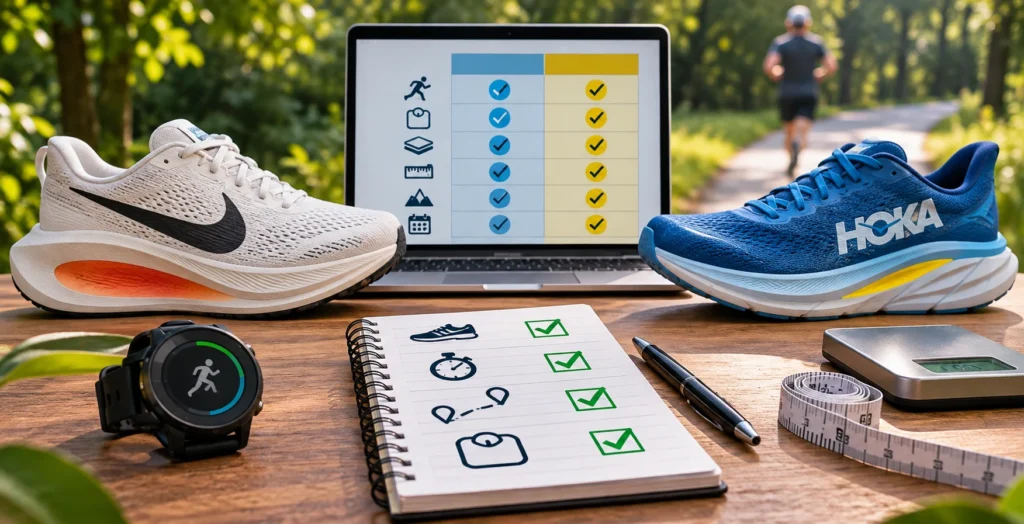
This comparison uses manufacturer specifications, published independent reviews, and available retail information. It does not claim firsthand wear testing of either shoe.
The research focuses on differences that can change a runner’s buying decision. These include cushioning depth, weight, heel drop, construction, fit, and retail price.
Nike provides the Vomero Premium’s official specifications and reference price. Independent reviews help explain its ride characteristics and practical limitations.
The HOKA Mach 6 information includes retail specifications and published independent measurements. Measurement methods can differ between sources, so minor variations are possible.
Useful independent research includes the Believe in the Run Vomero Premium review and its HOKA Mach 6 review.
Editorial ratings summarize the relative suitability of each shoe for the intended buyer. They do not represent laboratory scores or aggregated customer ratings.
Reference retail prices provide a consistent basis for comparing purchase costs. Live Amazon prices and exact product listings remain unverified.
The recommendation separates confirmed specifications from editorial interpretation. Individual fit, comfort, and running results can differ from published findings.
Final Verdict: Should You Buy the Nike Vomero Premium or HOKA Mach 6?
The HOKA Mach 6 is the overall winner for most runners. Its $140 reference price and lightweight construction offer a stronger balance of versatility and value.
The Nike Vomero Premium remains an attractive specialist for maximum-cushion road running. Its 55 mm heel stack and dual Air Zoom units create a distinct alternative.
Choose the Nike when comfort during slow and relaxed sessions matters most. It works best as a deliberate addition to an established running routine.
Choose the Mach 6 when you want one shoe for several workouts. Its lower weight makes it better aligned with faster training sessions.
The most useful distinction is not which shoe has more advanced cushioning. It is which shoe supports the running you do most often.
If you already own a fast trainer, the Nike can add variety. If you are buying your only running shoe, start by considering the Mach 6.
Best for Maximum Cushioning
Nike Vomero Premium
$230
Reference retail price
Choose this model for relaxed running, deep cushioning, and dedicated recovery sessions.
🏆 Overall Winner
HOKA Mach 6
$140
Reference retail price
Choose this model for everyday training, tempo runs, lightweight performance, and better value.
Frequently Asked Questions
These answers cover the main buying questions about cushioning, speed, price, and everyday use.
1. Which Is Better, Nike Vomero Premium or HOKA Mach 6?
The HOKA Mach 6 is better for most runners seeking everyday versatility. It offers a lighter design and a lower $140 reference retail price. The Nike Vomero Premium is better for runners who prioritize deep cushioning. Choose the Nike for relaxed recovery runs and the HOKA for varied training.
2. What Is the Difference Between Nike Vomero Premium and HOKA Mach 6?
The main difference is cushioning design and shoe weight. The Vomero Premium uses ZoomX foam, dual Air Zoom units, and a 55 mm heel stack. The Mach 6 uses supercritical EVA foam and a 37 mm heel stack. These differences make the Nike more specialized and the HOKA more versatile.
3. Is the Nike Vomero Premium Worth $230?
The Nike Vomero Premium is worth $230 for runners who specifically want its maximum-cushion design. Its tall midsole and dual Air Zoom units suit relaxed road mileage. However, runners seeking an affordable daily trainer can choose the $140 Mach 6. The extra cost does not guarantee better overall performance.
4. Is the Nike Vomero Premium Good for Long Runs?
Yes, the Nike Vomero Premium suits relaxed long runs when runners enjoy deep cushioning. Its 55 mm heel stack provides substantial material beneath the foot. However, its weight can reduce its appeal during faster efforts. Runners who prefer lighter long-distance shoes should also consider the HOKA Mach 6.
5. Does the Nike Vomero Premium Have a Carbon Plate?
No, the Nike Vomero Premium does not use a carbon fiber plate. Its cushioning system combines full-length ZoomX foam with two Air Zoom units. The HOKA Mach 6 also uses a non-plated design. Both shoes emphasize training performance, although their cushioning depth, weight, and intended running paces differ considerably.
Affiliate Disclosure:
As an Amazon Associate, I earn from qualifying purchases. This article contains affiliate links. If you purchase through these links, I may earn a small commission at no extra cost to you.


