

Quick Answer
The Brooks Glycerin 23 is the safer all-round choice for longer road runs. It offers more cushioning and smoother transitions. The Brooks Glycerin Flex weighs less and bends more through the midfoot. It suits easy miles, walking, and gym sessions. One checked Flex colorway costs $129.95 at Brooks, versus $175 for the Glycerin 23.
The real choice: freedom to bend or more cushioning for distance?
- Glycerin 23: more cushion for long, steady road miles.
- Glycerin Flex: 9.1 oz listed men’s weight and a 6 mm drop.
- Sale pricing can make the Flex a better value for short daily runs.
Quick Verdict: Glycerin Flex vs Glycerin 23
BROOKS GLYCERIN FLEX
$129.95 checked Brooks sale price; $170 list
Best for: Short easy runs, walks, and workouts that reward sole flexibility.
BROOKS GLYCERIN 23
$175.00 checked Brooks direct price
Best for: Runners who want deeper cushioning for longer road sessions.
| Category | Flex | 23 |
|---|---|---|
| Overall for road mileage | — | 🏆 |
| Value at checked prices | ✅ | ❌ |
| Sole flexibility | ✅ | ❌ |
| Long-run cushion | ❌ | ✅ |
| Lower listed weight | ✅ | ❌ |
Bottom line: Choose the Glycerin 23 for distance comfort; choose the Glycerin Flex when a more flexible feel and its current discount matter most.
- Glycerin 23 offers the more protective ride for longer road runs.
- At checked Brooks prices, Flex costs $45.05 less; list prices differ by $5.
- Glycerin 23 favors steady training; neither is a fast race shoe.
- Flex gives newer runners a lighter, less rigid feel for easy sessions.
- Flex’s snug toe shape can matter more than its roomy-looking midsole.
I’m Steven Tyler, and I write shoe buying guides for FootwearHiker. This Brooks Glycerin Flex review starts with one hard question: does extra flex help more than extra foam?
I checked Brooks specifications, independent lab data, and buyer feedback. I did not run a controlled wear test for this article. That distinction matters because shoe comfort changes from runner to runner.
The Glycerin Flex and Glycerin 23 share Brooks DNA TUNED cushioning. Yet their shape, weight, and ride goals are not the same. The right pick depends on your foot and your weekly mileage.
What Is the Brooks Glycerin Flex Designed to Do?
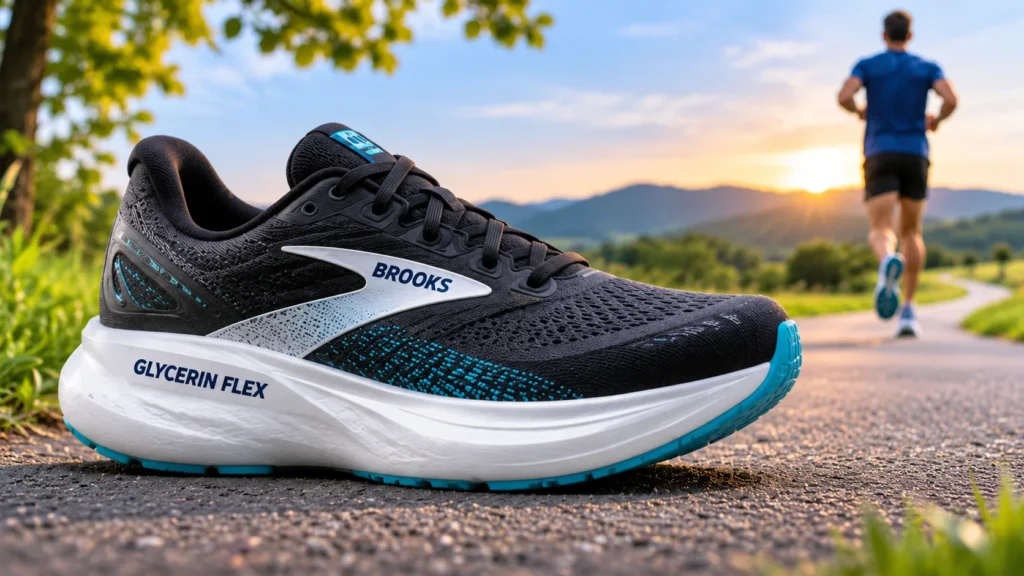
Quick verdict: The Glycerin Flex is a neutral road trainer that allows more bending through the middle and front of the sole. Its key strength is controlled movement, not high-speed rebound. Brooks lists a 6 mm drop and 9.1 oz men’s weight.
Brooks uses FlexZone, a deep midfoot groove, to let the shoe bend as you step. Separate forefoot sections also move with your stride. This gives your foot more freedom than the normal Glycerin shape.
The shoe uses DNA TUNED nitrogen-infused foam. Larger cells sit near the heel, while smaller cells sit toward the front. Brooks describes the knit upper and flexible build on its official Glycerin Flex page.
The upper feels less stiff than a classic structured trainer. That can be nice for walking, warm-up runs, and gym sessions. It also means the Flex will not feel like a stiff rocker shoe.
One key point gets missed in ads. Flexibility and softness are different traits. The sole can bend more while the foam still feels firm to some runners.
Flex: Pros
- Lighter listed men’s weight
- Midfoot and forefoot bend
- Breathable flat-knit upper
- Good feel for easy daily movement
- Large checked discount
Flex: Cons
- Narrow toe area for some feet
- Limited forefoot shock protection
- Weak measured energy return
- Less appealing for long fast runs
Brooks Glycerin Flex on Amazon
Check the selected size and color. Amazon pricing was not independently confirmed; the checked Brooks price is $129.95 for one colorway.
What Is the Brooks Glycerin 23 Designed to Do?
Quick verdict: The Glycerin 23 is the regular premium cushioned trainer. It is built for comfortable daily road miles and longer steady runs. Brooks lists an 8 mm drop, 10.6 oz men’s weight, and a $175 direct price.
The Glycerin 23 has more foam underfoot and a more guided transition. Brooks also added 2 mm of cushioning over its prior Glycerin model. The larger platform helps soften repeat impacts across a long run.
The shoe shares DNA TUNED foam with the Flex. That does not make their rides identical. Cutouts, stack height, and the shape of the forefoot also change the feel.
For runners who feel beat up after longer road sessions, the 23 has the stronger case. The added cushion comes with a weight cost, though. That cost becomes clear during short, quick workouts.
If you already own an older Glycerin, compare its fit before buying again. Our Brooks Glycerin 22 review covers the prior standard trainer and its key trade-offs.
Glycerin 23: Pros
- More cushion for road miles
- Smoother guided heel-to-toe ride
- Good choice for long easy runs
- More familiar trainer shape
- More width options by retailer
Glycerin 23: Cons
- Heavier listed men’s weight
- Less free sole bend
- Higher checked store price
- Not built as a race-day shoe
Brooks Glycerin 23 on Amazon
The checked Brooks direct price is $175. Confirm Amazon price, fit, width, and return terms before purchase.
How Do the Glycerin Flex and Glycerin 23 Specs Compare?
The big gaps are listed weight, drop, and sole design. The Glycerin Flex weighs 9.1 oz in Brooks product details. The Glycerin 23 weighs 10.6 oz. That is a 1.5 oz gap using manufacturer figures.
Brand numbers and lab numbers can differ. Different shoe sizes and measurement methods change results. Our running shoe specifications guide explains why measurements need context.
| Feature | Glycerin Flex | Glycerin 23 | Edge |
|---|---|---|---|
| Shoe type | Flexible neutral road trainer | Premium neutral road trainer | Depends on use |
| Brooks direct price checked | $129.95 sale; $170 list | $175 | Flex at checked prices |
| Men’s brand weight | 9.1 oz / 258 g | 10.6 oz / 300.5 g | Flex |
| Listed heel-to-toe drop | 6 mm | 8 mm | Preference |
| Midsole foam | DNA TUNED | DNA TUNED | Tie |
| Sole construction | FlexZone groove and forefoot pods | More conventional cushioned sole | Flex for bending |
| Upper | Flexible flat knit | Comfort-focused engineered upper | Preference |
| Long-run cushioning | Less protective at forefoot | More protective for long runs | Glycerin 23 |
| Ride feel | More foot movement, less rocker | More guided and smoother | Glycerin 23 for distance |
| Fast race suitability | Not the main goal | Not the main goal | Neither |
| Plate | None | None | Tie |
| Toe fit watchout | Snug toe shape in lab tests | Try standard and width options | Glycerin 23 for options |
| Best routine | Walks, short easy runs, gym | Daily runs, long road runs | Depends on goal |
The table uses Brooks specifications and published comparative testing. The prices are checked retailer figures, not verified live Amazon offers. Sale prices, colors, and size stock can change without notice.
Which Shoe Has Better Cushioning for Daily Runs?
The Glycerin 23 has the edge for long, repeat road impacts. Its taller midsole and more cushioned forefoot help when fatigue builds. The Flex offers enough heel protection for many easy short runs, but less at the front.
RTINGS measured a 39.9 mm heel stack on the Glycerin 23 and 36.6 mm on the Flex. Both use DNA TUNED foam. The amount and shape of foam still change the way each shoe works.
The Flex also bends more through the midfoot. Some runners like that because the foot does more work. Others prefer a guided roll as their legs tire. Neither feeling is right for everyone.
You should not confuse a softer landing with a safer shoe. Comfort depends on how you run, your injury history, and the fit. Our soft running shoe comparison explains the trade-off.
Which Feels More Natural: Glycerin Flex or Glycerin 23?
The Glycerin Flex wins when you want the sole to bend with your foot. Its deep cutouts are meant to let the arch and forefoot move through a normal stride. The Glycerin 23 keeps more of a guided feel.
Lab results give this claim useful context. RunRepeat measured 12.2 newtons of bending force for the Flex. Its test found the Flex about 19% more flexible than the regular Glycerin. That is clear, but not a total change in feel.
You can read the RunRepeat Glycerin Flex lab review for its test setup and fit measures. Its 69.1 mm toe-width result also explains why a wide-looking sole may still feel tight.
There is a trade-off. A sole that bends easily can ask your foot and calf muscles to do more. Build up time in the Flex when coming from a stiff rocker trainer.
Fit warning: More flex does not mean more toe room. Try the Flex indoors before a long run, especially if you use a wide size.
Is the Brooks Glycerin Flex Worth Its Price?
At the checked sale price, the Flex offers stronger value for its target buyer. Brooks shows one checked colorway at $129.95, down from its $170 list price. The Glycerin 23 shows $175 at Brooks.
That makes the current checked price gap $45.05. At full list prices, the gap is just $5. This is a major change in the buying choice. A small list gap favors the 23 for distance mileage.
A $45 saving can favor the Flex for easy runs and walks. But it is not a bargain if the toe shape causes pain. Fit and use matter more than a sale badge.
Prices can change by day, size, and color. Amazon may show different deals from Brooks. Check the exact size before comparing costs. Do not assume the first price shown applies to every option.
Which Shoe Has Better Fit, Grip, and Durability?
Neither shoe wins every fit test. The Flex has a soft knit upper, yet its toe area is snug in lab measurements. The 23 has a more standard daily-trainer build and offers wider options through many sellers.
RunRepeat found a narrow 69.1 mm toe section on the Flex. The lab also measured a broad 97.2 mm heel platform. That means the shoe can look broad from below but still squeeze toes above.
The Flex has thick rubber in key road-contact areas. RunRepeat measured 3.1 mm of outsole rubber. Its wear testing found normal to slightly weaker outsole abrasion results, not a clear promise of extra life.
Grip and wear depend on pavement, stride, rain, and how often you train. Neither model is a dedicated technical trail shoe. Avoid treating a road outsole as a substitute for trail lugs on wet dirt.
For stability, the lab picture is mixed. RTINGS favors the Flex platform in its own tests, while other reviewers prefer the guided regular Glycerin. Neither shoe is a medical fix for overpronation.
Before you order: Use the brand size chart, check width stock, and review the return window. A good fit should not crush your toes or let your heel slide.
Which Shoe Wins in Real-World Running and Walking?
The Glycerin 23 fits long road runs. The Flex fits more movement-based short sessions. Your route and pace help decide. These are use-case matches, not claims from a personal wear test.
For an easy 3-mile road run, which feels better?
The Glycerin Flex is a smart choice if you like a flexible sole. Its lighter build can feel less bulky during relaxed miles. The 23 remains better when you want a plush and guided ride.
For a 10-mile weekend run, which protects better?
The Glycerin 23 is the stronger pick for most distance runners. RTINGS finds its long-run cushioning more capable than the Flex. The higher stack is also useful when fatigue makes road impact feel more tiring.
If you are building weekly mileage, our long distance running shoes guide explains how to match cushion and fit to your route.
For walking and errands, which makes more sense?
The Glycerin Flex can suit brisk walks and daily errands. Its knit upper and midfoot movement fit that use. Some people will still prefer the Glycerin 23 for extra cushion on long standing shifts.
For gym warm-ups and strength days, which wins?
The Flex has the edge for treadmill warm-ups and light exercise circuits. It bends more than the regular Glycerin. However, neither high-cushion running shoe replaces a flat, stable lifting shoe for heavy squats.
For faster intervals or a race, which should you choose?
Neither is the clear choice for hard racing. RTINGS found weak energy return from the Flex, while the 23 is heavy for fast sessions. A speed-focused trainer or race shoe suits that job better.
For a cold morning run, what changes?
The better choice still depends on fit and training distance. RunRepeat found only a small foam-softness change in cold tests for the Flex. Both shoes still need care on ice, where road soles have limits.
How Much Does the Price Gap Matter Over Time?
The real cost is not only the amount you pay today. It is also how many comfortable miles the shoe can handle. A discounted shoe can cost more per useful run when it does not fit your training.
The Flex looks attractive at the checked $129.95 offer. The 23 costs $175 at Brooks. Yet the 23 can make more sense if you train long distances three or four days each week.
For a commuter who walks daily, the Flex can give useful freedom of movement. For a runner building mileage, a more cushioned sole may have greater daily value. These are fit-based choices, not lifetime guarantees.
Keep an eye on wear at the forefoot and heel. Replace shoes when the foam feels spent or the fit changes. The outsole alone does not tell the full story.
Who Should Buy the Glycerin Flex or Glycerin 23?
Buy the Flex when freedom of movement leads your list. Buy the 23 when distance comfort comes first. If neither fit suits your foot, you do not need to force the choice.
Buy Glycerin Flex if…
- You run short, easy road routes.
- You prefer a bendable sole.
- You also walk or use the treadmill.
- Your toes fit its narrow shape.
- You can get the checked sale price.
Buy Glycerin 23 if…
- You run longer road distances.
- You want more forefoot cushion.
- You like a guided roll.
- You dislike narrow toe areas.
- You value distance comfort over low weight.
If you want a lower-cost daily shoe, compare the Brooks Ghost 17 review before ordering. It is another neutral road option, though its ride goals differ.
Skip both if: You need firm motion-control support, aggressive trail grip, or a fast race shoe. Try a model built for that exact task instead.
What Do Real Buyers Say About the Glycerin Flex?
Buyers often praise the Glycerin Flex knit feel and easy comfort. But toe room brings mixed reports. This is not a one-sided review story, and some posted reviews were part of incentives.
One verified Zappos buyer with narrow feet praised the fit and said no break-in was needed. Another buyer said the toe box still felt tight after going up half a size. Those reports show why width matters.
The Glycerin Flex customer review page contains these mixed experiences. It also labels some entries as incentivized. Those reviews are not controlled lab tests and should not be treated as universal results.
Independent testers agree on two points: the Flex bends more than a regular Glycerin, and its energy return is not a top strength. Reviews differ on how enjoyable that trade-off feels.
What buyers like
- Soft knit around the foot
- Less rigid step feel
- Good comfort for walks
- Easy short-run feel
What buyers dislike
- Tight toe box
- Uneven fit from heel to toe
- Not much rebound at speed
- Mixed views on upper support
The Glycerin 23 has a clearer distance-training role, but it too has a fit trade-off: weight. Try the shoes side by side where possible. A short in-store jog can reveal more than one star rating.
How Should You Care for Glycerin Running Shoes?
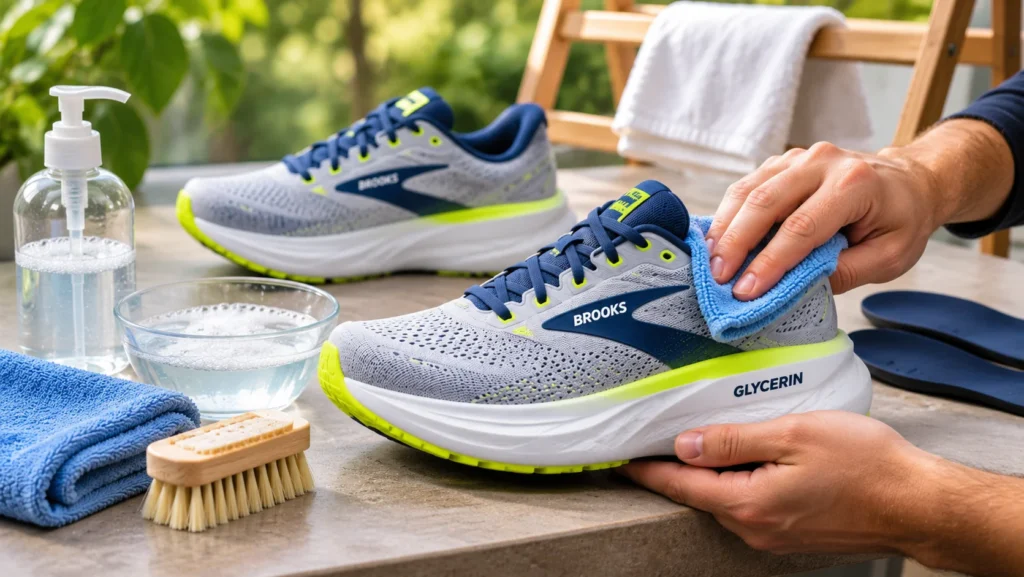
Gentle cleaning and full air-drying help both pairs last longer. The Flex has a knit upper, so rough scrubbing can be a poor choice. The 23 also needs care around foam and outsole edges.
- Brush off loose dirt after road runs, especially around deep FlexZone cuts.
- Wipe the upper with mild soap, cool water, and a soft cloth.
- Remove insoles and loosen laces when you need faster air-drying.
- Keep shoes out of direct heaters, dryers, and hot car trunks.
- Rotate pairs when you run on back-to-back days.
- Check heel rubber, forefoot rubber, and uneven midsole compression.
Do not machine-dry either pair. High heat can damage glue, foam, or upper shape. Let them air-dry in a cool, shaded place. Stuffing them with clean paper can help absorb moisture.
Watch for a new lean, fresh heel pain, or a flat feel during normal runs. The cause is not always shoe wear, but it is worth checking. Shoes age from both use and storage.
For the Flex, clean mud or grit out of the midfoot groove. Debris caught in a deep channel may change how the sole moves. Keep the outsole clear before each gym or road session.
What Is the Final Verdict on Glycerin Flex vs Glycerin 23?
The Glycerin 23 wins for a runner who wants one pair for steady road training. Its deeper cushioning and smoother ride make it better for longer efforts. The Flex is a more focused choice for easy movement.
The Flex wins at the checked sale price if you want a bendable shoe. It costs $45.05 less than the current Brooks price for the 23. At full price, the difference is only $5, which weakens its value case.
Fit should make the final call. If the Flex crowds your toes, its low weight is not worth that cost. If the 23 feels bulky, the Flex may help you enjoy short daily sessions more.
My editorial pick for most road runners is the Glycerin 23. For a short-run or walking rotation, I would consider the Flex. Neither needs a made-up wear-test claim to earn its place.
Frequently Asked Questions
Is the Brooks Glycerin Flex good for daily running?
Yes, the Brooks Glycerin Flex suits short, easy daily road runs. Its flexible midfoot and knit upper give a less rigid feel. It is not a top pick for fast racing, and its forefoot cushioning is less protective than the Glycerin 23 on longer sessions. Check fit before building mileage.
Which is better for long runs: Glycerin Flex or Glycerin 23?
The Glycerin 23 is the better long-run choice for most runners. It has more cushioning underfoot and a smoother guided stride. The Flex is lighter and bends more, but independent lab testing shows weaker forefoot protection. Your own comfort still matters, so test both on a short run first.
What is the biggest difference between Glycerin Flex and Glycerin 23?
The main difference is sole movement versus more cushioning. The Flex uses deep grooves to bend through the midfoot. The Glycerin 23 has a thicker, more guided ride for regular road miles. They share DNA TUNED foam, but that does not make their ride feel the same.
Does the Brooks Glycerin Flex fit true to size?
Many buyers can start with their usual running shoe size, but toe width needs care. Lab measurements found a narrow toe shape. Some buyers report a snug fit even after sizing up. Try your normal length first and check for free toe movement before deciding whether the shoe works.
Is the Brooks Glycerin Flex worth buying on sale?
Yes, the Flex is worth considering when you want a flexible easy-run shoe. A checked Brooks colorway is $129.95, below its $170 list price. That makes the value case stronger than at full price. Do not buy it only for the discount if the fit or cushioning feels wrong.
Affiliate Disclosure: As an Amazon Associate, I earn from qualifying purchases. If you click a link on this page and make a purchase, I may receive a small commission — at no extra cost to you. I only recommend products I genuinely believe will help you. This helps keep the site free and running. Thank you for your support.


