
Quick Answer
The Skechers GO RUN Ride 10 is still a strong daily trainer if you find a well-fitting pair at a fair price. Its 8.4-ounce build, 6 mm drop, and HYPER BURST foam suit easy runs and longer miles. The main caution is the upper: heel hold and forefoot fit vary between runners.
What matters most before buying the Ride 10?
- Verified shoe geometry: 34 mm heel, 28 mm forefoot, 6 mm drop.
- Biggest strength: light, soft, energetic cushioning for road miles.
- Biggest risk: inconsistent lockdown, especially around the heel.
Quick Verdict: Is the Ride 10 a Good Buy?
Best For
Daily road training
Neutral runners who want soft cushioning without a heavy shoe.
Independent expert score: 9/10 from Running Shoes Guru, not an Amazon rating.
Buy With Care
Check fit and stock
A soft upper can need a runner’s knot for secure heel hold.
Original reviewed price: $125. Live US stock and price are unverified.
| Buyer Concern | Ride 10 Verdict |
|---|---|
| Easy runs | ✅ Strong choice |
| Long runs | ✅ Comfortable for many testers |
| Fast cornering | ❌ Upper can feel loose |
| Wet pavement | ✅ Road grip earns praise |
| Value | ✅ If discounted and unused |
Bottom line: Buy the Ride 10 for light, cushioned road mileage if the fit works; choose another model if secure heel lockdown is your top need.
- The Ride 10 weighs 8.4 oz (238 g) in a men’s US size 9.
- Its original $125 reviewed price is historical, not a verified current offer.
- The HYPER BURST midsole works well for easy and steady road runs.
- The Arch Fit insole adds a shaped feel beneath the arch.
- Heel lockdown and forefoot room vary, so fit matters more than praise.
You want a daily running shoe that feels soft, light, and lively. Yet you do not want a loose heel or cramped toes after five miles. That is the question behind this Skechers GO RUN Ride 10 review. The Ride 10 mixes a responsive foam with a cushioned upper and durable road rubber. Its design still makes sense for daily training. Its age also makes current stock and shoe condition important.
I’m Steven Tyler, and I review footwear for FootwearHiker. This assessment draws on Skechers’ published specifications and independent road tests. I have not personally logged miles in this pair. I also could not confirm a current Amazon listing or live US price. Instead of inventing test data, I explain what experienced testers reported and how those findings affect a buyer.
The biggest surprise is not its low weight. It is how much fit can change the verdict. One runner can love the springy midsole. Another can struggle with foot movement in the same upper. Read the fit advice before choosing a size or chasing a discount.
What Is the Skechers GO RUN Ride 10 and Who Is It For?
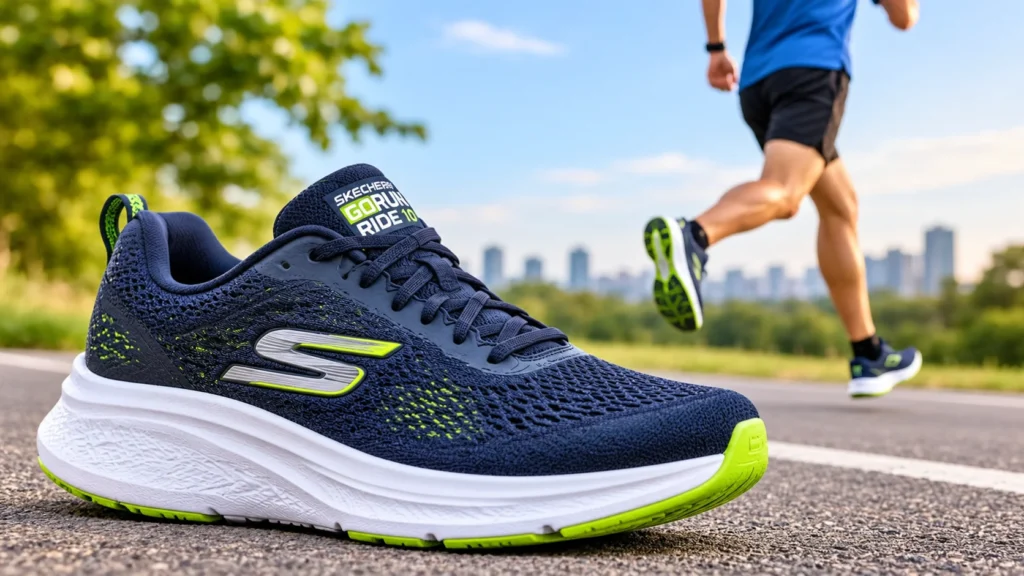
In short, the Skechers GO RUN Ride 10 is a neutral road-running shoe for everyday miles. It combines HYPER BURST cushioning, a shaped Arch Fit insole, and a Goodyear rubber outsole. It suits runners who want a protective ride without the bulk of some maximum-cushioned trainers.
The shoe has a 34 mm heel stack and 28 mm forefoot stack. That gives it a 6 mm heel-to-toe drop. Its listed men’s size 9 weight is 8.4 oz (238 g). Those numbers explain why testers describe it as cushioned yet easy to move in.
The Ride 10 fits best into a rotation as a daily trainer. It can cover recovery jogs, steady runs, and longer road sessions. Faster efforts are possible, though some testers had trouble with upper security at speed. This is not a dedicated racing shoe or a stability model.
The fit is less universal than the spec sheet suggests. Some reviewers found the front roomy. Others noticed a narrow forefoot area. The safest approach is to check the actual pair in running socks before buying.
Find Skechers GO RUN Ride 10 on Amazon
A verified product-specific Amazon listing and current USD price were not available during research. This search opens Amazon results, not a confirmed Ride 10 product page. Check the model, size, condition, and seller.
What Are the Full Skechers GO RUN Ride 10 Specifications?

Primarily, the Ride 10 is a neutral trainer with moderate-high cushioning and a 6 mm drop. Its key details come from Skechers’ own product information. The weight and stack measurements below refer to the manufacturer’s stated sample, not a new laboratory measurement.
| Specification | Skechers GO RUN Ride 10 |
|---|---|
| Shoe type | Neutral road daily trainer |
| Men’s weight | 8.4 oz / 238 g (US 9) |
| Women’s reported weight | 6.8 oz / 193 g (US 7, independent review) |
| Heel stack | 34 mm |
| Forefoot stack | 28 mm |
| Drop | 6 mm |
| Midsole | HYPER BURST supercritical foam |
| Insole | Skechers Arch Fit, described as removable |
| Upper | Engineered mesh, lace-up |
| Outsole | Goodyear Performance rubber |
| Propulsion plate | No carbon plate in Ride 10 |
| Historical US price | $125 cited by multiple original reviews; other original listings reached $145 |
| Current US price | Not verified; depends on stock, size, and seller |
For a cleaner buying comparison, use our running shoe specification comparisons guide. Match shoe sizes when comparing weight. Also check how foam, upper fit, and drop work together. A single headline number rarely decides comfort.
The main technical detail is not the foam’s brand name. It is the package: substantial cushioning, light weight, and generous rubber coverage. Plenty of shoes excel in just one of these areas. The Ride 10 tries to balance all three.
Does HYPER BURST Cushioning Feel Soft or Bouncy?
In short, the Ride 10’s HYPER BURST midsole feels soft yet lively to many road testers. Reviewers at Running Warehouse described smooth transitions and clear rebound. The foam supports relaxed mileage but still has enough spring for steady changes in pace.
HYPER BURST uses a supercritical foaming process. That describes how Skechers forms the cushioning material. For runners, the useful result is its feel under load. The foam compresses as you land, then rebounds as you move forward. It does not require a rigid carbon plate to produce that sensation.
A soft step-in feel is only the first test. The real test comes during a longer session. Running Shoes Guru reported a smooth recovery run and comfort on extended mileage. Road Trail Run’s multi-tester review also praised the cushioning-to-weight balance. These are independent assessments, not miles I ran myself.
That same softness has a drawback. One Road Trail Run tester considered the platform too squishy. Runners who like a firm, direct road feel may not enjoy it. A shoe can score well for comfort and still be the wrong match for someone who dislikes midsole compression.
A useful test is to run your normal easy pace, then add several short, controlled accelerations. Notice whether the rebound feels natural or unsettled. If your feet shift sideways as the foam compresses, stronger lacing alone may not fix your preference.
Does the 6 mm Drop Change How the Ride 10 Runs?
Yes, the Ride 10’s 6 mm drop can change how the shoe feels compared with higher-drop trainers. The heel stands 6 mm above the forefoot. Skechers also shapes the midfoot landing zone to support smooth forward movement.
Drop measures the height difference between the heel and forefoot. It does not tell you how soft the shoe is. Two shoes with the same drop can feel different because their foam, curvature, and overall stack differ. Here, the 34 mm heel stack still provides a deep cushion under the back of the foot.
Runners who normally use a 10 mm or 12 mm drop may notice a new loading pattern. That does not mean the Ride 10 forces a midfoot strike. Heel, midfoot, and forefoot runners all use neutral trainers in different ways. The change should feel comfortable during your normal stride.
Start with a short outing if you are moving from a much higher drop. Increase distance based on comfort rather than a set schedule. Do not change your gait just to match a shoe’s marketing. If your calf or Achilles area becomes sore, reduce the new load and reassess fit.
The Ride 10’s drop is useful to understand, but it is not a reason to buy alone. Our running shoe features guide explains why fit, movement, and outsole needs matter just as much.
Does the Arch Fit Insole Help With Comfort?
Primarily, the Arch Fit insole adds a shaped, supportive feel inside the Ride 10. Skechers says its form draws on podiatry research and extensive foot scans. That does not make the Ride 10 a medical device or a stability shoe.
The insole changes the contact between your foot and the foam. It can feel pleasant if you like clear arch contact. A flat-feeling insert may suit you better if firm arch pressure bothers you. Comfort depends on your foot shape and sensitivity, not on the label alone.
Independent reviewers reported improved step-in comfort over older versions. Yet opinions about the amount of support vary. Even a well-shaped insert can steal some internal shoe volume. If your foot feels squeezed at the top, the insole may be part of the reason.
Skechers describes the insole as removable. One reviewer reported that their sample appeared lightly fixed in place. Check your actual pair before pulling on any insert. Avoid forcing glued parts or assuming every production batch is identical.
Arch support alone cannot prove injury prevention. If you need prescribed orthotics, confirm both shoe depth and heel hold with the insert in place. A well-fitting neutral trainer may work for you, but persistent pain deserves professional assessment.
Does the Skechers GO RUN Ride 10 Fit True to Size?
In short, many reviewers found the Ride 10 true to length, but width feedback differs. Some testers praised the roomy midfoot. Others reported pressure near the forefoot. That split makes a try-on more useful than a blanket sizing rule.
Running Shoes Guru described a spacious front and a comfortable overall fit. Road Trail Run included a narrow-toe-box complaint among its tester notes. These statements can both be true because feet vary in width and shape. Lace tension also changes the way a flexible upper wraps the foot.
Check the length first. Your toes should not hit the front during a light jog or downhill step. Next, check the metatarsal area, where your forefoot is widest. The material should not press inward as your foot spreads. Finally, confirm that the heel stays seated when you pick up the pace.
Wear the same socks you normally use for runs. Try both shoes late in the day if possible. Walk, jog, and make a few gentle turns. Do not buy a smaller size just to fix heel lift if the toe space then becomes too short.
Buying online needs extra care with older stock. Sellers can mix men’s and women’s widths or show photographs of the wrong generation. Our buy running shoes online guide covers return checks and model identification.
How Secure Are the Heel and Upper on Fast Runs?
The upper is the Ride 10’s most important fit concern. Running Warehouse reported heel movement with normal lacing. At least one tester improved hold with a runner’s loop. Other reviewers also found the upper comfortable but less secure during quick turns.
The engineered mesh helps keep weight low. It also bends around the foot with less rigid structure than a highly reinforced upper. Extra collar and tongue padding feel plush at first. Yet padding cannot replace good lockdown when you accelerate or corner.
Try a runner’s loop if your heel rises slightly. Use the extra top eyelets to create a firmer hold around the ankle. The laces should feel snug without cutting into the top of your foot. Stop if the adjustment creates numbness or pressure.
One independent expert noted fraying on the soft laces. That is a reported sample issue, not a proven failure rate across all pairs. Inspect the eyelets and laces before buying used or stored stock. Replacing laces is easy; fixing a poor upper shape is not.
If you need sharp turns and fast intervals every week, a more secure performance trainer makes more sense. If most runs follow straight roads at easy pace, the Ride 10’s upper can be adequate once properly fitted.
How Durable Is the Goodyear Rubber Outsole?
The Ride 10’s Goodyear Performance outsole earns strong marks in published road tests. Rubber covers much of the contact surface. Testers reported dependable pavement traction and modest visible wear over their review periods.
Rubber coverage matters because exposed foam wears more quickly when it scrapes the road. The outsole protects common landing zones while helping the shoe roll from heel or midfoot toward the toes. That full-contact feel supports the Ride 10’s smooth daily-running character.
The Goodyear name does not guarantee a fixed mileage lifespan. Abrasive roads, heel scuffing, body weight, and running gait change wear patterns. The rubber can also look healthy after the cushioning has lost its preferred feel. Durability should include the entire shoe, not just the black rubber underneath.
Review the outsole every few weeks. Look for smooth patches where tread once had texture. Also inspect exposed foam, upper seams, and heel lining. Replace shoes based on comfort and meaningful wear, not a universal mileage number.
Our worn running shoe cushioning guide explains the signals that are easy to miss. A shoe can keep gripping the road long after it stops feeling right underfoot.
Can the Ride 10 Handle Rain, Cold, and Mixed Surfaces?
For normal wet roads, the Ride 10 has a useful rubber outsole. Independent testers praised traction in everyday road conditions. Still, it is a breathable mesh road shoe, not a waterproof winter trainer or a technical trail model.
The outsole can handle paved sidewalks and clean, firm paths. Loose gravel, deep mud, and icy surfaces require different grip needs. A smooth rubber pattern cannot replace trail lugs or ice-specific traction. Avoid treating a positive wet-road report as proof of safety on frost.
The padded upper can feel warm in hot weather. In cold weather, that padding can feel welcome, but wet mesh still lets water through. Choose socks for the conditions and allow the shoe to dry after a rainy outing. Never place it directly against intense heat.
For commuters who run before work, the simplest test is a short damp-road loop. Check heel hold while turning and how the sole feels on painted lines. Slow down on slick surfaces. No shoe makes algae, oil, or wet metal safe.
Which Runs Suit the Skechers GO RUN Ride 10 Best?
In short, easy and steady road runs are the Ride 10’s strongest uses. Long runs also fit its soft, energetic midsole. Fast workouts are more conditional because upper hold and forefoot control matter as speed rises.
| Use Case | Fit | Why |
|---|---|---|
| 3–5 km easy run | ✅ Strong | Soft foam and smooth transitions. |
| 10–15 km steady road run | ✅ Strong | Protective stack without excessive weight. |
| Recovery jog | ✅ Strong | Plush feel helps relaxed pacing. |
| Tempo session | ⚠️ Mixed | Foam rebounds, but lockdown may lag. |
| Wet commute run | ✅ With care | Road rubber grips; mesh is not waterproof. |
| Rocky trail or snow | ❌ Poor match | No deep lugs or winter protection. |
Beginner road runners can benefit from the Ride 10’s friendly cushioning. The shoe does not demand a fast turnover or special racing technique. However, beginners should still pay attention to fit and the change in heel drop.
Experienced runners can use it as a comfortable second pair. Keep a firmer, more secure shoe for demanding intervals if needed. This separation lets the Ride 10 do what it does best without expecting one trainer to cover every workout.
Workers who stand or walk for long periods may also enjoy the underfoot feel. That does not prove it is the best work shoe. Workplace slip rules, support needs, and dress requirements can differ from running conditions.
For group runs, the Ride 10 is well suited to smooth roads and steady pace changes. On technical routes, the shoe’s soft platform and open mesh are less ideal. Match terrain first, then think about cushion.
How Does the Ride 10 Compare With the Ride 9 and Ride 11?
The Ride 10 is closest to the Ride 9 in its sole design. The Ride 11 is a more substantial update. Its thicker HYPER BURST ICE cushioning and carbon-infused forefoot plate change the feel and purpose.
The Ride 10 keeps the earlier model’s HYPER BURST midsole and Goodyear outsole. Skechers revised the upper and added the Arch Fit insole. That makes the Ride 10 more of a fit-and-comfort update than an entirely new platform.
The Ride 11 moves to a 38 mm heel and 32 mm forefoot stack. It keeps a 6 mm drop but adds more foam beneath both ends. It also introduces HYPER BURST ICE and a carbon-infused plate toward the forefoot. Those features do not appear in the Ride 10.
| Feature | Ride 9 | Ride 10 | Ride 11 |
|---|---|---|---|
| Midsole family | HYPER BURST | HYPER BURST | HYPER BURST ICE |
| Stack | Same sole platform as Ride 10 | 34/28 mm | 38/32 mm |
| Drop | 6 mm | 6 mm | 6 mm |
| Plate | No carbon plate | No carbon plate | Carbon-infused forefoot plate |
| Best reason to choose | Existing fit familiarity | Lighter traditional Ride feel | More cushion and propulsion structure |
Which is the better buy? Choose the Ride 10 if you like a flexible daily shoe and find a secure fit. Choose the Ride 11 if you want more underfoot material and a plated forefoot feel. Neither version wins for everyone.
Do not mistake the Ride 11’s plate for a full racing setup. Independent reviews still describe it as a cushioned trainer. Price, weight, and foot feel should decide whether the newer construction is worth the change.
Is the Ride 10 Worth Its Original $125 Price?
At its original $125 review price, the Ride 10 offered a compelling blend of light weight, cushioning, and rubber coverage. That number is not a current Amazon quote. Earlier sources even recorded different original prices at different retailers.
Running Warehouse and several launch-era reviewers cited $125. Running Shoes Guru also noted a higher $145 Skechers listing at the time. This helps explain why old articles disagree about value. They may describe different retailers or points in the product’s sales cycle.
A discount only matters when the shoe is the correct model and in good condition. Older unused stock can be worthwhile, but inspect its storage history when possible. Look for dry or cracked rubber, separated glue, yellowed material, and brittle padding. A low price cannot repair a damaged sole.
Compare the actual offer against current daily trainers in your size. The Ride 10 has no reason to command a premium solely because reviewers liked it at launch. If it costs the same as a newer shoe with a fit you already trust, the newer shoe is often the safer purchase.
Do not calculate value from the suggested price alone. Add any shipping and return costs. A perfect fit at a fair total price beats a larger advertised discount that cannot be returned.
What Are Independent Reviewers and Runners Saying?
Most published expert assessments agree on the Ride 10’s best trait: its soft, energetic ride. Their strongest disagreement concerns fit, foot control, and preferred softness. That split is more useful than a single average score.
Reported Test Sentiment
What reviewers liked
Soft rebound, smooth road transitions, light weight, and durable outsole coverage.
What reviewers questioned
Heel security, inconsistent forefoot room, warm padding, and softness during speedwork.
These are summaries of named independent road tests, not verified Amazon customer ratings or this site’s original mileage tests.
Running Warehouse’s Ride 10 wear test praised cushioning and outsole performance. Its testers also described heel fit that improved with a runner’s loop. The lesson is practical: change lacing before judging the shoe, but do not ignore ongoing slip.
Running Shoes Guru’s independent review gave the shoe 9/10. Its reviewer praised versatility and noted lace wear as a drawback. That rating belongs to one publication’s testing method; it is not a pooled customer score.
Road Trail Run’s multi-tester review showed why preferences matter. Several testers liked the ride, while others criticized its upper or soft platform. No single report proves that every runner will get the same result. Match the reviewer’s foot shape and running pace to your own.
I could not verify exact-match, current Amazon customer review data. I therefore won’t attach invented star totals or customer quotations. For more context on review quality, see our running shoe review criteria guide.
Who Should Buy the Skechers GO RUN Ride 10?
Buy the Ride 10 if you run mostly on roads and prefer soft, responsive cushioning. It makes the most sense when its heel stays secure, the arch shape feels natural, and the asking price reflects an older model.
✅ Consider Buying If
- You want one shoe for easy and steady road runs.
- You enjoy a soft feel with some rebound.
- You prefer a 6 mm drop.
- The upper holds your heel without pressure.
- You find trustworthy unused stock at a fair price.
❌ Skip It If
- Your heel keeps sliding after lacing changes.
- You need structured support for overpronation.
- You prefer a firm, stable forefoot.
- You run mainly on muddy or icy trails.
- A newer shoe fits better at the same total price.
Do not buy this model solely because the brand calls Arch Fit supportive. The insole gives shaped contact, but it does not make every foot more stable. The most useful proof is your own comfort during movement.
If the Ride 10 feels unstable or causes pressure, do not force it. Try a more structured trainer if you want guidance. Try a wider-fitting model if the forefoot feels compressed. A different shoe is a better solution than painful break-in.
How Should You Care for the Ride 10?
Keep the Ride 10 clean, dry, and away from direct heat. Simple care helps protect its mesh upper, foam midsole, and rubber outsole. It cannot stop all wear, but it can prevent avoidable damage.
After wet road runs, loosen the laces and let the pair air-dry indoors. Remove the insole only if it lifts freely. Use paper to absorb surface moisture if needed. Avoid high heat, direct radiators, or a hot tumble dryer.
Brush away dry dirt from the outsole. Use mild soap and cool water for marks on the mesh. Do not soak the entire shoe just to remove a small stain. Harsh cleaning methods can harm glues and fabric treatments.
Alternate shoes if you run daily and the midsole stays damp. Inspect tread wear and toe-box seams before longer outings. Also check whether the cushion still feels consistent between left and right shoes.
For stored pairs, look closely at the glue line and foam before a first long run. An older new-in-box shoe can age even without mileage. Begin with a short road test and stop if any part feels unsafe.
Final Verdict: Should You Still Buy the Skechers GO RUN Ride 10?
Yes, the Ride 10 remains worth considering as a light, cushioned daily trainer, but only if the fit and price work. Its 238 g men’s sample weight, 6 mm drop, HYPER BURST foam, and Goodyear rubber form a balanced road-running package.
The shoe’s most important drawback is not outdated technology. It is the chance that the upper will feel insecure on your foot. Independent testers disagree about forefoot space and heel fit. That variation makes a careful try-on more valuable than any single rating.
Choose it for easy runs, steady daily mileage, and longer road outings. Skip it for technical trails, strong motion-control needs, or fast sessions where the heel shifts. If you already love the Ride 9, the Ride 10 offers a familiar sole with an updated upper and Arch Fit insole.
If you find the model for a good price, check the listing twice. Confirm that it says Ride 10, not Ride 11 or a GO WALK shoe. Make sure it is the right width, size, and condition. Then judge the fit during a short run before committing to longer mileage.
Check Exact-Model Availability
The button opens an Amazon search with the site’s affiliate tag. No specific listing or live price is guaranteed. Compare seller details before ordering.
Frequently Asked Questions
Is the Skechers GO RUN Ride 10 good for long runs?
Yes, the Skechers GO RUN Ride 10 works well for long road runs when the fit is secure. Independent testers praised its soft HYPER BURST cushioning and smooth transitions. The 34 mm heel stack adds protection without excessive weight. Check heel hold before extending your distance.
Is the Skechers GO RUN Ride 10 true to size?
Most expert reviews describe a true-to-length fit, but opinions on width differ. Some testers found the forefoot spacious, while others felt pressure at the front. Try your normal size first with running socks. Check both toe room and heel movement before buying.
What is the difference between the Ride 10 and Ride 11?
The Ride 11 has more stack height, HYPER BURST ICE cushioning, and a carbon-infused forefoot plate. The Ride 10 uses HYPER BURST foam without that plate. Both list a 6 mm drop. Choose based on your preferred ride feel, fit, and actual asking price.
Does the Skechers GO RUN Ride 10 have a carbon plate?
No, the Skechers GO RUN Ride 10 does not have a carbon propulsion plate. Its responsive sensation comes from HYPER BURST foam and the shape of the sole. Some shoppers confuse it with the Ride 11, which adds a carbon-infused forefoot plate. Always check the generation before purchasing.
Is the Ride 10 good for walking and wet pavement?
The Ride 10 can feel comfortable for walking, and its Goodyear outsole suits ordinary wet pavement. However, the shoe was designed as a neutral road-running trainer. The mesh upper is not waterproof. Avoid ice, slick metal, and deep mud, which need different traction or weather protection.
Affiliate Disclosure: As an Amazon Associate, I earn from qualifying purchases. If you click a link on this page and make a purchase, I may receive a small commission — at no extra cost to you. I only recommend products I genuinely believe will help you. This helps keep the site free and running. Thank you for your support.