
Quick Answer
The Skechers GO RUN Razor 4 is worth considering for tempo runs, intervals, and light daily training. Its HYPER BURST PRO foam, 4 mm drop, and carbon-infused forefoot plate give it a lively, smooth ride. The main drawback is fit: several reviewers found the toe box narrow. Try it on before buying.
Quick Verdict: Skechers GO RUN Razor 4
Best for
Road runners who want one light shoe for faster training and some steady miles.
Skip it if
You need a roomy toe box, strong motion control, or a soft recovery shoe.
| Category | Verdict |
|---|---|
| Tempo training | Strong choice |
| Easy daily runs | Good if you like a responsive feel |
| Long runs | Depends on cushioning preference |
| Wide feet | Try carefully before buying |
| Road grip | A key strength |
Price context: Published US launch-era prices ranged from about $130 to $145. These are not verified live Amazon prices.
This opens Amazon search results, not a verified product listing. Check model, size, price, and seller before ordering.
- The Razor 4 uses HYPER BURST PRO foam for a responsive, cushioned road ride.
- Its 4 mm drop suits runners comfortable with lower-offset shoes.
- A carbon-infused forefoot plate aids toe-off but does not feel like a rigid race-day plate.
- The Goodyear rubber outsole improves coverage and road traction.
- Fit is the biggest buying risk; toe-box opinions differ across testers.
I’m Steven Tyler, and I research running shoes for FootwearHiker. This Skechers GO RUN Razor 4 review draws on Skechers’ published details, independent running reviews, and owner feedback. It is not a claim that I personally logged test miles in this shoe.
The GO RUN Razor 4 has an unusual job. It must feel quick enough for speed work yet comfortable enough for regular road runs. Skechers changed the formula with a new foam, a forefoot plate, and more outsole rubber. Those changes brought more comfort, but also changed the feel that fans knew from older Razors.
The buying question is simple: do those updates make the Razor 4 a better shoe for your training? The answer depends more on fit and pace than the word “carbon” on its feature list. For a broader way to judge any shoe, use our running shoe review checklist.
What Is the Skechers GO RUN Razor 4 and Who Is It For?
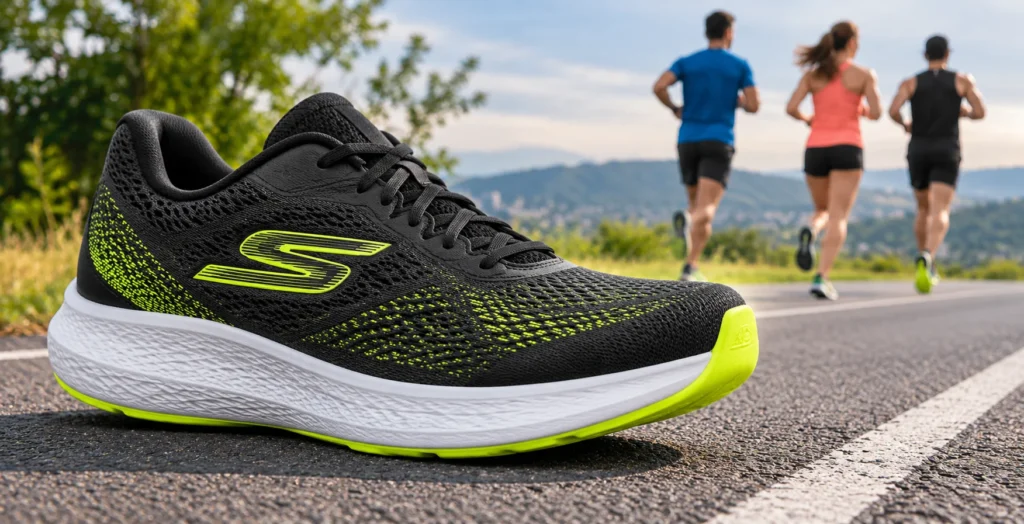
In short, the Skechers GO RUN Razor 4 is a neutral road-running shoe built for faster training. It also has enough underfoot protection for some daily miles. It sits between a traditional lightweight trainer and a firmer, speed-focused workout shoe. That middle ground is its biggest appeal.
The Razor name once meant a very light, stripped-back ride. This fourth version moves toward a more complete training shoe. It uses a softer-feeling foam, more rubber, and added structure up front. You gain more versatility, though you lose some of the older model’s minimal feel.
Consider the runner who does a short warm-up, a set of tempo intervals, and a cooldown. The Razor 4 can handle that full session without a shoe change. Independent testers also reported enjoying it on steady road runs. That does not make it the perfect recovery shoe for everyone.
Choose it for roads, track sessions, and firm paved paths. Avoid treating it as a technical trail shoe. Its outsole is designed for road traction, not deep mud, loose scree, or sharp, uneven mountain terrain.
What Are the Full Skechers GO RUN Razor 4 Specifications?
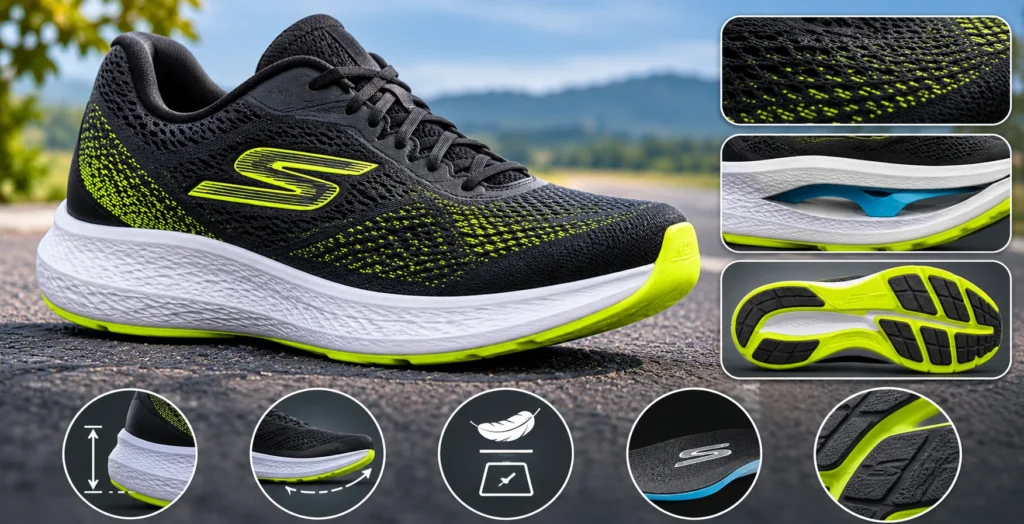
The Razor 4 combines a 4 mm drop with lightweight foam and a partial forefoot plate. Skechers lists 7.5 oz (213 g) for a men’s size 9. Independent reviewers have recorded different weights, so consider that figure a manufacturer specification rather than a universal measured value.
| Specification | Skechers GO RUN Razor 4 |
|---|---|
| Shoe type | Neutral road trainer / workout shoe |
| Heel-to-toe drop | 4 mm |
| Reported stack height | 30 mm heel / 26 mm forefoot |
| Manufacturer-listed weight | 7.5 oz / 213 g, men’s US 9 |
| Midsole | HYPER BURST PRO, supercritical TPU foam |
| Plate | Carbon-infused forefoot winglet / H-plate |
| Geometry | Skechers HYPER ARC rocker |
| Upper | Hyper Mono mesh, lace-up |
| Insole | Skechers Arch Fit |
| Outsole | Goodyear Performance rubber |
| Original US price context | About $130–$145 across published launch-era sources |
| Current Amazon price | Not independently verified; varies by listing |
The stack-height figures come from independent reports, not the specific Skechers listing used for its weight and drop. Different measurement methods can produce different numbers. Our running shoe specifications guide explains why shoe weights, drops, and stack measurements need context.
How Does HYPER BURST PRO Cushioning Feel Underfoot?
HYPER BURST PRO makes the Razor 4 cushioned without turning it into a soft recovery shoe. The foam uses a supercritical process with thermoplastic polyurethane, or TPU. That material helps the shoe rebound after each step. The result is a more lively midsole than a flat, basic foam platform.
Independent testers agree that the new midsole changes the Razor’s character. Some praise its bounce during fast training. Others say the forefoot feels firmer and less playful than expected. These opinions can both be true because a shoe feels different at slow and quick paces.
At easy pace, a runner may notice the plate and firmer front more than the foam’s spring. As effort rises, the forward roll becomes easier to use. That makes the shoe especially appealing for progressions and tempo work. You are not buying a marshmallow-soft ride.
The foam also gives the Razor 4 more comfort than a thin racing flat. Yet cushioning depth remains moderate beside large-stack daily trainers. If you need a soft shoe for tired-leg days, a dedicated recovery model makes more sense.
Does the Carbon-Infused Plate Make the Razor 4 Faster?
The forefoot plate helps the Razor 4 feel smooth at toe-off, but it is not a full-length racing plate. Skechers uses a carbon-infused winglet or H-shaped forefoot design. It works with the HYPER ARC rocker to guide the foot forward. That is a different setup from a stiff, full-length marathon race shoe.
Several reviewers found the plate subtle rather than forceful. This can be a benefit for training. A less demanding forefoot often feels easier to use during a mixed session. It may also make the Razor 4 more approachable than a rigid race-day shoe.
The important point is that a plate alone does not set your running pace. Shoe weight, foam, fit, rocker shape, and your stride all matter. There is no verified evidence that this model will cut a set number of seconds from your next 5K.
If you want a firm, aggressive racing sensation, try a dedicated racing shoe. If you want guidance through toe-off without an extreme feel, the Razor 4 makes more sense.
Is the Skechers Razor 4 Good for Tempo Runs and Intervals?
Yes, tempo runs and intervals are the Razor 4’s clearest use cases. The low weight, resilient foam, and forward-moving geometry reward a quicker stride. Multiple independent testers reported good results during faster sessions. The shoe is less specialized than an all-out track racer.
Imagine a session with a two-mile warm-up, four brisk mile repeats, and an easy cooldown. The Razor 4 has the range for that kind of road workout. You can increase pace without carrying the weight of a large daily trainer. The outsole also helps keep contact with paved ground.
The feel will not suit every runner. Some reviewers find the fourth version less sharp than the older Razor 3. Others prefer the extra comfort because it reduces the need to switch shoes between workouts. Both views point to the same design change: more shoe underfoot.
For sharp 200-meter repeats, a lighter flat may feel quicker. For longer threshold sets, the Razor 4 offers a useful mix of speed and protection. That makes it a practical second shoe for runners who already own a comfortable easy-day trainer.
Can You Use the Razor 4 for Easy Runs and Long Runs?
You can use the Razor 4 for easy and longer road runs if you enjoy a lively, moderate-cushion ride. It is not as soft as a high-stack comfort trainer. Some reviewers prefer it for steady daily runs, while others reserve it for faster efforts. Your cushioning preference matters.
Its 30 mm reported heel stack gives more protection than older low-profile Razor models. The rocker also helps the foot roll from landing to toe-off. That combination can feel smooth when fatigue begins to build. However, a smooth ride does not guarantee long-run comfort.
Try the shoe on a short easy run before using it for a long session. Check your toe space after the first few miles. Feet often swell during prolonged running, and the forefoot shape can become more noticeable as the run goes on.
For a first half-marathon or marathon build, choose the shoe that remains comfortable late in training. A specialized cushioned trainer can be the safer choice for runners who dislike pressure under the forefoot or need more room for swelling.
How Does the Razor 4 Fit, and Should You Size Up?
The Razor 4’s toe-box fit deserves more attention than its advertised weight. Some testers describe a snug, tapered front and recommend trying a larger size. Other testers report enough room or even excess length. There is no reliable rule that every runner should size up by the same amount.
The Hyper Mono mesh upper feels lighter and more flexible than the hard uppers used on older Razor models. That helps reduce pressure across the top of the foot. Yet soft mesh cannot correct a shape that pushes your toes together. Width and length are separate fit issues.
Start with your normal running size. Check for roughly a thumb’s width beyond your longest toe. Then check that your little toe can move without pressure. Walk and jog indoors before removing any return labels. A half-size increase helps only if it improves both comfort and heel hold.
If the extra length makes your heel slip, sizing up is not the right solution. You need a shoe with a different forefoot shape. Use our running shoe fitting checklist for a step-by-step assessment.
Fit warning: Do not buy a larger size just because one reviewer did. Check toe width, front clearance, midfoot hold, and heel slip together.
Does Skechers Arch Fit Provide Enough Support?
Arch Fit adds a noticeable contour, but the Razor 4 remains a neutral running shoe. Skechers uses its contoured insole to spread pressure and support the arch. Some runners enjoy that guided sensation. Others with sensitive arches may prefer a flatter interior.
The insole does not turn the Razor 4 into a motion-control model. It does not use the same approach as shoes built with strong stability rails or posts. If a runner needs extra guidance for recurring discomfort, they should evaluate fit and support rather than assume any arch contour will solve the issue.
One useful detail is that arch feel can change with lacing. A tight midfoot wrap may make the insole feel more pronounced. Loosen the laces slightly while keeping the heel secure, then compare the pressure. A good fit should feel supportive without creating pain or numbness.
Arch height alone cannot determine the correct running shoe. Our running shoe arch support guide explains why comfort and intended use matter more than simple foot-type labels.
How Good Is the Goodyear Outsole on Wet Roads?
The Goodyear Performance outsole is one of the Razor 4’s stronger features. Skechers added rubber coverage in key contact areas. Independent testers reported confident grip on dry pavement and several wet-road surfaces. The tread is built for regular road conditions, not for aggressive trail use.
More rubber also protects parts of the foam that tend to wear down first. That is helpful for runners who use the shoe several days each week. However, rubber coverage adds some weight. This trade-off helps explain why the Razor 4 feels more substantial than older Razors.
Wet traction still changes with the ground beneath you. Smooth metal, oily concrete, leaves, and slick paint can be slippery even in a shoe with strong road rubber. Slow down on unfamiliar surfaces and shorten your stride if grip feels uncertain.
For city roads, park loops, and clean paths, the outsole is a practical advantage. It increases confidence without requiring a heavy trail tread. If most of your runs involve mud or sharp loose rock, choose a dedicated trail shoe instead.
Is the Razor 4 Durable Enough for Regular Training?
The Razor 4 has design changes that favor durability, but its exact lifespan cannot be guaranteed. It uses thicker rubber coverage than earlier Razor models and a TPU-based foam designed to rebound repeatedly. Reviewers reported encouraging early wear results. That is evidence of a better build, not proof of a fixed mileage limit.
Actual wear depends on body weight, stride, road surface, storage, and how often the same pair is used. A runner who scrapes the outer heel may wear rubber faster than a smooth midfoot striker. Heavy use on rough pavement can also shorten the life of the upper.
Look for uneven outsole patches, a midsole that no longer feels balanced, and new pressure points underfoot. Do not rely on a single mileage number. One pair may stay useful past that figure, while another can lose its shape sooner.
Check both shoes every few weeks if you train regularly. Compare the worn pair with a fresh shoe from your rotation. That simple check reveals changes that are easy to miss when wear happens gradually.
How Does the Razor 4 Compare With Razor 3 and Razor 5?
The Razor 4 feels more like a modern training shoe than the lighter Razor 3. It adds HYPER BURST PRO, a forefoot plate, and more outsole rubber. The Razor 5 keeps the main ideas of a low-drop, plated speed trainer and uses a revised upper. The best choice is not automatically the newest model.
| Buying factor | Razor 3 | Razor 4 | Razor 5 |
|---|---|---|---|
| Core character | Lighter, simpler speed feel | Versatile workout trainer | Updated speed trainer |
| Midsole approach | Earlier HYPER BURST foam | HYPER BURST PRO | HYPER BURST PRO |
| Forefoot plate | No Razor 4-style plate | Carbon-infused H design | Carbon-infused plate |
| Best reason to choose | Prefer classic light Razor feel | Find a secure fit at a good price | Prefer its updated upper and fit |
| Main caution | Less built-up cushioning | Forefoot fit can be narrow | Check price and personal fit |
Razor 3 fans may miss the lighter, more direct feel when switching to the fourth model. That does not make the update worse. It makes it different. A runner who wants a faster daily shoe can prefer the extra cushioning and rubber.
Razor 5 is worth trying if the Razor 4’s upper gives you trouble. Still, do not assume a new upper fits every foot better. The two shoes share several key technologies, so the fit and total price can matter more than small differences on a feature sheet.
Who Should Buy the Skechers GO RUN Razor 4?
Buy the Razor 4 if you want a light road shoe for sessions that change pace. It suits runners who spend time at steady, tempo, and interval effort. It can also serve as a flexible daily option for those who dislike heavy, soft trainers. The right fit is essential.
Good match
- Tempo and threshold workouts
- Road intervals and strides
- Lightweight daily training
- Runners who like a 4 mm drop
- Runners who want strong road rubber
Look elsewhere
- Wide toe-box requirement
- Maximum-softness recovery runs
- Technical trail running
- Strong stability or motion-control need
- Full-length race-plate feel
For a runner building a two-shoe rotation, pair it with a soft easy-day trainer. Use the Razor 4 for the workout that asks you to pick up the pace. This keeps the role of each shoe clear. It also prevents the Razor 4 from being judged as a shoe it was never designed to replace.
Is the Skechers GO RUN Razor 4 Worth the Price?
The Razor 4 offers the best value when its fit works and the sale price is clearly below newer alternatives. It launched around the $130 to $145 range across published US sources. That is historical pricing, not a current offer. Availability and price now vary by size, color, and seller.
Check whether a low price comes from a genuine retailer with a practical return policy. Some remaining pairs can sit in storage for extended periods. Inspect glue lines, upper condition, and sole flexibility when the shoes arrive. A discount loses its appeal if the shoe cannot be returned after a fit check.
Compare the full cost with models you can try locally. A slightly more expensive shoe that fits well may save you the expense of a return. Look at grip, fit, foam feel, and intended use, not just a discount label. Our running shoe feature priorities guide can help with that decision.
At a meaningful discount, Razor 4 remains an appealing workout shoe. At close to the price of a newer model, start by trying both pairs. The better purchase is the one you will want to wear for your actual runs.
What Do Real Razor 4 Buyers and Independent Testers Say?
Feedback on the Razor 4 is positive about its lively ride, with fit as the repeated concern. Independent publications have praised its rocker, road grip, and useful speed range. However, some testers call the toe box too narrow. Others find the upper comfortable or even longer than expected.
Owner feedback reflects the same split. A reviewer on Zappos described using the shoe for faster workouts and praised its lighter feel. That reviewer also noted toe rubbing with certain socks. Another owner liked the cushioning and arch support. These are individual reports, not proof that every runner will have the same experience.
Owner and tester sentiment
- Common praise: quick toe-off, useful cushioning, and reliable road grip.
- Common caution: the forefoot shape may press on toes.
- Mixed verdict: some feel a fast trainer, while others prefer it for steady miles.
Read original reports before ordering. The Zappos customer reviews, Running Shoes Guru review, and Believe in the Run review offer different perspectives. No unverified Amazon review counts or star ratings are used here.
How Should You Care for the Razor 4?
Clean the Razor 4 gently and inspect its rubber and upper after regular use. Do not put it in a hot dryer or leave it in a parked car. Excess heat can damage shoe materials and adhesives. Simple care helps preserve the fit and shape.
- Brush off loose grit after runs on dusty paths.
- Use mild soap, cool water, and a soft cloth for dirt.
- Air-dry at room temperature away from direct heat.
- Remove wet insoles when practical and dry them separately.
- Check heel and forefoot rubber for uneven wear.
- Rotate shoes if you run often and allow pairs to dry fully.
After wet runs, loosen the laces and let air reach the inside. Do not force-dry the shoes beside a heater. If the upper develops a tear or the outsole starts separating, inspect the shoe before using it for speed work.
There is no need to replace shoes on an exact calendar date. Watch for lost comfort, visible damage, and uneven wear. A runner’s movement pattern and mileage affect how long a pair stays useful.
Final Verdict: Is the Skechers GO RUN Razor 4 Worth Buying?
Yes, the Skechers GO RUN Razor 4 is worth buying for a runner who values quick, smooth road training and gets a secure fit. It combines responsive HYPER BURST PRO foam with a subtle forefoot plate and durable rubber coverage. It works especially well as a tempo-day shoe that can also handle moderate training miles.
The fit makes or breaks the purchase. Do not let the low listed weight or carbon-infused plate distract from how the toe box feels. If your toes rub or your heel slips after sizing changes, choose another shoe. Running comfort matters more than a feature checklist.
One final point matters when shopping older models: a lower sale price is worthwhile only when the seller and return terms are trustworthy. Verify the exact Razor 4 model, not a similarly named Skechers walking shoe. Compare the price with Razor 5 before deciding, since the newer shoe may fit your foot better.
For neutral road runners who enjoy moderate cushioning and a fast turnover, the Razor 4 still has a clear purpose. It is a training shoe with speed in mind, not a substitute for every type of run.
Check Razor 4 Search Results on Amazon
Amazon search link only. Exact listing, price, and stock have not been verified.
Frequently Asked Questions
Is the Skechers GO RUN Razor 4 a daily trainer?
Yes. The Razor 4 can serve as a light daily trainer for runners who like responsive cushioning. It is also designed for speed work. Independent reviews differ on easy-run comfort, so try it on shorter runs before using it as your only training shoe.
Does the Skechers GO RUN Razor 4 have a carbon plate?
Yes. It has a carbon-infused forefoot winglet or H-shaped plate. This is not the same as a stiff, full-length plate found in many marathon racing shoes. The forefoot design works with the rocker and midsole to create a smooth, quick transition.
Does the Razor 4 run true to size?
Fit reports are mixed. Some reviewers found a narrow, short-feeling toe box and sized up. Others reported a more comfortable fit or extra length. Try your regular running size first, then judge toe clearance, forefoot width, and heel security before changing sizes.
Is the Razor 4 good for wide feet?
The Razor 4 is not the safest blind purchase for wide feet. Several testers reported a tapered forefoot and pressure near the toes. A larger size does not always solve a width problem. Try the shoe on or choose a model with a roomier front.
What is the difference between Razor 4 and Razor 5?
Both models use HYPER BURST PRO cushioning, a carbon-infused forefoot plate, and road-focused Goodyear rubber. Razor 5 has an updated upper and fit. The best choice depends on comfort, stock, and price. Try both if possible instead of assuming the newer shoe always wins.
Affiliate Disclosure: As an Amazon Associate, I earn from qualifying purchases. If you click a link on this page and make a purchase, I may receive a small commission — at no extra cost to you. I only recommend products I genuinely believe will help you. This helps keep the site free and running. Thank you for your support.