

Quick Answer
The original Salomon S/Lab Genesis remains a strong technical trail shoe if you want precise foothold, rock protection, and ground feel. Its 8 mm drop, 258 g listed weight, and 4.5 mm lugs suit varied mountain routes. Buy it at a meaningful discount; choose Genesis 2 for updated cushioning and stability.
What matters most when choosing the original Genesis?
- Best strength: secure foothold on rocky and uneven trails.
- Main weakness: moderate rebound despite its premium original price.
- Upgrade reason: Genesis 2 adds new foam and a wider platform.
Quick Verdict: Original S/Lab Genesis vs Genesis 2
Original S/Lab Genesis
Salomon UK customer rating; 642 reviews when checked
Retailer example: $149.96 (Backcountry, selected color/size; original $199.95)
Best for: Runners who want secure technical control at a clearance price.
Amazon search, not a verified listing or price.
S/Lab Genesis 2
Salomon US customer rating; 149 reviews when checked
Official US listed price: $200
Best for: Buyers seeking a newer midsole and added stability.
Amazon search, not a verified listing or price.
| Category | Original | Genesis 2 |
|---|---|---|
| Best all-round current buy | — | 🏆 |
| Best discounted value | ✅ | — |
| Lower listed shoe weight | ✅ | — |
| Updated foam technology | — | ✅ |
| Wider stability platform | — | ✅ |
Bottom line: Genesis 2 is the stronger updated choice for a new full-price purchase, while the original becomes compelling when its discount is substantial and the fit suits you.
- The original Genesis has an 8 mm drop and 258 g listed weight.
- Its 4.5 mm lugs target mixed, rocky, and technical trails.
- Independent tests found modest foam rebound and mixed upper durability.
- Genesis 2 adds optiFOAM² and a wider ground-contact platform.
- A $149.96 retailer example makes the original cheaper than the $200 newer model.
You’re choosing shoes for rough trails, not smooth pavement. Grip, secure fit, and rock protection matter more than flashy colors. The original Salomon S/Lab Genesis has a strong reputation among technical trail runners. But does it still justify a premium price?
I’m Steven Tyler, and this review is based on published specifications, independent lab tests, and customer feedback. It is not a claim of personal wear testing. I focus on facts that help you choose the right shoe for your feet and routes.
The original shoe feels different from today’s tall, soft trail trainers. Its profile is more controlled and connected to the ground. That can help on uneven slopes, but not every runner enjoys the trade-off. The newer Genesis 2 also changes the value equation.
My goal is simple: explain where the original wins, where it falls short, and what price makes sense. For more background on judging claims, use this running shoe review checklist. The key choice is less about hype and more about fit, terrain, and cost.
What Is the Salomon S/Lab Genesis and Who Is It For?
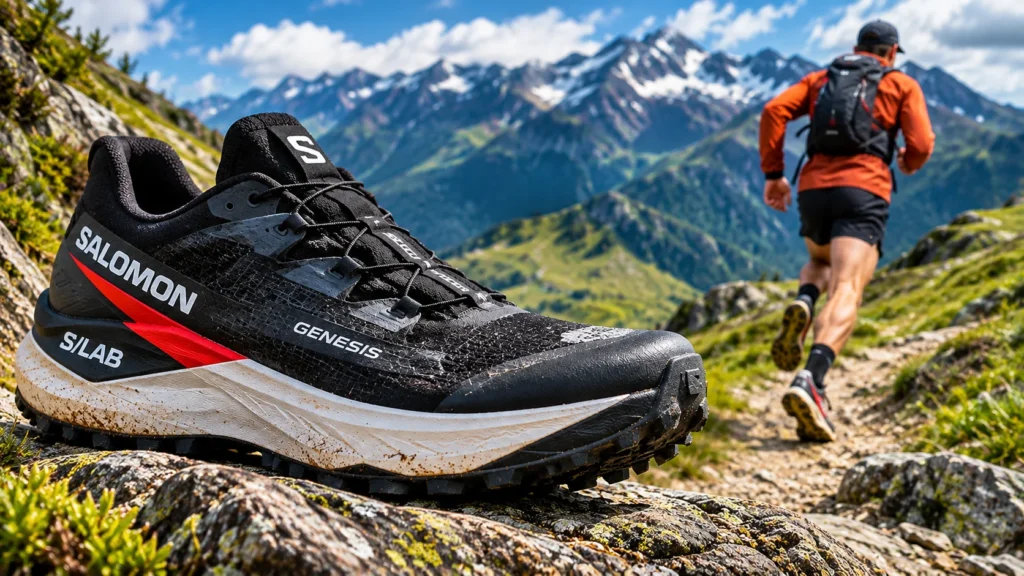
A protective, secure trail shoe for rocky routes and runners who like moderate ground feel.
Technical trails, steep descents, mixed mountain routes.
Maximum bounce, deep mud, or very wide feet.
Price context: $199.95 original retail; a selected Backcountry variant was listed at $149.96 when checked.
The original Salomon S/Lab Genesis is a unisex trail running shoe from Salomon’s premium S/Lab range. It combines an 8 mm drop, 4.5 mm outsole lugs, and 258 g listed weight. The shoe is built for rocky, mixed terrain and ultra-trail efforts. It is not a waterproof road shoe.
The design puts foot security first. An EndoFit sleeve, Quicklace closure, and built-in gaiter work together around the foot. A reinforced toe cap and Profeel Film help guard against stones. These details matter most when the trail changes direction quickly.
The foam has less bounce than some premium rivals. Independent testing found 59.4% forefoot energy return and a 31.9 mm measured heel stack. Runners who love precise placement may enjoy that feel. Runners chasing a plush ride may prefer another model.
Salomon calls it a high-performance shoe for varied mountain trails. That use case makes sense, but the outsole and upper do not perform equally in every test. Its strengths are control, protection, and adaptable use rather than universal comfort.
Salomon S/Lab Genesis: Original Trail Running Shoe
Choose this model if its secure fit works and you find a worthwhile discount. Confirm the product photos and model name before buying.
This is an affiliate search link. Live Amazon inventory and pricing were not verified.
What Does the Newer Salomon S/Lab Genesis 2 Change?
The updated model prioritizes improved underfoot response and stability without dropping technical-trail protection.
New buyers who want updated foam and a wider platform.
Buyers who can get the original for much less.
Official Salomon US listed price: $200. Amazon price not independently verified.
Genesis 2 is a real redesign, not just a new color. Salomon lists a 6 mm drop and 4.5 mm lugs. Its optiFOAM² compound aims to add bounce and shock absorption. The brand also includes an activeCHASSIS support system.
Salomon reports 39% more ground contact from a wider platform. This is a manufacturer claim, not an independent result from our testing. The updated Matryx Micro upper aims to improve durability and air flow. Those changes address issues raised about the first shoe.
The newer model weighs 10 oz according to Salomon US. That is not directly comparable with the original’s 258 g claim without checking sample sizes. It is best to treat both as manufacturer-listed figures. Your own fit and pace will matter more than a small weight gap.
If you’re buying at full price, Genesis 2 offers newer technology for the same broad mountain-trail mission. That doesn’t make the original obsolete. It makes a discount and a great fit more important when choosing the first generation.
Salomon S/Lab Genesis 2: Updated Trail Running Shoe
Pick this version if you value the newer cushioning and stability design. Check the listing carefully so you do not confuse it with the original.
This is an affiliate search link. Live Amazon inventory and pricing were not verified.
What Are the Full S/Lab Genesis Specifications?
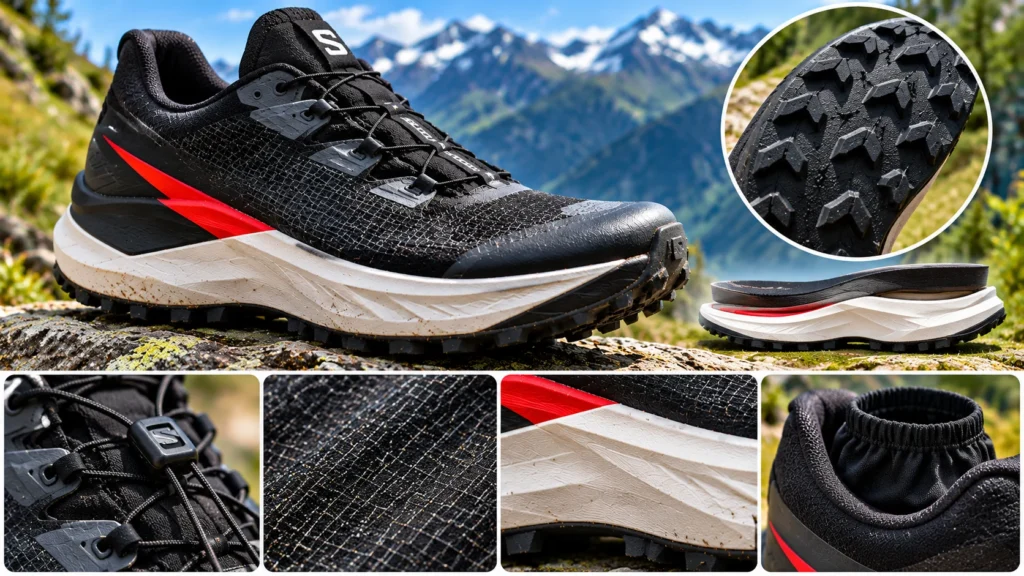
The original S/Lab Genesis combines a relatively low listed weight with an 8 mm drop and 4.5 mm lugs. Genesis 2 reduces the stated drop to 6 mm and changes the foam and support layout. Those differences affect feel more than the model names suggest.
The figures below use manufacturer product pages unless marked otherwise. A listed weight can reflect a specific sample size. Lab results may differ because tools and test methods vary. Compare the same sizes when possible, using this running shoe specification guide.
| Specification | Original S/Lab Genesis | S/Lab Genesis 2 | Difference |
|---|---|---|---|
| US price reference | $199.95 original retailer MSRP | $200 current official | Nearly equal list price |
| Weight, brand listed | 258 g | 10 oz / about 283 g | Different listed figures |
| Heel-to-toe drop | 8 mm | 6 mm | Original: higher drop |
| Lug depth | 4.5 mm | 4.5 mm | Tie in listed depth |
| Outsole | All-Terrain Contagrip | Revised All-Terrain Contagrip | Revised tread on 2 |
| Midsole | optiFOAM | optiFOAM and optiFOAM² | Updated foam on 2 |
| Upper | Matryx with Kevlar threads | Matryx Micro update | Revised upper on 2 |
| Ground protection | Profeel Film | Profeel Film | Both protect underfoot |
| Foot hold | EndoFit + Quicklace | EndoFit + Quicklace | Shared design features |
| Added chassis | Not listed as activeCHASSIS | activeCHASSIS | Genesis 2 |
| Integrated gaiter | Yes | Yes | Tie |
| Primary terrain | Mixed / rocky | Mixed / rocky | Same core purpose |
For exact features and regional variants, refer to Salomon’s original Genesis specifications. Model colors and sizes can change by market. The comparison covers the original low-cut S/Lab shoe, not the standard Genesis, a GTX model, or another S/Lab release.
How Well Does the Original Genesis Grip Rocky and Wet Trails?
The original Genesis performs best as a controlled mixed-terrain shoe, not a dedicated mud specialist. Its 4.5 mm lugs are deep enough for gravel, loose dirt, and many mountain routes. The two-part tread gives several edges for braking and push-off. Good foot placement still matters when rocks turn slick.
Salomon’s All-Terrain Contagrip compound aims to cover wet and dry conditions. That does not mean every wet surface grips equally well. RunRepeat recorded a forefoot traction score of 0.55 in its test. Its comparison-group average was 0.69. Treat this as a reason for caution on smooth, wet rock.
On a dry, broken trail, secure fit can matter more than extreme lug depth. Shoes that slide around the foot create lost control. The S/Lab Genesis helps reduce that movement with its close upper wrap and lacing system. This is where its design earns attention.
Deep mud changes the demands. Mud specialists use different lug spacing and more aggressive designs to clear soft ground. A runner who spends most weekends on muddy woodland tracks should consider a dedicated soft-ground shoe instead. The original Genesis is better as a varied-terrain option.
Genesis 2 keeps a 4.5 mm listed lug depth but redesigns the tread. Salomon says this improves grip. That claim is useful context, not a guarantee that it will outperform the original on every wet stone. Try it in the conditions you run most.
Is the Original S/Lab Genesis Comfortable for Ultras?
The original S/Lab Genesis can work for long races if you like moderate cushioning and direct ground feel. It is not the softest trail shoe in its price class. Salomon’s 8 mm drop gives a familiar heel-to-toe slope. The midsole and Profeel Film work together to blunt sharp trail impacts.
RunRepeat measured a 31.9 mm heel stack and 24.1 mm forefoot stack. Its energy-return test recorded 55.6% at the heel and 59.4% at the forefoot. These results sit around ordinary trail-shoe territory. They do not support claims of exceptional spring.
The shoe also has a 10.5 mm tongue in the same lab’s measurement. That can help spread lace pressure across the foot. The sock-like interior reduces tongue movement. For long descents, those details matter as feet shift forward with each step.
However, a long ultra is not a single comfort test. Swelling, downhill pounding, temperature, and running style can change the feel. A shoe that works for a 10-mile run may irritate you after 40 miles. Build up distance before using it for a major race.
If softer cushioning is your top goal, our On Cloudultra 2 review provides another example of the comfort-versus-control trade-off. Do not assume that a shoe labeled for ultras will match your cushioning needs.
Does the Salomon S/Lab Genesis Fit True to Size?
The original Genesis generally fits true to size, but the front is not especially tall. RunRepeat’s owner sizing poll leaned true to size. The lab measured a 94.2 mm fit width and a 74.8 mm toe-box width. Those numbers suggest a shape closer to medium than ultra narrow.
Toe-box height tells another story. The measured 25.1 mm vertical space is lower than that lab’s category average. If your big toe presses upward, the shoe can feel tight even when the width seems fine. That is why length alone is a weak fit check.
Try the shoe with your normal trail socks. Stand on a slope or walk down stairs to test toe contact. Tighten Quicklace just enough to stop heel slip. The shoe should hold the midfoot without compressing the forefoot. Leave room for swelling on long runs.
Wide-footed runners should not buy on the basis of a size chart alone. A roomy zero-drop alternative offers a different foot shape. Our Altra Lone Peak 9 coverage explains that wider-toe approach. Remember that a zero-drop shoe also changes the loading on your legs.
How Durable Is the Genesis Upper and Outsole?
The Genesis has mixed lab durability results. Its outsole performed better than its upper in some abrasion tests. RunRepeat recorded 1.1 mm of outsole wear under its test method. The toe-area textile and heel padding each earned 2/5 durability scores in that lab’s tests.
That doesn’t mean every pair fails early. Abrasion machines isolate one kind of wear, and real trails create different stresses. The protective toe bumper can resist bumps while the textile above it remains vulnerable to repeated scraping. Both findings can be true.
Matryx uses strong threads to support a light woven structure. Still, sharp rocks, rough gaiters, and repeated rubbing can damage fabric. Check high-wear points near the big toe, ankle collar, and lace paths. Early fraying matters more than surface dirt.
One surprise is that thick-looking protection does not guarantee better fabric abrasion scores. Buyers should inspect material wear and rubber wear separately. Do not use an assumed mileage lifespan as a promise. Runner weight, gait, terrain, and washing habits change shoe life.
Genesis 2 uses a revised Matryx Micro upper, and Salomon claims better durability. The claim is encouraging, but field use over time remains the best test. If you already own the original and it has held up well, there is no need to upgrade just for the new fabric name.
Is the Original Genesis Worth Its Price?
At full price, the original Genesis is harder to recommend against the updated model. A Backcountry listing showed $149.96 for one original color and size, down from $199.95. Salomon US lists Genesis 2 at $200. That example creates a $50.04 gap, not a universal price difference.
Prices and stock move by size and seller. A popular size may cost more than a clearance size. Amazon pricing could not be confirmed during this research. Compare the exact model, return terms, and delivery cost before calling an offer a deal.
A discount matters because the original’s EVA-based foam isn’t especially bouncy. You are paying for technical fit, protection, and overall trail control. If those are your priorities, paying around $150 can make sense. Paying $200 for an older model requires a stronger reason.
The newer shoe offers updated foam and chassis design for an official $200. Yet a higher price is not automatically a better fit. An original pair that fits securely may beat a newer pair that causes rubbing. Fit remains the first buying test, then terrain, then cost.
What Safety and Protection Features Matter Most?
Foot protection is one of the original Genesis’s best arguments. A reinforced toe cap reduces the impact of accidental toe strikes. Profeel Film helps filter sharp ground pressure. The medial side gets a protective pad. Those details matter on rocky trails and steep side slopes.
The integrated gaiter limits small stones entering the collar. It is not a waterproof seal. The standard shoe should not be sold as waterproof, and a wet outing can leave the interior damp. RunRepeat reported modest breathability and slow drying in its chamber-based test.
Use care on polished wet rock and slimy roots. No outsole makes poor footing safe. Shorten your stride, watch the surface, and avoid sudden sideways braking. Replace shoes once grip edges wear down or the outsole starts to separate.
A grippy shoe cannot replace careful foot placement. Test wet-rock traction on low-risk routes before taking it onto exposed terrain.
Genesis 2 adds an activeCHASSIS support element and a wider platform, according to Salomon. The brand says the change increases ground contact by 39%. This could help runners who want more support under uneven footfalls. It still needs a proper fit to work as intended.
Which Trail Conditions Suit the Original Genesis Best?
The original Genesis suits mixed technical routes with rock, firm dirt, gravel, and climbing. It is less convincing as a dedicated deep-mud or road trainer. Match the shoe to the surface you use most, not just the hardest stretch on one route.
| Use case | Recommendation |
|---|---|
| Rocky mountain runs | Strong option: secure fit and underfoot protection. |
| Mixed gravel and dirt | Good fit: versatile lugs without a bulky feel. |
| Long ultras | Consider if moderate cushioning suits your feet. |
| Wet polished rock | Use care: measured wet traction wasn’t class-leading. |
| Deep mud | Choose a specialized mud outsole instead. |
| Daily road mileage | Not ideal: trail tread is unnecessary on roads. |
For a day that mixes running with hiking, a flexible technical trail shoe can be handy. But terrain and load still matter. Our guide to hiking in running shoes explains when trail runners make sense and when sturdier footwear is more suitable.
Who Should Buy or Skip the Salomon S/Lab Genesis?
Buy the original Genesis if you value secure mountain-trail control and can get a genuine discount. Skip it if you demand maximum bounce, very generous vertical toe space, or specialized deep-mud grip. A technically advanced shoe is still the wrong shoe when its fit is wrong.
- Your routes include dry rocks and uneven descents.
- Quicklace and EndoFit suit your foot shape.
- You like a lower, connected trail ride.
- Your size is clearly discounted.
- You need a tall and soft midsole.
- Your toes press against low uppers.
- Most of your routes are deep mud.
- The older model costs the same as Genesis 2.
Don’t buy either S/Lab model solely for a premium badge. A standard Salomon Genesis or a Hoka Speedgoat can offer better value for some runners. Consider a wider option if toe space matters most. Try footwear with your race socks whenever possible.
What Do Real Buyers and Independent Tests Say?
Customer ratings show generally favorable responses, but they don’t replace a fit test. When checked, Salomon UK displayed 4.4/5 from 642 reviews for the original. Salomon US displayed 4.4/5 from 149 reviews for Genesis 2. Those are different regional product pages, not matched survey samples.
4.4/5
642 Salomon UK reviews at research time
Reported strengths: secure fit, technical-trail confidence, and protective design.
Reasons to pause: premium cost, mixed wet traction, and upper wear findings.
4.4/5
149 Salomon US reviews at research time
Design improvements: updated foam, wider platform, and redesigned outsole.
Reasons to pause: $200 list price and a fit that differs from the first generation.
Independent testing adds a useful check. RunRepeat measured 59.4% forefoot energy return, 0.55 forefoot traction, and 1.1 mm outsole abrasion loss on the original. Its textile durability scores were less impressive. These measurements describe one standardized lab method, not every owner’s experience.
Amazon star averages and review counts were not reliably available for these exact models. They are intentionally not presented as verified. Avoid treating unconfirmed marketplace complaints as measured facts. Check recent reviews for your size and color before ordering.
How Should You Clean and Maintain the S/Lab Genesis?
Remove mud with a soft brush and water, then dry the shoes naturally with their insoles removed.
Regular cleaning helps protect the Genesis upper and keeps debris out of the collar. Salomon advises brushing away dirt, washing gently with water, and drying in moving air. Avoid a washing machine, tumble dryer, and direct heat. Heat can damage bonded parts and change the fit.
After muddy runs, knock off heavy clumps before they harden. Open the lacing system so air reaches the interior. Remove the insoles and let both parts dry fully. Stuffing the shoes loosely with newspaper can help absorb water. Change the paper if it gets soaked.
Check the Contagrip tread for worn edges. Examine the Matryx upper for cuts, especially beside the toes. Look for heel-lining damage and any sole separation. Replace the shoes if their grip or support is no longer safe. A mileage number alone cannot determine that.
For brand instructions, read Salomon’s official running shoe cleaning guide. Store dry shoes away from sunlight and damp closed bags. Rotate pairs if your training schedule allows full drying between sessions.
Final Verdict: Should You Still Buy the Original S/Lab Genesis?
Yes, the original S/Lab Genesis is still worth buying for the right runner at the right price. It offers a secure fit, rock protection, and a close-to-ground feel on mixed technical trails. Its 8 mm drop and 4.5 mm lugs make sense on long mountain days.
At full price, though, Genesis 2 is a stronger starting point for most new buyers. Salomon updated the foam, outsole design, and support platform while keeping the trail-focused mission. The first shoe’s moderate energy return and mixed upper durability deserve attention.
My recommendation is to buy the original only when your fit is excellent and its discount is meaningful. A $149.96 retailer example is more persuasive than paying nearly $200. If both versions cost roughly the same, start by trying Genesis 2. The best trail shoe is the one that remains secure and comfortable late in your run.
Both links open Amazon search results with the affiliate tag. Confirm model, seller, size, and live price.
Frequently Asked Questions
Is the Salomon S/Lab Genesis good for ultramarathons?
Yes, the original Salomon S/Lab Genesis can suit ultras if you prefer moderate cushioning and stable foot hold. Its 8 mm drop, Profeel Film, and protective toe cap support technical mountain running. Test it on long training routes first, especially if your feet swell or you favor softer foam.
Does the original S/Lab Genesis run true to size?
The original S/Lab Genesis generally runs true to size according to RunRepeat’s owner-fit poll. Its toe box is not unusually narrow in measured width, but vertical toe room is limited. Try it with trail socks and check clearance on downhill steps before choosing your normal size.
What is the difference between S/Lab Genesis and Genesis 2?
The original S/Lab Genesis has an 8 mm listed drop and standard optiFOAM cushioning. Genesis 2 moves to a 6 mm drop and adds optiFOAM², activeCHASSIS, and a wider platform. Both target mixed technical terrain with 4.5 mm listed lugs, but their fit and ride differ.
Is the S/Lab Genesis waterproof?
No, the standard original S/Lab Genesis is not advertised as a waterproof shoe. Its integrated gaiter helps keep out small stones and trail debris, not water. Rain and stream crossings can soak the upper. Dry it carefully after wet runs and avoid treating its woven fabric as a waterproof membrane.
Which is better for technical trails: Genesis or Genesis 2?
Genesis 2 is the better new full-price starting point because Salomon revised the grip layout, cushioning, and platform. The original remains a good choice for runners who already trust its fit or find a large discount. Neither model eliminates the need for care on slick rock, mud, and exposed ground.
Affiliate Disclosure: As an Amazon Associate, I earn from qualifying purchases. If you click a link on this page and make a purchase, I may receive a small commission — at no extra cost to you. I only recommend products I genuinely believe will help you. This helps keep the site free and running. Thank you for your support.


