
Quick Answer
The Under Armour Flow Velociti Wind 3 is worth considering for short road runs, speed sessions, and runners who prefer a firm, lively feel. Its 8 mm drop, 8.8 oz listed weight, and rubber-free Flow sole make it nimble. Skip it if you need a wide fit, plush long-run cushioning, or built-in run tracking.
The key decision: fast road feel or soft long-run comfort?
- Choose it for: tempo runs, short training sessions, and a light-feeling ride.
- Think twice if: you need extra toe room or cool, airy mesh.
- Check first: the style code should read 3026117.
Quick Verdict: Under Armour Flow Velociti Wind 3
Best for
Neutral runners who want a quick, controlled shoe for shorter road miles and faster workouts.
Not ideal for
Wide feet, very long easy runs, deep cushioning needs, and runners seeking support for overpronation.
Price reference: $130 original US retail price. Current store prices vary by size, color, and stock; an exact live Amazon price was not verified.
Our verdict: A useful fast trainer at a fair discount, but not the best one-shoe choice for every runner.
Key Takeaways
- Under Armour lists an 8 mm drop and 8.8 oz weight for men’s style 3026117.
- Flow foam forms both the cushioning layer and the road-contact surface.
- A knit upper and winged tongue aim to improve midfoot and heel hold.
- Independent wear testing flags a narrow fit and less comfort on longer runs.
- This model does not connect to UA MapMyRun, unlike some older Velociti shoes.
By Steven Tyler
Review method: This is a research-based buying guide, not a claimed hands-on road test. It draws on Under Armour’s specifications, published independent testing, and verified customer feedback. No personal mileage or lab results are invented.
Want one running shoe for speed work, daily miles, and perhaps a short race? The Under Armour Flow Velociti Wind 3 deserves a look. It aims to cut bulk while keeping a smooth, steady feel on pavement. Yet its main strength also sets a limit. A shoe that feels lively over five kilometers can feel less kind during a slow, long run.
The name can cause confusion. Some stores call it the Flow Velociti Wind 3. Under Armour calls the same men’s style number, 3026117, the UA Velociti 3. That code matters more than the shop title. It helps you avoid mixing this model with the Wind 2 or the carbon-plated Velociti Elite.
What Is the Under Armour Flow Velociti Wind 3?
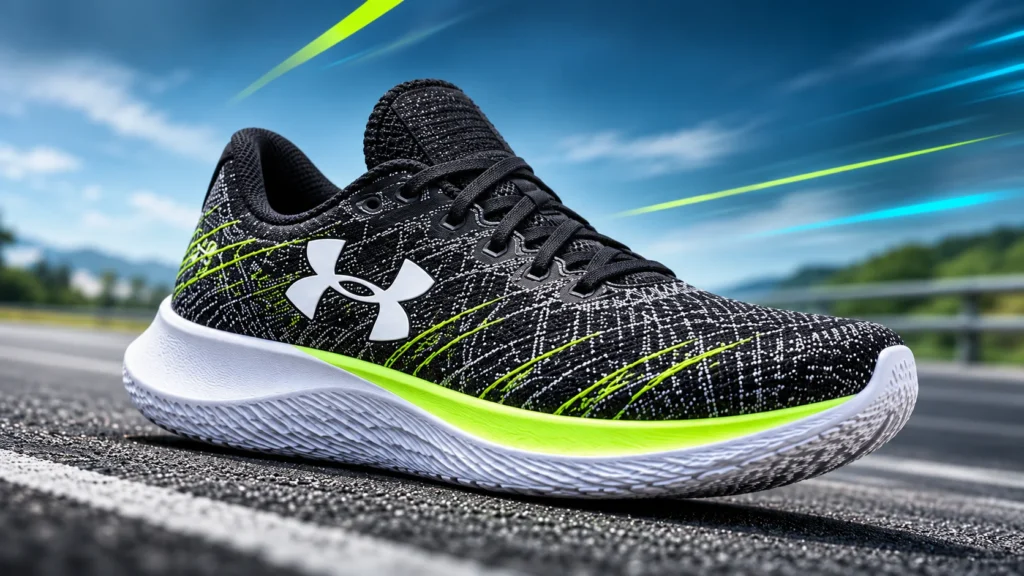
In short, the Flow Velociti Wind 3 is a neutral road running shoe built around a light, responsive ride. It is most at home during regular road training, short races, and steady faster efforts. It is not a motion-control shoe or a trail shoe. The design puts quick foot movement ahead of thick, soft foam.
The shoe uses Under Armour’s one-piece Flow cushioning system. The foam continues right to the ground. There is no separate, conventional rubber outsole. That keeps the design simple and helps explain its close-to-the-road character.
The top has changed, too. A flexible flat-knit material replaces the older Wind line’s more obvious Warp support structure. Added foam around the heel and a winged tongue help hold the foot in place. The result suits a runner who likes a secure upper but wants more give across the top of the foot.
That does not make the shoe ideal for every pace. A published independent Under Armour Velociti 3 review describes good energy on short runs and more limits as mileage grows. This is the most useful way to frame the shoe before buying.
What Are the Full Under Armour Flow Velociti Wind 3 Specifications?
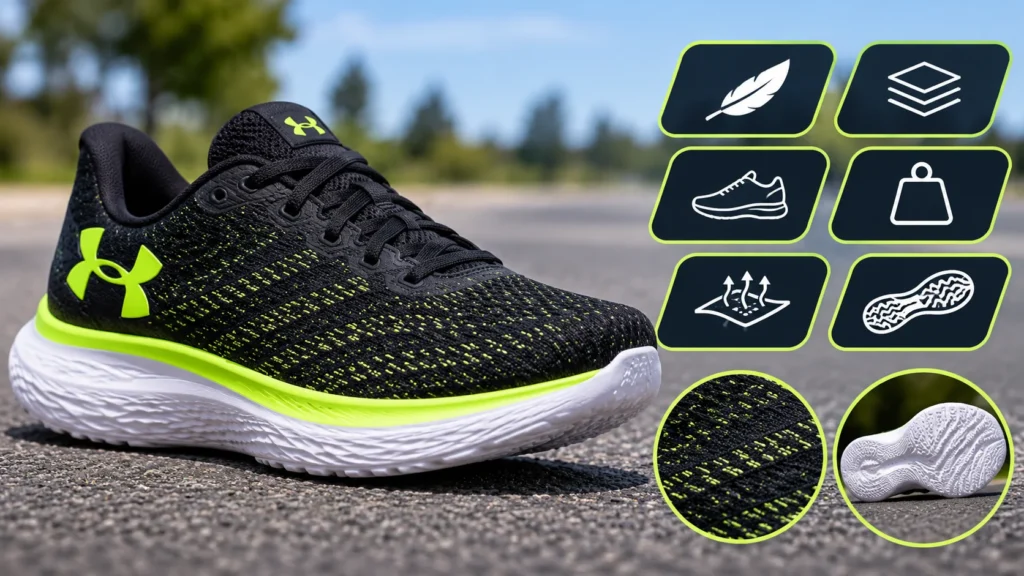
The most useful confirmed numbers are an 8 mm heel-to-toe drop and an 8.8 oz men’s listed weight. Under Armour also confirms a neutral platform, flat-knit upper, Flow foam, and no standard rubber outsole. Check the model code against the box before relying on any listing.
| Feature | Verified detail or buying note |
|---|---|
| Model | UA Velociti 3; also sold as Flow Velociti Wind 3 |
| Men’s style code | 3026117 |
| Type | Neutral road running shoe |
| Weight | 8.8 oz (about 249 g), Under Armour’s men’s listing |
| Heel-to-toe drop | 8 mm |
| Stack height | 30 mm heel / 22 mm forefoot, reported by independent tester |
| Upper | Flat-knit fabric with zoned stretch |
| Midsole | One-piece UA Flow foam |
| Outsole | Patterned Flow foam; no separate rubber layer |
| Footbed | EVA sockliner; removable on retailer listing |
| Plate | No carbon plate |
| Run tracking | No UA MapMyRun connection for style 3026117 |
| Original US retail | $130 |
Weight figures can differ across websites. Stores may use another sample size or their own scale. Under Armour’s 8.8 oz figure is the safest reference for this model. Treat lighter third-party numbers with care unless the size and method match.
How Does the Flow Cushioning Feel on the Road?
Flow cushioning delivers a lively, grounded feel rather than a deep, soft landing. That makes the shoe well suited to short runs and quicker strides. The midsole does not need a rubber base to contact the ground. This changes both the shoe’s feel and its look.
On a short road run, a lower and firmer platform can make quick turns of pace feel natural. You feel more of the road surface. The trade-off comes when your legs tire or when you want an easy, slow recovery day. Extra softness then matters more than quick response.
Independent testing describes the cushioning as responsive during early miles but less at home over longer distances. That is a useful warning for anyone buying just one shoe for every kind of run. Do not confuse a fast-feeling shoe with a soft shoe. They solve different needs.
The 8 mm drop is also worth noting. It places the heel higher than the forefoot by 8 mm. It can feel familiar to runners used to many standard road trainers. But the drop alone does not tell you how the shoe will feel. Foam, fit, and your stride matter just as much.
Is the Under Armour Flow Velociti Wind 3 Good for Speed Work?
Yes, this model makes the most sense for tempo runs, short intervals, and controlled fast road miles. Its moderate weight and close-to-ground setup favor easy changes in pace. It can work for a 5K session or a firm midweek workout without a race-only plate.
A tempo run means holding a pace that feels hard but controlled. The Velociti 3 suits that kind of work because the upper aims to stay secure when cadence rises. The foam gives some rebound without the high bounce found in many thick race shoes.
Try a session with easy running first, then short faster blocks. Pay attention to forefoot room and any rubbing as the run goes on. A shoe that holds well during a ten-minute test may feel tight after your feet swell. The fit check is more useful than chasing a claimed speed gain.
For track sprints or all-out road racing, a plated race shoe serves a different role. The Velociti 3 has no carbon plate. Its advantage is a simpler trainer feel, not a promise of race-day times. Choose it for regular fast work before choosing it for a personal best attempt.
Can You Use the Flow Velociti Wind 3 for Daily Training?
Yes, but daily training works best when your mileage stays modest and you like a firmer ride. The shoe can handle easy runs, short commutes on foot, and faster workouts. It becomes less appealing when your daily schedule calls for long, slow miles with plenty of shock protection.
Think about a runner doing three road sessions each week. Two runs last around 30 minutes, and one includes faster blocks. That routine matches the shoe’s strengths. Now picture a runner doing long marathon base runs every weekend. That person may want a deeper and more forgiving sole.
Under Armour calls this a neutral running shoe. Neutral does not mean unstable. It means the shoe does not add special motion-control support for runners who need help managing foot movement. If a clinician has advised a specific type of support, keep that advice ahead of the shoe’s marketing.
The best daily shoe is the one that stays comfortable after your usual distance. Do not buy this model based only on its weight. First decide how much cushioning your legs want by the final third of your normal run.
Does the Flat-Knit Upper Fit True to Size?
The upper holds the foot well, but independent testing found a snug, narrow fit. The knit stretches in selected areas, yet runners with broad forefeet should be careful. A comfortable length on paper does not always leave enough space across the toes.
Under Armour designed the knit to balance stretch, support, and air flow. A reinforced heel and padded winged tongue aim to keep the shoe steady during fast movement. These details are useful when you change pace or corner on the road.
There is a catch. One independent tester found the upper warm and said it kept water when wet. That does not cancel the maker’s breathability claim. It shows how fabric can behave differently in real running conditions. Knit can feel soft on the foot and still hold heat.
Fit tip: Try the shoe with your normal running socks. Check for a thumb-width of front space, toe movement, and no pinching across the widest part of your foot. If you are between sizes, test the larger one rather than buying blind.
Pay special attention to the toe box after standing for several minutes. A secure midfoot should not force your toes together. A bigger size cannot always fix a shape mismatch. If the forefoot still presses from the sides, choose a wider shoe design.
How Good Is the Grip Without a Rubber Outsole?
The patterned Flow sole can grip normal roads well, but no rubber layer does not mean all-weather traction. Under Armour designs the exposed foam to resist wear and hold the ground. Published testers report capable grip on some wet pavement. Some owners, however, mention slipping on wet surfaces.
Those two observations can both be true. Road paint, smooth tiles, oily patches, and rough asphalt offer very different levels of grip. Rain changes the surface again. A good result on wet pavement does not prove safe traction on every slick corner.
The outsole design also raises a fair wear question. With no separate rubber sheet, the same foam cushions your foot and meets the road. Under Armour calls it durable, and independent testing rates construction well. That still does not supply a measured lifespan for every runner.
Check the contact areas under the heel and forefoot after regular use. Uneven wear can tell you more than a mileage rule. Avoid treating this road shoe as a trail or ice shoe. It lacks the deep lugs built for loose ground and winter grip.
Is the Wind 3 Breathable Enough for Hot Weather?
Breathability is a mixed point, not a clear win. The maker describes the flat-knit upper as breathable. An independent road tester found the material warm, especially compared with open mesh. That makes this a shoe to try carefully if you often run in strong heat.
The knit design helps explain the split. A close fit gives the foot steady hold. Yet the same dense fabric can slow the flow of air. During a cool morning run, this may not matter. On a humid afternoon, it can become the first thing you notice.
Socks also change comfort. Thin, sweat-moving socks can reduce dampness, but they cannot turn a dense upper into open mesh. If you already know your feet overheat, a more airy shoe is a safer choice. Look for broad ventilation panels and less material around the midfoot.
Wet-weather care matters here, too. Damp knit should be dried fully between runs. Never put the shoe next to strong heat to rush the process. Let the upper keep its shape while air moves around it.
What Changed From the Flow Velociti Wind 2?
The clearest changes are the knit upper, updated heel hold, and simpler electronics. The older Flow Velociti Wind 2 had an integrated sensor for connected run tracking. Under Armour says the Velociti 3 does not connect to UA MapMyRun. That is a major detail for runners who liked the earlier smart-shoe feature.
There is also a shift in how the top of the shoe holds the foot. The Wind 2 used UA Warp construction. This version uses a flat-knit upper, added heel foam, and a winged tongue. The change makes the shoe feel more like a classic fitted trainer than a thin, structured performance upper.
The Flow concept remains. Both models remove the usual separate rubber outsole. The newer shoe offers revised foam and a more protected heel. Yet older does not always mean worse. If your Wind 2 fits well and still performs well, a new upper alone is not a reason to replace it.
Check style codes carefully when comparing listings. Some retailers keep the Wind name, while Under Armour uses Velociti 3. Product titles alone can lead to the wrong pair, especially when stock is limited.
Does the Wind 3 Connect to UA MapMyRun?
No, Under Armour states that the men’s UA Velociti 3 does not connect to UA MapMyRun. Its official product question-and-answer page confirms this for style 3026117. Do not buy this shoe expecting the built-in run sensor found in some older Under Armour models.
The distinction matters because old shopping descriptions often travel between product pages. A listing may mention a connected predecessor, then show photos of the newer shoe. Check the exact model before trusting a feature claim. The style number is the fastest way to separate them.
You can still track runs with a phone or watch. You just should not expect the shoe itself to send data. Also note that Under Armour set an end date for connectivity on certain older smart-shoe models. That aging feature is not a good reason to pay extra for old stock.
What Are the Main Pros and Cons?
The main strengths are a light-feeling ride, lively foam, and secure foot hold. The main drawbacks are a snug forefoot, mixed warm-weather comfort, and less appeal for long easy miles. These are practical trade-offs, not small details hidden in a spec sheet.
Pros
- 8.8 oz listed men’s weight feels manageable for uptempo work.
- One-piece Flow foam offers a smooth, responsive ride.
- Winged tongue and padded heel help hold the foot.
- 8 mm drop suits runners used to standard road trainers.
- Discounts can make an older model easier to justify.
Cons
- Narrow toe area can limit comfort for wide feet.
- Knit upper may feel hot and hold rainwater.
- Long easy runs may call for more cushioning.
- No built-in UA MapMyRun connection.
- Slick surfaces need care, even with a grippy sole pattern.
No running shoe wins every category. A narrow upper can improve hold for one runner and cause pressure for another. The useful question is not whether the design is good in general. It is whether the design matches your feet and your normal running routine.
What Do Real Buyers Say About the Velociti 3?
Buyer feedback is strongly positive about comfort, with fit and outsole concerns worth checking. Under Armour’s Canadian product page lists a 4.8 out of 5 rating from 93 ratings for this style. That is a store rating, not an independent performance test.
Positive owner comments describe comfortable wear for running, travel, and daily walking. The same page’s review summary highlights light weight, fit, and easy break-in. These reports support the idea that the shoe can serve beyond hard workouts.
However, the brand’s summary also notes narrow or small fit reports. Some buyers question traction on wet ground. One visible customer review raises a concern about exposed foam and possible wear, though that comment does not prove early failure. There is a big gap between a worry and measured long-term damage.
Customer review snapshot
Under Armour Canada: 4.8/5 from 93 ratings at the time of research.
Common praise: comfort, light feel, everyday wear.
Points to watch: narrow forefoot, wet-surface grip, foam wear questions.
This summary uses published customer feedback. It does not claim a verified Amazon review count.
The best way to use reviews is to look for patterns that apply to you. A runner with narrow feet may welcome the close hold. A runner with wide feet should not ignore repeated fit comments just because the overall star score is high.
How Much Should You Pay for the Flow Velociti Wind 3?
The original US retail price was $130, but current value depends on the exact offer. The model is older, and retailers set different prices by size and color. No exact live Amazon product listing or Amazon price was verified during this research, so a precise Amazon figure would be misleading.
As an editorial buying rule, a clear discount below the original price makes this shoe more attractive. That is not a claim about today’s lowest deal. You still need to compare final costs after shipping, taxes, and any return fee.
Watch out for stores that list a low price for one rare size while the size you need costs much more. A sale is not useful if it pushes you into a poor fit. Also check whether the shoe is final sale. Older stock can be hard to exchange.
Before paying, match the item code to 3026117, inspect the size chart, and confirm that the seller allows returns. At full retail, compare the fit and comfort of newer daily trainers too. The Velociti 3 offers a specific road feel, not a universal value win.
Who Should Buy the Flow Velociti Wind 3?
Buy it if you have neutral mechanics, like a snug fit, and spend most runs on roads. It fits best with short to medium sessions, a brisk training rhythm, and a preference for moderate cushioning. It also works as a second shoe alongside a softer long-run trainer.
Buy if you…
- Run road intervals or steady tempo efforts.
- Want one shoe for short runs and daily walking.
- Prefer ground feel over plush foam.
- Have a narrow or regular-width forefoot.
Skip if you…
- Need roomy toe space or a wide fit.
- Mostly run long, slow recovery miles.
- Want a carbon-plated race shoe.
- Need trail traction or connected-shoe data.
Two better-fit categories are worth considering if you skip it. Look at a wide-fit daily trainer for toe room. Or choose a higher-cushion road shoe if easy distance makes up most of your training. Do not force an older sale model to do a job it was not designed for.
How Should You Care for the Flow Sole and Knit Upper?
Keep the shoe clean, dry it with air, and check the exposed foam often. The sole has no separate rubber sheet, so its road-contact pattern deserves regular attention. The knit upper also needs time to dry after a wet run.
Start by removing loose grit with a soft brush. Wipe the sole with a damp cloth. If the upper gets dirty, use mild soap and a little water. Do not soak it longer than needed. Avoid harsh cleaning chemicals that could affect the fabric or foam.
After a rainy run, loosen the laces and remove the insole if it comes out easily. Let both pieces dry in a shaded, airy place. Keep the shoes away from radiators, tumble dryers, and strong direct heat. Fast drying with heat can damage adhesives and materials.
Check wear around the outer heel and the forefoot. If one section loses its pattern much faster than the rest, review your shoe rotation and foot strike. Also watch for a loss of support, new pressure, or pain. Those changes matter more than a single fixed mileage target.
Is the Under Armour Flow Velociti Wind 3 Worth Buying?
Yes, for the right runner at the right price. The Flow Velociti Wind 3 offers a clean, lively road ride, secure upper design, and a useful balance for shorter runs. Its 8 mm drop and moderate cushioning make it a capable fast trainer. The shoe’s best feature is how directly it connects foot movement to the road.
Still, this is not a plush long-distance trainer. Independent tests warn about a snug toe box, a warm upper, and comfort limits during extended runs. The absence of connected tracking is another change that matters to past Wind owners. Some wet-surface grip concerns also deserve respect.
The value decision is simple. Buy it when the fit is right and the discount makes sense. If you need wide shoes, deep cushion, or stronger trail grip, keep looking. No price can make the wrong shape comfortable for every mile.
For a product check, use Under Armour’s official UA Velociti 3 specification page. You can also review retailer feedback for style 3026117. Confirm stock, size, and final price before you buy.
Frequently Asked Questions
Is the Under Armour Flow Velociti Wind 3 good for beginners?
Yes, it can suit beginners who run short road distances and enjoy a firmer feel. The neutral design and 8 mm drop are easy to understand. Beginners who want a soft ride for longer runs should compare more cushioned trainers before buying this model.
Is the Flow Velociti Wind 3 true to size?
The fit can feel small or narrow, especially around the toes. Independent testing reports a snug forefoot, and some customer feedback agrees. Try your usual running size and a half size up if possible. A larger size will not fix every width problem.
Can you run a half marathon in the Velociti Wind 3?
You can run a half marathon in this shoe if the fit and cushioning work for your legs. Yet independent testing suggests its lively feel suits shorter efforts better. Test it on your longest training runs before race day. Do not judge distance comfort from one short jog.
Does the Under Armour Velociti 3 have Bluetooth or MapMyRun?
No, Under Armour confirms that men’s style 3026117 does not connect to UA MapMyRun. Some older Wind shoes had built-in tracking sensors, which causes confusion in online listings. Use the style code to confirm the model. A phone or running watch can still log your sessions.
Is the Flow Velociti Wind 3 good on wet roads?
It can grip ordinary wet pavement, but you should take care on smooth or slippery spots. Testers report decent traction in some wet runs, while a small number of owners mention slipping. Avoid sharp turns on painted lines, ice, and slick tiles. This is a road shoe, not a winter traction shoe.
Affiliate Disclosure: As an Amazon Associate, I earn from qualifying purchases. If you click a link on this page and make a purchase, I may receive a small commission — at no extra cost to you. I only recommend products I genuinely believe will help you. This helps keep the site free and running. Thank you for your support.