
Quick answer: Yes, the Saucony Guide 17 is a strong daily trainer for runners who want gentle stability without a rigid medial post. Its wide platform and smooth rocker suit easy miles and long runs. The main trade-offs are modest wet grip, limited speed appeal, and a toe box that narrows near the big toe.
Best for easy, guided road miles
Best for: mild-to-moderate support, walking, recovery runs, and steady road training.
Skip if: you need a fast workout shoe, aggressive wet grip, or strong traditional posting.
Original retail price: $140; current Amazon price and sizes vary.
Independent Review and Lab Indicators
RunRepeat supplies the first four use-case scores. Breathability is its separate 3/5 laboratory rating; these are not one uniform test scale.
A stability shoe should guide your foot, not fight it. The Guide 17 uses shape rather than a hard inner post to do that.
I’m Steven Tyler. This evidence-led review draws on independent lab and wear tests.
What Is the Saucony Guide 17 and Who Is It For?
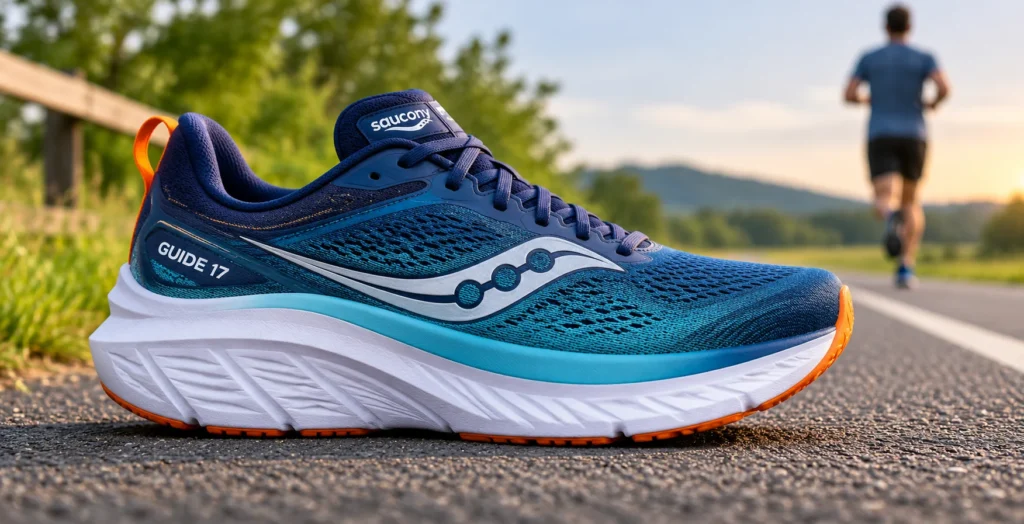
The Saucony Guide 17 is a cushioned road-running shoe with moderate, geometry-based support. It works best for runners who want help staying centered without a firm arch post.
Saucony calls the design CenterPath Technology. A broad sole, raised sidewalls, and rocker work together to guide each step.
- Want moderate support with less arch pressure
- Run mostly at easy or steady paces
- Need strong traditional motion control
- Run fast intervals as your main workout
Saucony Guide 17 Pros and Cons
The biggest strength is smooth, stable movement without a hard medial post. Its main drawback is weaker wet traction than the tested shoe average.
- Wide 121 mm forefoot platform increases ground contact and guidance
- Light 9.4 oz listed weight for a cushioned stability trainer
- Flexible 10.0 N bend result helps the rocker roll forward
- Heel lining earns 5/5 durability in independent lab testing
- Wet traction 0.44 trails the tested shoe average of 0.53
- Tapered big-toe area limits space despite a roomy midfoot
- Breathability earns only 3/5 in controlled smoke testing
- Exposed forefoot foam is not ideal on rough gravel paths
Saucony Guide 17 Key Features — What Do Tests Show?
Does CenterPath Technology Give Enough Stability?
Its wide, post-free base provides moderate guidance. RunRepeat measured 121.0 mm up front, versus a 115.2 mm average.
Takeaway: The broad base steadies the foot without creating a sharp arch bump.
Fit tip: Try a short easy run before buying. Notice whether the sidewalls guide you comfortably, especially near the arch.
Is the PWRRUN Cushioning Soft Enough for Long Runs?
Yes, if you like balanced cushioning. The shoe pairs PWRRUN foam with a softer PWRRUN+ sockliner.
Takeaway: The rocker matters as much as the foam for comfort.
How Good Is Saucony Guide 17 Grip in the Rain?
Wet grip trails the average: 0.44 versus 0.53 in RunRepeat’s traction test.
Wet Forefoot Grip — Independent Lab Coefficient
Higher means more traction. Bars compare the Guide 17 against the reported average, not a universal maximum.
Takeaway: The outsole suits clean roads better than slippery corners or loose trails.
Grip warning: Reduce speed on slick paint, wet metal, and steep wet turns. This is not a trail shoe.
Does the Upper Fit Wide Feet?
The midfoot is roomy, but toes face taper: 97.8 mm at the widest point versus 73.7 mm near the big toe.
Takeaway: A wide sole does not guarantee a wide toe box.
Is the Guide 17 Heavy or Stiff?
It bends easily: 10.0 N versus 15.6 N in RunRepeat’s lab.
Takeaway: A broad stable shoe does not have to feel rigid.
How Durable Is the Outsole and Heel?
Rubber wear is low: 0.6 mm versus the tested-shoe average of 1.1 mm.
Takeaway: Protected rubber areas last well in lab abrasion tests.
How Does the Saucony Guide 17 Perform in Real Tests?
Published tests rate the Guide 17 most highly for stability and daily running. They find much less benefit for races and hard tempo work.
Published Performance Measures
These are attributed RunRepeat assessments and tests, not FootwearHiker’s own laboratory scores.
Saucony Guide 17 Full Specifications
Manufacturer figures describe the design; lab results show how one tested sample measured. Different values are labeled here.
| Type | Stability road-running trainer |
| Support | CenterPath Technology; no medial post |
| Midsole | PWRRUN |
| Sockliner | PWRRUN+; removable |
| Stack, brand | 36 mm heel / 29 mm forefoot |
| Drop, brand | 6 mm |
| Weight, brand men | 9.4 oz / 269 g |
| Weight, lab sample | 9.7 oz / 275 g |
| Forefoot platform, lab | 121.0 mm |
| Forefoot grip, lab | 0.44 coefficient |
| Breathability, lab | 3/5 |
| Removable insole | ✓ Yes |
| Traditional medial post | ✗ No |
| Launch MSRP | $140 |
Saucony lists a 6 mm drop alongside 36/29 mm stack figures, which differ by 7 mm. RunRepeat measured 7 mm.
How Does the Saucony Guide 17 Compare to Competitors?
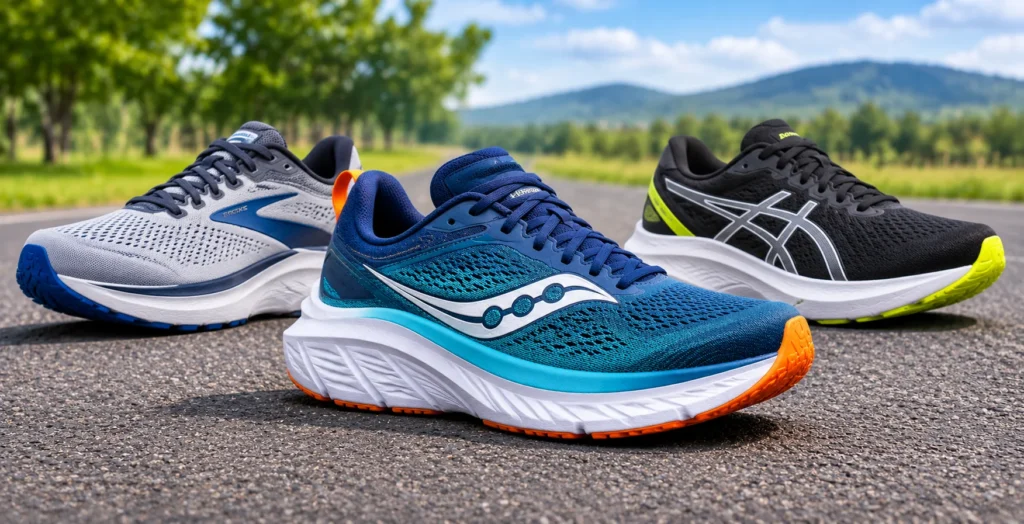
Choose the Guide 17 for smooth, lower-drop guidance. Choose Brooks for a more traditional heel-biased feel, or ASICS for firmer guided training.
Saucony Guide 17 vs Brooks Adrenaline GTS 23
The Guide rolls forward more. Brooks uses GuideRails and a 12 mm drop.
Saucony Guide 17 vs ASICS GT-2000 12
The Guide feels broader. ASICS has an 8 mm listed drop and firmer support.
| Measure | Guide 17 | Adrenaline GTS 23 | GT-2000 12 |
|---|---|---|---|
| Launch MSRP | $140 | $140 | $140 |
| Listed drop | 6 mm | 12 mm | 8 mm |
| Listed men’s weight | 9.4 oz | 10.4 oz | 9.4 oz |
| Support | Wide base + walls | GuideRails | 3D Guidance |
| Ideal use | Smooth daily miles | Heel-led daily miles | Structured daily miles |
| Ride character | Rocker-led | Classic trainer | Balanced/firm |
Saucony Guide 17 Pricing — Is It Worth the Price?
Yes, if the fit suits you and the sale price is sensible. Saucony launched the Guide 17 at $140, which matched its closest stability rivals.
A third-party price tracker recorded $106.77 for one Amazon men’s listing on October 15. Its lowest tracked price was $103 on September 29.
Saucony Guide 17 Road Running Shoe with CenterPath Support
Who Should Buy the Saucony Guide 17?
Buy the Guide 17 if you want quiet stability during steady road miles, not a fast racing shoe.
- Walkers wanting a cushioned stable shoe for daily outings
- Easy-pace runners who value a smooth forefoot rocker
- Fast runners who need pop for intervals or races
- Trail runners who face wet rocks or rough gravel
Bottom line: Choose the Guide 17 for smooth guided miles, then test the toe fit and arch feel.
What Are Real Buyers Saying About the Saucony Guide 17?
One third-party tracker reports 4.4/5 from 490 ratings. Amazon’s live count was not verified.
Buyer and Tester Sentiment Snapshot
- Reported listing rating: 4.4/5 across 490 ratings, not live verified
- Reviewers flag modest grip and limited speed-focused performance
Final Verdict — Is the Saucony Guide 17 Worth Buying?
Yes, for steady runs and moderate guidance. The Guide 17 offers a broad, stable platform with a rocker that keeps transitions smooth. Its 6 mm listed drop and PWRRUN setup make it distinct from classic posted stability shoes. The independent 84/100 review score supports a positive verdict, but it is not a universal fit rating. Choose it for recovery, easy mileage, or walking. Skip it when wet grip, sharp turns, roomy toe splay, or speed matter most. The smartest move is to try it on and check today’s price.
For measured grip, cushioning, and wear, see RunRepeat’s laboratory review. For field notes on support and movement, see Doctors of Running. Saucony’s launch specifications confirm the original design figures.
Saucony Guide 17 — smooth stability for everyday road miles
Frequently Asked Questions
Is the Saucony Guide 17 good for overpronation?
It can help runners who prefer mild-to-moderate guidance. Its wide base and sidewalls center the foot without a rigid medial post. It is not a medical treatment or a guarantee against injury. If you need strong targeted support, compare fits with other stability shoes.
Is the Saucony Guide 17 true to size?
RunRepeat lists the Guide 17 as true to size. The midfoot is fairly accommodating, but the big-toe area tapers. Shoe shape can matter more than length alone. Try your usual running size and check for clear toe space before a long run.
Can you run a marathon in the Guide 17?
Yes, it can work for steady marathon training or a comfortable finish. Independent reviewers report smooth long-run support, not race-day bounce. Faster runners may prefer a lighter, more responsive shoe. Check comfort during longer training runs before using it on race day.
Is the Saucony Guide 17 waterproof?
No, this is a breathable-mesh road trainer, not a waterproof running shoe. Wet pavement also raises a separate concern: independent grip testing found less traction than the tested-shoe average. Wear weather-appropriate socks and take care on slick painted or polished surfaces.
Does the Saucony Guide 17 have a medial post?
No. The Guide 17 replaces the earlier traditional post approach with CenterPath geometry. A broad platform, higher sidewalls, and a rocker help guide motion. Runners who dislike firm arch pressure may welcome this, but those wanting strong correction may not.
Is the Guide 17 better than the Guide 16?
It is better suited to runners who want higher cushioning and a smooth rocker. The design also changes the stability feel, so not every Guide 16 fan will prefer it. If you liked the older shoe’s firmer, more focused support, test both before switching.
Affiliate disclosure: This article contains Amazon affiliate links. We may earn a commission from qualifying purchases at no extra cost to you.