

Quick Answer
The Brooks Divide 5 is the better buy for most new trail runners. It adds DNA LOFT v2 foam and more underfoot cushioning while weighing 10.2 ounces. The Divide 4 weighs 10.4 ounces and remains a smart deal if marked down. Both suit pavement, gravel, and easy trails, not steep technical terrain.
What changed from Brooks Divide 4 to Divide 5?
- Divide 5: newer DNA LOFT v2 foam and 4 mm more stack, per Brooks.
- Divide 4: lower $100 launch price and firmer, more direct ride.
- Both: 8 mm stated drop and a TrailTack rubber outsole.
Quick Verdict: Brooks Divide 5 vs Divide 4
Scores below are editorial fit assessments, not lab test scores or Amazon customer averages. Prices are launch MSRPs, not verified live offers.
Brooks Divide 5
★★★★☆
$110 launch MSRP
Best for: Beginners who mix neighborhood roads with smooth dirt and gravel paths.
Brooks Divide 4
★★★★☆
$100 launch MSRP
Best for: Value hunters who prefer a firmer feel and find genuine clearance stock.
| Category | Divide 5 | Divide 4 |
|---|---|---|
| Overall winner | 🏆 | — |
| Best value at launch MSRP | ✅ | ❌ |
| Softer daily cushioning | ✅ | ❌ |
| Firmer ground feel | ❌ | ✅ |
| Weight on paper | ✅ | ❌ |
Bottom line: Choose the Divide 5 for a softer mixed-surface ride; choose the Divide 4 if its lower checkout price matters more.
- Divide 5 wins overall with newer foam and a taller cushioned platform.
- The launch price gap is $10: $110 against $100.
- Neither model targets demanding mountain races or deep mud.
- Divide 4 offers a useful lower-cost choice when the size and fit match.
- The 0.2-ounce weight change matters less than the different ride feel.
Is the Brooks Divide 5 worth buying when the older Divide 4 costs less? That question matters if you want one shoe for roads, gravel, and easy dirt paths. The new model looks familiar, but Brooks changed the part under your foot.
I’m Steven Tyler, and I use published product details and independent reviews to guide this comparison. I have not carried out a new side-by-side field test for this article. That distinction matters because fit and trail grip depend on real conditions.
The Divide range sits between a road trainer and a full trail shoe. You get extra tread without the bulk of a rugged mountain model. Our guide to road versus trail footwear explains when that compromise works.
Below, I compare cushioning, grip, price, fit, and useful daily tasks. I also explain where both shoes fall short. The goal is a clear purchase choice, not a long list of features.
What Is the Brooks Divide 5 Designed to Do?
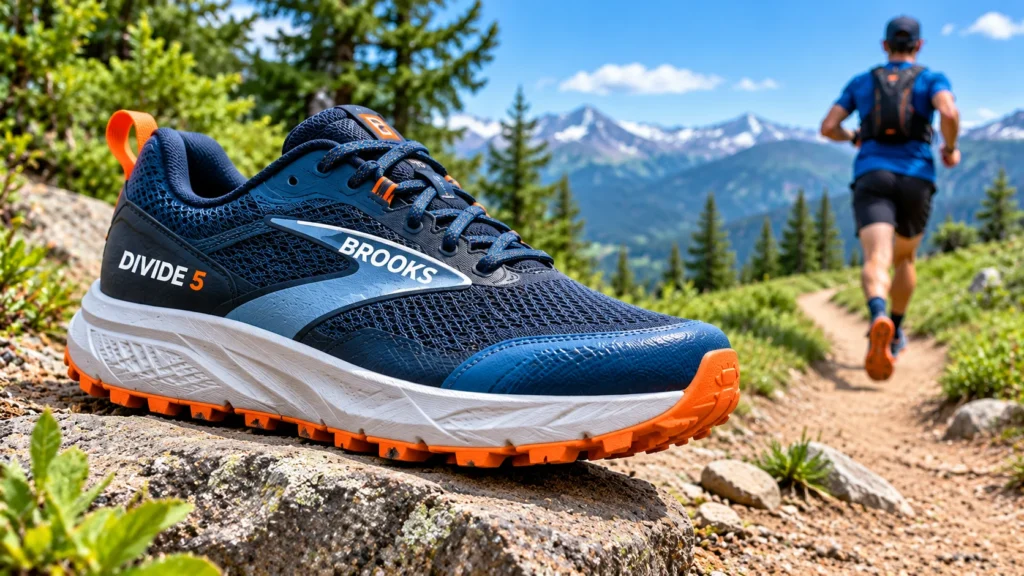
Editorial fit score: 4.2/5 | Launch MSRP: $110
Best for: New trail runners, gravel loops, paved approaches, and easy park paths.
Not ideal for: Deep mud, sharp rocky descents, or runners seeking a highly flexible minimalist shoe.
In short, the Brooks Divide 5 is a road-to-trail running shoe for light terrain. Brooks gives it DNA LOFT v2 midsole foam, a breathable mesh upper, and a TrailTack Green outsole. The result aims to make short paved stretches and packed dirt feel natural.
The manufacturer’s stated drop is 8 mm, with a men’s weight of 10.2 ounces. Brooks also reports 58.8% recycled material in the upper. The outsole rubber contains 25% recycled content. These are material claims, not proof of a longer shoe life.
The updated foam and added stack give the Divide 5 its main reason to exist. More cushioning is useful when a route joins hard sidewalks with firm trails. If most of your run stays paved, our article on trail shoes on roads helps explain the trade-off.
Independent reviewers do not agree on every part of its ride. Some praise the smooth daily comfort and traction. Others find the geometry less sure-footed on rough ground. That makes route choice as important as the improved foam.
- More cushioning than Divide 4
- Newer DNA LOFT v2 foam
- Comfortable road-inspired upper
- Useful grip on gravel and dry dirt
- Not a technical mountain specialist
- Moderate lugs limit mud traction
- Costs more than Divide 4 at launch
- Higher heel feel will not suit everyone
Brooks Divide 5 on Amazon
Launch MSRP: $110. The link opens Amazon search results because an exact live listing and price could not be confirmed. Select the standard Divide 5, not the Divide 5 GTX waterproof version.
What Does the Brooks Divide 4 Still Do Well?
Editorial fit score: 3.9/5 | Launch MSRP: $100
Best for: Budget-friendly trail starts and runners who like a firmer ride.
Not ideal for: People seeking the newer, softer foam of Divide 5.
Primarily, the Brooks Divide 4 still covers the basics of easy trail running. It pairs original DNA LOFT foam with a TrailTack rubber outsole. Its upper has a breathable road-shoe fit and a durable mudguard.
Brooks states an 8 mm drop and a men’s weight of 10.4 ounces. The brand also highlights drainage slits, a protective toe cap, and 57.8% recycled upper materials. These details matter to runners who value practical function over new model labels.
On pavement, a firmer platform can feel more direct underfoot. The same firmness can grow tiring on rough, hard trails. Independent Divide 4 reviews describe a secure, stable feel, but comfort remains a personal fit question.
The older model’s strength is simple value. If a genuine clearance offer saves enough money, its familiar road-to-trail design still makes sense. Check the outsole, return terms, and exact model before buying old stock.
- Lower $100 launch MSRP
- Firmer and more direct ride
- TrailTack grip for easy routes
- Road-like fit and drainage details
- Older midsole foam
- Less cushioning than Divide 5
- Slightly heavier on the official spec
- Available sizes may be limited
Brooks Divide 4 on Amazon
Launch MSRP: $100. The link opens Amazon search results because a current standard-model listing was not confirmed. Check that the seller shows Divide 4, not Divide 4 GTX.
How Do the Brooks Divide 5 and Divide 4 Specs Compare?
In short, the biggest hardware change is the Divide 5’s cushioning. Both models keep an 8 mm stated drop and a road-to-trail role. Brooks adds 4 mm of stack height to the Divide 5 while reducing the published men’s weight by 0.2 ounce.
| Specification | Brooks Divide 5 | Brooks Divide 4 | Edge |
|---|---|---|---|
| Model code, men’s | 110429 | 110405 | Different models |
| Launch MSRP | $110 | $100 | Divide 4 on sticker price |
| Current Amazon price | Not verified | Not verified | Compare checkout totals |
| Cushioning foam | DNA LOFT v2 | DNA LOFT | Divide 5 |
| Stated heel-to-toe drop | 8 mm | 8 mm | Tie |
| Men’s published weight | 10.2 oz / 289 g | 10.4 oz / 295 g | Divide 5 |
| Stack versus predecessor | 4 mm taller | Baseline | Divide 5 for extra foam |
| Outsole | TrailTack Green | TrailTack | Both suit light trails |
| Divide 5 lug specification | 3.5 mm in Brooks catalog | No matching catalog figure used | No fair numeric winner |
| Upper | Breathable air mesh | Breathable mesh | Fit preference |
| Toe protection | Protective toe cap | Protective toe cap | Tie |
| Recycled upper material | 58.8% | 57.8% | Divide 5 by 1 point |
| Waterproof standard shoe | No | No | Separate GTX versions |
| Best terrain | Pavement, gravel, packed dirt | Pavement, gravel, packed dirt | Tie |
The extra foam matters more than the small weight change. A difference of 0.2 ounce equals about 5.7 grams. Most shoppers should focus on fit, terrain, and the feel of the midsole before chasing that number.
These figures refer to standard men’s models where noted. Shoe size and women’s versions can change the listed weight. Lab-measured heel drops can also differ from the manufacturer’s published design figure.
Which Has Better Cushioning: Brooks Divide 5 or Divide 4?
Primarily, the Divide 5 wins on cushioning for everyday mixed routes. Its DNA LOFT v2 foam and extra stack give the foot more material between heel and ground. That helps explain why Brooks presents the new model as a softer road-to-trail option.
Brooks says the updated midsole foam is 10% lighter than the older formulation. The complete shoe, however, is only 0.2 ounce lighter. More foam and other shoe parts affect the final weight, so those two numbers are not in conflict.
Consider a five-mile loop with one paved mile at each end. The remaining miles cross firm gravel and smooth park dirt. The Divide 5’s cushioning makes sense across those changing surfaces, especially for runners who dislike harsh landings.
The Divide 4 still has a useful role. Its firmer DNA LOFT platform gives clearer feedback underfoot. Some runners like that feel for shorter sessions. Neither foam guarantees comfort, so shoe fit and actual pace still matter.
Which Brooks Divide Shoe Grips Roads and Easy Trails Better?
In short, both shoes grip light trails well, with no clear all-terrain winner. The Divide 5 uses TrailTack Green rubber and a catalog-listed 3.5 mm lug pattern. Divide 4 uses TrailTack rubber with a tread built for road-to-trail routes.
On dry gravel and packed dirt, either outsole is a sensible match. The shallow-to-moderate tread also lets you cross pavement without the harsh ride of deep mud lugs. A wet wooden bridge or slick rock still needs careful footing.
The Divide 5 has strong reports for its rubber grip, yet reviewers question its confidence on harder terrain. That is not a contradiction. Rubber can grip well while the shoe’s shape and support feel less secure during steep turns.
For sharp rocks, deep mud, and loose downhill tracks, consider a more specialized trail model. Our Mizuno Daichi 8 review looks at another mixed-terrain choice with different protection and outsole features.
Trail safety: Neither Divide is built to replace purpose-made winter traction on ice. Wet rock, steep mud, and exposed terrain call for more secure footwear and careful route planning.
Which Model Gives You Better Value for Money?
At their launch prices, the Divide 5 offers the stronger overall value. Its price rose by $10, from $100 to $110. In return, buyers get newer cushioning, extra stack, and a slightly lighter published weight.
That ten-dollar gap looks small when spread over months of regular use. But current clearance prices can reverse the choice. If Divide 4 costs much less in your size, it can be the smarter purchase for simple dirt paths.
Do not judge a discount by the crossed-out price alone. Compare the actual checkout total, shipping, return terms, and model code. Older stock also needs a check for damage, poor storage, or a worn display outsole.
Our running shoe discount guide covers practical ways to compare offers. A sale only adds value when the fit and terrain still suit your needs.
Which Has Better Fit, Stability, and Foot Protection?
The Divide 5 has the better everyday fit package for many new trail runners. Its road-inspired upper, secure midfoot design, and toe cap make the transition from ordinary trainers easier. Yet the softer, taller platform can change how stable a runner feels on uneven ground.
The Divide 4 also offers a familiar fit, mudguard, and protective toe cap. Brooks lists drainage slits among its features. That is useful after shallow puddles, though drainage does not make the shoe waterproof.
Independent testing describes a secure midfoot on the Divide 5. It also warns that rugged trails can expose stability limits. The Divide 4 feels firmer underfoot, but the older foam does not make it safer on technical ground.
Try both shoes with the socks you plan to wear. Your heel should stay seated, while your toes can spread and move. On downhill steps, the toes should not crash into the front.
Fit tip: Use the model’s size chart and a seller with returns. A correct length cannot fix a heel that slips or a forefoot that feels squeezed.
Which Shoe Wins in Real-World Running and Walking?
The Divide 5 wins most mixed-surface tasks, while Divide 4 wins when price drives the choice. Both are neutral road-to-trail shoes. Neither becomes waterproof, insulated, or protective work footwear just because it has trail tread.
| Real situation | Better choice | Reason |
|---|---|---|
| Roads plus groomed park loops | Divide 5 | More forgiving foam for surface changes |
| Short, dry gravel workouts | Divide 4 on a good discount | Firmer feel and adequate light-trail tread |
| First trail-running purchase | Divide 5 | Smoother cushion for mixed routes |
| Cool, dry autumn morning | Tie | Both need suitable socks; neither is insulated |
| Outdoor staff walking safe paths | Divide 5 | More cushioning for long walking shifts |
| Wet rock or steep muddy mountain trail | Neither | Choose purpose-built traction and protection |
Take the outdoor-work example with care. The Divide 5 can serve on safe walking paths, but it has no protective toe certification. It must not replace required safety footwear in warehouses, workshops, or industrial sites.
Light hiking is another fair use for both models. They can work on marked dirt paths with a small daypack. Heavy loads, jagged rock, and long exposed descents call for a different shoe.
Is the Brooks Divide 5 Price Increase Worth Paying?
Yes, the extra $10 was justified at the two models’ launch prices. Divide 5 brought a softer foam, 4 mm more cushioning stack, and a small weight drop. Those changes affect the feel more than the fresh colors do.
Current prices need a separate check because launch MSRPs are not live offers. I could not confirm exact Amazon prices for these standard non-GTX models. Shop the same gender, width, size, and color before comparing totals.
A useful shopping rule is to pay a modest premium for Divide 5 when both fit well. Prefer Divide 4 when the discount is substantial and you like its firmer feel. Do not spend more for features you will never use.
Be alert to product listing errors. The Divide 5 GTX is a different waterproof variant. It should not be treated as the standard Divide 5 or used to estimate its price.
Who Should Buy the Divide 5, and Who Should Buy Divide 4?
The Divide 5 fits runners who want newer cushioning; Divide 4 fits price-first shoppers. Start with the surface under your feet. Then match the shoe to comfort, fit, and the real amount you will pay.
- Your regular run crosses roads and firm dirt.
- You want the softer DNA LOFT v2 feel.
- You are starting trail running on easy routes.
- The price gap from Divide 4 is small.
- You found a large, genuine markdown.
- You prefer a firmer daily trainer.
- Your trails are flat and well maintained.
- The older model fits your foot better.
Skip both if your main route has steep mud, loose scree, or frequent sharp rock. A dedicated trail shoe is a safer match for that job. The Saucony Peregrine 14 review covers one more aggressive trail option.
Skip both if almost every mile is smooth asphalt. A road trainer will often feel simpler and quieter underfoot. Likewise, a waterproof requirement points toward a separate GTX shoe, not the breathable standard Divide.
What Do Independent Testers and Real Buyers Say?
In short, testers praise the Divide 5’s value and easy-trail grip, but disagree on its ride. Road Trail Run describes it as a useful, comfortable mixed-surface shoe. Believe in the Run is less enthusiastic about its feel on more demanding trails.
OutdoorGearLab’s women’s Divide 5 review also finds it better suited to crossover use than hard technical terrain. Its lab-measured drop differs from Brooks’ stated 8 mm. That is why measured and advertised shoe numbers should not be treated as identical.
There is useful buyer feedback, too. In a public Brooks community discussion, one Divide 5 owner reported more than 300 miles on several pairs during work and easy hikes. Another commenter liked the shoe for light trail running after initial miles.
Those are individual experiences, not verified Amazon purchase reviews or controlled lifespan tests. I could not validate current Amazon review text for both exact standard models. Fit complaints and durability claims should be checked against the listing you plan to buy.
What the evidence supports
- Strong case: affordable shoes for easy road-to-trail routes.
- Mixed case: softer feel versus ground stability on rough trail.
- Weak case: claims about exact lifespan across every runner.
For source context, compare the manufacturer’s product pages with published reviews from Road Trail Run, Believe in the Run, and OutdoorGearLab. Their methods differ, which helps explain different verdicts.
How Should You Care for Brooks Divide Trail Shoes?
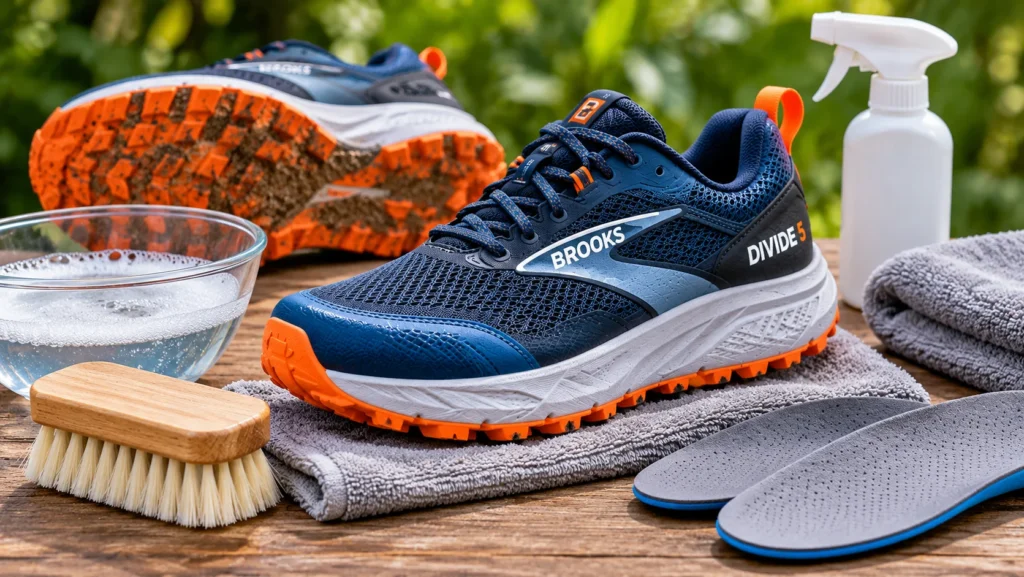
Primarily, clean the shoes gently and dry them away from direct heat. Dirt trapped in the outsole can reduce grip. Wet shoes left in a bag can develop odor and speed up material wear.
After a dry run, brush loose dirt from the lugs and upper. For mud, rinse lightly with cool water and use mild soap. Avoid bleach, a washing machine, and a clothes dryer unless Brooks’ current care guidance says otherwise.
Remove the insoles after a soaked outing and let everything air dry. Stuff the shoes with plain paper for the first stage of drying. Replace the paper when wet, and keep the shoes out of hot cars and direct heaters.
Check the outsole every few weeks if you run often. Rounded lugs, smooth patches, or uneven wear can reduce grip. Also inspect the heel lining, toe cap, and midsole for damage before long outings.
Shoe life depends on your mass, gait, route, and how often you wear them. A mileage promise for every owner would be misleading. Replace the pair when comfort, fit, or traction changes enough to affect your run.
Final Verdict: Is the Brooks Divide 5 Worth Buying?
Yes. The Brooks Divide 5 is worth buying for light trails and mixed daily routes. It earns the recommendation through its newer foam, extra cushioning, and road-shoe-like fit. Its $110 launch price was only $10 above the Divide 4’s original price.
Keep your expectations grounded. This shoe does not turn a muddy mountain route into an easy walk. It is most useful on pavement, gravel roads, dry dirt, and groomed park trails.
The Divide 4 can still win on price when a real clearance offer is large enough. It also suits runners who enjoy a firmer platform. But there is little reason to choose old stock at nearly the same price unless it fits better.
The most useful buying question is not which generation is newest. It is whether the shoe matches your weekly route. For most first-time trail runners with mixed routes, I would start with the Divide 5.
Frequently Asked Questions
Is the Brooks Divide 5 better than the Divide 4?
Yes, the Divide 5 is the better choice for most mixed-surface runners. It adds DNA LOFT v2 foam and 4 mm of stack while trimming the published men’s weight. Divide 4 remains a good choice for buyers who prefer a firmer ride or find a large clearance discount.
What is the main difference between Brooks Divide 5 and 4?
The main difference is the cushioning package. Divide 5 moves to DNA LOFT v2 foam and a taller platform. Divide 4 uses the older DNA LOFT foam. Both keep an 8 mm stated heel-to-toe drop and aim at easy trails, gravel, and road connections.
Can the Brooks Divide 5 be used for road running?
Yes, the Divide 5 works for road sections during mixed-terrain runs. Its road-inspired upper and moderate tread help it cross pavement comfortably. A dedicated road shoe is still a better choice when almost every mile stays on asphalt, especially for runners who dislike trail tread on hard surfaces.
Is the Brooks Divide 5 waterproof?
No, the standard Brooks Divide 5 is a breathable mesh trail shoe, not a waterproof model. Brooks also made a separate Divide 5 GTX version with waterproof protection. Check the exact product title before buying. The two versions differ in materials, feel, and often price.
Which Brooks Divide model is better for beginners?
The Divide 5 is the stronger starting point for most beginners. Its extra cushioning works well for runs that mix roads, firm dirt, and gravel. If the Divide 4 fits better and costs substantially less, it remains a sound first trail shoe for gentle routes.
Affiliate Disclosure: As an Amazon Associate, I earn from qualifying purchases. If you click a link on this page and make a purchase, I may receive a small commission — at no extra cost to you. I only recommend products I genuinely believe will help you. This helps keep the site free and running. Thank you for your support.