
Quick Answer
The Brooks Ghost 17 is the better value for most runners. The Brooks Ghost 18 keeps the same 10 mm drop and DNA LOFT v3 foam, but adds a refined upper, softer tongue, and updated sockliner. Choose the Ghost 18 for a better-fitting new shoe. Choose the Ghost 17 when it saves about $40.
What really changes between Ghost 18 and Ghost 17?
- Both shoes use a 10 mm stated drop.
- Ghost 18 improves the tongue, upper, and step-in feel.
- Ghost 17 keeps the familiar ride for less money.
Quick Verdict: Brooks Ghost 18 vs Ghost 17
BROOKS GHOST 18
Independent review score: 73/100 from OutdoorGearLab
$149.95 Amazon listing snapshot, men’s black, size 13
Best for runners who want the refreshed upper, tongue, and sockliner.
BROOKS GHOST 17
Reported Amazon rating: 4.6/5 in a July listing snapshot
$109.95 Amazon listing snapshot, men’s black, size 12.5
Best for runners who want the Ghost ride at a lower price.
| Category | Ghost 18 | Ghost 17 |
|---|---|---|
| Overall value | — | 🏆 |
| Upper updates | ✅ | ❌ |
| Lower cost | ❌ | ✅ |
| Fresh sockliner | ✅ | ❌ |
| Familiar daily ride | ✅ | ✅ |
Bottom line: Buy the Ghost 17 at a meaningful discount; choose the Ghost 18 when its improved fit justifies the extra cost.
- The Ghost 17 wins on value because the basic midsole and drop remain unchanged.
- Recent listing snapshots show roughly $40 between the two example pairs.
- The Ghost 18 offers a newer upper, flat-knit tongue, and OrthoLite X-60 sockliner.
- Neither shoe is made for fast racing or strong motion-control support.
- Fit matters more than the small difference in published shoe weight.
This Brooks Ghost 18 review starts with a simple question: is it worth $150? You may also see the Ghost 17 on sale. Both shoes look built for the same job, so the choice is not obvious. I’m Steven Tyler, a writer for FootwearHiker. This review uses Brooks’ published specifications and independent shoe tests. I have not claimed personal mileage or performed a new lab test for this article.
The Brooks Ghost 18 is a neutral road-running shoe for daily miles and walking. Its biggest change is how the shoe wraps your foot, not a new foam formula. The Ghost 17 gives you nearly the same core design for less. That is why price and fit should lead your choice.
Here is the useful part: the latest version does not win every category. Newer materials can improve comfort without changing the feel of each step. We will look at what Brooks changed, what independent testers found, and who should skip both models. By the end, you can choose without paying for features you will not use.
What Is the Brooks Ghost 18, and Who Is It For?
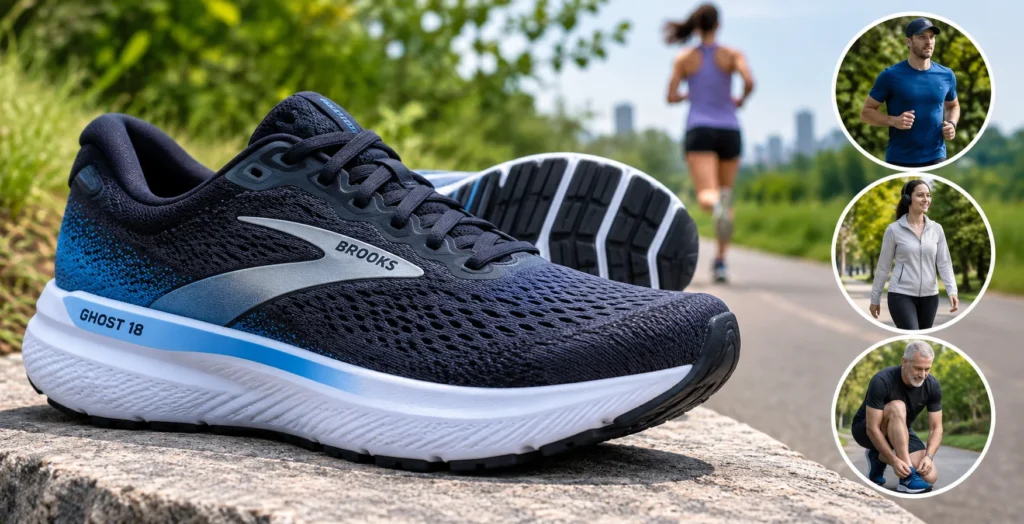
In short, the Ghost 18 is a balanced neutral trainer for easy runs, walking, and regular road miles. It uses nitrogen-infused DNA LOFT v3 foam. This foam blends a soft landing with a stable, familiar feel. It is not a carbon-plated racing shoe or a motion-control shoe.
Brooks lists a 10 mm heel-to-toe drop and a men’s reference weight of 10.2 ounces in its official Ghost 18 specifications. The drop measures the height gap between heel and forefoot. A 10 mm drop gives the heel a higher position. That suits some heel strikers, but no drop works best for everyone.
The Ghost 18 adds a redesigned air-mesh upper, a flat-knit tongue, and an OrthoLite X-60 sockliner. These parts shape the first feel when you put the shoe on. The outsole uses RoadTack rubber for paved surfaces. Brooks also lists recycled material in the upper. These are real refinements, not a whole new shoe.
Independent tests paint a useful picture. OutdoorGearLab calls the Ghost 18 reliable and comfortable, but not lively. RTINGS reports a stable platform and weaker forefoot protection than heel protection. Those findings fit its intended job: steady miles rather than quick pace changes. They also show why a shoe that feels good on a walk may feel less exciting during speedwork.
Pros: familiar ride, secure upper design, useful heel cushioning, road traction, and width choices. Cons: ordinary energy return, limited speed appeal, and possible toe-area fit issues for some feet.
Brooks Men’s Ghost 18 Neutral Running & Walking Shoe
Brand price: $150. Example Amazon price: $149.95 on November 19, for black, size 13 medium. Sizes and prices change.
What Does the Brooks Ghost 17 Still Do Well?
Mainly, the Ghost 17 still offers a dependable neutral ride for road runs and long walks. It uses the same DNA LOFT v3 foam family and a stated 10 mm drop. Brooks lists its men’s reference weight at 10.1 ounces. That is only 0.1 ounce less than the Ghost 18 reference value.
The earlier version has the core features most casual runners need. You get a cushioned midsole, breathable upper, and rubber outsole for pavement. You also get a stable-feeling heel without a rigid stability system. The Ghost 17 can serve as your only road trainer when its fit works well.
Its main advantage is price. Older shoe models often drop in cost when new stock arrives. A November Amazon listing snapshot showed one men’s Ghost 17 variant at $109.95. That makes the older model worth a serious look. The saving is large compared with the small change in midsole design.
For more detail on the earlier shoe, see the Brooks Ghost 17 review. It covers fit and the changes from the Ghost 16. This matters if you already own a pair and want to know whether moving up a model will improve your runs.
Pros: lower sale prices, reliable daily comfort, balanced cushioning, and a proven design. Cons: an older upper design, fewer available sizes as stock sells, and limited speed-focused features.
Brooks Men’s Ghost 17 Neutral Running Shoe
Example Amazon price: $109.95 on November 19, for black, size 12.5 medium. Stock and prices can change.
How Do the Brooks Ghost 18 and Ghost 17 Specs Compare?
The two shoes share more than they change. Both use DNA LOFT v3 foam and a 10 mm listed drop. They are neutral road trainers with no plate. The newer model focuses on fit materials. The table below shows the published numbers and the practical meaning behind them.
| Feature | Ghost 18 | Ghost 17 | Practical winner |
|---|---|---|---|
| Shoe type | Neutral road trainer | Neutral road trainer | Tie |
| Midsole foam | DNA LOFT v3 | DNA LOFT v3 | Tie |
| Stated drop | 10 mm | 10 mm | Tie |
| Men’s reference weight | 10.2 oz / 289.2 g | 10.1 oz / 286.3 g | Near tie |
| Upper | Updated engineered air mesh | Earlier engineered mesh | Ghost 18 for updates |
| Tongue | Soft flat-knit design | Earlier design | Ghost 18 |
| Sockliner | OrthoLite X-60 | Earlier sockliner | Ghost 18 |
| Outsole | RoadTack rubber | Road-focused rubber | Near tie |
| Plate | None | None | Tie |
| Heel reflectivity | Advertised by Brooks | Not verified here | Ghost 18 feature |
| Recycled upper material | 55.3% by weight, per Brooks | Not verified here | Ghost 18 disclosed figure |
| Width choices | Narrow through extra wide, by availability | Multiple widths, by stock | Check fit |
| Original US list price | $150 | $150 | Tie at launch |
| Example November price | $149.95 | $109.95 | Ghost 17, $40 lower |
Brooks’ weights are reference figures, not a promise for every size. Your size, width, and color can change the number. Lab measurements also differ from brand figures because testing methods are not the same. If you want to judge a shoe’s weight, compare like sizes under the same method.
It also helps to know how drop changes the feel beneath your foot. Our running shoe drop guide explains that measure in plain terms. A small change in comfort can matter more than a small change in shoe weight.
Which Brooks Ghost Has Better Cushioning for Everyday Runs?
The Ghost 18 has a small lab-tested edge, but the ride remains close to the Ghost 17. Both shoes use the same DNA LOFT v3 midsole family. Brooks did not market the Ghost 18 as a major foam overhaul. The difference is not like moving from an old foam type to a new one.
An independent RTINGS comparison measured heel energy return at 69.5% for the Ghost 18 and 66.5% for the Ghost 17. Its forefoot figures were 71.6% and 68.8%. Those numbers show a modest test advantage for the newer pair. They do not prove that every runner will notice that gap on the road.
RunRepeat also found a large split between heel and forefoot impact protection in the Ghost 18. Its lab reported 135 SA at the heel and 101 SA at the forefoot. SA stands for shock absorption in its testing method. That helps explain why heel strikers may enjoy more protection than people who land toward the front.
Consider a runner doing a relaxed five-kilometer road loop. Either shoe can handle that job when the fit feels right. During a fast interval workout, both may feel less energetic than a lighter trainer. The word “soft” on a product page does not mean a shoe will feel springy at speed.
Which Shoe Fits Better: Brooks Ghost 18 or Ghost 17?
The Ghost 18 wins for updated upper details, but fit remains personal. Brooks added a soft flat-knit tongue, revised air mesh, and an OrthoLite X-60 sockliner. These changes aim to make the shoe feel more secure and comfortable. They do not mean the shoe will fit every foot better.
Some independent testers reported pressure or rubbing near the forefoot in the Ghost 18. OutdoorGearLab advises runners with wider forefeet to try a wide size. Runner’s World also reported hot spots around bunion-prone areas for some testers. That is why checking the toe shape matters, even in a shoe sold with several width options.
Try shoes late in the day or after a short walk when your feet have had time to swell. Wear your usual running socks. Check that the heel stays put and your toes can spread. You should not need to crush your toes just to stop heel slip. Our running shoe fitting checklist gives a clear process for this test.
The newer upper is worth paying for when it solves a real fit issue. If the Ghost 17 already feels good, there is little reason to pay more for a tongue you do not notice. On the other hand, saving money on a shoe that rubs your toes is poor value.
Which Brooks Ghost Is Better for Walking, Traction, and Durability?
Both shoes suit daily walking and regular road use, with no clear durability winner established. The Ghost 18 has a grippy RoadTack rubber outsole, and the Ghost 17 uses a similar road-focused design. Neither is a trail shoe. Both are best judged on sidewalks, paved paths, and everyday road surfaces.
Tom’s Guide found the Ghost 18 comfortable for walking and steady gym use. Its firmer, stable feel can help during long hours on your feet. Still, traction on dry pavement does not prove grip on ice. Wet tiles, loose gravel, and polished floors can behave differently from the test road.
Longevity depends on body weight, mileage, gait, storage, and surface. A rough reference for road-running shoe replacement is 300 to 500 miles, but that is not a guaranteed lifespan. Watch for uneven outsole wear, a leaning heel, new aches, or foam that no longer feels right. Wear patterns matter more than a single mileage target.
A runner who walks to work and runs three times a week may value the Ghost’s plain design. Someone who races often may want another shoe alongside it. The Ghost can do a basic daily job well without being the only shoe in every training plan.
Is the Ghost 18 Worth More Than the Ghost 17?
The Ghost 17 offers better value when the price gap is about $40 and both fit well. Brooks lists the Ghost 18 at $150. A men’s Ghost 18 Amazon listing showed $149.95 on November 19. A men’s Ghost 17 listing showed $109.95 on the same date. These were different shoe sizes, so they are examples, not a fixed pair-for-pair quote.
The difference between those two example listings is $40. The saving is around 27% of the newer pair’s price. That is real money for a change focused mostly on fit details. You could put the difference toward socks, another training item, or the next pair of shoes.
The calculation changes when the sale price changes. If the older model costs only $10 less, the updated fit deserves a closer look. If the Ghost 17 is $50 less in your size, it becomes harder to justify the latest model. Some retailers may also offer older shoes with limited return options, so check that before buying.
Do not compare an unusual color in one size with a common color in another and assume the price gap applies to you. Compare your exact length and width. Check shipping, seller reputation, and the return policy. A low price is not useful when the right size is unavailable.
Which Ghost Works Best for Real Running and Walking Situations?
The Ghost 17 wins most price-focused daily uses, while the Ghost 18 wins when its updated upper fits better. Neither shoe should win on name alone. Here are six buying situations where the difference matters.
- New runner doing easy road miles: Ghost 17 for value, if its fit is secure and comfortable.
- Walker on long shifts: Ghost 18 when the softer tongue and sockliner improve daily comfort.
- Runner replacing a worn Ghost 17: Ghost 17 again if the fit worked and a discounted pair remains available.
- Runner with bunion pressure: Neither automatically wins. Try width options and avoid toe rubbing.
- Cold morning road runner: Either on clear pavement. Neither is suitable as an ice-grip solution.
- Coach buying shoes for a group: Ghost 17 can reduce total cost, but each runner still needs an individual fit check.
The coach example is useful. Ten pairs at the two sample prices create a $400 difference before tax or shipping. That makes the older shoe attractive for group use. Yet a team should not buy one model blindly. Different foot shapes can need different widths or designs.
If you run daily and need one pair for most miles, our daily running shoe guide explains how to match cushioning, fit, and training goals. The right match helps more than a new model number.
Who Should Buy the Ghost 18, the Ghost 17, or Neither?
Choose the Ghost 18 for its updated fit. Choose the Ghost 17 for the lower price. Skip both if you need a different shoe type. This is a decision about how you run and how the shoe feels, not about which number is higher.
- You want the newest tongue and sockliner.
- The newer upper fits your foot better.
- Your size has little Ghost 17 stock left.
- The current price gap is small.
- You want a lower price.
- You liked the earlier Ghost fit.
- Your runs are mostly easy road miles.
- You do not need the upper updates.
Do not buy either when you need a plated race shoe, a dedicated trail outsole, or firm guidance for excessive motion. For more directed support, compare the Brooks Adrenaline GTS line. For a softer, plush feel, also try the Brooks Glycerin line. These are alternatives, not guarantees of a better fit.
The less obvious point is this: a stable-feeling neutral shoe is not the same as a stability shoe. The Ghost has a secure heel and broad base, but it lacks GuideRails support. If your feet or legs need a different kind of guidance, test that design before buying.
What Are Real Reviewers and Buyers Saying About Both Shoes?
Reviewers broadly agree that the Ghost 18 is dependable but not exciting. OutdoorGearLab praised its comfort and simple design, while listing weight and limited energy as drawbacks. Tom’s Guide liked its walking comfort but preferred the discounted Ghost 17 for value. Doctors of Running also highlighted the traditional, higher-drop feel.
Independent opinions differ on fit. Some runners welcome the secure feel, while others report toe pressure or a warm upper. This does not prove that one group is wrong. Small changes in toe shape, sock thickness, and foot width can produce different results in the same model.
A July Amazon market snapshot reported 4.6 out of 5 stars for one men’s Ghost 17 listing, across roughly 3,100 reviews. That figure relates to a specific listing and date. It is not a direct rating comparison with the Ghost 18. We could not verify a matching live Amazon review average for the newer shoe.
- Comfort and steady walking performance are recurring positives.
- Limited bounce is a recurring criticism during faster running.
- Toe fit and upper feel deserve an in-store check.
- Personal wear tests by this author are not claimed.
Do not take one angry review as proof of a bad shoe. Read patterns across testers with different running styles. Check whether the review mentions the size, width, distance, and surface. A runner racing intervals has different needs from someone walking on a commute.
How Should You Care for Brooks Ghost Running Shoes?
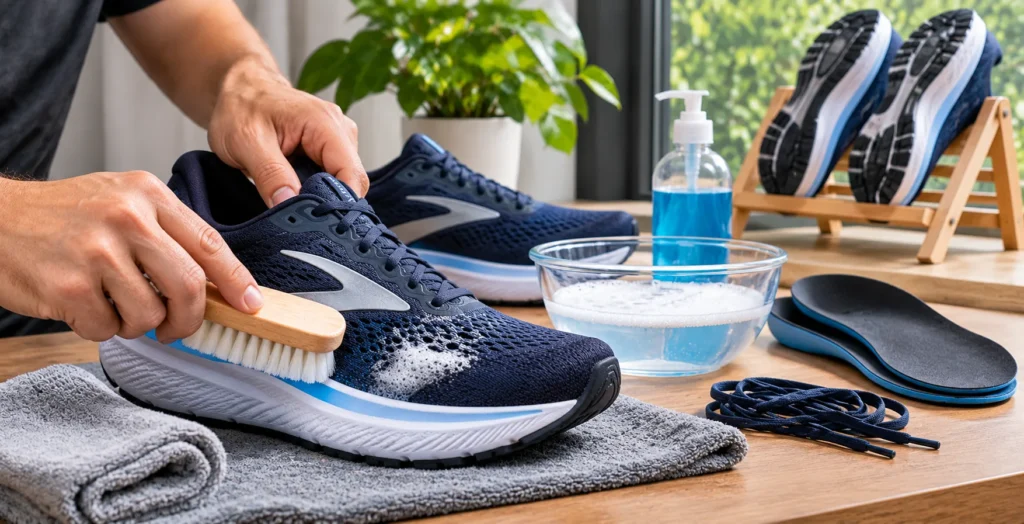
Keep both Ghost models clean, dry, and away from extreme heat to protect their materials. Brush away mud and road grit with a soft brush. Use mild soap and cool water on stained mesh. Do not scrub the foam hard or put the shoes in a hot dryer.
Heat can affect foam, glue, and upper materials. Avoid leaving either pair inside a hot parked car. If shoes become soaked, loosen the laces and air dry them. Paper inside the shoe can help absorb moisture. Change the paper when it becomes wet.
Rotate pairs when practical, especially if you run on consecutive days. Check the outsole for uneven wear and watch the midsole for compression. Do not assume that a shoe is safe because the upper still looks clean. Running comfort can change before the mesh fails.
Store a spare pair in a dry, cool space. If you buy older stock, check the seller’s return terms and inspect the shoes before use. New shoes should feel secure and free from glue failure or cracked material. A discount is not worth a damaged pair.
Final Verdict: Should You Buy the Brooks Ghost 18 or Save With the 17?
The Brooks Ghost 17 is the smarter purchase for most value-focused runners. Its DNA LOFT v3 foam and 10 mm drop keep the core daily-training feel of the Ghost 18. The newer shoe brings better upper details, a soft flat-knit tongue, and an OrthoLite X-60 sockliner. Those are useful upgrades when the fit feels better on your feet. They do not amount to a major shift in ride. With recent example prices near $109.95 for the Ghost 17 and $149.95 for the Ghost 18, the older shoe saves about $40. The Ghost 18 is still a sound option for walkers, heel strikers, and new runners who value its updated feel. Choose the Ghost 17 if both fit equally well. Choose the Ghost 18 if the older upper gives you trouble. Skip both when you need trail grip, stronger motion control, or a lively speed shoe. Always compare the exact size and width before you pay.
The strongest final test is not a spec sheet. It is whether your toes have room, your heel stays secure, and the shoe stays comfortable after a short run or walk. If you are new to shopping for training shoes, the running shoe buying guide covers those checks in more detail.
Brooks Men’s Ghost 18 Neutral Running & Walking Shoe
Best when the updated tongue and upper improve your fit.
Brooks Men’s Ghost 17 Neutral Running Shoe
Best when your size is on sale and the older fit feels right.
Frequently Asked Questions
Is the Brooks Ghost 18 better than the Ghost 17?
The Ghost 18 is better when its redesigned tongue and upper fit your foot more comfortably. Both use DNA LOFT v3 foam and a listed 10 mm drop. For most easy road running, the older Ghost 17 remains a strong value when it costs about $40 less.
What is the biggest difference between Ghost 18 and Ghost 17?
The main change is the upper and step-in comfort, not the midsole foam. Brooks added a soft flat-knit tongue, updated engineered mesh, and OrthoLite X-60 sockliner to the Ghost 18. The Ghost 17 still offers the familiar daily-training design at a lower sale price.
Is the Brooks Ghost 18 good for walking all day?
Yes, the Ghost 18 can work well for daily walking and long hours on your feet. It offers a stable-feeling neutral platform and balanced cushioning. Check the toe box and heel fit first, since comfort depends on your foot shape, socks, and how long you stand or walk.
Is the Ghost 18 worth $40 more than the Ghost 17?
The Ghost 18 is worth an extra $40 when the upper, tongue, or sockliner feels better in a real fit test. It is harder to justify when both models feel the same. Compare your actual size and width because sale prices vary across shoe colors and sellers.
Can you run a half marathon in Brooks Ghost 18 shoes?
Yes, you can train for and complete a half marathon in the Ghost 18 when its cushioning and fit suit your stride. However, independent testers report less forefoot protection and energy return than some alternatives. Build mileage slowly and choose a different shoe if long runs cause discomfort.
Affiliate Disclosure: As an Amazon Associate, I earn from qualifying purchases. If you click a link on this page and make a purchase, I may receive a small commission — at no extra cost to you. I only recommend products I genuinely believe will help you. This helps keep the site free and running. Thank you for your support.