

Quick Answer
The Brooks Glycerin GTS 22 wins for runners who want plush cushioning with added motion guidance. Its GuideRails system is the key advantage. The standard Glycerin 22 wins for neutral runners who prefer a lighter, less structured feel. Both use DNA Tuned foam and a 10 mm drop, so support needs should drive your choice.
What actually separates the GTS 22 from the neutral Glycerin 22?
- GTS 22: GuideRails support; men’s listed weight is 10.7 oz.
- Glycerin 22: neutral support; men’s listed weight is 10.2 oz.
- Both: DNA Tuned cushioning, 10 mm drop, and $165 original retail price.
Quick Verdict: Brooks Glycerin GTS 22 vs Glycerin 22
GLYCERIN GTS 22
$165 launch MSRP
$114.95 reported deal; price varies
Best for: Daily road runners wanting extra heel and midfoot guidance.
GLYCERIN 22
$165 launch MSRP
$84.95 observed deal; price varies
Best for: Neutral runners seeking plush comfort without added guidance.
Scores are editorial buyer-fit assessments, not personal wear-test scores or Amazon customer ratings. Deal examples reflect different sizes and dates; confirm your own selection before purchase.
| Category | GTS 22 | 22 |
|---|---|---|
| Overall for support seekers | 🏆 | ❌ |
| Best neutral-shoe value | ❌ | ✅ |
| Motion guidance | ✅ | ❌ |
| Lower listed weight | ❌ | ✅ |
| Plush DNA Tuned foam | ✅ | ✅ |
Bottom line: Choose the GTS 22 for active guidance; choose the regular 22 if neutral cushioning already works for you.
- GTS 22 wins for guidance because Brooks adds its GuideRails system.
- Both had a $165 launch price; discount prices depend on size and stock.
- GTS 22 suits long, easy road miles when extra support feels comfortable.
- Regular Glycerin 22 weighs 0.5 oz less in Brooks’ men’s specifications.
- The difference is support geometry, not a newer or stronger foam.
I’m Steven Tyler, and I write footwear buying guides for FootwearHiker. For this review, I compare Brooks’ specifications with independent lab and wear-test reports. I don’t present those outside tests as my own.
If you’re shopping for a plush daily trainer, both Glycerin shoes look appealing. Yet a shoe that feels supportive to one runner can feel restrictive to another. The real question is whether you want the added GuideRails system.
The GTS 22 is not simply a softer Glycerin 22. It uses the same main cushioning idea with a more guided chassis. You can explore the neutral shoe in my Brooks Glycerin 22 review before deciding.
What Is the Brooks Glycerin GTS 22 Designed to Do?
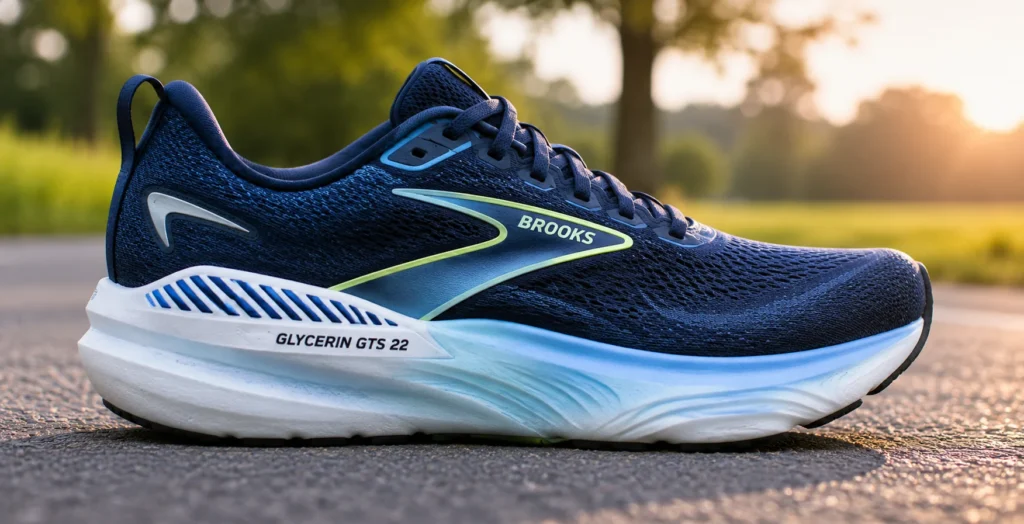
The Glycerin GTS 22 is a plush stability running shoe for steady road mileage. Its GuideRails system helps limit excess movement while the DNA Tuned midsole cushions each step. It favors controlled comfort over lively racing performance.
Quick verdict: Best for runners who enjoy a secure, guided feel during easy runs, walking, and long days on their feet.
Brooks calls GTS its go-to-support line. On this model, the added support targets movement at the heel and midfoot. It does not make the shoe a medical device or guarantee injury prevention.
The midsole uses larger foam cells under the heel and smaller cells toward the toes. This design aims to soften landings without making every push-off mushy. A broad base also contributes to the planted feel.
Brooks lists a 10 mm heel-to-toe drop and a men’s weight of 10.7 oz. That weight is normal for a substantial support trainer, but noticeable next to lighter daily shoes.
Independent wear testers report strong medial guidance and a firm, steady forefoot. That combination works well for slow and moderate runs. Runners who enjoy flexible, barely-there shoes should look elsewhere.
- Plush heel cushioning
- Noticeable GuideRails support
- Secure padded upper
- Broad, controlled platform
- Durable road outsole
- Heavier than neutral Glycerin 22
- Guidance can feel intrusive
- Not made for fast workouts
- Fit and discounts vary by size
Brooks Men’s Glycerin GTS 22 Supportive Running Shoe
Original retail price: about $165. A $114.95 offer was reported in early November; this is not a guaranteed live price. The linked Amazon ASIN corresponds to a men’s black/grey/white listing, size 12 medium.
What Does the Regular Brooks Glycerin 22 Offer Instead?
The regular Glycerin 22 offers much of the same comfort without GuideRails. It suits runners who already feel stable in neutral shoes. It also trims about half an ounce from the men’s listed weight.
Quick verdict: Pick the regular model if extra motion control does not improve your fit or stride.
Both shoes use DNA Tuned foam, an engineered knit upper, and a 10 mm heel drop. Brooks gives the neutral model a broad platform for inherently stable transitions. Yet it lacks the GTS’s distinct side guidance.
That difference matters when you turn corners or run on tired legs. A neutral runner can find the standard model more natural and less restrictive. However, it is not automatically faster simply because it is lighter.
The men’s listed weight is 10.2 oz. The extra half-ounce on the GTS version is a modest difference on paper. Your perception of support will likely matter more than 14 grams.
Independent testers also praised the neutral model’s smooth transitions and durable outsole. They noted that the ride favors comfort over sharp speed. This makes both versions closer in purpose than their labels suggest.
- Plush DNA Tuned comfort
- Lighter than GTS 22
- Broad, balanced platform
- Good long-run potential
- Discounted stock can offer value
- No dedicated GuideRails support
- Still relatively heavy
- Not a lively speedwork shoe
- Some feet dislike the toe-box shape
Brooks Men’s Glycerin 22 Neutral Running Shoe
Original retail price: about $165. A $84.95 price was observed for one men’s black/grey/white, size 11.5 medium listing on November 18. Other sizes can cost more or be unavailable.
How Do the Brooks Glycerin GTS 22 and Glycerin 22 Specs Compare?
The shoes share their foam, drop, and original price. GuideRails and listed weight create the clearest differences. Treat a spec table as a starting point, not a replacement for checking your personal fit.
| Feature | Glycerin GTS 22 | Glycerin 22 | Advantage |
|---|---|---|---|
| Category | Support / stability | Neutral | Needs-based |
| Midsole | DNA Tuned | DNA Tuned | Tie |
| Support system | GuideRails | No GuideRails | GTS for guidance |
| Heel drop | 10 mm | 10 mm | Tie |
| Men’s listed weight | 10.7 oz / 303.3 g | 10.2 oz / 289.2 g | Neutral, lighter |
| Upper | Engineered knit | Engineered knit | Fit-dependent |
| Outsole | Road rubber, extra medial coverage | Road rubber | GTS for support geometry |
| Original US MSRP | $165 | $165 | Tie |
| Best use | Guided easy and long runs | Neutral easy and long runs | Needs-based |
| Built-in electronics | None | None | Tie |
The weight figures are Brooks’ published men’s specifications. Fit and measured stack heights can differ in independent tests. Retail pricing changes by color, width, region, and seller.
Which Shoe Wins for Stability and Overpronation?
The Brooks Glycerin GTS 22 wins for runners who want added guidance. GuideRails create a more structured feel around the rear and middle of the foot. The regular Glycerin 22 offers a broad base without the same support system.
Some runners use the term overpronation for excessive inward foot movement. That alone does not prove that you need a stability shoe. Comfort, prior experience, and professional guidance matter more than one footprint test.
Independent side-by-side wear testing describes the GTS 22 as notably more stable. This is useful evidence, but no shoe controls every stride in the same way. Shoe shape also affects how the rails contact your foot.
If you often like Brooks Adrenaline GTS shoes, the GTS 22 deserves a try. If GuideRails felt awkward in past models, the neutral version is the safer first test. Do not force a support feature merely because its name sounds helpful.
Winner: Glycerin GTS 22 for dedicated guidance. Neither is the universal winner for injury prevention.
Which Shoe Has Better Cushioning and Running Comfort?
The cushioning contest is nearly a tie because both use DNA Tuned foam. Large heel cells aim to soften impact. Smaller forefoot cells help the shoe move into toe-off without collapsing into a sponge-like feel.
The GTS can feel firmer through the midfoot because of its support geometry. The neutral model lets your foot work with fewer added side constraints. That sensation matters even when foam formulas share a name.
For a five-mile easy run, either version can provide enough protection. Long runs expose heel slip, hot spots, and toe pressure more clearly. Fit becomes a stronger predictor of enjoyment than a small weight difference.
Neither model is an ideal choice for repeated all-out intervals. There are lighter trainers for that role. Choose these shoes when comfortable mileage matters more than rapid turnover.
Start with the running shoe fitting checklist to assess heel hold and toe clearance before ordering.
Winner: Tie for basic cushioning; neutral Glycerin 22 for unrestricted feel, GTS 22 for guided comfort.
Which Brooks Glycerin Shoe Offers Better Price and Value?
The regular Glycerin 22 offers better value when you do not need GuideRails. Both models launched at about $165. You gain little by paying extra for motion guidance that you dislike or never use.
Actual discounts complicate the calculation. One recent GTS 22 deal was reported at $114.95. A different neutral Glycerin 22 size was observed at $84.95. That $30 gap is illustrative, not a matched quote for identical sizes.
Compare the total price after taxes and shipping. Check return terms, available widths, and seller reputation. A bargain is not a bargain if the shoe rubs your arch or your toes.
Price should only settle the decision after support and fit. If GTS guidance works for you, paying a modest premium can be sensible. Otherwise, buy the well-fitting neutral shoe and keep the difference.
Winner: Glycerin 22 for neutral buyers at a lower checkout price; GTS 22 if its guidance solves a real comfort need.
Which Is Safer and More Durable for Regular Road Runs?
Neither shoe guarantees safer running, but both offer durable road-ready construction. Independent testers report strong outsole wear resistance. The GTS 22 adds support features, not a universal protection advantage.
One independent GTS wear test reported an outsole with little visible change after 60 miles. Another lab measured solid grip on smooth surfaces. Those findings support confidence in everyday use, not a promise about your personal mileage.
Road rubber still has limits. Wet painted lines, ice, mud, and loose gravel change traction. Use surface-specific footwear when the ground becomes slippery or unstable. A stability system cannot replace grip.
The higher heel drop can feel familiar to habitual Brooks users. Runners moving from low-drop shoes should adapt gradually. A comfortable daily shoe is not a treatment for knee, ankle, or foot pain.
Safety note: Stop using a shoe that causes persistent pain, numbness, or hot spots. Seek qualified care for ongoing symptoms rather than relying on shoe labels.
Winner: Tie for everyday durability; pick GTS only if its extra guidance feels right.
Which Model Fits Different Real-World Running Needs?
The best choice changes with your stride and schedule. The GTS 22 fits support-focused training. The regular 22 fits neutral training. Neither should win based only on its name or higher support level.
Which Works Best for Easy Miles and Recovery Runs?
Both work well for easy miles. Choose GTS 22 if your foot feels better with extra guidance late in a run. Choose Glycerin 22 if you prefer a smoother, less controlled transition. Try your usual relaxed pace before making a decision.
Which Works Best for Long Road Runs?
The GTS 22 wins for runners who welcome structure over longer distances. Its plush platform and motion guidance can feel reassuring as fatigue builds. The neutral 22 remains a strong choice for runners whose form and comfort stay consistent without rails.
Which Is Better for Walking and Standing at Work?
Either can work, with the fit deciding the winner. A retail worker who values a stable heel might prefer GTS. Someone who walks comfortably in neutral shoes can choose the lighter 22. Try walking, turns, and stairs, not just standing still.
Which Handles Cold Weather Better?
Neither has a clear cold-weather advantage. Both use road outsoles and cushioned uppers. Foam and traction can change with temperature. For icy routes, use winter-appropriate traction rather than expecting GuideRails to prevent slipping.
Which Is Better for a Running Club or Workplace Shoe Program?
Offer both versions rather than one fleet-wide shoe. Team members have different foot shapes and support preferences. A club fitting event should compare comfort in both models and verify individual sizes. Standardized purchasing should not override individual fit.
The running shoe buying guide offers a broader checklist for matching shoes to training goals.
Is Paying More for the GTS 22 Worth It?
Pay more only when the support feels better on your feet. The original retail prices were equal, so there was no launch premium for GuideRails. Clearance pricing can now differ sharply across sizes.
Start with a direct price comparison for your own size. Do not compare a narrow discount size against a wide full-price option. Check both listings at checkout before deciding which is cheaper.
A difference of $20 to $30 can matter over repeated replacements. Yet saving $30 is poor value if a shoe causes discomfort. Likewise, spending more on a support label does not prove better performance.
Older stock can also mean fewer color and width choices. Review photos, seller information, and return terms. If neither older model fits well, look at current Brooks models rather than accepting the wrong size.
My price rule: Choose comfort first, then compare real checkout totals. A low price should confirm your choice, not make it for you.
Who Should Buy the GTS 22, the Neutral 22, or Neither?
Buy the GTS 22 for a guided feel and the neutral 22 for free-moving comfort. Neither shoe suits everyone. Test both at easy pace and check the upper around the heel, arch, and toes.
- You like GuideRails in past Brooks shoes.
- Your foot feels calmer with structured heel guidance.
- Your priority is comfortable daily mileage.
Skip GTS 22 if…
- Support rails press against your foot.
- You want a light, fast workout shoe.
- You already like neutral running shoes.
- You want DNA Tuned comfort without rails.
- Your size has a worthwhile discount.
Skip neutral 22 if…
- You prefer pronounced stability guidance.
- The toe box or heel feels wrong.
Do not buy either if you need trail traction, a light racing shoe, or a shape that neither model provides. The Brooks Ghost 17 is another daily trainer to compare, but it also needs a fit check. See my Brooks Ghost 17 review for a different cushioning balance.
What Are Real Runners Saying About the Two Models?
Independent reviews generally praise cushioning and stable road comfort. The main complaints concern weight, a less lively ride, and fit details. Those differences matter more than an average star rating from mixed product sizes.
Running Shoes Guru’s GTS wear tester reported a marked stability advantage over the neutral model. The same review described a heavier, blockier feel. Its neutral Glycerin 22 review praised smooth comfort but did not call it a speed shoe.
RunRepeat’s lab work adds measurable context. Its GTS test recorded a 10.1 mm drop and a 95.6 mm width at the widest measured fit point. It also found a removable insole and a tongue without gussets.
Individual buyer comments are more mixed. Some runners report comfortable long training days. Others mention pressure, creasing, or an awkward upper fit. A single online complaint cannot predict whether the shoe will fit you.
Buyer sentiment at a glance
- Often praised: cushioning, stable feel, road grip, padded heel.
- Often questioned: high weight, slower ride, toe-box comfort, support pressure.
- Best response: verify width, take a short indoor test walk, and keep return options open.
For reliable fit advice, distinguish laboratory measurements from personal impressions. Reviewers can describe the construction, but your foot decides whether its shape works.
How Should You Maintain Brooks Glycerin Running Shoes?
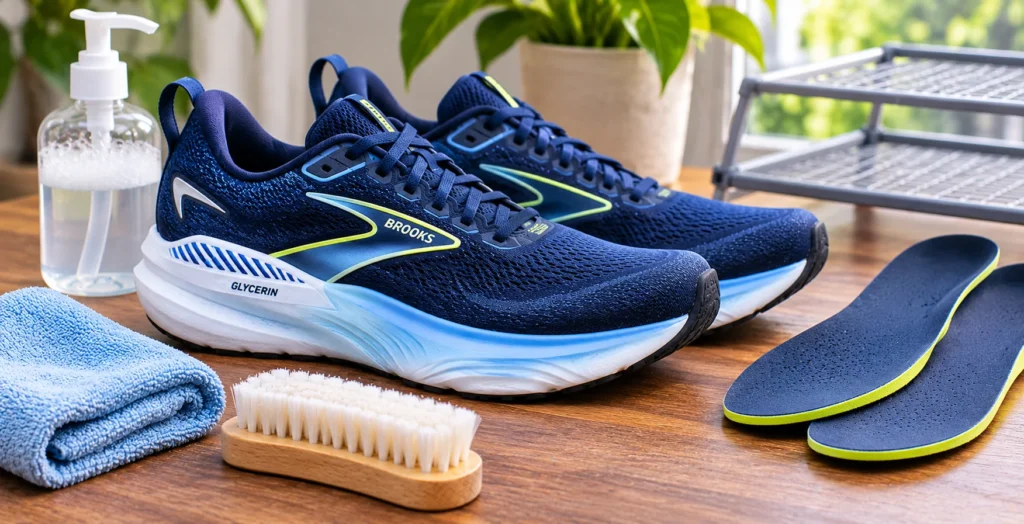
Clean both models gently, dry them naturally, and track wear. Routine care helps the upper and outsole last longer. Neither shoe needs special treatment because of its support system.
After a dusty road run, remove loose dirt with a soft brush. Wipe the upper with a damp cloth and mild soap. Avoid harsh solvents, strong heat, and tumble dryers, which can damage foam or adhesive bonds.
Take out the insoles when shoes are damp. Let them air-dry away from heaters and direct sunlight. Loosen the laces before removing each shoe, so the heel collar keeps its shape.
Check tread, midsole creases, heel wear, and new discomfort every month or two. Do not retire a shoe based only on a fixed mileage number. Your build, routes, and gait change how quickly a shoe wears.
Rotation is useful for runners who train on consecutive days. Giving damp shoes time to dry can improve comfort. If the outsole wears unevenly or the shoe feels unstable, compare it with a fresher pair.
The running shoe wear signs guide explains when replacement becomes sensible.
Final Verdict: Is the Brooks Glycerin GTS 22 Worth Buying?
Yes, the GTS 22 remains worth buying for runners who like guided cushioning. Its GuideRails system makes it the clearer choice for support seekers. The standard Glycerin 22 remains the better neutral alternative, especially at a lower price.
These shoes share more than they differ. Both provide DNA Tuned cushioning, a 10 mm drop, and a broad road-running platform. You are choosing a support experience, not deciding which foam is newer or softer.
For most buyers, the best test is simple. Compare both shoes in your correct size, jog for several minutes, and look for pressure near the arch or heel. The right shoe should feel comfortable before its first long run.
My recommendation: Choose the GTS 22 when GuideRails feels helpful. Choose the neutral 22 if you don’t need that guidance. If neither feels natural, keep looking rather than forcing the purchase.
Frequently Asked Questions
Which is better, Brooks Glycerin GTS 22 or Glycerin 22?
The Glycerin GTS 22 is better if you want added motion guidance. Its GuideRails system creates a more structured ride. The regular Glycerin 22 is better if you prefer neutral cushioning. Both use DNA Tuned foam and a 10 mm drop, so fit and support preference should decide.
What is the difference between Glycerin 22 and GTS 22?
The main difference is GuideRails support in the GTS 22. Brooks also lists the men’s GTS 22 at 10.7 oz versus 10.2 oz for the neutral version. Both feature the same cushioning family, a knit upper, and a 10 mm drop. The GTS targets a guided feel.
Is the Brooks Glycerin GTS 22 good for walking?
Yes, the Glycerin GTS 22 can work well for walking if you enjoy plush cushioning and a structured heel. Its road outsole and padded upper suit everyday paved surfaces. However, its higher weight or guidance may feel intrusive. Try walking and stairs before relying on it for long workdays.
Does the Brooks Glycerin GTS 22 fit true to size?
Start with your normal running-shoe size, but check the actual fit. Independent testing found that the GTS 22 can run slightly short for some feet. Width options also vary by seller. Leave comfortable toe room, secure your heel, and try the shoes with your usual socks before going outside.
Should I buy the Glycerin GTS 22 if I have flat feet?
Flat feet alone do not prove you need a stability shoe. The GTS 22 may feel comfortable if you prefer guided heel and midfoot support. Other flat-footed runners enjoy neutral shoes. Compare both models and seek individual professional advice if pain or a diagnosed foot condition affects your choice.
Affiliate Disclosure: As an Amazon Associate, I earn from qualifying purchases. If you click a link on this page and make a purchase, I may receive a small commission — at no extra cost to you. I only recommend products I genuinely believe will help you. This helps keep the site free and running. Thank you for your support.