

Quick Answer
The Brooks Ghost 16 is worth buying for easy runs and daily walking, especially at a discount. Its 12 mm heel drop, DNA LOFT v3 foam, and durable road outsole favor a smooth, steady ride over speed. Choose it if you like classic, secure trainers. Skip it if you need more forefoot softness or a lively bounce.
What matters most with the Ghost 16?
- 12 mm heel drop supports a familiar, heel-friendly running feel.
- Brooks lists a men’s weight of 9.5 oz (269.3 g).
- Fit at the toes matters more than the discount.
Quick Verdict: Should You Buy the Ghost 16?
BEST FOR CLASSIC DAILY COMFORT
Brooks Ghost 16
Brooks customer rating: 4.1/5 (1,326 reviews shown when checked).
Original US list price: $140. A Brooks sale listing showed $99.95; stock and sizes vary.
Best for road runners and walkers who want a steady, secure feel.
CONSIDER A NEWER MODEL IF…
Ghost 17 or Ghost 18
Both use a 10 mm stated heel drop, compared with the Ghost 16’s 12 mm.
The Ghost 17 adds forefoot cushioning. The Ghost 18 refines the current Ghost design.
Best for shoppers who prefer updated geometry or find little price difference.
| Buying factor | Best choice |
|---|---|
| Traditional 12 mm drop | ✅ Ghost 16 |
| Lower 10 mm drop | ✅ Ghost 17 / 18 |
| Discount-driven value | ✅ Ghost 16, if well below newer models |
| Fast, springy workouts | ❌ Consider a faster shoe |
| Technical trail use | ❌ Choose a trail shoe |
Bottom line: Buy the Ghost 16 if you value a familiar ride and a real discount; pay more for the Ghost 17 or 18 only when their fit or added cushioning serves you better.
- The Ghost 16 has a 12 mm drop and a men’s listed weight of 9.5 oz.
- DNA LOFT v3 is a major change from the Ghost 15’s earlier foam.
- Independent lab testing found strong outsole durability but modest energy return.
- Toe-area comfort varies; extra-wide sizing does not guarantee a good shape match.
- A $99.95 sale listing is $40.05 below the shoe’s original $140 price.
By Steven Tyler
Shopping for the Brooks Ghost 16 can feel odd now. It is no longer the newest Ghost shoe, yet stores may still carry several sizes. The question is not whether it was popular at launch. It is whether its fit, ride, and current price still make sense for you.
This review uses Brooks specifications, published independent lab results, and customer feedback. It does not claim an undocumented personal mileage test. That distinction matters because a shoe’s measured design and its comfort on your feet are not the same thing.
What Is the Brooks Ghost 16 Running Shoe?
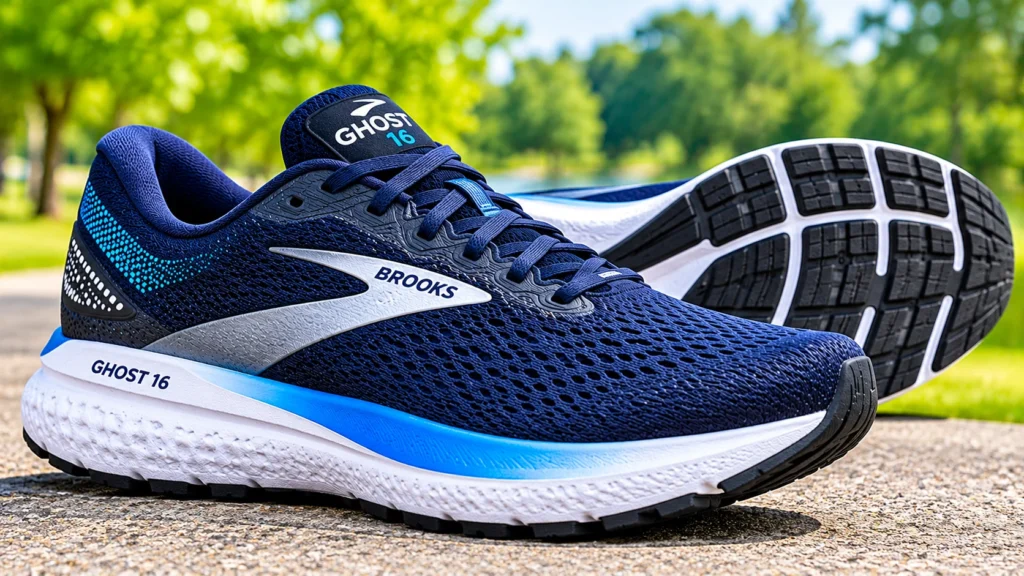
The Brooks Ghost 16 is a neutral daily trainer for road running and walking. It uses nitrogen-infused DNA LOFT v3 foam, an engineered air-mesh upper, and RoadTack rubber. Its design focuses on smooth, repeatable comfort rather than fast race-day speed.
Neutral means the shoe lacks a dedicated guide-rail support system. It does not mean the platform feels loose. The Ghost 16 has a structured heel, a broad enough base for many runners, and a balanced feel during easy miles.
The Ghost series has long appealed to runners who want the same basic feel each day. A beginner can use it for short runs. A regular runner can choose it for relaxed training between harder sessions. Walkers may also like its padded upper and predictable sole.
The most important point is easy to miss: cushioning is not the same as softness. Brooks calls this a balanced cushioned shoe. Independent tests found a firmer ride than some shoppers expect from the foam’s name.
If you are new to shoe categories, our daily running shoe guide explains how training goals shape the best choice.
What Are the Brooks Ghost 16 Specifications?
The Ghost 16’s defining specs are its 12 mm heel-to-toe drop, DNA LOFT v3 midsole, and 9.5 oz men’s listed weight. These figures describe a classic high-drop daily trainer. They do not promise the same fit or feel for every foot.
| Feature | Ghost 16 detail |
|---|---|
| Shoe type | Neutral road-running daily trainer |
| Cushioning | Nitrogen-infused DNA LOFT v3 |
| Heel-to-toe drop | 12 mm, manufacturer specification |
| Men’s weight | 9.5 oz / 269.3 g, manufacturer specification |
| Upper | Engineered air mesh |
| Outsole | RoadTack rubber with recycled silica |
| Support type | Neutral, without dedicated GuideRails |
| Plate | None |
| Men’s width options | Narrow, standard, wide, and extra wide; availability varies |
| Original US retail | $140 |
| Best surfaces | Road, pavement, treadmill, smooth paths |
Brooks supplies the advertised weight and drop. Lab equipment can produce different figures. For example, RTINGS measured a 12.4 mm drop and 35.9 mm heel stack in its test pair. Those are measurements of a sample, not a change to the official specification.
Stack height tells you the amount of material underfoot. Drop measures the difference between the heel and forefoot heights. Neither number tells you how the shoe will fit across your toes or around your heel.
How Does the Brooks Ghost 16 Cushioning Feel?
The Brooks Ghost 16 feels more steady than springy in published testing. Its DNA LOFT v3 foam improves on the older Ghost design, but it does not turn the shoe into a soft, bouncy speed trainer. Easy miles are its main strength.
Brooks uses nitrogen infusion to change the foam’s structure and lower weight. That can deliver cushioning without a bulky underfoot feel. The shaped midsole and segmented heel area also help the shoe move smoothly from landing to toe-off.
However, no foam name can settle comfort on its own. RunRepeat’s lab review measured the midsole at 41.5 AC on its hardness scale, compared with a 35.5 AC category average. Higher values on that test indicate a firmer sample.
That finding explains why buyers disagree about softness. Some enjoy the stable, protected feel. Others expect a deeper, plush sensation and feel let down. The Ghost 16 suits people who value consistent cushioning over a dramatic rebound.
Is the Ghost 16 Good for Heel Strikers?
Yes, the Ghost 16 is a strong match for many heel-first runners. Its 12 mm drop, padded heel, and smooth rearfoot transition suit a landing pattern that starts at the heel.
That does not make it right for every heel striker. Your stride, pace, calf comfort, and preferred shoe shape still matter. If a high drop feels strange, compare it with the lower-drop Ghost 17 before buying.
Is the Forefoot Soft Enough for Long Runs?
The forefoot can work for steady long runs, but it is not the plushest option. Reviewers often praise the shoe’s reliability while noting limited bounce. Runners seeking deep cushioning beneath their toes should compare alternatives.
Pay attention after several miles, not just during the first minute of wear. A shoe can feel pleasant in a store yet leave your forefoot tired during a long session. A return policy that allows a proper trial has real value.
Does the Brooks Ghost 16 Fit True to Size?
The Ghost 16 generally follows standard running-shoe sizing, but its toe shape is not ideal for everyone. There are multiple width choices, which helps. Still, a wide size does not automatically fix a tapered toe area or an uncomfortable heel collar.
Lab results show why width alone is a poor guide. RunRepeat measured a 96.1 mm width at the shoe’s widest forefoot point. Closer to the big toe, that narrowed to 72.1 mm. Two people with equally wide feet may feel that shape differently.
Check both length and toe spread. You should be able to move your toes without rubbing the front or sides. Your heel should stay secure as you walk quickly, and the upper should not press on your ankle bones.
Brooks offers men’s narrow, standard, wide, and extra-wide width categories, but stock changes by color and size. If you already wear an earlier Ghost, do not assume the same width will feel identical.
Should Wide-Foot Runners Buy the Ghost 16?
Wide-foot runners should try the Ghost 16 rather than buying from width labels alone. The wide and extra-wide options provide more room, yet the tapered front can still bother some toe shapes.
This is one of the clearest reasons to test the shoe in person. Also check that a wider fit does not create heel slip. The goal is toe comfort and secure midfoot hold at the same time.
Does the Brooks Ghost 16 Offer Good Stability?
The Ghost 16 offers a stable-feeling neutral platform, not dedicated motion-control support. Its secure upper and structured rearfoot help many runners feel centered. However, it lacks the GuideRails support system found in stability-focused Brooks shoes.
That difference matters if you have specific support preferences. Some runners do well in neutral shoes despite mild inward foot motion. Others prefer more guidance for comfort and consistency. Shoe labels alone cannot determine which group you are in.
Independent testing supports the Ghost 16’s dependable feel. RTINGS gave it an 8.3 stability subscore under its testing method. That is a lab rating, not a medical claim or a promise of injury prevention.
If you have used stability shoes for years, compare the feel before switching. Our running shoe feature priorities guide helps separate useful design details from marketing terms.
Is the Upper Comfortable and Breathable?
The Ghost 16’s engineered air-mesh upper is comfortable for many everyday runs. Brooks designed it for a secure fit and useful airflow. Padding at the tongue and heel adds a gentle feel around the foot.
This upper is not a waterproof shell. Light air circulation helps on warm days, but rain can still pass through the mesh. Wet socks may feel uncomfortable long before the outsole loses grip.
RunRepeat measured 10.4 mm of tongue padding on its sample, above its listed category average of 5.8 mm. Extra padding can reduce lace pressure, though it also adds volume across the top of the foot.
One tradeoff is the tongue design. It is not gusseted, meaning its sides are not attached to the upper with fabric wings. Check whether it stays centered during your stride. Also make sure the heel collar does not rub your ankle.
How Durable Is the Brooks Ghost 16 Outsole?
The Ghost 16 outsole is one of its stronger features. Brooks uses RoadTack rubber for road grip and wear resistance. Its broad coverage suits repeated contact with pavement, though no sole lasts forever.
Independent testing gives this claim more weight. RunRepeat measured only 0.7 mm of damage in its outsole abrasion test. The category average in that test was 1.1 mm. A smaller groove means less material wore away during the test.
The same lab measured 4.1 mm of outsole rubber, compared with a 3.1 mm category average. That is more rubber underfoot than many comparable shoes. It helps explain the durability focus, even if it does not predict an exact lifespan.
A runner who wears down the outer heel quickly should still inspect that area often. Your gait, surface, body weight, and use pattern affect wear. Replace shoes when their grip, fit, or cushioning no longer meets your needs, not only after a fixed mileage target.
Can You Run in the Ghost 16 on Wet or Cold Roads?
The Ghost 16 is suitable for many damp paved routes, but it is not a winter trail shoe. Its rubber outsole offers road-focused grip. Its standard mesh upper does not provide full waterproof protection.
RunRepeat recorded a 0.48 forefoot friction result in its wet-surface traction test. That is useful measured evidence, but traction still depends on the ground. Wet painted lines, leaves, smooth tile, and ice can remain slippery in any road shoe.
Cold conditions also change how cushioning feels. Foam and rubber can become firmer as temperatures fall. Wear suitable socks, warm up gradually, and choose a shoe built for ice or snow when surfaces demand it.
For outdoor work or frequent rain, consider a water-resistant version or dedicated weather shoe. Check the exact model description before ordering. A standard Ghost 16 listing should not be treated as a waterproof product.
Is the Brooks Ghost 16 Good for Running, Walking, and Work?
The Ghost 16 works best for easy road runs, steady daily training, and walking. It can also suit people who spend time standing, provided its fit and heel height feel comfortable. It is less appealing for fast workouts or rough trails.
For beginners, its simple design is a benefit. There is no rigid racing plate or aggressive rocker to get used to. You can focus on a comfortable pace while learning how your feet respond to regular exercise.
For experienced runners, the Ghost 16 makes more sense as an easy-day shoe than a race weapon. It can handle short recovery sessions and many longer steady outings. Runners seeking quick turnover or a stronger rebound may prefer a faster trainer.
Is the Ghost 16 a Good Shoe for Beginners?
Yes, the Ghost 16 is a sensible beginner shoe if the fit feels right. Its neutral construction, balanced cushioning, and road outsole match common first-run needs.
Start with the surface and distance you actually use. A beginner who mostly walks on pavement needs different traits from someone training for muddy trails. Avoid paying extra for race technology that will not improve your daily sessions.
Can You Walk or Stand in the Ghost 16 All Day?
Many walkers can enjoy the Ghost 16’s padded upper and stable feel. The shoe is designed for walking as well as road running, according to Brooks.
However, comfort after several hours is personal. A 12 mm drop can feel natural to some people and steep to others. Try it during a normal workday at home if the retailer’s return policy allows that type of testing.
Can You Train for a Half Marathon in the Ghost 16?
Yes, many runners can use the Ghost 16 for half-marathon training at easy and steady paces. Its durable outsole and dependable cushioning suit repeated road miles.
Still, the shoe is not designed for top race speed. For demanding workouts, a lighter and more responsive model may feel better. The right choice depends on your pace and comfort, not the event name alone.
Brooks Ghost 16 vs Ghost 15, 17, and 18: What Changed?
The Ghost 16 marks the move to DNA LOFT v3 while keeping the traditional 12 mm drop. The Ghost 17 changes the shape with a 10 mm drop and more forefoot cushioning. The Ghost 18 builds on the newer approach.
That creates a meaningful split for buyers. The Ghost 16 is the classic high-drop choice. Later versions are worth comparing if you want different geometry or more cushioning at the front of the foot.
| Feature | Ghost 15 | Ghost 16 | Ghost 17 | Ghost 18 |
|---|---|---|---|---|
| Drop | 12 mm | 12 mm | 10 mm | 10 mm |
| Midsole | DNA LOFT v2 | DNA LOFT v3 | DNA LOFT v3 | DNA LOFT v3 |
| Main buying reason | Familiar older fit | Light, classic ride | More forefoot foam | Newer comfort details |
| Original US price | Varied by release | $140 | About $150 | About $150 |
If you like the Ghost 16’s 12 mm drop, the lower figure on later models is not an automatic upgrade. Your legs may prefer familiar geometry. But if your forefoot feels under-cushioned, the Ghost 17 deserves a closer look.
See our Brooks Ghost 17 review for the specific tradeoffs between these versions. Compare real prices in your size instead of assuming the latest model must be worth more.
Is the Brooks Ghost 16 Worth Its Current Price?
The Ghost 16 is good value when it costs clearly less than the newer Ghost shoes. Its original US price was $140. A Brooks sale page displayed $99.95 for a listed colorway, a $40.05 reduction from that original price.
That sale listing is a snapshot, not a promise of stock. Availability and selling prices change by size, width, color, and store. Amazon pricing could not be confirmed as a single live price for every variation.
At $99.95, the Ghost 16 can be compelling if the fit is right. At $140, compare current Ghost 17 and Ghost 18 offers first. A small price gap makes the newer geometry worth trying, even if you eventually prefer the older shoe.
The practical rule is simple: never let a discount overrule comfort. Saving $40.05 does not help if the shoe rubs your toes or heel. For deal timing, our running shoe sale guide covers how to check older stock and price changes.
What Are Real Buyers Saying About the Ghost 16?
Buyer feedback is mostly positive about comfort and day-to-day use, but fit comments are mixed. Brooks displayed a 4.1 out of 5 customer rating from 1,326 reviews when checked. That figure belongs to Brooks’ site, not an independent editorial score.
Comments across Brooks and Zappos show different experiences with the toe box. Some customers welcome the available width choices and secure heel. Others report pressure around the toes or rubbing near the ankle.
What buyers praise
- Comfort during everyday walking
- Predictable support and heel hold
- Choice of widths and colors
What some buyers dislike
- Tapered or tight toe-area feel
- Heel collar and ankle rubbing
- Less bounce than expected
Read Zappos customer reviews alongside the manufacturer comments. They describe individual experiences, not a universal fit rule. Neither review count nor a star average can tell you whether your own toes will have enough space.
Amazon reviews were not directly accessible for reliable counting during this research. For that reason, this article does not invent Amazon review totals or quote customers it cannot verify.
What Are the Biggest Brooks Ghost 16 Pros and Cons?
The Ghost 16’s main advantages are a dependable ride, durable outsole, and broad everyday use. Its main drawbacks are a high drop, limited spring, and fit concerns for some foot shapes. These tradeoffs explain why it can be a smart sale buy but not a universal choice.
| Pros | Cons |
|---|---|
| Smooth easy-running feel | Not a lively tempo shoe |
| Solid outsole lab durability | Toe shape may feel tapered |
| Secure, padded upper | Heel collar may bother some |
| Multiple width choices | 12 mm drop will not suit all |
| Potential older-model discount | Remaining stock may be limited |
Think about which drawback would affect your routine. A runner doing easy five-kilometer loops may not care about low energy return. A runner doing fast intervals twice a week might notice it every session. That difference matters more than a general star score.
Who Should Buy the Brooks Ghost 16, and Who Should Skip It?
Buy the Ghost 16 if you want a secure, steady neutral shoe for everyday miles. Skip it if you want an extra-soft forefoot, a low heel drop, or a highly responsive ride. Foot shape and intended use should decide the purchase before price.
Buy it if you…
- Run mostly at easy or steady paces
- Prefer a classic 12 mm drop
- Walk often on paved surfaces
- Find a good price in your correct width
Skip it if you…
- Need maximum bounce at fast paces
- Prefer a much lower heel drop
- Feel toe pressure in its tapered front
- Need grip for rocky or muddy trails
If neither group fits, start with the activity you do most. For speed sessions, compare a performance-focused trainer. For demanding trails, choose a trail-specific outsole. For clear motion-guidance preferences, consider a stability model rather than the neutral Ghost.
How Should You Choose Your Ghost 16 Size Online?
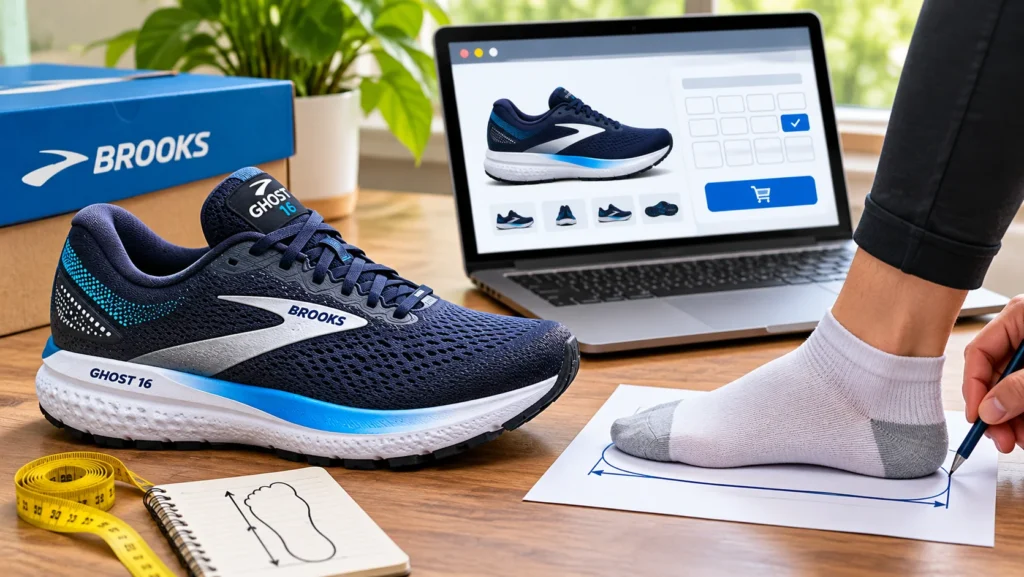
Choose the Ghost 16 size that leaves comfortable toe space without heel slip. Do not order only by your usual casual-shoe number. Running shoes need enough room for foot movement, especially during longer outings.
Measure both feet late in the day, then compare the larger foot with the size chart. Check length and width separately. Walk quickly in your usual socks and make sure the heel stays planted.
If you have wide forefeet, inspect how the front narrows near the big toe. If you have narrow heels, verify that extra width does not cause movement at the back. Fit varies between people even when two shoes share the same labeled size.
Before ordering, confirm whether you can return a lightly tried pair. Our guide to buying running shoes online explains the checks that matter when you cannot try a shoe first.
How Do You Care for the Brooks Ghost 16?
Keep the Ghost 16 clean, dry, and away from strong heat. Basic care protects its mesh upper, rubber sole, and foam. It also helps you spot wear before a run becomes uncomfortable.
- After dirty runs: Brush away dry grit with a soft brush.
- For marks: Use mild soap, cool water, and a damp cloth.
- For drying: Remove insoles if needed and air-dry at room temperature.
- For storage: Keep shoes in a dry, shaded, ventilated space.
- For inspection: Check the outer heel, upper seams, and sole grip.
Avoid a clothes dryer, radiator, or hot parked car. High heat can harm adhesives and change how foam and rubber feel. Do not assume that washing a shoe restores worn cushioning.
Two pairs can last different lengths of time under different runners. Pay attention to uneven wear, a change in comfort, or loss of traction. Those signs are more useful than a rigid replacement date.
Final Verdict: Is the Brooks Ghost 16 Still Worth Buying?
Yes, the Brooks Ghost 16 remains a smart option for many easy runners and walkers. It combines a familiar 12 mm drop, balanced DNA LOFT v3 cushioning, a secure upper, and a durable road outsole. Those traits make it useful well after its launch.
The case becomes stronger with a meaningful discount. A $99.95 listing offers real savings against the original $140 price, but it does not guarantee your size is available. Check today’s checkout price before judging the deal.
The biggest reason to skip the Ghost 16 is not its age. It is a poor match with your foot shape or running goals. If the toe area feels tight, try another shape. If you want more forefoot cushioning, compare the Ghost 17 or 18. If you want speed, consider a faster shoe.
My recommendation is to buy the Ghost 16 only when it fits well, feels good on your usual run, and costs clearly less than a newer option. A good older shoe at the right price can beat a newer shoe that does not suit you.
Ready to compare sizes and offers?
Check Men’s Ghost 16 on Amazon
View Official Brooks Specifications
Amazon link opens search results, not a verified in-stock variant. Price and stock may differ.
Frequently Asked Questions
Is the Brooks Ghost 16 good for walking?
Yes. Brooks lists walking as a main use for the Ghost 16. The padded mesh upper, secure heel, and balanced foam can feel comfortable on paved routes. Yet all-day comfort depends on your foot shape and how you respond to the 12 mm drop. Try it before long shifts if possible.
Is the Brooks Ghost 16 good for flat feet?
It can work for some people with flat feet, but it is not a dedicated stability shoe. The Ghost 16 has a neutral platform without Brooks GuideRails. If you prefer motion guidance or have ongoing foot discomfort, compare fit and support choices with a qualified professional. Your own comfort matters more than the label.
Is the Brooks Ghost 16 better than the Ghost 17?
The Ghost 16 is better if you like its lighter, traditional 12 mm-drop ride and find a strong discount. The Ghost 17 reduces the drop to 10 mm and adds forefoot cushioning. Neither is better for every runner. Try both when possible, especially if you have sensitive toes or prefer a specific heel height.
Does the Brooks Ghost 16 run small or narrow?
The Ghost 16 generally follows standard running-shoe sizing, but its toe shape can feel tight for some buyers. It comes in multiple widths, yet greater width does not guarantee toe comfort. Check space near your big toe, secure heel hold, and the fit after walking. Always confirm the seller’s return policy.
How long do Brooks Ghost 16 running shoes last?
There is no single mileage limit that applies to every Ghost 16 pair. Wear depends on surface, stride, body weight, and care. Its thick RoadTack rubber performed well in independent abrasion testing. Check for uneven outsole wear, poor traction, or a noticeable loss of cushioning, and replace shoes when performance no longer meets your needs.
Affiliate Disclosure: As an Amazon Associate, I earn from qualifying purchases. If you click a link on this page and make a purchase, I may receive a small commission — at no extra cost to you. I only recommend products I genuinely believe will help you. This helps keep the site free and running. Thank you for your support.