

Quick Answer
The ASICS Magic Speed 4 wins for long tempo runs because its 43.5 mm heel stack offers more cushioning than the Magic Speed 3’s 36 mm stack. The Magic Speed 3 wins for short, quick sessions because it weighs 220 g versus 242 g. Pick the 4 for protection and the 3 for agility.
What changes when you move from Magic Speed 3 to Magic Speed 4?
- The 4 adds a forefoot FF TURBO insert and 7.5 mm more heel stack.
- The 4 favors longer, steady fast runs and a stronger rocker feel.
- The 3 saves 22 g per shoe and feels closer to the road.
Quick Verdict: ASICS Magic Speed 4 vs Magic Speed 3
MAGIC SPEED 4
Running Shoes Guru expert score
$170 original US list price, not live Amazon price
Best for: Runners who want a carbon-plated shoe for long tempo sessions.
MAGIC SPEED 3
Running Shoes Guru expert score
$160 original US list price, not live Amazon price
Best for: Runners who prefer lighter shoes for intervals and 5K training.
| Category | Speed 4 | Speed 3 |
|---|---|---|
| Overall long-workout pick | 🏆 | — |
| Original list-price value | ❌ | ✅ |
| Long tempo runs | ✅ | ❌ |
| Lightweight intervals | ❌ | ✅ |
| Lower road-race stack | ❌ | ✅ |
Bottom line: Magic Speed 4 wins for long fast workouts with deeper cushioning; Magic Speed 3 is the smarter pick for runners who prize lighter handling and a lower stack.
- Magic Speed 4 offers 43.5 mm heel cushioning and a forefoot FF TURBO insert.
- Magic Speed 3 launched at $160, which was $10 less than the 4.
- Magic Speed 4 is the stronger long-tempo training option.
- Magic Speed 3 weighs 220 g and feels nimbler in short speed sessions.
- Both use full-length carbon plates, but they do not feel the same.
Trying to decide between the ASICS Magic Speed 4 and Magic Speed 3? The names sound close. The ride is not. One shoe has grown into a tall, plated workout trainer. The other stays closer to a light race-day shoe.
I’m Steven Tyler, and this comparison is based on ASICS specifications, published lab measurements, and independent runner reports. It is not a claim that I ran a personal wear test in either pair. That distinction matters when you compare comfort or durability.
Both shoes target runners who enjoy a firm, guided toe-off. Each uses a full-length carbon plate. But the Magic Speed 4 adds extra foam underfoot and a FF TURBO insert. The Magic Speed 3 keeps weight low and makes quick changes of pace feel easier.
Those trade-offs matter more than the model number. Before paying for an older sale pair, check your target distance, foot shape, and race rules. Our existing Magic Speed 4 review covers the newer shoe in more detail. Here, the focus is which version makes sense for your runs.
What Is the ASICS Magic Speed 4 Best For?
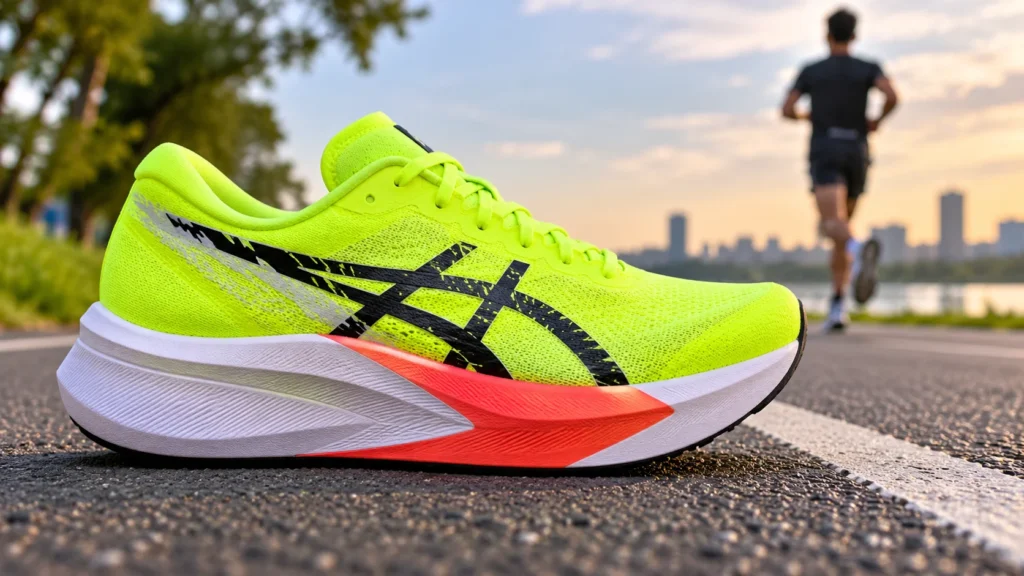
Quick verdict: Best for sustained fast training
Heel stack: 43.5 mm | Drop: 8 mm | Claimed men’s weight: 242 g | Original US list price: $170
The ASICS Magic Speed 4 is best for tempo runs, longer repeats, and sustained race-pace workouts. Its 43.5 mm heel and 35.5 mm forefoot stack offer much more material underfoot than the earlier model. The full-length carbon plate guides the foot into a fast toe-off.
ASICS combines FF BLAST PLUS cushioning with an FF TURBO insert near the forefoot. The FF TURBO insert adds a springier spot under the front of the foot. It does not turn the whole midsole into a soft, premium race foam.
The extra height makes a clear difference during a 10-mile progression run. A runner holding one pace for many miles can value the added protection. A runner making sharp turns on a short track may notice the height more than the cushioning.
Independent tests also find a stiff ride and limited stability for some foot strikes. ASICS lists the Magic Speed 4 as neutral, not a support shoe. If the forefoot feels cramped when standing, do not expect the mesh to stretch enough during a long workout.
- Deeper cushioning for long fast sessions
- Full-length carbon plate for guided toe-off
- FF TURBO forefoot insert for added rebound
- Outsole wears well in published lab tests
- More rocker than the Magic Speed 3
- 22 g heavier than the prior men’s model
- Stiff platform feels awkward at slow pace
- Narrow forefoot can irritate some runners
- Advertised heel stack exceeds 40 mm
ASICS Magic Speed 4 — Amazon product listing
The linked listing is one men’s version. Check the size, color, seller, and final price before buying.
What Is the ASICS Magic Speed 3 Best For?
Quick verdict: Best for light and sharp speed sessions
Heel stack: 36 mm | Drop: 7 mm | Claimed men’s weight: 220 g | Original US list price: $160
The ASICS Magic Speed 3 is best for intervals, short racing, and runners who like ground feel. Its 36 mm heel and 29 mm forefoot stack sit lower than the Magic Speed 4. That helps the shoe feel more direct when a workout calls for rapid steps.
It also weighs 22 g less in ASICS’ men’s reference figures. That is not a huge change for a walk. During hard 400-meter repeats, though, some runners enjoy the lighter, less bulky feel.
The Magic Speed 3 has a full-length carbon plate between two FF BLAST PLUS foam layers. Unlike the 4, it has no FF TURBO forefoot insert. Its MOTION WRAP upper is thin and race-focused, with less padding around the foot.
Less foam is not a flaw when the goal is short speed. But a runner planning 90 minutes at marathon effort may value more underfoot comfort. The Magic Speed 3 also makes sense when an event has a strict shoe-height limit. Always confirm that your exact pair meets your race rules.
- 220 g men’s reference weight
- Lower 36 mm heel stack
- Full-length carbon plate
- Thin, breathable MOTION WRAP upper
- More nimble for short repeats
- Less cushioning for long workouts
- No FF TURBO forefoot insert
- Firmness can tire feet during easy miles
- Older stock can limit sizes and returns
ASICS Magic Speed 3 — Amazon search
This button opens Amazon search results, not a verified single-item listing. Match the model name and size carefully.
How Do the Magic Speed 4 and Magic Speed 3 Specs Compare?
The main specification gap is cushioning depth, not the plate. Both shoes have full-length carbon plates and neutral road-running designs. The Magic Speed 4 adds 7.5 mm of advertised heel stack and 6.5 mm at the forefoot. The Magic Speed 3 weighs 22 g less.
These figures are manufacturer reference specifications for men’s shoes. Actual weight varies by size. Lab-tested stack and drop can differ because testers use different measurement methods and sample shoes. Treat these numbers as a design comparison, not a promise of how a pair will feel on your foot.
| Feature | Magic Speed 4 | Magic Speed 3 | Advantage |
|---|---|---|---|
| Original US list price | $170 | $160 | 3 on launch price |
| Men’s listed weight | 242 g / 8.6 oz | 220 g / 7.8 oz | 3, lighter |
| Heel stack | 43.5 mm | 36 mm | 4, more depth |
| Forefoot stack | 35.5 mm | 29 mm | 4, more depth |
| Advertised drop | 8 mm | 7 mm | Preference |
| Plate | Full-length carbon | Full-length carbon | Tie |
| Base foam | FF BLAST PLUS | FF BLAST PLUS | Tie |
| Extra forefoot foam | FF TURBO insert | None | 4 |
| Upper | Engineered mesh | MOTION WRAP | Depends on fit |
| Road-race height concern | 43.5 mm advertised heel | 36 mm advertised heel | 3, lower |
Which Shoe Feels Better for Long Tempo Runs?
The Magic Speed 4 wins for longer tempo runs because it has deeper cushioning and a stronger rocker. A rocker is the curved sole shape that helps the shoe roll from heel to toe. The extra foam can feel more protective after the first 30 minutes of hard running.
Take a steady 10-mile workout. The 4 gives the runner 43.5 mm of heel stack underfoot, compared with 36 mm in the 3. That does not guarantee less fatigue. It does give the shoe more room for cushioning while the carbon plate guides forward motion.
The Magic Speed 3 wins when you prefer a low, quick response to changes in pace. Its firm feel can be useful for 400-meter or 800-meter repeats. But the lower stack leaves less cushioning for a long block near marathon effort.
The surprising point is that more foam does not always mean more bounce. Published lab tests describe the 4 as stiff, with a stronger pop near the front than at the heel. Runners seeking a soft daily shoe should check the ASICS Superblast 2 review before choosing either carbon-plated model.
Which Is Faster for Intervals and Short Races?
The Magic Speed 3 wins for agility during intervals and short, sharp races. It weighs 220 g in ASICS’ men’s reference size, while the 4 weighs 242 g. Its lower sole also puts the runner closer to the ground during tight turns.
Think of eight 400-meter repetitions on a standard track. Frequent changes from jog to sprint suit a light, direct shoe. The Magic Speed 3 offers that sensation without losing its full-length carbon plate. Its thinner upper also helps the shoe feel stripped down.
The Magic Speed 4 can still work well for 5K training. Its taller sole does not make it slow. Yet some independent reviewers find the 4 most fluid when the runner holds a smooth pace rather than making sudden shifts in speed.
Neither model is a guaranteed race-time shortcut. Fitness, pacing, fit, and conditions matter more. Use the shoe that stays secure at full speed. If your toes hit the front when running downhill, try another size or last before making a race-day choice.
Which Magic Speed Gives You Better Value for Money?
The Magic Speed 3 had better value at launch if price and low weight mattered most. It originally listed for $160, compared with $170 for the Magic Speed 4. That $10 gap alone did not buy a large change in build quality. It bought a different running experience.
Current pricing needs a fresh check. Older colors and sizes can carry large discounts, while rare sizes can cost more. A cheap Magic Speed 4 may offer better value than a full-price Magic Speed 3. Compare the exact size, seller, shipping, and return policy.
The correct question is not whether one model costs $10 more. Ask whether the extra cushioning changes your weekly training. If you do longer fast runs, the Magic Speed 4 earns its place. If you run brief intervals, the Magic Speed 3 still makes sense.
For runners who want one non-plated shoe for easy and fast days, the ASICS Novablast 5 review covers a more flexible daily-training option. Paying less for the wrong kind of shoe is not a saving.
Which Shoe Fits Better, Lasts Longer, and Meets Race Rules?
The Magic Speed 3 wins on lower stack height and a lighter upper, while the Magic Speed 4 offers more cushioning depth. Neither wins fit for every foot. Published reviews report a snug forefoot on the 4, with mixed reactions to its more padded upper.
For narrow feet, a firm hold can feel secure. For wide feet, the same hold can cause pressure on long runs. Try your normal running size with a thumb’s width at the toes. Check heel hold, arch contact, and toe spread while standing and jogging.
Both shoes have rubber outsoles for road use. Lab reports suggest the Magic Speed 4 outsole resists wear well. Yet no test can promise a fixed mileage lifespan. Rotate shoes, watch exposed foam, and stop using a pair when traction or stability falls.
Race warning: The Magic Speed 4 lists a 43.5 mm heel stack. World Athletics rules set a 40 mm sole-thickness limit for regulated road events. The Magic Speed 3’s advertised 36 mm heel sits below that figure. Approval depends on the exact shoe and event; check the World Athletics shoe regulations and race organiser before competition.
Which Magic Speed Wins in Real Running Situations?
The best choice changes with the session. Magic Speed 4 is the stronger long-workout pick. Magic Speed 3 is better when low weight and quick changes in pace matter. For easy days, neither plated shoe is the default choice for every runner.
Which Is Better for a 5K Workout?
Magic Speed 3 wins for track-based 5K preparation. The 220 g reference weight and lower sole suit quick repetitions. Magic Speed 4 remains useful for steady road 5K work, especially if the runner values its padded ride more than a light feel.
Which Is Better for Half-Marathon Tempo Training?
Magic Speed 4 wins for longer tempo blocks. Its extra stack gives more cushioning depth during sustained effort. Test it on a long workout before race day, and check event shoe rules if your result must count in a regulated competition.
Which Works Better for Cold-Weather Training?
Magic Speed 4 has a slight edge for cool, dry workouts because its upper carries more padding. Neither shoe is a waterproof winter model. On icy surfaces, a carbon plate and road rubber do not replace traction built for snow or ice.
Which Is Better for Group Interval Sessions?
Magic Speed 3 wins for group sessions with repeated accelerations and sharp turns. It feels lighter and less bulky. Magic Speed 4 suits groups running longer road repeats at a fixed pace. Coaches should not treat either shoe as a substitute for proper warm-ups.
Which Is Better for Easy or Recovery Runs?
Neither is my first pick for slow recovery days. Both use stiff carbon plates designed around faster movement. A flexible, cushioned daily trainer often feels more natural when legs are tired. Choose comfort and stable foot placement over a fast label.
Is the Magic Speed 4’s Price Difference Worth Paying?
The original $10 premium is worth paying when your main goal is sustained fast running. The Magic Speed 4 costs more at launch because it adds stack height, a different upper, and a forefoot FF TURBO insert. Those features suit longer workouts.
The price gap is not fixed today. An older model may be discounted or hard to find. One color can cost less than another in the same model. Check both models in your exact size and make a like-for-like comparison before ordering.
Do not confuse a reference list price with a live offer. The $170 and $160 figures in this guide are original US prices, not verified current Amazon checkout totals. I could not confirm live Amazon prices directly. If your desired size of the 4 is cheaper than the 3, value may favor the 4.
Who Should Buy the Magic Speed 4 or Magic Speed 3?
Buy the Magic Speed 4 if you train for longer, steady hard efforts and want more foam. Buy the Magic Speed 3 if you prefer a lighter, lower shoe for quick sessions. Skip both if you need strong stability support or a forgiving easy-day shoe.
Newer runners should add a plated shoe only after finding comfortable daily footwear and a stable running routine. Our carbon plated running shoes guide explains why the right first shoe is often not the fastest-looking one.
- Your hard runs often last 45 to 90 minutes.
- You like a strong forward rocker.
- You want more cushioning than the previous model.
- You can tolerate a stiff, tall platform.
Skip if:
The fit squeezes your toes or your regulated race requires a compliant lower stack.
- You run frequent 400-meter to mile repeats.
- You value a light, direct feel.
- You prefer a lower carbon-plated shoe.
- You find a sound pair at a fair price.
Skip if:
You want plush cushioning for long easy runs or need a softer ride.
Don’t buy either: For daily easy miles, consider the ASICS Novablast 5. For a softer recovery focus, compare our ASICS GEL-Nimbus 26 review. Neither shoe here is designed to correct overpronation or replace medical support.
What Do Real Runners Say About Both Shoes?
Independent testers broadly agree on the main split: Magic Speed 4 feels more protective, while Magic Speed 3 feels lighter and quicker. The feedback is not unanimous. Some runners enjoy the 4’s rocker; others dislike its stiff or bulky feel.
Running Shoes Guru scored both shoes 9/10 in its expert comparison. That is an editorial score, not an Amazon customer rating. For one women’s Magic Speed 4 listing, Zappos displayed 16 reviews at the time checked. Buyers praised cushioning but also reported fit concerns. These samples do not predict every runner’s experience.
Expert score: 9/10 (Running Shoes Guru).
Often praised: deeper cushioning, rolling toe-off, road outsole wear.
Common concerns: narrow fit, stiff feel, and added bulk compared with the 3.
Reader takeaway: Buy for longer fast training, but test the forefoot fit.
Expert score: 9/10 (Running Shoes Guru).
Often praised: lighter weight, secure upper, lively short-session feel.
Common concerns: firmness on easy runs and less cushioning on long efforts.
Reader takeaway: Buy for speed-first work, not soft all-day comfort.
These findings summarize published independent reviews, not an original controlled wear test. Amazon review counts and live star averages were not verified, so they are not presented as facts. Read the exact seller listing before you choose a color or size.
How Should You Care for ASICS Magic Speed Running Shoes?
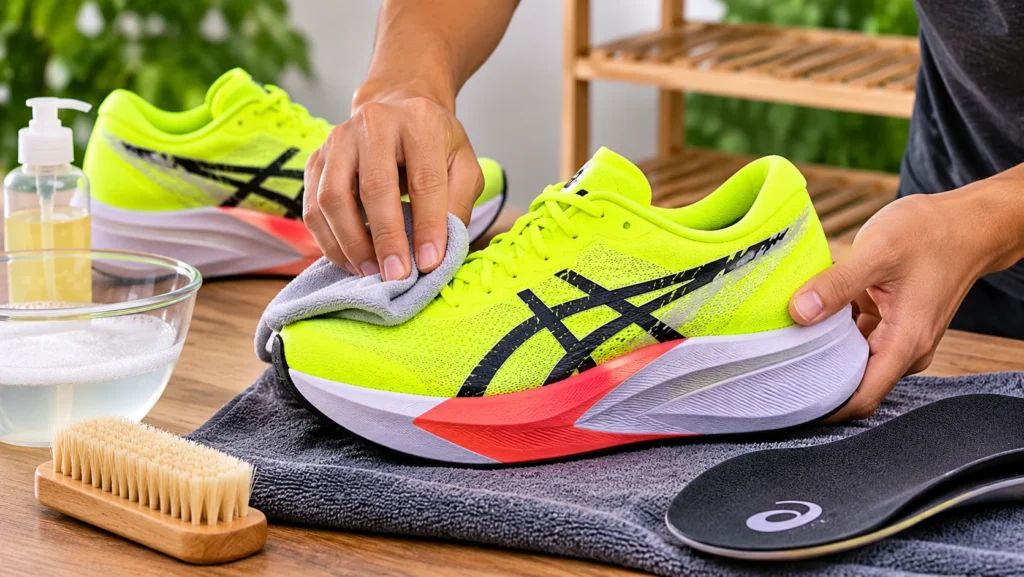
Care tip: Brush off dry grit, wipe the upper with mild soap, and air-dry at room temperature.
Both Magic Speed models last longer when you keep the upper dry and check the outsole. Remove loose dirt after wet road sessions. Do not put the shoes in a hot dryer or next to a heater. Excess heat can affect adhesives, foam, and the upper.
Use a damp cloth and mild soap for road grime. Stuff the shoes with paper if the lining is wet, and let them dry with airflow. Take out the insole when practical. Avoid machine washing unless the manufacturer specifically permits it for your pair.
Rotate these plated shoes with a daily trainer. This keeps the Magic Speed pair ready for speed workouts and helps you notice when its feel changes. Inspect heel rubber, exposed foam, and any separation between the sole and upper.
For storage, choose a cool, dry spot away from direct sun. Do not bend the forefoot hard to test the plate. If the outsole slips on wet pavement or the shoe feels uneven, retire it from fast training. Road shoes do not become safer as the rubber wears flat.
Final Verdict: Should You Upgrade from Magic Speed 3 to 4?
Upgrade to the Magic Speed 4 if your training now includes long tempo runs and sustained fast mileage. Its higher stack and FF TURBO insert make it a different tool, not just a fresh color. I favor the 4 for this kind of runner because comfort over a longer session matters more than a small change in shoe weight.
Keep the Magic Speed 3 if you enjoy its lighter, lower, more direct ride. The 3 is still a strong choice for short intervals, 5K workouts, and runners who prefer ground feel. A new version does not make a working pair obsolete. The most useful shoe is the one that suits your training.
One caveat can decide the purchase before comfort does: event rules. The Magic Speed 4’s advertised 43.5 mm heel exceeds the 40 mm road-race stack threshold used in regulated events. Confirm race eligibility before buying it as your only competition shoe. For unrestricted training, choose by fit, workout length, and actual checkout price.
Frequently Asked Questions
Is the ASICS Magic Speed 4 better than the Magic Speed 3?
The Magic Speed 4 is better for long tempo training because it has deeper foam and a stronger rocker. The Magic Speed 3 is better for a lighter, more direct feel. Neither wins every use. Choose the 4 for sustained pace and the 3 for short, quick running.
What is the biggest difference between Magic Speed 4 and 3?
The biggest difference is midsole height. The Magic Speed 4 lists 43.5 mm at the heel, while the Magic Speed 3 lists 36 mm. The 4 also adds a FF TURBO forefoot insert. The 3 stays lighter at 220 g versus 242 g in men’s reference sizes.
Can I use the Magic Speed 4 for a marathon?
Yes, runners can use Magic Speed 4 for marathon-distance training if the fit works. Its deep cushioning suits long fast efforts. But the listed 43.5 mm heel height is above the 40 mm limit for regulated road racing. Check your event rules before planning to race in it.
Is the Magic Speed 3 still worth buying on sale?
Yes, the Magic Speed 3 is worth buying when the size fits and the discount is strong. It still has a full-length carbon plate and a light 220 g men’s reference weight. Verify the seller, return rights, and condition. An older model is not automatically a better deal.
Are either Magic Speed shoes good for beginners?
Both can work as second shoes for beginners who already run comfortably. Neither is the safest default for someone buying their first running shoe. Their stiff carbon plates suit purposeful speed sessions. Start with a stable daily trainer, then add one if your training needs it.
Affiliate Disclosure: As an Amazon Associate, I earn from qualifying purchases. If you click a link on this page and make a purchase, I may receive a small commission — at no extra cost to you. I only recommend products I genuinely believe will help you. This helps keep the site free and running. Thank you for your support.


