

Quick Answer
The Salomon Aero Glide 2 is a solid road trainer for easy miles, steady runs, and walkers who like a smooth rocker. Its listed 10 mm drop and 270 g men’s weight are appealing. Yet independent lab tests found modest energy return. Choose it for its secure fit and easy transitions, not explosive bounce.
What matters most in this Aero Glide 2 review?
- Best for: neutral runners, relaxed road miles, and smooth daily training.
- Watch out for: a snug toe area and modest forefoot cushioning.
- Price check: $160 original US price; current discounts vary by size.
Quick Verdict: Salomon Aero Glide 2
Best for
Easy-to-steady road runs, everyday training, and runners who prefer a higher heel.
Main trade-off
Comfortable upper and a smooth rolling shape, but less bounce than the plush look suggests.
Price reference
$160 US launch price. A retailer listed one men’s offer at $144 when checked.
| Category | Verdict |
|---|---|
| Easy road runs | ✅ Good match |
| Fast intervals | ❌ Not its strength |
| Wide feet | ❌ Try carefully first |
| Road grip | ✅ Road-focused rubber |
| Value | ✅ Better when discounted |
Bottom line: Buy the Aero Glide 2 for its smooth daily ride and secure upper, but compare newer trainers if bounce or a roomy toe box matters more.
Five Key Takeaways
- The men’s shoe has a listed 270 g weight and 10 mm drop.
- Its 37.4 mm heel and 27.4 mm forefoot figures come from published specifications.
- Independent lab testing measured 54.0% forefoot energy return, below its test-set average.
- The 3D mesh upper scored 4 out of 5 for breathability in one independent lab.
- The original $160 price is harder to justify if a newer model costs the same.
Looking for one pair to handle your regular road miles? The Salomon Aero Glide 2 has an attractive pitch. It gives you a tall heel, a smooth rolling shape, and a soft, padded upper without the weight of some bulky trainers.
I’m reviewing the published facts, not claiming a personal wear test. This guide draws on Salomon’s specifications and independent shoe testing. It also checks the limits that marketing copy can miss. For a broader way to judge each claim, see this running shoe review checklist.
Here’s the key question: does that thick sole deliver the comfort you expect? The answer is mixed. The Aero Glide 2 feels smooth by design, but lab results show that height alone doesn’t make a shoe soft or lively.
What Is the Salomon Aero Glide 2 and Who Is It For?
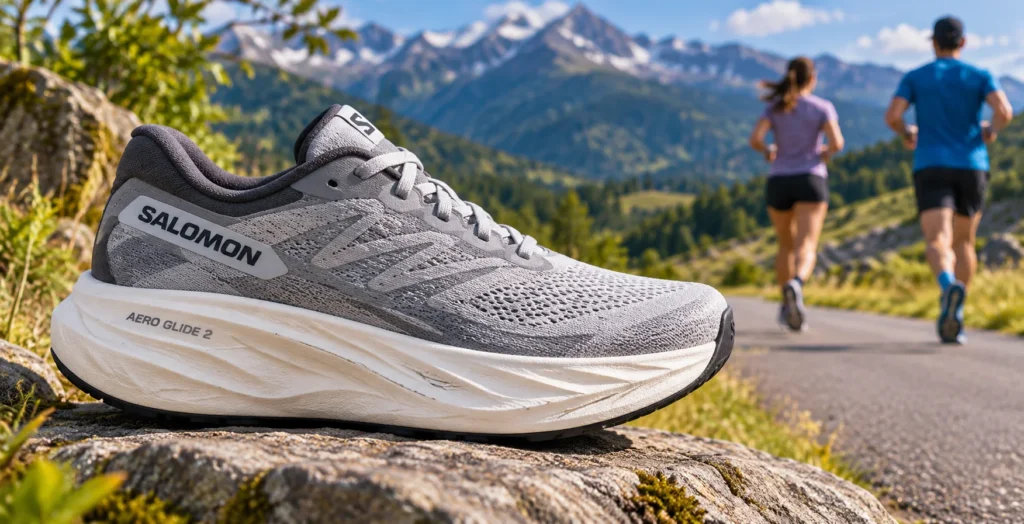
Good fit: Neutral road runners who prefer an easy, rolling stride.
Less suitable: Wide-footed runners and those seeking a race-day feel.
The Aero Glide 2 is a neutral road-running shoe made for daily training. Its Energy Foam midsole sits beneath a breathable mesh upper. A curved sole profile helps your foot roll forward as you run.
Salomon positions it for everyday runs and lists two to three runs per week. That is a usage guide, not a fixed mileage limit. You can wear it more often if the fit and cushioning still serve you well.
The main appeal is comfort without a clumsy feel. It works best for easy runs, recovery days, and steady outings on pavement. A new runner who wants one simple road shoe could also consider it.
The fit deserves more thought. The heel and midfoot feel secure in published wear reviews, but the front can feel snug. If your toes need space, a wide-fit model from another line is a safer starting point.
✅ Pros
- Smooth rocker for daily miles
- Padded tongue and heel collar
- Breathable mesh upper
- Manageable weight for its design
- Good amount of road rubber
❌ Cons
- Not ideal for many wide feet
- Limited sense of bounce
- No gusseted tongue
- Not made for rough trails
- Original price faces strong rivals
Salomon Aero Glide 2 on Amazon
Check available sizes and sellers. This link opens Amazon search results, not a verified single-product listing. Confirm the exact model before ordering.
What Are the Full Salomon Aero Glide 2 Specifications?
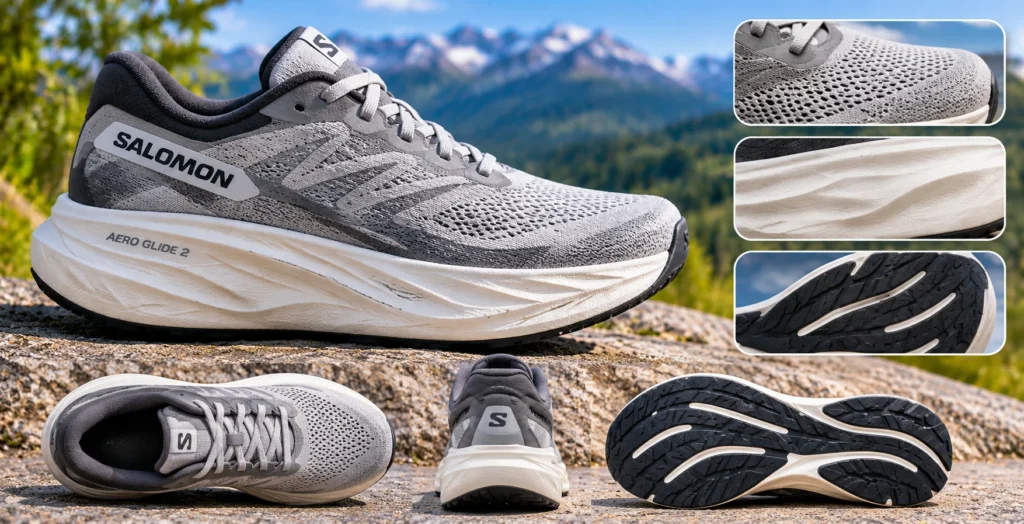
The official Aero Glide 2 specs describe a high-heel, neutral road shoe. Its listed 10 mm drop and 270 g men’s weight help explain its daily-training role. Lab measurements can differ from the brand’s values because sizes and methods differ.
The table separates official claims from independent readings. It does not treat one measuring method as the only correct one. That distinction is key when you compare shoes from different labs or brands.
| Feature | Brand / retail data | Independent finding |
|---|---|---|
| Shoe type | Neutral road trainer | Best suited to daily use |
| Heel stack | 37.4 mm | 35.5 mm in one lab |
| Forefoot stack | 27.4 mm | 24.2 mm in one lab |
| Heel-to-toe drop | 10 mm | 11.3 mm in one lab |
| Men’s weight | 270 g in Salomon product listing | 268 g in one lab |
| Women’s weight | 230 g in selected brand listing | Depends on test size |
| Midsole | Energy Foam / optiFOAM naming varies by market | EVA-based blend |
| Sole geometry | Reverse Camber rocker | Smooth transition focus |
| Upper | 3D mesh with sensiFIT | 4/5 lab breathability score |
| Outsole | Road contaGRIP rubber | 3.4 mm rubber thickness |
| Lacing | Traditional laces | Non-gusseted tongue |
| US original price | $160 | Resale and current stock vary |
For source checks, compare Salomon’s model details with RunRepeat’s independent lab results. Both are useful, but they answer different questions.
A taller heel can change how a shoe feels, even at the same total weight. The 10 mm drop is also a better clue about foot position than a tall-looking sidewall. For a deeper explanation, use this running shoe specifications guide.
How Comfortable Is the Aero Glide 2 Cushioning on the Road?
The Aero Glide 2 gives a smooth, cushioned road ride, but it isn’t the softest high-stack shoe. Its foam and rocker do much of the work. They support a steady roll rather than a sharp, springy push-off.
Salomon uses an EVA-based foam blend in the midsole. It aims to balance comfort and weight. The heel feels more protected than the forefoot in the published data, which matters for your landing style.
Does the Thick Midsole Deliver Maximum Shock Absorption?
Not by the lab numbers alone. RunRepeat measured 118 SA of heel shock absorption and 92 SA under the forefoot. The lab’s heel average was higher, so the Aero Glide 2 did not lead its test group.
This is a useful surprise. A tall sidewall can make a shoe look softer than the foam feels in motion. If you land heavily on your forefoot, try the model before relying on its max-cushion label.
How Much Bounce Does Energy Foam Provide?
The foam gives some rebound, but it does not act like a top race-day compound. RunRepeat measured 54.0% forefoot energy return. That trailed its comparison-set average of about 61%.
For easy runs, that gap need not spoil the shoe. You don’t need a spring-loaded feel for every training mile. Still, runners who want a lively bounce at each step should compare other models.
The real benefit is consistency. The rocker helps keep your stride moving when the run is calm. It doesn’t turn a relaxed daily trainer into a speed shoe.
Is the Salomon Aero Glide 2 Good for Long Runs or Speedwork?
The Aero Glide 2 suits easy and steady long runs better than hard interval work. Its curved sole makes transitions feel smooth. Yet the measured energy return gives it less snap than faster trainers.
A 30-minute recovery run is a natural use. So is an hour of controlled road mileage at a pace where you can talk. The padded upper and rolling sole can help make those sessions pleasant.
What Happens When You Pick Up the Pace?
You can run faster in the Aero Glide 2, but it is not designed as a dedicated speed shoe. The foam has limited rebound compared with modern, high-energy trainers. The thick sole also gives a less direct ground feel.
That does not mean every tempo mile feels poor. Published road tests describe useful range at moderate efforts. The difference shows up when you demand rapid turnovers and strong push-off again and again.
Can You Train for a Half Marathon in It?
Yes, if the fit works and you like its cushioning at your planned distance. Plenty of half-marathon plans use easy road miles. The shoe can handle those sessions as part of a normal training routine.
Build up distance in stages and judge the forefoot feel. A shoe that feels fine at five kilometers may not suit your toes at twenty. Its high drop can also feel different if you usually run in low-drop shoes.
Runners new to daily training should first match pace, surface, and fit. This daily running shoe guide explains the process in simple terms.
How Does the Salomon Aero Glide 2 Fit and Size?
The Aero Glide 2 is generally true to size in length, but the front can feel snug. The regular-width shape suits some average feet. Runners with wide forefeet should not assume the mesh will solve pressure.
Salomon’s sensiFIT structure holds the midfoot from both sides. That helps create a secure feel without hard plastic supports. The soft collar adds comfort around the heel, while the laces let you adjust tension.
Is the Toe Box Wide Enough?
The toe box is a possible deal-breaker for wide feet. One lab measured 76.4 mm at its toe-box reference point. That was narrower than the same lab’s shoe average at the time of testing.
A runner with a broad forefoot can feel pressure during long outings. Swelling late in a run makes the front fit more important. Check width with your usual socks after some time on your feet.
Should You Size Up?
Start with your normal running size, then check the fit. Going up half a size can add toe length, but may leave the heel loose. It will not always fix a narrow shape across the forefoot.
Stand, walk, and jog before deciding. You want a secure heel, stable midfoot, and space near the longest toe. If changing shoe brands causes confusion, use this running shoe sizing guide first.
Fit warning: Numb toes, side pressure, or a slipping heel are poor fit signs. Don’t rely on a longer size to fix every width problem.
Is the Aero Glide 2 Upper Breathable and Secure?
Yes, the mesh upper balances airflow and foot hold well for a daily shoe. Salomon pairs a thin 3D mesh with a padded tongue and collar. This keeps the upper soft while holding the midfoot in place.
RunRepeat gave the upper a 4 out of 5 breathability score in a smoke test. That beats the lab’s average in the published comparison. It is a strong result for a shoe with generous padding around the opening.
The tongue uses 7.9 mm of padding in the same lab report. That can reduce lace pressure during longer runs. However, the tongue is not attached along its sides, so check its position when putting the shoe on.
The upper is not waterproof. Rain and puddles can wet your socks. For mild weather and normal road miles, the airflow matters more than weather sealing.
Does the Aero Glide 2 Offer Enough Stability?
The Aero Glide 2 offers a stable feel for many neutral runners, but it is not a motion-control shoe. Its broad platform helps the foot sit on a firm base. The curved profile guides your roll forward.
RunRepeat measured a 120.6 mm forefoot base and a 97.5 mm heel base. Both exceeded that lab’s averages. A wider base can make a tall shoe feel more settled when you land.
The midsole also resisted twisting strongly in its lab assessment. That adds structure beneath the foot. It does not replace personal fit checks or a prescribed support need.
If you need medical orthoses, bring them to a fitting. A lab found the stock insole removable, but you still need enough room for your own insert. Make sure the heel stays secure after the swap.
How Good Is the Grip on Wet Roads and Light Gravel?
Road contaGRIP is designed for pavement and other firm surfaces. It uses wide, shallow contact shapes rather than deep trail lugs. That makes sense for everyday urban running and dry paths.
The sole has enough rubber to cover key contact points. One lab measured 3.4 mm of outsole thickness. Its forefoot traction figure was 0.47 in a controlled test, below the same lab’s average near 0.53.
Treat those numbers as a reason to be careful on slick ground. Wet paint, polished tiles, ice, and oily roads are not the same as dry asphalt. No shoe offers reliable grip on every surface.
Can You Use the Aero Glide 2 on Trails?
Use it only on firm, easy paths when conditions allow. Flat park gravel and packed dirt are closer to its road design. Loose rock, deep mud, and steep technical ground call for a trail shoe.
Trail shoes have different tread patterns and protection needs. Mixing up road and trail use can wear down a road outsole faster. This road versus trail shoes guide can help you choose.
Will the Salomon Aero Glide 2 Last for Daily Training?
The Aero Glide 2 has promising upper durability and adequate road rubber, but lifespan varies by runner. Shoe wear depends on body weight, stride, surface, and care. There is no guaranteed mileage for every pair.
RunRepeat gave its toe-box fabric 4 out of 5 in an abrasion test. That is a strong lab result. The heel lining scored 3 out of 5, which suggests the collar deserves some care.
The outsole test left a 1.1 mm abrasion mark. That result was close to the test-set average. Its 3.4 mm rubber layer helps, but rubber thickness alone does not predict how your pair will wear.
What Are the First Signs You Need a Replacement?
Watch for uneven tread, new pain, and a foam feel that has changed. A shoe can lose comfort before the outsole looks bare. Check both shoes together because wear often differs between the left and right foot.
Press the midsoles and compare them with their earlier feel. Also check heel lining tears and laces that no longer hold the foot. Replace the shoe when performance has dropped, not because of one mileage rule.
What Changed From the Original Salomon Aero Glide?
The Aero Glide 2 is mainly a fit and upper update rather than a full redesign. Published reviews describe a similar cushioned, rolling ride. The biggest reasons to move up are the revised mesh and insole experience.
A common complaint about the first Aero Glide involved an insole that could shift. Doctors of Running reported that the second version addresses that issue. The update also refines the upper and step-in feel.
| Area | Original Aero Glide | Aero Glide 2 |
|---|---|---|
| Purpose | Cushioned daily roads | Cushioned daily roads |
| Midsole concept | Energy Foam, rocker | Energy Foam, rocker |
| Upper | Earlier mesh design | Revised 3D mesh and fit |
| Insole | Movement complaints reported | Improved retention reported |
| Upgrade reason | Keep if it already fits | Consider for upper comfort |
Do not expect a dramatic change in speed or foam rebound. If your original pair fits and still feels good, there is little reason to replace it early. If its insole keeps moving, the second model offers a clear practical fix.
How Does the Aero Glide 2 Compare With Newer Running Shoes?
The Aero Glide 2 can still serve daily miles, but newer shoes deserve a look at full price. Later Aero Glide models offer different cushioning setups and fit choices. The best buy depends on what you want changed.
For softer impact protection, compare the latest cushioned trainers from Salomon and other road brands. For a faster ride, look at lightweight tempo trainers. For more toe space, prioritize shoe shape over a familiar logo.
Should You Buy the Aero Glide 2 Instead of the Aero Glide 4?
Choose the Aero Glide 2 mainly when its fit works and the price is lower. RunRepeat’s comparison lists better energy return and shock absorption for the Aero Glide 4. That makes the newer option worth testing if both cost about $160.
There is no universal winner for every foot. The older shoe’s familiar higher-drop character can still appeal. Yet paying the same price for an older model makes less sense unless it fits you better.
Would a Softer Shoe Be Better for Recovery Days?
A softer shoe can feel better if you want a more relaxed underfoot sensation. But foam softness does not equal better impact protection in every case. Your comfort during actual runs is the strongest practical guide.
Try several shoes at the same slow pace. Pay attention to your heels, forefoot, and balance through each turn. A stable shoe that feels calm can serve you better than a soft shoe that feels uncertain.
Is the Aero Glide 2 Good for Walking and Treadmills?
Yes, the Aero Glide 2 can work for walking and treadmill sessions if the fit feels natural. Its padded heel and rocker may feel comfortable on smooth ground. The light, breathable upper also suits indoor exercise.
Walking changes your foot motion and time on the ground. Some walkers enjoy a curved sole, while others prefer a flatter base. Test a short walk before using the pair for long days on your feet.
A treadmill is one of the shoe’s more natural surfaces. Its road tread does not need deep lugs for that job. Still, keep the deck clean and dry, and stop if you feel slipping.
For daily errands, the mesh helps air move around your feet. The main trade-off remains forefoot space. A secure fit in a short run is not proof of all-day walking comfort.
Is the Salomon Aero Glide 2 Worth Its $160 Original Price?
The Aero Glide 2 is easier to recommend on sale than at its original $160 price. The smooth ride, light build, and good upper have merit. The modest lab rebound makes full-price value less clear against newer trainers.
At the time of this check, Bob’s Sports Chalet listed a men’s pair at $144, down from $160. That is a $16 difference for the listed offer. Stock, sizes, colors, and prices can change before you order.
A good discount only matters if you get the right size. Shipping charges and return rules can erase small savings. If you’re unsure about width, a seller with easy exchanges can be worth paying more for.
The smarter question is not whether $160 buys a good shoe. It is whether the Aero Glide 2 suits your feet better than another shoe at the same price. Fit, comfort, and your normal pace should decide.
Who Should Buy the Aero Glide 2 and Who Should Skip It?
Buy the Aero Glide 2 if you run mostly on roads and like a secure, rolling daily trainer. Skip it if you need a roomy forefoot, deep trail grip, or lively interval pace. Those needs point toward other designs.
✅ Buy it if you…
- Run on pavement most days
- Prefer a higher heel drop
- Want a padded, secure upper
- Enjoy a smooth rolling stride
- Find a good price in your size
❌ Skip it if you…
- Need a wide toe box
- Want springy race-day foam
- Run on muddy, steep trails
- Prefer a low-drop shoe
- Need a prescribed support design
The best alternative changes with your problem. Wide feet call for a better-shaped last. Faster sessions call for more responsive foam. Technical routes call for true trail traction. Don’t solve all three needs by buying a shoe based on brand alone.
What Do Independent Reviewers Say About the Aero Glide 2?
Independent reviewers tend to like the smooth ride and comfortable upper, while opinions differ on cushioning and value. That split makes sense. Wear tests describe how a shoe feels, while lab work reveals how it behaves under set loads.
Published review patterns
- Often praised: comfortable padding, low weight for the design, and smooth road transitions.
- Mixed views: how plush the foam feels under real running loads.
- Common concerns: narrow front fit, limited speed focus, and price competition.
- Evidence limit: no verified Amazon buyer-review sample was available for this write-up.
Running Shoes Guru reported a snug forefoot and enjoyable heel cushioning. Road Trail Run highlighted its cushion-to-weight balance and stable feel. RunRepeat found weaker shock absorption than the tall sidewalls led its testers to expect.
These observations are not identical, and they should not be forced into one verdict. Each test uses different feet and methods. What they agree on is the shoe’s role as a road-focused daily trainer, not an all-out racer.
For context, read Running Shoes Guru’s field review and Road Trail Run’s road review. Neither replaces a personal try-on.
How Should You Clean and Care for the Aero Glide 2?
Clean the Aero Glide 2 gently and let it dry at room temperature. Simple care protects the mesh, padding, and foam. High heat and harsh cleaning methods add wear without helping the shoe perform.
- Brush off dry dirt. Use a soft brush after the shoe dries. Don’t grind sand into the mesh.
- Wipe the upper. Use lukewarm water, a cloth, and a small amount of mild soap when needed.
- Clean the tread. Remove stones or packed dirt with a soft tool. Avoid cutting the rubber.
- Dry with airflow. Loosen the laces and keep the pair away from heaters and direct intense heat.
- Store it dry. Keep the shoes in a cool, ventilated place between runs.
If you run often, rotate pairs when practical. That gives damp shoes time to air out. It also lets you notice when one pair no longer feels right compared with the other.
Inspect the midsole, heel lining, and outsole once in a while. A clean shoe can still be worn out. Focus on grip and comfort instead of using appearance as the only test.
Final Verdict: Should You Buy the Salomon Aero Glide 2?
The Salomon Aero Glide 2 remains a good daily road shoe for the right runner. It offers a smooth rocker, pleasant upper comfort, and a secure fit. Its 10 mm drop and manageable weight help explain the appeal.
The limitation is clear. It does not deliver the high rebound or forefoot protection that some runners expect from its tall looks. A snug toe area also makes fit more important than the brand name.
I would shortlist it for calm road miles if the price is fair. At $160, I would try a newer cushioned trainer beside it. On discount, it becomes a stronger choice if your feet fit its shape.
Final call: Choose comfort, a secure fit, and smooth road movement over hype. If the Aero Glide 2 passes your own fit test, it can still earn a place in your daily rotation.
Find Your Salomon Aero Glide 2 Size
Use the model name to check current Amazon sellers. The search link is tagged for this site and does not promise a specific listing or price.
Frequently Asked Questions
Is the Salomon Aero Glide 2 good for everyday running?
Yes, the Aero Glide 2 is designed for everyday road running. It is best for easy and steady miles rather than hard speed sessions. Its rocker helps the foot roll forward. The secure mesh upper suits many neutral runners. Always check the toe-box width before buying.
Does the Salomon Aero Glide 2 run true to size?
The Aero Glide 2 generally runs true to size in length. However, its toe area can feel narrow. Start with your normal running size and test it with your usual socks. Going up in length is not a sure fix for width pressure. Try a wider shoe if your toes feel cramped.
Is the Salomon Aero Glide 2 soft or firm?
The Aero Glide 2 has a cushioned, controlled feel rather than a deeply soft one. It uses an EVA-based foam and a rolling sole shape. Lab results showed modest shock absorption and energy return for its category. Runners who want a springier ride should compare other cushioned trainers in person.
What is the difference between the Aero Glide and Aero Glide 2?
The Aero Glide 2 mainly updates the upper and improves the insole experience. Both versions use a cushioned road-running design with a rocker profile. Reports of insole movement affected the original model. If the older shoe fits you well, the second version is an update rather than a whole new kind of ride.
Is the Salomon Aero Glide 2 worth buying now?
Yes, the Aero Glide 2 is worth considering at a good price and with the right fit. Its original US price was $160. Later models may offer better cushioning performance, so compare options when prices are close. Don’t choose it only because the heel looks tall. Your feet and running pace matter more.
Affiliate Disclosure: As an Amazon Associate, I earn from qualifying purchases. If you click a link on this page and make a purchase, I may receive a small commission — at no extra cost to you. I only recommend products I genuinely believe will help you. This helps keep the site free and running. Thank you for your support.


