

Quick Answer
The HOKA Mach 6 offers better value for most road runners, with its $140 original retail price and lightweight foam. However, the $275 HOKA Tecton X 3 wins for trail racing and ultramarathons. Its dual carbon plates, PEBA cushioning, and Vibram outsole make it a specialized choice for off-road performance.
Which HOKA shoe matches your running goals?
- Mach 6 wins for daily road training and overall affordability.
- Tecton X 3 features two carbon plates for trail racing.
- Both shoes have a manufacturer-listed 5 mm heel drop.
⚡ Quick Verdict — HOKA Tecton X 3 vs Mach 6
HOKA Tecton X 3
Editorial assessment
$275 (original retail price)
✅ Best for:
Experienced trail runners seeking premium cushioning, traction, and carbon-plated racing performance.
HOKA Mach 6
Editorial assessment
$140 (original retail price)
✅ Best for:
Road runners who want a light, responsive shoe for daily miles and faster workouts.
| Category | Tecton X 3 | Mach 6 |
|---|---|---|
| Overall Winner for Road Runners | — | 🏆 |
| Best Value | — | ✅ |
| Trail Racing | ✅ | — |
| Lightweight Road Training | — | ✅ |
| Technical Trail Traction | ✅ | — |
Bottom line: The Mach 6 wins for everyday road runners, while the Tecton X 3 justifies its premium for dedicated trail racers.
Ratings represent editorial judgments, not Amazon customer ratings or personal laboratory test scores. Retail prices are launch prices. Current prices and availability vary.
- The Mach 6 wins for most road runners because of its versatile design.
- The Mach 6 originally cost $135 less than the Tecton X 3.
- The Tecton X 3 suits trail racers with dual carbon plates and PEBA foam.
- Road running beginners get better everyday value from the Mach 6.
- Vibram trail lugs and carbon plates are the biggest structural differences.
A premium running shoe can look tempting when you want more speed. But spending more money does not always mean getting better results.
The HOKA Tecton X 3 and HOKA Mach 6 show why. Both offer responsive cushioning, yet they serve different types of runners.
I’m Steven Tyler, and this comparison focuses on practical footwear buying decisions. My research draws on published shoe specifications and independent running shoe evaluations.
The Tecton X 3 targets runners who race across uneven trails. Its carbon plates, thick foam, and gripping outsole support that purpose.
The Mach 6 takes a simpler approach to everyday road performance. It combines low weight with responsive foam and a plate-free design.
The original retail price gap between these shoes is $135. That makes the choice worth examining before spending your money.
This HOKA Tecton X 3 review compares cushioning, traction, fit, and value. It also explains when a premium trail racer makes sense.
The best choice starts with understanding where you spend your running miles.
What Is the HOKA Tecton X 3 Designed to Do?
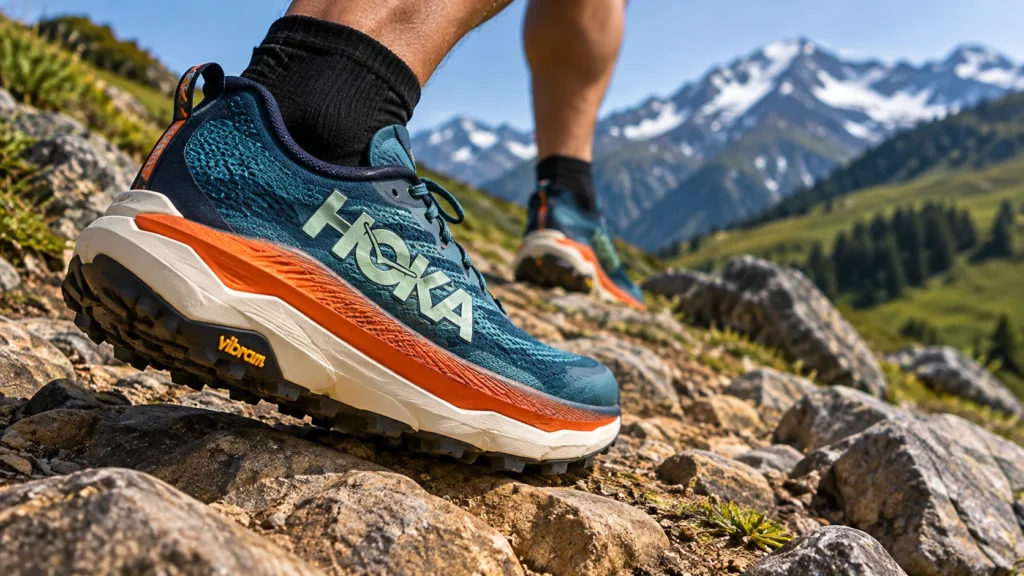
The HOKA Tecton X 3 is a premium carbon-plated trail racing shoe designed for long-distance off-road races. It combines dual-layer PEBA foam, parallel carbon plates, and a Vibram outsole to help experienced trail runners maintain an efficient ride across varied terrain.
Editorial ratings based on design, intended use, and published research.
Best for: Trail racing, mountain races, and long-distance ultramarathons.
Not ideal for: Daily road running, budget buyers, and runners seeking flexible shoes.
Original retail price: $275.
The HOKA Tecton X 3 belongs to HOKA’s premium trail racing range. Its design places speed and long-distance performance ahead of everyday affordability.
Two layers of PEBA foam surround parallel carbon-fiber plates. PEBA stands for polyether block amide, a lightweight and resilient foam material.
The plates feature winglets that help support the shoe during off-road movement. A Vibram Megagrip Litebase outsole provides grip through approximately 4 mm lugs.
The integrated knit gaiter helps reduce debris entering around the ankle. A MATRYX upper and dynamic forefoot construction complete its specialized racing design.
- Responsive dual-layer PEBA cushioning.
- Two carbon plates with stabilizing winglets.
- Grippy Vibram Megagrip Litebase outsole.
- Integrated gaiter helps block trail debris.
- Suitable for long-distance trail racing.
- Strong underfoot protection.
- Rocker design supports forward transitions.
- Durable performance-focused MATRYX upper.
- High original retail price of $275.
- Too specialized for routine road running.
- Carbon plates reduce natural flexibility.
- Gaiter design will not suit every runner.
- Heavier than the HOKA Mach 6.
- Not waterproof.
- High platform requires care on uneven terrain.
Recommended for Trail Racing
HOKA Tecton X 3 Trail Running Shoes
$275
Original US retail price. Check Amazon for available sizes and current offers.
- Dual-layer PEBA midsole.
- Parallel carbon-fiber plates.
- Vibram Megagrip trail outsole.
- Integrated knit gaiter.
- 5 mm manufacturer-listed heel drop.
What Is the HOKA Mach 6 Designed to Do?
The HOKA Mach 6 is a lightweight road running shoe designed for daily training and faster workouts. Its supercritical EVA foam provides responsive cushioning without a stiff racing plate. The Mach 6 offers better everyday value for runners who spend most of their time on pavement.
Editorial ratings based on design, intended use, and published research.
Best for: Daily road runs, tempo workouts, fitness running, and training plans.
Not ideal for: Technical mountain trails, deep mud, and runners needing dedicated stability support.
Original retail price: $140.
The HOKA Mach 6 uses full-length supercritical EVA foam for road training. EVA stands for ethylene vinyl acetate, a common running shoe cushioning material.
The supercritical process changes the foam structure to improve its performance characteristics. This approach helps HOKA produce a light and responsive midsole.
Unlike the Tecton X 3, the Mach 6 contains no carbon plates. Its flexible construction suits runners who prefer a less rigid ride.
A creel jacquard mesh upper helps balance ventilation with a secure fit. Our detailed HOKA Mach 6 review explores its toe box and comfort considerations.
- Lightweight road running construction.
- Responsive supercritical EVA cushioning.
- Suitable for daily miles and tempo workouts.
- Lower purchase price than the Tecton X 3.
- Plate-free design allows more natural flex.
- Breathable jacquard mesh upper.
- Strategic rubber outsole coverage.
- Wide-size versions were offered.
- Standard fit can feel narrow.
- Not suitable for demanding technical trails.
- No integrated debris gaiter.
- No carbon-fiber racing plates.
- Limited grip in deep mud.
- Neutral support will not suit every runner.
- Not waterproof.
🏆 Best Everyday Value
HOKA Mach 6 Road Running Shoes
$140
Original US retail price. Current offers depend on size, color, and seller.
- Supercritical EVA foam.
- Lightweight plate-free design.
- Creel jacquard mesh upper.
- Strategic road rubber coverage.
- 5 mm manufacturer-listed heel drop.
How Do the HOKA Tecton X 3 and Mach 6 Compare?
In short, the HOKA Tecton X 3 prioritizes trail racing performance. The Mach 6 focuses on versatile road training and lower ownership costs. Their different foam systems, outsole patterns, and plate designs explain most performance differences.
| Feature | HOKA Tecton X 3 | HOKA Mach 6 |
|---|---|---|
| Original Retail Price | $275 | $140 |
| Shoe Category | Trail Racing | Road Training |
| Independent Lab Weight | 9.7 oz (275 g) | 8.2 oz (232 g) |
| Official Heel Drop | 5 mm | 5 mm |
| Midsole Foam | Dual-layer PEBA | Supercritical EVA |
| Carbon Plates | Two parallel plates | None |
| Carbon Winglets | Yes | No |
| Outsole | Vibram Megagrip Litebase | Strategic rubber coverage |
| Trail Lugs | Approximately 4 mm | No dedicated trail lugs |
| Upper Material | MATRYX textile | Creel jacquard mesh |
| Integrated Gaiter | Yes | No |
| Support Category | Neutral | Neutral |
| Rocker Geometry | Yes | Yes |
| Waterproof | No | No |
| Primary Running Surface | Unpaved trails | Paved roads |
| Wide Size Availability | Limited options | Wide versions offered |
| Best Training Use | Race-specific trail workouts | Daily road miles |
| Best Racing Use | Trail marathons and ultras | Road races |
| Beginner Road Runner | Poor match | Better match |
| Primary Advantage | Premium trail performance | Everyday value |
Weight figures are published independent measurements. Shoe size and testing methods affect measured weight. Prices represent original US retail prices.
The weight difference matters during long runs and repeated fast workouts. Yet the lighter shoe does not automatically perform better on every surface.
The Tecton X 3 carries extra trail-specific components for a reason. Its outsole and gaiter provide features that the road-focused Mach 6 lacks.
Meanwhile, the Mach 6 removes features that most road runners do not need. This simpler design helps keep its weight and purchase price lower.
Choose the running surface before comparing individual features. That decision prevents you from paying for technology that adds little value.
Which Shoe Offers Better Cushioning and Running Performance?
Primarily, the Tecton X 3 wins for long-distance trail racing performance. The Mach 6 wins for flexible, versatile road training. Their cushioning systems support different goals rather than competing directly for the same running experience.
How Does the Tecton X 3 PEBA Foam Perform?
The Tecton X 3 uses two layers of responsive PEBA cushioning. This foam surrounds its parallel carbon plates and supports the racing platform.
A substantial foam platform helps separate the foot from rough ground. That protection matters during long trail races with repeated rock strikes.
Consider a 50 km trail race with several long runnable sections. A responsive shoe can help maintain a comfortable rhythm through those sections.
However, a tall foam platform does not guarantee better balance. Runners still need controlled foot placement when crossing uneven terrain.
PEBA foam also does not guarantee faster finishing times for every athlete. Training, pacing, nutrition, and individual running mechanics remain important.
How Does the Mach 6 Supercritical EVA Foam Perform?
The Mach 6 delivers a lively ride without using carbon plates. Its supercritical EVA foam works across several common road training speeds.
That flexibility makes the Mach 6 useful for varied weekly workouts. One pair can cover easy runs, steady efforts, and tempo sessions.
For example, a road runner could use it for Tuesday intervals. The same runner could wear it during a relaxed weekend training run.
This versatility reduces the need for several specialized running shoes. It also makes the Mach 6 easier to justify on a limited budget.
Do Carbon Plates Make the Tecton X 3 Faster?
Carbon plates can support efficient forward movement, but they cannot guarantee speed. The Tecton X 3 combines two parallel plates with responsive foam.
Its plate design differs from the single broad plates found in many racers. The winglets help support movement across changing trail surfaces.
However, a runner must feel comfortable with the shoe’s bending stiffness. A poor fit can outweigh any potential benefit from the carbon plates.
🏆 Category verdict: Tecton X 3 for trail racing performance. Mach 6 for everyday road training and natural flexibility.
Which HOKA Shoe Has Better Grip and Traction?
In short, the Tecton X 3 wins on unpaved trail surfaces. Its Vibram Megagrip outsole uses approximately 4 mm lugs for off-road traction. The Mach 6 uses road-specific rubber coverage suited to smoother paved surfaces.
Which Shoe Performs Better on Technical Trails?
The Tecton X 3 provides more suitable traction for demanding trail conditions. Its raised outsole lugs engage with loose dirt and uneven ground.
Trail runners also benefit from its protective foam and plate construction. These features help separate the foot from sharp surface changes.
However, deep mud can demand more aggressive tread than this shoe provides. A dedicated mud-running shoe can offer a better match in those conditions.
Runners seeking a less expensive trail option should consider the HOKA Speedgoat 6 before buying a carbon-plated racer.
Which Shoe Performs Better on Paved Roads?
The Mach 6 wins for routine running on asphalt and concrete. Its outsole design matches the more consistent contact of paved surfaces.
Trail lugs provide fewer benefits when running on flat pavement. Repeated road use can also cause unnecessary wear on trail-specific outsole features.
A 10 km paved training route illustrates this difference well. The Mach 6 offers the relevant road features without additional trail components.
How Do Both Shoes Handle Wet Surfaces?
The Tecton X 3 offers the more appropriate outsole for wet trails. The Mach 6 remains the more practical option for ordinary wet roads.
Neither outsole prevents slipping on every surface. Wet roots, painted road markings, polished rocks, and ice can reduce traction.
Both shoes also lack a dedicated waterproof membrane. Water can enter through their uppers during rain or stream crossings.
Do not assume a premium trail outsole provides reliable grip on ice. Slow down on slippery terrain and use suitable winter traction equipment when conditions require it.
🏆 Category verdict: Tecton X 3 wins for off-road traction. Mach 6 wins for paved road compatibility.
Which Shoe Offers Better Value for Money?
Primarily, the HOKA Mach 6 offers better value for everyday road runners. Its original $140 retail price is $135 below the Tecton X 3. That lower cost buys a versatile shoe without unnecessary trail racing technology.
Tecton X 3
$275
Original retail price
Mach 6
$140
Original retail price
Original Retail Price Savings With Mach 6
$135
Approximately 49.1% lower original purchase price.
The Tecton X 3 becomes a stronger investment for competitive trail runners. Its specialized construction addresses the demands of off-road racing.
However, those benefits provide limited value during ordinary pavement runs. Most road runners do not need an integrated gaiter or trail lugs.
Imagine buying shoes for three weekly runs on neighborhood streets. The Mach 6 covers that schedule without requiring a premium racing budget.
A trail athlete preparing for a mountain ultramarathon faces a different decision. The relevant racing features can justify spending more on suitable equipment.
Both models have newer successors, so discounted stock deserves careful consideration. Compare the actual selling price and available fit before making your choice.
🏆 Category winner: HOKA Mach 6 for overall affordability and everyday road training value.
Which Shoe Offers Better Fit, Durability, and Unique Features?
The Mach 6 offers a simpler fit system for daily road running. The Tecton X 3 offers more specialized features for demanding trail races. Neither shoe guarantees a better fit for every foot shape.
How Do the HOKA Tecton X 3 and Mach 6 Fit?
The Tecton X 3 combines its MATRYX upper with a knit collar. That construction creates a more enclosed fit around the ankle.
The Mach 6 uses a conventional collar and creel jacquard mesh upper. Its standard fit can feel snug around wider feet.
Wide-footed runners should check whether the Mach 6 wide version remains available. Buying a longer shoe does not always solve a width problem.
Long-distance runners should also account for foot swelling during extended efforts. Test the fit with the socks you normally wear while running.
Does the Tecton X 3 Integrated Gaiter Help?
Yes, the integrated gaiter helps reduce debris entering around the ankle. This feature becomes useful on dusty paths and loose gravel trails.
Small stones can interrupt a long race when they enter your shoes. A gaiter helps reduce that problem without requiring a separate accessory.
However, its design does not completely seal the shoe from the environment. Fine dust and water can still enter through other openings.
The Mach 6 omits this feature because most road runners need less debris protection.
Which HOKA Shoe Has Better Outsole Durability?
Each outsole offers a design suited to its intended running surface. The Tecton X 3 uses specialized trail rubber and raised lugs.
The Mach 6 uses rubber coverage positioned for typical road contact. This construction provides a more suitable match for repeated asphalt running.
Actual durability depends on runner weight, running form, surface, and usage. No fixed mileage figure can predict the lifespan of every pair.
Inspect the areas under your heel and forefoot for uneven wear. Flattened trail lugs and exposed foam can indicate reduced outsole performance.
Try both shoes with your usual running socks. Check toe movement, heel security, forefoot pressure, and comfort during a short indoor walk before committing to a pair.
🏆 Category verdict: Tecton X 3 wins for specialized trail features. Mach 6 wins for uncomplicated everyday road use.
Which Shoe Wins in Real-World Running Scenarios?
In short, the Mach 6 wins most road training scenarios. The Tecton X 3 wins scenarios that involve competitive long-distance trail running. Matching each shoe to its intended surface produces a more useful buying decision than comparing price alone.
| Running Scenario | Winner | Reason |
|---|---|---|
| Daily 5K road run | Mach 6 | Light and responsive |
| 50 km trail race | Tecton X 3 | Trail racing construction |
| 100 km ultramarathon | Tecton X 3 | Protective cushioning and grip |
| Road tempo workouts | Mach 6 | Responsive plate-free foam |
| Rocky trail racing | Tecton X 3 | Vibram outsole and protection |
| Running club road training | Mach 6 | Broad training use and lower cost |
| Treadmill running | Mach 6 | Road-focused flexible design |
| Frozen or icy trails | Neither | Dedicated winter traction may be needed |
Which Shoe Works Better for Daily Road Runs?
The Mach 6 provides the better daily road running experience for most runners. Its low weight suits a range of normal training speeds.
It also avoids adding a stiff carbon plate to every workout. Runners who prefer more natural shoe flex can appreciate this simpler construction.
Which Shoe Is Better for Trail Ultramarathons?
The Tecton X 3 offers the stronger design for competitive trail ultras. Its responsive cushioning and gripping outsole address important off-road racing needs.
Still, ultramarathon comfort depends heavily on individual fit and terrain. Complete several long training runs before choosing either shoe for race day.
Which Shoe Should Beginners Choose?
Road running beginners should generally choose the Mach 6 over the Tecton X 3. Its lower price and versatile design make it more practical.
Beginner trail runners should consider conventional trail trainers before premium carbon-plated racers. A comfortable fit matters more than advanced racing technology during early training.
Is the HOKA Tecton X 3 Worth the Extra Money?
The Tecton X 3 is worth the extra money for suitable trail racers. Its original $275 price reflects carbon plates, premium foam, and trail-specific construction. However, the same premium provides limited practical benefits for runners training mainly on roads.
The $135 original price difference represents a major purchasing decision. It nearly covers another Mach 6 at its original retail price.
Think about the types of races and training routes you use. Premium off-road features make sense when those routes require them.
For occasional jogging, walking, or short paved runs, they provide less value. The Mach 6 delivers the relevant features at a lower initial cost.
Competitive trail runners should also compare the Tecton X 3 with newer models. A discounted older shoe can offer better value than a newer full-price model.
These examples assume equal mileage for comparison purposes only. They do not predict actual shoe lifespan.
| Assumed Mileage | Tecton X 3 | Mach 6 |
|---|---|---|
| 300 miles | $0.92/mile | $0.47/mile |
| 400 miles | $0.69/mile | $0.35/mile |
| 500 miles | $0.55/mile | $0.28/mile |
Cost per mile offers one way to compare footwear spending. Yet a suitable shoe matters more than an attractive numerical result.
Who Should Buy the HOKA Tecton X 3 or Mach 6?
Buy the Tecton X 3 if trail racing forms your main goal. Buy the Mach 6 if you need versatile footwear for road training. Your running surface, preferred fit, and budget should guide the final choice.
Buy HOKA Tecton X 3 If…
- You compete in long-distance trail races.
- You need off-road traction.
- You prefer responsive PEBA foam.
- You want a carbon-plated trail racer.
- You run through dusty or loose terrain.
- Your budget supports premium racing shoes.
- You run mainly on paved roads.
- You prefer flexible shoes.
- You rarely race on trails.
- You need an affordable daily trainer.
Buy HOKA Mach 6 If…
- You run mainly on roads.
- You need an everyday training shoe.
- You enjoy responsive cushioning.
- You prefer a plate-free design.
- You want lower footwear costs.
- You alternate easy and faster workouts.
- You race across technical trails.
- You need aggressive trail lugs.
- You require dedicated stability features.
- The available fit feels too narrow.
Neither shoe meets every running need. Consider alternatives if you need strong stability support, winter traction, waterproof construction, or a specialized mud-running outsole.
- HOKA Challenger ATR 7: Consider for mixed road and moderate trail running.
- HOKA Gaviota: Consider if you prefer a more structured stability design.
- HOKA Mafate Speed 4: Consider for cushioned technical trail training.
- HOKA Rocket X 2: Consider for carbon-plated road racing.
- HOKA Tecton X 4: Compare if you want a newer premium trail racer.
The Salomon Ultra Glide 3 also provides another cushioned trail option worth evaluating.
What Are Real Buyers and Independent Reviewers Saying?
Published feedback generally supports the Tecton X 3 as a capable trail racer. Independent reviews also recognize the Mach 6 as a versatile road trainer. However, price, fit, and surface compatibility remain important limitations for both models.
HOKA Tecton X 3 Feedback
Common Positive Themes
- Responsive trail running experience.
- Protective cushioning during long efforts.
- Useful grip on varied trail terrain.
- Integrated gaiter offers practical debris protection.
Common Concerns
- Expensive compared with conventional trail trainers.
- High platform can affect ground feel.
- Gaiter preferences vary among runners.
- Specialized design limits everyday value.
HOKA Mach 6 Feedback
Common Positive Themes
- Low weight for daily road running.
- Responsive midsole foam.
- Useful across several training speeds.
- Competitive original retail price.
Common Concerns
- Standard fit can feel narrow.
- Limited suitability for uneven trails.
- Cushioning preferences differ between runners.
- Not a dedicated stability trainer.
Independent testing from RunRepeat supports the Mach 6’s lightweight road training design. Published Tecton X 3 evaluations highlight its racing foam and trail-specific construction.
OutdoorGearLab and other specialist reviewers provide additional perspectives on both shoes. Their findings help explain why the models suit different runners.
Keep in mind that another runner’s experience cannot guarantee your comfort. Foot shape, preferred cushioning, and movement patterns affect how a shoe feels.
Amazon customer reviews and current star ratings could not be independently verified for this comparison. The feedback above summarizes published independent evaluations rather than presenting unverified Amazon testimonials.
How Should You Care for HOKA Running Shoes?

Both HOKA shoes benefit from gentle hand cleaning and natural air drying. Avoid washing machines, strong cleaning products, and direct heat. Correct care helps protect the foam, upper materials, outsole rubber, and specialized trail components.
How Should You Clean the HOKA Tecton X 3?
Clean the Tecton X 3 after muddy or dusty trail runs. Removing trapped dirt helps you inspect the outsole and upper condition.
- Remove the insoles and loosen the laces.
- Allow thick mud to dry enough for gentle removal.
- Brush loose dirt away with a soft shoe brush.
- Use a damp cloth and mild soap on the upper.
- Clean dirt from the spaces between the outsole lugs.
- Gently wipe the integrated knit gaiter.
- Remove soap residue with a clean damp cloth.
- Allow the shoes to air dry at room temperature.
Pay special attention to the area around the integrated gaiter. Trapped dirt and moisture can make the collar less comfortable.
How Should You Clean the HOKA Mach 6?
The Mach 6 requires simple care after ordinary road training sessions. Its mesh upper and exposed foam areas need gentle cleaning.
- Remove loose dirt with a soft brush.
- Wipe the mesh upper with a damp cloth.
- Use diluted mild soap for stubborn marks.
- Clean the outsole without scraping the foam.
- Remove and air dry damp insoles.
- Store the shoes once all parts have dried.
Avoid placing either shoe near a radiator or heating appliance. High temperatures can affect footwear adhesives and foam materials.
How Should You Store HOKA Running Shoes?
Store both models in a cool, dry, ventilated place. Keep them away from prolonged sunlight and excessive indoor heat.
Do not leave wet running shoes inside a sealed gym bag. Allow moisture to escape before storing the shoes for extended periods.
Alternating shoes can give each pair time to dry between workouts. This approach also allows you to match each shoe with the correct terrain.
When Should You Replace HOKA Running Shoes?
Replace your shoes when wear noticeably reduces comfort, grip, or support. Mileage provides a useful reference but cannot determine replacement timing alone.
A commonly used guideline is roughly 300 to 500 miles for running shoes. Actual lifespan depends on materials, surfaces, and individual running mechanics.
Check the Tecton X 3 for damaged lugs and unusual plate-related stiffness. Inspect the Mach 6 for worn rubber and uneven foam compression.
- Remove dirt after demanding outdoor runs.
- Air dry wet shoes before storage.
- Inspect outsole wear regularly.
- Avoid washing machines and tumble dryers.
- Track mileage using a running log.
- Replace shoes when their condition no longer supports comfortable running.
What Common Mistakes Should You Avoid When Choosing These Shoes?
The biggest mistake is choosing a running shoe based only on price or technology. The more expensive Tecton X 3 does not automatically outperform the Mach 6. Your regular running surface should remain the first buying consideration.
- Buying carbon plates for every workout: Advanced racing technology does not guarantee better daily training comfort.
- Ignoring terrain: Road rubber and trail lugs serve different surfaces.
- Choosing the wrong width: A longer shoe cannot always solve forefoot pressure.
- Assuming higher prices mean greater durability: Specialized racing materials do not guarantee longer shoe life.
- Racing in unfamiliar shoes: Complete suitable training runs before wearing new shoes during a long event.
Another mistake involves changing shoe geometry without allowing an adjustment period. Both shoes have a listed 5 mm heel drop, but their ride characteristics differ.
Introduce unfamiliar shoes gradually into your normal training routine. Reduce use if they cause persistent discomfort or new pain.
How Was This HOKA Shoe Comparison Researched?
This comparison uses published running shoe specifications and independent testing reports. It evaluates cushioning, weight, outsole construction, fit, and original retail pricing. The methodology separates verified product facts from editorial recommendations and illustrative running scenarios.
Independent laboratory measurements provide useful information about shoe weight and construction. Specialist running shoe reviews add context about comfort and intended performance.
The comparison also considers differences between premium racers and daily trainers. This approach helps explain which features provide value for specific runners.
- HOKA official website — Product information and footwear technologies.
- RunRepeat Tecton X 3 laboratory review — Independent measurements and construction analysis.
- RunRepeat Mach 6 laboratory review — Weight, cushioning, and outsole measurements.
- iRunFar Tecton X 3 coverage — Trail racing design and practical running perspectives.
- Believe in the Run Mach 6 review — Road training characteristics and footwear design.
- OutdoorGearLab Tecton X 3 review — Trail running performance evaluations.
- OutdoorGearLab Mach 6 review — Independent road running evaluations.
Research transparency: This article does not claim original hands-on testing, personally recorded mileage, or direct laboratory measurements. Editorial ratings reflect an assessment of published evidence and intended use. Current Amazon listings, live prices, and customer ratings were not independently verified.
Final Verdict: Should You Buy the HOKA Tecton X 3 or Mach 6?
The HOKA Mach 6 is the better purchase for most everyday road runners. It offers responsive cushioning, low weight, and a versatile training design. The Tecton X 3 remains the stronger choice for competitive trail runners who benefit from its specialized features.
The Tecton X 3 combines premium foam with two parallel carbon plates. Its Vibram outsole and integrated gaiter support long-distance trail racing.
Those features make sense when you spend significant time on uneven terrain. They offer fewer practical benefits during ordinary paved road runs.
The Mach 6 takes a simpler and more affordable approach. Its original retail price saves $135 compared with the Tecton X 3.
Do not buy either shoe simply because it looks faster. Buy the shoe that matches your running surface and feels comfortable.
Our Final Recommendations
BEST FOR TRAIL RACING
HOKA Tecton X 3
4.5/5
Choose this shoe for trail ultras, competitive mountain running, and responsive carbon-plated cushioning.
$275
Original retail price
🏆 BEST EVERYDAY VALUE
HOKA Mach 6
4.6/5
Choose this shoe for daily road miles, faster workouts, versatile training, and lower purchase costs.
$140
Original retail price
Editorial ratings are not Amazon customer ratings. Verify current prices, model details, seller information, and size availability before purchasing.
Frequently Asked Questions
1. Which Is Better, the HOKA Tecton X 3 or Mach 6?
The HOKA Mach 6 is better for daily road running and general training. The Tecton X 3 is better for competitive trail racing and ultramarathons. Choose according to your running surface, preferred cushioning, fit, and available budget.
2. What Is the Difference Between the HOKA Tecton X 3 and Mach 6?
The Tecton X 3 uses PEBA foam, dual carbon plates, and Vibram trail lugs. The Mach 6 uses supercritical EVA foam and a plate-free road construction. Their original retail prices were $275 and $140, respectively.
3. Is the HOKA Tecton X 3 Worth Buying?
Yes, the Tecton X 3 is worth considering for experienced trail racers. Its responsive foam, carbon plates, and trail traction support demanding off-road racing. However, casual runners and road runners will often get better value from less specialized shoes.
4. Can You Use the HOKA Mach 6 for Trail Running?
The Mach 6 can handle some smooth, dry, compact gravel paths. However, it lacks dedicated trail lugs for demanding off-road conditions. Choose a proper trail running shoe for rocky terrain, steep mountain paths, loose surfaces, or deep mud.
5. Is the HOKA Tecton X 3 Good for Ultramarathons?
Yes, HOKA designed the Tecton X 3 for long-distance trail racing. Its PEBA foam, carbon plates, and protective construction suit many ultramarathon conditions. Complete long training runs in the shoes before racing to confirm your personal comfort and fit.
Affiliate Disclosure: As an Amazon Associate, FootwearHiker earns from qualifying purchases. This article contains affiliate links. If you purchase through these links, we may receive a commission at no additional cost to you. Our recommendations reflect product research, intended use, and editorial assessments. Prices and availability can change without notice.


