

Quick Answer
The Brooks Hyperion Elite 4 is a carbon-plated road racing shoe with responsive DNA Flash v2 cushioning, a secure upper, and smooth transitions. It’s still worth considering in 2026 if you find a substantial discount, but newer models offer livelier cushioning. Before buying, compare running shoe specifications to see whether its design matches your needs.
Four reasons to consider it
- Carbon-plated propulsion: The SpeedVault Race+ plate supports quick, efficient transitions.
- Secure racing fit: A breathable, lightweight upper helps hold your foot during faster efforts.
- Controlled ride: Firmer cushioning may appeal to runners who dislike overly soft racing shoes.
- Discount potential: Its value improves when priced well below its original $250 retail price.
My buying recommendation
- Consider buying: You want a relatively firm, structured racer at a reduced price.
- Consider alternatives: You prioritize maximum energy return, lighter construction, or a roomier fit.
The Brooks Hyperion Elite 4 arrived with a clear goal: make Brooks more competitive in carbon-plated road racing. Its improved foam, redesigned plate, and streamlined upper made it a meaningful step forward.
But is it still a smart purchase in 2026? In this Brooks Hyperion Elite 4 review, I’ll examine its design, fit, race performance, limitations, and newer alternatives.
This assessment draws on Brooks’ published specifications and independent laboratory reviews rather than an unverified personal wear test. I’ll focus on what those findings mean for your buying decision.
What Is the Brooks Hyperion Elite 4 Running Shoe?
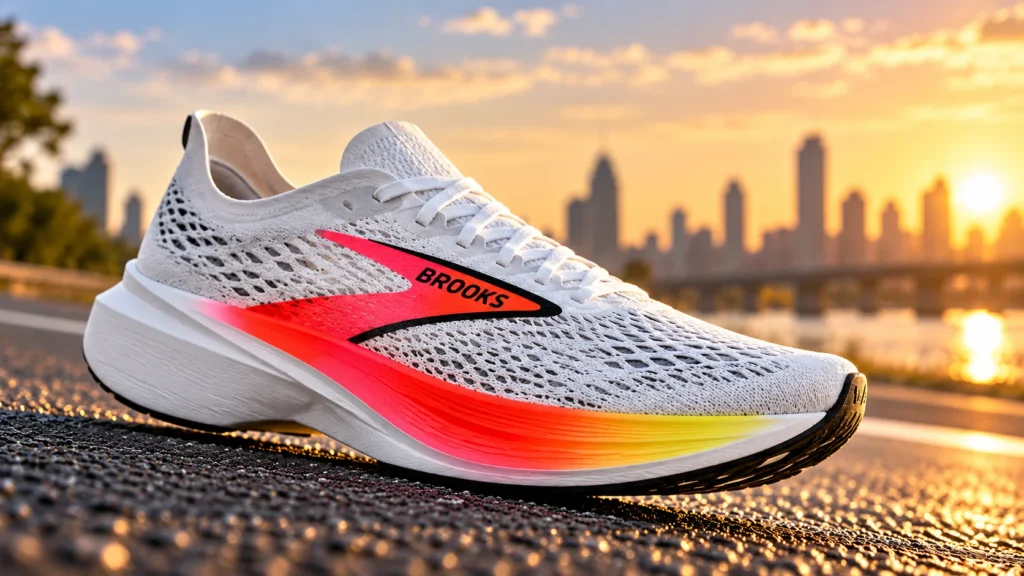
The Brooks Hyperion Elite 4 is a lightweight, neutral road racing shoe designed for distances from the 5K to the marathon. It combines nitrogen-infused cushioning with a carbon-fiber plate and a curved midsole to encourage fast transitions.
Brooks introduced the model in 2024 as an upgrade to the Hyperion Elite 3. Its design places speed and race-day efficiency ahead of everyday cushioning and versatility.
According to the official Brooks Hyperion Elite 4 specifications, the shoe uses responsive cushioning, a propulsion plate, and a fitted upper.
Brooks Hyperion Elite 4 Key Specifications
- Category: Carbon-plated road racing shoe.
- Support: Neutral.
- Midsole: Nitrogen-infused DNA Flash v2.
- Plate: Full-length Arris SpeedVault Race+ carbon-composite plate.
- Heel-to-toe drop: 8 mm, according to Brooks.
- Weight: Approximately 7.8 oz (221 g), as listed by Brooks; measurements vary with shoe size.
- Published stack height: Approximately 40 mm heel and 32 mm forefoot, with independent measurements differing.
- Upper: Lightweight, breathable performance construction.
- Outsole: Strategically placed rubber for road traction.
- Intended distances: 5K, 10K, half marathon, and marathon.
- Original US retail price: $250.
- Release year: 2024.
These specifications explain why the Hyperion Elite 4 belongs in the racing category. However, a carbon plate and high stack height don’t automatically make every shoe equally fast.
What Makes the Hyperion Elite 4 Different?
Its biggest distinction is the combination of DNA Flash v2 cushioning and the SpeedVault Race+ plate. Brooks built these components around a relatively controlled, firm racing experience.
The upper also contributes to its identity. Instead of adding substantial padding, Brooks focuses on ventilation and secure foot positioning.
How Does the Brooks Hyperion Elite 4 Perform While Running?
The Hyperion Elite 4 offers a relatively firm, smooth, and structured racing ride. It generally feels less springy than newer premium racing shoes built around PEBA-based foam.
Independent testing supports this distinction. The important question isn’t whether the shoe contains a carbon plate, but how effectively the entire construction supports your stride.
DNA Flash v2 Cushioning: Responsive but Not Especially Bouncy
DNA Flash v2 is a nitrogen-infused cushioning material developed to reduce weight and support quick responses. It provides noticeable underfoot protection without relying on an extremely soft sensation.
Brooks improved this formulation over the earlier Elite models. However, independent reviewers have found that its energy return remains below the strongest modern racing foams.
The RunRepeat laboratory review identified its cushioning response as a significant limitation compared with leading racing competitors.
If you prefer a firmer platform, this isn’t necessarily a dealbreaker. It becomes more important when you’re paying a premium specifically for maximum bounce.
For a clearer explanation of how advanced cushioning is manufactured, read our guide to supercritical foam running shoes.
SpeedVault Race+ Carbon Plate and RapidRoll Geometry
The SpeedVault Race+ plate adds stiffness through the sole, while the curved RapidRoll design encourages the foot to roll forward. Together, these features support efficient heel-to-toe movement.
A carbon plate does not create speed independently. Its performance depends on the foam, plate geometry, running mechanics, and the runner’s ability to use the shoe comfortably.
Here are the main effects runners may notice:
- Stiffer forefoot: The shoe resists bending more than a conventional flexible trainer.
- Smoother transitions: The curved sole helps guide movement toward toe-off.
- More structured feel: The plate and foam combination produces a controlled platform.
- Less flexibility: Walking and easy jogging may feel less natural than in a daily trainer.
Our guide to rocker sole running shoe benefits explains how curved midsoles influence forward movement.
Is the Hyperion Elite 4 Good for 5K and 10K Racing?
Yes, the Hyperion Elite 4 can work well for shorter road races where quick transitions and a secure fit matter. Its structured ride may suit runners who enjoy a firmer platform.
At faster speeds, the plate and rocker become more relevant than they do during casual jogging. However, competitors with lighter construction and livelier foams may offer greater performance appeal.
Can You Run a Half Marathon or Marathon in It?
Brooks designed the Hyperion Elite 4 for races through the marathon distance. Its substantial cushioning stack provides enough material for long-distance racing.
That doesn’t mean it will feel equally comfortable to every marathoner. Runners who depend on a soft, highly energetic midsole may find its firmer response tiring over long efforts.
My preference would be to judge marathon suitability during a longer workout before racing. A comfortable 5K doesn’t guarantee the same experience after two or three hours.
Can You Use It for Daily Training?
You can train in the Hyperion Elite 4, but it isn’t my first choice for everyday running. Its carbon plate, specialized geometry, and original premium price make it better suited to specific workouts.
I would reserve it primarily for these sessions:
- Race-pace intervals on the road.
- Tempo runs at a controlled, faster effort.
- Selected long workouts that include race pace.
- Road races where you’ve already tested the fit.
A more forgiving daily trainer makes greater sense for recovery runs. Keeping separate training and racing shoes can also reduce unnecessary wear on your race-day pair.
How Does the Brooks Hyperion Elite 4 Fit?
The Hyperion Elite 4 generally fits true to size for many runners, but its racing-oriented shape can feel narrow. The upper emphasizes lockdown rather than extra room around the forefoot.
Its lightweight construction offers good ventilation. However, runners with broad feet or high sensitivity to upper pressure should be particularly careful.
Is It True to Size?
Independent fit feedback generally supports starting with your usual running shoe size. Still, sizing labels alone cannot account for your individual toe shape and foot width.
The REI running shoe fitting guide recommends adequate toe clearance with a secure midfoot and heel.
Before ordering, use our 12-point running shoe fitting checklist to evaluate the fit systematically.
Is It Suitable for Wide Feet?
The Hyperion Elite 4 isn’t an ideal starting point for runners who regularly need wide running shoes. Its performance-oriented fit and lack of a dedicated wide option limit its versatility.
Pay particular attention to these areas:
- Toe box: Check for uncomfortable pressure near the little toe.
- Midfoot: Avoid excessive compression across the arch.
- Heel: Confirm a secure hold without rubbing.
- Upper volume: Make sure the laces don’t create painful pressure over the foot.
Don’t automatically size up to solve width problems. Increasing length can introduce heel movement while leaving the forefoot shape unsuitable.
How Good Are the Hyperion Elite 4’s Grip and Durability?
The Hyperion Elite 4 has a relatively capable outsole for a premium road racer. Rubber coverage helps protect high-contact areas while providing useful traction.
Independent laboratory testing found encouraging outsole durability and usable grip on wet concrete. That provides a stronger basis for evaluation than judging the tread pattern from photographs alone.
Does It Grip Wet Roads?
Its outsole can handle typical paved running surfaces, including some damp conditions. However, no racing shoe guarantees secure traction on every wet surface.
Painted road markings, metal covers, and slick pavement still demand caution. I wouldn’t choose this model specifically for technical trails or slippery off-road routes.
How Long Does the Brooks Hyperion Elite 4 Last?
There isn’t a universally reliable mileage limit for this shoe. Longevity depends on running mechanics, surfaces, body weight, storage, and how frequently you use it.
The outsole may remain usable after the cushioning has lost some of its original response. That distinction matters when deciding whether an older racing shoe is still performing well.
Watch for these signs:
- Reduced cushioning response compared with earlier runs.
- Uneven outsole wear or exposed midsole material.
- Upper damage around the toes or heel.
- New discomfort during familiar workouts.
- A noticeably different ride between the left and right shoe.
I would judge the shoe by its condition and performance rather than an arbitrary mileage target. Avoid assuming a durable rubber outsole guarantees unchanged racing performance.
What Are the Biggest Pros and Cons of the Brooks Hyperion Elite 4?
The Hyperion Elite 4’s strongest qualities are its secure upper, structured transitions, and capable outsole. Its biggest limitations are the relatively modest energy return and weight compared with newer racing shoes.
Advantages
- Secure fit: The lightweight upper provides good foot lockdown for runners who match its shape.
- Effective plate design: The carbon plate contributes to a stiff, race-oriented platform.
- Smooth transitions: RapidRoll geometry encourages a consistent forward motion.
- Useful outsole durability: Rubber placement offers encouraging wear performance for its category.
- Controlled cushioning: Runners who dislike soft, unstable-feeling racers may appreciate the firmer ride.
- Potential sale value: Discounted older stock may make it more accessible.
Disadvantages
- Less energetic foam: DNA Flash v2 doesn’t deliver the bounce associated with newer premium PEBA foams.
- Weight disadvantage: Later Elite models are lighter on published specifications.
- Narrow fit: Broad-footed runners may struggle to achieve comfortable lockdown.
- Limited daily versatility: Its firm, plated construction isn’t ideal for every easy run.
- Outdated at full price: Modern alternatives provide stronger reasons to spend premium-racing-shoe money.
- Availability uncertainty: Specific colors and sizes may be difficult to find in 2026.
How Does the Brooks Hyperion Elite 4 Compare With Newer Models?
The biggest change in the Hyperion Elite line came with the introduction of DNA Gold cushioning. The Hyperion Elite 4 PB, Elite 5, and Elite 6 moved the series toward lighter and more energetic PEBA-based construction.
This is important because the original Elite 4 and Elite 4 PB aren’t the same shoe internally. Their similar names and appearance can make shopping confusing.
Brooks Hyperion Elite 4 vs. Elite 4 PB vs. Elite 5 vs. Elite 6
| Feature | Elite 4 | Elite 4 PB | Elite 5 | Elite 6 |
|---|---|---|---|---|
| Release year | 2024 | 2025 | 2025 | 2026 |
| Midsole foam | DNA Flash v2 | DNA Gold | DNA Gold | Updated DNA Gold |
| Published weight | 7.8 oz | 7.2 oz | Approx. 6.9 oz | 6.8 oz |
| Advertised drop | 8 mm | 8 mm | 8 mm | 7 mm |
| Carbon plate | SpeedVault Race+ | SpeedVault Race+ | SpeedVault+ | Updated SpeedVault+ |
| Key appeal | Firm, controlled racing | More energetic cushioning | Lighter, modern racing feel | Latest Elite performance design |
Note: Weights reflect manufacturer-published reference figures, with rounding where appropriate. Actual weights and independent laboratory measurements can differ by size and testing method.
Is the Hyperion Elite 4 PB Better Than the Original Elite 4?
For runners seeking a livelier ride, the Elite 4 PB is a meaningful improvement. Its DNA Gold foam replaces the original model’s DNA Flash v2 cushioning.
The official Hyperion Elite 4 PB product page confirms its PEBA-based foam and carbon plate.
I would favor the PB version when prices are similar and both fit comfortably. The original Elite 4 makes more sense when its firmer feel is preferred or its discount is substantial.
Should You Buy the Elite 5 or Elite 6 Instead?
The Elite 5 introduced a further redesign around DNA Gold cushioning and a lighter racing construction. It represents a more modern performance direction than the original Elite 4.
The Elite 6 continues that evolution with revised cushioning, an updated plate, and optimized geometry. Brooks lists its weight at approximately 6.8 oz and its drop at 7 mm.
You can review those details on the official Brooks Hyperion Elite 6 page.
The newer shoe is the more compelling performance-focused choice on paper. However, the best racing shoe still needs to suit your foot and running mechanics.
Is the Brooks Hyperion Elite 4 Worth the Money in 2026?
The Brooks Hyperion Elite 4 is worth considering in 2026 primarily as a discounted racing shoe. At or near its original $250 price, I would generally choose a newer alternative.
Brooks has listed discounted Elite 4 stock, although availability varies by product listing, color, and size. That means an advertised sale price does not guarantee you can purchase your preferred pair.
What Is a Reasonable Price to Pay?
I would treat the original $250 retail price as a reference, not a recommended 2026 purchase price. The discount should be meaningful enough to justify choosing older cushioning technology.
For example, an available pair around $150 represents a 40% reduction from the original price. That’s a more attractive starting point, provided the pair is genuine, unused, and returnable.
Before ordering, compare these factors:
- Final price: Include delivery charges and applicable taxes.
- Correct version: Confirm whether the listing is Elite 4 or Elite 4 PB.
- Condition: Check whether the shoes are new, used, or refurbished.
- Return policy: Make sure you can address an unsuitable fit.
- Size availability: Don’t compromise on fit simply to secure a discount.
- Alternative pricing: Compare the total cost with newer Elite models.
If a seller’s information seems unclear, I would avoid making a rushed purchase. Our guide on what to look for in running shoe reviews can help you separate useful evidence from marketing claims.
Who Should Buy the Brooks Hyperion Elite 4?
The Hyperion Elite 4 suits runners seeking a relatively firm carbon-plated racer with a secure upper. Its appeal becomes stronger when the price is substantially below newer alternatives.
Consider It If You:
- Prefer structured cushioning over a soft, highly bouncy ride.
- Have a neutral stride and find its fit comfortable.
- Want a dedicated shoe for road races and speed workouts.
- Already enjoy the fit of Brooks performance shoes.
- Can find a genuine discounted pair in your correct size.
Skip It If You:
- Want the most energetic modern marathon racing foam.
- Need a dedicated wide-width shoe.
- Prefer soft cushioning during longer races.
- Need one pair for daily training and occasional racing.
- Can purchase an Elite 4 PB or newer Elite model for a similar price.
I wouldn’t recommend buying the Hyperion Elite 4 solely because it has a carbon plate. Fit, ride preference, and realistic pricing should lead your decision.
How Can You Get the Best Performance From the Hyperion Elite 4?
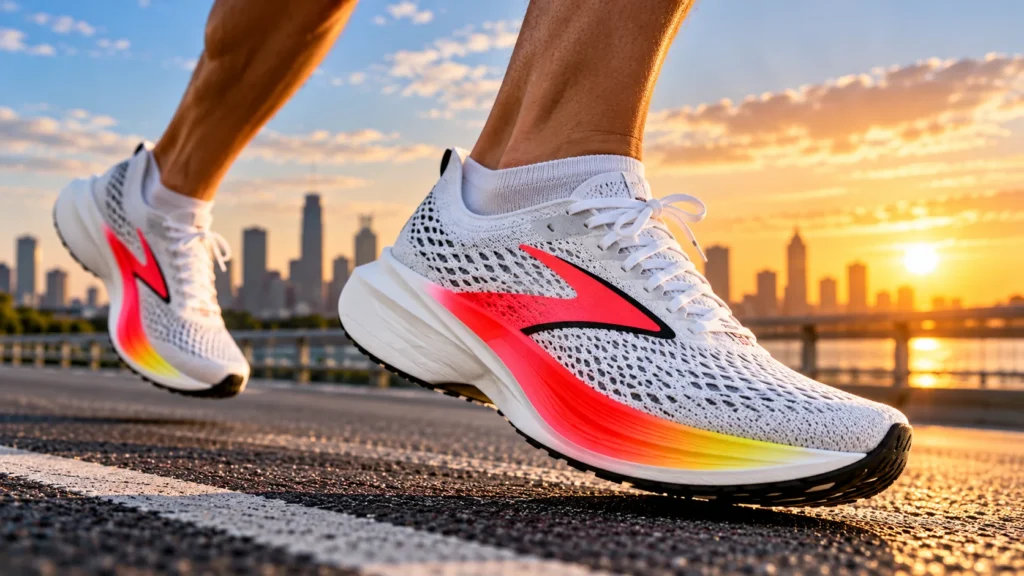
The best approach is to treat the Hyperion Elite 4 as specialized racing equipment. Familiarity with its fit and geometry matters more than saving it untouched for race day.
Five Practical Steps
- Check the fit indoors. Wear your usual racing socks and evaluate toe clearance, width, and heel hold.
- Start with a shorter workout. Learn how the firm cushioning and carbon plate feel before attempting a long session.
- Test your target pace. Include controlled race-pace efforts to judge whether the shoe feels efficient.
- Complete a longer trial. For half marathons and marathons, confirm comfort during sustained running.
- Keep a separate easy-day shoe. Use a comfortable daily trainer for recovery and routine mileage.
Stop using the shoe if you notice persistent pain, numbness, or unusual pressure. A shoe that feels fast isn’t automatically suitable for your body.
My rule is simple: don’t introduce unfamiliar footwear on race day. Even a premium racing model needs to earn its place through comfortable training runs.
Which Brooks Running Shoes Are Worth Considering Instead?
If you’re comparing Brooks racing shoes, these three models cover different buying priorities. The scores below are editorial assessments based on published specifications and independent findings, not personal mileage tests or aggregated customer ratings.
Affiliate disclosure: As an Amazon Associate, we earn from qualifying purchases at no additional cost to you.
💰 Best discounted option
Brooks Hyperion Elite 4
★★★½☆ 3.5/5 editorial rating
DNA Flash v2 cushioning, an 8 mm drop, and a full-length carbon plate create a structured racing experience. I would shortlist this model for runners who prefer firmer cushioning and can secure a genuine bargain.
⚡ Best foam upgrade
Brooks Hyperion Elite 4 PB
★★★★☆ 4/5 editorial rating
DNA Gold PEBA cushioning and a SpeedVault Race+ plate offer a lighter, more energetic alternative to the standard Elite 4. I would compare this model first when the two versions have similar prices.
🏆 Best newer racing option
Brooks Hyperion Elite 6
★★★★½ 4.5/5 editorial rating
Updated DNA Gold cushioning, a revised SpeedVault+ plate, and a published weight of 6.8 oz target higher race-day performance. This is my preferred starting point for runners prioritizing newer Brooks racing technology over a discount.
Frequently Asked Questions About the Brooks Hyperion Elite 4
Is the Brooks Hyperion Elite 4 a carbon-plated shoe?
Yes. The Brooks Hyperion Elite 4 contains a full-length Arris SpeedVault Race+ carbon-composite propulsion plate. It works with the shoe’s DNA Flash v2 midsole and curved geometry to support quick transitions. The plate makes the shoe stiffer, but its presence alone doesn’t guarantee faster race times.
Is the Brooks Hyperion Elite 4 good for a marathon?
Brooks designed the Hyperion Elite 4 for road races up to the marathon distance. Its cushioning stack and plate can support long-distance racing, but the firm ride may not suit everyone. Test it during longer workouts before deciding to wear it for a marathon.
Does the Brooks Hyperion Elite 4 run true to size?
The Hyperion Elite 4 generally runs true to size according to independent reviews, although its racing fit can feel narrow. Start with your usual running shoe size, then verify toe clearance, midfoot comfort, and heel security. Runners needing wide shoes should consider other models.
What is the difference between Hyperion Elite 4 and Elite 4 PB?
The main difference is the midsole foam. The standard Hyperion Elite 4 uses DNA Flash v2, while the Elite 4 PB uses lighter, more responsive DNA Gold PEBA cushioning. Both have carbon plates and an advertised 8 mm drop, but the PB version offers stronger performance potential.
Is the Brooks Hyperion Elite 4 still worth buying in 2026?
Yes, if its fit suits you and you find it substantially discounted. The Hyperion Elite 4 remains a capable carbon-plated road racing shoe, but it faces stronger competition from the Elite 4 PB, Elite 5, and Elite 6. At full original retail price, newer alternatives generally offer better value.
Final Verdict: Should You Buy the Brooks Hyperion Elite 4?
The Brooks Hyperion Elite 4 remains a capable racing shoe with a secure upper, structured cushioning, and effective carbon-plated geometry. Its performance is credible, even though newer racing shoes have moved beyond its original foam technology.
In 2026, I would recommend it primarily to runners who prefer firmer cushioning and can find a worthwhile discount. For those seeking maximum racing performance, the Elite 4 PB or Elite 6 deserves stronger consideration.
My final recommendation: Buy the Hyperion Elite 4 for its fit, controlled ride, and discounted value—not simply because it carries a carbon plate.