
Quick Answer
Some running shoes can go in a washing machine, but only when their manufacturer permits it; hand cleaning is usually safer for foam, adhesives, and shape. Nike, Brooks, ASICS, and New Balance generally recommend hand cleaning, while adidas gives conditional machine-washing instructions.
If the care instructions explicitly allow machine washing
- Check the label: Follow the directions for your exact model, not a general sneaker tip.
- Remove loose dirt: Brush away dried mud before washing.
- Take out inserts: Remove laces and removable insoles; wash insoles by hand.
- Protect the pair: Use a mesh laundry bag and a cold, gentle cycle with mild detergent.
- Air-dry completely: Never use a heated dryer, radiator, or direct strong sunlight.
Unsure about your model? Skip the washing machine and spot-clean the shoes instead.
Dirty running shoes can make the laundry basket look tempting, especially after a muddy trail run. I prefer a simple rule: protect the shoe’s construction first, then worry about making its upper look spotless.
This guide explains when machine washing may be acceptable, why brands disagree, and how to clean and dry your shoes safely. It also covers odors, stains, and signs that cleaning won’t restore a worn-out pair.
Why Can a Washing Machine Damage Running Shoes?
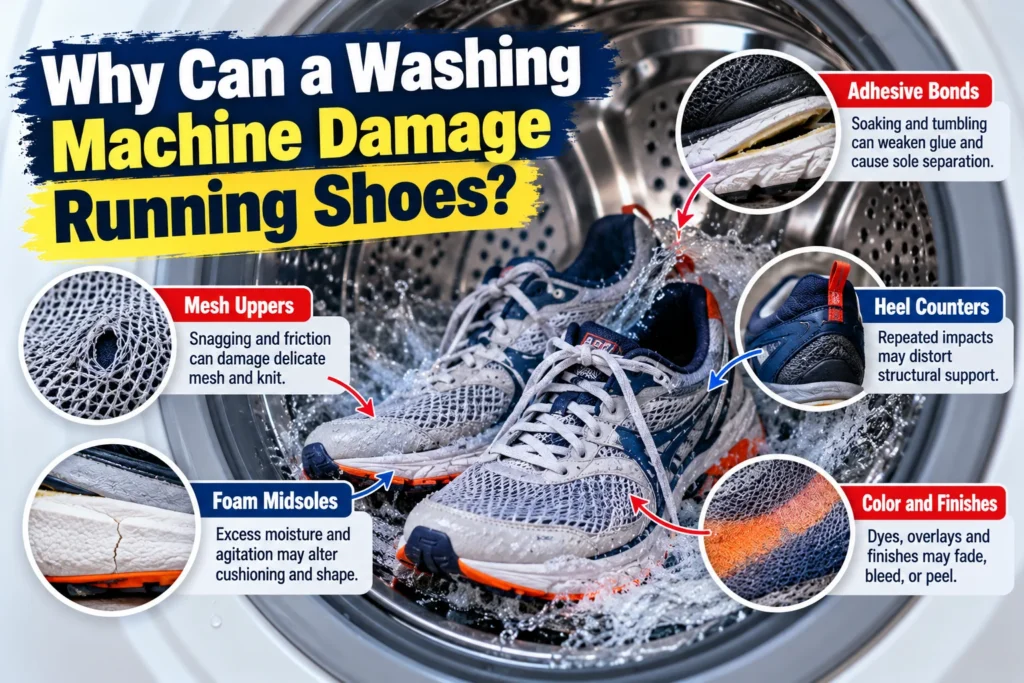
Machine washing exposes running shoes to repeated soaking, tumbling, and friction. Those stresses can affect materials that weren’t designed for a laundry cycle.
A running shoe is a layered product, not one solid piece of fabric. Its upper, foam midsole, rubber outsole, reinforcements, and adhesive bonds respond differently to water and movement.
- Adhesive bonds: Prolonged soaking and agitation can increase the risk of sole separation.
- Foam midsoles: Excess moisture, heat, and rough handling may alter cushioning or shape.
- Mesh uppers: Snagging, rubbing, and stretching can damage thin knit or engineered mesh.
- Heel counters: Repeated impacts inside the drum may distort structural support.
- Color and finishes: Dyes, overlays, and decorative finishes may fade, bleed, or peel.
A cold wash avoids hot water, but it doesn’t eliminate agitation or prolonged wetting. That’s why a delicate setting isn’t automatically safe for every running shoe.
Does the type of running shoe matter?
Yes. A basic fabric sneaker with explicit machine-wash approval differs from a performance runner with bonded components or a stiff plate.
- Everyday mesh trainers: Consider machine washing only if their care guidance allows it.
- Carbon-plated racing shoes: Favor careful hand cleaning because performance construction is specialized.
- Waterproof running shoes: Follow membrane-specific instructions to protect waterproofing treatments and bonded layers.
- Suede or leather footwear: Use material-specific cleaners instead of a normal wash cycle.
- Damaged or aging shoes: Avoid additional stress when seams or soles already look compromised.
What Do Major Running Shoe Brands Recommend in 2026?
Brand instructions aren’t identical. The comparison below reflects published general guidance, not permission for every individual shoe model.
| Brand | General machine-wash guidance | Preferred approach |
|---|---|---|
| Nike | Not recommended | Hand wash gently |
| Brooks | Do not machine wash | Mild soap and soft brush |
| ASICS | Avoid machine washing | Spot clean and air-dry |
| New Balance | Not suggested | Mild detergent and cloth |
| adidas | Allows a cold, gentle wash in its general running-shoe guide | Hand wash for a gentler clean |
For details, read the care guidance from Nike, Brooks, ASICS, and New Balance. Their advice supports cleaning without fully submerging the shoe.
How Can You Tell Whether Your Running Shoes Are Machine Washable?
Check the care label, product page, or manufacturer support guidance for your exact style. If none explicitly approves machine washing, don’t assume that a fabric upper makes the whole shoe washer-safe.
- Find the exact model name: Look at the tongue label, box, or original order details.
- Read its cleaning instructions: Check for terms such as machine washable, hand wash, and do not soak.
- Inspect construction: Notice bonded overlays, exposed foam, specialty membranes, and vulnerable trims.
- Assess existing wear: Look for loose glue, tears, cracks, or separating outsole edges.
- Choose the safer method: When guidance conflicts or remains unclear, clean by hand.
One useful distinction: “washable upper” doesn’t necessarily mean “machine-washable shoe.” The manufacturer’s directions should address the assembled footwear, not just one fabric component.
How Do You Machine Wash Running Shoes If the Manufacturer Allows It?
Use the method below only when the exact shoes are approved for machine washing. A careful cycle can reduce risk, but it cannot guarantee that the pair will emerge unchanged.
- Read the care instructions again. Follow model-specific limits before choosing the cycle or detergent.
- Brush away surface dirt. Let heavy mud dry, then loosen it with a soft brush outdoors.
- Remove laces and insoles. Bag the laces separately; gently hand-clean removable insoles.
- Place shoes in a mesh laundry bag. This reduces snagging and some drum impacts.
- Add a few old towels. If your washer instructions permit, towels can cushion movement and balance the load.
- Choose cold water and a gentle cycle. Use a small amount of mild liquid detergent; avoid bleach and fabric softener.
- Keep spinning gentle. Select low spin or no spin if your washer and care instructions allow.
- Remove shoes promptly. Blot excess moisture and let all components air-dry before reassembly.
Don’t machine wash multiple heavy pairs together unless the machine’s guidance permits that load. Shoes can strike the drum and create avoidable noise, imbalance, and wear.
Is a front-loading washer better than a top-loader?
A front-loader without a central agitator may expose the shoes to less aggressive mechanical action. However, washer design never overrides a shoe manufacturer’s “do not machine wash” instruction.
- Front-loading washer: Use its approved delicate cycle only for shoes cleared for machine washing.
- Top-loader with agitator: Be especially cautious because the agitator can catch or stress footwear.
- Any washer: Check appliance guidance, balance the load, and stop the cycle if severe banging occurs.
What Is the Safest Way to Wash Running Shoes by Hand?
Hand washing is the better default because you control moisture and pressure. It also lets you treat dirty soles without saturating the cushioning and upper.
Start with a soft brush, mild dye-free soap, a cloth, lukewarm or cool water, and a dry towel. Strong chemicals usually aren’t necessary.
- Take out the laces and removable insoles. Set them aside for separate cleaning.
- Dry-brush the outsole. Remove grit from grooves and tread without grinding it into the mesh.
- Mix a mild cleaning solution. Add a little gentle detergent to a bowl of water.
- Spot-test discreetly. Check an inconspicuous part of the upper for discoloration.
- Clean the upper gently. Use a lightly dampened cloth or soft brush with minimal pressure.
- Scrub the rubber separately. A firmer brush may suit durable outsoles, never fragile knit.
- Lift away the soap. Wipe repeatedly with a clean damp cloth instead of soaking the whole shoe.
- Wash laces and insoles by hand. Rinse laces as appropriate; avoid fully soaking foam insoles.
- Air-dry the parts separately. Reassemble only after the shoes and inserts feel fully dry.
For example, I’d treat a muddy white knit shoe in two zones: the upper gets a soft cloth, while the outsole gets the more vigorous brushing. That keeps grit and stiff bristles away from delicate yarns.
How should you clean mesh and knit running shoes?
Mesh and knit need light pressure because their threads can snag or fuzz. Dab stubborn spots rather than repeatedly scrubbing the same small patch.
- Use a soft-bristled brush or microfiber cloth.
- Apply a little diluted cleaner rather than pouring liquid directly onto the shoe.
- Wipe away residue and check whether the color remains even.
How should you clean foam midsoles and rubber outsoles?
Midsole foam may mark easily, while rubber tread holds sand and stones. Clean those areas separately to avoid transferring grime back to the upper.
- Use a damp cloth on exposed foam and printed details.
- Use a firmer brush only on durable rubber tread.
- Avoid abrasive cleaners, solvents, and aggressive scraping on painted or coated sections.
How Long Do Running Shoes Take to Dry After Washing?
Drying time varies with humidity, airflow, padding, and how wet the shoes became. Plan for at least a day, and allow longer for soaked or heavily padded shoes.
New Balance advises roughly 24 hours of air drying in its general care guidance. Treat that as a starting point, not a guarantee that every insole and foam layer is dry.
- Take out the insoles: Place them separately where air can circulate.
- Blot surface water: Press with a clean towel instead of twisting the shoes.
- Support the shape: Loosely stuff shoes with plain paper towels, replacing them when damp.
- Increase airflow: Use a fan in a shaded, ventilated room.
- Check before wearing: Feel inside the toe box and under the removable insole for lingering moisture.
A dryer may seem convenient, but heat can damage adhesive bonds, finishes, and synthetic materials. Avoid hair dryers, heaters, radiators, and intense direct sunlight for the same reason.
Can You Remove Running Shoe Odor Without Machine Washing?
Yes. Sweat odor often improves when you clean removable insoles, remove trapped dirt, and let moisture escape between runs.
Perfume alone only masks the problem. Deal with damp material before adding a shoe-safe deodorizing product.
- After running: Open the shoe, loosen its laces, and let it ventilate.
- Clean insoles: Gently wipe with mild soapy water and let them dry separately.
- Refresh socks: Wear clean, moisture-managing running socks each session.
- Rotate pairs: Give a damp pair more time to dry before the next run.
- Reassess persistent odor: Check for trapped dampness or damaged insoles that need replacement.
A small amount of baking soda can help some shoes smell fresher, but it isn’t a substitute for cleaning and drying. Check the material and product guidance first, and remove loose powder before wearing.
What Mistakes Should You Avoid When Washing Running Shoes?
Most avoidable problems come from using too much force, water, chemical cleaner, or heat. A bright-looking upper isn’t worth sacrificing fit or cushioning.
- Assuming every sneaker is washable: Casual canvas shoes and performance running shoes may need different care.
- Ignoring manufacturer guidance: An internet cleaning hack cannot supersede model-specific instructions.
- Using hot water: Heat may affect adhesives, finishes, and synthetic components.
- Adding bleach: Harsh products can fade dyes and damage delicate materials.
- Using a stiff brush on mesh: Rough scrubbing can fray fibers.
- Soaking foam insoles: Too much water can harm their shape and encourage slow drying.
- Using high-speed spin: Repeated hard impacts may stress shoes and the washer.
- Wearing shoes while damp: Moisture can cause discomfort and lingering odors.
Another mistake is trying to “fix” flattened cushioning with a deep clean. Cleaning can remove dirt, but it cannot reverse the breakdown of midsole foam.
How Do You Know If Washing Damaged Your Running Shoes?
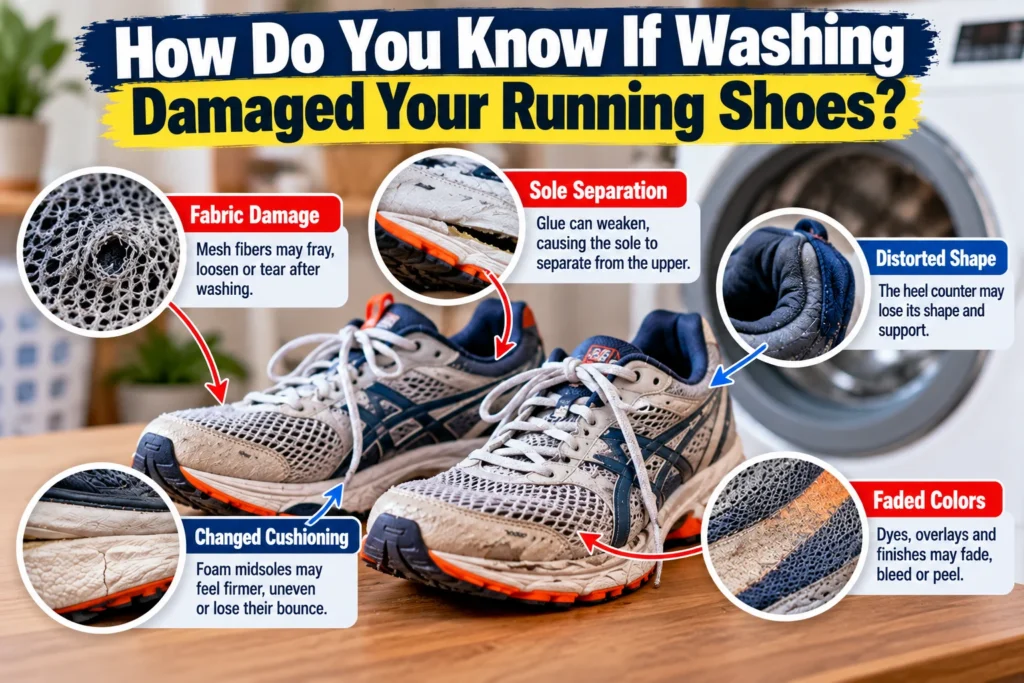
Inspect shoes only after they are thoroughly dry. Compare their shape and fit with how they felt before cleaning.
- Separating layers: Gaps appear where the upper, midsole, or outsole should meet.
- Warped shape: One shoe bends, twists, or looks noticeably different from the other.
- Changed fit: The heel slips, the upper puckers, or a new pressure point appears.
- Unexpected feel: Cushioning seems uneven, unstable, or unusually firm.
- Visible fabric damage: Mesh fibers loosen or previously secure overlays begin peeling.
If you notice structural damage, don’t rely on that pair for demanding runs. A shoe that feels unstable deserves replacement or an assessment by the brand, not another wash.
Which Shoe-Cleaning Products Are Worth Considering?
You don’t need specialized gear for every cleaning session; mild soap and a soft cloth often work. If you clean frequently, a suitable brush or kit can make the process easier.
These picks are based on published product features and intended uses, not hands-on testing. The stars indicate editorial suitability for this cleaning task, not verified customer-review scores.
Affiliate disclosure: Purchases through the Amazon links below may earn this site a commission at no extra cost to you.
🏆 Best complete hand-cleaning kit
Reshoevn8r Essential Shoe Cleaning Kit
★★★★☆
Includes a 4-ounce cleaner, soft/medium/stiff brushes, and a microfiber towel. I’d choose it when one household needs different brushes for mesh uppers and rubber soles; use the softest appropriate brush on delicate fabric.
🧶 Best for delicate uppers
Jason Markk Delicates Cleaning Brush
★★★★★
Uses soft hog-hair bristles and a walnut handle for gentle footwear cleaning. I’d pick this before a stiff brush for fine mesh or knit, while still testing a hidden area first.
🧽 Best for tough sole dirt
Jason Markk Essential Kit
★★★★☆
Pairs a 4-ounce cleaning solution with a stiff Durables brush. I’d reserve that brush for sturdy rubber and similar surfaces rather than delicate running-shoe mesh.
Frequently Asked Questions
Can Nike running shoes go in the washing machine?
Nike’s general care instructions recommend against machine washing, especially because water and agitation can damage delicate materials. Use mild cleaner and a soft cloth, air-dry thoroughly, and consult your specific model’s guidance before cleaning specialized foam or mesh.
Can adidas running shoes go in the washing machine?
adidas publishes general instructions allowing a cold, gentle cycle, with laces and insoles removed and shoes protected inside a bag. Nevertheless, adidas says hand washing is gentler, so follow the care instructions for your exact shoe model first.
Can you put running shoes in a pillowcase before washing?
A pillowcase or mesh laundry bag can reduce rubbing and snagging when your shoe’s manufacturer explicitly permits machine washing. It cannot prevent prolonged soaking or every drum impact, so it doesn’t make a shoe washer-safe when its care instructions say otherwise.
Will washing running shoes ruin their cushioning?
Machine washing can expose foam midsoles to excessive moisture and friction, with additional risk if heat enters the process. Damage isn’t inevitable after one cycle, but hand cleaning is safer and cannot be replaced by washing when cushioning already feels collapsed.
How often should you wash your running shoes?
There is no universal schedule, because dirt exposure, running conditions, and upper materials vary by shoe. Brush off trail mud after dirty runs, spot-clean stains as needed, and thoroughly air-dry sweat-damp shoes between sessions instead of repeatedly machine washing them.
Final Verdict: Should You Put Running Shoes in the Washer?
For most performance running shoes, I recommend skipping the washing machine and cleaning by hand. The extra control helps protect foam, glue, mesh, and the fit you’ve already dialed in.
If your exact shoe model explicitly allows machine washing, use its specified gentle settings and air-dry thoroughly. Before your next run, inspect the shoe’s shape, sole attachment, and cushioning; a clean shoe still needs to be a sound running shoe.