

Quick Answer: Is the Superblast 3 worth the premium?
Yes, for neutral runners who want one cushioned shoe for long runs and daily training. The ASICS Superblast 3 weighs 239 g by ASICS specifications and has a 46.5 mm heel stack. Its FF LEAP foam delivers a softer, livelier ride. Skip it if you need firm stability, extra-wide sizing, or a low-cost daily trainer.
- Best strength: High-impact protection without the weight of most bulky trainers.
- Biggest compromise: Its soft base feels less secure for some runners.
- US list price: $210; marketplace prices vary by size and color.
Quick Verdict: ASICS Superblast 3
BEST FOR
Neutral runners building mileage for half marathons and marathons.
Why: Thick cushioning, smooth transitions, and useful tempo range.
NOT IDEAL FOR
Runners needing strong motion control or a wide-width option.
Why: Soft foam and standard-width sizing limit its fit range.
| Independent RTINGS test category | Score |
|---|---|
| Cushioning | 9.4/10 |
| Daily training | 8.0/10 |
| Long runs | 7.9/10 |
| Stability | 6.4/10 |
These are RTINGS laboratory review scores, not FootwearHiker hands-on scores or Amazon customer ratings.
- ASICS lists 239 g and an 8 mm heel-to-toe drop.
- Its FF LEAP top foam replaces the older FF TURBO PLUS approach.
- RTINGS scores cushioning at 9.4/10 but stability at 6.4/10.
- RunRepeat measured just 0.5 mm of outsole wear in its abrasion test.
- At $210, the upgrade makes most sense for runners who use its versatility.
Looking at the ASICS Superblast 3 and wondering whether one shoe can cover your whole training week? That is the right question. Plenty of shoes feel soft during a store try-on. Fewer stay comfortable on a long road run while still feeling lively when you pick up the pace.
I’m Steven Tyler, and I research running shoe design and buying decisions for FootwearHiker. This review draws on ASICS specifications, independent shoe tests, and published runner feedback. It does not claim personal test miles that I have not documented. I focus on the details that affect your runs: fit, foam, grip, stability, durability, and price.
The Superblast 3 is a premium neutral trainer with a tall, plate-free sole. It promises a lively ride without the rigid carbon plate used by many racing shoes. Yet its extra softness creates a real trade-off. To judge the price fairly, you need to know whether that trade-off fits your stride.
What Is the ASICS Superblast 3 Designed to Do?
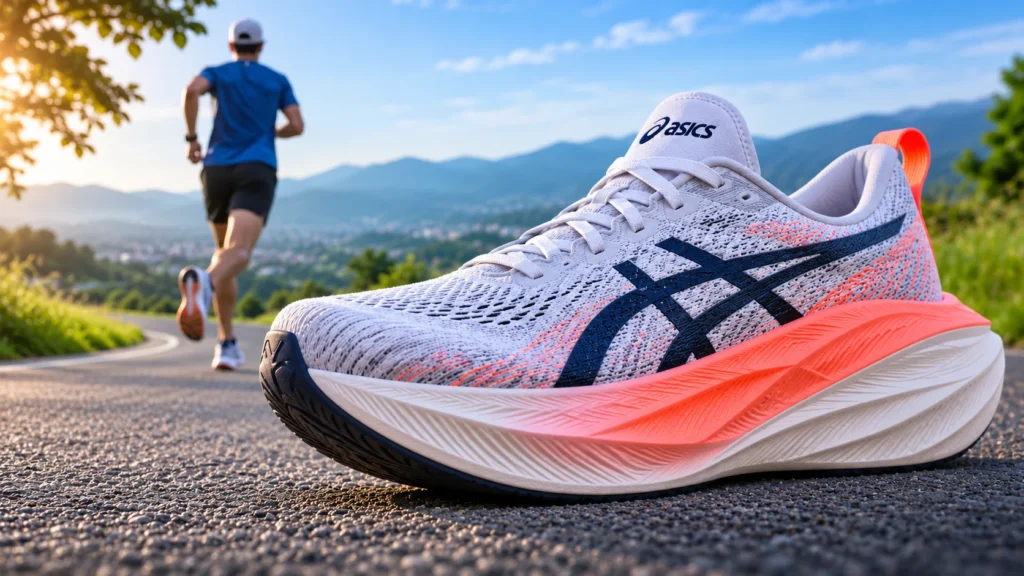
In short, the ASICS Superblast 3 is built for cushioned road miles and faster training sessions. It sits between a classic everyday trainer and a specialist racing shoe. ASICS calls it a high-cushion neutral shoe. The design combines a deep midsole, a light upper, and a curved transition from heel to toe.
The key part is its dual-layer foam. FF LEAP forms the softer, springier upper portion. FF BLAST PLUS adds structure underneath. This creates a balance of impact protection and rebound, though it does not feel as firm as every past Superblast model.
There is no carbon plate. The shoe relies on foam and shape rather than a rigid lever. That matters if you prefer a natural-feeling training stride and do not want a dedicated racer for every faster run.
ASICS also updates the eyestay and woven upper. The changes aim to improve midfoot hold while trimming weight. You can read the official ASICS design announcement for the brand’s stated construction details.
What Are the ASICS Superblast 3 Specifications?
The headline figures are 239 g, an 8 mm drop, and a 46.5 mm heel stack. Those numbers show how much cushioning ASICS packs into a relatively light shoe. They do not tell you whether the shoe will fit your foot, but they explain its unusual position in the running market.
| Feature | ASICS Superblast 3 |
|---|---|
| Model code | 1013A177 |
| Category | Neutral road super trainer |
| US listed price | $210 |
| ASICS listed weight | 239 g / 8.4 oz |
| Heel stack | 46.5 mm, ASICS stated |
| Forefoot stack | 38.5 mm, ASICS stated |
| Heel-to-toe drop | 8 mm, advertised |
| Midsole | FF LEAP plus FF BLAST PLUS |
| Upper | Engineered woven fabric |
| Outsole | ASICSGRIP forefoot and AHAR LO heel, per independent teardown |
| Plate | None |
| Width choices | Standard listed; no dedicated wide option found |
Measurement methods explain why lab results differ. RTINGS recorded 232.6 g and a 7.1 mm measured drop. Its heel measurement reached 46.6 mm. These are not errors in the ASICS chart; shoe size and test methods affect results.
How Does FF LEAP Cushioning Feel on the Road?
The Superblast 3 favors deep softness with a clear rebound on toe-off. FF LEAP offers a more forgiving landing than the firmer feel associated with the Superblast 2. FF BLAST PLUS sits underneath and helps stop the upper foam from feeling shapeless.
For everyday mileage, that creates a smooth and springy feel. You get cushioning through the heel and forefoot rather than a soft heel paired with a harsh front. The rocker, or curved sole, helps guide your foot forward as you move.
Independent findings support the impact protection. RTINGS gives cushioning a 9.4/10 score. RunRepeat’s lab also reports strong shock absorption. These sources measure shoes differently, yet both support the view that comfort under load is a major strength.
Do not confuse bounce with forceful racing snap. RTINGS scores the shoe’s snappiness at 6.4/10. The soft forefoot bends more easily than a rigid racing setup. That makes the ride pleasant but less aggressive during all-out efforts.
Is the ASICS Superblast 3 Good for Long Runs?
Yes. Long runs are the strongest reason to buy the Superblast 3. Its tall foam platform absorbs impact while keeping weight manageable. That is useful when a workout extends from an easy start into quicker final miles. You get consistent cushioning without needing a heavy recovery shoe.
RTINGS rates its long-run use at 7.9/10. The laboratory also measured forefoot cushioning after repeated-distance simulations. Energy absorbed stayed at 10.10 joules at the 40 km point, down from 10.71 joules at 10 km. That indicates cushioning remains substantial through a prolonged test.
For a marathon build, a shoe that handles easy miles and progressions can simplify your rotation. The Superblast 3 fits that job better than a thin, harsh trainer. Yet its very soft platform can feel less controlled when your legs get tired.
Choose it if you run mainly on paved roads and prefer a lively, protective feel. If your ankle control is poor late in runs, test the shoe carefully before making it your only long-run option.
Can the Superblast 3 Handle Tempo Runs and Racing?
Yes for tempo sessions, but a plated racer is the better choice for maximum speed. The Superblast 3 can handle steady workouts, marathon-pace blocks, and changes of pace during long runs. Its rebound keeps it from feeling like a slow recovery-only shoe.
The distinction is between versatility and race-specific force. A soft shoe can return energy without giving the stiff push of a racing plate. RTINGS rates half- and full-marathon racing at 8.0/10, but 5K and 10K racing at 6.6/10. That gap tells you where it is strongest.
A runner targeting a controlled marathon finish can use the Superblast 3 on race day. Someone chasing a fast 5K personal best will usually gain more from a lighter, sharper model. The same logic holds for track repeats and short hill sprints.
For a broader look at how speed and comfort interact, our ASICS Novablast 5 review covers a less costly daily training option.
Does the ASICS Superblast 3 Fit True to Size?
Most runners should begin with their usual running shoe size. RTINGS rates its true-to-size fit at 9.1/10. Its tests found useful forefoot space and a comfortable overall length. The toe area can suit feet that swell during long sessions.
The main warning is the midfoot. A shoe can have enough toe room yet still press against the arch. RTINGS flags some snugness there. The Superblast 3 is also sold in a standard-width format, so it offers fewer choices for runners who rely on dedicated wide sizes.
Test with your normal running socks. Leave room in front of the longest toe and check heel hold while jogging. Try an incline if possible. Your heel should stay secure without forcing the laces tight enough to hurt the top of your foot.
Fit matters more than a high score. Our running shoe review guide explains why heel security, toe space, and arch pressure should shape your final choice.
How Good Are the Grip and Outsole Durability?
The Superblast 3 performs well on paved surfaces, including wet concrete. The outsole uses grippy rubber and targeted pads rather than a full heavy rubber sheet. RunRepeat measured a forefoot traction score of 1.05 in its own test method. That is a strong result within its shoe database.
Durability findings are encouraging, too. RunRepeat removed just 0.5 mm of rubber in its standardized abrasion test. Its category average measured 1.1 mm. That is a meaningful lab difference, but it cannot predict the exact mileage every runner will get.
The design is still a road shoe. RTINGS found weak traction on gravel. Wet pavement performance does not mean safe grip on loose rocks, muddy paths, or steep trails. Keep it on the surface it was designed to handle.
Some owners report early visible wear despite the strong lab result. Both observations can be true. Outsole contact patterns vary with gait and road texture. Check where your own shoes wear first instead of trusting a single distance claim.
Is the Superblast 3 Stable Enough for Everyday Running?
It is stable enough for many neutral runners but not a true stability shoe. The broad platform supports the foot, and the upper helps hold it in place. However, soft foam allows more movement under load than a firmer support trainer.
RTINGS gives stability a 6.4/10 score. That result is noticeably lower than its cushioning score. Its testers say the soft forefoot and heel can reduce control. A very tall stack also asks the runner to manage more foam between foot and ground.
This does not make the shoe unsafe for everyone. A runner with steady mechanics may enjoy its smooth ride without trouble. The concern rises when you need firm guidance, have trouble controlling side-to-side movement, or regularly train on slanted roads.
If that describes your stride, compare a support-focused shoe rather than assuming maximum cushioning solves every issue. A neutral trainer should never be sold as a treatment for foot or knee pain.
How Does the Upper Handle Heat, Rain, and Comfort?
The woven upper feels light, but ventilation results depend on the test. ASICS uses a refined engineered woven design and updated eyestay. The construction aims to improve the hold around the midfoot without adding bulky padding.
RTINGS rates breathability at 7.5/10, which supports use in warm weather. RunRepeat gave a more moderate 3/5 score. Its testing found more airflow around the tongue than through the toe box. These results highlight different methods and areas of the upper.
For hot, humid runs, watch how your toes feel after 30 minutes rather than relying only on general mesh claims. Thin socks may help. In rain, the outsole grips roads well, but the fabric is not waterproof.
RTINGS measured 28.8 hours for a soaked sample to dry fully. Avoid sealing wet shoes in a gym bag. Remove the insoles and let both parts dry naturally after a rainy session.
What Changed From the ASICS Superblast 2?
The main change is a softer, lighter ride with a new FF LEAP foam layer. ASICS also increased the stack by 1.5 mm and refined the upper. The third model is not just a fresh color of the same shoe. It shifts the feel toward comfort and rebound.
ASICS reports a 10 g weight reduction from the prior version. Different sample sizes and lab methods produce other weight gaps. Do not compare numbers unless both tests use the same method.
| Feature | Superblast 3 | Superblast 2 |
|---|---|---|
| Top foam | FF LEAP | FF TURBO PLUS |
| Base foam | FF BLAST PLUS | FF BLAST PLUS ECO |
| Heel / forefoot stack | 46.5 / 38.5 mm | 45 / 37 mm |
| Advertised drop | 8 mm | 8 mm |
| Ride character | Softer, bouncier | Firmer, more structured |
| Best reason to choose | Long-run comfort | Firmer feel or discounted value |
Should every Superblast 2 owner upgrade? No. A well-fitting older pair still has value, especially if you like its firmer feel. The Superblast 3 makes sense when you want more softness or need to replace a worn pair.
Our detailed ASICS Superblast 2 review explains the earlier shoe’s strengths and fit concerns. It is a useful reference before paying full price for the new version.
Which Runners Should Buy or Skip the Superblast 3?
Buy the Superblast 3 for versatile long-distance training, not simply for its premium name. Its best user runs several times each week and wants one shoe for easy days, long runs, and some quicker sessions. You can reduce the need for a second trainer if its feel suits your foot.
Buy if you…
- Run mostly on roads and sidewalks.
- Want cushioning for 15 to 30 km outings.
- Like springy foam without a carbon plate.
- Have a comfortable standard-width fit.
- Value a single versatile training pair.
Skip if you…
- Need firm guidance for pronation control.
- Require a dedicated wide-size option.
- Run mostly on gravel or muddy trails.
- Train mainly for short, fast races.
- Want an everyday shoe under $150.
Beginners do not need to spend $210 to start running. A comfortable daily trainer that fits well is enough for steady mileage. For a softer, lower-priced comparison, the ASICS Gel-Nimbus 26 review covers a different cushioning-focused option.
Runners who prefer unusually soft, rocker-led shoes can also study our Mizuno Neo Vista review. Different foam designs can change comfort more than small weight differences.
Is the ASICS Superblast 3 Worth $210?
Yes, if you regularly use its cushioning and pace range. ASICS currently lists the Superblast 3 at $210 in the United States. That is a premium cost for a training shoe. The price is easier to justify when you wear it for three different types of road run.
A useful value test is cost per meaningful use. If you only run two short sessions each week, a lower-priced trainer is often enough. If you build weekly mileage and dislike switching shoes, its versatility becomes more valuable.
Still, do not treat the list price as the Amazon price. Third-party listings change by size and color. Some marketplace offers have been above the official $210 price. Verify the seller, return terms, and final total before purchasing.
Compare any sale on the Superblast 2 as well. A good discount may outweigh the new model’s softer foam. Paying more only makes sense if the newer ride fixes a problem you had with the earlier shoe.
What Do Independent Testers and Runners Say?
The main agreement is clear: the Superblast 3 cushions long miles and feels livelier than expected. However, reviewers differ on stability and ventilation. These disagreements matter more than a single five-star summary because they point to different runner needs.
RTINGS’ independent laboratory review finds excellent cushioning, good road traction, and lower stability. It also reports a comfortable overall size with some midfoot tightness. The measured results help explain why the same shoe can feel smooth to one runner and unsteady to another.
RunRepeat’s cut-in-half tests report strong grip and low outsole abrasion. Its testers also flag limited toe-area ventilation. Because the outlets use different scoring systems, their numbers should not be treated as identical measurements.
Runner feedback: common themes
- Praise: Softer landings, lively long runs, and dependable paved-road grip.
- Concerns: Premium pricing, softer fast-pace feel, and uneven wear for some users.
- Fit caution: Midfoot pressure varies; try the shoe before long sessions.
These themes include public runner reports, not a verified sample of Amazon purchases. Some runners report early outsole wear, while controlled lab abrasion results are strong. Avoid generalizing either experience to every foot and surface.
How Should You Care for the ASICS Superblast 3?
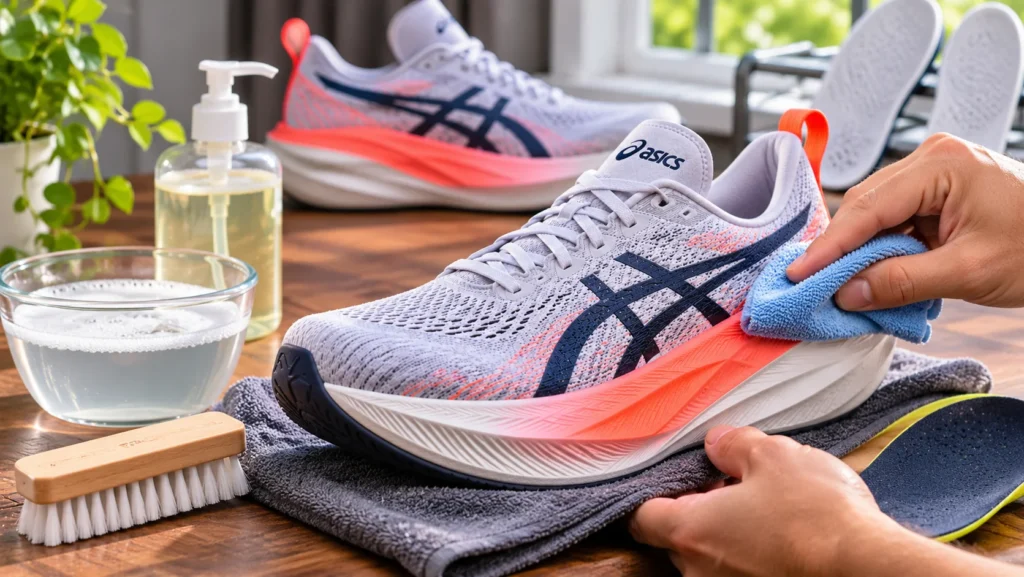
Keep the Superblast 3 clean, dry, and away from harsh heat. The lightweight woven upper and premium foam do not need special chemicals. Simple care helps preserve shape and makes outsole wear easier to spot.
- After wet runs: Remove insoles and loosen laces to improve airflow.
- For dirt: Brush off dry grit, then use mild soap and a damp cloth.
- For drying: Air-dry at room temperature, away from heaters or hot cars.
- For storage: Keep shoes in a cool, dry spot with airflow.
- For wear checks: Inspect heel rubber, forefoot pads, and any uneven foam compression.
Do not rely on a fixed replacement mileage. Two runners can wear the same outsole at different rates. Replace the shoe when grip, structure, or comfort clearly declines rather than when the calendar reaches a set date.
If a pair stays soaked after heavy rain, rotate another shoe into your next run. RTINGS measured more than a day of drying time in its full-dry test. A dry shoe is easier to assess for fit and comfort.
Final Verdict: Should You Buy the ASICS Superblast 3?
The ASICS Superblast 3 earns a recommendation for neutral runners who value long-run comfort and daily versatility. Its 46.5 mm heel stack, low listed weight, and soft FF LEAP cushioning deliver a distinct combination. Independent tests support the impact protection and grip. The main trade-offs are its softer stability, standard-width fit, and $210 list price.
If your training includes easy miles, long efforts, and occasional tempos, this shoe can cover most of them. If you need a firm support shoe or plan to race only short distances, its strengths do not match your needs. A discount on the Superblast 2 also deserves a close look.
Check both the fit and seller before buying. The Amazon listing below is for a specific Superblast 3 variant, so availability and price may differ from ASICS’ official list price.
Check ASICS Superblast 3 Price on Amazon
View Official ASICS Specifications and Price
Frequently Asked Questions
Is the ASICS Superblast 3 good for beginners?
Yes, a beginner with a neutral stride can run comfortably in the Superblast 3. Its deep foam offers generous protection. However, the $210 price is hard to justify for occasional short runs. Start with fit and comfort. A cheaper daily trainer may suit your routine just as well.
Does the ASICS Superblast 3 have a carbon plate?
No. The ASICS Superblast 3 uses FF LEAP and FF BLAST PLUS foam without a carbon plate. Its curved shape and soft, springy material create the ride. This design suits training across several paces. A dedicated plated racer can feel sharper during hard, short efforts.
Is the ASICS Superblast 3 better than the Superblast 2?
The Superblast 3 is the better fit for runners seeking softer cushioning and reduced listed weight. The Superblast 2 remains attractive if you prefer a firmer feel or find a steep discount. Neither version wins for every runner. Compare fit and your main training pace before upgrading.
Can you wear the ASICS Superblast 3 for a marathon?
Yes. The Superblast 3 offers enough cushioning for marathon-distance running, and RTINGS scores its half- and full-marathon racing use at 8.0/10. It suits runners who value protection and smooth rolling. Those aiming for their fastest result may favor a lighter, plated racing model.
Is the ASICS Superblast 3 suitable for wide feet?
It is not the safest first choice for runners who need dedicated wide sizing. ASICS lists a standard width, while RTINGS reports some snugness around the arch. The toe area offers useful room for many runners. Try your normal size and check midfoot pressure before keeping the pair.
Affiliate Disclosure: As an Amazon Associate, I earn from qualifying purchases. Links may earn a commission at no extra cost to you.


