

Quick Answer
The HOKA Gaviota 6 wins for stability, walking, and support-focused easy runs. Its 10.25-ounce design uses an enhanced H-Frame for foot guidance. The lighter 8.2-ounce Mach 6 wins for neutral runners and faster workouts. Choose the Gaviota 6 for structured support or the Mach 6 for speed and value.
Which HOKA shoe matches your support and running needs?
- Gaviota 6 offers structured stability through its enhanced H-Frame.
- Mach 6 weighs around 58 grams less per shoe.
- Mach 6 costs $40 less at reference retail prices.
Quick Verdict — HOKA Gaviota 6 vs Mach 6
HOKA GAVIOTA 6
$180 (Reference retail price)
Best for:
Runners and walkers seeking maximum cushioning, a broad base, and extra stability.
HOKA MACH 6
$140 (Reference retail price)
Best for:
Neutral runners who want a light, responsive shoe for daily miles and faster workouts.
| Category | Gaviota 6 | Mach 6 |
|---|---|---|
| Overall for Neutral Running | — | 🏆 |
| Best Value | — | ✅ |
| Maximum Stability | ✅ | — |
| Lightweight Performance | — | ✅ |
| Support-Focused Walking | ✅ | — |
Bottom line: The Mach 6 wins for neutral runners seeking speed and value, while the Gaviota 6 earns its premium through structured stability.
Prices are reference retail prices, not verified live Amazon offers. Availability varies by size and color. Recommendations reflect published research rather than numerical hands-on review scores.
- The Mach 6 offers better versatility for runners who prefer neutral shoes.
- The Mach 6 saves $40 at its reference price of $140.
- The Gaviota 6 provides structured support through its enhanced H-Frame.
- Beginners should choose according to fit and comfort rather than price alone.
- The Gaviota 6 prioritizes stability, while the Mach 6 prioritizes responsive movement.
Choosing between two HOKA running shoes can feel harder than expected. Both have thick midsoles, curved soles, and cushioned designs.
However, these two models serve different purposes. Buying the wrong one can leave you with an expensive shoe that does not suit your needs.
This HOKA Gaviota 6 review compares the shoe with the lighter HOKA Mach 6. My goal is to help you match each design to your running habits.
I’m Steven Tyler, writing this comparison for Footwear Hiker. This review draws on published product details, independent laboratory findings, and professional running shoe reviews.
The Gaviota 6 takes a support-first approach. Its broad platform and stability frame suit runners who prefer a guided ride.
The Mach 6 takes a different path. Its lightweight foam and neutral construction suit runners who enjoy changing their pace.
At their reference retail prices, the shoes have a $40 gap. Yet the more expensive model is not always the better purchase.
Your ideal choice depends on comfort, fit, and how you plan to use the shoe. The biggest difference becomes clear once you examine their midsoles.
What Is the HOKA Gaviota 6 Designed to Do?
Quick Verdict — HOKA Gaviota 6
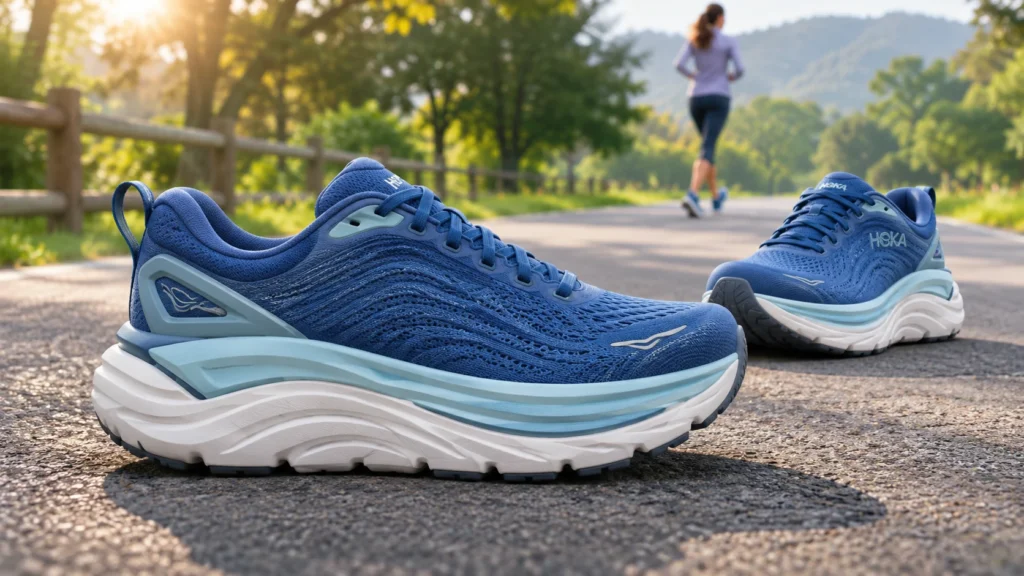
The HOKA Gaviota 6 is a maximum-cushion stability shoe designed for runners and walkers who prefer structured foot guidance.
Best for: Easy runs, walking, and support-focused daily use.
Not ideal for: Runners who prioritize low weight and quick speed changes.
HOKA builds the Gaviota 6 around an enhanced H-Frame stability system. This structure helps guide foot movement without relying on a traditional rigid support post.
The compression-molded EVA midsole provides substantial cushioning beneath the foot. A broad platform adds space and stability during ground contact.
The men’s model has a listed weight of 10.25 ounces. HOKA also lists a 6 mm heel-to-toe drop. These features support its role as a daily stability trainer.
Compared with its predecessor, the Gaviota 6 continues HOKA’s support-first approach. Our HOKA Gaviota 5 review provides useful background for readers considering the older model.
At a reference price of $180, the Gaviota 6 sits in the premium trainer category. Its main appeal comes from combining substantial cushioning with structured guidance. Buyers who need neither feature can find better value elsewhere.
- Enhanced H-Frame stability system.
- Broad and supportive platform.
- Substantial underfoot cushioning.
- Suitable for support-focused walking.
- Regular, wide, and extra-wide men’s options.
- Comfort-focused upper construction.
- Useful for relaxed road running.
- Higher reference retail price.
- Heavier than the Mach 6.
- Less suited to fast intervals.
- Bulkier platform than lightweight trainers.
- Extra guidance will not suit everyone.
- No gusseted tongue.
HOKA Gaviota 6 Running Shoes
A premium stability trainer for buyers who want a broad platform and cushioned support.
- Men’s base model: 1171932
- Support system: Enhanced H-Frame
- Midsole: Compression-molded EVA
- Listed heel drop: 6 mm
- Reference retail price: $180
Check Gaviota 6 Price on Amazon
Check the exact model, size, seller, and current price before ordering.
What Is the HOKA Mach 6 Designed to Do?
Quick Verdict — HOKA Mach 6
The HOKA Mach 6 is a lightweight neutral running shoe built for daily training, tempo efforts, and runners who enjoy a responsive ride.
Best for: Neutral daily running, tempo workouts, and mixed-pace road training.
Not ideal for: Runners who need structured stability or a generous standard-width toe box.
HOKA equips the Mach 6 with a full-length supercritical EVA midsole. This foam design balances cushioning, low weight, and responsive movement.
The shoe does not contain a carbon plate. Instead, its foam and curved sole help create smooth transitions during running.
Independent testing places the men’s Mach 6 near 232 grams. HOKA lists a 5 mm heel-to-toe drop, though laboratory results vary by measurement method.
Its lightweight design makes it useful across several workout types. Our detailed HOKA Mach 6 review examines the shoe’s fit and performance in greater depth.
The Mach 6 carries a reference price of $140. That makes it less expensive than the Gaviota 6 before any clearance discounts.
Its main weakness involves fit rather than versatility. Runners with broad forefeet should check the available wide version before buying.
Pros
- Lightweight running shoe construction.
- Responsive supercritical EVA foam.
- Suitable for tempo workouts.
- Versatile neutral daily trainer.
- Strategic rubber outsole coverage.
- Lower reference retail price.
- Available in standard and wide widths.
Cons
- No dedicated stability frame.
- Standard toe box can feel narrow.
- Less suited to buyers seeking structured walking support.
- Limited extra-wide options.
- Older-model stock can be inconsistent.
- Not a dedicated trail running shoe.
HOKA Mach 6 Running Shoes
A lightweight neutral trainer for runners seeking responsive cushioning and flexible training options.
- Men’s base model: 1147790
- Shoe category: Neutral road running
- Midsole: Supercritical EVA
- Listed heel drop: 5 mm
- Reference retail price: $140
Older colorways may cost less. Check current stock and return terms.
How Do HOKA Gaviota 6 and Mach 6 Specs Compare?
The Gaviota 6 offers more structured stability, while the Mach 6 offers lower weight. Their different midsole designs explain why each shoe suits different running needs.
The following comparison uses published specifications and reference retail prices. Weight, fit, and measured dimensions can vary by shoe size and testing method.
| Feature | Gaviota 6 | Mach 6 | Winner |
|---|---|---|---|
| Reference Price | $180 | $140 | Mach 6 |
| Men’s Weight | 10.25 oz / 291 g | 8.2 oz / 232 g | Mach 6 |
| Model Number | 1171932 | 1147790 | — |
| Shoe Category | Stability | Neutral | Personal fit |
| Listed Heel Drop | 6 mm | 5 mm | Personal fit |
| Midsole Material | Compression-molded EVA | Supercritical EVA | Use dependent |
| Stability Frame | Enhanced H-Frame | None | Gaviota 6 |
| Cushioning Focus | Maximum comfort and support | Lightweight responsiveness | Use dependent |
| Upper Material | Engineered mesh | Creel jacquard mesh | Personal fit |
| Outsole | Abrasion-resistant rubber | Durabrasion rubber coverage | No clear winner |
| Carbon Plate | No | No | Tie |
| Men’s Width Options | Regular, wide, extra-wide | Regular, wide | Gaviota 6 |
| Running Surface | Road | Road | Tie |
| Tempo Running | Secondary use | Primary strength | Mach 6 |
| Support-Focused Walking | Strong choice | Neutral alternative | Gaviota 6 |
| Best Overall Use | Support-focused daily miles | Mixed-pace neutral training | Use dependent |
Notice how the most important differences involve weight and support. The Gaviota 6 does not simply offer a more expensive version of the Mach 6.
Each model solves a different problem. A neutral runner can gain more value from the Mach 6 despite its lower price.
Which Shoe Offers Better Stability and Cushioning?
Winner: HOKA Gaviota 6. The Gaviota 6 offers more structured guidance through its enhanced H-Frame and broad base. It suits runners who prefer a supported ride over a lightweight performance feel.
Stability and cushioning describe different parts of a shoe’s design. Cushioning affects how the material feels beneath your foot. Stability influences how the platform guides your movement.
A thick midsole does not automatically provide strong stability. Soft foam can compress differently across the shoe during each step.
The Gaviota 6 combines cushioning with a dedicated guidance structure. The Mach 6 instead offers a neutral platform with less added bulk.
Consider a runner completing a relaxed 5-mile route after a long day. The Gaviota 6 makes more sense if that runner prefers extra guidance.
However, a neutral runner who dislikes restrictive shoes can prefer the Mach 6. Comfort should determine the final choice rather than shoe category alone.
How Does the Enhanced H-Frame Support Your Feet?
The enhanced H-Frame helps manage foot movement through the shape and construction of the midsole. HOKA designs this system to address excessive inward rolling without traditional rigid support materials.
The frame works alongside the shoe’s broad platform. This creates a different underfoot experience from the neutral Mach 6.
Runners who already enjoy stability trainers can find the Gaviota 6 familiar. Neutral runners may find its guidance unnecessary.
Pronation itself is a normal part of movement. A stability shoe does not need to eliminate every inward motion.
Buying tip: Choose a stability shoe because it feels comfortable and suits your movement. Do not assume that visible inward foot movement alone requires correction.
Which Shoe Feels Better During Easy Runs?
The Gaviota 6 wins for easy runs when the runner prefers substantial cushioning and support. The Mach 6 remains a strong choice for runners who enjoy a lighter feel.
Easy running does not require the lightest possible shoe. A comfortable platform can matter more than saving weight during relaxed miles.
However, cushioning preferences differ between runners. Some runners prefer firm support, while others enjoy a softer or more flexible ride.
If maximum cushioning matters but structured guidance does not, consider our HOKA Bondi 9 review for another option.
Which Shoe Delivers Better Running Performance?
Winner: HOKA Mach 6. Its lightweight build and supercritical foam make it the stronger choice for mixed-pace running. The Gaviota 6 focuses more on steady movement and structured support.
The Mach 6 uses a full-length responsive midsole. This design allows it to handle relaxed miles and faster efforts within the same workout.
Its approximate men’s weight of 232 grams also keeps shoe bulk low. That matters when you repeatedly lift your feet during a run.
The Gaviota 6 weighs around 291 grams in the published men’s specification. Its additional material serves a support-focused purpose rather than a speed-focused one.
Neither shoe guarantees a faster finishing time. Training, fitness, comfort, terrain, and weather all influence performance.
For runners who enjoy changing their pace, the Mach 6 offers greater flexibility. The Gaviota 6 remains useful when stable movement matters more than speed.
Which Shoe Is Better for Tempo Runs?
The Mach 6 wins for tempo training because it combines responsive foam with lower weight. It suits sustained efforts that feel faster than normal easy running.
Imagine a workout with a 10-minute warm-up and 20-minute tempo segment. The Mach 6 can handle both stages without requiring a shoe change.
The Gaviota 6 can handle faster running too. However, its heavier support-focused design makes speed work a secondary use.
The foam difference also matters. Our guide to supercritical foam running shoes explains how this midsole technology balances weight and rebound.
How Does Shoe Weight Affect Your Run?
The Mach 6 weighs about 59 grams less per shoe using the published reference figures. That equals approximately 118 grams less across a pair.
Men’s Running Shoe Weight Comparison
291 g
232 g
Difference: The Mach 6 is approximately 20% lighter using these reference weights. Actual weight varies by size.
Lower shoe weight can contribute to a lighter running feel. However, weight alone does not determine comfort or running efficiency.
The Gaviota 6 carries more material to deliver its support-focused design. That extra weight can be an acceptable trade-off for its target users.
Which Shoe Works Better for Long Runs?
The Gaviota 6 wins for relaxed long runs when structured stability is a priority. The Mach 6 wins for neutral runners who prefer a lighter long-distance trainer.
A runner completing 10 relaxed miles may value a broad, supportive platform. Another runner covering the same distance may prefer responsive foam and lower weight.
Both choices can work when the shoes fit well. Long-distance comfort depends on toe room, heel hold, and personal cushioning preferences.
Test any new shoe on shorter routes before using it for your longest run. This gives you time to identify pressure points and fit problems.
Which HOKA Shoe Offers Better Value for Money?
Winner: HOKA Mach 6 for neutral runners. Its $140 reference price makes it $40 cheaper than the Gaviota 6. It also covers a wider range of running paces.
The Gaviota 6 carries a reference price of $180. Buyers pay extra for its stability frame, broader construction, and support-focused design.
That price difference makes sense when the added guidance improves your comfort. It offers less value when you prefer a neutral ride.
The Mach 6 is also an older model within the Mach series. Retailers can discount remaining sizes and colors as stock changes.
However, a cheap shoe becomes poor value if it causes discomfort. Check the toe box, heel fit, and width before accepting a clearance deal.
Value comes from how well a shoe serves your actual routine. Spending less only helps when the cheaper model meets your needs.
What Do You Get for the Extra $40?
The Gaviota 6’s $40 premium buys a different support system and platform design. It does not guarantee better running performance or longer shoe life.
The enhanced H-Frame provides the clearest reason to spend more. Its broader platform and extra-wide men’s option also benefit buyers seeking more space.
The Mach 6 uses the price difference differently. It keeps the design lighter and focuses on foam responsiveness.
If you do not need structured guidance, the lower-priced Mach 6 offers better value. If you prefer dedicated stability, the Gaviota 6 justifies consideration.
Is the HOKA Mach 6 Still Worth Buying?
Yes, the Mach 6 remains worth buying for runners who want a lightweight neutral trainer. Its responsive midsole remains useful even after newer models arrive.
You do not need the latest shoe simply because it has a newer model number. Fit and comfort matter more than the release sequence.
Check remaining stock carefully before buying. Older models may have fewer size choices or limited return options.
A discounted Mach 6 can offer strong value when the fit is right. Avoid settling for an unsuitable size just to save money.
Which Shoe Has Better Fit, Durability and Safety?
Winner for fit options: HOKA Gaviota 6. Its broader platform and extra-wide men’s option make it the more flexible choice for buyers needing extra room.
The Mach 6 takes a performance-focused approach to fit. Its more streamlined shape can suit runners who enjoy a close hold.
However, a secure fit should not squeeze your toes. Foot movement and swelling during long runs make adequate space important.
Both shoes use rubber coverage to protect parts of the outsole. Neither design guarantees a fixed mileage lifespan.
Durability depends on your body weight, running surface, gait, and how often you wear the shoes.
A shoe with intact outsole rubber can still lose its comfortable midsole feel. Inspect the complete shoe rather than judging wear from the outsole alone.
Which Shoe Is Better for Wide Feet?
The Gaviota 6 generally offers more width choices than the Mach 6. Its men’s range includes regular, wide, and extra-wide versions.
The Mach 6 also offers wide sizing in selected markets. However, its standard-width shape can feel narrow near the toes.
Do not judge internal shoe width from the outside platform. Thick midsoles can make shoes appear wider than their usable foot space.
Try the shoes with your normal running socks. Check whether your toes can move without rubbing against the upper.
How Do the Outsoles Compare?
Neither shoe has a proven universal durability advantage. Both use rubber outsole coverage to balance wear protection with their intended running characteristics.
The Mach 6 features strategic rubber placement designed to protect high-contact areas. The Gaviota 6 combines rubber coverage with its broad support platform.
Road texture affects how quickly each outsole wears. Rough concrete can cause different wear patterns from smooth treadmill surfaces.
Inspect the heel and forefoot regularly. Uneven wear deserves attention when it changes how the shoe feels during walking or running.
What Safety and Comfort Issues Should You Consider?
Neither shoe guarantees injury prevention or safe traction across every surface. Choose the model that fits comfortably and suits your normal movement.
Both models primarily serve road running. Neither replaces dedicated footwear for ice, technical trails, or workplaces requiring certified slip resistance.
The listed heel drops differ by only 1 mm. Yet the overall geometry and support systems create more noticeable differences.
Important Safety Note
- Introduce unfamiliar running shoes gradually.
- Do not continue running through persistent foot pain.
- Avoid relying on ordinary road shoes for icy surfaces.
- Seek professional advice for persistent pain or recurring injuries.
- Check orthotic fit before removing or replacing shoe insoles.
Which Shoe Wins in Real-World Use Cases?
The Gaviota 6 wins when structured support matters most. The Mach 6 wins when low weight and mixed-pace running take priority.
Real-world shoe selection starts with your daily routine. A walker covering several miles has different needs from a runner doing intervals.
The following scenarios show where each design makes the most sense. They represent practical use cases rather than claimed personal wear tests.
| Use Case | Recommended Shoe | Why It Wins |
|---|---|---|
| Neutral daily 5K runs | Mach 6 | Light and versatile |
| Support-focused easy runs | Gaviota 6 | Enhanced H-Frame |
| Tempo and interval workouts | Mach 6 | Responsive foam |
| Support-focused walking | Gaviota 6 | Broad support base |
| Neutral treadmill running | Mach 6 | Lower weight |
| Extra-wide men’s sizing | Gaviota 6 | More width options |
| Ice or technical trails | Neither | Requires specialized traction |
Which Shoe Is Better for Daily Running?
The Mach 6 wins for neutral daily running because it handles different workout speeds. It can cover easy miles, moderate sessions, and tempo efforts.
A runner training four days each week can benefit from this versatility. One pair can serve several workout types.
The Gaviota 6 becomes the better option when that runner prefers structured support. Its stability system remains the main reason to choose it.
Which Shoe Is Better for Walking and Standing?
The Gaviota 6 is the stronger candidate for walkers seeking maximum cushioning and structured guidance. Its broad platform supports its comfort-focused role.
Consider someone who spends eight hours moving around an office or shop. A stable platform may feel more comfortable than a close performance fit.
However, some people prefer lighter shoes during long shifts. The Mach 6 remains an option if its neutral platform feels comfortable.
Neither model should replace required occupational safety footwear. Workplace grip and protection standards require separate checks.
Which Shoe Is Better for Cold-Weather Runs?
Neither shoe has a confirmed universal cold-weather advantage. The Mach 6 suits faster dry-road training, while the Gaviota 6 suits support-focused easy runs.
Cold temperatures can change how midsole foam feels. Wet roads can also reduce available traction.
For a winter run on clear pavement, choose according to your normal comfort needs. For snow or ice, use footwear or traction devices designed for those conditions.
Do not assume that a wider sole automatically grips slippery surfaces better.
Is the HOKA Gaviota 6 Price Difference Worth It?
The Gaviota 6 is worth the additional $40 when its dedicated stability improves your comfort. Otherwise, the Mach 6 provides better value for neutral running.
The Gaviota 6 costs $180 at reference retail pricing. The Mach 6 costs $140, making its reference price about 22% lower.
Reference Retail Price Comparison
$180
$140
A hypothetical 400-mile ownership period would cost 45 cents per mile for the Gaviota 6. The same distance would cost 35 cents per mile in the Mach 6.
This calculation illustrates the price difference rather than predicting shoe lifespan. Actual usable mileage varies between runners.
Do not pay extra simply because the Gaviota 6 contains more material. Buy it when that material provides a benefit you can feel.
Who Should Buy the Gaviota 6 or Mach 6?
Buy the Gaviota 6 if structured stability and maximum cushioning match your needs. Buy the Mach 6 if you prefer lightweight neutral running shoes.
Neither shoe serves every foot shape or running style. Your ideal model depends on how the shoe feels during normal movement.
Use the following buyer profiles to narrow your choice. Then confirm fit before committing to a purchase.
Who Should Buy the HOKA Gaviota 6?
Choose the Gaviota 6 when you prefer a guided ride with substantial cushioning.
Buy if:
- You enjoy stability running shoes.
- Easy runs form most of your training.
- You prefer a broad sole platform.
- You want maximum cushioning.
- You need extra-wide men’s sizing.
- Walking comfort matters more than speed.
Skip if:
- You prioritize lightweight running.
- You dislike structured support.
- Most workouts involve fast intervals.
- Your budget does not support premium pricing.
Who Should Buy the HOKA Mach 6?
Choose the Mach 6 when you prefer a responsive neutral shoe for varied training.
Buy if:
- You prefer neutral running shoes.
- You perform regular tempo workouts.
- Low shoe weight matters to you.
- You want one shoe for mixed paces.
- You enjoy responsive cushioning.
- You want a lower purchase price.
Skip if:
- You prefer dedicated stability systems.
- The toe box feels restrictive.
- You need extra-wide sizing.
- You want maximum support for walking.
Who Should Skip Both Shoes?
Skip both models if you need specialized trail traction, waterproof construction, or certified workplace protection. Their main purpose remains road running.
Do Not Buy Either Shoe If:
- Your main running routes involve technical mountain trails.
- You need waterproof footwear for frequent wet conditions.
- Neither model provides a comfortable fit.
- Your workplace requires certified slip-resistant shoes.
- You specifically want a carbon-plated racing shoe.
Runners seeking a lighter stability design can explore other HOKA models. Our HOKA Arahi 7 review provides another support-focused option to compare.
Dedicated trail shoes make more sense for rough off-road routes. Choose the correct shoe category before choosing a specific model.
What Are Reviewers Saying About Both Shoes?
Published reviews highlight the Gaviota 6’s structured support and the Mach 6’s lightweight versatility. Their main criticisms involve different design trade-offs.
The Gaviota 6 appeals to reviewers who value broad stability and guidance. Its added bulk makes it less attractive for speed-focused training.
Independent Mach 6 reviews frequently highlight responsive cushioning and mixed-pace performance. Its close forefoot fit remains a concern for some foot shapes.
These differences reflect each shoe’s intended role. Neither weakness automatically makes the shoe unsuitable for its target audience.
HOKA Gaviota 6 Feedback
Common positive themes
- Support-focused construction.
- Broad underfoot platform.
- Substantial cushioning.
- Multiple width choices.
Common concerns
- Higher price.
- Less speed-oriented geometry.
- More weight than neutral performance trainers.
- Non-gusseted tongue construction.
HOKA Mach 6 Feedback
Common positive themes
- Low shoe weight.
- Responsive midsole.
- Versatile training performance.
- Useful rubber outsole coverage.
Common concerns
- Tapered standard-width forefoot.
- No dedicated stability frame.
- Less suitable for extra-wide feet.
- Inconsistent older-model stock.
Feedback reflects published independent reviews and design assessments. Live Amazon customer ratings and individual purchase reviews could not be independently verified. No customer testimonials have been invented.
How Should You Care for HOKA Running Shoes?
Clean HOKA running shoes by hand, dry them naturally, and store them away from heat. These steps help protect the mesh, foam, and bonded materials.
Both the Gaviota 6 and Mach 6 contain lightweight foam midsoles. Harsh cleaning products and excessive heat can damage shoe materials.
Start by removing loose dirt after muddy or dusty runs. You do not need to wash the entire shoe after every workout.
Let damp shoes dry before storing them in a closed space. Good airflow helps prevent moisture buildup and unwanted odors.
Rotate between pairs when practical, especially if one pair remains wet. Rotation gives your shoes time to dry fully between sessions.
Inspect the upper, outsole, and midsole regularly. Replace shoes when damage or loss of comfort affects safe, comfortable use.
How Should You Clean Your HOKA Shoes?
Hand cleaning with mild soap, cool water, and a soft brush works best for routine shoe care. Avoid aggressive scrubbing or machine washing.
- Remove the shoelaces and removable insoles.
- Brush away loose dust and dry dirt.
- Mix mild soap with cool or lukewarm water.
- Clean the mesh using a soft cloth or brush.
- Scrub the outsole gently to remove trapped dirt.
- Wipe away soap with a damp cloth.
- Allow every part to air dry completely.
- Replace the insoles and laces after drying.
Avoid: Washing machines, tumble dryers, bleach, direct heaters, and prolonged exposure to strong sunlight.
How Should You Store Your Running Shoes?
Store the Gaviota 6 and Mach 6 in a dry place with moderate temperatures and good airflow. Keep them away from direct heat sources.
A ventilated shoe rack works well for daily storage. Avoid leaving damp shoes inside sealed plastic bags.
Car interiors can become hot during warm weather. Do not store running shoes there for extended periods.
Remove dirt and dry the shoes before long-term storage. Keep heavy objects away from their uppers and midsoles.
When Should You Replace Your HOKA Shoes?
Replace running shoes when cushioning, grip, fit, or structural condition no longer supports comfortable use. Mileage provides a useful reference rather than a strict deadline.
A common inspection range is around 300 to 500 miles. Some shoes need replacement earlier, while others remain comfortable beyond that range.
Look for meaningful changes in how the shoe feels during normal running. Visible damage and uneven wear also deserve attention.
- Outsole rubber has worn through in important contact areas.
- The shoe feels less comfortable during familiar routes.
- The midsole shows major uneven compression.
- The upper no longer holds your foot securely.
- The shoe develops structural damage.
Do not assume every new ache means your shoes need replacement. Persistent discomfort deserves appropriate professional assessment.
How Was This HOKA Gaviota 6 vs Mach 6 Comparison Researched?
This comparison uses manufacturer specifications, independent laboratory findings, and professional running shoe reviews. It does not claim original hands-on mileage testing.
Published product information establishes the intended shoe category and listed dimensions. Independent testing adds context about weight, fit, and construction.
Different laboratories can produce different results for the same model. Sample size and measurement methods affect those findings.
For that reason, this review distinguishes listed specifications from measured laboratory results. It also treats personal fit as an individual buying factor.
The recommendations focus on stability needs, training goals, price, and practical ownership. They do not assume that one shoe suits every runner.
Research Sources
- HOKA Gaviota 6 official product specifications — manufacturer-listed weight, drop, and stability technology.
- RunRepeat Gaviota 6 laboratory review — construction, support, and independent testing.
- RunRepeat Mach 6 laboratory review — measured weight, fit, and performance characteristics.
- RTINGS Mach 6 review — independent performance and construction measurements.
- RTINGS Gaviota 6 review — support-focused performance assessment.
- Doctors of Running Gaviota 6 review — professional observations about stability and ride.
- Believe in the Run Mach 6 review — shoe specifications, pricing, and running impressions.
Final Verdict: Is the HOKA Gaviota 6 Worth Buying?
Yes, the HOKA Gaviota 6 is worth buying if structured stability and maximum cushioning match your needs. Its enhanced H-Frame and broad platform provide a clear reason to choose it over the Mach 6.
The $180 reference price places it above many daily trainers. However, the extra cost makes sense for buyers who benefit from its support-focused design.
The Mach 6 remains the stronger overall recommendation for neutral runners. It costs less, weighs less, and handles more varied running paces.
At $140 reference pricing, the Mach 6 also offers strong value. Its main limitation involves runners who need a wider or more supportive fit.
You can also use both models within a shoe rotation. The Gaviota 6 can cover support-focused easy miles, while the Mach 6 handles faster sessions if both suit your feet.
The best purchase is not necessarily the lightest or most expensive shoe. Choose the one that makes your normal training feel comfortable and natural.
Which HOKA Running Shoe Should You Buy?
Best for Stability
HOKA Gaviota 6
$180
Reference retail price
Choose this model for structured guidance, substantial cushioning, and support-focused daily movement.
Best for Neutral Running
HOKA Mach 6
$140
Reference retail price
Choose this model for lower weight, responsive foam, and mixed-pace road training.
Live prices and availability may vary. Confirm the model and size before ordering.
Frequently Asked Questions
Which Is Better, HOKA Gaviota 6 or Mach 6?
The Gaviota 6 is better for runners seeking maximum cushioning and structured stability. The Mach 6 is better for neutral runners who want lightweight performance. Its lower reference retail price also makes it a stronger value choice for buyers who do not need added guidance.
What Is the Difference Between Gaviota 6 and Mach 6?
The main difference is their support and midsole design. The Gaviota 6 uses an enhanced H-Frame for stability, while the Mach 6 uses responsive supercritical EVA foam. Their approximate men’s weights are 291 grams and 232 grams, respectively.
Is the HOKA Gaviota 6 Good for Walking?
Yes, the Gaviota 6 can be a good walking shoe for people who prefer substantial cushioning and structured guidance. Its broad platform and multiple width options make it worth considering. However, individual fit matters, and some walkers prefer lighter neutral shoes.
Is the HOKA Mach 6 Good for Long Runs?
Yes, the Mach 6 can work well for long runs when its neutral platform and fit suit the runner. Its responsive foam and low weight support varied road training. Runners seeking dedicated stability may prefer a different model, such as the Gaviota 6.
Is the HOKA Gaviota 6 Suitable for Flat Feet?
The Gaviota 6 can suit people with flat feet who feel comfortable in stability shoes. Its enhanced H-Frame provides structured guidance. However, flat feet alone do not mean someone needs a stability shoe. Choose according to comfort and seek professional advice for persistent pain.
Affiliate Disclosure
As an Amazon Associate, Footwear Hiker earns from qualifying purchases. This article contains affiliate links. We may receive a commission when you purchase through these links, at no additional cost to you. Product recommendations are based on published specifications, independent research, and practical buying considerations. Prices and availability can change without notice.


