

Quick Answer
The HOKA Mach 6 is the better buy for most runners at its $140 reference price. The $275 HOKA Cielo X1 3.0 offers PEBA foam and a carbon fiber plate for competitive racing. Choose the Mach 6 for daily training and the Cielo X1 3.0 for dedicated race-day performance.
Which HOKA shoe makes more sense for your running goals?
- The Mach 6 costs $135 less at reference retail prices.
- The Cielo X1 3.0 offers carbon-plated propulsion for competitive races.
- The Mach 6 handles daily miles and faster training sessions.
By Steven Tyler | Research-based running shoe comparison. This article contains affiliate links. As an Amazon Associate, we earn from qualifying purchases.
⚡ Quick Verdict — HOKA Cielo X1 3.0 vs Mach 6
HOKA Cielo X1 3.0
Premium carbon-plated racer
$275
Reference retail price
✅ Best for:
Competitive runners seeking a light, springy shoe for fast road races.
HOKA Mach 6
Versatile lightweight trainer
$140
Reference retail price
✅ Best for:
Runners who want one affordable shoe for daily miles and speed workouts.
| Category | Cielo X1 3.0 | Mach 6 |
|---|---|---|
| Overall Winner | — | 🏆 |
| Best Value | — | ✅ |
| Race-Day Performance | ✅ | — |
| Daily Training | — | ✅ |
| Propulsive Ride | ✅ | — |
Bottom line: The Mach 6 wins for everyday runners seeking value, while the Cielo X1 3.0 suits runners investing in dedicated race-day performance.
Prices are reference retail prices. Amazon prices, stock, sellers, and sizes can change.
- The Mach 6 wins overall because it covers more types of training.
- The Mach 6 saves $135 compared with the Cielo X1 3.0.
- The Cielo X1 3.0 combines PEBA foam with a carbon fiber plate.
- Beginners generally benefit more from the Mach 6’s conventional training design.
- The biggest difference is race-specific propulsion versus everyday running versatility.
Buying running shoes gets tricky when two models serve different goals. Both shoes promise a light and responsive ride on the road.
However, the HOKA Cielo X1 3.0 and Mach 6 serve different runners. One focuses on race-day speed, while the other supports regular training.
I’m Steven Tyler, and my focus here is practical running shoe research. I compare shoe construction, published laboratory tests, prices, and independent runner feedback.
This HOKA Cielo X1 3.0 review uses published evidence rather than personal wear testing. That distinction helps keep performance claims clear and honest.
The Cielo X1 3.0 brings premium materials and carbon-plated propulsion. The Mach 6 takes a simpler approach with responsive EVA foam.
Does the extra $135 make you a faster runner? Not necessarily, because shoe fit and running mechanics also affect performance.
Your weekly mileage, race goals, and budget matter more than flashy features. A shoe built for speed is not automatically better for every run.
Let’s compare both models and find where each offers the most value. The right choice depends on what you need from your next pair.
What Is the HOKA Cielo X1 3.0 Designed to Do?
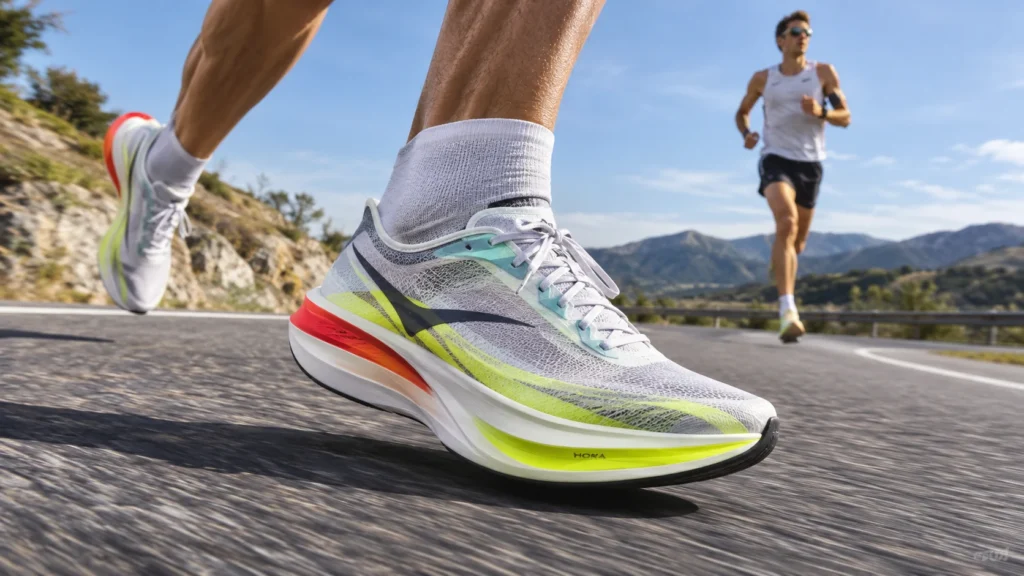
Quick Verdict — HOKA Cielo X1 3.0
Best for: Competitive road racers who enjoy a springy and aggressive rolling ride.
Not ideal for: Budget buyers, runners needing firm lateral support, and relaxed daily mileage.
The HOKA Cielo X1 3.0 is a premium road racing shoe. Its main goal is to support fast running through responsive foam and curved sole geometry.
HOKA uses PEBA foam to create a light and energetic platform. A carbon fiber plate works with the foam to shape the shoe’s forward transition.
The strong rocker helps the foot roll toward the next stride. This design suits runners who enjoy a pronounced rolling motion underfoot.
Independent testing measured one Cielo X1 3.0 sample at 193 grams. The low weight is impressive for a shoe with such substantial cushioning.
The upper uses lightweight Leno weave textile for a race-focused fit. Its thin construction prioritizes weight savings over plush everyday comfort.
At a $275 reference retail price, this shoe targets dedicated racers. Recreational runners do not need its premium features to complete successful races.
- Responsive PEBA racing foam.
- Lightweight carbon-plated construction.
- Strong forward-rolling ride.
- Substantial cushioning for long races.
- Lightweight textile upper.
- Redesigned outsole and carbon plate.
- Suitable for competitive distance racing.
- High $275 reference retail price.
- Narrow platform can limit stability.
- Race fit may feel restrictive.
- Less suitable for relaxed daily runs.
- Aggressive rocker requires adaptation.
- Not designed for trails or rough terrain.
Premium Race-Day Pick
HOKA Cielo X1 3.0 Running Shoes
Carbon-plated road racing shoes with PEBA foam and lightweight textile construction.
$275 Reference retail price
Confirm the exact 3.0 model, size, seller, and current price before ordering.
What Is the HOKA Mach 6 Designed to Do?
Quick Verdict — HOKA Mach 6
Best for: Daily road running, tempo workouts, and runners seeking one versatile shoe.
Not ideal for: Runners wanting carbon-plated race propulsion or dedicated stability features.
The HOKA Mach 6 is a lightweight neutral running shoe. It supports regular road training without relying on a carbon fiber plate.
Its supercritical EVA foam provides cushioning with a responsive feel. The foam works well across steady runs and faster training efforts.
HOKA pairs the midsole with a breathable creel jacquard mesh upper. Strategic rubber coverage protects key areas of the outsole from road contact.
Independent laboratory testing measured one Mach 6 sample at 232 grams. Its stated heel-to-toe drop measures 5 mm.
The plate-free construction offers a more conventional ride than the Cielo. That difference matters when your pace changes throughout a training session.
Our HOKA Mach 6 review provides more detail about fit and toe-box comfort. Runners with wider feet should consider the available wide versions.
The $140 reference price makes the Mach 6 an appealing training option. Its versatility also reduces the need for a separate speed workout shoe.
- Lightweight daily training design.
- Responsive supercritical EVA foam.
- Suitable for steady and tempo runs.
- Lower $140 reference retail price.
- Breathable mesh upper.
- Protective rubber outsole coverage.
- Wide sizes available in selected versions.
- No carbon fiber plate.
- Standard fit can feel narrow.
- Less specialized for competitive racing.
- Not a dedicated stability shoe.
- May feel firm to runners seeking plush cushioning.
- Older model availability varies by size.
Best Overall Value
HOKA Mach 6 Running Shoes
Lightweight neutral road running shoes with responsive foam and versatile training performance.
$140 Reference retail price
Check the current seller, available width, size, and return policy.
How Do the HOKA Cielo X1 3.0 and Mach 6 Compare?
The Cielo X1 3.0 wins for specialized racing technology and weight savings. The Mach 6 wins for affordability, everyday versatility, and conventional running comfort.
Both shoes use lightweight materials, but their midsoles serve different purposes. The following table shows which features matter most when choosing between them.
| Feature | HOKA Cielo X1 3.0 | HOKA Mach 6 |
|---|---|---|
| Reference Retail Price | $275 | $140 |
| Shoe Category | Premium road racing | Daily training |
| Model Number | 1171927 | 1147790 (men’s) |
| Midsole Foam | PEBA foam | Supercritical EVA |
| Carbon Fiber Plate | Yes | No |
| Lab Sample Weight | 193 g / 6.8 oz | 232 g / 8.2 oz |
| Stated Heel-to-Toe Drop | 7 mm | 5 mm |
| Upper Material | Leno weave textile | Creel jacquard mesh |
| Outsole | Compression-molded polyurethane | Strategic rubber coverage |
| Rocker Geometry | Aggressive | More conventional |
| Lacing Design | Race-focused asymmetrical design | Traditional adjustable lacing |
| Support Type | Neutral | Neutral |
| Wide Fit Options | Standard race fit | Selected wide versions |
| Daily Training | Limited suitability | Excellent suitability |
| Competitive Marathon | Primary use | Possible alternative |
| Beginner Suitability | Limited | Better for most beginners |
| Overall Buying Verdict | Best for dedicated racing | Best for most runners |
Specification note: Laboratory measurements can differ from manufacturer figures. Shoe weight varies by size, and stack measurements depend on the testing method.
The carbon plate remains the most obvious difference between these shoes. However, the complete midsole design matters more than one feature alone.
A runner seeking a smooth, natural stride may prefer the Mach 6. Another runner may enjoy the stronger rolling motion of the Cielo.
Which Shoe Is Better for Speed and Racing?
The HOKA Cielo X1 3.0 wins for dedicated road racing. Its PEBA foam, carbon plate, and aggressive rocker work together to support fast transitions.
The Mach 6 remains a capable shoe for faster training sessions. However, HOKA did not design it around the same specialized racing system.
Does the Carbon Plate Make a Real Difference?
The carbon plate gives the Cielo X1 3.0 a more structured ride. It works with the foam and rocker to shape the movement of each stride.
A carbon plate alone does not guarantee faster race times. Your pace, stride mechanics, comfort, and response to the full shoe also matter.
Consider a runner completing a hard 10K effort on smooth pavement. The Cielo’s race geometry can suit the fast and repeated forward movement.
The same runner may prefer the Mach 6 during relaxed recovery miles. The more conventional ride places fewer demands on their preferred stride.
Which Shoe Feels Lighter and More Responsive?
The Cielo X1 3.0 wins on measured sample weight and race-specific responsiveness. RunRepeat recorded sample weights of 193 grams and 232 grams for these shoes.
That represents a difference of 39 grams between the tested samples. Actual weight differences depend on the shoe size you purchase.
The lighter design makes sense for runners prioritizing race performance. However, weight alone cannot predict improvements in finishing time.
Which Shoe Is Better for Tempo Runs?
The Mach 6 wins for routine tempo sessions and mixed training days. Its plate-free construction suits runners who want one shoe across different speeds.
A session might combine two easy miles with three faster miles. The Mach 6 can handle both parts without requiring a dedicated racer.
Choose the Cielo for race-day propulsion and the Mach 6 for regular speed training.
Which Shoe Offers Better Comfort, Fit, and Stability?
The HOKA Mach 6 is the better comfort choice for most daily runners. Its training-focused construction supports a wider range of speeds and running routines.
The Cielo X1 3.0 delivers substantial cushioning with an aggressive rolling sensation. That combination can feel enjoyable without offering the most stable platform.
Which HOKA Shoe Has the Better Fit?
The Mach 6 offers more practical fitting options for everyday running. Selected wide versions make it worth considering if standard HOKA shoes feel tight.
The standard Mach 6 still has a relatively snug fit. Wide-footed runners should not assume that every size will feel comfortable.
The Cielo X1 3.0 uses a more focused race fit. A close fit can reduce unwanted movement but may restrict toe spread.
Try shoes with the socks you normally wear for running. Your toes need space to move when your feet swell during long runs.
Which Shoe Provides Better Stability?
The Mach 6 is the more practical stability choice between these two neutral models. The Cielo X1 3.0 uses a tall and relatively narrow platform.
RunRepeat measured the Cielo’s heel platform at just 78.1 mm. That narrow base helps explain why some runners may find it less supportive.
Neither shoe serves as a dedicated stability model for support-focused runners. The HOKA Arahi or Gaviota lines provide alternatives worth trying.
Which Shoe Is More Comfortable for Slow Runs?
The Mach 6 wins for relaxed daily mileage and changing running speeds. Its construction is less focused on aggressive forward movement than the Cielo.
Soft foam does not always create better comfort at every pace. A secure fit and predictable landing can matter more during recovery runs.
Check heel security, toe space, and pressure across your midfoot. Do not keep a racing shoe that causes pain simply because it feels fast.
The Mach 6 offers a more adaptable platform for regular training and everyday running comfort.
Which HOKA Shoe Offers Better Value for Money?
The HOKA Mach 6 offers better value for most runners. Its $140 reference retail price is $135 below the Cielo X1 3.0.
That makes the Mach 6 approximately 49% less expensive at reference prices. The price gap becomes more significant when you run several times each week.
Reference Retail Price Comparison
HOKA Cielo X1 3.0 — $275
HOKA Mach 6 — $140
Save $135
By choosing the Mach 6 at reference prices.
How Much Does Each Shoe Cost Per Mile?
The Mach 6 has a lower cost per mile when both shoes cover equal mileage. This comparison illustrates price differences without guessing actual shoe lifespan.
| Example Mileage | Cielo X1 3.0 | Mach 6 |
|---|---|---|
| 200 miles | $1.38 | $0.70 |
| 300 miles | $0.92 | $0.47 |
| 400 miles | $0.69 | $0.35 |
These figures are hypothetical ownership cost calculations, not tested lifespan estimates or durability guarantees.
A dedicated racing shoe may deliver value through important competitive events. A daily trainer delivers value through frequent use across different workouts.
If you rarely race, the Cielo’s premium features may see limited use. Your money may serve you better through consistent training and comfortable equipment.
The Mach 6 delivers useful everyday performance without the premium racing price.
Which Shoe Has Better Durability and Unique Features?
The HOKA Mach 6 is the more sensible choice for regular training wear. The Cielo X1 3.0 wins for specialized features built around competitive performance.
Durability depends on running surfaces, body weight, stride mechanics, and shoe care. Neither model has a guaranteed mileage lifespan for every runner.
How Do Their Outsoles Compare?
The Mach 6 uses strategic rubber coverage for repeated contact with pavement. Its design suits the routine demands of daily road training.
The Cielo X1 3.0 uses a compression-molded polyurethane outsole design. HOKA combines this construction with other weight-saving features for racing.
Both shoes belong on suitable road surfaces rather than technical trails. Sharp rocks and rough terrain can damage exposed midsole materials.
Check outsole wear regularly, especially around your usual landing area. Uneven wear can change how the shoe feels during each stride.
What Makes the Cielo X1 3.0 Unique?
The carbon plate, PEBA foam, and pronounced rocker distinguish the Cielo. These features form a specialized system for runners who enjoy an aggressive ride.
The redesigned plate includes cutouts that help reduce material and weight. Its geometry differs from the simpler construction found in the Mach 6.
The Cielo also uses a thin race-focused tongue and lightweight upper. These features reduce bulk but demand careful adjustment of lace pressure.
What Makes the Mach 6 Unique?
The Mach 6 combines responsive supercritical EVA foam with plate-free versatility. It offers a lightweight option without the price of a premium racing shoe.
Its breathable mesh upper and internal gusset support regular training comfort. The available wide versions also increase its fitting options.
Introduce aggressive racing shoes gradually. Avoid wearing an untested pair for the first time during a marathon. Neither model provides reliable protection against slipping on ice or unsuitable terrain.
The Mach 6 suits frequent road use, while the Cielo X1 3.0 offers more advanced race-specific features. A universal durability winner cannot be confirmed without comparable long-term testing.
Which Shoe Wins in Real-World Running Scenarios?
The Mach 6 wins most everyday training scenarios and beginner running routines. The Cielo X1 3.0 wins when competitive racing becomes your main priority.
Consider how often you run and which workouts fill your week. Your shoe should suit your most common activities rather than rare occasions.
| Running Scenario | Winner | Main Reason |
|---|---|---|
| Daily 5K runs | Mach 6 | Versatile training ride |
| Competitive marathon | Cielo X1 3.0 | Race-focused foam and plate |
| Weekly tempo workouts | Mach 6 | Lower cost and flexible use |
| Half-marathon personal best attempt | Cielo X1 3.0 | Lightweight racing design |
| Routine cold-weather road runs | Mach 6 | Practical daily training use |
| Running club training | Mach 6 | Mixed workout versatility |
| First running shoe | Mach 6 | Lower cost and conventional ride |
Which Shoe Works Better for Daily Running?
The Mach 6 wins for runners who train several times each week. It covers easy mileage, steady efforts, and faster sessions.
Consider a runner completing 25 miles across four weekly training days. A versatile trainer can handle that schedule without demanding race-specific footwear.
The Cielo can complement this routine as a separate competition shoe. However, buying it as your only trainer offers less practical value.
Which Shoe Is Better for Marathon Racing?
The Cielo X1 3.0 wins for competitive marathon runners who enjoy its geometry. The PEBA midsole and carbon plate support its specialized racing purpose.
Comfort becomes increasingly important over the full 26.2-mile marathon distance. A shoe that feels unstable during training may remain unsuitable on race day.
Check the current approved shoe list if your competition follows footwear regulations. Do not assume that every published stack measurement establishes race eligibility.
Which Shoe Is Better for Cold-Weather Running?
The Mach 6 is the more practical choice for routine winter road mileage. This recommendation concerns everyday use rather than proven superior ice traction.
Cold temperatures can change how running shoe foams feel underfoot. Wet pavement and ice also place extra demands on outsole grip.
Neither model serves as a dedicated winter traction shoe. Choose appropriate footwear when snow, ice, or unsafe road conditions increase slipping risks.
Is the HOKA Cielo X1 3.0 Worth the Extra $135?
The Cielo X1 3.0 is worth the extra $135 for selected competitive runners. Most recreational runners receive better overall value from the Mach 6.
The premium price covers specialized materials and a race-focused construction. Those features provide the most value when they match your running style.
Buying a carbon-plated shoe does not guarantee a personal best. Training quality, sleep, nutrition, pacing, and shoe comfort also affect race outcomes.
Consider how often you would use a dedicated racing shoe. If you enter only one event yearly, the cost per race can become substantial.
| Number of Races | Cielo Purchase Cost per Race |
|---|---|
| 2 races | $137.50 |
| 4 races | $68.75 |
| 8 races | $34.38 |
Illustrative calculations using the $275 reference price. These figures do not establish how many races the shoe will last.
Runners with established training shoes may benefit from adding the Cielo. It gives them a separate tool for race preparation and competition.
New runners should first find a comfortable shoe for consistent training. The Mach 6 provides a lower-cost starting point for building that routine.
Actual retail discounts can change the comparison between both models. Check the final price, return policy, and exact version before making your decision.
Who Should Buy the HOKA Cielo X1 3.0 or Mach 6?
Buy the Mach 6 if you want one shoe for most runs. Choose the Cielo X1 3.0 if you need a specialized competition shoe.
Your running schedule provides a better buying guide than technology alone. Think about your most frequent workouts and the goals you want to achieve.
Buy HOKA Cielo X1 3.0 If:
- You already own a daily training shoe.
- You compete in road races.
- You enjoy aggressive rocker geometry.
- You prefer a springy carbon-plated ride.
- Your budget supports a $275 racing shoe.
- The race-focused fit suits your feet.
Skip It If:
- You need only one running shoe.
- You prefer a broad and supportive platform.
- You dislike stiff or aggressive shoes.
- You mainly run at relaxed speeds.
Buy HOKA Mach 6 If:
- You run several times each week.
- You want a versatile daily trainer.
- You enjoy occasional tempo workouts.
- You prefer a plate-free running shoe.
- You want to save $135.
- You are starting a running routine.
Skip It If:
- You specifically want a carbon-plated racer.
- You need dedicated stability features.
- You prefer maximum plush cushioning.
- The standard or wide fit causes discomfort.
When Should You Avoid Both Shoes?
Neither shoe covers every possible running need. Consider another model if your main goals fall outside their intended uses.
- Maximum cushioning: Consider the HOKA Bondi 9.
- Dedicated stability: Consider the HOKA Arahi or Gaviota.
- Trail running: Consider the HOKA Speedgoat series.
- Alternative carbon racer: Consider the HOKA Rocket X 3.
- Plated speed trainer: Consider the HOKA Mach X 3.
- Newer daily trainer: Compare the Mach 6 with the Mach 7.
Fit remains the most important factor when choosing between these alternatives.
What Are Real Runners Saying About Both Products?
Published runner feedback favors the Cielo for its energetic racing experience. Independent Mach 6 reviews highlight its versatility across different daily training sessions.
However, both shoes receive criticism related to fit and intended use. These limitations deserve attention before you make a purchase.
HOKA Cielo X1 3.0 — Published Runner Feedback
- Energetic racing ride.
- Low weight for its cushioning.
- Pronounced forward transition.
- Updated carbon-plated construction.
- Limited lateral stability.
- Aggressive rocker sensation.
- Premium purchase price.
- Restrictive race-focused fit for some feet.
Sources include independent assessments from RunRepeat, RTINGS, and Doctors of Running.
HOKA Mach 6 — Published Runner Feedback
- Lightweight training feel.
- Responsive foam.
- Adaptability across different speeds.
- Competitive reference retail price.
- Snug standard-width fit.
- Limited room for some wider feet.
- Less race-specific propulsion.
- Cushioning preferences vary between runners.
Sources include RunRepeat, OutdoorGearLab, Believe in the Run, and Solereview.
The key difference in this feedback comes from each shoe’s intended purpose. Reviewers assess the Cielo mainly as a racing shoe.
The Mach 6 earns attention as a shoe for repeated training sessions. Comparing their strengths requires looking beyond speed alone.
Independent reviews also reveal individual differences in fit and comfort. A positive review does not guarantee that a shoe matches your feet.
Live Amazon customer ratings and verified purchase reviews were unavailable during research. The feedback above summarizes published independent reviews rather than unverified Amazon testimonials.
How Should You Care for HOKA Running Shoes?
Clean HOKA running shoes gently, dry them naturally, and avoid extreme heat. These simple steps help protect the upper, foam, and outsole materials.
The Cielo X1 3.0 deserves particular care because of its specialized racing construction. The Mach 6 also benefits from regular cleaning and careful storage.
How Do You Clean HOKA Running Shoes?
Hand cleaning is the safest general approach for these running shoes. A soft brush and mild soap can remove ordinary road dirt.
- Remove loose dirt from the outsole with a soft brush.
- Remove the laces and removable insoles when needed.
- Mix a small amount of mild soap with cool water.
- Wipe the upper gently using a soft cloth.
- Remove remaining soap with a clean, damp cloth.
- Allow the shoes to air-dry at room temperature.
Avoid aggressive scrubbing around thin mesh and lightweight racing textiles. Follow the manufacturer’s specific cleaning instructions for your shoe model.
How Should You Store Carbon-Plated Running Shoes?
Store carbon-plated running shoes in a cool, dry indoor space. Avoid locations that expose the shoes to direct sunlight or extreme temperatures.
Do not crush the Cielo X1 3.0 under heavy equipment. Its lightweight upper and racing construction benefit from careful handling.
Allow damp shoes to dry before returning them to storage. Trapped moisture can create unpleasant odors and damage some shoe materials.
When Should You Replace Your HOKA Shoes?
Replace running shoes when wear starts affecting comfort, grip, or support. Mileage provides a useful reference, but physical condition matters more.
Many daily trainers use 300 to 500 miles as a general replacement guide. Actual useful lifespan varies with the shoe and runner.
Competitive racers may lose their preferred race feel before visible outsole failure. Track performance and comfort instead of relying on appearance alone.
- Outsole wear that reduces useful grip.
- New or persistent discomfort during familiar runs.
- Uneven compression across the midsole.
- Damage that reduces upper security.
- A noticeable loss of the shoe’s preferred ride.
Use the Mach 6 for regular training and reserve the Cielo X1 3.0 for selected race-pace sessions and competitions. This approach limits unnecessary wear on your premium racing shoes.
What Common HOKA Shoe Buying Mistakes Should You Avoid?
The biggest mistake is choosing a shoe based only on its price or technology. Your running routine and foot shape should guide your purchase.
Premium racing features can sound appealing when you want faster results. However, unsuitable geometry can make even an expensive shoe uncomfortable.
Should You Buy the Most Expensive Running Shoe?
No, the most expensive running shoe is not automatically the best choice. Premium prices often reflect specialized features rather than broader usefulness.
The Cielo X1 3.0 costs $135 more than the Mach 6. That extra cost makes sense only when its racing features meet your needs.
Should You Choose Your Usual HOKA Size?
Use your normal size as a starting point, not a guarantee. Different HOKA models can vary in internal length, width, and upper shape.
A snug racing shoe may feel different from a standard daily trainer. Check both the toe box and heel fit before committing to long runs.
Try shoes near the end of the day when practical. Your feet may have expanded after normal daily activity.
Should You Use New Racing Shoes Immediately?
No, test new racing shoes during training before using them in competition. Start with manageable sessions that allow you to assess their comfort.
Gradually introduce longer race-pace efforts if the shoes feel suitable. Stop using a pair that causes persistent pain or unsafe instability.
How Was This HOKA Shoe Comparison Researched?

This comparison combines official product information with independent laboratory measurements and published running reviews. It separates verified facts from practical buying recommendations.
Manufacturer information establishes each shoe’s intended purpose and construction. Independent tests help explain how those features affect the measured shoe design.
Published laboratory data also reveals differences between claimed and measured specifications. Those differences deserve attention when comparing weight, stack height, and heel drop.
Research Sources
- HOKA Cielo X1 3.0 official product announcement — construction, design purpose, and reference retail price.
- RunRepeat Cielo X1 3.0 laboratory review — weight, sole geometry, fit, and physical measurements.
- RunRepeat HOKA Mach 6 laboratory review — measured weight and construction findings.
- RTINGS Cielo X1 3.0 review — independent racing shoe assessment.
- OutdoorGearLab HOKA Mach 6 review — training suitability and reference retail price.
- Doctors of Running Cielo X1 3.0 review — independent running experience and racing suitability.
The overall winner reflects value and versatility for the average runner. Individual category winners reflect the specific strengths of each shoe.
We have not performed firsthand wear testing for this comparison. Cost calculations are illustrative, and running scenarios explain practical product suitability.
Amazon prices and customer ratings were not directly available for verification. Readers should confirm current offers and product details before purchasing.
Final Verdict: HOKA Cielo X1 3.0 or Mach 6?
The HOKA Mach 6 is the overall winner for most running shoe buyers. It offers a useful combination of training versatility, low weight, and affordability.
The HOKA Cielo X1 3.0 wins for dedicated competitive road racing. Its PEBA foam and carbon plate support a more specialized running experience.
At $275, the Cielo requires a clear reason for its premium price. Runners chasing race goals may find that investment worthwhile after testing its fit.
The Mach 6 costs $140 at its reference retail price. That lower price leaves more room for other training needs.
My recommendation is to choose your daily training shoe first. Add a dedicated racer when your goals and budget justify the extra expense.
The best running shoe is the one that supports your actual routine. More technology does not always mean a better running experience.
Choose the Right HOKA Running Shoe
BEST FOR RACING
HOKA Cielo X1 3.0
$275
Reference retail price
Choose this shoe for competitive racing and carbon-plated propulsion.
🏆 BEST OVERALL BUY
HOKA Mach 6
$140
Reference retail price
Choose this shoe for affordable daily training and versatile running performance.
Check current prices, exact model versions, available sizes, and return policies before ordering.
Frequently Asked Questions
Which Is Better, HOKA Cielo X1 3.0 or Mach 6?
The HOKA Mach 6 is better for most runners seeking an affordable daily trainer. The Cielo X1 3.0 is better for competitive runners who prefer carbon-plated racing shoes. Choose based on your training needs, foot comfort, and available budget.
What Is the Difference Between HOKA Cielo X1 3.0 and Mach 6?
The Cielo X1 3.0 uses PEBA foam, a carbon fiber plate, and aggressive racing geometry. The Mach 6 uses supercritical EVA foam without a plate. Their reference retail prices are $275 and $140, respectively.
Can Beginners Run in the HOKA Cielo X1 3.0?
Beginners can use the Cielo X1 3.0 if its fit and ride suit them. However, the Mach 6 generally offers better value for new runners. Beginners do not need carbon-plated footwear to build fitness or complete road races.
Is the HOKA Mach 6 Suitable for Marathon Running?
Yes, the HOKA Mach 6 can support marathon training and racing when it suits your feet. Test its comfort during progressively longer training runs. Runners seeking specialized carbon-plated propulsion may prefer the Cielo X1 3.0.
Can You Wear the HOKA Cielo X1 3.0 Every Day?
You can wear the Cielo X1 3.0 for training, but HOKA designed it mainly for racing. Its premium price and aggressive geometry reduce its everyday value. The Mach 6 is a more practical choice for frequent road mileage.
Affiliate Disclosure
As an Amazon Associate, FootwearHiker earns from qualifying purchases. This article contains affiliate links. We may receive a commission when you purchase through these links, at no additional cost to you. Our recommendations reflect published product specifications, independent research, and practical buying considerations. Reference prices are not guaranteed live Amazon prices. Product availability, prices, sellers, and specifications may change.


