

Quick Answer
The HOKA Mach 6 wins for most runners with its $140 original retail price and versatile training design. The $250 HOKA Rocket X 2 features dual-layer PEBA foam and a carbon-fiber plate for competitive racing. Choose the Mach 6 for daily miles and the Rocket X 2 for race-day performance.
The main differences between these HOKA running shoes:
- The Mach 6 costs $110 less at original retail prices.
- The Rocket X 2 features a full-length carbon-fiber plate.
- The Mach 6 offers better everyday training versatility.
⚡ Quick Verdict — HOKA Rocket X 2 vs Mach 6
HOKA Rocket X 2
Editorial rating
Original retail price
✅ Best for:
Competitive runners seeking carbon-plated racing performance.
HOKA Mach 6
Editorial rating
Original retail price
✅ Best for:
Everyday runners seeking lightweight cushioning, speed, and value.
| Category | Rocket X 2 | Mach 6 |
|---|---|---|
| Overall Winner | — | 🏆 |
| Best Value | ❌ | ✅ |
| Race-Day Performance | ✅ | ❌ |
| Daily Training | ❌ | ✅ |
| Running Versatility | ❌ | ✅ |
Bottom line: The Mach 6 wins for everyday runners because of its lower price and versatility, while the Rocket X 2 suits dedicated competitive racers.
Prices represent original retail prices, not live Amazon offers. Ratings are editorial assessments, not customer ratings. We may earn a commission through affiliate links.
- The HOKA Mach 6 wins overall for everyday running versatility.
- The Mach 6 costs $110 less at original retail prices.
- The Rocket X 2 uses premium PEBA foam and a carbon plate for racing.
- The Mach 6 provides beginners with a more affordable, flexible training shoe.
- The main difference is specialized racing performance versus everyday running practicality.
Choosing between two fast HOKA running shoes can feel confusing. Both the Rocket X 2 and Mach 6 offer lightweight cushioning and responsive rides.
However, they serve different running goals. One targets competitive racing, while the other handles everyday training.
I’m Steven Tyler, and this HOKA Rocket X 2 review compares both models using published specifications and independent running shoe research.
The biggest difference sits beneath your feet. The Rocket X 2 combines premium racing foam with a stiff carbon plate.
Meanwhile, the Mach 6 uses responsive foam without a plate. Its simpler design also comes with a much lower price.
That difference matters when you run several times each week. You need a shoe that matches your training needs.
A competitive marathon runner may benefit from specialized racing technology. A recreational runner may gain more from daily comfort and versatility.
Buying the more expensive shoe does not automatically improve your running performance. Fit, training habits, and personal comfort also matter.
So, does the Rocket X 2 justify its higher price? The answer depends on how you plan to use it.
What Is the HOKA Rocket X 2 Designed to Do?
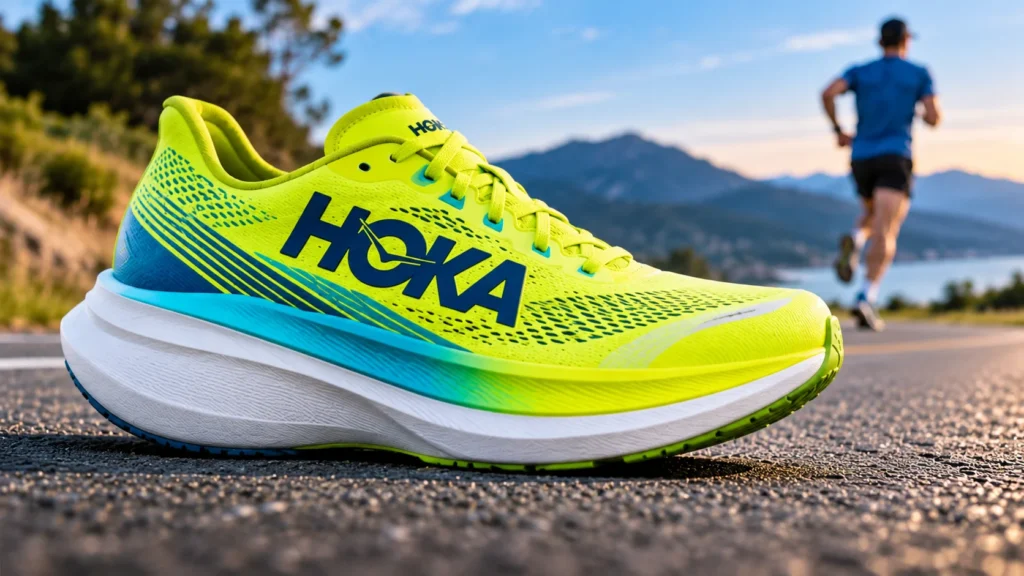
Best for: Competitive road races and personal-best attempts.
Not ideal for: Wide-footed runners, budget buyers, and relaxed daily training.
Original retail price: $250.
Scores reflect editorial assessments rather than direct wear-test measurements.
The HOKA Rocket X 2 is a premium carbon-plated road racing shoe. Its design focuses on fast running and competitive race efforts.
HOKA uses dual-layer PEBA foam inside the midsole. PEBA stands for polyether block amide, a lightweight and responsive cushioning material.
A curved carbon-fiber plate sits between the foam layers. This plate works with the sole shape to create a stiff, rolling ride.
The Rocket X 2 has a listed 5 mm heel-to-toe drop. Its lightweight mesh upper helps keep unnecessary weight low.
Runners can use the Rocket X 2 for several road race distances. These include 5K, 10K, half-marathon, and marathon events.
However, its stiff platform and snug fit may not suit everyone. Runners with wide feet should pay particular attention to sizing.
The original $250 retail price places it among premium racing shoes. That price makes sense primarily when competitive racing performance matters.
- Responsive dual-layer PEBA foam.
- Full-length carbon-fiber plate.
- Lightweight racing construction.
- Race-focused energy return.
- Breathable mesh upper.
- Suitable for multiple road race distances.
- Secure racing fit.
- High original retail price.
- Snug forefoot fit.
- Stiff platform requires adjustment.
- Limited everyday training value.
- Thin racing upper.
- Limited width options.
Best for Competitive Racing
HOKA Rocket X 2 Running Shoes
Premium PEBA foam, a carbon-fiber plate, and lightweight mesh construction make this shoe a dedicated road racing option.
$250
Original retail price. Current offers may vary.
What Is the HOKA Mach 6 Designed to Do?
Best for: Daily running, tempo workouts, and recreational racing.
Not ideal for: Runners seeking maximum cushioning or dedicated carbon-plated racing technology.
Original retail price: $140.
Scores reflect editorial assessments rather than direct wear-test measurements.
The HOKA Mach 6 is a lightweight performance shoe designed for everyday running. Its flexible construction supports several types of training sessions.
HOKA uses supercritical EVA foam in the Mach 6 midsole. This manufacturing process creates a light and responsive cushioning material.
Unlike the Rocket X 2, the Mach 6 contains no carbon plate. This gives the shoe more flexibility during normal running movements.
Both models share a listed 5 mm heel-to-toe drop. However, their different midsole designs create distinct running experiences.
The Mach 6 also uses a breathable creel jacquard mesh upper. Strategic rubber coverage protects important areas of the outsole.
You can use this shoe for daily miles and faster workouts. It also works for recreational runners entering road races.
Our detailed HOKA Mach 6 review examines its training features and overall value.
Its original $140 retail price makes it more accessible than the Rocket X 2. Selected wide-size options also improve its appeal.
- Affordable original retail price.
- Responsive supercritical EVA foam.
- Lightweight plate-free construction.
- Suitable for daily training.
- Useful for tempo and speed workouts.
- Strategic rubber outsole coverage.
- Selected wide-size options.
- No carbon-fiber plate.
- Standard width may feel snug.
- Less specialized for competitive racing.
- Foam can become firmer in cold weather.
- Not a maximum-cushion recovery shoe.
- No dedicated stability support system.
🏆 Editor’s Choice — Best Overall Value
HOKA Mach 6 Running Shoes
Responsive cushioning, lightweight construction, and a flexible midsole make the Mach 6 a practical everyday performance trainer.
$140
Original retail price. Current offers may vary.
How Do HOKA Rocket X 2 and Mach 6 Specs Compare?
The Rocket X 2 wins on specialized racing technology. The Mach 6 wins on affordability, flexibility, and everyday training versatility.
Their shared 5 mm listed drop does not mean they feel identical. Different foam materials and plate construction change how each shoe performs.
| Feature | HOKA Rocket X 2 | HOKA Mach 6 |
|---|---|---|
| Original Retail Price | $250 | $140 |
| Shoe Category | Road racing | Daily performance training |
| Midsole Foam | Dual-layer PEBA | Supercritical EVA |
| Carbon Plate | Yes | No |
| Listed Heel-to-Toe Drop | 5 mm | 5 mm |
| Approximate Published Weight | 7.9 oz / 224 g | 8.2 oz / 232 g (Men’s) |
| Support Type | Neutral | Neutral |
| Upper | Synthetic mesh | Creel jacquard mesh |
| Outsole | Zonal rubber coverage | Strategic rubber coverage |
| Flexibility | Stiff | More flexible |
| Rocker Geometry | Race-focused | Training-focused |
| Wide Sizes | Limited availability | Selected wide versions |
| Daily Running | Secondary use | Primary use |
| Competitive Racing | Primary use | Secondary use |
| Beginner Suitability | Limited | Good |
| Terrain | Roads | Roads |
| Best For | Dedicated racing | Versatile training |
Published weights vary by shoe size and measurement method. Prices are original retail prices, not verified live offers.
The most important difference is the carbon plate inside the Rocket X 2. This plate makes the shoe harder to bend during running.
The Mach 6 offers a more flexible platform for regular training. Its lower price also makes replacement easier for frequent runners.
Choose your running shoes based on their intended purpose. Weight alone cannot tell you which model will feel better.
Which Shoe Delivers Better Racing Performance?
Winner: HOKA Rocket X 2. Its premium PEBA foam and carbon-fiber plate create a more specialized racing platform than the Mach 6.
The Rocket X 2 combines resilient cushioning with a stiff sole. This construction aims to support efficient movement during fast running.
The Mach 6 also handles speed workouts well. However, its design balances speed with everyday running comfort.
How Does the Carbon Plate Improve the Running Experience?
The carbon plate increases the Rocket X 2’s lengthwise stiffness. This reduces how much the shoe bends from heel to toe.
The curved plate works with the rocker shape and responsive foam. Together, these features can improve running economy for some athletes.
Running economy refers to the energy needed to maintain a particular pace. Better running economy can help athletes sustain their target speed.
However, wearing a carbon plate does not guarantee faster race times. The runner’s fitness, comfort, and movement patterns still matter.
Which Shoe Is Better for Marathon Racing?
The Rocket X 2 is the stronger choice for competitive marathon racing. Its construction focuses on sustained speed rather than general training flexibility.
The Mach 6 remains suitable for runners who prefer flexible footwear. It can also serve as a marathon shoe after successful long-run testing.
Try your chosen racing shoes during longer training sessions. Check how your toes, heels, and lower legs feel as fatigue increases.
Never assume that a premium racing shoe will solve pacing problems. Consistent training remains more important than footwear technology.
Category Winner: HOKA Rocket X 2 for competitive road racing and race-specific workouts.
Which Shoe Offers Better Comfort and Fit?
Winner: HOKA Mach 6. Its more flexible midsole and everyday training design make it a practical choice for most recreational runners.
The Rocket X 2 uses a secure, close-fitting racing upper. This design helps limit unnecessary foot movement during fast efforts.
However, that close fit may create pressure around wider feet. Long-distance runners should consider how their feet swell during exercise.
Which HOKA Shoe Is Better for Wide Feet?
The Mach 6 provides more suitable options for runners with wider feet. Selected versions come in wide sizes.
The Rocket X 2 has a narrower racing-oriented shape. Runners who need extra forefoot space may find its fit restrictive.
Try both shoes while wearing your normal running socks. Make sure your toes have enough room to move comfortably.
Buying a longer shoe does not always fix a width problem. Excess length can allow unwanted movement around your heel.
Which Shoe Feels Better During Easy Runs?
The Mach 6 is generally the more practical choice for easy runs. Its plate-free design allows the forefoot to bend more freely.
The Rocket X 2 can feel comfortable at slower speeds for some runners. However, competitive running remains its main purpose.
Neither model primarily targets runners seeking maximum soft cushioning. Consider a dedicated recovery shoe when plush comfort is your main goal.
Category Winner: HOKA Mach 6 for everyday comfort, flexibility, and broader fit options.
Which HOKA Shoe Offers Better Value for Money?
Winner: HOKA Mach 6. Its $140 original retail price is $110 lower than the Rocket X 2’s $250 original price.
That represents a 44% saving compared with the premium racing model. The lower price also reduces future replacement costs.
The Mach 6 handles easy runs, tempo sessions, and recreational races. These different uses increase the practical value of one pair.
The Rocket X 2 offers specialized features that target competitive runners. Those features provide less value during relaxed daily training.
How Much Could You Save With the Mach 6?
At original retail prices, two pairs of Mach 6 shoes cost $280. One pair of Rocket X 2 shoes costs $250.
This means two Mach 6 pairs cost only $30 more. Frequent runners should consider the long-term cost of replacing footwear.
| Cost Comparison | Rocket X 2 | Mach 6 |
|---|---|---|
| Original Price | $250 | $140 |
| Two Pairs | $500 | $280 |
| Example Cost per Mile at 300 Miles | $0.83 | $0.47 |
The 300-mile example illustrates ownership costs. It does not predict or guarantee the lifespan of either shoe.
Discounts can change the value comparison significantly. A heavily discounted Rocket X 2 becomes more attractive to competitive runners.
Category Winner: HOKA Mach 6 for lower purchase costs and broader everyday usefulness.
Which Shoe Is More Practical for Long-Term Use?
Winner: HOKA Mach 6. Its everyday training focus and lower replacement cost make it the more practical long-term choice.
The Rocket X 2 prioritizes racing performance through lightweight construction. Its thinner upper reflects that focus.
The Mach 6 balances low weight with strategic rubber outsole coverage. This approach makes it suitable for frequent road training.
Which Shoe Offers Better Durability?
The Mach 6 is the more practical option for repeated daily use. However, actual durability depends on how each runner uses the shoe.
Independent laboratory testing identifies limitations in the Rocket X 2’s upper durability. Lightweight racing materials often involve trade-offs.
Running surface, body weight, mileage, and movement patterns affect shoe wear. No fixed mileage figure guarantees the condition of either model.
Inspect the outsole and upper regularly for damage. Pay attention to changes in cushioning and comfort during familiar runs.
Should You Wear Carbon-Plated Shoes Every Day?
Some runners can use carbon-plated shoes for regular training. However, plated construction changes the way the foot bends during running.
Introduce the Rocket X 2 gradually if you have never worn plated footwear. Start with shorter sessions before increasing distance or intensity.
The Mach 6 provides a useful everyday alternative between race-specific workouts. Its flexible construction also suits runners who dislike stiff shoes.
- Never introduce unfamiliar footwear on marathon race day.
- Increase training distance and intensity gradually.
- Stop running if you develop sharp or persistent pain.
- Replace shoes when damage affects grip or comfort.
- Seek professional advice for recurring foot or lower-leg pain.
Category Winner: HOKA Mach 6 for everyday ownership and long-term practicality.
Which Shoe Wins in Real-World Running Situations?
The Rocket X 2 wins for competitive racing. The Mach 6 wins for most regular training situations because it handles different running speeds.
Your weekly routine provides the clearest guide to choosing either model. Consider how often you train, race, and complete faster workouts.
| Running Situation | Winner | Reason |
|---|---|---|
| Daily 3–5 mile runs | Mach 6 | Flexible cushioning and versatility |
| Competitive 5K or 10K | Rocket X 2 | Race-focused foam and carbon plate |
| Marathon personal-best attempt | Rocket X 2 | Specialized racing construction |
| Beginner half-marathon training | Mach 6 | Affordable, versatile training design |
| Cold-weather speed sessions | Rocket X 2 | Favorable PEBA foam temperature behavior |
| Frequent coaching and training | Mach 6 | Lower replacement costs |
Which Shoe Should Beginners Choose?
The Mach 6 is the more practical starting point for many beginners. Its plate-free design supports different types of running sessions.
New runners benefit from finding a comfortable shoe that fits properly. Specialized racing technology is not necessary for building basic fitness.
However, beginners who need extra stability or softer cushioning should compare other models. The Mach 6 is a neutral performance trainer.
Which Shoe Works Better in Cold Weather?
The Rocket X 2 has a potential advantage in cold-weather cushioning. PEBA foam generally responds favorably to lower temperatures.
Independent laboratory measurements indicate that the Mach 6 becomes firmer in cold conditions. This change can affect its perceived ride.
However, foam behavior does not determine winter running safety alone. Neither model is specifically designed for icy or snow-covered surfaces.
Choose footwear with appropriate traction when winter conditions create slippery roads.
Can You Use Both Shoes in a Running Rotation?
Yes. The Rocket X 2 and Mach 6 can complement each other within a running rotation.
The Mach 6 handles most daily training and tempo sessions. The Rocket X 2 serves as a dedicated racing shoe.
- Monday: Easy run — Mach 6.
- Tuesday: Rest or cross-training.
- Wednesday: Tempo workout — Mach 6.
- Thursday: Rest or recovery.
- Friday: Race-specific workout — Rocket X 2.
- Saturday: Rest.
- Sunday: Comfortable long run — Mach 6.
This example illustrates shoe selection rather than providing a personalized training plan. Adjust workouts to your fitness and recovery needs.
Using separate shoes lets you reserve premium racing footwear for important sessions. It also helps avoid unnecessary wear during ordinary activities.
Is the HOKA Rocket X 2 Worth the Extra Cost?
The Rocket X 2 is worth its higher price for runners who prioritize competitive racing. Most recreational runners receive better overall value from the Mach 6.
The $110 original price gap reflects specialized racing materials. These include dual-layer PEBA foam and a curved carbon-fiber plate.
However, those features are not essential for regular exercise. Comfortable daily training remains the priority for most recreational runners.
What Is a Good Sale Price for Each Shoe?
A Rocket X 2 price near $175 represents a 30% discount from its original retail price. That makes it an attractive racing purchase.
A Mach 6 price near $100 represents a discount of about 29%. That provides strong value for an everyday performance trainer.
| Buying Scenario | Price | Value Assessment |
|---|---|---|
| Rocket X 2 original price | $250 | Dedicated racing purchase |
| Rocket X 2 target sale price | $175 | Attractive racing value |
| Mach 6 original price | $140 | Good everyday value |
| Mach 6 target sale price | $100 | Excellent training value |
Target sale prices are editorial shopping suggestions, not verified current retailer offers.
Should You Upgrade to the HOKA Rocket X 3?
The Rocket X 2 remains worth considering at a meaningful discount. Its racing construction still offers features that dedicated runners seek.
The Rocket X 3 provides a newer alternative with updated construction. Compare its fit and current price before purchasing the older model.
A newer shoe does not automatically fit your feet better. Choose a model that feels comfortable during your intended running activities.
Check the retailer’s warranty and return policy before purchasing. Clearance shoes sometimes have different return conditions.
Who Should Buy the HOKA Rocket X 2 or Mach 6?
Buy the Rocket X 2 when competitive racing is your main goal. Buy the Mach 6 when daily training, comfort, and affordability matter more.
Think about the activities you perform most often. A specialized racing shoe may not suit a runner who mostly completes easy miles.
Buy Rocket X 2 If…
- You regularly enter competitive road races.
- You want carbon-plated racing technology.
- You already own a daily running shoe.
- You prefer a stiff and responsive ride.
- You enjoy a secure racing fit.
- Your budget allows a specialized shoe.
- You need one shoe for every run.
- You prefer a roomy toe box.
- You dislike stiff running shoes.
- Your main goal is affordable daily exercise.
Buy Mach 6 If…
- You run several times each week.
- You want lightweight daily cushioning.
- You enjoy tempo workouts.
- You prefer flexible running shoes.
- You want stronger everyday value.
- You need a versatile training shoe.
- You want dedicated carbon-plated racing.
- You need maximum soft cushioning.
- You require specialized stability support.
- You prefer a stiff racing platform.
- You need trail running footwear. Consider the HOKA Speedgoat range.
- You want maximum recovery cushioning. Consider the HOKA Bondi range.
- You need stability-oriented support. Compare the HOKA Arahi and Gaviota ranges.
- You want a plated training shoe. Consider the HOKA Mach X range.
- Neither shoe fits your feet comfortably. Try different models or brands.
What Are Real Runners Saying About Both Products?
Independent running shoe reviews generally favor the Rocket X 2 for racing. The Mach 6 receives positive feedback for everyday versatility.
Fit remains an important concern for both models. Runners with wider feet should carefully check available sizing options.
HOKA Rocket X 2 — Review Feedback
- Responsive racing cushioning.
- Strong energy return.
- Lightweight construction.
- Secure racing fit.
- Effective rocker geometry.
- Narrow forefoot fit.
- Premium purchase price.
- Stiff construction.
- Limited everyday versatility.
- Thin upper durability.
Independent reviewers describe the Rocket X 2 as a responsive racing shoe. Laboratory findings also identify limitations involving toe-box space and upper durability.
HOKA Mach 6 — Review Feedback
- Lightweight daily running feel.
- Responsive cushioning.
- Training versatility.
- Flexible construction.
- Competitive original price.
- Snug standard-width fit.
- Firmer cushioning in cold conditions.
- Limited maximum-cushion comfort.
- No dedicated racing plate.
Independent reviews highlight the Mach 6’s lightweight and responsive design. Laboratory results also show that its foam becomes firmer in cold conditions.
Source: RunRepeat Mach 6 laboratory review.
These findings support the main distinction between both running shoes. The Rocket X 2 specializes in racing, while the Mach 6 handles regular training.
These summaries reflect independent review findings. Amazon customer ratings and verified purchase reviews were not directly available for verification.
How Was This HOKA Rocket X 2 vs Mach 6 Comparison Researched?
This comparison uses published shoe specifications, independent laboratory measurements, and professional running shoe reviews. It does not claim original hands-on testing.
The research focuses on racing performance, comfort, fit, pricing, and ownership. These factors help explain which model suits different runners.
Laboratory measurements provide useful details about cushioning and flexibility. Professional reviews help explain how those characteristics affect running experiences.
However, no laboratory test can identify the perfect shoe for everyone. Personal comfort and foot shape remain essential parts of the buying decision.
- RunRepeat Rocket X 2 review — laboratory measurements, materials, and durability.
- RunRepeat Mach 6 review — cushioning, fit, flexibility, and temperature behavior.
- Performance: Intended running purpose, foam, plate construction, and ride characteristics.
- Comfort: Upper design, width options, and flexibility.
- Value: Original retail pricing and everyday versatility.
- Ownership: Practical maintenance, replacement costs, and usage needs.
The editorial ratings consider how well each model serves its intended purpose. They also consider the practical needs of recreational runners.
These ratings are subjective editorial judgments rather than standardized laboratory scores. Individual running experiences can differ from the overall recommendation.
How Should You Care for HOKA Running Shoes?
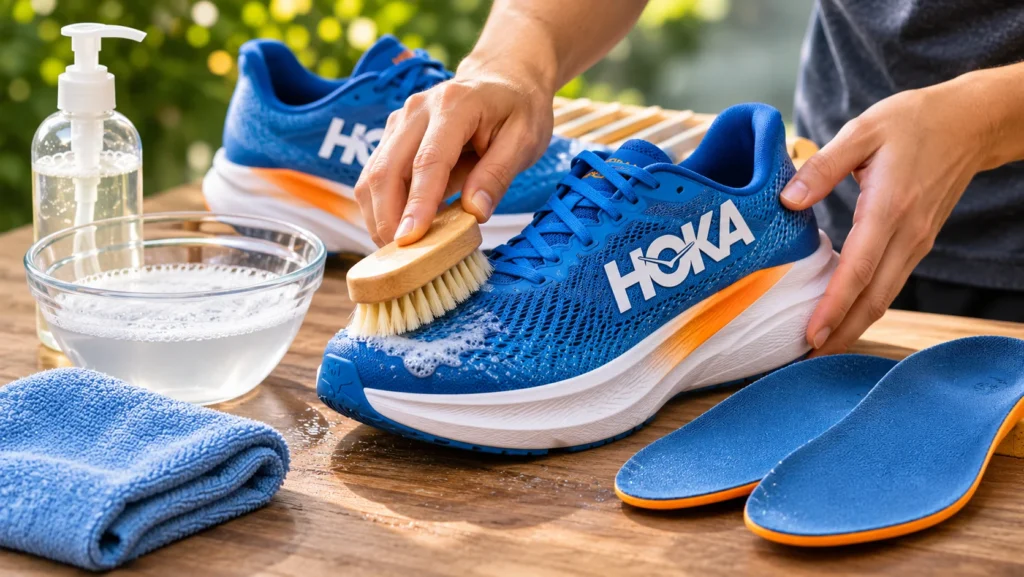
Clean HOKA running shoes by hand and allow them to dry naturally. Store them in a cool, dry area away from direct heat.
Proper care helps protect the mesh upper, foam, and rubber outsole. Regular inspections also help identify damage before it affects running comfort.
1. Remove Dirt After Outdoor Runs
Use a soft brush to remove dry dirt from your running shoes. Pay attention to outsole grooves and areas around the mesh.
A damp cloth and mild soap can remove remaining marks. Avoid harsh chemicals that may damage shoe materials.
2. Avoid Washing Machines and Dryers
Hand washing provides a gentler cleaning method for running shoes. Washing machines can expose footwear to unnecessary movement and moisture.
Dryers also produce heat that can affect adhesives and cushioning materials. Let your shoes air dry in a shaded location.
3. Remove Moisture Before Storing Your Shoes
Loosen the laces after wet or sweaty runs. Remove the insoles if the shoe design allows it.
This improves airflow and helps trapped moisture escape. Wait until the shoes are dry before placing them inside a closed storage space.
4. Keep Your Shoes Away From Extreme Heat
Store the Rocket X 2 and Mach 6 in a cool location. Avoid leaving either model inside a hot car.
Extreme heat can affect foam, adhesives, and other shoe materials. Direct heat should not be used to speed up drying.
5. Use Each Shoe for Its Intended Purpose
Reserve the Rocket X 2 for races and selected speed workouts. This reduces unnecessary wear during daily activities.
The Mach 6 can handle more frequent training sessions. A two-shoe rotation helps distribute usage according to each model’s strengths.
6. Inspect the Outsole and Upper Regularly
Check the outsole for smooth rubber patches and uneven wear. Examine the upper for tears or damage around the toes.
Replace your shoes when their condition affects comfort or secure footing. Do not rely only on the distance recorded in a running app.
Record how far you run in each pair of shoes. Mileage tracking helps you notice changes in comfort and wear. Combine those records with regular physical inspections instead of relying on a fixed replacement distance.
Final Verdict — Which HOKA Shoe Should You Buy?
The HOKA Mach 6 is the overall winner for most recreational runners. It offers responsive cushioning, flexible construction, and a lower purchase price.
The HOKA Rocket X 2 wins for dedicated competitive racing. Its carbon-fiber plate and PEBA foam provide a specialized race-focused platform.
The original $110 price difference makes the Mach 6 easier to recommend. Most runners can use its features during a wider range of workouts.
However, serious racers may benefit from owning both models. Use the Mach 6 for regular training and the Rocket X 2 for important races.
Choose the shoe that matches your actual running routine. Premium technology provides the most value when you use it for the right purpose.
🏆 Final Buying Recommendations
Best for Competitive Racing
HOKA Rocket X 2
4.5/5
Choose the Rocket X 2 for carbon-plated racing performance, responsive PEBA cushioning, and competitive road events.
$250
Original retail price
🏆 Best Overall Choice
HOKA Mach 6
4.7/5
Choose the Mach 6 for everyday running, tempo workouts, recreational racing, and better overall value.
$140
Original retail price
Check the exact model, available size, current price, seller reputation, and return policy before purchasing.
Frequently Asked Questions
Which Is Better, HOKA Rocket X 2 or Mach 6?
The HOKA Mach 6 is better for most recreational runners because it offers daily training versatility at a lower price. The Rocket X 2 is better for competitive racing because of its dual-layer PEBA foam and carbon-fiber plate. Your running goals determine the better choice.
What Is the Main Difference Between HOKA Rocket X 2 and Mach 6?
The main difference is their midsole construction and intended purpose. The Rocket X 2 uses dual-layer PEBA foam and a carbon plate for competitive racing. The Mach 6 uses supercritical EVA foam without a plate, making it more flexible and practical for daily running.
Is the HOKA Rocket X 2 Good for Daily Running?
The Rocket X 2 can handle daily running, but racing remains its primary purpose. Its stiff carbon plate and expensive materials make it less practical for frequent easy runs. The Mach 6 generally provides better everyday versatility, flexibility, and value for recreational runners.
Can You Run a Marathon in the HOKA Mach 6?
Yes, the HOKA Mach 6 can serve as a marathon running shoe. Its responsive cushioning and flexible construction suit runners who prefer plate-free footwear. Complete several longer training runs in the Mach 6 before using it for a marathon. Comfort and fit remain essential.
Is the HOKA Rocket X 2 Still Worth Buying?
The HOKA Rocket X 2 remains worth buying for competitive runners who find it at an attractive price. Its carbon-fiber plate and PEBA foam provide specialized racing features. Compare its current price, fit, and availability with newer racing shoes before making your final decision.
About the Author
Steven Tyler is the credited author of this Footwear Hiker running shoe comparison. This article focuses on footwear specifications, independent research, practical running needs, and informed buying decisions.
Affiliate Disclosure
As an Amazon Associate, we earn from qualifying purchases. This article contains affiliate links. We may receive a commission when you purchase through these links, at no additional cost to you.
Our recommendations reflect editorial assessments of published specifications, independent research, and practical running needs. Product prices, specifications, and availability may change. Listed prices are original retail prices rather than live Amazon offers.


