

Quick Answer
Running shoes typically last 300–500 miles (480–800 km), including when used on concrete. Concrete can increase outsole wear, but no scientifically established concrete-only replacement mileage applies to every shoe. Start checking your shoes closely around 250–300 miles, paying attention to tread wear, cushioning, and comfort. Understanding how running shoe midsoles work helps explain why cushioning can deteriorate before the upper looks worn out.
Five Signs Your Concrete Running Shoes Need Replacing
- Worn outsole: Rubber becomes smooth, uneven, or worn through.
- Flattened cushioning: The midsole feels noticeably firmer or less responsive.
- Reduced comfort: Familiar running routes feel unusually uncomfortable.
- Uneven support: The shoes lean, deform, or feel unstable.
- Upper damage: Tears or worn heel linings affect fit and foot security.
What Should You Do?
- Track mileage: Record your running distance and inspect your shoes regularly.
- Check all three: Evaluate outsole wear, midsole condition, and running comfort before deciding.
Concrete sidewalks can be convenient for running, but they’re demanding surfaces for footwear. If you’re logging regular miles on pavement, you may wonder whether your shoes will wear out sooner.
I prefer judging running shoe life through mileage, physical wear, and changes in comfort rather than relying on a single number. This guide explains how concrete affects durability, when to replace your shoes, and how to make each pair last longer.
How Many Miles Do Running Shoes Typically Last on Concrete?
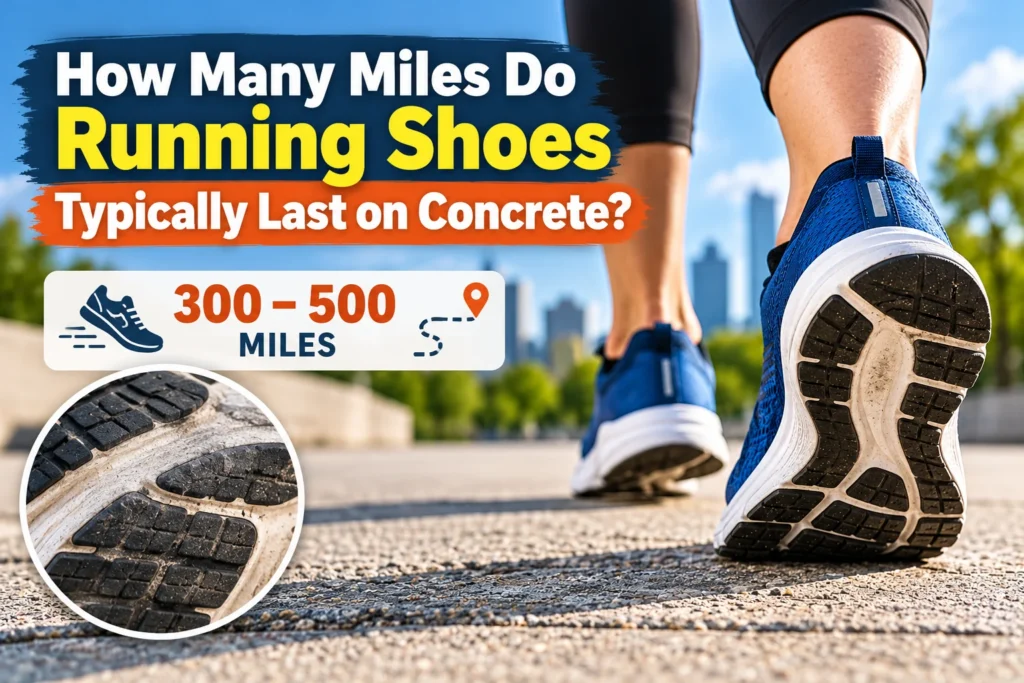
Most road-running shoes have a commonly recommended replacement range of 300–500 miles. The exact lifespan depends on shoe construction, your running habits, and the condition of the surfaces you use.
According to Brooks Running’s replacement guidance, performance running shoes generally last within this range. It’s a practical guideline rather than an automatic expiration point.
What Does Running Shoe Lifespan Actually Mean?
Running shoe lifespan is the period or distance during which a shoe continues providing adequate cushioning, traction, structural support, and comfort for its intended use.
A shoe can look clean while its cushioning has already changed substantially. Conversely, minor cosmetic damage doesn’t automatically mean the shoe is unusable.
The important distinction is between appearance and functional performance. That’s especially relevant when your training happens on concrete.
How Long Will Your Shoes Last Based on Weekly Mileage?
The table below converts the standard 300–500-mile range into approximate weeks of use. These calculations assume all recorded mileage comes from the same pair.
| Weekly Running | 300-Mile Checkpoint | 500-Mile Checkpoint |
|---|---|---|
| 10 miles | 30 weeks | 50 weeks |
| 15 miles | 20 weeks | 33 weeks |
| 20 miles | 15 weeks | 25 weeks |
| 30 miles | 10 weeks | 17 weeks |
For example, someone running 20 miles weekly reaches 300 miles after approximately 15 weeks. That doesn’t mean replacement is automatically necessary at that point.
My recommendation: Start inspecting concrete-running shoes before the lower checkpoint. Replace them when their condition or comfort justifies it.
Why Can Running on Concrete Wear Shoes Out Faster?
Concrete is a rigid running surface that provides little cushioning of its own. Its texture can also contribute to outsole abrasion with repeated foot contact.
However, greater surface hardness doesn’t create a fixed percentage reduction in shoe lifespan. The effect depends on the shoe and runner.
1. Friction Gradually Wears Down Outsole Rubber
Your outsole contacts the ground with every step. Repeated braking, landing, and push-off movements gradually remove material from its surface.
Rough concrete can create considerable abrasion, especially around the heel and forefoot. Smooth pavement may produce a different wear pattern.
2. Repeated Loading Changes Midsole Cushioning
The midsole compresses whenever your foot bears weight. Repeated loading gradually changes how some cushioning materials respond.
These changes can make a previously comfortable shoe feel firmer, flatter, or less responsive. They may occur without dramatic visible damage.
Important: Midsole aging occurs on other surfaces too. Concrete isn’t the only reason cushioning deteriorates.
3. Landing Mechanics Influence Wear Patterns
Two runners can wear out identical shoes differently. Their stride mechanics determine where the outsole experiences the greatest repeated contact.
- Heel striking: May concentrate wear around the rear outsole.
- Forefoot striking: May produce greater visible wear near the front.
- Uneven loading: Can create different wear patterns between the inner and outer edges.
- Frequent turning: Adds twisting and sideways forces during movement.
Uneven tread wear alone doesn’t prove your running form is incorrect. Look for changes in shoe stability and comfort as well.
Does Concrete Wear Running Shoes Faster Than Asphalt?
Concrete and asphalt are both relatively hard running surfaces. Neither has a universal shoe replacement mileage supported by strong comparative durability research.
A published study comparing running surfaces found similar in-shoe plantar pressure measurements on concrete and asphalt. That finding doesn’t directly measure shoe durability.
Concrete vs Asphalt vs Softer Running Surfaces
| Surface | Typical Characteristics | Shoe Durability Considerations |
|---|---|---|
| Concrete | Rigid; texture varies | Monitor rubber abrasion and cushioning changes |
| Asphalt | Firm; texture and condition vary | Similar road-shoe monitoring is appropriate |
| Synthetic Track | Purpose-built running surface | May reduce some abrasion, depending on texture |
| Grass or Dirt | Variable softness and unevenness | Less road abrasion is possible, but terrain creates other wear |
Surface texture often matters as much as the material name. An abrasive asphalt road may wear outsole rubber faster than relatively smooth concrete.
Research on running impacts across concrete, track, and grass found differences in measured acceleration. Those findings shouldn’t be interpreted as proof of a specific shoe lifespan.
What Factors Affect Running Shoe Lifespan on Concrete?
The surface is only one part of the durability equation. Shoe construction, training habits, and individual movement can be equally important.
Outsole Material and Coverage
Road-running shoes often use rubber in high-contact areas. Durable coverage can help protect softer cushioning materials from direct pavement contact.
Consider the following features:
- High-wear rubber: Helps protect frequently contacted outsole areas.
- Coverage pattern: Determines which parts of the sole have additional protection.
- Tread geometry: Influences traction and how material contacts the pavement.
- Exposed foam: May wear differently from traditional outsole rubber.
Midsole Foam and Construction
Modern running shoes use materials such as EVA, TPU, and PEBA-based foams. Their durability depends on formulation, density, geometry, and construction.
A thicker or softer midsole isn’t guaranteed to last longer. Judge the complete shoe rather than one cushioning specification.
Body Weight, Training Volume, and Running Technique
Greater loading can influence how quickly a shoe’s materials change. However, individual results vary too much to predict lifespan from body weight alone.
Frequent training also accumulates mileage quickly. A runner completing 30 miles weekly will reach standard replacement checkpoints much sooner than someone running 10.
Fit and Everyday Use
Poor fit can damage heel linings, toe-box fabric, and other upper components. Shoes worn for work or casual walking also accumulate additional use.
Before buying replacements, review how tight running shoes should be. Secure, comfortable fit matters more than simply choosing a larger or smaller size.
How Can You Tell When Concrete Running Shoes Are Worn Out?
Look for meaningful changes in traction, cushioning, structure, and running comfort. Don’t depend exclusively on mileage or appearance.
Check These Six Warning Signs
- Outsole rubber has worn through: Soft midsole material may be exposed in high-contact areas.
- Tread has become unusually smooth: Worn traction patterns may reduce confidence on wet pavement.
- Cushioning feels substantially different: Familiar runs feel firmer or less comfortable.
- Midsole shape has changed: Persistent compression, collapse, or unevenness suggests deterioration.
- Heel or upper structure is damaged: The shoe no longer holds your foot securely.
- New discomfort appears: Unexplained soreness during familiar workouts deserves attention.
The REI running shoe replacement guide also emphasizes wear patterns and changes in comfort. These can be more useful than calendar age alone.
New pain isn’t automatically caused by worn shoes. Training changes, recovery, biomechanics, and other health factors can contribute.
If discomfort persists, seek guidance from a qualified healthcare professional rather than assuming new shoes will solve it.
How Do You Test Whether Your Running Shoes Still Have Life Left?
I recommend a simple inspection that combines visual checks with your normal running experience. It takes only a few minutes and doesn’t require special equipment.
Step 1: Inspect the Outsole
Turn both shoes over and examine their contact areas. Look for worn-through rubber, major asymmetry, or sections with substantially reduced tread.
Step 2: Examine the Midsole
Check both sides for unusual collapse, cracking, or lasting deformation. Minor foam creases alone don’t necessarily mean replacement is required.
Step 3: Place the Shoes on a Flat Surface
Look at their shape from behind. A shoe that leans strongly or has collapsed structurally deserves closer inspection.
Step 4: Compare Running Comfort
Think about how the shoes felt during earlier runs. Notice whether they now feel noticeably less stable or comfortable under similar conditions.
If possible, compare them with a newer pair of the same model. This can make subtle cushioning changes easier to recognize.
Step 5: Review Mileage
Check your running log or estimate weekly use. Include substantial walking mileage if the same pair serves both purposes.
Practical rule: Clear structural damage or major loss of comfort can justify replacement before 300 miles. Reaching 500 miles doesn’t automatically prove an otherwise functional shoe is unsafe.
How Can You Make Running Shoes Last Longer on Concrete?
You cannot eliminate normal footwear wear, but consistent care can help preserve comfort and construction. The goal is to protect materials without changing the way the shoes function.
Seven Practical Maintenance Habits
- Keep a mileage log: Assign recorded runs to the correct pair using an app or notebook.
- Use running shoes primarily for running: Consider separate footwear for long work shifts and daily errands.
- Rotate pairs when practical: Allow wet shoes to dry and spread use between suitable pairs.
- Clean abrasive debris: Remove trapped gravel and dirt from the outsole.
- Air-dry naturally: Avoid radiators, dryers, and excessive heat that can affect shoe materials.
- Inspect monthly: Look for changing tread wear, damaged uppers, and unstable cushioning.
- Choose appropriate routes: When convenient, avoid unnecessary running on severely broken or debris-covered pavement.
Rotating two pairs doesn’t automatically increase their combined mileage. It can, however, make drying and monitoring individual shoes easier.
Similarly, running occasionally on a track or another suitable surface may vary your training experience. It doesn’t guarantee a measurable increase in shoe lifespan.
What Should You Look for in Running Shoes for Concrete?
Choose road-running shoes that combine appropriate cushioning, reliable traction, and a comfortable fit. Maximum softness alone doesn’t guarantee better durability.
Our running shoes for concrete floors buying guide explores additional footwear options and selection considerations.
Prioritize These Features
- Road-specific outsole: Suitable tread and material coverage for paved surfaces.
- Comfortable cushioning: A predictable feel during your normal running pace and distance.
- Secure fit: Stable heel and midfoot contact without painful pressure.
- Appropriate width: Enough forefoot room for comfortable movement.
- Stable platform: Confidence through landing, transition, and push-off.
- Practical construction: Materials and features appropriate for regular training.
You don’t necessarily need expensive racing technology for daily concrete runs. A reliable road-training model may better match your needs.
Also, more cushioning cannot guarantee injury prevention. Consistent training progression, recovery, and individual comfort remain important.
Does Walking on Concrete Count Toward Running Shoe Lifespan?
Yes. Walking adds repeated loading, outsole contact, and material wear, even though it differs mechanically from running.
A pair used for running, commuting, and long work shifts may wear faster than its running log suggests. Consider total use when evaluating replacement.
For more context, read our guide explaining whether running shoes are good for walking on concrete.
What Mistakes Should You Avoid When Replacing Concrete Running Shoes?

The biggest mistake is treating one mileage figure as an absolute rule. Individual wear patterns and changes in performance deserve equal attention.
- Waiting for holes: Midsole deterioration may happen before obvious upper damage.
- Replacing only by date: Calendar age doesn’t reveal actual training mileage.
- Ignoring non-running use: Walking and everyday wear also affect materials.
- Buying only for softness: Cushioning, stability, fit, and traction work together.
- Assuming all concrete is identical: Surface texture and condition vary.
- Expecting new shoes to fix persistent pain: Discomfort can have causes unrelated to footwear.
I also suggest keeping a brief note about how each new pair feels during its first few runs. That baseline provides a useful comparison months later.
Which Running Shoes Are Worth Considering for Concrete in 2026?
If your current shoes are reaching the end of their useful life, these established road-training models offer different approaches to daily cushioning and fit. The selections below are based on published product specifications, not claimed personal mileage testing.
The star scores are editorial suitability assessments for general paved-road running. They aren’t customer-review ratings or guaranteed durability measurements.
🏆 Balanced Daily Trainer
Brooks Ghost 18
★★★★½ — 4.5/5
The Ghost 18 uses DNA LOFT v3 cushioning, a 10 mm heel-to-toe drop, and a RoadTack rubber outsole. Its balanced road-running design makes it my first shortlist option for runners seeking a traditional daily trainer on concrete.
🛣️ Versatile Road Training
Saucony Ride 18
★★★★½ — 4.5/5
The Ride 18 combines PWRRUN+ cushioning with an 8 mm drop and reinforced forefoot rubber. I would consider it for runners who want versatile daily cushioning and a road-oriented outsole.
👟 Multiple Width Options
New Balance Fresh Foam X 880v15
★★★★☆ — 4.0/5
The 880v15 offers Fresh Foam X cushioning, a 6 mm drop, and multiple width choices. I would shortlist it for runners who prioritize finding a comfortable fit for repeated road mileage.
Affiliate disclosure: As an Amazon Associate, we may earn from qualifying purchases. Prices, availability, and sizes vary. The models above are examples of suitable road-training designs, not promises of a specific lifespan.
Frequently Asked Questions About Running Shoes on Concrete
Do Running Shoes Wear Out Faster on Concrete?
They can, particularly when the concrete is rough or abrasive. Repeated contact wears outsole material, while cushioning experiences normal compression and aging.
However, concrete doesn’t shorten every shoe’s lifespan by a predictable amount. Evaluate mileage, condition, and comfort instead of assuming an exact replacement distance.
Can Running Shoes Last 500 Miles on Concrete?
Yes, some running shoes remain functional at 500 miles of concrete running. Others may require replacement earlier because of worn tread, damaged construction, or substantial cushioning changes.
Five hundred miles is a useful checkpoint, not a guaranteed durability rating. Inspect the actual pair before continuing to use it.
Are Concrete Sidewalks Bad for Running Shoes?
Concrete sidewalks aren’t automatically unsuitable for running shoes. Road-running footwear is designed for use on firm paved surfaces.
Nevertheless, rough textures, broken pavement, and repeated contact contribute to wear. Choosing suitable footwear and monitoring its condition can help maintain a comfortable running experience.
Should You Replace Running Shoes Every Six Months?
Not necessarily. Six months may represent very different mileage totals depending on your training routine.
A runner completing 30 miles weekly accumulates mileage much faster than someone running five. Base replacement decisions on total use, physical condition, and changes in comfort rather than calendar age alone.
Can Better Cushioning Make Running Shoes Last Longer on Concrete?
Not automatically. More cushioning can change comfort, but greater foam thickness or softness doesn’t guarantee longer useful life.
Outsole construction, midsole resilience, fit, and individual running mechanics all contribute. Choose shoes that feel comfortable and appropriate for your training rather than relying on cushioning thickness alone.
Final Takeaway: How Long Do Running Shoes Last on Concrete?
Most running shoes have a general replacement guideline of 300–500 miles, including pairs used regularly on concrete. The exact distance varies because running surface, outsole design, midsole construction, and individual usage all influence wear.
Concrete can contribute to abrasion, but there’s no universal concrete-specific mileage limit. Treat the standard range as a reminder to inspect your footwear rather than an automatic replacement schedule.
My recommendation: Track your mileage, inspect your shoes around 250–300 miles, and pay attention to meaningful changes in comfort or structure. If your shoes have become damaged, unstable, or noticeably uncomfortable, consider replacing them even before reaching the usual mileage range.
Comfortable, well-fitting road-running shoes and sensible maintenance habits are better priorities than trying to squeeze a predetermined number of miles from every pair.