

Quick Answer
No, more cushioning does not automatically mean more comfort in running shoes. Extra foam can make landings feel softer, but comfort also depends on cushioning firmness, shoe stability, foot shape, and fit. A moderately cushioned shoe may feel better than a maximum-cushion model when it suits your movement. Start with proper running shoe toe room before comparing cushioning levels.
What Makes Running Shoes Comfortable?
- Cushioning softness: Softer foam often feels pleasant, but excessive sinking may feel awkward.
- Correct shoe fit: Enough toe space and secure heel positioning prevent unnecessary pressure.
- Platform stability: A supportive base helps the shoe feel predictable during movement.
- Heel-to-toe drop: The height difference between heel and forefoot affects running feel.
- Running purpose: Comfortable cushioning for recovery runs may differ from your preference for faster training.
Best Way to Choose
- Compare: Try a balanced daily trainer and a maximum-cushion shoe.
- Test: Walk and jog in both, checking comfort, heel security, and transitions.
- Decide: Choose the shoe that stays comfortable during your intended activity.
It’s easy to assume thicker running shoe soles will make every step more comfortable. Yet two shoes with similar amounts of foam can feel completely different.
I prefer comparing how cushioning behaves rather than judging shoes by their appearance. This guide explains softness, stack height, stability, and practical ways to find your ideal comfort level.
What Does Cushioning in Running Shoes Actually Mean?
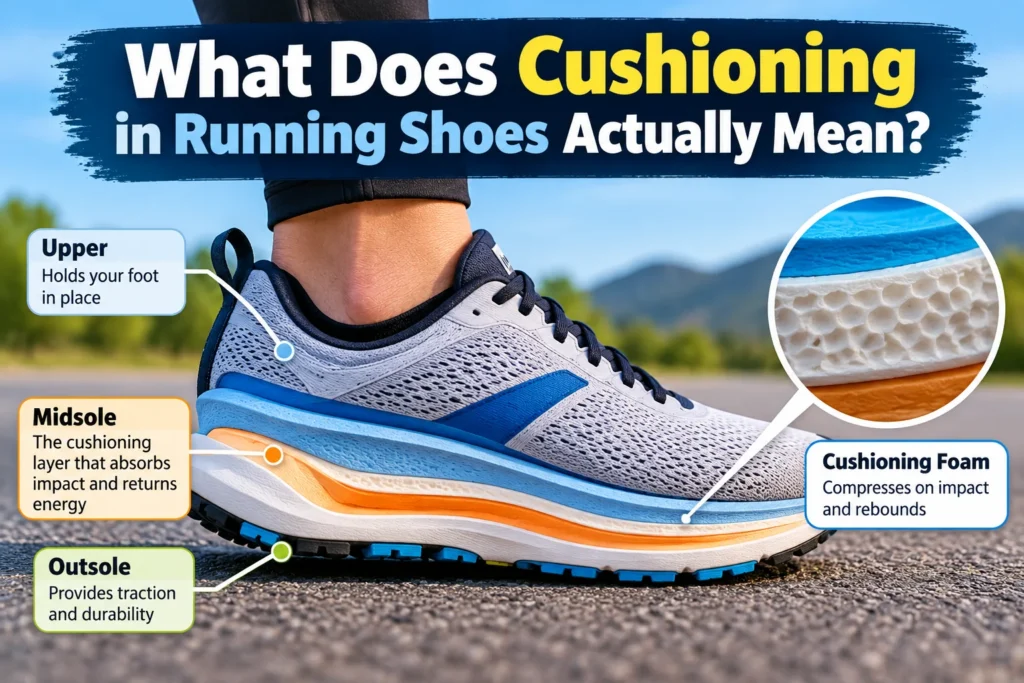
Running shoe cushioning is the material beneath your foot that compresses and rebounds during movement. Its main functions include changing how forces spread beneath the foot and influencing the feel of each landing.
Most modern running shoes use foam midsoles. However, foam thickness alone cannot explain the complete cushioning experience.
Definition: Cushioning describes the underfoot materials and their behavior, while comfort describes how pleasant the entire shoe feels to the person wearing it.
How Does Midsole Foam Affect Comfort?
The midsole is the cushioning layer between your foot and the outsole. Its material, thickness, geometry, and compression characteristics help determine how the shoe feels.
- EVA foam: A common lightweight cushioning material available in different densities and formulations.
- PEBA-based foam: Often used in performance shoes because selected formulations offer low weight and high energy return.
- Nitrogen-infused foam: Foam produced using specialized processes to achieve particular cushioning characteristics.
- Gel or specialized inserts: Additional cushioning components used in some footwear designs.
Foam names don’t tell the entire story. Two shoes using similar materials can have different firmness, weight, and stability.
Is Cushioning Thickness the Same as Softness?
No. A thick midsole can feel firm, while a thinner midsole may feel soft underfoot.
Stack height measures the vertical distance between the ground and your foot at a specified location. It does not measure foam softness or guarantee better comfort.
- More thickness: Provides additional material beneath the foot.
- More softness: Describes how easily cushioning compresses under load.
- More responsiveness: Describes how the shoe feels during compression and rebound.
These characteristics interact, but they aren’t interchangeable. That’s why a firm maximum-stack shoe can feel less plush than a softer daily trainer.
Does More Cushioning Mean More Comfort When Running?
More cushioning can improve comfort, especially when the existing shoe feels too harsh. However, the relationship isn’t automatic because fit, softness, running mechanics, and personal preferences also matter.
A 2021 scientific review of footwear comfort found that well-fitted, lightweight footwear with softer midsoles was generally perceived as comfortable. The researchers also noted differences between studies and individual requirements.
This supports a useful distinction: softer cushioning often improves perceived comfort, but greater cushioning thickness does not necessarily do so.
What Does Research Say About Cushioning and Comfort?
A study of recreational runners found that perceived comfort could not be reliably predicted from impact forces and plantar pressure measurements alone. In other words, measurable impact characteristics didn’t consistently reveal which shoes felt better.
The running shoe cushioning study reinforces why personal comfort testing matters alongside technical measurements.
My practical takeaway is to treat cushioning specifications as a starting point, not a final verdict. Your feet provide important feedback that a specification sheet cannot capture.
Why Can Maximum-Cushion Running Shoes Feel Less Comfortable?
Maximum cushioning provides more material beneath your feet, but its geometry may not match your preferences. Some runners appreciate the plush sensation, while others prefer less bulk and a more direct connection to the ground.
Five Reasons Extra Cushioning May Feel Uncomfortable
- Excessive softness: Some runners dislike a sinking sensation because it makes transitions feel less direct.
- Taller platforms: Greater sole height can change balance and ground awareness, depending on the shoe’s width and design.
- Additional weight: More cushioning material can increase shoe weight, although modern foams sometimes offset this.
- Different rocker geometry: A curved sole may feel smooth to one runner but unnatural to another.
- Poor overall fit: Thick cushioning cannot fix a narrow toe box, loose heel, or uncomfortable upper.
Imagine comparing a soft, high-stack shoe with a slightly firmer daily trainer. The taller shoe may feel luxurious when standing but less natural during quicker running.
That example illustrates a possible difference, not a universal result. Comfort depends on the entire shoe and how you use it.
Are Soft Running Shoes Always More Comfortable Than Firm Shoes?
Soft running shoes often feel more comfortable initially, but firm cushioning can suit runners who prefer a more direct or controlled sensation. Neither firmness level works best for everyone.
A soft shoe usually compresses more readily underfoot. A firmer shoe generally resists compression more strongly, although actual behavior depends on the material and design.
When Might Softer Cushioning Feel Better?
- During relaxed recovery runs.
- When you dislike a harsh landing sensation.
- For longer easy runs when plushness feels pleasant.
- During walking when the shoe still feels stable.
When Might Firmer Cushioning Feel Better?
- When you prefer clearer ground feedback.
- During quicker workouts requiring a direct toe-off sensation.
- When a particular soft shoe feels excessively unstable.
- When a moderately firm model feels smoother at your natural pace.
Firmness alone does not determine responsiveness. A relatively firm foam can still provide useful rebound, while soft foam can also feel energetic.
Comfort is ultimately a personal response to the complete shoe. Compare both types rather than assuming either is superior.
What Is the Difference Between Cushioning, Stack Height, and Heel Drop?
Cushioning, stack height, and heel-to-toe drop describe different footwear characteristics. Understanding their differences helps prevent misleading comparisons.
- Cushioning: The materials and mechanical behavior beneath the foot.
- Stack height: The total height of the sole beneath a specified point.
- Heel-to-toe drop: The difference between heel and forefoot stack heights.
For example, a shoe with a 40 mm heel stack and a 32 mm forefoot stack has an 8 mm heel-to-toe drop. That calculation still tells you nothing definitive about foam softness.
2026 Running Shoe Cushioning Comparison
These three real models demonstrate different cushioning approaches. Specifications come from manufacturer descriptions and may vary by model version, size, and measurement method.
| Running Shoe | Cushioning | Listed Drop | Men’s Listed Weight | Suggested Use |
|---|---|---|---|---|
| Brooks Ghost 18 | DNA LOFT v3 | 10 mm | 289.2 g | Balanced daily running |
| HOKA Bondi 9 | Supercritical EVA | 5 mm | Approx. 297.7 g | Maximum-cushion easy miles |
| ASICS GEL-NIMBUS 28 | FF BLAST PLUS and PureGEL | 8 mm | 281 g | Plush long-distance running |
Note: Manufacturer-listed weights may use different reference sizes and are not standardized head-to-head laboratory measurements. Intended uses are editorial assessments, not guaranteed comfort outcomes.
Notice that heel drop and weight differ even among cushioned shoes. Choosing the most comfortable model requires comparing more than foam thickness.
How Much Cushioning Do You Need for Different Activities?
The ideal cushioning level depends partly on your activity and the sensation you prefer. Maximum cushioning is an option, not a requirement.
For Daily Running
Balanced cushioning is a sensible starting point for many everyday runners. It can provide underfoot comfort without making maximum softness the main priority.
- Look for a predictable heel-to-toe transition.
- Choose a fit that stays secure during repeated strides.
- Compare moderate and plush daily trainers at your usual pace.
For Long-Distance Running
Comfort becomes increasingly important as running time increases. Additional cushioning may feel helpful, but shoe weight, heel security, and forefoot comfort also deserve attention.
- Check whether cushioning stays pleasant as you become tired.
- Consider the shoe’s weight and flexibility.
- Avoid excessive toe pressure or heel movement.
For Walking and Standing
Highly cushioned running shoes may also feel comfortable for walking. However, their rocker shape and platform geometry can produce a different sensation than dedicated walking shoes.
- Test the shoe at normal walking speed.
- Look for a stable platform.
- Check whether the heel feels secure when standing.
For Faster Running
Fast workouts may benefit from lightweight, responsive designs rather than maximum softness alone. Cushioning can still be substantial in performance shoes.
The goal is to find the balance between cushioning, weight, and a transition that suits your running style.
What Matters More Than Cushioning Thickness?
Several shoe characteristics can influence comfort as much as cushioning thickness. A shoe with excellent foam may still be uncomfortable if its fit or geometry is unsuitable.
1. Proper Shoe Width
Your forefoot needs enough space to move without painful squeezing. Extra cushioning cannot prevent discomfort from a shoe that fits too narrowly.
Our guide to running shoe width and fit explains how to evaluate forefoot room and width options.
2. Stable Underfoot Support
A thick shoe does not automatically provide greater stability. Platform width, sidewalls, heel construction, and foam geometry all contribute to the sensation of support.
If you need additional guidance, compare the differences between neutral and stability running shoes before assuming maximum cushioning will solve the issue.
3. Comfortable Arch Contact
Arch pressure can affect comfort even when the midsole feels soft. Some runners prefer noticeable arch contact, while others dislike concentrated pressure.
Learn more about individual support requirements in our guide explaining whether running shoes need arch support.
4. Heel-to-Toe Transition
A shoe should feel natural as your weight moves forward. Heel drop, forefoot flexibility, and rocker geometry can influence that transition.
There is no universally comfortable heel-drop measurement. Your previous footwear and running habits may influence which design feels familiar.
Can More Cushioning Help Prevent Running Injuries?
More cushioning does not guarantee fewer running injuries. Footwear may influence comfort and loading, but running injuries involve multiple factors beyond shoe design.
A 2025 study examining cushioning perception and injury risk found an association between perceived comfort-related measures and injury outcomes. However, the findings did not establish that choosing thicker cushioning directly prevents injuries.
This distinction matters. A comfortable shoe may be useful, but comfort alone cannot replace appropriate training and recovery.
What Else Should Runners Consider?
- Training progression: Increase distance and intensity at a manageable rate.
- Recovery: Allow enough time between demanding sessions.
- Strength and mobility: Develop the capacity needed for your activity.
- Fit: Address rubbing, pinching, or unusual shoe movement.
- Persistent pain: Seek assessment from a qualified healthcare professional.
Don’t buy maximum cushioning solely because a product promises protection. Choose footwear for comfort and suitability without treating it as an injury-prevention guarantee.
How Can You Test Which Cushioning Level Feels Best?
The most useful comparison involves wearing different shoes and moving at your normal pace. A short, structured test can reveal issues that standing in the store might miss.
A Six-Step Cushioning Comfort Test
- Choose two or three shoes. Include a balanced trainer and a maximum-cushion option.
- Check basic fit. Confirm toe room, width, and heel security before evaluating cushioning.
- Walk for several minutes. Notice whether the shoe feels smooth or unstable.
- Jog at an easy pace. Use an appropriate test area where the retailer permits running.
- Compare several movements. Notice heel comfort, forefoot comfort, and the transition into toe-off.
- Record your preference. Score overall comfort from 0 to 10 and note any pressure or slipping.
Try the same test in each shoe using similar conditions. This keeps the comparison focused on the footwear rather than changes in pace or activity.
Researchers have also examined separate comfort dimensions, including heel cushioning, stability, forefoot cushioning, and flexibility. The RUN-CAT research illustrates why comfort is more complex than a single softness rating.
What Should a Comfortable Shoe Feel Like?
- Your toes can move without pressing against the front or sides.
- Your heel stays secure without painful pressure.
- The cushioning feels pleasant at your intended pace.
- Transitions don’t feel awkward or forced.
- No new rubbing, numbness, or concentrated pressure develops.
A shoe that feels good for thirty seconds may feel different during a longer run. Whenever possible, confirm your choice under realistic training conditions.
Who Might Prefer More Cushioning or Less Cushioning?
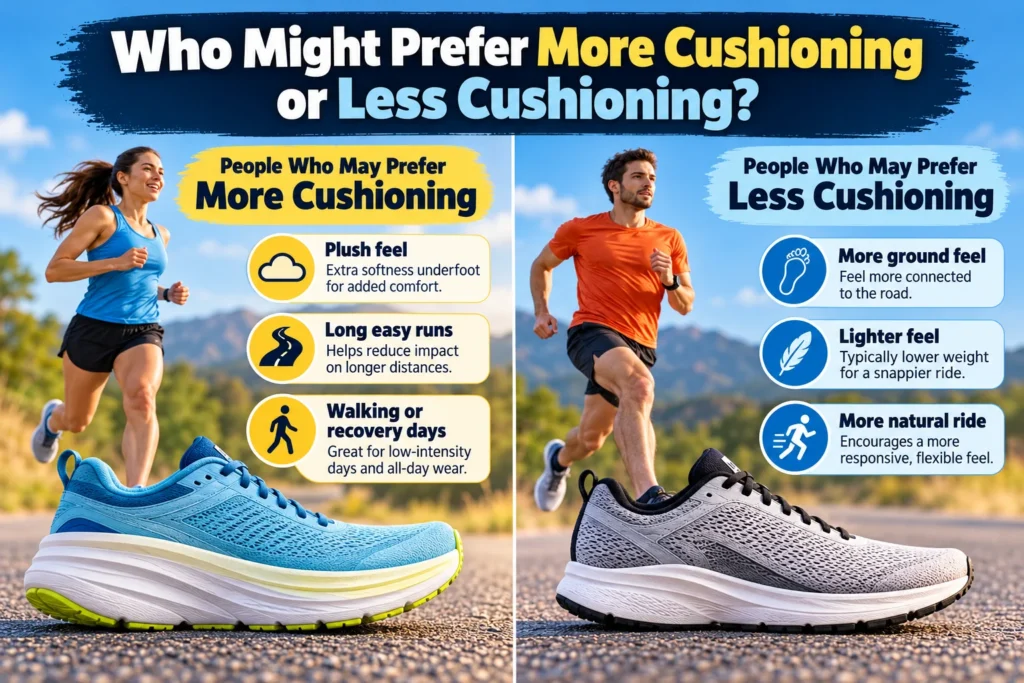
Different runners can prefer different cushioning levels for legitimate reasons. These preferences do not define rigid footwear categories.
Runners Who May Prefer More Cushioning
- People who enjoy a plush underfoot sensation.
- Runners comparing comfortable options for relaxed mileage.
- Those who dislike harsh-feeling shoes.
- Walkers who find high-cushion designs stable and pleasant.
Runners Who May Prefer Less Cushioning
- Those who prefer greater ground awareness.
- Runners who dislike tall or bulky shoe platforms.
- People who prefer a firmer, more direct toe-off.
- Those who feel more controlled in lower-stack footwear.
Switching abruptly between substantially different shoes may change how your feet and lower legs experience loading. Introduce unfamiliar designs gradually and reduce use if persistent discomfort develops.
What Mistakes Should You Avoid When Choosing Cushioning?
The most common mistake is treating cushioning thickness as a complete measure of quality. A useful comparison should evaluate how the entire shoe behaves.
- Buying the thickest sole automatically: More foam does not guarantee better fit, stability, or comfort.
- Ignoring midsole firmness: Compare compression feel instead of judging shoes visually.
- Confusing softness with responsiveness: These describe related but different cushioning characteristics.
- Overlooking shoe width: Even excellent cushioning cannot correct excessive forefoot pressure.
- Ignoring heel drop: A substantially different drop may feel unfamiliar during running.
- Buying from reviews alone: Another runner’s favorite model may not suit your feet.
- Expecting cushioning to treat pain: Persistent symptoms require more than choosing a softer shoe.
My preferred buying rule is simple: evaluate fit first, running feel second, and technical specifications third. Marketing descriptions should support your decision rather than make it for you.
Which Comfortable Running Shoes Are Worth Comparing in 2026?
If you’re choosing between balanced and maximum cushioning, these three models provide useful starting points. Each represents a different approach to comfort rather than a universal best shoe.
Editorial rating note: The ratings below assess verified design features and suitability for the stated use case. They are not Amazon customer averages, controlled comfort-test results, or claims of personal wear testing.
🏆 Best Balanced Daily Trainer
Brooks Ghost 18
★★★★½ 4.5/5 Editorial Fit
The Ghost 18 combines nitrogen-infused DNA LOFT v3 cushioning, a 10 mm drop, and a secure upper. I’d shortlist it for runners who want balanced comfort without making maximum softness the priority.
Consideration: Its traditional drop and balanced ride won’t match everyone’s preferences.
☁️ Best Maximum-Cushion Feel
HOKA Bondi 9
★★★★☆ 4.0/5 Editorial Fit
The Bondi 9 uses a supercritical EVA midsole, a broad platform, and a smooth rocker design. I’d compare it when plush underfoot cushioning is the main priority for relaxed running or walking.
Consideration: Its tall platform and pronounced cushioning may feel bulky to some runners.
🏃 Best Plush Long-Run Option
ASICS GEL-NIMBUS 28
★★★★½ 4.5/5 Editorial Fit
The GEL-NIMBUS 28 combines FF BLAST PLUS cushioning, PureGEL technology, and an 8 mm drop. I’d consider it for runners seeking soft cushioning and a comfortable upper during longer easy runs.
Consideration: Its plush design may not appeal to runners who prefer a firm, minimal feel.
Affiliate disclosure: As an Amazon Associate, we may earn from qualifying purchases. Prices, availability, sizes, and sellers can change.
Frequently Asked Questions
Does More Cushioning Make Running Shoes Better for Your Knees?
Not necessarily. More cushioning changes underfoot behavior but doesn’t guarantee lower knee loading or prevent knee injuries. Different shoe designs may alter movement and how forces are distributed. Choose comfortable footwear, manage training demands, and seek professional assessment for persistent knee pain.
Are Maximum-Cushion Running Shoes Good for Beginners?
Maximum-cushion shoes can work well for beginners, but they aren’t required. A comfortable daily trainer with reliable fit and predictable transitions is a sensible starting point. Beginners should compare moderate and maximum cushioning rather than assuming the thickest option offers the most protection.
Does More Cushioning Make Running Shoes Slower?
Not automatically. Extra cushioning material may increase weight, but modern lightweight foams can provide substantial cushioning without excessive bulk. Performance also depends on foam rebound, shoe geometry, and running speed. A comfortable, responsive high-stack shoe can feel faster than a heavier, less energetic alternative.
Is Maximum Cushioning Better for Walking on Concrete?
Maximum cushioning may feel pleasant during extended walking on hard surfaces, but it is not automatically better. Shoe stability, fit, flexibility, and rocker geometry influence comfort. Test a highly cushioned shoe against a balanced walking or running model before deciding which feels better.
Can Too Much Cushioning Cause Foot Discomfort?
Yes, a particular highly cushioned design can feel uncomfortable when its softness, height, or geometry doesn’t suit your movement. However, cushioning thickness alone doesn’t establish the cause of discomfort. Check fit, support, and running habits before blaming the amount of foam.
Final Verdict: Does More Cushioning Really Mean More Comfort?
More cushioning can make running shoes feel softer, but it doesn’t automatically make them more comfortable. Fit, midsole behavior, stability, shoe weight, and personal preferences all contribute to the experience.
For everyday running, start by comparing a balanced trainer with a maximum-cushion model. Pay attention to how each feels during movement rather than relying on appearance or marketing claims.
My final advice: Buy the cushioning level that feels right for your feet and intended activity. The most comfortable shoe is not necessarily the one with the thickest sole.


