

Quick Answer
Replace running shoes when cushioning feels noticeably flatter, traction deteriorates, or the shoes no longer provide a secure, comfortable fit. Most everyday running shoes reach a useful replacement checkpoint around 300–500 miles (480–800 km), but actual lifespan varies. Understanding how running shoe midsoles work helps explain why shoes sometimes wear out before looking damaged.
7 Signs Your Running Shoes Need Replacing
- Flattened cushioning: The midsole feels less protective or responsive than before.
- Worn outsole: Tread has become smooth, thin, or damaged.
- Uneven shoe shape: One side of the sole has compressed noticeably more than the other.
- Loose heel fit: The heel counter or upper no longer holds your foot securely.
- New rubbing: Blisters or hot spots appear where they never occurred before.
- Unexplained discomfort: Familiar runs produce new soreness without an obvious training change.
- Structural damage: Torn uppers, separating soles, or failing seams affect the shoe’s function.
Best Way to Confirm
- Compare pairs: Check your current shoes against a newer pair of the same model.
- Check mileage: Review distance alongside cushioning, outsole wear, and fit.
Wondering when to replace running shoes can be frustrating, especially when the uppers still look nearly new. I’ve found that the smartest approach is to consider mileage, physical wear, and running comfort together.
This 2026 guide explains the warning signs, how to inspect your shoes, and when buying another pair makes sense.
What Does It Mean When Running Shoes Wear Out?
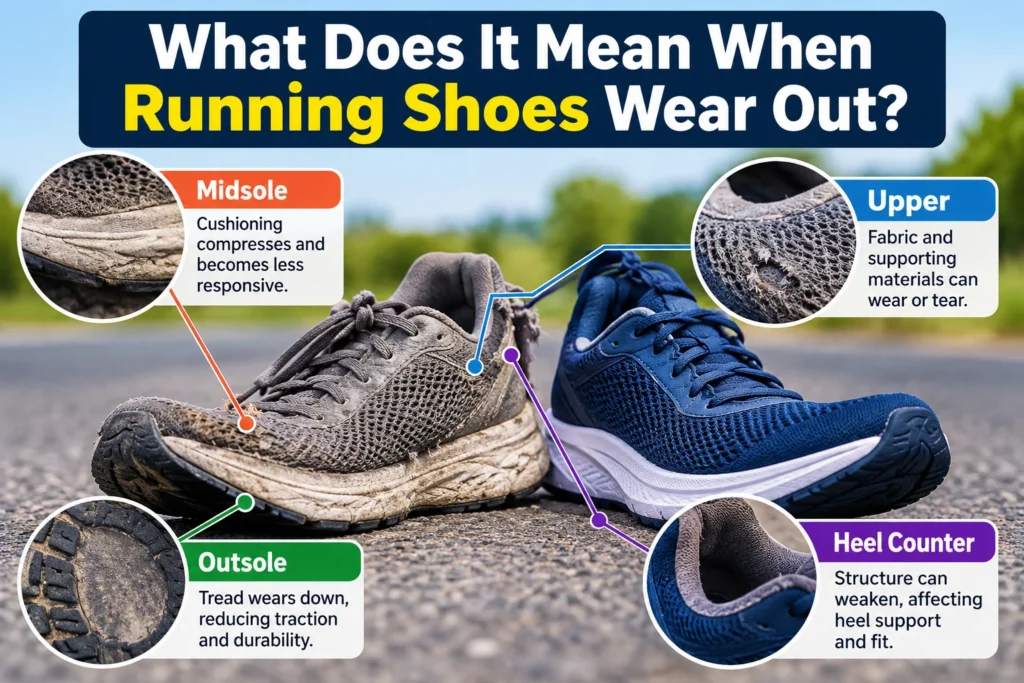
A worn-out running shoe has experienced enough material deterioration that its original cushioning, traction, structural support, or fit has noticeably changed. The shoe doesn’t need visible holes to reach that point.
Four main components deserve attention:
- Midsole: The foam layer that cushions your landing and influences the shoe’s responsiveness.
- Outsole: The bottom layer that contacts the ground and provides traction.
- Upper: The fabric and supporting materials that hold your foot in place.
- Heel counter: The firmer structure around the heel that helps maintain rearfoot security.
Repeated loading can gradually compress midsole materials, while contact with pavement wears away outsole rubber. The American Academy of Podiatric Sports Medicine describes these components as important indicators of shoe deterioration.
Some wear is completely normal. The important question is whether those changes affect how the shoes perform.
How Many Miles Should You Run Before Replacing Your Shoes?
Most conventional running shoes have a commonly recommended replacement range of 300–500 miles, or approximately 480–800 kilometers. This is a monitoring guideline rather than a guaranteed lifespan.
The actual replacement point depends on the shoe’s construction, your running habits, and its condition. REI’s running shoe replacement guidance also emphasizes checking wear and comfort instead of relying on mileage alone.
Running Shoe Replacement Mileage Chart
The following table estimates how quickly runners reach common replacement checkpoints. It assumes consistent weekly distance and doesn’t include additional walking or casual use.
| Weekly Mileage | 300-Mile Checkpoint | 500-Mile Checkpoint |
|---|---|---|
| 5 miles | 60 weeks | 100 weeks |
| 10 miles | 30 weeks | 50 weeks |
| 15 miles | 20 weeks | About 33 weeks |
| 20 miles | 15 weeks | 25 weeks |
| 30 miles | 10 weeks | About 17 weeks |
For example, running 15 miles weekly brings you to 300 miles in about five months. That doesn’t automatically mean the shoes are finished.
I recommend beginning regular inspections before reaching your expected replacement range. Early checks make changes easier to recognize.
What Are the 7 Signs You Need New Running Shoes?
The clearest signs combine changes in the shoe’s physical condition with changes in its performance. One warning sign can justify closer inspection, while several together make replacement more compelling.
1. The Midsole Cushioning Feels Flat
Aging midsole foam may lose some of its ability to recover after repeated compression. Your shoes might feel firmer, less lively, or noticeably different from an identical newer pair.
Inspect the sides for deep compression lines, permanent flattening, or uneven deformation. Ordinary cosmetic creases alone aren’t proof that cushioning has failed.
2. The Outsole Tread Is Worn Down
Outsole deterioration becomes concerning when tread disappears in important contact areas. Exposed foam or substantially reduced grip can indicate that a shoe has reached the end of its useful running life.
Examine both heels and forefeet, particularly where you typically land and push off. Don’t assume that every uneven wear pattern is abnormal.
3. The Shoes Lean or Feel Uneven
Place both shoes on a level surface and inspect them from behind. Noticeable tilting or permanent asymmetrical compression may indicate changes to their structure.
A shoe that consistently feels unstable deserves closer attention. However, a minor visible difference doesn’t automatically establish that it is unsafe.
4. Your Heels No Longer Stay Secure
A stretched upper, damaged heel lining, or weakened heel counter can change how securely a shoe holds your foot. Repeated heel movement may increase friction or make running uncomfortable.
Check whether the problem comes from wear or an incorrect original size. Our guide to identifying running shoes that are too big explains the difference.
5. You Develop New Blisters or Hot Spots
Recurring rubbing in previously comfortable shoes can suggest changes in their interior lining, upper, or shape. Worn heel padding and damaged seams are especially worth checking.
However, blisters can also result from socks, moisture, and fit problems. Inspect those factors before assuming the shoes are worn out.
6. Familiar Runs Cause Unexplained Aches
New foot or lower-leg discomfort may coincide with reduced shoe cushioning or changes in fit. It becomes more suspicious when your training routine hasn’t changed.
Still, soreness doesn’t prove that shoes caused the problem. Training load, recovery, injury, and health conditions can produce similar symptoms.
Northwestern Medicine’s running shoe guidance recommends considering wear, comfort, and fit together. Persistent or worsening pain deserves assessment by a qualified healthcare professional.
7. The Upper or Sole Has Structural Damage
Major tears, separating sole layers, and damaged stitching can compromise fit or structural integrity. Replacing the shoes is often more appropriate than continuing to run in them.
Small cosmetic marks are different from damage that changes how the shoe functions. Focus on security, traction, and underfoot stability.
How Can You Check Running Shoe Wear at Home?
You can perform a practical five-step inspection without specialized equipment. The goal is to identify meaningful changes rather than measure cushioning with laboratory precision.
- Clean the outsole: Remove mud and loose dirt so the tread pattern is visible.
- Inspect the bottom: Look for smooth areas, missing rubber, cracks, and exposed midsole foam.
- Check the shoe shape: Place both shoes on a flat surface and look for permanent leaning or uneven compression.
- Inspect the interior: Examine heel lining, stitching, and upper fabric for damage or excessive looseness.
- Compare running comfort: Use a newer pair of similar shoes to identify significant changes in cushioning and fit.
Comparing an old shoe with the same model in new condition can be particularly useful. Different shoe models naturally have different cushioning and stability characteristics.
A hand-compression or twisting test isn’t a reliable measure of remaining shoe life. Treat these observations as clues, not definitive tests.
What Factors Make Running Shoes Wear Out Faster?
Running shoes don’t deteriorate at identical rates, even when runners cover the same distance. Several factors influence how quickly their materials change.
- Running surface: Rough terrain and abrasive pavement can accelerate outsole wear.
- Body weight and carried load: Greater loading can increase stress on cushioning materials.
- Stride and landing pattern: Repeated contact in particular areas influences outsole wear distribution.
- Shoe construction: Foam formulations, rubber coverage, and upper materials vary between models.
- Additional activities: Walking, commuting, and workouts also contribute to overall use.
- Moisture and storage: Repeated wetting, excessive heat, and poor drying conditions may contribute to material deterioration.
The Australian Podiatry Association also highlights differences associated with body weight, running surfaces, and wear patterns.
Higher-priced shoes aren’t automatically longer-lasting. Durability depends on construction and usage, not price alone.
Do Running Shoes Expire If You Don’t Wear Them?
Running shoes can deteriorate while sitting unused, particularly when stored in unfavorable conditions. Foam, adhesives, rubber, and upper materials may change with age.
However, no single calendar age accurately predicts the condition of every unworn pair. Storage temperature, humidity, materials, and original manufacturing quality all matter.
How Should You Inspect Old, Unused Running Shoes?
- Look for cracking, hardened rubber, or separating adhesive bonds.
- Inspect the midsole for unusual brittleness or deformation.
- Check the upper fabric and stitching for deterioration.
- Try the shoes on and assess comfort before any demanding run.
- Avoid using them for running if structural deterioration is visible.
Store running shoes in a cool, dry, ventilated area away from direct sunlight. Avoid leaving them for extended periods in excessively hot vehicles.
Should You Replace Running Shoes Before 300 Miles?
Yes, replacing shoes before 300 miles makes sense when significant damage, lost traction, or persistent fit problems appear. You don’t need to reach a mileage target before responding to clear wear.
For example, a runner may damage an outsole while training on abrasive surfaces. Another runner might notice serious heel-counter damage despite relatively low mileage.
Conversely, some shoes remain comfortable and structurally sound beyond typical checkpoints. Mileage should guide inspection rather than dictate replacement by itself.
How Do You Track Running Shoe Mileage Accurately?
The simplest method is to record each pair’s mileage from its first run. A GPS watch, running app, spreadsheet, or notebook can work.
Use this process:
- Record the shoe model and first-use date.
- Assign running sessions to the correct pair in your tracking system.
- Add treadmill miles and other recorded exercise distances.
- Estimate significant walking mileage when using the same shoes casually.
- Start checking condition regularly as mileage increases.
For an example, consider a runner logging 18 miles weekly. That runner reaches 360 miles in 20 weeks, assuming no additional usage.
I prefer reviewing mileage alongside notes about comfort and wear. Those observations give the number more useful context.
How Can You Make Running Shoes Last Longer?
Good shoe care can reduce avoidable damage, although it cannot eliminate normal material fatigue. A few habits are especially worthwhile.
- Rotate pairs: Alternating shoes allows more drying time and distributes weekly use between pairs.
- Remove shoes properly: Untie the laces rather than stepping on the heel to pull them off.
- Clean gently: Remove dirt with a soft brush and follow the manufacturer’s care instructions.
- Air-dry naturally: Keep wet shoes away from radiators, direct heating, and excessive temperatures.
- Match shoes to terrain: Use footwear suited to road, trail, or other running surfaces.
- Limit unnecessary wear: Consider separate casual footwear if you regularly walk long distances.
Brooks Running’s shoe replacement advice also discusses the benefits of rotation and recognizing deteriorating cushioning or support.
Rotating two pairs doesn’t mean each pair will last twice as many miles. It primarily divides the total workload and makes drying easier.
How Should You Choose Your Next Pair of Running Shoes?
When replacement becomes necessary, start with fit and intended use rather than choosing solely by brand. A comfortable shoe that suits your running routine is the more practical goal.
Check the Fit Before Buying
Your new shoes should hold the heel securely while allowing comfortable movement in the toe box. Avoid pairs that pinch, cause immediate rubbing, or require painful breaking-in.
Use our guide on how to find your running shoe size before ordering. Measure both feet and test the size with your usual running socks.
Choose the Right Support Category
Neutral running shoes and stability models have different design goals. Some runners prefer the additional guidance offered by stability footwear, while others feel better in neutral shoes.
Our neutral vs stability running shoes comparison explains the differences. Neither category is automatically the best choice for everyone.
Don’t Confuse New-Shoe Firmness With Poor Fit
A new model may feel different because of its foam or sole geometry. However, pain, restricted toes, or excessive pressure shouldn’t be dismissed as normal adjustment.
Read how tight running shoes should be to distinguish secure fit from excessive tightness.
Which Running Shoes Are Worth Considering as Replacements in 2026?

If your current pair needs replacing, these three models offer different approaches to everyday running comfort. Their specifications and intended uses are based on manufacturer information, not personal wear testing.
Affiliate disclosure: Some links below are affiliate links. We may earn a commission from qualifying purchases at no additional cost to you.
Editorial ratings below reflect use-case suitability, not verified customer review averages or laboratory durability scores.
🏆 Reliable Daily Trainer
Brooks Ghost 18
★★★★☆ 4.5/5 Editorial Rating
The Ghost 18 features nitrogen-infused DNA LOFT v3 cushioning and a 10 mm heel-to-toe drop. I would shortlist it for runners wanting balanced comfort on daily road runs, provided its fit suits their feet.
☁️ Extra-Soft Cushioning
ASICS GEL-NIMBUS 28
★★★★☆ 4.4/5 Editorial Rating
The GEL-NIMBUS 28 combines FF BLAST PLUS cushioning with rearfoot PureGEL technology. I’d consider it for neutral runners who prioritize a plush underfoot feel during easy runs and longer sessions.
🛡️ Structured Support
Brooks Adrenaline GTS 25
★★★★☆ 4.3/5 Editorial Rating
The Adrenaline GTS 25 provides balanced cushioning, a 10 mm drop, and Brooks GuideRails support technology. It’s worth trying if you prefer a more guided ride, although support preferences vary among runners.
These recommendations are starting points, not universal winners. Compare sizing, running feel, intended support, and return policies before purchasing.
Frequently Asked Questions
How often should you replace running shoes if you run every day?
Daily runners may need replacements more frequently because they accumulate mileage faster. Someone running five miles daily reaches 350 miles in about ten weeks.
However, the shoe’s condition still matters. Monitor outsole wear, cushioning changes, comfort, and structural damage rather than replacing shoes solely because a certain number of weeks has passed.
Can running shoes last longer than 500 miles?
Yes, some running shoes remain functional beyond 500 miles, depending on construction and usage. That mileage doesn’t guarantee that a pair has failed.
Inspect the cushioning, outsole, upper, and heel structure regularly. Significant deterioration or persistent discomfort should take priority over the odometer reading.
Do treadmill running shoes need replacing as often?
Treadmill running still compresses the midsole and contributes to overall shoe wear. A treadmill may create different outsole wear patterns than abrasive outdoor terrain, but cushioning can still deteriorate.
Count treadmill distance toward shoe mileage and inspect the shoes as you would any other running pair.
Can you use worn-out running shoes for walking?
Sometimes, provided the shoes still feel comfortable, fit securely, and retain adequate traction. A pair retired from demanding running may remain suitable for light casual use.
Don’t continue using shoes with unstable soles, major structural damage, or discomfort. Those problems can also affect walking.
Should you replace both running shoes if only one wears out?
Usually, replacing the pair is the most practical choice because both shoes have undergone similar usage. Combining one old shoe with one new shoe may create noticeable differences in cushioning and sole height.
Check whether the unusual wear indicates a fit or movement concern. Repeated extreme asymmetry may justify a professional footwear assessment.
Final Takeaway: When Is It Really Time to Replace Running Shoes?
The best time to replace running shoes is when meaningful wear begins affecting cushioning, traction, fit, or running comfort. For many runners, the 300–500-mile range provides a useful reminder to inspect their footwear carefully.
Start tracking your miles, examine your shoes regularly, and pay attention to changes on familiar runs. If multiple warning signs appear, begin choosing a well-fitting replacement instead of waiting for the shoes to fail completely.


Steven is a former sportsperson and now a full-time businessman and research writer. He is the mastermind of this site, and he created this site to help people who need specialized shoes for different activities. When he was a sportsperson, he was very passionate about different types of shoes for his sports purpose. The passion he had for shoes at that time now turned into his profession. Besides his shoe business, he loves sharing his knowledge and experience with people and helping them maintain healthy feet.
More Posts
