

Quick Answer
The Brooks Adrenaline GTS 25 is the better choice for most new buyers seeking cushioned support. It adds 3 mm of forefoot foam and lowers the drop to 10 mm. The GTS 24 is lighter and suits runners who love a firmer, 12 mm-drop feel. Buy the older shoe when its price is clearly lower.
The main differences:
- GTS 25: 37 mm heel stack and 27 mm forefoot stack.
- GTS 24: 12 mm drop and lower listed men’s weight.
- Both: DNA LOFT v3 cushioning and GuideRails support.
Quick Verdict: Adrenaline GTS 25 vs 24
BROOKS ADRENALINE GTS 24
★★★★★
Retailer rating snapshot
$140 original MSRP
Brooks listed $109.95 for a sold-out variant. Current Amazon pricing unverified.
Best for: Runners seeking firm support, a 12 mm drop, and potential discounts.
BROOKS ADRENALINE GTS 25
★★★★★
Retailer rating snapshot
$155 original MSRP
A tracked Amazon listing showed $109.95. Verify the current size and color price.
Best for: Daily runners and walkers seeking added cushioning and a 10 mm drop.
| Category | GTS 24 | GTS 25 |
|---|---|---|
| Overall Winner | ❌ | 🏆 |
| Best Value at Observed Prices | ❌ | ✅ |
| More Forefoot Cushioning | ❌ | ✅ |
| Lower Published Weight | ✅ | ❌ |
| Traditional High-Drop Feel | ✅ | ❌ |
Bottom line: GTS 25 wins for most new buyers through added cushioning. GTS 24 makes sense when its higher drop suits you or its price is meaningfully lower.
- GTS 25 adds 3 mm of forefoot cushioning.
- The original U.S. retail prices differ by $15.
- Both shoes target supportive everyday running and walking.
- GTS 24 is lighter according to Brooks’ published specifications.
- The better fit matters more than the newer model number.
The Brooks Adrenaline GTS 25 and GTS 24 offer two versions of dependable support. Both use GuideRails and nitrogen-infused DNA LOFT v3 foam. Yet their cushioning layout and heel-to-toe drop are different.
I’m Steven Tyler, and I focus on practical running shoe buying guides for FootwearHiker. This review uses manufacturer specifications, published independent testing, and customer feedback. It does not claim personal mileage that I haven’t logged.
The key question is simple. Does the newer GTS 25 offer enough improvement to justify choosing it over the older GTS 24? The answer depends on your preferred fit, daily routine, and the current selling price.
What Is the Brooks Adrenaline GTS 25 Designed to Do?
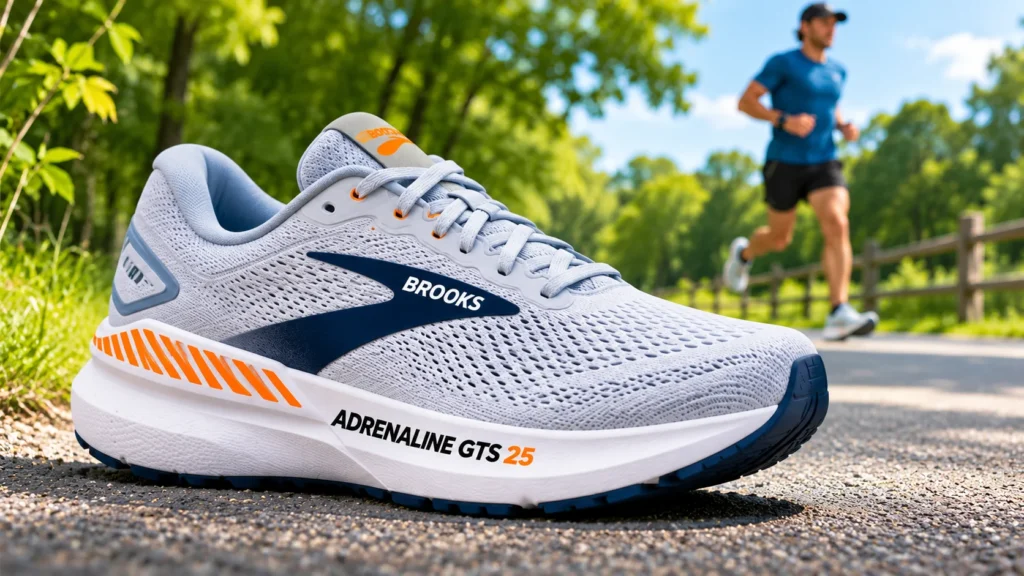
The Brooks Adrenaline GTS 25 is a supportive daily running shoe built for steady road miles and walking. It combines GuideRails support with DNA LOFT v3 foam for controlled, comfortable movement.
Brooks added 3 mm of cushioning beneath the forefoot and 1 mm at the heel. The new platform has a stated heel stack of 37 mm and forefoot stack of 27 mm.
Its 10 mm drop gives the shoe a slightly different underfoot feel than the GTS 24. The updated engineered mesh upper and flat-knit collar also aim to improve comfort and fit.
- More cushioning under the forefoot
- Lower 10 mm drop
- GuideRails stability system
- Updated breathable upper
- Useful for daily running and walking
- Heavier listed weight
- Can feel firm under the forefoot
- Limited bounce for faster workouts
- Not made for ice or technical trails
Brooks Men’s Adrenaline GTS 25 Running Shoe
Best for runners and walkers seeking added forefoot foam and structured support.
What Does the Brooks Adrenaline GTS 24 Still Offer?
The Brooks Adrenaline GTS 24 remains a dependable stability running shoe. Its nitrogen-infused DNA LOFT v3 midsole delivers a controlled ride for everyday training.
The 12 mm drop is a key difference. Runners who enjoy a traditional high-heel-offset shoe may prefer this familiar setup.
Its published men’s weight is 10.0 ounces, lower than the GTS 25’s 10.6 ounces. That difference does not guarantee faster running, but it is worth considering.
The GTS 24 is especially appealing when discounted. For more detail, see our Adrenaline GTS 24 review.
- Lower published weight
- Familiar structured support
- GuideRails technology
- RoadTack outsole
- Potential clearance discounts
- Less cushioning under the forefoot
- Firm feel for some runners
- High 12 mm drop
- Older stock has limited availability
Brooks Men’s Adrenaline GTS 24 Supportive Running Shoe
Best for bargain hunters and runners who prefer the traditional Adrenaline feel.
How Do the Brooks Adrenaline GTS 25 and 24 Specs Compare?
The GTS 25 offers deeper cushioning and a lower drop. The GTS 24 has a lower published weight and original list price.
| Feature | GTS 24 | GTS 25 |
|---|---|---|
| Category | Stability daily trainer | Stability daily trainer |
| Midsole | DNA LOFT v3 | DNA LOFT v3 |
| Support | GuideRails | GuideRails |
| Drop | 12 mm | 10 mm |
| Men’s Weight | 10.0 oz | 10.6 oz |
| Heel Stack | About 36 mm* | 37 mm |
| Forefoot Stack | About 24 mm* | 27 mm |
| Original U.S. MSRP | $140 | $155 |
Note: GTS 24 stack estimates are calculated from Brooks’ stated cushioning increases. They are not independent laboratory measurements.
Which Shoe Wins on Cushioning and Ride Feel?
The GTS 25 wins on added forefoot foam, but more foam does not guarantee a softer ride. Independent testing has found that its forefoot can still feel firm.
The GTS 24 provides a more traditional, structured sensation. Some runners prefer this direct feel, while others want more protection beneath the front of the foot.
The GTS 25 is a better starting point for relaxed daily miles. Neither model is designed to deliver the bounce of a dedicated speed trainer.
Which Brooks Adrenaline Offers Better Stability and Fit?
Both models use GuideRails support, so neither has a major advantage in its basic stability concept. The technology aims to limit excess movement while supporting the runner’s natural path.
The GTS 25 changes cushioning and upper details. The GTS 24 retains a familiar structure that long-time Adrenaline users may prefer.
Fit matters more than a spec sheet. Confirm toe room, heel hold, arch comfort, and the correct width before buying.
Our running overpronation support guide explains who may benefit from stability shoes.
Which Is Better for Price and Long-Term Value?
The best value depends on the price available for your exact size. Original U.S. list prices were $140 for the GTS 24 and $155 for the GTS 25.
Current discounts can change that ranking. A tracked Amazon GTS 25 listing showed $109.95, while Brooks listed a sold-out GTS 24 variant at $109.95.
If both models cost about the same, choose the GTS 25 if its fit suits you. A GTS 24 discounted by $20 to $30 can be attractive, especially if you enjoy its higher drop.
Which Model Is Safer and More Durable on Real Roads?
Both shoes suit paved roads, sidewalks, and ordinary walking routes. Neither is intended as a winter traction shoe.
Wet paint, ice, polished flooring, and loose gravel create different grip challenges. GuideRails support cannot prevent slipping.
Brooks gives a typical replacement range of 300 to 500 miles for performance running shoes. Actual wear depends on how you use and care for them.
Safety note: Supportive running shoes cannot guarantee injury prevention or treat a medical condition. Seek individual assessment for persistent pain.
Which Shoe Wins in Everyday Use Cases?
Which Is Better for Daily Road Running?
The GTS 25 is the better starting point for most new buyers because of its added cushioning. The GTS 24 remains appealing if you prefer a firmer ride.
Which Is Better for Walking and Work Shifts?
The GTS 25 gets a narrow edge because of its deeper forefoot foam. Long-shift comfort still depends on fit and workplace requirements.
Which Is Better for Cold-Weather Running?
Neither is designed for ice. Both can work on clear, cold pavement with suitable socks, but slippery winter routes require appropriate traction.
Which Is Better for Beginners?
The GTS 25 is a sensible starting point for beginners seeking structured support. However, not every beginner needs stability shoes.
Which Is Better for Fast Training?
Neither is ideal for speed sessions. The GTS 24 is lighter on paper, but both focus on control rather than fast energy return.
Who Should Buy the GTS 25, the GTS 24, or Neither?
Choose the GTS 25 for added cushioning and a 10 mm drop. Choose the GTS 24 when its traditional feel or discount makes it more suitable.
Use our running shoe selection guide to compare support and neutral footwear. You can also read our running shoe arch support guide before ordering.
- You want more forefoot foam.
- You prefer a 10 mm drop.
- Both models cost about the same.
- You want supportive everyday comfort.
- You like the 12 mm drop.
- You prefer a firmer feel.
- You find a meaningful discount.
- Your preferred size is available.
What Do Real Buyers and Independent Testers Say?
Reviews frequently praise the Adrenaline line for dependable daily support. Both models also receive complaints about firmness and fit.
Independent GTS 25 testing highlights its stable construction while questioning its responsiveness. Some testers appreciate the newer ride, while others find the forefoot harsh.
Customer ratings help identify patterns, but individual fit reviews matter more than one overall star score.
How Should You Care for Brooks Adrenaline Running Shoes?
Brooks recommends cleaning running shoes by hand. Use a soft brush, mild soap, and warm water. Avoid washing machines and dryers.
Let shoes dry naturally away from direct heat. Check for worn outsole areas, compressed foam, and damaged heel lining.
Our running shoe replacement signs guide explains when old running shoes need attention.
Final Verdict: Is the GTS 25 Worth Buying Over the GTS 24?
Yes, the Brooks Adrenaline GTS 25 is the better all-around starting point for new buyers seeking stable daily comfort. Its additional cushioning and lower drop offer clear changes from the GTS 24.
However, the GTS 24 is still a valid choice. Its lower weight, familiar structure, and potential discounts appeal to runners who prefer the older feel.
My recommendation is to try the GTS 25 first when prices are similar. Choose the GTS 24 when it fits better or costs substantially less.
Best overall for new buyers.
Best for a familiar feel or a better deal.
Frequently Asked Questions
Which is better, Brooks Adrenaline GTS 25 or GTS 24?
The GTS 25 is the better starting point for most new buyers seeking supportive comfort. It adds more forefoot foam and lowers the stated drop to 10 mm. The GTS 24 remains a good choice for runners who prefer its 12 mm drop or find a substantial discount.
What is the difference between the Adrenaline GTS 24 and 25?
The main differences are foam depth, drop, upper details, and listed weight. Brooks added 3 mm of foam under the GTS 25 forefoot and 1 mm at the heel. The GTS 25 has a 10 mm drop, while the GTS 24 has a 12 mm drop.
Is the Brooks Adrenaline GTS 25 worth the extra money?
Yes, if its added foam and lower drop feel better on your feet. The original U.S. list price is $15 above the GTS 24. Current sale prices vary, so compare the same size and width. A cheaper GTS 24 can still be the better personal choice.
Can Brooks Adrenaline GTS shoes help with overpronation?
Both models include GuideRails to help limit excess foot movement during running and walking. That structure can feel helpful for some people who overpronate. However, pronation alone does not prove you need a stability shoe. Comfort, fit, and persistent symptoms should guide your choice.
How long do Brooks Adrenaline GTS 25 running shoes last?
Brooks gives a typical 300 to 500 mile range for performance running shoes. Actual wear depends on training volume, terrain, stride, and care. Check for flattened cushioning, uneven wear, and new discomfort. Clean shoes by hand and let them air dry to avoid needless damage.
Affiliate Disclosure: As an Amazon Associate, I earn from qualifying purchases. If you click a link on this page and make a purchase, I may receive a small commission — at no extra cost to you. I only recommend products I genuinely believe will help you. This helps keep the site free and running. Thank you for your support.