
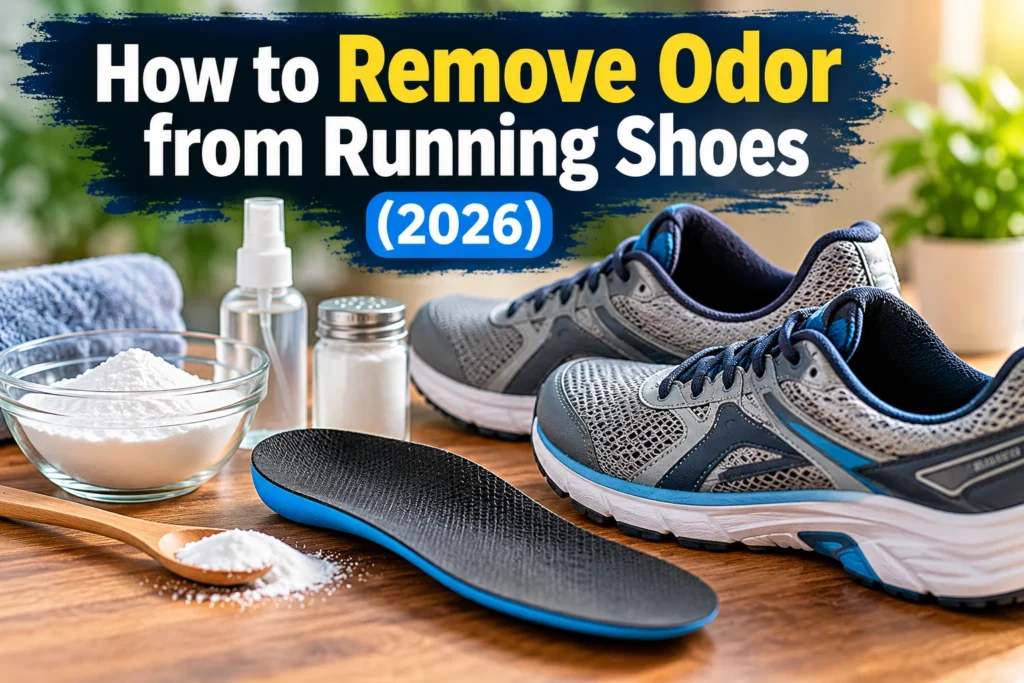
Quick Answer
To remove odor from running shoes, take out the insoles, let everything dry, clean sweat buildup with mild soap, and use baking soda or a shoe deodorizer for lingering smells. Always air-dry your shoes completely before wearing them again. The safest approach follows established running shoe cleaning recommendations.
7 Quick Steps to Remove Shoe Odor
- 1. Remove insoles: Take out removable footbeds and loosen the laces for better airflow.
- 2. Dry completely: Use a fan in a ventilated room to remove trapped moisture.
- 3. Clean gently: Wipe the interior and washable insoles with mild soapy water.
- 4. Try baking soda: Apply a small amount to dry, compatible interiors and leave overnight.
- 5. Use a deodorizer: Choose a footwear-safe product for persistent smells.
- 6. Check the insoles: Replace worn, permanently smelly removable insoles when necessary.
- 7. Prevent moisture: Wear clean socks and rotate between running shoes when possible.
Important: Avoid bleach, high heat, soaking, and machine washing unless your shoe manufacturer’s care instructions explicitly allow them.
Smelly running shoes can turn a comfortable workout into an unpleasant experience. Even expensive running shoes develop odors when sweat and moisture remain trapped inside.
The good news? You can often fix the problem without replacing your shoes. I’ll explain seven practical methods, what to avoid, and how to keep odors from returning.
Why Do Running Shoes Smell Bad?
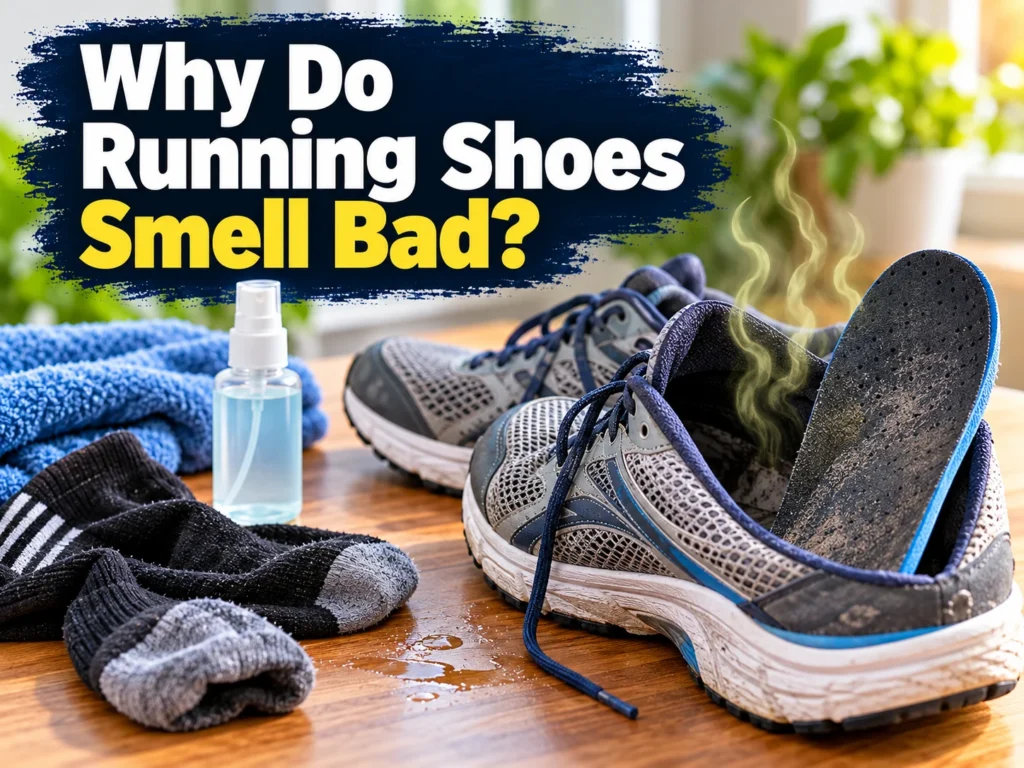
Running shoes usually smell because sweat creates a damp environment where odor-producing microorganisms can thrive. Skin oils, dead skin cells, and moisture accumulate in the lining and insoles.
Running shoe odor is the unpleasant smell produced when sweat-related moisture and organic residue accumulate inside footwear, allowing odor-causing microbes to grow.
Sweat itself isn’t always strongly scented. The noticeable smell develops as microorganisms interact with material left inside the shoes.
What Causes Odor to Build Up?
- Excessive sweating: Repeated workouts introduce moisture into the shoe lining.
- Poor ventilation: Closed bags and damp closets slow drying.
- Dirty insoles: Footbeds absorb sweat, skin oils, and other residue.
- Repeated wear: Daily use may prevent shoes from drying between runs.
- Dirty socks: Previously worn socks transfer moisture and microorganisms into clean shoes.
- Wet conditions: Rain, puddles, and humid weather extend drying time.
A useful first check is to smell the removable insoles separately. If they smell much stronger than the uppers, prioritize cleaning or replacing them.
How Do You Remove Odor from Running Shoes? 7 Effective Methods
The most reliable approach combines moisture removal, gentle cleaning, and odor control. Start with the least aggressive method before using additional products.
1. Remove the Insoles and Air-Dry Your Running Shoes
Start by removing the shoes from your gym bag immediately after running. Loosen the laces and take out removable insoles.
Place everything in a dry, ventilated room. A small fan can help moisture evaporate without exposing the shoes to damaging heat.
- Remove the shoes and take out removable insoles.
- Open the tongue and loosen the laces.
- Place the shoes near a fan at room temperature.
- Dry the insoles separately.
- Wait until all materials feel completely dry before reassembling.
My practical recommendation: Make airflow your first treatment, not fragrance. A scented product cannot solve moisture trapped inside the cushioning and lining.
Drying may take several hours or longer, depending on humidity and how wet the shoes are. Never assume the inner padding is dry just because the outer mesh feels dry.
2. Use Baking Soda to Reduce Lingering Shoe Odor
Baking soda can help absorb and neutralize some unwanted odors. It’s inexpensive and commonly recommended for freshening running shoes.
However, baking soda doesn’t replace cleaning. It also doesn’t reliably disinfect contaminated shoe materials.
- Make sure the shoes are completely dry.
- Remove the insoles if possible.
- Sprinkle a small amount of baking soda inside compatible shoe interiors.
- Leave it overnight.
- Shake out or carefully vacuum away the remaining powder.
- Check that no loose powder remains before wearing the shoes.
For less mess, place baking soda inside a securely closed, breathable pouch rather than scattering it directly. Avoid loose powder around delicate membranes, specialty linings, or materials with restrictive care instructions.
Don’t combine baking soda and vinegar inside the shoes. The reaction creates moisture and doesn’t provide a proven advantage over separate cleaning methods.
3. Hand-Clean the Insoles With Mild Soap
Dirty insoles are frequently the strongest source of running shoe odor. Cleaning them separately helps remove sweat residue rather than temporarily covering the smell.
Use cool or lukewarm water and a small amount of mild detergent. Avoid saturating foam or applying excessive pressure.
- Check whether the insoles are removable and washable.
- Brush away loose dirt with a soft brush.
- Mix mild detergent with a little water.
- Gently wipe or brush both sides.
- Remove leftover soap using a clean, damp cloth.
- Air-dry fully before putting them back.
Some specialized orthotic inserts have different cleaning requirements. Follow their manufacturer’s instructions instead of treating them like ordinary foam insoles.
If an insole remains intensely smelly after proper cleaning and drying, replacement may help. Make sure the replacement preserves the intended shoe fit.
4. Clean the Inside of Your Running Shoes
Cleaning the lining helps remove material that allows odors to return. This is especially useful when shoe interiors feel greasy, sticky, or visibly dirty.
You rarely need to soak the entire shoe. Gentle surface cleaning is usually safer for everyday running shoes.
- Remove loose debris from the interior.
- Dip a soft cloth into diluted mild detergent.
- Wipe the heel lining and accessible interior surfaces.
- Remove soap residue with another lightly dampened cloth.
- Dry the shoes completely in moving air.
Do not aggressively scrub thin heel padding or mesh. These parts can wear out even when the shoes still look usable.
Waterproof membranes and certain specialty uppers may require dedicated cleaning products. Always check care instructions before applying general-purpose detergent.
5. Use a Shoe Deodorizer for Persistent Smells
Shoe deodorizing sprays can help when airing and cleaning haven’t completely solved the problem. Products differ in whether they neutralize odor, add fragrance, or provide antimicrobial action.
Choose a product explicitly labeled for footwear materials. Follow its directions, including application amounts and drying times.
- Odor-neutralizing spray: Useful for targeted treatment of compatible interior surfaces.
- Activated charcoal inserts: A low-mess option for storing dry shoes between workouts.
- Footwear deodorizing powder: May help with odor, but requires careful removal before running.
Test a new spray on a small hidden area first. Never mix different cleaners or disinfectants together.
A deodorizer should complement drying and cleaning. Heavy fragrance may simply mask a recurring problem.
6. Replace Insoles That Hold Persistent Odors
Sometimes the shoe’s removable footbed retains an unpleasant smell despite cleaning. This can happen when foam stays damp repeatedly or collects residue over time.
Replacing the insoles may improve freshness without replacing otherwise serviceable running shoes. Compatibility and fit matter more than added fragrance.
Before buying replacement insoles, check these points:
- The new insole fits the shoe’s length and width.
- It doesn’t crowd the toes or lift the heel excessively.
- Its thickness is close to the original footbed.
- It doesn’t create unexpected pressure under the arch.
- The manufacturer allows replacement of the original insole.
If the replacement changes your running mechanics or comfort, reconsider the fit. Odor control should never come at the expense of foot comfort.
7. Rotate Your Running Shoes and Improve Foot Hygiene
Preventing odor is easier when shoes dry between workouts. Rotating between two pairs can help frequent runners avoid putting sweaty feet into still-damp footwear.
Clean, moisture-managing socks also reduce the amount of sweat retained inside the shoe.
- Change socks after every workout.
- Wash and dry your feet, including between the toes.
- Allow shoes to air out after every run.
- Avoid storing damp shoes in closed gym bags.
- Rotate pairs if your current shoes stay damp between runs.
- Dry wet shoes before storing them long-term.
For runners in humid conditions, a ventilated indoor area with a fan can be more practical than relying on outdoor air. The goal is complete drying, not intense heat.
Which Running Shoe Odor Removal Method Works Best?
The best method depends on whether moisture, dirty insoles, or remaining odor is the main problem. No single treatment works equally well in every situation.
| Method | Best Use | Typical Treatment | Main Limitation |
|---|---|---|---|
| Fan air-drying | Damp shoes | Until fully dry | Doesn’t remove built-up dirt |
| Baking soda | Light lingering odors | Overnight | Can leave powder residue |
| Mild soap cleaning | Sweat and dirt buildup | Gentle cleaning, then full drying | Not suitable for every material |
| Shoe deodorizer | Residual odor | Follow product directions | May only mask smells |
| Charcoal inserts | Storage freshness | Between uses | Don’t clean dirty linings |
| Insole replacement | Persistent insole odor | One-time replacement | Fit must be checked |
Best starting combination: Remove the insoles, clean sweat residue, and air-dry everything. Add a deodorizer only when the shoes are clean but still smell.
The treatment times above are practical guidelines, not guaranteed odor-removal times. Shoe construction, humidity, and the amount of trapped moisture affect results.
Can You Remove Running Shoe Odor Without Washing Them?
Yes. Mild odors can often improve through drying, removable-insole care, and a compatible deodorizer without washing the entire shoe.
This option works best when shoes are sweaty but not heavily soiled. Visible grime, sticky linings, or persistent contamination call for more thorough cleaning.
A Simple No-Wash Freshening Routine
- Remove the shoes from your bag after running.
- Take out removable insoles.
- Brush away dry debris.
- Air-dry everything near a fan.
- Use a dry charcoal pouch or compatible deodorizer if necessary.
- Reassemble only when all parts are dry.
This process minimizes water exposure and is useful between deeper cleaning sessions. It also makes it easier to notice worn padding or damaged shoe materials.
Should You Put Smelly Running Shoes in the Washing Machine?
Hand cleaning is generally the safer default. Washing machines can expose shoes to agitation, prolonged soaking, and other conditions that damage certain foams, adhesives, and uppers.
Several major running shoe brands discourage machine washing. Always follow the specific shoe manufacturer’s instructions rather than assuming every model tolerates the same process.
Why Can Machine Washing Cause Problems?
- Agitation: Repeated impacts can stress bonded shoe components.
- Excess moisture: Thick cushioning and lining may take longer to dry.
- Detergent residue: Poor rinsing can leave unwanted material in fabrics.
- Heat exposure: Hot washing and tumble drying can affect adhesives and foam.
- Special materials: Waterproof membranes and technical components may require different care.
The Adidas running shoe care guide recommends gentle cleaning and room-temperature drying rather than machine washing.
For a mild smell, washing the whole shoe is often unnecessary. Start with the removable insoles and interior lining.
Can Vinegar, Rubbing Alcohol, or Essential Oils Remove Shoe Odor?
Some household products may reduce smells, but they aren’t automatically suitable for modern running shoe materials. Material compatibility matters as much as odor control.
White Vinegar
Diluted white vinegar is sometimes used to clean removable insoles. However, acidic cleaning solutions may be unsuitable for certain coatings, adhesives, or specialized fabrics.
Use a manufacturer’s approved method when available. Don’t soak the entire shoe in vinegar or mix it with bleach.
Rubbing Alcohol
Alcohol can damage some surface finishes, adhesives, or foam materials. I wouldn’t use it as a general-purpose running shoe deodorizer.
If disinfection is necessary, select a footwear-compatible product with clear instructions. A pleasant smell doesn’t prove an item has been disinfected.
Essential Oils
Essential oils mainly introduce fragrance and may irritate skin or stain materials. Strong scents can also hide odors without removing their cause.
Avoid applying concentrated oils directly to the insole or shoe lining. Drying and cleaning remain the better foundation.
How Do You Prevent Running Shoes from Smelling Again?
Keep the inside of your running shoes dry and clean between workouts. A few consistent habits can prevent mild odors from turning into persistent problems.
Build a Simple Shoe Care Schedule
| When | What to Do |
|---|---|
| After every run | Open shoes, allow airflow, and change socks. |
| After wet runs | Remove insoles and dry completely. |
| When odor appears | Clean the insoles and accessible interior surfaces. |
| Periodically | Inspect insoles, heel lining, and overall shoe wear. |
You don’t need to deep-clean running shoes after every workout. Drying them properly is often the most useful daily habit.
The ASICS cleaning and maintenance guide also emphasizes insole care and avoiding excessive heat during drying.
What Mistakes Should You Avoid When Deodorizing Running Shoes?
The biggest mistakes involve trapping more moisture or applying harsh products. Odor removal should not shorten the useful life of your running shoes.
- Using high heat: Don’t dry shoes in a tumble dryer or directly against a heater.
- Applying too much spray: Excess liquid can create additional dampness.
- Skipping the insoles: Cleaning only the uppers may leave the main odor source untouched.
- Mixing chemicals: Never combine bleach, ammonia, vinegar, or other cleaners.
- Wearing shoes while damp: Remaining moisture can encourage recurring odors.
- Using perfume as a fix: Fragrance doesn’t remove accumulated sweat residue.
- Scrubbing aggressively: Rough cleaning can damage delicate mesh and lining.
A room-temperature fan is usually safer than a heater. The Under Armour running shoe cleaning guide also recommends careful insole cleaning and complete air-drying.
When Should You Replace Running Shoes Instead of Deodorizing Them?
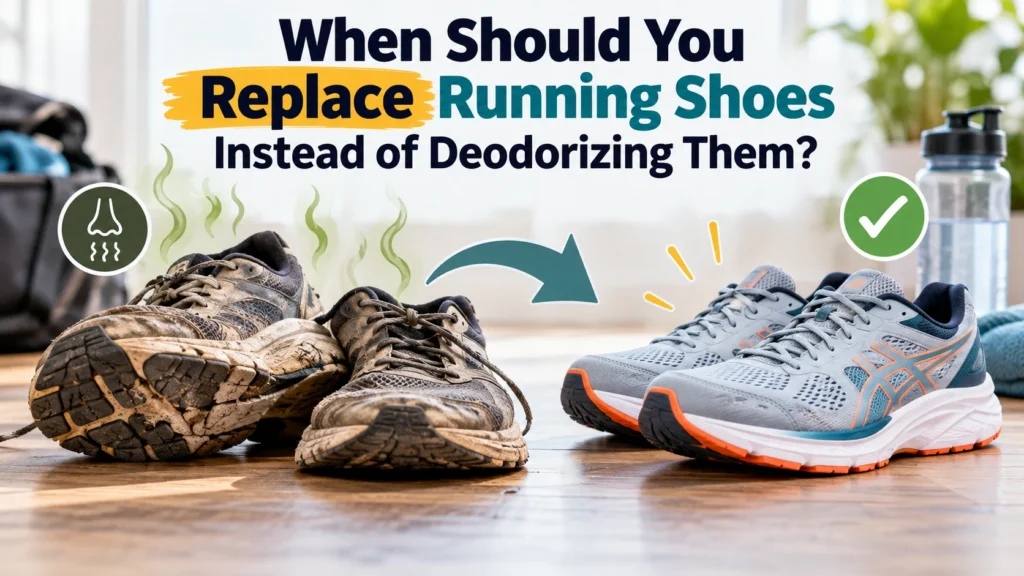
Replace running shoes when cleaning no longer solves the odor problem and the shoes also show significant wear or damage. Smell alone doesn’t automatically mean a pair is unusable.
Look for changes in fit, cushioning, outsole traction, and structural condition. Those factors matter more to running performance and comfort than cosmetic freshness.
Signs Your Running Shoes May Need Replacing
- The cushioning feels noticeably compressed or uneven.
- The outsole has lost substantial tread or grip.
- The heel counter or upper has structural damage.
- The shoes no longer fit securely.
- The interior remains heavily contaminated despite appropriate cleaning.
- You experience new rubbing or discomfort linked to visible shoe wear.
If the shoes remain comfortable and structurally sound, replacing only the insoles may be worth considering. Avoid discarding an otherwise usable pair solely because of a temporary smell.
Persistent foot odor accompanied by itching, peeling, rash, or pain may point to a foot-health issue. Seek medical advice when symptoms persist rather than relying on shoe deodorizer.
Which Products Help Remove Odor from Running Shoes?
Most mild odor problems don’t require specialized purchases. If cleaning and drying aren’t enough, these products offer different approaches to managing lingering smells.
The following are practical product options, not laboratory-tested rankings. The star scores reflect editorial fit for each use case rather than verified customer review averages.
🏆 Best for targeted odor treatment
Gear Aid Revivex Odor Eliminator
★★★★☆ 4.5/5
An odor-treatment concentrate designed for compatible gear and fabrics. I’d consider this option when routine cleaning isn’t enough, provided the exact formula and treatment instructions suit the shoe materials.
🌿 Best low-mess storage option
Moso Natural Bamboo Charcoal Air Purifying Bag
★★★★☆ 4/5
A reusable charcoal-filled pouch intended for passive odor and moisture management. I’d favor this format for storing dry running shoes without scattering powders inside them.
💰 Best for everyday freshening
Arm & Hammer Shoe Refresher Spray
★★★☆☆ 3.5/5
A convenient spray-style shoe freshener for compatible footwear. I’d reserve this kind of product for occasional odor control after cleaning, rather than using fragrance to cover permanently damp shoes.
Buying tip: Check current ingredient lists, product instructions, and compatibility before purchasing. No deodorizer can compensate for shoes that remain wet or contain heavy dirt buildup.
Frequently Asked Questions About Running Shoe Odor
How do you get a bad smell out of running shoes overnight?
Remove the insoles and dry the shoes in a ventilated room. Once the interiors are dry, a small amount of baking soda or a footwear-safe deodorizer may reduce lingering smells overnight. Strong odors caused by sweat buildup usually require cleaning as well.
Does baking soda permanently remove running shoe odor?
No. Baking soda may reduce existing odors, but it doesn’t stop future sweating or remove all contamination. To prevent the smell from returning, clean dirty insoles, dry shoes thoroughly, and avoid storing damp footwear in closed bags.
Can you put running shoes in the freezer to remove odor?
Freezing isn’t a reliable way to sanitize running shoes. Low temperatures may temporarily reduce microbial activity, but they don’t consistently eliminate odor-causing organisms or accumulated dirt. Cleaning and thorough drying are more dependable approaches.
How often should you deodorize running shoes?
Deodorize running shoes when odors develop rather than following a rigid spraying schedule. Air them out after each run and clean the insoles when sweat buildup becomes noticeable. Frequent deodorizer use shouldn’t replace basic shoe care.
Why do my running shoes still smell after washing?
Odors may persist because the insoles or lining still contain residue, or the shoes haven’t dried completely. Remove and clean washable insoles separately, gently clean accessible interior surfaces, and allow everything to air-dry. Consider replacing worn insoles if the smell remains concentrated there.
Final Thoughts: Keep Your Running Shoes Fresh Without Damaging Them
Removing odor from running shoes doesn’t have to involve expensive products or aggressive cleaning. Start by removing moisture, cleaning the insoles, and allowing the shoes to dry fully.
If smells remain, try a compatible odor-neutralizing treatment or replace worn removable insoles. Avoid high heat, harsh chemicals, and unnecessary machine washing.
Start with one simple habit today: Take your running shoes out of your bag after every workout. Better airflow can make a noticeable difference to their freshness over time.


Steven is a former sportsperson and now a full-time businessman and research writer. He is the mastermind of this site, and he created this site to help people who need specialized shoes for different activities. When he was a sportsperson, he was very passionate about different types of shoes for his sports purpose. The passion he had for shoes at that time now turned into his profession. Besides his shoe business, he loves sharing his knowledge and experience with people and helping them maintain healthy feet.
More Posts
