
QUICK ANSWER: IS THE RAZOR EXCESS 2 WORTH IT?
The Skechers GO RUN Razor Excess 2 is the better all-round speed trainer for most runners. It adds a carbon-infused forefoot plate, softer upper, removable Arch Fit insole, and four more millimeters of stack height. The original Razor Excess stays appealing for runners who prefer a lighter, simpler, plateless feel or find a much lower price.
- Best for steady and tempo runs: Razor Excess 2.
- Best for a flexible, plateless feel: Original Razor Excess.
- Biggest drawback: The second version still has a tapered toe box.
Quick Verdict: Razor Excess 2 vs Razor Excess
🏆 EDITOR’S CHOICE
Razor Excess 2
Editorial pick: improved comfort and versatility
Launch MSRP: $145A third-party listing showed $99 for a men’s variant; confirm live pricing.
Best for runners mixing steady runs, tempo sessions, and longer road efforts.
VALUE ALTERNATIVE
Original Razor Excess
Editorial pick: light and naturally flexible
Launch MSRP: $140Current Amazon price not independently confirmed.
Best for runners who prefer an unplated shoe or already trust the first version.
| Category | Excess 2 | Original |
|---|---|---|
| Overall choice | 🏆 | — |
| Value at launch MSRP | ✅ | — |
| Softer upper | ✅ | ❌ |
| Unplated flex | ❌ | ✅ |
| More underfoot foam | ✅ | ❌ |
Bottom line: Choose the Razor Excess 2 for its improved upper and added forefoot structure; choose the original only when its flexible ride or a worthwhile discount matters more.
- The Razor Excess 2 adds a carbon-infused forefoot H-plate; the original has no plate.
- Their listed launch prices differ by $5: $145 versus $140.
- The updated shoe suits faster long runs without the rigid feel of full-length racing plates.
- The original remains useful for runners who want a simple, responsive road trainer.
- The second version has 34/30 mm published stack figures versus 30/26 mm on the original.
Looking for a fast running shoe without a harsh race-day feel? The Skechers GO RUN Razor Excess 2 deserves a close look. Its design sits between a lightweight daily trainer and a dedicated racing shoe.
I’m Steven Tyler, writing for FootwearHiker. This review draws on manufacturer specifications and published independent wear tests. I have not conducted a separate hands-on mileage test, so I will not present other testers’ observations as my own.
The key is not whether the newer shoe has more technology. It is whether those updates suit your feet and normal training. This running shoe buying guide helps put those choices in context.
What Is the Skechers GO RUN Razor Excess 2 Best For?
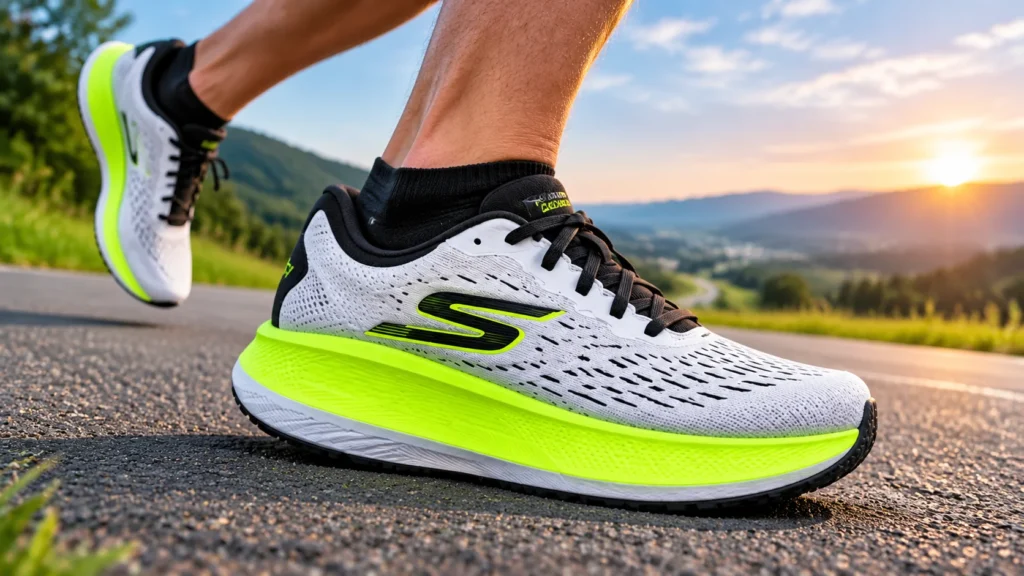
In short, the Razor Excess 2 works best for steady road runs, faster training, and longer efforts at a controlled pace. Its light build feels less bulky than a plush everyday trainer. Meanwhile, the extra stack protects your feet better than a minimal racing flat.
Quick fit verdict: Best for neutral runners with standard or narrow feet who enjoy a firm, lively ride. Less suitable for broad forefeet and runners who seek deep, soft cushioning.
Skechers uses its HYPER BURST midsole foam, a carbon-infused winglet plate in the forefoot, and a removable Arch Fit insole. These parts work together to shape the ride. The foam keeps weight low, while the forefoot plate adds structure at push-off.
The plate does not span the whole sole. That matters for runners who dislike rigid supershoes. Independent reviewers describe a smoother, more natural transition than the word “carbon” may suggest.
The updated mono-mesh upper also plays a major role. Softer material and improved padding can make longer runs feel less harsh. However, a tapered front can press against the toes, even if the length is correct.
What Are the Razor Excess 2 Pros and Cons?
The main strengths are its light, smooth ride and improved upper. Its main limits are narrow toe space, modest wet-road traction, and less propulsive help than a rigid full-length carbon racing shoe.
- Light feel at faster training paces
- More upper comfort than the first shoe
- Supportive, removable Arch Fit footbed
- Smooth transitions on road surfaces
- Good range from steady runs to long sessions
- Tapered toe box can feel tight
- Not a soft recovery-day trainer
- Plate is not as propulsive as full-length designs
- Rubber layout can struggle on wet pavement
- Older stock can be difficult to find in the right size
Skechers GO RUN Razor Excess 2Originally listed at $145. Check exact color, size, seller, condition, and current price before buying.
What Was the Original Skechers GO RUN Razor Excess Made For?
The original Razor Excess was built for runners who wanted more cushioning than the regular Razor while keeping a light and direct ride. It is a fast neutral road shoe, not a plush stability trainer. It also does not use the newer model’s forefoot plate.
The original blends HYPER BURST foam with Skechers HYPER ARC shaping and Goodyear rubber. Its listed 30 mm heel and 26 mm forefoot create a 4 mm drop. That low offset suits some runners but can take adjustment for those used to taller heels.
Independent early reviewers praised the weight-to-cushion balance and quick turnover. Several also found the original upper less forgiving. For some feet, it rubbed during longer sessions. That comfort concern helped shape the second version’s redesign.
The key reason to keep the first shoe is feel. A plate-free forefoot bends more freely, and some runners prefer that. If an existing pair fits well, a new model does not automatically make that experience worse.
What Are the Original Razor Excess Pros and Cons?
The original wins on simplicity and flexible forefoot feel. It loses to the update in upper refinement and built-in forefoot structure. The value choice depends on what both pairs cost in your size today.
- Responsive HYPER BURST platform
- Low weight for its cushion level
- Plate-free, flexible push-off
- Works for tempo and steady efforts
- Worth considering at a clear discount
- Less refined upper material
- Lower foam stack than the update
- No carbon-infused winglet plate
- No equivalent removable Arch Fit setup
- Old inventory can have limited sizing or return terms
Original Skechers GO RUN Razor ExcessLaunch MSRP was $140. A current Amazon selling price could not be confirmed for the exact model.
How Do the Razor Excess 2 and Original Specifications Compare?

The Razor Excess 2 adds 4 mm of published stack height and a forefoot plate while keeping the same 4 mm drop. Its upper and insole also change. The original remains a lighter, less structured design in some published reference sizes.
| Specification | Razor Excess 2 | Original Razor Excess |
|---|---|---|
| Type | Neutral road speed trainer | Neutral road speed trainer |
| Heel / forefoot stack | 34 / 30 mm | 30 / 26 mm |
| Heel drop | 4 mm | 4 mm |
| Reported men’s US 9 weight | 7.9 oz / 224 g | 7.5 oz / 213 g in one tester’s published spec |
| Midsole | HYPER BURST | HYPER BURST |
| Plate | Carbon-infused forefoot winglet | None |
| Footbed | Removable Arch Fit insole | Earlier, simpler footbed |
| Upper | Softer mono-mesh blend | Earlier synthetic/mesh build |
| Outsole | Goodyear Performance rubber | Goodyear rubber |
| Launch MSRP | $145 | $140 |
| Best design advantage | Comfort and added structure | Flexible, unplated feel |
Weights vary with sample size, measurement method, and early production information. Use each value as a published reference, not a guarantee for every pair. The same applies to stack measurements from different labs.
The four extra millimeters matter more than the $5 launch price gap. Extra foam can reduce the ground feel on longer runs. Still, a higher stack alone does not prove that a shoe is softer.
Which Model Has Better Cushioning and Running Performance?
The Razor Excess 2 wins for cushioned, uptempo training, while the original feels more direct. Both use HYPER BURST foam, so neither behaves like a highly plush recovery shoe. The newer version simply gives the design more foam and a little more structure.
Published testers describe the second version as smooth at steady and faster speeds. Some used it for long runs, including a reported 30 km session. That is meaningful evidence of its intended range, but one review does not promise comfort for every runner.
The H-shaped forefoot plate helps resist bending. Yet it does not turn the Excess 2 into a stiff marathon supershoe. If you expect a hard springboard effect, the shoe can feel understated. Its appeal is controlled turnover rather than dramatic propulsion.
The original offers a different trade-off. Its lower stack and absent plate let the foot work through toe-off with less built-in stiffness. That can feel pleasant at quick cadences, especially for runners who dislike plated training shoes.
Is the Carbon-Infused H-Plate Worth Having?
Yes, for runners who want mild forefoot structure without a full-length carbon plate. The H-plate is a change in the shoe’s bending behavior, not a guaranteed speed boost. Independent reviewers disagree on how much the added plate changes the sensation.
That disagreement is useful. It means shoppers should focus on fit and pace rather than the word “carbon.” A runner with comfortable, quick mechanics may love the original’s flex. Another may prefer the added structure of version 2 during longer sessions.
Neither model promises faster race times. Fitness, route, surface, and shoe comfort play larger roles in the outcome than a forefoot plate alone.
Which Razor Excess Fits Better for Narrow or Wide Feet?
The Razor Excess 2 improves upper comfort, but neither shoe is a safe first pick for wide forefeet. Published testing describes its length as broadly true to size, with a notably tapered toe box. Soft material cannot make a narrow front shape wide.
The redesigned upper feels more forgiving over the foot than the first version’s firmer material. Padding around the tongue and collar can also reduce pressure. Still, those changes do not guarantee space near the big toe and little toe.
Start with the correct shoe length. Then test width while standing and jogging. If the outer toes press into the mesh, do not assume a half-size increase will fix the shape. Review running shoe sizing differences before switching models.
Fit warning: Stop using a shoe that causes numbness, sharp toe pressure, or repeat blisters. The right width matters more than an attractive discount.
Does Arch Fit Make the Razor Excess 2 a Stability Shoe?
No. Arch Fit adds a shaped, removable footbed, but the Razor Excess 2 remains a neutral road shoe. Its insole may feel supportive under the arch. It does not replace a dedicated stability design for runners who want stronger guidance.
Skechers says its Arch Fit shape draws on podiatrist data. That describes the design process, not a medical result for every wearer. Try the shoe with the stock insole and check for unwanted arch pressure.
If your feet need extra forefoot room, consult this running shoe width guide. Do not solve width problems by only tightening or loosening the laces.
Which Model Offers Better Grip and Durability?
The Razor Excess 2 does not deliver a clear grip win, even with its updated design. Both shoes use Goodyear-branded rubber, but outsole coverage and the flat contact pattern still matter. The second version remains a road shoe, not a trail or wet-weather specialist.
One published wear test found that the Razor Excess 2 felt less secure on wet pavement. It also noted wear on exposed foam beside the rubber. These are tester observations, not a fixed mileage limit for every pair.
For dry roads and tracks, the outsole provides enough grip for normal training in typical conditions. For polished concrete, slippery turns, or wet paint, reduce speed and check your footing. Neither model has deep off-road lugs.
Durability depends on landing pattern, surfaces, body weight, and how often the shoes are used. Inspect the forefoot rubber and exposed foam regularly. Worn tread may affect safe grip before the cushioning feels completely flat.
Which Razor Excess Is Better for Price and Value?
The Razor Excess 2 offered stronger features for just $5 more at its stated launch price. Its listed MSRP was $145, compared with $140 for the original. Today’s price gap is not fixed because both are older releases and seller stock varies.
A third-party price comparison showed a men’s Razor Excess 2 offer starting at $99 when checked. That is a time-sensitive listing, not a verified price for every size or seller. I could not verify a matching live Amazon price for the original shoe.
When both pairs cost nearly the same, I would pick version 2 for its better upper and footbed. If the original costs much less and you already like its fit, the first shoe becomes a fair value choice.
Check the complete cost, including delivery, return fees, and seller rules. Older shoes stored for long periods deserve extra inspection. This running shoe discounts guide explains why the lowest sticker price is not always the best deal.
Buying tip: Compare the same size and condition. A $30 discount does not help if a clearance pair pinches your toes or cannot be returned.
Which Model Wins for Real-World Running Situations?
The Razor Excess 2 wins more common mixed-training situations, while the original still suits runners who value flex. Your usual pace and foot shape should decide the purchase. Here are six practical use cases.
| Situation | Better choice | Reason |
|---|---|---|
| Steady road training | Razor Excess 2 | More foam and a refined upper |
| Longer, faster sessions | Razor Excess 2 | Comfort and mild forefoot structure |
| Quick runs with a flexible feel | Original | Unplated forefoot movement |
| Wide-foot training | Neither | Tapered fit is a concern |
| Wet winter pavement | Neither as a first choice | Check grip on slick surfaces |
| Budget training rotation | Lower-priced suitable pair | Fit and condition matter more than generation |
A cooler morning does not require a special racing plate. The more important concern is grip on wet pavement and enough room for your chosen socks. Always test traction before pushing the pace.
For a marathon block, version 2 gives more underfoot material without the full stiffness of a carbon race shoe. That appeals to runners who want one pair for workouts and longer runs. However, neither shoe is a replacement for a soft recovery trainer if that is your preference.
Who Should Buy the Razor Excess 2, and Who Should Skip It?
Buy the Razor Excess 2 if you want a light road shoe for mixed faster training and your toes have enough room. It offers a practical balance of cushion and flexibility. Do not choose it solely because it contains carbon.
- You run mostly on roads
- You mix steady and tempo sessions
- You like a firm and light ride
- You want the newer upper and footbed
- Your forefoot fits its taper
- You already know it fits well
- You prefer a shoe without plates
- You find a meaningful discount
- You prefer a more direct ride
- The pair is new and in sound condition
Skip both if you need a wide toe box, dependable grip on slick paths, or soft recovery-run cushioning. In that case, compare a neutral daily trainer with a broader forefoot. Runners needing strong stability features should also look outside this pair.
Beginners do not need the fastest-looking model. Pick a shoe that stays comfortable at your natural pace. The lighter Razor shape can be appealing, but it will not make a poor fit suitable.
What Do Independent Testers and Runners Say?
Published reviews lean toward the Razor Excess 2 as the more polished design. Running Shoes Guru praised its smooth transitions and secure hold but warned about a tight toe box. Road Trail Run testers highlighted upper changes and the new forefoot plate.
Not all reviewers agreed that the plate made a dramatic difference. Believe in the Run described the new shoe as broadly similar to the original, with improved comfort and cushion. That contrast is useful because runners feel stiffness and foam differently.
Public runner discussions also show split tastes. Some liked the original’s light, flexible feel. Others wanted a less plastic-like upper and valued the update. These are individual experiences, not a measured buyer consensus.
Reported feedback at a glance
- Repeated strength: Light, smooth ride at faster paces.
- Repeated concern: Forefoot width and toe pressure.
- Mixed opinion: How much the H-plate improves speed.
- Evidence limit: No verified Amazon review count or aggregate rating was available for both exact models.
Those patterns are more helpful than an invented star score. Use published test reports as context, then let a proper fit check decide which model suits you.
How Should You Care for Razor Excess Running Shoes?
Keep the uppers clean, let the shoes dry naturally, and inspect the outsole after hard sessions. Both models use lightweight foam and bonded layers. Hot dryers and heaters can damage glue, fabric, and rubber over time.
Brush off loose grit after road runs. Use a damp cloth and mild cleaner for marks, then air-dry the shoes away from direct heat. Remove the Razor Excess 2 insole if it needs to dry separately.
Check exposed forefoot foam for damage and inspect the rubber where you land. If the tread becomes smooth or the ride feels uneven, reassess the pair. Our guide to running shoe replacement signs covers the key warning points.
Store unused pairs in a cool, dry place. Old stock can age even without miles. Before racing in a pair kept in storage, check for cracks, loose bonding, or changes in cushioning feel.
Final Verdict: Is the Razor Excess 2 Worth Buying?
Yes. The Skechers GO RUN Razor Excess 2 is the better buy for most runners who want a light speed trainer with enough cushion for longer road efforts. Its updated upper, removable Arch Fit insole, added foam, and forefoot plate make it more versatile than the first Razor Excess. The original is still a good choice for runners who love its direct, plate-free ride. The main warning is fit: the newer toe box remains narrow, and neither model is a top pick for broad feet. Published reviews also suggest a smooth, controlled ride rather than the strong snap of a full-length carbon race shoe. Compare the price of the exact size and color you need. If both cost nearly the same, select the second version. If the original fits you well and costs much less, it remains a practical purchase.
As a final check, confirm seller reputation, product condition, and returns. There is little value in saving money on the wrong fit. Published tests guide this verdict; I have not completed an independent long-term trial.
Skechers GO RUN Razor Excess 2
Best overall if you want more comfort and structure in a fast road shoe.
Original Skechers GO RUN Razor Excess
Best if you prefer natural forefoot flex or find a much lower price.
Frequently Asked Questions
Is the Skechers GO RUN Razor Excess 2 good for daily running?
Yes, the Razor Excess 2 can handle daily road runs if you enjoy a firmer, lively feel. It performs best when you also run at steady or faster paces. Runners who prefer soft landings for easy days may want a more cushioned daily trainer.
What is the difference between Razor Excess 2 and Razor Excess?
The Razor Excess 2 adds a carbon-infused forefoot plate, more stack height, a softer upper, and a removable Arch Fit insole. Both models use HYPER BURST foam and a 4 mm drop. The original feels more flexible, while version 2 has more structure and improved upper comfort.
Is the Razor Excess 2 worth more than the original?
Yes, it is worth a small premium for most runners because the upper and insole are more refined. Their published launch MSRP gap was just $5. Current selling prices can differ far more, so compare real offers. Keep the original on your list if it fits you well and costs much less.
Can I run a marathon in the Skechers Razor Excess 2?
Yes, some runners can use the Razor Excess 2 for a marathon or long training run. Independent testers found enough cushion for substantial road mileage. However, it is not as propulsive as a stiff carbon racing shoe. Test it on several longer runs before choosing it for race day.
Is the Skechers Razor Excess 2 good for wide feet?
No, the Razor Excess 2 is not a strong choice for many wide-footed runners. Reviewers report a narrow, tapered toe box despite improved upper softness. Check toe space carefully with your normal running socks. If pressure persists, choose a model built with a roomier forefoot rather than hoping it stretches.
Affiliate Disclosure: As an Amazon Associate, I earn from qualifying purchases. If you click a link on this page and make a purchase, I may receive a small commission — at no extra cost to you. I only recommend products I genuinely believe will help you. This helps keep the site free and running. Thank you for your support.