

Quick Answer
The safest way to clean running shoes is to hand-wash them using mild detergent, lukewarm water, and a soft brush or cloth. Remove dirt gently, clean the removable components separately, and let everything air-dry completely. Avoid machine washing, soaking, and direct heat unless your shoe manufacturer specifically approves another method. This approach also follows Brooks Running’s shoe-care recommendations.
How to Clean Running Shoes in 6 Steps
- Remove components: Take out removable insoles and shoelaces.
- Brush away dirt: Remove loose debris and dried mud before adding water.
- Prepare mild soap: Mix a few drops of gentle detergent with lukewarm water.
- Clean each section: Brush the outsoles and gently wipe the uppers.
- Remove soap residue: Wipe with a clean, damp microfiber cloth.
- Air-dry completely: Stuff the shoes with white paper towels and dry at room temperature.
Important Safety Tips
- Check materials: Suede, leather, and waterproof footwear may need special cleaning instructions.
- Avoid harsh products: Bleach, strong stain removers, and stiff brushes can damage delicate uppers.
- Check dryness: Don’t run until the upper, padding, and insoles are dry.
Dirty running shoes don’t always need replacing. Often, a careful cleaning removes mud, surface stains, and unpleasant odors without putting the materials at unnecessary risk.
I prefer starting with the gentlest method rather than scrubbing aggressively. This guide explains how to clean each shoe component, handle stubborn stains, and avoid common mistakes.
What Does Cleaning Running Shoes Actually Mean?
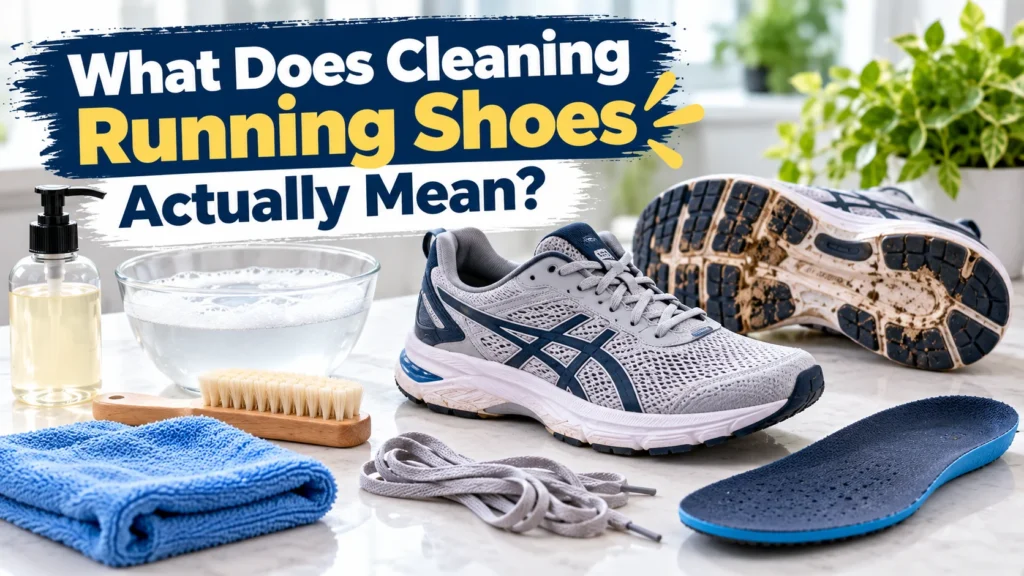
Cleaning running shoes means removing dirt, debris, sweat residue, and surface stains while protecting the materials responsible for comfort, fit, and traction.
Unlike ordinary canvas sneakers, running shoes often combine lightweight mesh, engineered foam, adhesives, rubber, and synthetic overlays. Each component responds differently to moisture and friction.
Which Parts of Running Shoes Need Cleaning?
- Upper: The fabric and supporting materials surrounding your foot.
- Outsole: The ground-contacting rubber that provides traction.
- Midsole: The cushioning layer between the upper and outsole.
- Insole: The removable or permanently attached footbed inside the shoe.
- Shoelaces: The fastening system that collects dust and sweat.
- Heel collar: The padded opening around your ankle.
The goal isn’t to saturate every layer with water. A controlled surface cleaning is usually enough.
What Supplies Do You Need to Clean Running Shoes?
You don’t need an expensive cleaning machine or specialized chemicals. A few ordinary household supplies can handle most routine dirt.
- One soft-bristled shoe brush or clean toothbrush
- Two microfiber cloths
- A small bowl of lukewarm water
- Mild, dye-free laundry detergent or gentle soap
- A soft sponge
- White paper towels or clean, dry cloths
- A separate brush for dirty outsole grooves
- Optional material-compatible sneaker cleaner
Choose gentle tools first. A toothbrush with stiff bristles may be useful on durable rubber, but it can snag delicate knit fibers.
According to New Balance’s footwear-care instructions, testing detergent on a hidden area before cleaning helps identify possible discoloration.
How Do You Clean Running Shoes by Hand? 7 Easy Steps
Hand-cleaning gives you control over moisture, brush pressure, and detergent placement. It’s the preferred approach for most performance running shoes.
Follow these seven steps for a complete cleaning routine.
Step 1: Remove the Shoelaces and Insoles
Start by taking out the shoelaces and any removable insoles. This exposes dirt trapped around the tongue, eyelets, and interior.
Don’t force out glued-in footbeds. Clean those carefully while they remain attached.
- Loosen the laces completely before removing them.
- Check the insole for tears or damaged foam.
- Inspect the heel lining for trapped debris.
- Place removable components on a clean towel.
Step 2: Remove Loose Dirt and Dried Mud
Brush loose dirt from the entire shoe before introducing moisture. Wetting dry soil too early can spread stains across the fabric.
For muddy trail shoes, allow thick mud to dry enough to brush away easily. Avoid scraping delicate fabric with sharp objects.
- Tap the outsoles together gently to release loose debris.
- Brush dirt out of tread grooves.
- Remove small stones without cutting into the rubber.
- Use a dry cloth to lift dust from the upper.
Step 3: Prepare a Gentle Cleaning Solution
Add a few drops of mild detergent to a small bowl of lukewarm water. Mix until the soap disperses.
You only need enough solution to dampen your cleaning cloth or brush. Excess soap creates residue that takes longer to remove.
Practical tip: Test your mixture on a small, hidden section of fabric before cleaning visible areas.
Step 4: Clean the Outsoles and Midsoles
Start with the outsole because it usually holds the heaviest dirt. Dip a brush into the cleaning solution and work through the rubber grooves.
Use moderate pressure on durable rubber. Wipe the brush frequently to avoid spreading dirty water.
- Brush the outsole from heel to toe.
- Work around the edges of the tread pattern.
- Wipe loosened dirt with a damp cloth.
- Clean the exposed midsole surface gently.
- Remove remaining soap with a clean cloth.
Use less pressure on exposed cushioning foam than on rubber. The midsole shouldn’t be soaked or aggressively scrubbed.
Step 5: Gently Clean the Upper Fabric
The upper requires the most delicate handling. Mesh, knit, and lightweight synthetic fabrics can develop snags when brushed aggressively.
Dip a soft sponge or microfiber cloth into your cleaning mixture. Squeeze out excess liquid before gently wiping the fabric.
- Work on one small section at a time.
- Follow the direction of the fabric where practical.
- Use gentle circular movements on stable synthetic overlays.
- Avoid heavy pressure near stitching and glued edges.
- Blot remaining moisture using a dry cloth.
I recommend repeating a gentle pass instead of increasing brush pressure. A stubborn stain is better than a damaged upper.
Step 6: Wash the Shoelaces and Insoles Separately
Shoelaces can usually handle a more thorough hand-washing than the shoe itself. Insoles require gentler treatment because their foam may absorb moisture.
How to Clean Shoelaces
- Place the laces in lukewarm, mildly soapy water.
- Rub them gently between your fingers.
- Use a soft brush on noticeable stains.
- Rinse thoroughly with clean water.
- Hang them indoors until completely dry.
How to Clean Running Shoe Insoles
- Brush away loose debris.
- Wipe both sides with a lightly soapy cloth.
- Pay attention to the heel and forefoot areas.
- Remove detergent with another damp cloth.
- Allow them to air-dry separately.
Don’t twist, wring, or fully submerge foam insoles. These actions can affect their shape or layered construction.
Step 7: Wipe Away Residue and Air-Dry
Once cleaning is complete, wipe the shoes with a clean, damp microfiber cloth. Remove visible detergent without flooding the material.
Fill the interiors loosely with white paper towels to absorb moisture and help maintain their shape.
- Place the shoes in a shaded, ventilated room.
- Keep the tongues open to improve airflow.
- Replace damp paper towels when necessary.
- Dry the laces and insoles separately.
- Reassemble only after every component is completely dry.
Drying may take a full day or longer, depending on humidity and how wet the shoes became. Don’t use a dryer to speed things up.
How Should You Clean Different Running Shoe Materials?
The safest cleaning method depends on the upper material. Mesh and knit can often tolerate gentle damp cleaning, while suede requires special treatment.
The following table compares common running shoe materials and their cleaning needs.
| Material | Recommended Cleaning | Avoid |
|---|---|---|
| Engineered mesh | Soft cloth, mild soap, light moisture | Stiff brushes and soaking |
| Knit fabric | Soft sponge and gentle blotting | Pulling or snagging fibers |
| Synthetic overlays | Damp microfiber cloth | Abrasive cleaners and solvents |
| Leather | Leather-compatible cleaner | Excess water and harsh detergent |
| Suede or nubuck | Specialized suede-care products | Ordinary wet scrubbing |
| Waterproof footwear | Manufacturer-approved cleaner and gentle rinsing | Unapproved chemicals and excessive heat |
Always prioritize the instructions supplied with your particular shoe. Material combinations and protective finishes can change what’s safe.
The ASICS running shoe cleaning guide also distinguishes fabric uppers from leather, suede, and nubuck.
Can You Wash Running Shoes in a Washing Machine?
For most performance running shoes, hand-washing is the safer choice. Washing machines can expose footwear to prolonged soaking, agitation, and mechanical stress.
That combination may damage adhesives, stretch uppers, or affect cushioning components. A delicate cycle doesn’t automatically eliminate those risks.
Why Do Running Shoe Brands Discourage Machine Washing?
- Adhesive stress: Repeated moisture exposure may weaken some bonded areas.
- Fabric damage: Agitation may stretch or abrade delicate uppers.
- Foam exposure: Extensive soaking can affect certain cushioning materials.
- Shape changes: Shoes may lose their original fit or structure.
- Drying problems: Water trapped in padding can take considerable time to evaporate.
The American Cleaning Institute notes that some sneakers are machine-washable, but manufacturers often discourage the practice.
If your exact model is explicitly approved for machine washing, follow its instructions. Otherwise, choose hand-cleaning.
How Do You Clean Running Shoes Without Ruining the Cushioning?
Protecting cushioning means keeping moisture and mechanical stress under control. The midsole is designed to manage forces during running, not withstand aggressive washing.
Many midsoles use engineered foams such as EVA, TPU, or PEBA. Their construction and bonding methods can differ substantially.
- Don’t soak the entire shoe in a bucket.
- Never scrub exposed foam with a stiff wire brush.
- Keep strong solvents away from cushioning layers.
- Avoid pressing or twisting wet midsoles aggressively.
- Allow sufficient drying time before running.
Cleaning the exterior won’t restore foam that has permanently compressed through use. Our guide to how running shoe midsoles work explains why cushioning performance depends on more than appearance.
How Do You Clean White Running Shoes and Stubborn Stains?
White running shoes often reveal dirt sooner than darker designs. Start with mild soap and avoid treating every discoloration as a deep stain.
Cleaning methods should match both the stain and the material beneath it.
Removing Mud Stains
- Allow thick mud to dry enough for easy removal.
- Brush away loose particles.
- Apply a small amount of mild cleaning solution.
- Gently wipe the affected area.
- Blot with a clean, damp cloth.
Removing Grass Stains
Grass stains can cling to rubber and fabric. Start with a mild detergent and gentle wiping before considering a material-approved stain treatment.
For additional methods focused on rubber surfaces, see our guide to removing grass stains from shoe rubber.
Don’t apply aggressive stain-removal mixtures directly to mesh, glued seams, or exposed midsole foam. Test compatible products in a hidden area first.
Removing Scuff Marks
Scuffs on durable rubber may respond to a lightly dampened cloth and gentle rubbing. Some marks come from abrasion rather than removable surface dirt.
Avoid using abrasive cleaning pads on painted midsoles. They may remove the finish along with the mark.
Removing Yellow Discoloration
Yellowing may result from surface residue, aging, material oxidation, or adhesive discoloration. Ordinary washing cannot reverse every cause.
Don’t use household bleach to force white fabrics back to their original color. It can discolor materials and damage shoe components.
How Do You Remove Bad Smells From Running Shoes?
Running shoe odor often develops when sweat, moisture, and microorganisms accumulate inside the footwear. Cleaning and drying the interior helps address these conditions.
Perfume may temporarily cover unpleasant smells, but it doesn’t remove the underlying moisture or residue.
Simple Steps to Freshen Smelly Running Shoes
- Remove the insoles if they’re designed to come out.
- Wipe accessible interior surfaces gently.
- Hand-clean removable insoles using mild soap.
- Remove excess cleaning solution with a damp cloth.
- Air-dry all components completely.
- Wear fresh, moisture-managing socks before your next run.
Some runners use a small amount of baking soda on completely dry insoles to absorb odors. Remove the powder thoroughly before wearing the shoes.
Avoid heavily fragranced sprays when you have sensitive skin. Check whether any deodorizing product is compatible with the footwear materials.
How Should You Dry Running Shoes After Cleaning?
Air-drying at room temperature is generally the safest method. High heat may alter adhesives, fabric structure, or some foam components.
The drying process deserves as much care as the cleaning process.
Recommended Drying Method
- Blot visible moisture with a dry towel.
- Loosen the tongue and open the shoe collar.
- Insert clean white paper towels loosely.
- Place the shoes in a shaded, ventilated location.
- Replace damp paper towels as needed.
- Wait until the shoes and insoles are fully dry.
A fan supplying room-temperature airflow can help ventilation. Avoid heaters, hair dryers, radiators, and direct intense sunlight.
For additional manufacturer guidance, see adidas running shoe maintenance instructions.
How Long Do Running Shoes Take to Air-Dry?
Lightly damp shoes may dry within a day, while thoroughly wet footwear can take longer. Indoor temperature, airflow, humidity, and shoe construction all matter.
Don’t rely on a fixed deadline. Check the toe area, heel padding, and insoles before reassembling your shoes.
How Often Should You Clean Running Shoes?
There’s no universal cleaning schedule for running shoes. Frequency should depend on your running environment and how much debris accumulates.
A road runner may only need occasional spot-cleaning. Trail runners should inspect their outsoles more frequently for packed dirt and stones.
A Practical Cleaning Routine
- After muddy runs: Remove loose debris and clear traction grooves when practical.
- After wet runs: Remove wet insoles where possible and allow proper drying.
- When stains appear: Spot-clean compatible materials before dirt becomes embedded.
- When odor develops: Clean and dry the interior and removable insoles.
- During routine inspections: Check outsole wear, upper damage, and cushioning condition.
Regular gentle maintenance is usually preferable to frequent intensive washing. You don’t need to deep-clean shoes after every short road run.
What Mistakes Should You Avoid When Cleaning Running Shoes?
Most avoidable problems come from using too much water, excessive friction, or inappropriate heat. These mistakes can damage otherwise usable shoes.
- Machine washing without approval: Can expose shoes to damaging agitation and soaking.
- Using bleach: May discolor fabric and damage certain components.
- Scrubbing mesh aggressively: Can snag threads or weaken delicate sections.
- Soaking foam insoles: Can affect their shape and drying time.
- Drying beside a heater: May damage adhesives or deform synthetic materials.
- Using excess detergent: Leaves residue inside the shoe.
- Wearing shoes while damp: Can increase friction and encourage unwanted odor.
- Ignoring care labels: Risks applying the wrong treatment to specialized materials.
One mistake deserves special attention: trying to make old shoes perform like new by deep-cleaning them. Cosmetic improvements don’t necessarily indicate restored structural performance.
When Should You Replace Running Shoes Instead of Cleaning Them?

Cleaning is worthwhile when shoes are structurally sound but dirty. Replacement becomes more appropriate when traction, cushioning, or fit has deteriorated.
Check for functional problems before investing time in restoring appearance.
- Outsole rubber worn smooth in important contact areas
- Deep or unusual midsole compression
- Persistent loss of cushioning or responsiveness
- Torn uppers affecting foot security
- Damaged heel counters or internal padding
- New rubbing or unwanted foot movement during runs
Freshly cleaned shoes should still feel secure during running. If the fit has changed, review how tight running shoes should be before deciding whether continued use makes sense.
Don’t judge shoe condition by appearance alone. A clean pair can still have worn cushioning or inadequate traction.
Which Running Shoe Cleaning Products Are Worth Considering in 2026?
Most runners can clean their shoes using basic household supplies. A dedicated kit becomes useful when you want different brushes or a purpose-made cleaning solution.
These two options serve different priorities. The ratings below are editorial feature-fit assessments, not customer review scores or claims of hands-on testing.
Affiliate disclosure: We may earn a commission from qualifying purchases made through the following Amazon links, at no additional cost to you.
🏆 Best Multi-Brush Kit
Reshoevn8r Essential Shoe Cleaning Kit
★★★★☆ 4.5/5 editorial feature-fit score
This kit includes a 4-ounce cleaning solution, three brushes with different bristle firmness, and a microfiber towel. The soft-bristle option makes it a more flexible choice for shoes with delicate uppers.
I would favor this kit for runners maintaining several shoe types. Always match the brush to the material and follow the kit instructions.
🧽 Best for Durable Surfaces
Jason Markk Essential Kit
★★★★☆ 4.0/5 editorial feature-fit score
This kit pairs a 4-ounce concentrated cleaning solution with a stiff-bristled Durables Brush. Its included brush is intended for sturdy surfaces such as rubber, plastic, and standard full-grain leather.
I’d consider it for outsole-focused cleaning. For lightweight running mesh or knit, use a separately purchased delicate brush or soft cloth instead.
Frequently Asked Questions About Cleaning Running Shoes
Can I clean running shoes with dish soap?
Yes, a small amount of mild, dye-free dish soap may work on compatible synthetic materials. Dilute it with water and test a hidden area first. Avoid concentrated application, excessive soaking, and strong degreasing formulas. Always check the manufacturer’s instructions, especially for leather, suede, or waterproof footwear.
Can I put running shoes in the dryer?
No, most running shoes shouldn’t go into a clothes dryer. High heat and tumbling may damage adhesives, deform materials, or affect the shoe’s construction. Instead, remove removable components, insert dry white paper towels, and let the footwear air-dry in a shaded, ventilated room.
Can I use baking soda to clean running shoes?
Baking soda may help absorb mild odors when used carefully on dry, compatible interior surfaces. However, abrasive scrubbing or leaving residue inside shoes isn’t ideal. For ordinary dirt and stains, start with mild detergent and a soft cloth. Remove all cleaning residue before wearing your shoes.
How do I clean running shoes without getting them completely wet?
Start by brushing away dry dirt. Use a slightly damp microfiber cloth with a small amount of mild soap to spot-clean dirty areas. Follow with another lightly damp cloth to remove residue. This method limits moisture exposure and is particularly helpful for delicate fabric uppers.
Does washing running shoes make them last longer?
Gentle cleaning can help prevent debris buildup and maintain usable traction, but it doesn’t guarantee a longer shoe lifespan. Aggressive washing may cause additional damage. Running shoes still wear through repeated use, and cleaning cannot reverse permanent midsole compression, damaged structure, or worn outsole rubber.
Final Takeaway: Keep Running Shoes Clean Without Damaging Them
Learning how to clean running shoes properly helps you maintain their appearance and remove dirt without unnecessary wear. For most pairs, mild soap, a soft brush, and careful air-drying are enough.
Focus on cleaning the outsole, protecting delicate uppers, and drying removable parts separately. Always follow the instructions for your particular shoe model.
Before your next run, check that your shoes are fully dry, comfortable, and structurally sound. Clean shoes feel better to wear, but safe running also depends on proper fit, cushioning, and traction.


Steven is a former sportsperson and now a full-time businessman and research writer. He is the mastermind of this site, and he created this site to help people who need specialized shoes for different activities. When he was a sportsperson, he was very passionate about different types of shoes for his sports purpose. The passion he had for shoes at that time now turned into his profession. Besides his shoe business, he loves sharing his knowledge and experience with people and helping them maintain healthy feet.
More Posts
