
Quick Answer
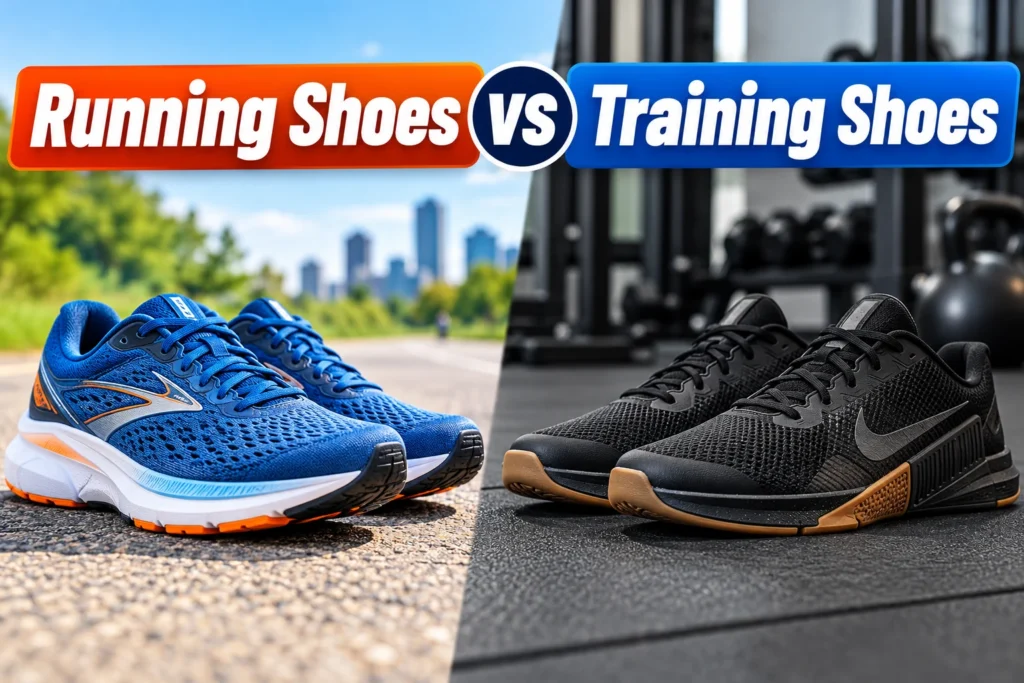
Running shoes are designed for repetitive forward movement, with cushioning and sole geometry that support running. Training shoes generally have flatter, firmer platforms and better side-to-side stability for lifting, gym classes, and agility exercises. Choose running shoes for regular running and training shoes for varied gym workouts. The right choice also depends on your running shoe support needs.
Key Differences
- Main purpose: Running shoes suit repetitive strides; training shoes support varied gym movements.
- Cushioning: Running shoes usually have more cushioning, while training shoes tend to feel firmer.
- Stability: Training shoes typically provide a wider, more grounded base for lifting and lateral drills.
- Heel drop: Running shoes often have a greater heel-to-toe height difference, although designs vary.
- Best workout: Choose running shoes for distance and training shoes for strength, HIIT, and agility.
Before Buying
- Match your workout: If you run and lift regularly, consider separate pairs for each activity.
Running shoes and training shoes can look almost identical on a store shelf. Yet their different designs become noticeable when you start running, lifting weights, or changing direction quickly.
I recommend choosing footwear around the movements you perform most often. This guide explains the differences, common mistakes, and practical features worth checking before buying.
What Is the Difference Between Running Shoes and Training Shoes?
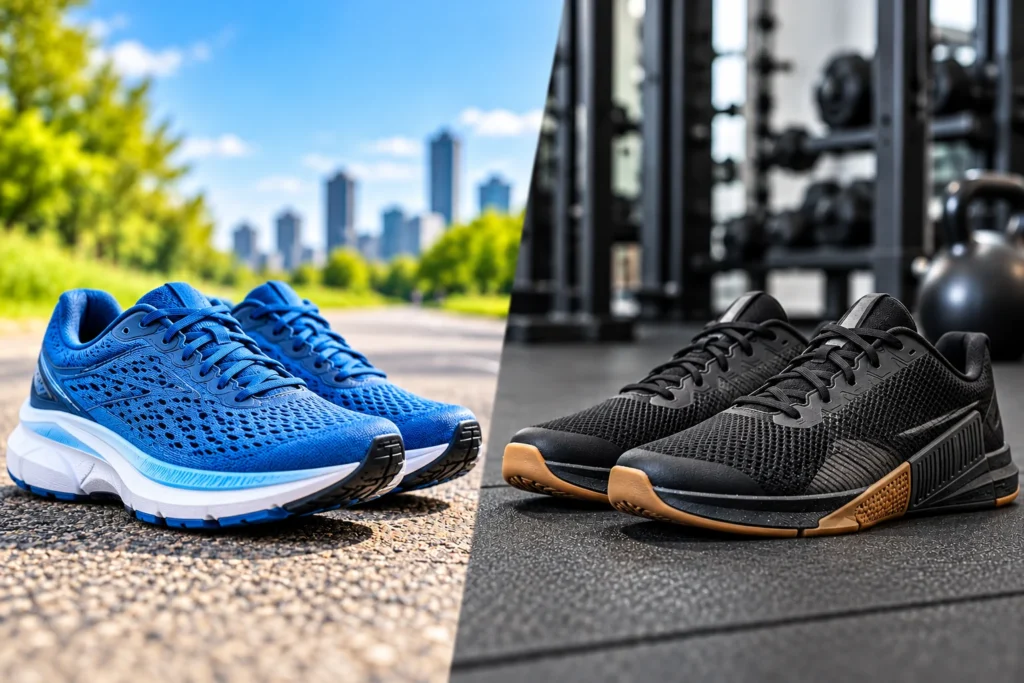
The biggest difference is how each shoe supports movement. Running shoes focus on repeated forward strides, while training shoes accommodate movements in several directions.
That difference affects cushioning, flexibility, traction, and stability. Neither category is automatically better for every workout.
| Feature | Running Shoes | Training Shoes |
|---|---|---|
| Primary use | Road, track, and treadmill running | Gym workouts, lifting, and HIIT |
| Movement | Mostly forward | Multidirectional |
| Cushioning | Often softer and thicker | Usually firmer and lower |
| Sole shape | Often curved for forward transitions | Typically flatter and wider |
| Heel-to-toe drop | Varies; often moderate or higher | Often relatively low |
| Lateral stability | Not usually the main design priority | A major design priority |
| Long-distance running | Generally suitable | Usually not ideal |
| Weightlifting | Soft models may feel unstable | Often better for general strength workouts |
These are category-wide tendencies, not fixed rules. A minimalist running shoe and a cushioned hybrid trainer may have overlapping features.
For additional design explanations, see the ASICS comparison of running and training footwear.
What Are Running Shoes?
Running shoes are athletic shoes built to support repeated running strides. Their cushioning, upper construction, and outsole design work together to accommodate forward motion.
Many running shoes use lightweight foams and breathable mesh uppers. Their soles often help the foot transition from landing to toe-off.
What Are Running Shoes Designed For?
Running shoes are most useful when your workout includes repeated running steps. Their design supports comfort over many strides rather than maximum stability during heavy lifts.
- Road running: Cushioning and outsole grip suited to pavement.
- Treadmill running: Comfortable forward movement during indoor runs.
- Long-distance running: Underfoot comfort during extended sessions.
- Daily jogging: Versatility for regular easy-paced runs.
- Running workouts: Options for tempo sessions, intervals, and races.
Not all running shoes feel equally soft. Lightweight racing shoes, stability models, and everyday trainers use different constructions.
How Does Running Shoe Cushioning Work?
The midsole is the cushioning layer between the foot and the outsole. Manufacturers use foam and geometric designs to influence impact feel and running transitions.
More cushioning doesn’t automatically mean better performance or fewer injuries. The right amount depends on comfort, body mechanics, terrain, and personal preference.
It’s worth considering how cushioning changes with use. Our guide explains how to tell when running shoe cushioning is worn out.
What Are Training Shoes?
Training shoes, often called cross-training shoes, are designed for varied workouts involving changes in movement direction. They usually combine a stable base, secure upper, and flexible forefoot.
Their construction helps during exercises that involve lifting, jumping, squatting, and moving sideways. A dedicated cross-trainer isn’t necessarily the right choice for every sport, however.
What Are Training Shoes Best Used For?
Training shoes are particularly useful for gym workouts that mix strength and conditioning. They give you a more grounded platform than many heavily cushioned running shoes.
- Strength training: A firm base for squats, lunges, and general lifting.
- HIIT sessions: Support for quick transitions and energetic movements.
- Agility drills: Traction and stability for changing direction.
- Circuit training: Versatility when switching between exercises.
- Functional fitness: Support for kettlebells, sled work, and bodyweight training.
Some highly specialized activities need different footwear. Heavy Olympic lifting may benefit from weightlifting shoes, while court sports often require sport-specific traction.
The MD Anderson cross-training shoe guide also discusses stability, outsole construction, and proper fit.
Why Does Shoe Cushioning Matter for Running and Training?
Cushioning changes how a shoe feels when your foot meets the ground. Running and gym movements place different demands on the cushioning system.
Running Shoes Usually Prioritize Repeated Impact Comfort
Running involves hundreds or thousands of similar strides. Cushioned midsoles can make those repeated impacts feel more comfortable.
Some running shoes feature tall, soft foam platforms. Others use firmer or lower-profile cushioning to provide a different running experience.
Training Shoes Usually Prioritize a Stable Platform
During strength training, a compressible sole can make your footing feel less predictable. Training shoes often use firmer cushioning to reduce that sensation.
A flatter base can help you feel connected to the floor. This is especially useful during controlled strength movements.
Practical tip: Stand in a shoe and perform a few slow bodyweight squats. Notice whether your feet stay stable or the cushioning feels excessively wobbly.
How Are Stability, Flexibility, and Heel Drop Different?
Running and training shoes differ in more than softness. Three important design factors are lateral stability, sole flexibility, and heel-to-toe drop.
Lateral Stability
Lateral stability describes how securely a shoe supports side-to-side movement. Gym shoes often reinforce the sides and use wider platforms for this purpose.
Running shoes can still be stable during forward motion. However, that doesn’t mean they offer the same support during quick lateral drills.
Sole Flexibility
Running shoes may bend at the forefoot or use a curved rocker that guides forward movement. Training shoes often allow more varied bending and movement patterns.
Neither design is universally more flexible. Carbon-plated running shoes, for example, can be particularly stiff.
Heel-to-Toe Drop
Heel-to-toe drop is the height difference between the heel and forefoot. A shoe with 30 mm under the heel and 20 mm under the forefoot has a 10 mm drop.
Running shoe drops vary widely, including zero-drop designs. Training shoes commonly use lower drops, although some lifting-focused models have elevated heels.
- Higher drop: Changes how the foot sits and may affect running or squatting mechanics.
- Lower drop: Places the heel closer to forefoot height.
- Stack height: Measures how much material sits between the foot and ground.
- Platform width: Influences the available base for stable movement.
Don’t choose a shoe based on heel drop alone. Fit, comfort, sole firmness, and the intended activity matter together.
Can You Use Running Shoes for Gym Training?
Yes, running shoes can work for some gym activities. They are often suitable for treadmill sessions, stationary cycling, and light general exercise.
They become less appropriate when workouts involve heavy lifting or rapid side-to-side movement. A tall, soft running shoe may feel unstable under these conditions.
When Running Shoes May Be Acceptable
- Walking on a treadmill.
- Easy treadmill jogging.
- Low-intensity stationary exercise.
- Light machine-based workouts without demanding lateral movement.
When Training Shoes Are Usually Better
- Loaded squats and deadlifts.
- Side shuffles and agility drills.
- Box jumps and multidirectional plyometrics.
- Mixed strength-and-conditioning classes.
For heavy barbell lifts, consider whether a dedicated lifting shoe is more suitable. The best footwear depends on the exercise and your technique.
Can You Run in Training Shoes?
You can run short distances in many training shoes, especially models built for hybrid workouts. Regular longer runs are usually more comfortable in running-specific footwear.
Training shoes generally offer less specialized forward-motion cushioning. Their wider, firmer platforms may feel less natural during extended running.
When Short Runs May Work
Consider a training shoe for brief jogging intervals during a workout. For example, a session might alternate 400-meter runs with squats and rowing.
Some hybrid trainers are intentionally designed for this combination. Check manufacturer guidance before treating a gym shoe as a distance-running shoe.
When Should You Switch to Running Shoes?
Choose running-specific footwear when jogging becomes a regular, substantial part of your routine. The same applies when preparing for a 5K, 10K, half marathon, or marathon.
There is no universal mileage limit that makes a training shoe unsafe. Your comfort, running mechanics, shoe design, and workout demands determine suitability.
Which Shoes Are Better for Different Workouts?
Match the footwear to your main activity rather than choosing by appearance. This simple workout guide can help.
| Workout | Suggested Footwear | Reason |
|---|---|---|
| Road jogging | Running shoes | Forward-motion comfort |
| Long treadmill runs | Running shoes | Repeated-stride cushioning |
| General strength training | Training shoes | Firmer platform |
| HIIT classes | Training shoes | Multidirectional stability |
| Heavy Olympic lifting | Specialized lifting shoes | Firm support and lifting geometry |
| Mixed gym and brief runs | Hybrid trainers | Balanced versatility |
For mixed training, identify which exercises place the greatest demands on your footwear. A workout with heavy lifting deserves different priorities than one dominated by running.
How Should Beginners Choose Running Shoes vs Training Shoes?
Beginners should start with the activity they perform most frequently. A comfortable, well-fitting shoe in the correct category is usually better than an expensive shoe designed for something else.
Step 1: Identify Your Main Activity
Write down your normal weekly workouts. Separate running sessions from lifting, agility work, and gym classes.
If most sessions involve jogging, start with running shoes. If most involve lifting or circuits, start with training shoes.
Step 2: Check the Shoe’s Fit
Your heel should feel secure without rubbing. Your toes need enough room to move naturally.
Running shoes commonly need additional space in front of the toes to accommodate foot movement. See our detailed guide to proper running shoe toe room.
- Heel: Avoid excessive slipping during movement.
- Midfoot: Look for a secure fit without pressure.
- Toes: Allow comfortable movement without crowding.
- Width: Avoid pinching along either side of the foot.
Step 3: Test Movement Before Buying
Walking around a store is useful, but it doesn’t reproduce every workout. When permitted, test the shoe using movements similar to your normal routine.
- Walk briskly to check heel security.
- Jog briefly to assess running comfort.
- Perform controlled bodyweight squats to assess stability.
- Try gentle lateral steps to evaluate side support.
- Check for rubbing, slipping, or concentrated pressure.
Step 4: Consider Support Needs
Some runners prefer neutral cushioning, while others feel more comfortable with additional stability features. Foot shape alone cannot reliably determine your ideal shoe.
Read our explanation of whether running shoes need arch support before buying extra inserts or supportive footwear.
Do You Need Two Pairs for Running and Gym Workouts?
Not everyone needs two pairs immediately. However, separate running and training shoes can make sense when both activities are regular parts of your schedule.
A dedicated running shoe provides a design suited to mileage. A dedicated training shoe provides a more stable platform for gym movements.
When One Pair May Be Enough
- You mainly perform one type of workout.
- Your secondary activity is occasional and low intensity.
- Your shoes remain comfortable and stable for the exercises performed.
- You have chosen a hybrid model suited to your routine.
When Two Pairs Make More Sense
- You run multiple times per week.
- You also perform regular strength training.
- Your gym workouts involve substantial lateral movement.
- You want activity-specific grip, support, and cushioning.
Separate shoes can distribute wear between pairs, although they don’t guarantee a longer total lifespan. Your mileage, workout intensity, shoe construction, and maintenance still matter.
What Mistakes Should You Avoid When Choosing Workout Shoes?

The most common mistake is assuming all athletic footwear works equally well. Small differences in shoe design become important when workout demands increase.
- Choosing by appearance: A stylish sneaker may lack the stability needed for gym training.
- Using soft shoes for heavy lifting: Excessively compressible soles may make your stance less secure.
- Running long distances in unsuitable trainers: Firm gym shoes may feel uncomfortable during repeated strides.
- Ignoring fit: Tight toes and slipping heels can cause unnecessary discomfort.
- Assuming more cushioning is always better: Comfort and stability depend on the intended movement.
- Buying without testing: A shoe’s feel during exercise matters more than its appearance.
- Ignoring worn footwear: Damaged outsoles or unstable midsoles can compromise performance.
Another mistake is assuming that one workout automatically requires maximum arch support. Choose support based on comfort and individual needs rather than marketing labels.
Which Running and Training Shoes Are Worth Considering in 2026?
Two models illustrate the practical design differences between these categories. These selections reflect manufacturer-listed features and intended uses, not claims of personal wear testing.
The ratings below are editorial suitability scores for their stated use cases, not customer review averages.
🏃 Best for Everyday Running
Brooks Ghost 17
★★★★☆ 4.5/5 Editorial Suitability
This neutral road-running shoe uses nitrogen-infused cushioning and a manufacturer-listed 10 mm heel-to-toe drop. Its design suits daily running and walking. I’d shortlist it for runners who want a conventional, cushioned daily trainer rather than a gym-focused platform.
🏋️ Best for Strength and Mixed Gym Training
Nike Metcon 10
★★★★☆ 4.5/5 Editorial Suitability
The Metcon 10 combines a stability-focused heel structure with ReactX foam for short, dynamic efforts. Nike designed it for strength and conditioning workouts. I’d prioritize it for gym sessions that mix lifting, jumps, and brief running intervals.
Affiliate disclosure: As an Amazon Associate, we may earn from qualifying purchases. Prices, sizing, model availability, and seller listings may change.
For manufacturer information about the Metcon 10, see Nike’s official product announcement.
Frequently Asked Questions About Running Shoes vs Training Shoes
Are running shoes and training shoes the same?
No. Running shoes are primarily designed for repetitive forward strides, while training shoes support varied gym movements, including lifting and lateral drills. Their cushioning, sole shapes, and stability features usually differ. Some hybrid shoes combine characteristics of both categories.
Can I wear running shoes for weightlifting?
You can wear running shoes for some light gym exercises, but heavily cushioned models may feel unstable during loaded lifts. A firmer training shoe generally provides a more grounded platform. Specialized weightlifting footwear may be preferable for demanding Olympic lifts.
Are training shoes good for treadmill running?
Training shoes can work for brief treadmill warmups or short jogging intervals. However, running shoes are generally better suited to regular or longer treadmill sessions. They provide cushioning and geometry specifically developed for repeated running strides.
Which shoes are better for walking?
Both categories can work for casual walking if they fit comfortably. Running shoes are often a good option for longer walks because of their cushioning and forward-motion design. Training shoes may suit short walks combined with gym workouts.
Should beginners buy running shoes or training shoes first?
Beginners should buy footwear that matches their most frequent activity. Choose running shoes if you primarily jog or follow a running program. Choose training shoes if you mainly lift weights or attend fitness classes. Consider separate pairs as your activities expand.
Final Verdict: Running Shoes vs Training Shoes
Running shoes and training shoes serve different purposes. Running footwear prioritizes repetitive forward movement, while training footwear generally offers a firmer and more stable base for varied workouts.
If running is your primary activity, start with a properly fitted running shoe. If strength training, HIIT, or agility work dominates your routine, choose a suitable training shoe.
For regular combinations of running and gym training, owning separate pairs is often the more practical choice. Above all, prioritize comfort, fit, and the demands of your workouts.
Ready to choose? Compare the models above, check your size carefully, and select the pair that supports what you do most often.


Steven is a former sportsperson and now a full-time businessman and research writer. He is the mastermind of this site, and he created this site to help people who need specialized shoes for different activities. When he was a sportsperson, he was very passionate about different types of shoes for his sports purpose. The passion he had for shoes at that time now turned into his profession. Besides his shoe business, he loves sharing his knowledge and experience with people and helping them maintain healthy feet.
More Posts
