

Quick Answer
The Salomon Genesis 2 is the better full-price pick for technical trails. Its revised chassis and outsole offer a more structured ride, while the original Genesis feels more flexible. Both have an 8 mm drop. Buy the original if you find a good discount; choose Genesis 2 if stability and outsole durability matter more.
What separates the original Genesis from Genesis 2?
- Genesis 2: 17.8 N bending resistance and revised outsole geometry.
- Original Genesis: 12.6 N bending resistance and better clearance value.
- Both: Matryx uppers, Quicklace systems, and 8 mm advertised drops.
Quick Verdict — Salomon Genesis vs Genesis 2
Original Genesis
117 retailer reviews at Scheels
$149.95 original US list price
Select clearance offers from $96.95
Best for:
Value-conscious trail runners who prefer more forefoot flex.
Genesis 2
46 reviews on Salomon US
$150.00 Salomon US list price
Amazon price may vary
Best for:
Runners who prioritize firm support and durable traction.
Ratings come from different retailers and review samples. They are not controlled head-to-head test scores. Amazon buttons open search results rather than verified individual listings.
| Category | Genesis | Genesis 2 |
|---|---|---|
| Overall Winner | ❌ | 🏆 |
| Best Clearance Value | ✅ | ❌ |
| Outsole Abrasion Resistance | ❌ | ✅ |
| Greater Flexibility | ✅ | ❌ |
| Toe-Upper Abrasion Test | ✅ | ❌ |
Bottom line: Genesis 2 wins for technical-trail buyers who value structure and outsole wear resistance; the original Genesis becomes the smarter value when the right size is heavily discounted.
- Genesis 2 improves structural support and outsole abrasion resistance.
- Selected original Genesis clearance offers can save $53.05 against the $150 Genesis 2 list price.
- Genesis 2 takes 17.8 N to bend in RunRepeat’s test, compared with 12.6 N for the original.
- Both shoes have an advertised 8 mm drop and quick-pull laces.
- The newer model is not automatically a better fit for wider toes.
I’m Steven Tyler, and I write footwear buying guides for FootwearHiker. My goal is to help readers sort useful shoe details from marketing claims. This Salomon Genesis review compares the original shoe with its updated successor, Genesis 2.
Both shoes target technical trails. They share several design features, including Matryx uppers and Contagrip rubber. Yet their construction creates differences you can feel on rough ground.
The original Genesis earns praise for flexibility, a secure fit, and dependable grip. Genesis 2 adds a revised chassis and outsole. Those updates can help when the ground gets uneven, but they also make the shoe stiffer.
This comparison uses published manufacturer details, independent laboratory results, and retailer feedback. It does not claim a personal field test. For more on evaluating those sources, read our running shoe review criteria.
We will examine comfort, traction, fit, durability, and cost. The goal is simple: help you choose the right pair for your feet and trails.
What Is the Salomon Genesis and Who Is It For?
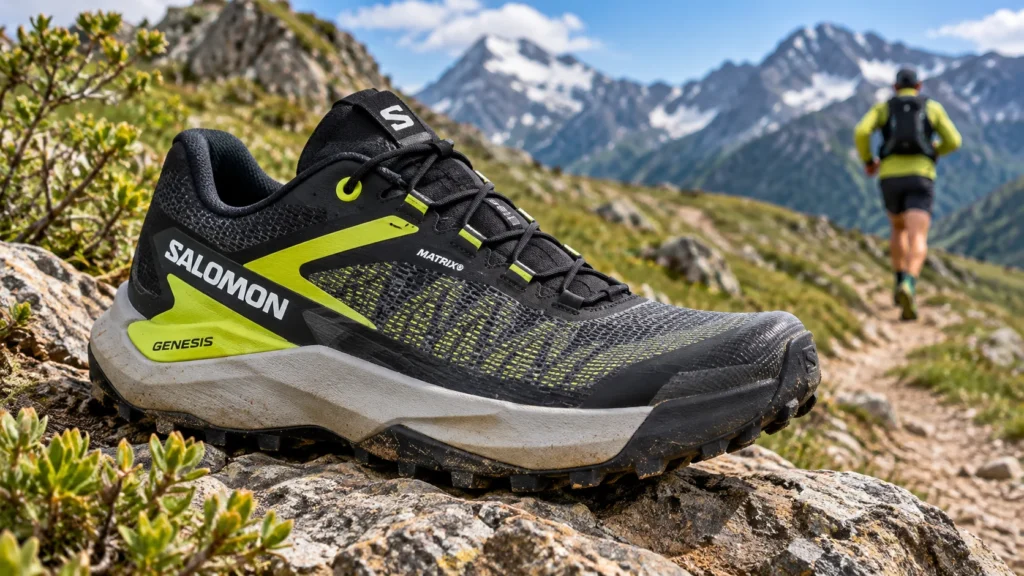
Original Genesis — Quick Assessment
A flexible technical trail shoe with strong upper protection and dependable mixed-terrain grip.
- Breathability: 4/5 — RunRepeat lab
- Toe-upper abrasion resistance: 4/5 — RunRepeat lab
- 30-degree bend resistance: 12.6 N
- Measured lug depth: 4.0 mm
Not ideal for: Buyers wanting a highly rigid forefoot or an especially tall toe box.
The Salomon Genesis is a technical trail running shoe built for mixed and rocky routes. Its Matryx upper combines lightweight woven fibers with added abrasion resistance. The shoe uses an Active Chassis for support and an All-Terrain Contagrip outsole for traction.
Salomon lists a heel-to-toe drop of 8 mm and lugs measuring 4.5 mm. RunRepeat measured the lugs at 4.0 mm in its sample. Those values reflect different measurement methods, not necessarily different shoe versions.
The original Genesis also uses Quicklace. This cord tightens with one pull and tucks into a small pocket. The EndoFit sleeve helps hold the midfoot securely during turns and descents.
Its greatest strength is balance. The original Genesis gives runners useful cushioning without making the shoe excessively rigid. RunRepeat measured 12.6 N of force to bend the shoe through 30 degrees.
That flexibility matters on twisting singletrack. Your foot can adapt more easily as the surface changes. Still, a flexible shoe is not automatically the safest choice for every rocky descent.
What Are the Original Genesis Pros and Cons?
The original Genesis favors runners seeking secure traction and a less rigid ride. However, outsole wear and toe-space limitations deserve attention before buying.
Pros
- 4/5 upper abrasion score in laboratory testing
- Flexible forefoot construction
- Secure Quicklace and EndoFit lockdown
- 4.5 mm advertised trail lugs
- Discounts available on selected older stock
Cons
- Some owners report early outsole wear
- Low toe-box ceiling can bother sensitive toes
- Less structured forefoot than Genesis 2
- Older stock has limited color and size choices
Salomon Genesis — Check Current Availability
Original list price: $149.95. Selected clearance prices vary by size and retailer. Verify the exact shoe before ordering.
What’s New in the Salomon Genesis 2?
Genesis 2 — Quick Assessment
A more structured technical trail shoe with improved measured outsole wear resistance.
- Breathability: 4/5 — RunRepeat lab
- Toe-upper abrasion resistance: 3/5 — RunRepeat lab
- 30-degree bend resistance: 17.8 N
- Measured lug depth: 3.9 mm
Not ideal for: Runners wanting soft cushioning or generous room near the big toe.
The Salomon Genesis 2 keeps the original model’s technical-trail focus. Its main changes involve the chassis, outsole geometry, and woven upper. Salomon also describes a wider midsole platform.
These changes aim to improve control without creating a bulky shoe. The new chassis guides the foot through uneven landings. Its outsole uses revised lug shapes rather than simply adding deeper tread.
RunRepeat measured 17.8 N of resistance during its 30-degree bending test. That represents about 41% more force than the original Genesis needed. The change gives Genesis 2 a firmer, more structured feel.
The outsole produced another notable laboratory result. RunRepeat measured just 0.4 mm of rubber damage after its abrasion test. The original Genesis showed 1.2 mm in the comparable test.
This difference supports Genesis 2’s durability advantage under those test conditions. It does not prove that every runner will get three times as many trail miles.
Does the Genesis 2 Improve Everything?
No. The Genesis 2 improves some areas but makes compromises elsewhere. The upper received a lower abrasion score than the original model in RunRepeat’s tests.
It also has a narrower measured toe-tip area. Runners with wide forefeet should not assume that Salomon’s wider-platform claim means a roomier toe box. Midsole width and internal toe space measure different parts of a shoe.
Pros
- Redesigned Active Chassis
- 0.4 mm outsole abrasion damage in lab testing
- Reworked tread for technical terrain
- Breathability score of 4/5
- Secure midfoot lockdown
Cons
- Stiffer than the original model
- Narrow toe-tip region in lab measurements
- Moderate rather than plush cushioning
- 3/5 toe-upper abrasion score
Salomon Genesis 2 — Updated Technical Trail Shoe
Salomon US lists the standard Genesis 2 at $150. This is not the more expensive S/Lab Genesis 2.
How Do the Salomon Genesis and Genesis 2 Specs Compare?
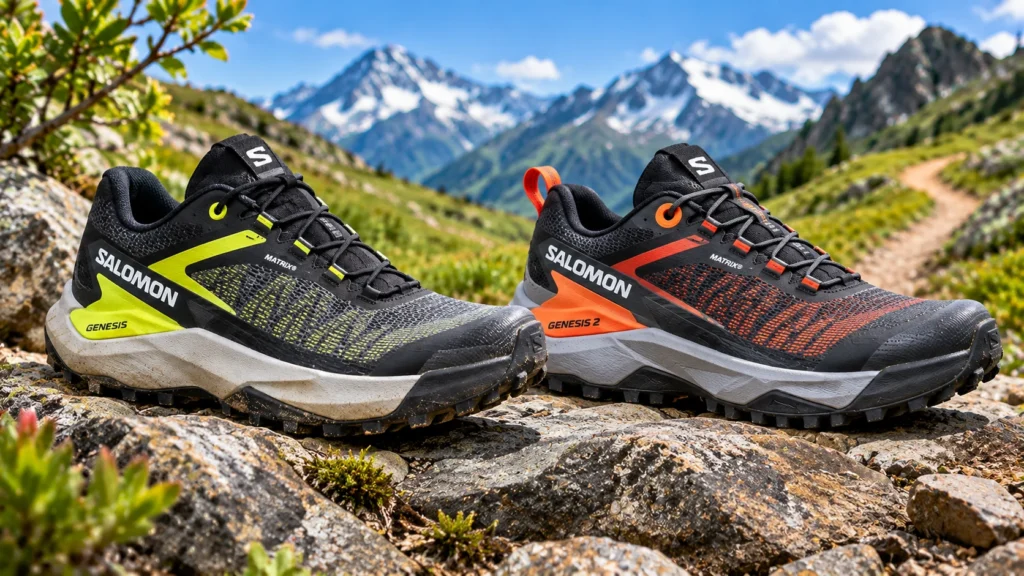
The Genesis and Genesis 2 share an 8 mm advertised drop, Matryx uppers, and Quicklace systems. Their biggest measurable differences involve bending stiffness, outsole durability, and toe fit. These differences matter more than their small weight gap.
Manufacturer measurements and independent lab results can vary. The table labels each type of measurement rather than mixing the two. That distinction matters when comparing shoes with slightly different test methods.
For a fuller explanation of stack height, shoe weight, and drop, use our running shoe specification guide.
| Specification | Original Genesis | Genesis 2 | Advantage |
|---|---|---|---|
| Original US list price | $149.95 | $150.00 | Tie |
| Advertised drop | 8 mm | 8 mm | Tie |
| Manufacturer lug depth | 4.5 mm | 4 mm | Different tread designs |
| Lab-measured lug depth | 4.0 mm | 3.9 mm | Essentially tied |
| Lab weight, US men’s 9 | 282 g | 286 g | Genesis |
| Lab heel stack | 33.5 mm | 32.7 mm | Genesis, slightly |
| Lab forefoot stack | 24.5 mm | 24.0 mm | Genesis, slightly |
| Bend resistance | 12.6 N | 17.8 N | Genesis for flexibility |
| Breathability lab score | 4/5 | 4/5 | Tie |
| Toe-upper abrasion score | 4/5 | 3/5 | Genesis |
| Outsole abrasion damage | 1.2 mm | 0.4 mm | Genesis 2 |
| Upper material | Matryx | Revised Matryx | Different strengths |
| Chassis | Active Chassis | Integrated Active Chassis | Genesis 2 |
| Lacing system | Quicklace | Quicklace | Tie |
| Outsole | All-Terrain Contagrip | Reworked Contagrip | Genesis 2 for wear testing |
| Waterproof membrane | No, standard version | No, standard version | Tie |
Sources: Manufacturer product information and independent RunRepeat testing. Test results describe specific shoe samples, not guaranteed performance for every pair.
Which Salomon Genesis Has Better Grip on Technical Trails?
Genesis 2 gets the overall grip recommendation for mixed technical trails. Its revised lug design and firmer chassis support more controlled movement on uneven ground. Still, neither shoe wins every surface.
The original Genesis has 4.5 mm advertised lugs. Genesis 2 has 4 mm advertised lugs. That does not mean the original automatically grips better. Rubber contact, tread shape, and the surface underfoot all affect traction.
Both shoes use All-Terrain Contagrip rubber. This outsole system targets mixed surfaces instead of one narrow terrain type. That makes each model suitable for dirt trails, scattered rocks, and moderate loose gravel.
On hard, angled rock, a secure midfoot and controlled landing matter. Genesis 2 offers a more structured ride for those moments. The original allows more foot flex, which some runners prefer on winding trails.
Which Model Handles Wet Rocks Better?
Genesis 2 is my provisional choice for wet, technical routes, but neither shoe guarantees secure grip on smooth wet stone. Salomon revised its tread geometry, while independent reviewers have reported confident traction across mixed terrain.
Wet rock remains unpredictable. Algae, polished stone, and steep angles can defeat even aggressive rubber. Slow your pace when the surface offers little friction.
Is the Original Genesis Better in Mud?
Not automatically. Its deeper advertised lugs offer a small numerical advantage. Yet Genesis 2 changes lug shape and spacing, which also affect how mud releases.
For frequent deep mud, a dedicated soft-ground shoe such as the Salomon Speedcross 6 makes more sense. Both Genesis models aim for broader trail use.
Trail safety: Neither standard Genesis model replaces an ice-specific shoe or traction device. Snow, smooth ice, and steep wet rock require extra caution.
Which Genesis Feels Better on Long Runs?
The original Genesis wins for runners who prefer flexibility. Genesis 2 suits those who want a more guided, controlled ride. Neither model is the obvious choice for someone seeking maximum softness.
The 12.6 N bending result explains why the original can feel more natural when the foot rolls forward. Genesis 2 needs 17.8 N in the same laboratory procedure. That makes it noticeably stiffer on paper.
However, stiffness and cushioning are not the same feature. A stable shoe can still feel firm under the heel. More foam also does not guarantee less fatigue after hours on rugged ground.
The right choice depends on your routes and running style. Smooth trails favor an easy, flexible stride. Broken rock can reward extra guidance. Long distances demand enough protection without pressure points.
Does the Genesis 2 Have Softer Cushioning?
No clear evidence shows that Genesis 2 is softer than the original in every condition. RunRepeat describes its ride as balanced and its shock absorption as limited compared with modern cushioned rivals.
This matters for runners who land hard on their heels. A shoe may feel stable during short runs yet less forgiving late in an ultra-distance outing.
Which Is Better for Long-Distance Comfort?
The original gets the flexibility advantage. Genesis 2 gets the structure advantage. Your foot shape and terrain should settle the decision.
If both feel too firm, consider a more cushioned trail model. Our On Cloudultra 2 review provides another long-distance comparison, including laboratory cushioning data.
Which Salomon Genesis Offers Better Price and Value?
The original Genesis offers better value when its price falls well below $150. Genesis 2 is the stronger full-price buy for runners who need its newer support and outsole design. At nearly identical list prices, the updated model has a clearer case.
One retailer currently shows an original Genesis option at $96.95. Genesis 2 remains listed at $150 on Salomon US. That creates a $53.05 difference for the specific discounted original option.
The discount is useful only when your size fits. An unsuitable shoe is not a bargain. Check return policies and stock before selecting a color simply because it costs less.
For shoppers comparing several stores, our running shoe discount guide explains why sizes, returns, and clearance policies change the true value of an offer.
When Does the Genesis 2 Become Worth the Extra Cost?
Genesis 2 is worth paying more for when outsole wear resistance and a stiffer platform matter to your runs. Its 0.4 mm laboratory abrasion result compares favorably with the original’s 1.2 mm result.
That is a strong difference under controlled conditions. Still, laboratory rubber wear is not a direct forecast of shoe lifespan. Terrain, body weight, and running style all influence real-world use.
Which Model Offers Better Fit, Upper Durability, and Protection?
The original Genesis wins the tested toe-upper abrasion comparison. Genesis 2 wins the tested outsole durability comparison. Fit is less simple because the newer shoe changes its platform without offering more space everywhere.
RunRepeat gave the original Genesis a 4/5 toe-upper abrasion result. The Genesis 2 scored 3/5 in the same category. Both use Matryx fabric, but upper construction and reinforcement differ.
At the toe-tip region, RunRepeat measured the Genesis 2 at 71.6 mm. It reported that result was about 5% narrower than the original Genesis sample. That measurement deserves attention from runners whose big toes press against shoe walls.
Genesis 2’s revised chassis can help the foot remain centered. However, a stable platform will not fix a poor internal fit. The best shoe should hold the heel without squeezing the toes.
Does the Salomon Genesis Run True to Size?
Both models are generally classified as true to size in RunRepeat’s assessments. That is a useful starting point, not a guarantee. Foot width, toe length, and sock thickness still affect comfort.
Leave enough room for your toes during downhill movement. Test the shoes while standing and walking down an incline when possible. A secure heel should not require painful lace tension.
Which Has Better Long-Term Durability?
Genesis 2 wins on outsole abrasion resistance. The original Genesis wins on the toe-upper abrasion scores. Neither result proves that one complete shoe will last longer for every runner.
For example, a runner who scrapes shoe uppers on sharp rocks may value the original’s stronger test result. Someone wearing through rubber on hard trails has better evidence for choosing Genesis 2.
Which Genesis Wins in Real-World Running Conditions?
Genesis 2 is the stronger default for technical routes needing extra guidance. The original Genesis remains a good choice for flexible trail running and reduced purchase cost. The best option changes when the terrain changes.
These use-case picks combine manufacturer details, laboratory results, and published field reviews. They are recommendations, not claims from a new controlled field test.
| Running Situation | Preferred Model | Reason |
|---|---|---|
| Rocky descents | Genesis 2 | More structured chassis |
| Winding singletrack | Original Genesis | Greater forefoot flexibility |
| Hard, abrasive trails | Genesis 2 | Better tested outsole wear resistance |
| Dry mixed-terrain training | Either | Both have versatile Contagrip outsoles |
| Wide toe shape | Try both carefully | Genesis 2 has a narrow measured toe-tip area |
| Discounted backup pair | Original Genesis | Lower clearance purchase cost |
| Cold-weather dirt trails | Either, after fit testing | Choose grip for actual conditions |
| Heavy rain or deep mud | Neither specialized | Consider waterproofing or deeper mud tread |
Which Shoe Works Better for Hiking?
Genesis 2 gets the edge for hikers who want a firmer, more guided feel. The original Genesis works well for hikers who prefer flexible footwear.
Both shoes can suit day hikes on mixed trails. Neither should be treated as a replacement for specialized mountain boots when heavy loads, winter conditions, or ankle protection require them.
Can You Use Either Genesis for Road Running?
Both can handle short paved connections, but neither is designed mainly for roads. The trail lugs and structured uppers add little value on smooth asphalt.
Frequent road miles can also affect lug wear. Choose a road-to-trail shoe for routes dominated by pavement and compact gravel.
Is the Genesis 2 Worth the Price Difference?
Yes, when your main concern is support and outsole wear on demanding trails. No, when you already love the original’s fit and find it at a strong discount. The upgrade is useful, but not essential for every runner.
At their original US list prices, the gap is only $0.05. There is little financial reason to choose an older model at that price. In that situation, Genesis 2 offers the newer design at almost no added cost.
Clearance prices change the calculation. A $96.95 original costs $53.05 less than a $150 Genesis 2. That saving can matter for runners replacing several pairs each season.
Neither figure is a verified Amazon checkout price. The original price is a listed retail reference, while the clearance amount applies to selected stock. Check current prices before making your decision.
Price history note: The original Genesis launched around the $150 US price level and now appears in selected clearance offers. Genesis 2 currently carries a $150 US list price. No verified historical Amazon price series was available for this comparison.
Who Should Buy the Original Genesis or Genesis 2?
Buy Genesis 2 if your trails demand frequent directional control and durable tread. Buy the original Genesis if you prefer flexibility and can find the correct size at a lower price. Skip both if their fit or cushioning does not suit your feet.
This decision should begin with fit rather than price. Wear both shoes indoors before committing, if your retailer allows returns. The newer model is not guaranteed to fit better simply because it is newer.
Buy Original Genesis If…
- You prefer a more flexible trail shoe.
- You already know the original fits well.
- You find a meaningful clearance discount.
- You value its tested toe-upper protection.
Buy Genesis 2 If…
- You prefer a more structured platform.
- You run on abrasive, technical trails.
- You want the updated outsole design.
- The price difference is small.
When Should You Skip Both?
Skip both if you need maximum cushioning, an extra-wide toe shape, or dedicated deep-mud traction.
For a roomier toe shape, consider the Altra Lone Peak 9. Its zero-drop design feels different and requires an appropriate adjustment period.
What Are Real Buyers Saying About Both Genesis Models?
Buyer feedback is broadly positive about grip, support, and comfort, but it is not unanimous. The original Genesis has complaints about outsole wear. The Genesis 2 receives mixed comments about comfort and fit.
It is important to separate retailer ratings from Amazon ratings. Scheels displays a 4.5/5 average from 117 reviews for the original Genesis. Salomon US displays a 4.1/5 average from 46 reviews for Genesis 2.
These numbers come from different stores and different review groups. They should not be treated as a controlled comparison. I could not verify live Amazon star ratings or review totals for exact matching listings.
Original Genesis
★★★★★ 4.5/5
117 reviews — Scheels
Commonly praised
- Secure fit and convenient lacing
- Comfort during trails and hikes
- Grip on mixed terrain
Reported complaints
- Outsole wear sooner than expected
- Warmth or limited comfort for some foot shapes
Bottom line: Owners often value the secure, versatile feel, but durability satisfaction varies.
Genesis 2
★★★★☆ 4.1/5
46 reviews — Salomon US
Common positive themes
- Technical-trail grip
- Supportive structure
- Midfoot security
Concerns to check
- Firmness compared with softer shoes
- Comfort and toe-space differences
Bottom line: The updated design favors control, but fit and cushioning remain personal.
Retailer opinions can change as more reviews arrive. Individual comfort complaints do not establish a defect affecting every shoe.
How Should You Maintain Salomon Genesis Trail Shoes?
Care tip: Brush away dried mud after each dirty run. Clean the outsole grooves, air-dry the shoes, and inspect worn lugs before technical outings.
Both Genesis models need simple, regular care. The Matryx upper can hold trail dirt, while the Contagrip outsole collects small stones and mud. Cleaning helps you spot damage before a long run.
Start by removing loose dirt with a soft brush. Use cool water and mild soap for stubborn marks. Avoid strong cleaning chemicals and machine drying, which can damage materials.
Next, check the Quicklace cord for fraying. Inspect its locking mechanism and storage pocket. Replace damaged laces before they fail during a descent.
Leave wet shoes in a ventilated room to dry. Remove the insoles when necessary. Do not place the shoes beside a heater or expose them to concentrated heat.
Finally, check rubber wear across the heel and forefoot. Uneven lug loss can reduce confidence on rocky ground. Replace the shoes when worn traction, damaged support, or persistent discomfort makes them unsafe for your routes.
Final Verdict: Should You Buy Genesis or Genesis 2?
The Salomon Genesis 2 is my overall recommendation for a new technical-trail purchase. Its revised chassis creates a more guided ride, while independent abrasion tests favor its outsole. The standard model still costs $150 at Salomon US, placing it close to the original’s launch price.
The original Genesis remains an excellent value under the right conditions. It feels less rigid in laboratory bending tests and its upper earned a stronger toe-abrasion score. A significant clearance discount makes those strengths more attractive.
Most positive feedback across the Genesis line centers on grip and secure fit. The main concerns involve comfort preferences, toe space, and wear. Those concerns deserve as much attention as the product’s technical specifications.
My final buying rule is straightforward: choose Genesis 2 at equal prices, but consider the original when it fits well and costs substantially less.
Frequently Asked Questions
Is the Salomon Genesis good for ultra running?
Yes, the original Genesis can work well for long technical trail runs. It offers secure lockdown, moderate cushioning, and a relatively flexible forefoot. However, runners seeking maximum softness should consider more cushioned alternatives. Test the shoe over shorter distances before using it for an ultra-distance event.
Is the Salomon Genesis 2 better than the original?
Genesis 2 is better for runners who prioritize structure and outsole wear resistance. The original offers greater flexibility and stronger toe-upper abrasion results in independent testing. Neither model wins every category. Choose Genesis 2 at equal prices, but consider the original when a suitable discounted pair fits well.
Does the Salomon Genesis run true to size?
Independent testing generally describes both Genesis models as true to size. Still, their toe shapes differ. Genesis 2 has a relatively narrow measured toe-tip area, which can affect comfort. Wear your usual trail socks when checking fit, and leave enough room for downhill toe movement.
Can I wear Salomon Genesis shoes for hiking?
Yes, both Genesis models can handle many day hikes on dirt, gravel, and rocky paths. Genesis 2 has a more structured feel, while the original allows more flex. Neither standard shoe is waterproof or built for icy conditions. Match your footwear to the weather, terrain, and pack weight.
How long do Salomon Genesis shoes last?
There is no reliable fixed mileage for every runner. Outsole wear, upper damage, cushioning changes, and terrain all affect lifespan. Genesis 2 performed better in RunRepeat’s outsole abrasion test, but that result does not guarantee longer use. Inspect your shoes regularly and replace them when support or traction declines.
Affiliate Disclosure:
As an Amazon Associate, I earn from qualifying purchases.
If you click a link on this page and make a purchase,
I may receive a small commission — at no extra cost to you.
I only recommend products I genuinely believe will help you.
This helps keep the site free and running. Thank you for your support.


