

Quick Answer
The HOKA Mach 6 wins for everyday running because it weighs about 232 grams and offers flexible, plate-free cushioning. The Adidas Boston 12 is better for structured tempo and marathon workouts. Choose HOKA for daily versatility or Adidas for a firmer, more guided ride.
Which shoe handles your weekly training better?
- Mach 6 weighs approximately 232 grams.
- Boston 12 features glass-fiber ENERGYRODS 2.0.
- Mach 6 has a $20 lower original retail price.
Quick Verdict: Adidas Boston 12 vs HOKA Mach 6
ADIDAS BOSTON 12
$160 Original MSRP
Best for:
Runners who want structured tempo training and marathon workouts.
HOKA MACH 6
$140 Original MSRP
Best for:
Neutral runners seeking a lightweight shoe for varied daily training.
| Category | Boston 12 | Mach 6 |
|---|---|---|
| Overall Winner | — | 🏆 |
| Original Price Value | ❌ | ✅ |
| Tempo Training | 🏆 | ✅ |
| Lightweight Feel | ❌ | 🏆 |
| Daily Versatility | ❌ | 🏆 |
Bottom line: HOKA Mach 6 wins for everyday runners because it’s lighter and more versatile. Boston 12 is worth choosing when structured speed training matters more.
Editorial scores are our comparative assessments, not Amazon star ratings. Prices shown are original US retail prices, not live Amazon offers.
- HOKA Mach 6 weighs about 232 grams in the men’s reference size.
- Boston 12 originally cost $20 more than the Mach 6.
- Boston 12 uses glass-fiber ENERGYRODS 2.0 for structured transitions.
- Mach 6 uses a plate-free supercritical EVA midsole.
- The biggest difference is the Boston’s guided ride versus HOKA’s lighter flexibility.
Why Are Runners Comparing Adidas Boston 12 and HOKA Mach 6?
The Adidas Boston 12 and HOKA Mach 6 target runners who want speed and comfort. Both work on roads, but their designs create different running experiences.
I’m Steven Tyler, and I write running shoe reviews for Footwear Hiker. This comparison uses published brand specifications, independent laboratory findings, and available buyer feedback. It is a research-based review, not a claim of personal mileage testing.
The Boston 12 uses two types of Lightstrike foam and glass-fiber rods. The Mach 6 uses supercritical EVA foam without a plate or rods.
That difference matters during daily miles, tempo sessions, and longer workouts. Let’s look at the details before choosing a winner.
What Is the Adidas Adizero Boston 12 Designed to Do?
| Best for | Tempo sessions, marathon training, and structured road workouts. |
| Not ideal for | Runners who want the lightest and most flexible daily trainer. |
| Original price | $160 |
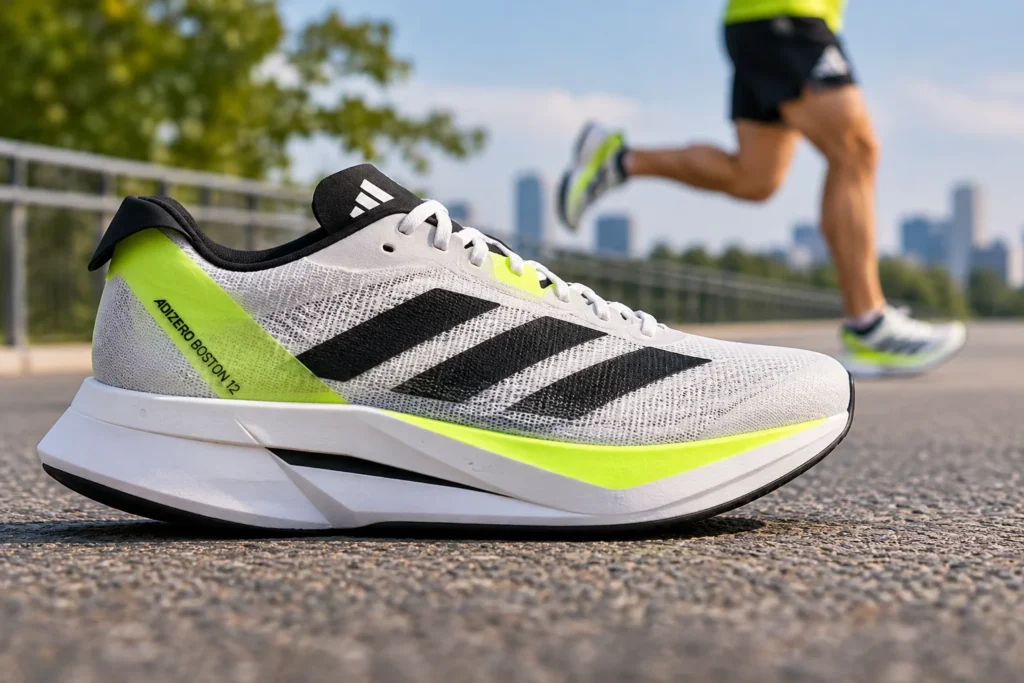
The Adidas Adizero Boston 12 is a performance road trainer for mid-distance and long-distance workouts. It combines Lightstrike Pro foam, Lightstrike 2.0 EVA, and glass-fiber ENERGYRODS 2.0. This design gives runners a structured ride for faster training. It suits runners preparing for races who want more guidance than a flexible daily shoe provides.
Adidas lists a men’s reference weight of 260 grams. The official heel stack measures 38 mm, while the forefoot measures 31 mm. That creates a stated 7 mm heel-to-toe drop.
The Continental rubber outsole adds grip across road surfaces. The engineered mesh upper uses targeted zones for midfoot hold and forefoot flexibility. Adidas also states that the upper contains at least 50% recycled content.
The Boston 12 launched at $160 in the US. It now competes with newer models, including the Boston 13 and Adizero EVO SL. Buyers should compare current discounts before paying full price.
Read our official Boston 12 specifications for product details and availability.
What Are the Adidas Boston 12 Pros and Cons?
The Boston 12’s biggest strength is its structured, fast-training platform. Its main drawback is a firmer, heavier feel than flexible daily trainers. That balance suits runners who prefer a guided transition and a more purposeful tempo shoe.
Adidas Adizero Boston 12 Running Shoes
Choose the Boston 12 if you want a structured trainer for faster road workouts and marathon preparation.
What Is the HOKA Mach 6 Designed to Do?
| Best for | Daily road running, mixed paces, and lightweight training. |
| Not ideal for | Runners who need a broad toe box or a highly cushioned recovery shoe. |
| Original price | $140 |
The HOKA Mach 6 is a lightweight neutral road trainer for daily miles and faster workouts. It uses a full-length supercritical EVA midsole and strategic rubber outsole coverage. Its plate-free design creates a more flexible feel than the Boston 12. It suits runners who want one shoe for several types of road training.
The men’s reference weight is approximately 232 grams. HOKA lists a 37 mm heel stack and a 32 mm forefoot stack. Its stated heel-to-toe drop is 5 mm.
The creel jacquard upper uses zones of breathability. An internal tongue gusset helps hold the foot in place. The rubber outsole protects important ground-contact areas without covering the entire base.
The Mach 6 launched at $140 in the US. The newer Mach 7 now gives shoppers another option. A discounted Mach 6 can still offer strong value when its fit suits your feet.
See the HOKA Mach 6 product details for its construction and retail information.
What Are the HOKA Mach 6 Pros and Cons?
The Mach 6’s biggest strength is its low weight and broad training use. Its main drawback is a tapered forefoot that can feel tight. Buyers often praise its light feel, but fit feedback shows that toe room needs careful attention.
HOKA Men’s Mach 6 Running Shoes
Choose the Mach 6 if you want a light, plate-free trainer for regular road miles and varied running speeds.
How Do the Adidas Boston 12 and HOKA Mach 6 Specifications Compare?
The Boston 12 wins on its guided propulsion system, while the Mach 6 wins on weight. Adidas lists 260 grams and a 7 mm drop. HOKA lists approximately 232 grams and a 5 mm drop. Both are neutral road trainers, but their midsole systems serve different needs.
| Specification | Boston 12 | Mach 6 | Winner |
|---|---|---|---|
| Original US MSRP | $160 | $140 | Mach 6 |
| Men’s reference weight | 260 g | 232 g | Mach 6 |
| Heel stack | 38 mm | 37 mm | Boston 12 |
| Forefoot stack | 31 mm | 32 mm | Mach 6 |
| Heel drop | 7 mm | 5 mm | Depends on preference |
| Midsole | Lightstrike Pro + 2.0 | Supercritical EVA | Tie |
| Propulsion system | Glass-fiber rods | None | Boston 12 |
| Upper | Engineered mesh | Creel jacquard | Tie |
| Outsole | Continental rubber | Strategic rubber | Boston 12 |
| Plate | No carbon plate | No plate | Tie |
| Category | Neutral road trainer | Neutral road trainer | Tie |
| Warranty | Check regional policy | Check regional policy | Not established |
Weights and stack heights refer to men’s brand specifications and reference sizes. Actual weight changes with shoe size. Independent laboratory measurements can differ from brand measurements.
Which Shoe Offers Better Cushioning and Responsiveness?
The HOKA Mach 6 wins for runners who want a lighter and more flexible ride. Its supercritical EVA foam runs through the full midsole. The Boston 12 uses a firmer support layer with a softer Lightstrike Pro top layer. That structure gives the Adidas shoe a more guided feel during faster training.
Lightstrike Pro provides the softer top layer in the Boston 12. Lightstrike 2.0 supports the base and helps create a structured platform. ENERGYRODS 2.0 sit within the midsole and guide the transition from heel to toe.
The Mach 6 takes a simpler approach. HOKA uses supercritical EVA foam to balance cushioning and responsiveness. The shoe does not depend on rods or a carbon plate to create forward movement.
Independent testing gives useful context. RTINGS measured the Mach 6 at 233.6 grams, close to its published reference weight. Its laboratory review describes the shoe as a balanced daily trainer rather than a specialist racing shoe.
Neither foam system is automatically better for every runner. Some runners prefer a firm platform that feels controlled during tempo sessions. Others want a softer and more flexible shoe for changing daily paces.
Test both shoes at your normal training pace. A shoe that feels fast for one kilometer may feel tiring over a longer run.
Category winner: HOKA Mach 6 for flexible daily cushioning; Boston 12 for structured tempo running.
Which Running Shoe Performs Better During Daily and Tempo Runs?
The HOKA Mach 6 wins for mixed daily training because it is lighter and less structured. The Boston 12 wins when the workout needs a more guided transition. Their weight difference is approximately 28 grams using the published men’s reference figures.
For easy runs, the Mach 6 offers a straightforward ride. Its plate-free midsole allows a more flexible feel. That makes it a practical choice for runners who alternate relaxed miles with steady efforts.
The Boston 12 feels more purposeful during faster training. Its rods and dual-foam midsole support a structured stride. Runners who enjoy this feeling can use it for tempo sessions and marathon-pace workouts.
Consider a runner with four weekly sessions. The runner completes two easy runs, one interval workout, and one longer weekend run. The Mach 6 can cover the full week. The Boston 12 makes more sense if the faster workouts matter most.
Neither shoe replaces a racing shoe for every athlete. Advanced runners may want a separate plated model for race day. Recreational runners can often get more value from a versatile trainer.
Category winner: Mach 6 for everyday versatility; Boston 12 for structured speed sessions.
Is the HOKA Mach 6 Worth the Extra Comfort or Is the Boston 12 Better Value?
The Mach 6 wins on original retail price because it launched at $140 against the Boston 12’s $160. That is a $20 difference. However, actual value depends on today’s discounts, remaining sizes, and the shoe that fits best.
The Boston 12’s premium buys a different midsole system. You get glass-fiber rods, dual-density foam construction, and a Continental rubber outsole. Those features matter most when you want a firmer training platform.
The Mach 6 saves weight and uses a plate-free design. Its simpler construction suits runners who prefer flexibility. It also makes sense for buyers who want one shoe for several weekly workouts.
Current prices change by retailer, size, and color. Adidas has advertised substantial discounts from its original $160 price. HOKA retailer listings have also shown Mach 6 discounts from its $140 MSRP.
Do not treat an original retail price as a current Amazon price. Check the selected size, seller, shipping cost, and return policy before buying.
Category winner: HOKA Mach 6 at original retail prices. A deep Boston 12 discount can change the result.
Which Shoe Has Better Grip, Fit, and Durability?
The Boston 12 has the stronger outsole specification because it uses Continental rubber. The Mach 6 has strategic rubber coverage designed to protect key contact areas. Both shoes have useful road-running traction, but neither is a technical trail shoe.
Continental rubber is a notable feature of Adidas performance footwear. Adidas combines it with a midsole built for faster training. The outsole layout supports repeated road contact and daily use.
HOKA places rubber in selected areas of the Mach 6 outsole. This approach helps manage weight while protecting high-contact sections. The design does not cover every part of the base.
Fit can matter more than the outsole. The Boston 12 has a regular-fit design, while the Mach 6 has received buyer complaints about toe pressure and forefoot width. Runners with broad feet should test both models before a long run.
HOKA’s store review feedback includes praise for light weight and comfort. It also includes complaints about tight width and heel movement. One published buyer report described sole separation, which shows why buyers should inspect shoes and keep purchase records.
Stop using any shoe that develops sole separation, loose structural parts, or causes pain. Contact the seller or manufacturer about a possible defect. Do not assume a shoe is safe because its outsole looks new.
Both models need routine care. Remove surface dirt with a soft brush. Let wet shoes dry naturally and avoid direct heat.
Category winner: Boston 12 for outsole rubber specification; fit depends on your foot shape.
Which Shoe Wins in Real-World Running Scenarios?
The Mach 6 wins in more everyday situations because it combines low weight and flexible cushioning. The Boston 12 takes the lead when a runner wants a more structured platform for tempo and marathon-pace work. Choose based on the sessions that make up most of your week.
| Running situation | Winner | Reason |
|---|---|---|
| Easy 5K runs | Mach 6 | Lighter and more flexible. |
| Tempo workouts | Boston 12 | Rods add structure to transitions. |
| Daily mixed-pace running | Mach 6 | Versatile plate-free ride. |
| Marathon-pace training | Boston 12 | Structured performance feel. |
| Beginner road running | Mach 6 | Simple, versatile design. |
| Wet pavement | Boston 12 | Continental outsole specification. |
For cold-weather running, neither shoe has a special winter outsole or waterproof membrane in its standard road version. Use extra care on ice and packed snow. A road-running outsole is not a substitute for winter traction equipment.
For runners who train in a commercial gym or running club, both shoes can handle regular road sessions. The Mach 6 offers a more flexible daily option. The Boston 12 is a better match for scheduled faster workouts.
Is the Adidas Boston 12 Worth $20 More Than the HOKA Mach 6?
No, not for every runner. The Boston 12’s original $160 price is $20 above the Mach 6’s $140 launch price. The extra cost makes sense when you value ENERGYRODS 2.0 and a structured training ride. The Mach 6 offers better general value for mixed daily use.
The Boston 12 has been discounted below its original retail price at Adidas. That can make it a strong purchase when your size is available. Compare the final checkout cost rather than relying on the original price.
The Mach 6 has also appeared below its original MSRP at HOKA retail partners. Its value improves when the price falls well below newer Mach models.
Historical lowest prices depend on color, size, retailer, and sale period. I could not verify a complete price-history record for either shoe. Do not treat one retailer’s temporary offer as a guaranteed lowest price.
Check both listings before ordering. A $10 saving is not worth buying a shoe that does not fit. A comfortable shoe that supports consistent training is the better investment.
Value verdict: Mach 6 wins at full original retail prices; buy the Boston 12 when its discount makes the performance features worthwhile.
Who Should Buy the Adidas Boston 12 or HOKA Mach 6?
Buy the Adidas Boston 12 if you want structured tempo training and a guided ride. Buy the HOKA Mach 6 if you want a lighter shoe for regular road miles. Both suit neutral runners, but neither replaces a dedicated stability shoe when that support is needed.
- Run regular tempo sessions.
- Train for a marathon.
- Prefer a structured midsole.
- Like glass-fiber rod guidance.
- Want a lighter daily trainer.
- Mix easy and faster runs.
- Prefer a plate-free shoe.
- Want the lower original MSRP.
- You need strong stability support; consider ASICS GT-2000.
- You want maximum cushioning; compare HOKA Bondi.
- You need a carbon race shoe; compare Adidas Adios Pro.
What Are Real Buyers Saying About Both Running Shoes?
Published buyer feedback highlights the Mach 6’s light feel and the Boston 12’s performance-focused construction. Fit and comfort remain personal concerns for both shoes. The figures below are brand or retailer review snapshots, not Amazon ratings.
Buyer Feedback Snapshot
- Performance-focused construction.
- Comfort for training runs.
- Recognizable Adizero design.
- Firmness may not suit everyone.
- Rod structure feels less flexible.
- Lightweight construction.
- Comfort and responsive cushioning.
- Versatile everyday use.
- Forefoot width can feel tight.
- Some report heel movement.
Buyer takeaway: Both shoes have positive feedback, but the Mach 6’s toe-box fit deserves attention. The Boston 12 is better suited to buyers who enjoy a more structured running platform.
Review totals and ratings can change over time. They also come from different retail sources and should not be treated as a direct statistical comparison. Read recent reviews for your exact size and color before ordering.
How Should You Maintain Your Adidas Boston 12 and HOKA Mach 6?
Clean both shoes by hand and let them air-dry. Avoid direct heat because it can damage synthetic materials, adhesives, and cushioning.
Regular care helps both shoes stay in good condition. Dirt can collect around the outsole, mesh upper, and heel collar. Clean these areas gently after muddy or wet runs.
How Do You Clean the Mesh Upper?
Use a soft brush and a small amount of mild soap. Wipe the upper with a damp cloth instead of soaking the shoe. This helps protect the mesh and glued sections.
How Should You Dry Wet Running Shoes?
Remove the insoles if the design allows it. Loosen the laces and place paper towels inside the shoes. Let them dry naturally in a ventilated area.
How Do You Protect the Outsole?
Remove small stones and dried mud from the rubber. Avoid using sharp metal tools that can damage the tread. Check the heel and forefoot for uneven wear.
How Should You Store Both Shoes?
Store running shoes in a cool, dry place. Keep them away from heaters, hot car interiors, and direct sunlight. Do not leave damp shoes inside a closed gym bag.
When Should You Replace Running Shoes?
Inspect your shoes regularly instead of following one fixed mileage number. Look for worn tread, compressed foam, loose bonding, and changes in comfort. Replace a pair when its condition no longer supports safe, comfortable running.
For more details, follow the ASICS shoe cleaning guide and the Brooks footwear care instructions.
How Was This Adidas Boston 12 vs HOKA Mach 6 Comparison Researched?
This comparison uses official product specifications, independent laboratory reviews, and published retailer feedback. It does not claim a new hands-on running test. That distinction matters because shoe feel changes with runner weight, pace, foot shape, and running surface.
Adidas product information confirms the Boston 12’s Lightstrike foam, ENERGYRODS 2.0, Continental outsole, and published dimensions. HOKA product information confirms the Mach 6’s supercritical foam, creel jacquard upper, and strategic rubber coverage.
Independent test data from RTINGS provides measured weight, cushioning, responsiveness, and stability findings. Retailer feedback adds useful context about fit and ownership concerns.
We also considered the role of the newer Boston and Mach models. A previous-generation shoe can still offer value when its discount is meaningful and its fit meets your needs.
The comparison focuses on four buyer questions: cushioning, running performance, price, and fit. These factors have the greatest impact on choosing between these two neutral road trainers.
For product details, see the Adidas Boston 12 official page and the HOKA Mach 6 official retail page.
Final Verdict: Should You Buy Adidas Boston 12 or HOKA Mach 6?
The HOKA Mach 6 is the better overall choice for most runners seeking one versatile daily trainer. Its approximately 232-gram weight and plate-free supercritical EVA design make it easier to use across different training paces. The Adidas Boston 12 remains the stronger option for runners who prefer glass-fiber rods and a structured tempo-running platform. Your training goals and foot shape should decide the final purchase.
Choose the Mach 6 for everyday road running, shorter workouts, and flexible training. Choose the Boston 12 for marathon preparation and faster sessions where its guided feel suits your stride.
Neither shoe is perfect for every foot. Check toe room, heel hold, and comfort before committing to longer runs. A proper fit matters more than a small difference in specifications.
My recommendation is the HOKA Mach 6 for general daily use. The Adidas Boston 12 is the better specialist choice when structured speed training is your priority.
Adidas Adizero Boston 12 Running Shoes
Choose this shoe for a structured ride and regular tempo or marathon training.
HOKA Men’s Mach 6 Running Shoes
Choose this shoe for lighter daily training and a flexible, plate-free running feel.
Frequently Asked Questions
Which is better, Adidas Boston 12 or HOKA Mach 6?
The HOKA Mach 6 is better for most daily runners because it weighs less and offers a flexible, plate-free ride. The Boston 12 is better for structured tempo sessions and marathon workouts. Choose the shoe that matches your main training needs and fits your foot comfortably.
What is the main difference between Adidas Boston 12 and HOKA Mach 6?
The main difference is the midsole design. Boston 12 combines Lightstrike Pro, Lightstrike 2.0, and glass-fiber rods. Mach 6 uses supercritical EVA without rods or a plate. This creates a more guided Adidas ride and a lighter, more flexible HOKA experience.
Is Adidas Boston 12 worth the extra money?
The Boston 12 is worth more when you need its structured training feel and ENERGYRODS 2.0. It is not automatically better for easy daily running. Compare current discounts before buying, because a large sale can make the Adidas shoe a strong value.
Is HOKA Mach 6 good for long-distance running?
Yes, the Mach 6 can handle longer road runs for runners who like its fit and cushioning. Its low weight helps during regular training. However, runners with wide forefeet or a preference for softer cushioning should test it carefully before choosing it for long sessions.
Does Adidas Boston 12 have a carbon plate?
No, the Boston 12 does not use a carbon-fiber plate. It uses glass-fiber-infused ENERGYRODS 2.0 within its midsole. These rods provide structure and help guide transitions. The Mach 6 has neither rods nor a plate, so its ride feels more flexible.
Affiliate Disclosure:
As an Amazon Associate, I earn from qualifying purchases.
If you click a link on this page and make a purchase,
I may receive a small commission — at no extra cost to you.
I only recommend products I genuinely believe will help you.
This helps keep the site free and running. Thank you for your support.


