

Quick Answer
The ASICS Gel-Cumulus 27 wins for runners who value an updated upper and padded heel fit. The Gel-Cumulus 26 is the smarter budget buy when discounted. Both have an 8 mm drop, the same listed midsole stack, and a $140 launch price. The 26 is about 12 g lighter in men’s reference sizing.
What actually changes between the Cumulus 27 and 26?
- Gel-Cumulus 27: redesigned mesh upper and knit heel pull tab.
- Gel-Cumulus 26: lighter listed men’s weight, at 253 g versus 265 g.
- Both: FF BLAST PLUS foam, heel PureGEL, FluidRide outsole, and an 8 mm drop.
Quick Verdict: Gel-Cumulus 27 vs 26
Gel-Cumulus 26
Earlier site snapshot: Amazon customer rating; not live
$140 original US list price
Best for:
Budget shoppers who find their size on sale and want a lighter classic trainer.
Gel-Cumulus 27
Earlier site snapshot: Amazon customer rating; not live
$140 original US list price
Best for:
Easy-road runners seeking an updated mesh upper and easier pull-on design.
| Category | Cumulus 26 | Cumulus 27 |
|---|---|---|
| Overall design update | — | 🏆 |
| Best value on a deep sale | ✅ | ❌ |
| Lower listed weight | ✅ | ❌ |
| Updated heel entry | ❌ | ✅ |
| Midsole and listed drop | ✅ | ✅ |
Bottom line: Choose the 27 for its refreshed fit, but choose the 26 when a meaningful price cut beats that small update.
- The 27 adds a redesigned mesh upper and a new knit heel pull tab.
- Both shoes launched at $140, so the launch-price gap was $0.
- The 26 lists 253 g for men; the 27 lists 265 g.
- Both have a 38.5 mm men’s heel stack and an 8 mm drop.
- Neither is built as a fast race shoe or a dedicated stability trainer.
You’re ready for new running shoes, but the two Cumulus models look almost the same. Both promise daily comfort. Both use familiar ASICS cushioning. So is the newer pair worth more?
I’m Steven Tyler, and I write practical footwear guides for FootwearHiker. This buying comparison draws on official ASICS specifications, independent wear tests, and published customer feedback. It does not claim that I personally ran in both pairs. That distinction matters when judging how a shoe feels.
The ASICS Gel-Cumulus 27 is an update to the Gel-Cumulus 26, not a full rebuild. Their midsole designs remain close. The main change is around the foot, where mesh and heel details affect fit. Buyers should also weigh discounts, heat, and outsole wear.
We’ll compare what changed, what stayed the same, and which runner benefits. The biggest surprise is that the lighter older shoe may be the better buy.
What Is the ASICS Gel-Cumulus 27 Best For?
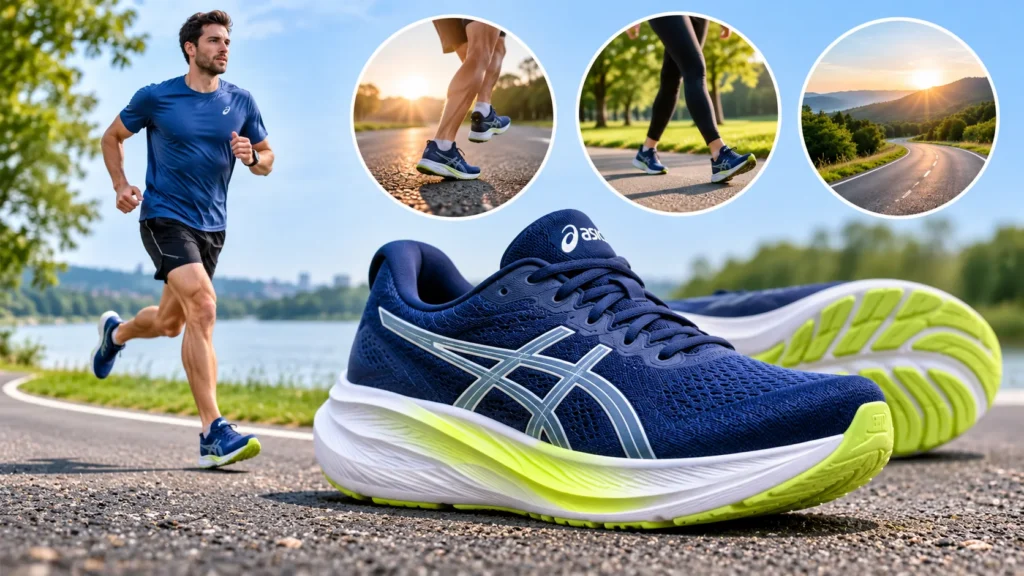
In short, the Gel-Cumulus 27 is a neutral road trainer for relaxed runs, steady miles, and everyday walking. Its FF BLAST PLUS midsole and heel PureGEL aim to soften landings without adding a racing plate. A broad base gives the ride a controlled feel.
Quick verdict: Better for heel comfort and an updated upper, not extra speed.
The shoe lists a 38.5 mm heel and 30.5 mm forefoot stack in men’s sizing. That creates an 8 mm drop. Listed men’s weight is about 265 g, or 9.3 oz. Women’s figures differ with shoe size and geometry.
ASICS also adds a knit pull tab at the heel. The refreshed mesh feels like a more visible change than the foam. This makes the Gel-Cumulus 27 appealing to runners who liked the Cumulus ride but wanted a different fit around the heel.
For the full single-model analysis, see the ASICS Gel-Cumulus 27 review. That guide covers separate outsole testing, fit notes, and wear concerns.
- Soft heel landing for easy miles
- New mesh upper and pull tab
- Stable-feeling neutral platform
- Works for walks and easy runs
- Heavier than the older model
- Modest rebound for hard workouts
- Mesh can feel warm
- Outsole abrasion raises concerns
ASICS Gel-Cumulus 27 neutral road-running shoes
Original US price: $140. Actual Amazon offers depend on size, color, and stock.
Who Should Choose the ASICS Gel-Cumulus 26?
Mainly, the Gel-Cumulus 26 suits neutral runners who want easy mileage at a lower price. It has the same listed drop and stack geometry as the 27. Its FF BLAST PLUS foam and rearfoot PureGEL also serve the same basic purpose: comfortable daily impact protection.
Quick verdict: The 26 is the stronger value choice when your size is discounted.
The men’s reference shoe weighs about 253 g, or 8.9 oz. That’s around 12 g less than the 27. The difference is small, but it matters more than expected when neither model delivers strong race-shoe rebound.
The older engineered mesh design and heel finish are the key trade-offs. Some runners enjoy the familiar construction. Others notice rubbing or prefer the revised collar on the newer pair. Try both if heel shape has caused problems before.
Our ASICS Gel-Cumulus 26 review looks at published tests, the older upper, and the value of sale pricing.
- Lower listed weight
- Same basic cushioning platform
- Often easier to justify on sale
- Useful for everyday road miles
- No newer heel pull tab
- Older fit may rub some heels
- Limited speed-oriented bounce
- FluidRide wear needs monitoring
ASICS Gel-Cumulus 26 neutral road-running shoes
Original US price: $140. Look for a real discount and confirm seller returns.
What Are the Full Gel-Cumulus 27 vs 26 Specifications?
In short, ASICS kept the core running geometry consistent. Both shoes list an 8 mm drop and FF BLAST PLUS cushioning. The visible changes are the upper and heel tab. The 26 keeps a small weight advantage.
| Specification | Gel-Cumulus 26 | Gel-Cumulus 27 | Result |
|---|---|---|---|
| US launch MSRP | $140 | $140 | Tie |
| Current Amazon price | Verify listing | Verify listing | Depends on offer |
| Men’s listed weight | 253 g / 8.9 oz | 265 g / 9.3 oz | 26 |
| Women’s listed weight | 222 g / 7.8 oz | 230 g / 8.1 oz | 26 |
| Men’s heel / forefoot stack | 38.5 / 30.5 mm | 38.5 / 30.5 mm | Tie |
| Heel-to-toe drop | 8 mm | 8 mm | Tie |
| Midsole foam | FF BLAST PLUS | FF BLAST PLUS | Tie |
| Rearfoot insert | PureGEL | PureGEL | Tie |
| Outsole | FluidRide | FluidRide | Tie in basic material |
| Upper | Engineered mesh | Revised engineered mesh | 27 design update |
| New knit heel pull tab | No | Yes | 27 |
| Support type | Neutral | Neutral | Tie |
| Carbon plate | No | No | Tie |
| Amazon rating snapshot* | 4.5/5 | 4.6/5 | 27 at time recorded |
| Warranty and returns | Check retailer / region | Check retailer / region | No verified difference |
*Amazon ratings are earlier FootwearHiker listing snapshots, not live Amazon checks. Reference weights use different published sample sizes. Price and stock vary by color, width, and seller.
Which Has Better Cushioning and Running Feel?
In short, neither model has a clear cushioning-spec win. Both combine FF BLAST PLUS foam with a PureGEL heel insert. Their listed men’s sole measurements also match. The newer model does not buy you a taller stack or a new high-rebound foam.
That matters on a relaxed five-mile run. The main job is smooth, steady impact protection. Reviewers describe both as dependable daily shoes rather than spring-loaded speed trainers. The feeling is closer to controlled comfort than a lively racing push.
Published testing does show some small differences in ride impressions. These are impressions from different testers, not a single controlled head-to-head experiment. Shoe size, pace, and landing style can change how firm a midsole feels.
Consider the ASICS Novablast if you crave a bouncier stride. Our ASICS Novablast 5 review explains why its foam feels different. That comparison matters when the Cumulus costs close to other daily trainers.
Another point: more stack does not always mean a better running shoe. The Cumulus keeps a less extreme feel underfoot. Runners who dislike tall, highly rockered platforms may prefer this design even when flashier shoes feel faster.
Cushioning winner: Tie. Choose the model that fits better and costs less. Don’t pay extra expecting a dramatic midsole upgrade.
Which Has the Better Fit, Heel Hold, and Breathability?
The Gel-Cumulus 27 wins for updated heel entry, but not for every foot shape. ASICS added a redesigned mesh upper and knit heel pull tab. Those changes target fit and ease of use. They do not guarantee that the newer shoe fits wider feet better.
The added heel structure can help runners who enjoy a padded rear collar. It can also change where fabric touches the ankle. If older shoes rubbed your heel bone, try both versions with your usual running socks. A soft collar is not enough if its edge sits in the wrong spot.
Heat is the 27’s biggest fit-related caution. RunRepeat gave its tested 27 sample a breathability score of 2/5 in a lab airflow test. That’s a useful warning for hot, humid runs. It’s not proof that every runner will overheat.
The 26 also has an engineered mesh upper and may suit runners who like its older fit. Its lower listed weight is helpful, but a 12 g gap cannot offset a poor size choice. Toe pressure and heel slip matter more.
ASICS names the new upper and heel tab in its official Gel-Cumulus update guide. The brand describes the update as a refinement rather than a new foam platform.
Fit winner: Gel-Cumulus 27 for the refreshed heel design. For hot feet or wide toes, the winning pair is whichever passes a real try-on.
Which Offers Better Price and Value?
At launch, the Gel-Cumulus 26 and 27 were tied at $140. So there was no original US price gap. Current value depends on the offer for your exact size and width. Older colorways often sell at a discount, but a low advertised price does not guarantee inventory.
Use a simple rule. If the 27 costs only $10 more, pay for it if the heel fit is better. If the 26 is $30 or $40 cheaper, that saving is harder to ignore. The foam, stack, and drop remain closely matched.
For example, compare a $90 Cumulus 26 with a $120 Cumulus 27. The older shoe costs $30 less, or 25% less than the newer offer. Those are example prices, not current verified listings.
Discounts can hide weak return policies. Check the seller, color, width, and whether unworn returns are accepted. Our guide on buying running shoes online covers the key checks before ordering.
Value winner: Gel-Cumulus 26 when the price gap is substantial. At equal prices, the newer design is the easier first option for most shoppers.
Which Is Better for Grip, Durability, and Safe Use?
Neither Cumulus model is the clear outsole winner. Both use a FluidRide outsole made from rubberized foam. It aims to keep transitions smooth while trimming the feel of heavy, full-rubber coverage. The trade-off is abrasion on rough surfaces.
That doesn’t mean the shoes fail on normal streets. It means you should look at tread wear after repeated runs. Rough pavement, gravel, and strong toe scraping can wear foam-based contact areas faster. Independent lab abrasion results for both models raised concerns.
Neither model is a trail shoe. Their tread patterns are made mainly for paved roads. Avoid assuming that heel cushioning equals strong grip on wet leaves, loose mud, or steep rocky paths. For winter mornings, check whether your route has ice before choosing either pair.
The 27 adds a heel pull tab, which makes the shoe easier to pull on. That is a convenience feature, not a structural safety device. Both shoes remain neutral trainers without a motion-control post or carbon plate.
Runners who need stronger guidance for large inward foot motion should try dedicated support shoes. A stable-feeling base does not replace a fit assessment. When new foot pain follows a change in shoes, stop and check the fit rather than forcing more miles.
Durability and safety winner: Tie. Use both primarily on roads, watch outsole wear, and choose dedicated trail or stability footwear when needed.
Which Cumulus Wins in Real-World Running Situations?
The 27 wins for updated heel convenience, while the 26 often wins for budget value. Neither gains a speed advantage from a new foam. These six practical buying situations show where the choice becomes clearer.
- Beginner starting three easy runs each week: Gel-Cumulus 26 on sale. Its daily cushioning and lower price can make entry easier. Choose the 27 instead if the older heel rubs.
- Runner doing relaxed five- to eight-mile road runs: Tie. Both offer the same listed stack and 8 mm drop. Comfort and proper size matter more than the generation number.
- Walker who often changes shoes during the day: Gel-Cumulus 27. The heel pull tab makes entry more convenient. A proper fit still matters more than the tab alone.
- Runner training in cold, dry weather: Tie. Either can work on clear pavement. Neither is an ice-grip shoe, so choose winter traction when conditions demand it.
- Runner in hot, humid weather: Gel-Cumulus 26 gets a slight look first. The 27 scored only 2/5 for lab airflow. Test the older upper too, since neither model guarantees cool feet.
- Run club outfitting several new runners: Gel-Cumulus 26 if sizes and returns are available. Multi-pair savings matter, but every runner still needs an individual fit check.
This is a buyer-fit framework, not six claimed field tests. Foot shape, weekly mileage, and surface can change the result. A good shoe for one runner can cause rubbing for another.
Is Paying More for the Gel-Cumulus 27 Worth It?
Yes, when the updated fit solves a real comfort problem. No, when you already love the 26 and the new pair costs much more. A new model number alone does not justify replacing comfortable shoes with usable life left.
Check the actual checkout total. Look at the exact men’s or women’s model, width, color, and seller. Shipping and returns can erase a small headline discount. Avoid comparing a full-price wide version with a clearance standard-width pair as if they were equal.
If your current Cumulus 26 still has good tread and feels comfortable, keep using it. New shoes aren’t a performance upgrade by default. If your pair is worn down, the 27 offers a reasonable next try without forcing a different drop.
At equal prices, start with the 27. At a big discount, try the 26 first. If both feel flat, use the money toward a livelier daily trainer instead.
Who Should Buy the 27, the 26, or Neither?
Choose the 27 for a refreshed upper and heel entry. Choose the 26 for lower weight and savings. Skip both if your main goal is fast racing, deep mud, or highly structured stability support.
Before buying online, follow a running shoe fitting checklist. Check heel lock, toe space, sock thickness, and the exact width option. A shoe that fits today should not need painful miles to become wearable.
- You want a new heel pull tab.
- You liked the Cumulus ride but want an updated upper.
- Both models cost roughly the same.
- The new collar fits without friction.
- You find your correct size on sale.
- You want the lighter listed build.
- The older heel fit already works for you.
- You do mostly easy road miles.
Don’t buy either: Consider a trail shoe for mud, a stability shoe for guided support, or a faster trainer for intervals. Don’t use a road shoe as a substitute for winter ice traction.
What Are Real Buyers Saying About the Gel-Cumulus 27 and 26?
Overall, earlier Amazon listing snapshots on FootwearHiker showed positive ratings for both. The Gel-Cumulus 27 recorded 4.6/5 across 930 ratings. The 26 recorded 4.5/5 across 1,568 ratings. These are snapshots, not live counts or proof of durability.
Customer and independent-review sentiment
| Topic | Gel-Cumulus 26 | Gel-Cumulus 27 |
|---|---|---|
| Rating snapshot | 4.5/5, 1,568 ratings | 4.6/5, 930 ratings |
| Common strength | Easy-day comfort | Steady fit and ride |
| Common concern | Heel fit and outsole wear | Warm upper and outsole wear |
Ratings alone don’t identify the better running shoe. The 27’s small numerical lead can change with new reviews. It also doesn’t measure how a shoe fits one person’s foot. Look for reviews from buyers with similar mileage and width needs.
Independent testers often praise the 27’s calm, stable daily feel. Some criticize low energy return and poor airflow. The 26 draws praise for its light feel and value. Its older heel shape and outsole remain possible weak points.
A practical reading of this feedback is simple. Buy for fit first, then weigh the price and expected surface. Treat five-star comfort praise as a useful clue, not a promise.
How Should You Maintain Either Gel-Cumulus Running Shoe?
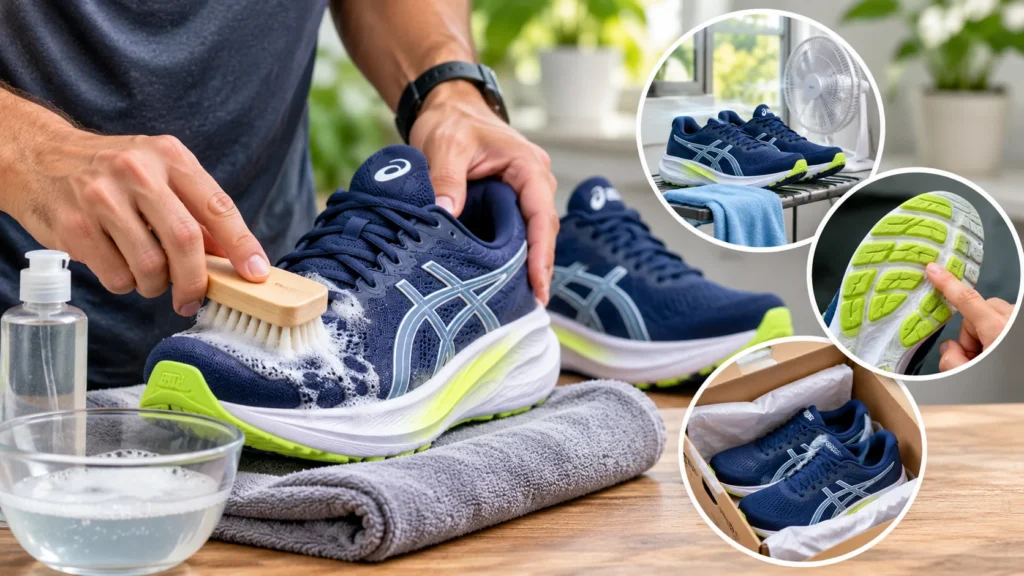
Clean both pairs by hand, dry them away from heat, and inspect the outsole. These shoes use foam-based outsole material that deserves regular checks. Simple care helps you spot damage before a shoe loses grip or comfort.
- After dusty or wet runs: Brush off dry grit and loose dirt. Focus on the grooves under the heel and forefoot.
- For upper stains: Remove laces and use a little mild soap with a soft brush. Avoid harsh cleaners.
- After cleaning: Air-dry at room temperature. Skip radiators, dryers, and direct high heat.
- Each week: Check for uneven wear, loose fabric, or new heel rubbing. Compare both shoes for damage.
- As mileage grows: Track comfort, not just distance. Replace shoes when cushioning and tread no longer perform well.
ASICS advises against washing complete running shoes in a machine. Its official running shoe cleaning guide explains why hand washing helps protect the construction.
REI uses roughly 300 to 500 miles as a general replacement range, not a guarantee. Read its running shoe replacement advice and check your own tread and comfort. Frequent rough-road use can shorten a shoe’s working life.
Final Verdict: Should You Upgrade from the Cumulus 26 to 27?
Upgrade only if you prefer the Gel-Cumulus 27’s fit or need a replacement pair. The redesign brings a new mesh upper and heel pull tab. It does not change the listed 8 mm drop or transform the core cushioning system.
At similar prices, I’d choose the 27 first for its updated heel construction. But if the 26 fits better and saves meaningful money, buy the older model. That decision follows the actual changes, not the model number.
The less obvious lesson is about fit and wear. A pair that saves $30 is not a bargain if its collar rubs. A newer upper is not an upgrade if your feet overheat. The best Cumulus is the one you’ll enjoy wearing on your regular route.
Frequently Asked Questions
Is the ASICS Gel-Cumulus 27 better than the 26?
It is better if the updated upper and heel pull tab improve your fit. The listed foam, 8 mm drop, and men’s stack measurements remain close. The older 26 is lighter, so the newer model is not a full performance upgrade. Compare both pairs at your actual checkout price.
What is the biggest difference between Gel-Cumulus 27 and 26?
The biggest change is the redesigned engineered mesh upper and added knit heel pull tab. The 27 also weighs more in the listed men’s sample. Both keep FF BLAST PLUS, heel PureGEL, and the same published 8 mm drop. Fit matters more than the small weight gap.
Is the Gel-Cumulus 27 good for walking?
Yes, the Gel-Cumulus 27 can work for walking if its fit feels secure. The cushioned heel and steady neutral base suit everyday movement. It is still a road-running shoe, not a slip-resistant work shoe or hiking boot. Check your heel and toe comfort before long walks.
Should I replace a working Gel-Cumulus 26 with the 27?
No, not solely because the 27 is newer. Replace the 26 when the outsole is worn, cushioning feels flat, or the fit no longer works. If your 26 still feels comfortable, the newer upper gives little reason to retire it early. A try-on can confirm whether the 27 suits you.
Which Gel-Cumulus is better for hot weather?
Neither is a clear warm-weather winner. The Gel-Cumulus 27 received a 2/5 breathability score in one independent lab test. The 26 also needs a personal fit and airflow check. For humid routes, thin running socks and a cooler mesh shoe can matter more than choosing between these two versions.


