Quick Answer
What running shoe features actually matter? Comfortable fit, enough toe room, suitable cushioning, reliable traction, and a secure heel are the most important features for most runners. Stability, heel-to-toe drop, breathability, and weight also matter, but their importance depends on your feet and training. Start with a comfortable fit rather than expensive technology, then follow a practical running shoe buying guide to narrow your options.
Six features to prioritize
- Proper fit: Secure around your heel and midfoot without squeezing.
- Toe box space: Enough room for your toes to spread naturally.
- Comfortable cushioning: A foam feel that suits your pace and distance.
- Stable platform: A balanced ride without unwanted wobbling.
- Suitable traction: Outsole grip matched to your running surface.
- Appropriate drop: A heel-to-toe height difference that feels familiar and comfortable.
Quick buying check
- Test before deciding: Walk and jog in both shoes, checking for pressure, slipping, or rubbing.
Running shoes come with an overwhelming number of features, from advanced foams to carbon plates and specialized support systems. It’s easy to get distracted by technology that may not improve your running experience.
I’d rather judge a running shoe by how well it matches the runner than by its longest specification list. This guide explains which features deserve your attention and which ones you can safely treat as optional.
What Are the Most Important Features of Running Shoes?
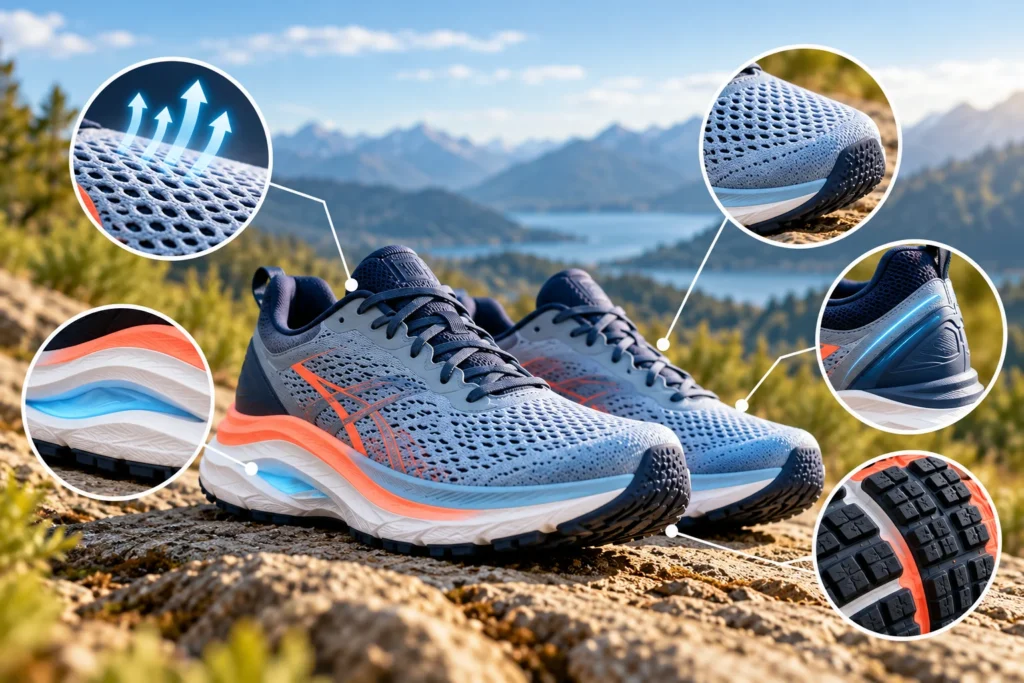
Running shoe features are the design characteristics that affect fit, comfort, stability, traction, and how a shoe feels during movement. The most useful features help the shoe work with your foot and your running conditions.
There’s no single combination that suits everyone. The American College of Sports Medicine emphasizes individual needs when selecting running footwear.
1. Proper Fit and Immediate Comfort
Fit deserves first place because a technically impressive shoe offers little value when it causes pressure or rubbing. A good running shoe should feel comfortable from the first try-on.
Look for these fit characteristics:
- Secure heel: Your heel stays comfortably in place during movement.
- Comfortable midfoot: The shoe holds your foot without squeezing it.
- Enough toe room: Your toes can spread and move without hitting the front.
- Correct width: The upper does not press painfully against your foot.
- No immediate hot spots: You should not notice concentrated rubbing.
Running shoes may soften slightly with use, but don’t expect a painfully tight shoe to become the right size. Pay attention to pressure before buying.
2. Toe Box Width and Length
The toe box is the front section of a running shoe that surrounds your toes. It needs enough length and width to accommodate foot movement during running.
A useful starting point is approximately a thumb’s width between your longest toe and the front of the shoe. Your heel should remain secure when you leave this space.
The American Academy of Orthopaedic Surgeons recommends adequate toe space and testing athletic shoes with your normal exercise socks.
Remember that a wider shoe isn’t automatically better. Excess space can allow unwanted sliding, especially during downhill running.
3. Cushioning That Matches Your Running
Cushioning describes the material under your feet that compresses as you land. Most modern running shoes use specialized foam in the midsole.
Softness and cushioning aren’t exactly the same thing. A thick midsole can feel firm, while a thinner one may feel surprisingly soft.
- Soft cushioning: Often appealing for easy runs and relaxed training.
- Balanced cushioning: Combines underfoot comfort with a controlled feel.
- Firm cushioning: Can provide a more direct, stable sensation.
- Responsive cushioning: Compresses and rebounds, producing a springier ride.
More cushioning doesn’t automatically mean fewer injuries. The best choice is the one that feels comfortable and controlled during your normal running pace.
4. Stability Without Unnecessary Restriction
Stability describes how securely a shoe supports your foot as you land and move forward. It can come from platform width, midsole geometry, sidewalls, or other supportive structures.
Neutral running shoes generally allow relatively unrestricted foot movement. Stability models add features intended to guide or control movement.
Some runners appreciate structured support, while others prefer a neutral platform. Foot arch shape alone cannot reliably determine the ideal shoe for every runner.
If you’d like a closer comparison, the American Academy of Podiatric Sports Medicine explains neutral and stability designs.
5. Traction for Your Running Surface
Traction is the grip provided by the outsole, which is the bottom layer contacting the ground. It becomes especially important on wet pavement, loose gravel, and trails.
- Road running: Favor durable rubber and a smooth, predictable transition.
- Gravel paths: Consider moderate tread with dependable grip.
- Muddy trails: Look for deeper, widely spaced lugs.
- Rocky trails: Prioritize secure footing and suitable rubber traction.
Deep trail lugs don’t necessarily improve a shoe on smooth pavement. Choose the outsole for the surface you use most often.
Running Shoe Features Comparison: Which Ones Matter Most?
Not every running shoe specification deserves equal attention. The following table provides practical buying priorities rather than laboratory performance rankings.
| Feature | Priority | What to Check |
|---|---|---|
| Fit and comfort | Essential | No pain, pressure, or rubbing |
| Toe room | Essential | About one thumb-width ahead of longest toe |
| Cushioning | High | Comfortable firmness and controlled landing |
| Traction | High | Grip matched to terrain |
| Stability | High, but individual | No unwanted wobbling or restrictive pressure |
| Heel-to-toe drop | Individual | Familiar geometry and comfortable loading |
| Breathability | Situational | Airflow appropriate for climate |
| Weight | Situational | Noticeable comfort versus performance trade-off |
| Carbon plate | Optional | Racing goals and suitability |
Use this as a decision guide, not an absolute ranking for every runner. Someone navigating muddy trails may prioritize traction above cushioning.
Does Heel-to-Toe Drop Really Matter?
Yes, heel-to-toe drop can influence how running shoes feel and how your lower limbs handle loading. However, no single drop measurement is best for everyone.
Heel-to-toe drop is the vertical difference between the shoe’s heel height and forefoot height. For example, a 34 mm heel and 26 mm forefoot produce an 8 mm drop.
Understanding Common Drop Categories
- Zero drop (0 mm): The heel and forefoot sit at the same measured height.
- Low drop (1–4 mm): Creates a relatively level underfoot geometry.
- Moderate drop (5–8 mm): Offers a middle-ground heel offset.
- Higher drop (9–12 mm): Places the heel noticeably above the forefoot.
These ranges are descriptive categories, not universal industry standards. Different shoes can still feel unlike one another despite having the same measured drop.
Switching abruptly to a much lower drop may increase demand on your calves and Achilles tendon. The Cleveland Clinic’s running shoe guide recommends gradual transitions.
Is Running Shoe Weight Important for Beginners?
Weight matters, but beginners generally benefit more from fit, confidence, and comfort. A lighter shoe isn’t automatically better for daily training.
Running shoe weight varies with size, cushioning, rubber coverage, and construction. Manufacturers often publish weights for one sample size, so comparisons aren’t always straightforward.
When a Lighter Running Shoe Helps
- Fast training sessions where a nimble feel is desirable.
- Races where reduced footwear weight may help performance.
- Runners who dislike bulky or heavy-feeling shoes.
When Weight Matters Less
- Easy running at a comfortable conversational pace.
- Beginners building consistent training habits.
- Trail running where protective materials improve suitability.
I’d compare two shoes at the same pace before deciding that the lighter one is better. Their balance and transition can matter as much as the listed weight.
How Important Are Breathability and Upper Materials?
Breathability affects airflow and moisture comfort inside your running shoes. It matters especially during hot weather and longer runs.
Most contemporary road-running shoes use engineered mesh, knit materials, or combinations of breathable textiles. Their construction influences flexibility, ventilation, and foot security.
- Engineered mesh: Allows different levels of ventilation and structure across the upper.
- Knit uppers: Can offer a flexible, sock-like fit depending on construction.
- Reinforced overlays: Add local structure or durability in selected areas.
- Waterproof membranes: Help block external water but may reduce ventilation.
For hot-weather pavement running, I would prioritize a comfortable, breathable upper over unnecessary waterproofing. For cold, wet conditions, protection may become more important.
Do Running Shoes Need Arch Support or Stability Technology?
Not every runner needs additional arch support or stability technology. Some prefer supportive features, while others run comfortably in neutral shoes.
Pronation, the inward rolling movement of the foot, is a normal part of running. Its presence alone doesn’t prove that you need motion-control footwear.
The Cochrane review of running shoe designs and injury prevention found that evidence does not establish one shoe category as the universal injury-prevention choice.
When Should You Consider Stability Shoes?
- You consistently feel unstable in several neutral models.
- You find structured sidewalls or supportive geometry more comfortable.
- A qualified professional identifies a specific support need.
- You have previously worn a supportive design comfortably during training.
Don’t assume flat feet automatically require the firmest stability shoe. Try different styles and consider a qualified assessment for persistent pain.
What Running Shoe Features Matter for Different Running Styles?
Your training environment helps determine which features deserve priority. A road runner and a technical-trail runner may need very different shoes.
Daily Running and Easy Training
Daily training shoes should balance comfort, versatility, and durability. Many runners benefit from dependable cushioning and a predictable ride rather than specialized racing technology.
- Comfortable fit for repeated use.
- Suitable cushioning for typical mileage.
- Durable rubber in high-wear areas.
- Stable transitions at easy speeds.
Long-Distance Running
Long-distance shoes need to remain comfortable as time on your feet increases. Pay particular attention to toe room, underfoot comfort, and unwanted movement.
Feet may swell during longer runs, making an already tight upper uncomfortable. Our long-distance running shoe guide explores these choices further.
Road Running Versus Trail Running
Road shoes usually prioritize smooth transitions on pavement, while trail shoes emphasize grip and terrain protection. Neither category is automatically better outside its intended environment.
For mixed surfaces, consider how much of your running takes place on each terrain. Deeply lugged shoes may feel awkward on long stretches of pavement.
Speed Work and Racing
Faster training and racing may benefit from a lightweight, responsive platform. Some specialized models use stiff plates and advanced foams to modify the shoe’s rolling and rebound behavior.
These features aren’t essential for beginners. Build comfort and consistent training before paying a premium for racing-specific equipment.
Which Running Shoe Features Are Mostly Marketing Hype?
Some running shoe technologies have legitimate benefits, but promotional claims often oversimplify their effects. The important question is whether a feature helps your particular running needs.
Carbon Plates
Carbon-fiber plates can work with responsive foam and rocker geometry to improve running economy for some runners. They don’t guarantee faster results for everyone.
They also don’t make a poorly fitting shoe comfortable. Reserve these designs for situations where their performance characteristics justify the cost.
Extremely Thick Cushioning
High stack height means there’s a substantial thickness of material beneath the foot. It may deliver a cushioned sensation, but thickness alone doesn’t measure comfort or stability.
A taller platform can feel less controlled for some runners. Compare the entire shoe rather than evaluating foam height in isolation.
Expensive Proprietary Technologies
Manufacturers frequently use branded names for foam compounds, guidance structures, and outsole materials. Those names describe product technologies, not guaranteed results for every person.
Focus on measurable characteristics and practical comfort. If two shoes work equally well, the more expensive technology isn’t automatically worth paying for.
How Can You Test Running Shoe Features Before Buying?
The best way to evaluate a running shoe is to test how it feels during movement. Specifications help narrow your choices, but they cannot replace a proper fit check.
Six-Step Running Shoe Test
- Check your size: Measure both feet and wear your normal running socks.
- Inspect toe space: Leave adequate room beyond the longest toe.
- Test heel security: Walk and jog to check for excessive slipping.
- Evaluate cushioning: Notice whether the landing feels comfortable and controlled.
- Check stability: Turn gently and jog at your usual pace, if store space permits.
- Look for discomfort: Reject shoes producing noticeable rubbing, numbness, or pressure.
Try both shoes, preferably later in the day when your feet may be slightly larger. A few minutes of movement can reveal problems that standing still won’t show.
If you’re comparing models online, consult our running shoe specification comparison guide to understand their published measurements.
What Mistakes Should You Avoid When Choosing Running Shoes?
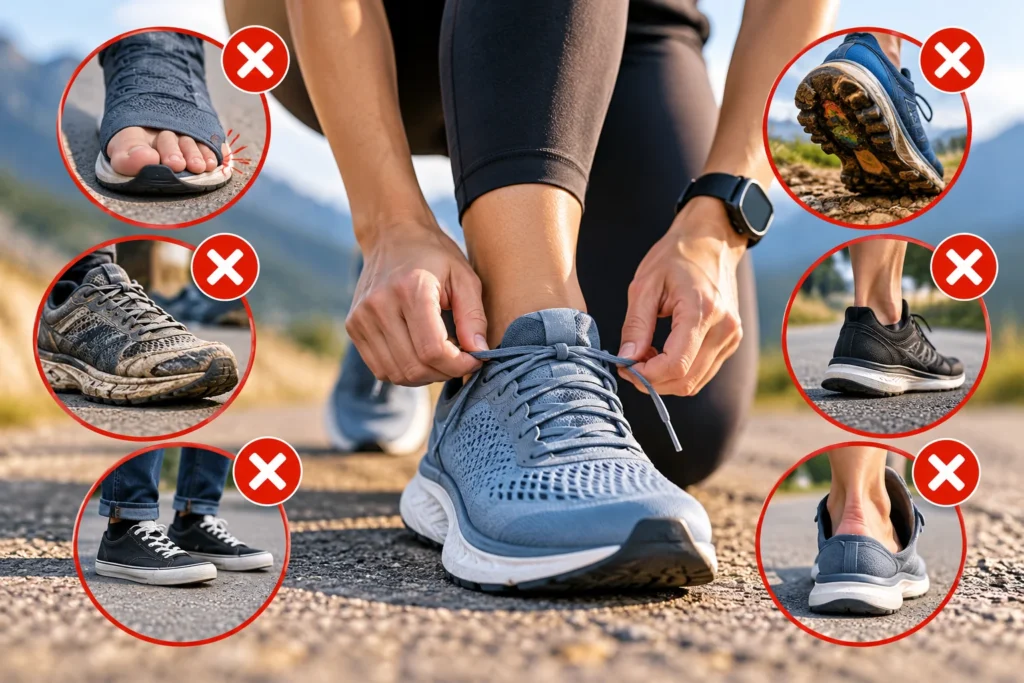
Most buying mistakes happen when appearance, branding, or impressive numbers take priority over fit and use. A simpler decision process can help you avoid an unsuitable purchase.
- Choosing by appearance: Color and design cannot tell you whether the fit is right.
- Buying too small: Limited toe space can cause rubbing during longer runs.
- Assuming softer is better: Excessive softness may feel unstable to some runners.
- Ignoring your running surface: Road and trail outsoles serve different conditions.
- Changing drop too quickly: Sudden geometry changes can alter lower-leg loading.
- Paying for unused technology: Premium racing components are unnecessary for many daily runs.
- Trusting one online review: Another runner’s foot shape and preferences may differ from yours.
Online reviews are most useful when they describe specific fit characteristics and running conditions. Our guide to evaluating running shoe reviews explains which details deserve attention.
Which Running Shoes Are Worth Considering in 2026?
If you’re comparing real models, start with established daily trainers and supportive alternatives. The three examples below serve different priorities rather than representing a universal ranking.
These are editorial shortlist assessments based on their intended design categories, not hands-on test ratings or verified customer-review averages. Check current model specifications, sizes, and availability before purchasing.
Affiliate disclosure: As an Amazon Associate, this site may earn from qualifying purchases made through eligible links, at no additional cost to you.
🏆 Versatile Daily Trainer
Brooks Ghost 17
★★★★☆ 4.5/5
The Ghost 17 is a neutral road-running trainer designed around a cushioned, versatile ride. I’d put it on a shortlist for runners who want one dependable shoe for easy runs and everyday training, provided the fit works for them.
☁️ Plush Cushioning Option
ASICS GEL-NIMBUS 27
★★★★☆ 4.5/5
This neutral road shoe emphasizes substantial cushioning for comfortable-paced running. I’d consider it for runners who enjoy a plush underfoot sensation, while checking whether its bulk and geometry feel natural.
🛡️ Guided Stability Option
Saucony Guide 18
★★★★☆ 4/5
The Guide 18 uses supportive platform geometry for a guided road-running experience. I’d include it when comparing shoes with more structured stability, rather than assuming every runner needs this design.
Frequently Asked Questions About Running Shoe Features
What is the single most important running shoe feature?
Comfortable fit is the most important starting point for most runners. A shoe should hold your heel securely, accommodate your toes, and avoid painful pressure. Cushioning, stability, and traction matter too, but even advanced technology cannot compensate for consistently poor fit.
Do expensive running shoes make a difference?
Expensive running shoes may offer advanced foam, lighter construction, or specialized racing geometry. However, a higher price does not guarantee better comfort or performance for every runner. A reasonably priced shoe that fits well and matches your training can be a smarter purchase.
Is more cushioning always better for running?
No, more cushioning isn’t always better. Some runners prefer softer, thicker midsoles, while others enjoy a firmer or more stable ride. The right amount depends on personal comfort, training demands, and shoe geometry. Compare different cushioning levels at your typical running pace.
Are carbon-plated running shoes necessary for beginners?
No, beginners generally don’t need carbon-plated running shoes. These specialized designs target certain performance goals and can cost considerably more than traditional trainers. A comfortable, versatile daily trainer is usually the more practical starting point while you develop consistent running habits.
Should running shoes feel tight or loose?
Running shoes should feel secure, not painfully tight or excessively loose. Your heel and midfoot need comfortable support, while your toes need enough space to move. Check both feet while walking or jogging, because a shoe that feels fine while standing may rub during running.
Final Takeaway: Which Running Shoe Features Should You Prioritize?
When deciding what running shoe features actually matter, start with comfortable fit, enough toe room, suitable cushioning, reliable traction, and a stable feel. Consider heel-to-toe drop, weight, breathability, and specialized technologies only after those essentials.
You don’t need every new feature to enjoy running. You need footwear that works with your feet, your training, and the surfaces you run on.
Next step: Compare two or three suitable models, try them with your normal running socks, and choose the pair that feels best during movement.


Steven is a former sportsperson and now a full-time businessman and research writer. He is the mastermind of this site, and he created this site to help people who need specialized shoes for different activities. When he was a sportsperson, he was very passionate about different types of shoes for his sports purpose. The passion he had for shoes at that time now turned into his profession. Besides his shoe business, he loves sharing his knowledge and experience with people and helping them maintain healthy feet.
More Posts