Quick Answer
The main rocker sole running shoes benefits include smoother heel-to-toe transitions, reduced ankle movement during push-off, and changes in how pressure spreads across the foot. To build a useful running shoe rotation, pair a comfortable daily trainer with a rocker-soled shoe for suitable easy or long runs. Start with two pairs and choose each shoe for a distinct purpose. Research on rocker-bottom shoe biomechanics supports mechanical benefits, although injury prevention isn’t guaranteed.
Five Steps to Build Your Rotation
- Choose a daily trainer: Prioritize fit, comfort, and predictable handling.
- Add a rocker shoe: Look for a smooth rolling sensation during your natural stride.
- Match each workout: Assign shoes to easy, long, and faster sessions.
- Introduce gradually: Start with short runs before increasing mileage.
- Track comfort: Monitor shoe wear, soreness, and running performance.
Bottom line: A two-shoe rotation is enough for many recreational runners. More pairs are optional.
Choosing running shoes can feel complicated when every brand promises a smoother, faster ride. Rocker soles deserve attention, but they’re only one part of a good training setup.
In this guide, I’ll explain their benefits, limitations, and how they fit into a practical shoe rotation. You’ll also find shopping considerations and an example weekly schedule.
What Are Rocker Sole Running Shoes?
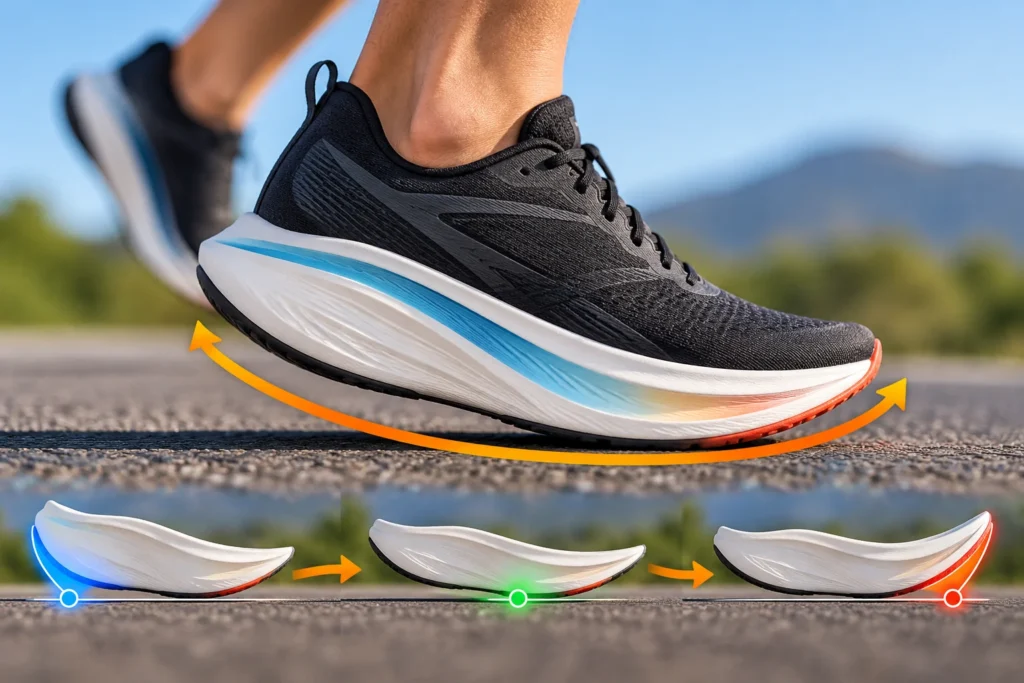
Rocker sole running shoes feature a curved sole profile designed to encourage the foot to roll forward during each stride. Instead of relying entirely on foot and ankle movement, the shoe’s geometry helps guide the transition.
This curved construction can appear under the forefoot or extend from heel to toe. The exact shape matters because different rocker designs produce different biomechanical effects.
How Does a Rocker Sole Work?
When your foot lands, your body travels forward over the shoe. A rocker-shaped sole changes how that rolling movement occurs.
- Heel rocker: Helps guide the initial transition after heel contact.
- Forefoot rocker: Encourages rolling forward as the heel lifts.
- Rocker apex: The location where the curved sole begins its main rolling action.
- Midsole stiffness: Influences how much the shoe bends during movement.
- Cushioning foam: Affects softness and energy return independently of the rocker shape.
Not every thick running shoe has a pronounced rocker. Likewise, not every rocker shoe contains a carbon plate.
These are separate design features. Understanding the distinction helps prevent expensive buying mistakes.
What Are the Main Benefits of Rocker Sole Running Shoes?
Rocker soles can make the running transition feel smoother and change how work is distributed between joints. Their effects depend on the shoe design and the individual runner.
1. Smoother Heel-to-Toe Transitions
The curved sole encourages your body to move forward through stance. Some runners describe this sensation as rolling rather than bending through the forefoot.
This feeling can be appealing during steady road running. However, a smooth sensation doesn’t automatically mean better running economy.
2. Reduced Ankle Motion During Push-Off
A rocker sole can reduce some ankle movement and mechanical work during running. This may appeal to runners who prefer less forefoot bending.
A controlled biomechanics study involving 16 runners reported reduced ankle work in rocker shoes. It also observed increased work at the knee, highlighting an important trade-off.
You can explore that research through Biomechanics of Running With Rocker Shoes.
3. Changes in Plantar Pressure
Plantar pressure describes the force distributed under your foot. Rocker geometry can change where and how that pressure develops during movement.
A 2025 systematic review identified changes in pressure distribution and ankle mechanics. Results varied according to the shoe’s rocker design.
4. A Different Feel for Long Runs
Some runners enjoy rockered cushioning because it creates a consistent transition over repeated strides. Others dislike the guided movement or find it unnatural.
For this reason, I suggest evaluating comfort before assuming a rocker will improve endurance. Your normal training pace is the best place to start.
5. More Variety Within a Running Shoe Rotation
A rocker shoe can provide a different mechanical experience from a conventional trainer. That makes it an interesting second option when building a rotation.
Variety may change how repetitive loads are distributed. It doesn’t mean that switching shoes automatically prevents injuries.
What Are the Disadvantages of Rocker Sole Running Shoes?
Rocker shoes aren’t the best choice for every runner or every workout. Some designs feel unfamiliar, especially when they’re highly cushioned or stiff.
- Different stability feel: Tall, curved soles may feel awkward during sharp turns.
- Unfamiliar mechanics: The rolling motion may require gradual adaptation.
- Changed joint loading: Reduced ankle work can coincide with greater demands elsewhere.
- Variable flexibility: Stiffer models may not suit runners who prefer natural forefoot bending.
- Potential cost: Specialized models can be more expensive than basic trainers.
- Uneven terrain: Some pronounced rockers feel less predictable on irregular ground.
The biggest mistake is assuming that less ankle work means less total physical stress. Rocker designs redistribute mechanical demands rather than eliminate them.
If a shoe creates persistent pain, stop using it and reassess. Don’t try to run through discomfort just to adapt to its design.
How Do Rocker Sole Shoes Compare With Traditional Running Shoes?
Traditional trainers and rocker shoes can both work for daily training. The main difference is how their geometry influences foot movement and transitions.
| Feature | Rocker Sole | Traditional Trainer |
|---|---|---|
| Sole profile | Pronounced curvature | Usually less pronounced curvature |
| Transition feel | Guided rolling motion | Varies with flexibility and cushioning |
| Ankle mechanics | Can reduce ankle motion and work | Depends on conventional shoe design |
| Forefoot bending | Often reduced in stiff designs | Often more flexible |
| Best rotation role | Steady runs or long runs if comfortable | Versatile everyday mileage |
| Adaptation | May take additional adjustment | Depends on familiarity and fit |
Neither category is automatically superior. Choose based on comfort, movement, training demands, and how the shoe complements your existing pair.
How Do You Build a Running Shoe Rotation?
A running shoe rotation is a planned way of alternating different pairs across training sessions. The goal is to match footwear to workouts and provide options that feel comfortable.
For most recreational runners, two well-chosen pairs are an excellent starting point. A third pair becomes useful when training demands become more specialized.
Step 1: Start With a Dependable Daily Trainer
Your daily trainer should handle most ordinary runs. Prioritize comfortable fit, reliable traction, and a ride that feels predictable.
Choose a shoe you can wear comfortably without constantly adjusting your stride. This becomes the foundation of your rotation.
Step 2: Add a Rocker Shoe for a Specific Purpose
Choose a rocker shoe only when it adds something useful to your existing setup. A smoother transition during steady mileage is one potential reason.
Try several models if possible, because rocker profiles differ substantially. Your second shoe should solve a real preference or training need.
Step 3: Match Shoes to Training Sessions
Assign each pair a clear role rather than switching randomly. This makes your rotation simpler to evaluate.
- Easy runs: Use the most comfortable, reliable trainer.
- Long runs: Consider a rocker shoe if its transition feels natural.
- Tempo workouts: Choose footwear that feels stable at your intended pace.
- Recovery runs: Favor comfort over aggressive propulsion features.
- Trail runs: Use appropriate outsole grip and terrain-specific protection.
A shoe doesn’t need to be specialized for every workout. One pair can cover several training categories.
Step 4: Introduce the New Shoe Gradually
Don’t immediately replace every run with a new rocker shoe. Begin with a short, familiar session and monitor how your body responds.
Increase use only while the shoes remain comfortable. There isn’t one scientifically established adaptation timetable for every runner.
Step 5: Monitor Mileage and Wear
Record how often you use each pair and note any changes in comfort. Inspect outsole wear, midsole deformation, and upper damage.
Mileage alone cannot tell you exactly when a shoe needs replacement. Loss of comfort or unusual wear deserves attention.
How Many Pairs of Running Shoes Do You Really Need?
One comfortable pair is sufficient for many beginners. Two pairs create useful flexibility, while three can support more varied training.
- One pair: Suitable for beginners and occasional runners.
- Two pairs: A practical choice for consistent recreational training.
- Three pairs: Useful for runners combining daily mileage, long runs, and faster sessions.
- Four or more: Optional for specialized training or multiple surfaces.
A 2015 prospective study followed 264 recreational runners over 22 weeks. Using multiple pairs was associated with a lower injury risk in that observational sample.
However, the findings don’t prove shoe rotation directly prevents injuries. Training load, previous injuries, and recovery habits still matter.
Read the running shoe rotation and injury research for details.
What Does a Weekly Running Shoe Rotation Look Like?
Here’s an example for a recreational runner who runs four days per week. It uses two pairs without requiring expensive specialist shoes.
| Day | Workout | Shoe |
|---|---|---|
| Monday | Easy 3 miles | Daily trainer |
| Tuesday | Rest or cross-training | No running shoe |
| Wednesday | Steady 4 miles | Rocker shoe |
| Thursday | Rest | No running shoe |
| Friday | Easy 3 miles | Daily trainer |
| Saturday | Rest | No running shoe |
| Sunday | Long easy run, 6 miles | Comfortable rocker shoe |
This example places 6 of 16 weekly running miles in the daily trainer and 10 miles in the rocker shoe. It’s a scheduling illustration, not a scientifically recommended mileage split.
New runners should first establish comfortable training volume. Don’t increase mileage simply because you purchased another pair.
Should Beginners Include Rocker Sole Shoes in Their Rotation?
Beginners can use rocker soles, but they don’t need them. Comfort and consistency should come before specialized footwear technology.
Start with one dependable shoe if your running schedule is still developing. Add a second pair once you understand what you want from a different ride.
What Should Beginners Check Before Buying?
- Toe space: Ensure toes have room without the foot sliding forward.
- Heel security: Look for a secure fit without painful pressure.
- Natural movement: The rocker should feel comfortable at your usual pace.
- Balance: Check how confidently you can turn and slow down.
- Outsole grip: Match traction to your regular running surfaces.
- Return policy: Choose a retailer that permits appropriate fit testing.
Pay close attention to discomfort around the foot, calf, Achilles tendon, or knee. A new shoe shouldn’t force you into a painful running pattern.
Can Rocker Sole Running Shoes Help Prevent Injuries?
Rocker shoes may modify certain mechanical loads, but preventing injuries is a much bigger question. Current biomechanical evidence doesn’t establish universal injury prevention.
For example, one running study found reduced ankle work alongside increased knee work. This means a shoe can reduce one demand while increasing another.
Research also suggests that footwear effects vary with running mechanics. The systematic review of running shoe construction explains how different shoe features can alter biomechanics.
Consider running shoes one part of a broader training plan. Workload management, recovery, strength, and individual injury history also deserve attention.
What Mistakes Should You Avoid When Rotating Running Shoes?
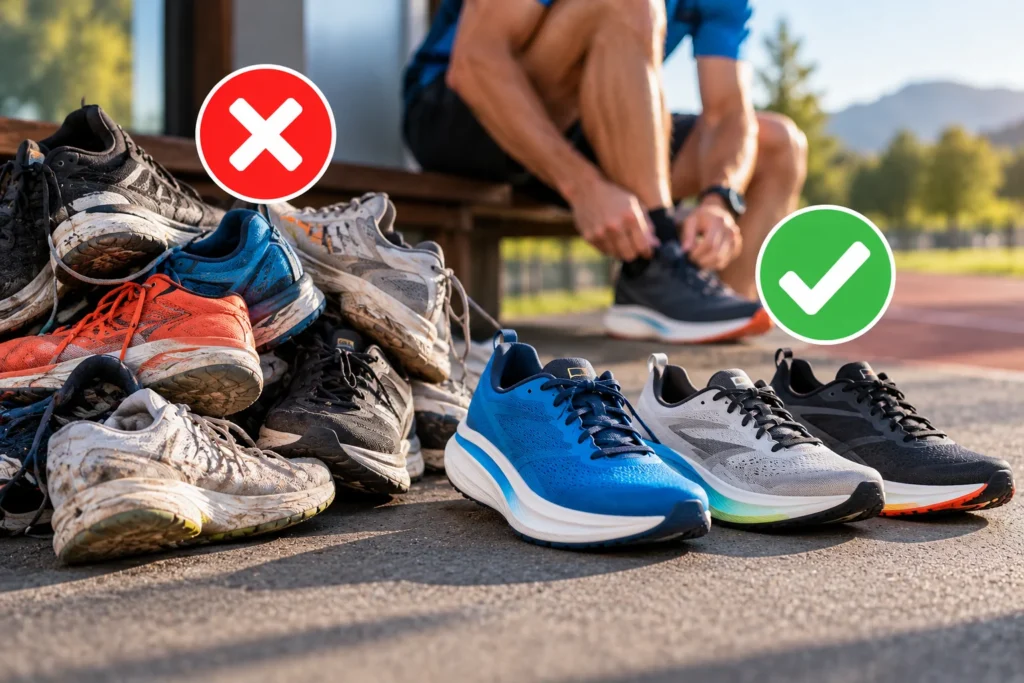
The most common mistakes involve buying too many shoes or changing footwear too quickly. A useful rotation should simplify training decisions, not complicate them.
- Buying three pairs immediately: Start with fewer shoes and identify actual needs.
- Ignoring heel-to-toe drop: Large changes in shoe geometry can affect how running feels.
- Switching into rockers abruptly: Introduce unfamiliar designs progressively.
- Choosing by cushioning alone: Test stability, fit, and transition quality.
- Assuming expensive means better: Price doesn’t guarantee comfort.
- Keeping worn-out shoes: Replace pairs when their condition or performance deteriorates.
- Ignoring pain: Persistent discomfort requires reassessment, not forced adaptation.
One useful way to assess a rotation is to keep brief notes after each run. Record the shoe, workout, perceived comfort, and any unusual soreness.
After several weeks, patterns may become clearer. You’ll have more useful information than a simple count of shoes in your closet.
Which Rocker Sole Running Shoes Are Worth Considering in 2026?
Three established models illustrate different approaches to rocker geometry. These are research-based shopping candidates, not shoes I’ve personally tested.
Each serves a potentially different role in a running shoe rotation. Check current sizing, availability, and prices before choosing.
Affiliate disclosure: As an Amazon Associate, this website may earn from qualifying purchases made through the following links, at no additional cost to you.
🏆 Daily Training Pick
HOKA Clifton 10
★★★★☆ 4.5/5
The Clifton 10 combines a smooth MetaRocker design with compression-molded EVA cushioning and an 8 mm heel-to-toe drop. I’d shortlist it for everyday road running when a runner wants a gently guided transition rather than an aggressive racing feel.
⭐ Long-Run Pick
ASICS GlideRide Max
★★★★☆ 4.5/5
The GlideRide Max features GUIDESOLE rocker geometry, FF BLAST MAX cushioning, and a 6 mm heel drop. Its guided, cushioned construction makes it worth comparing for steady and long-distance road runs.
💡 Updated Rocker Option
ASICS GlideRide Max 2
★★★★☆ 4.0/5
The GlideRide Max 2 uses a rockered midsole construction, a firm EVA element, and FF BLAST cushioning technologies to encourage smooth transitions. I’d compare its fit and ride with the original before paying more for the newer version.
Editorial scores reflect feature suitability for the stated use cases, not verified customer ratings or hands-on test results.
Frequently Asked Questions About Rocker Sole Running Shoes
Are rocker sole running shoes good for everyday running?
Yes, rocker sole running shoes can work well for everyday running when they fit comfortably and suit your stride. Their curved shape may encourage smoother transitions. However, runners who prefer greater flexibility or more ground feel may enjoy conventional trainers instead.
Do rocker sole running shoes make you faster?
Not necessarily. Rocker geometry can influence mechanics, but speed depends on several factors, including foam properties, shoe mass, training, and individual response. A curved sole alone doesn’t guarantee improved running economy or faster race times.
Should you rotate running shoes every day?
You can alternate shoes between running days, but a daily switch isn’t mandatory. The best approach is to choose the shoe that suits each session. A simple two-pair system may provide enough variety without complicating your training.
Can you wear rocker sole running shoes for walking?
Many rocker-soled models can also work for walking, provided they feel stable and comfortable. However, walking and running involve different movement demands. Try the shoe at your normal walking pace before choosing it for extended daily use.
How long should you use a new rocker shoe before a long run?
There’s no universal adaptation period. Begin with short, comfortable runs and increase duration gradually based on your response. Don’t introduce unfamiliar rocker shoes during an important long run or race without adequate testing beforehand.
Final Thoughts: Are Rocker Sole Running Shoes Worth Adding to Your Rotation?
Rocker sole running shoes can be useful when you enjoy a guided transition or want a different mechanical feel during training. Their benefits are individual, and they aren’t a guaranteed solution for discomfort or injuries.
For most recreational runners, I’d start with one comfortable daily trainer and add a rocker shoe only when it has a clear purpose. A simple rotation is easier to maintain, evaluate, and afford.
Next step: Compare the fit and ride of two suitable shoes before expanding your rotation. Choose comfort and consistency over unnecessary complexity.


Steven is a former sportsperson and now a full-time businessman and research writer. He is the mastermind of this site, and he created this site to help people who need specialized shoes for different activities. When he was a sportsperson, he was very passionate about different types of shoes for his sports purpose. The passion he had for shoes at that time now turned into his profession. Besides his shoe business, he loves sharing his knowledge and experience with people and helping them maintain healthy feet.
More Posts