
Quick Answer
The Under Armour HOVR Machina 3 is the better pick for most neutral road runners. Its revised dual-density HOVR foam and breathable upper suit daily miles. Choose the HOVR Machina 2 if you specifically prefer its Pebax speed plate or find it much cheaper. Both have an 8 mm drop, and their original connected-coaching service has expired.
The biggest difference between the Machina 3 and Machina 2:
- Machina 3: softer heel, firmer forefoot, and redesigned upper.
- Machina 2: documented Pebax propulsion plate and 3D spacer mesh.
- Neither should be bought for working MapMyRun shoe connectivity.
Quick Verdict: Machina 3 vs Machina 2
HOVR MACHINA 3
Daily training
$150 reference retail listing; live Amazon price unverified
Best for: Neutral runners seeking balanced comfort, airflow, and longer road runs.
HOVR MACHINA 2
Plated feel
$150 reference retail listing; live Amazon price unverified
Best for: Runners who enjoy a firmer, plate-assisted toe-off.
| Category | Machina 3 | Machina 2 |
|---|---|---|
| Overall winner | 🏆 | — |
| Best value at equal price | ✅ | ❌ |
| Breathable upper | ✅ | ❌ |
| Documented Pebax plate | ❌ | ✅ |
| Current connected coaching | ❌ | ❌ |
Bottom line: Choose the Machina 3 for general road training at a similar price; choose the Machina 2 only when its plate feel or a meaningful discount matters more.
- The Machina 3 wins for versatile daily running, mainly through its revised foam and upper.
- Both models have $150 reference retail listings, so current discounts decide the actual price gap.
- The Machina 2 explicitly features a Pebax propulsion plate for a plate-assisted toe-off.
- Both offer neutral support and an 8 mm heel-to-toe drop.
- Under Armour lists March 31, 2025 as the end of their original shoe-connectivity service.
Shopping for an older running shoe can save you money. It can also leave you with outdated feature claims. That is the challenge with the Under Armour HOVR Machina 3 review: the shoe still has useful road-running hardware, but some of its smart features belong to the past.
I’m Steven Tyler, a footwear research writer for FootwearHiker. For this comparison, I checked Under Armour’s published specifications and independent running reviews. I have not claimed personal mileage or laboratory tests on these pairs. The goal is to help you decide based on facts that can be checked.
The HOVR Machina 3 and HOVR Machina 2 share a neutral design and an 8 mm drop. Yet they don’t deliver the same underfoot feel. The later shoe puts more focus on foam tuning and upper comfort. The earlier model gives you a clearly specified Pebax plate.
We’ll cover the fit, ride, outsole, price, care, and buying traps. You’ll also see where manufacturer copy conflicts with independent reviews. That matters when old stock appears on marketplaces and product names look alike.
What Is the Under Armour HOVR Machina 3 Best For?
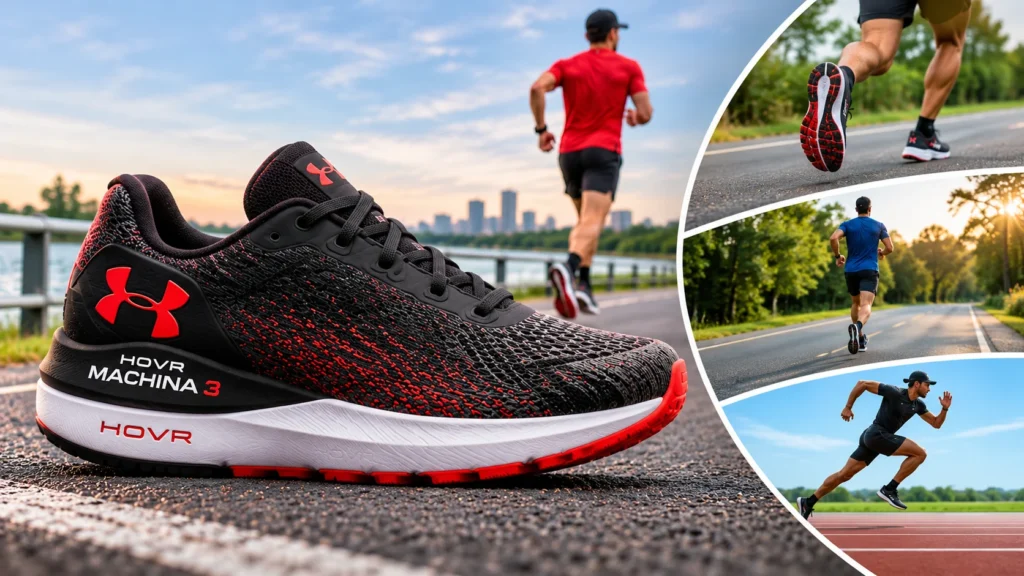
Verdict: Best for neutral road runners who want a structured daily trainer with balanced cushioning. Listed men’s weight: 10.6 oz. Listed drop: 8 mm. Best avoided if you need motion-control support or a lightweight race shoe.
The Machina 3 is primarily a daily road trainer. It uses Under Armour’s HOVR cushioning with different foam behavior at the heel and forefoot. The heel aims to soften landings, while the firmer front section supports a brisk toe-off. The company also updated the upper, heel shape, and outsole layout.
Under Armour specifies an engineered warp spacer mesh upper, a molded EVA sockliner, and an external thermoplastic polyurethane heel wrap. That last part is the firm piece around the rear of the shoe. It helps hold the heel in place without turning the shoe into a stability model.
The brand lists the men’s style as 3024899, with an 8 mm offset and 10.6 oz weight. A reported 28 mm heel stack appears in an independent review, but the official product page does not consistently state stack height. Don’t mix stack figures from different sizes and variants.
The point of this design is comfort during repeated road miles. Canadian Running’s reviewer praised its smooth transition and secure upper. T3 also reported a comfortable ride over testing runs up to about 10 km. These are their observations, not unverified claims of our own field testing.
If you are unsure how weight and drop affect fit, our running shoe specification guide explains which figures matter when comparing trainers.
Machina 3 Pros
- Dual-density HOVR cushioning balances heel comfort and forward motion.
- Engineered warp spacer upper has fewer overlays and seams.
- External heel wrap aids lockdown.
- Rubber coverage targets high-wear road-contact areas.
- Familiar 8 mm drop suits runners accustomed to moderate-drop shoes.
Machina 3 Cons
- 10.6 oz listed weight is not especially light.
- Original MapMyRun shoe connection has expired.
- Its plate description differs across published sources.
- Old-stock sizing and return terms vary by retailer.
Find Under Armour HOVR Machina 3 listings
Amazon search link, not a verified single-product listing. Check model number 3024899 and your size before buying. Live price unavailable for verification.
What Does the Under Armour HOVR Machina 2 Offer Instead?
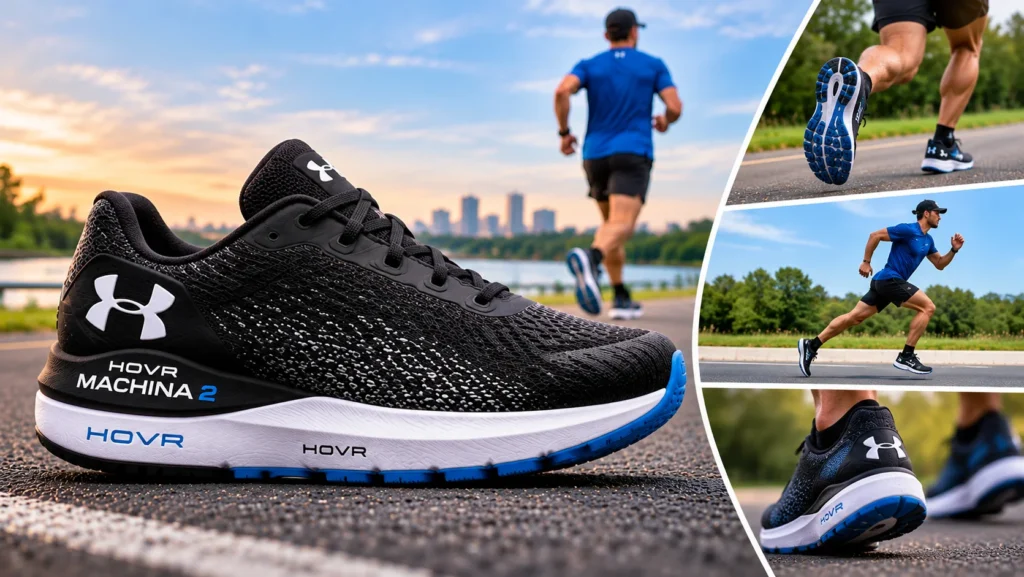
Verdict: Best for neutral runners who want the older model’s defined Pebax plate construction. Listed men’s weight: 10.24 oz. Listed drop: 8 mm. It is not a reason to buy outdated shoe-tracking features.
The HOVR Machina 2 keeps the same general mission: mix everyday cushioning with a quicker feel. Its signature difference is a sprint-inspired Pebax plate. Under Armour explicitly lists that component in the Machina 2 specifications. It also pairs HOVR cushioning with a 3D spacer mesh upper.
The design includes an external heel counter and carbon rubber pods under the heel. These details aim to improve rearfoot security and traction in a hard-wearing part of the outsole. The upper uses UA RUSH lining, which Under Armour marketed as a mineral-infused textile feature.
Under Armour lists men’s style 3023539, an 8 mm offset, and 10.24 oz weight. The numbers are close to the Machina 3. A lower published weight does not guarantee a faster shoe, since fit, stiffness, and foam feel matter as well.
A running-store review described the Machina 2 as responsive and useful for high-mileage training. Yet the later model gained a more refined mesh feel, according to T3’s comparison. If the newer upper presses less against your feet, that can outweigh a small change in shoe weight.
Both shoes are neutral trainers. For runners unsure what that means, our neutral running shoe guide explains the difference between general support and dedicated stability control.
Machina 2 Pros
- Documented Pebax plate for a firm toe-off.
- Responsive HOVR cushioning for road miles.
- 3D spacer mesh helps ventilation.
- External heel counter adds structure.
- Published 10.24 oz weight is slightly lower.
Machina 2 Cons
- Less refined upper than the later model in independent testing.
- Plate stiffness may not suit easy-day preferences.
- Original connected-coaching feature has expired.
- Older inventory requires careful fit and condition checks.
Find Under Armour HOVR Machina 2 listings
Amazon search link, not a verified single-product listing. Check style number 3023539, condition, seller, and return rights. Live price unavailable for verification.
How Do the Machina 3 and Machina 2 Specifications Compare?
The main specifications favor the Machina 3 for a modern daily-training feel. Both shoes have an 8 mm drop and neutral support. The Machina 2 has a documented Pebax propulsion plate, while the Machina 3 emphasizes dual-density foam. The two models also differ in upper materials, heel structure, and rubber placement.
The table uses men’s published specifications unless noted otherwise. Weights are brand-listed figures, not laboratory measurements from a controlled side-by-side size. Prices are reference retailer listings, not verified live Amazon offers. That distinction matters because old-stock footwear can vary greatly in size and availability.
| Feature | HOVR Machina 3 | HOVR Machina 2 | Advantage |
|---|---|---|---|
| Men’s style | 3024899 | 3023539 | Tie |
| Support | Neutral | Neutral | Tie |
| Heel-to-toe drop | 8 mm | 8 mm | Tie |
| Listed men’s weight | 10.6 oz / about 301 g | 10.24 oz / about 290 g | Machina 2 on paper |
| Midsole | Dual-density UA HOVR | UA HOVR with plate | Different feel |
| Pebax speed plate | Earlier Pebax plate removed; sources differ on other plate details | Explicitly listed | Machina 2 for confirmed Pebax |
| Upper | Engineered warp spacer mesh | 3D spacer mesh | Machina 3 |
| Heel support | External TPU heel wrap | External heel counter | Fit dependent |
| Sockliner / lining | Molded EVA sockliner | UA RUSH lining | Preference |
| Outsole | Channeled rubber, targeted coverage | Carbon rubber heel pods | Machina 3 for broader design update |
| App-enabled coaching | Original connection expired | Original connection expired | Neither |
| Reference retail listing | $150 | $150 | Actual checkout price decides |
One detail deserves care: Under Armour’s launch story mentions an updated composite plate. Independent reviews instead stress removal of the old Pebax plate and the new dual-density HOVR foam. The safe reading is that the Machina 3 should not be sold as having the Machina 2’s identical Pebax system.
Which Shoe Has Better Cushioning and Running Feel?
The Machina 3 wins for balanced daily comfort. Its revised HOVR foam uses a softer heel and firmer front section. That blend helps soften the landing without making each toe-off feel dull. The Machina 2 feels different because its documented Pebax plate adds a firmer mechanical part to the ride.
Canadian Running’s test notes described the Machina 3 as smooth through transitions. That matters for runs when your pace changes between easy miles and brief faster sections. T3 also found the updated foam comfortable, though its reviewer did not call the shoe the best in its class.
The Machina 2 remains a sound option for runners who actively like plate-assisted motion. A plate can add structure, but it does not guarantee lower race times. The response depends on your stride and how the whole shoe works together. Neither design turns a training shoe into a top racing model.
How would you decide? Take a short easy run, then add a controlled faster segment. Notice heel comfort, forefoot pressure, and how smoothly each shoe bends or rolls. Pick the pair that feels good during the pace you use most, not the one with the more exciting marketing term.
Which HOVR Machina Fits Better and Feels More Breathable?
The Machina 3 gets the edge for upper comfort in published hands-on reviews. Its engineered warp spacer mesh removes several old overlays and seams. The revised heel design and small outer wrap aim to give support without adding bulk. The Machina 2 uses a different 3D spacer mesh construction.
Canadian Running’s reviewer reported secure lockdown and no heel slip with the Machina 3. T3 also found the upper less stuffy than the Machina 2. Those are specific reviewer experiences, not proof that every foot will prefer the same shoe. Toe shape and shoe size still come first.
Both models are sold as neutral shoes in regular fit. Neither brand page confirms broad width options for every old-stock colorway. If you have a wide forefoot, avoid buying based on length alone. More length cannot reliably fix a shoe that presses against the sides of your toes.
For a proper try-on, wear your normal running socks. Check toe room while standing and moving. Tighten the laces until the heel stays secure without crushing the top of the foot. If either pair creates a hot spot within minutes, treat that as a poor fit rather than a break-in challenge.
Is the Machina 3 Worth More Money Than the Machina 2?
The Machina 3 is worth paying more for when the added cost buys a better fit and smoother daily ride. At equal cost, it is my overall choice. But these are older shoes, and size-specific clearance prices can reverse the value ranking. Buy based on the real total at checkout.
A $150 retail reference appears for each model at established running retailers. This is not a claim that Amazon currently sells either pair for $150. I could not verify exact live Amazon listings, seller prices, sizes, and shipping. A historical launch review also quoted $160 for the Machina 3, so list-price references vary.
For example, a $30 discount on the Machina 2 changes the decision for runners who already like its plate. A $10 saving is less persuasive if the older upper causes rubbing. What matters is not the size of the markdown. What matters is the fit and ride you receive for the final price.
Before purchasing, compare the seller’s return window, item condition, delivery fee, and exact style code. Old stock can include color variants or similar product names, such as Machina 3 Clone. Those are not interchangeable with the two models discussed here.
Which Is More Durable, Safer, and Better for Smart Features?
The Machina 3 has the stronger updated outsole design on paper, but neither shoe has a verified durability win. Under Armour describes targeted channeled rubber on the Machina 3. The Machina 2 uses carbon rubber pods under high-impact heel zones. Wear rates depend on the runner and surface.
Independent reviewers praised the Machina 3 outsole for road grip and long-mileage design. Yet no controlled, equal-distance head-to-head wear trial was available for this article. Treat claims such as a guaranteed 500-mile life as estimates, not promises. Check actual rubber loss, foam feel, and seam strength.
The key smart-feature warning is clear. Under Armour’s official product pages list connectivity expiration on March 31, 2025 for both models. A shoe may still contain a sensor, but that does not mean its old coaching service works now. Choose these models for their physical running features, not a promised live coaching app.
Under Armour also gives a small lithium coin-cell battery warning for the Machina 2. Keep damaged shoes and exposed internal parts away from children. Never cut into the midsole to remove or repair a sensor. The safest choice is to follow manufacturer care and disposal advice.
Both shoes have an 8 mm drop, but drop is not overall cushion thickness. Read our heel to toe drop explanation before making a large change from your current shoes.
Which Model Wins in Real Running Situations?
The Machina 3 wins most ordinary road-training use cases. The Machina 2 becomes more attractive when you prefer its plated forefoot or find a better deal. Neither is a dedicated trail shoe, medical support shoe, or shoe to buy for app tracking. Your running surface and fit decide the final result.
Which Shoe Works Better for Daily 5K Runs?
Choose the Machina 3 for a typical 5K training run. Its balanced heel cushioning and revised upper suit a mix of easy steps and short faster efforts. The Machina 2 still works for this distance, but the older plate is not required for most relaxed runs.
Which Shoe Is Better for Longer Road Runs?
Choose the Machina 3 if its heel comfort and lockdown fit suit your foot. Its HOVR foam and structured upper target repeated road mileage. Try it on shorter routes first. A comfortable 5K does not guarantee the same fit after a much longer session.
Which Works Better for Tempo Sessions?
Pick the Machina 2 if you prefer the clear feel of a Pebax plate. Pick the Machina 3 if you value a smoother foam-led transition. Neither answer replaces a running trial. A tempo session should feel controlled, with no rubbing or harsh forefoot pressure.
Which Shoe Handles Cold or Wet Roads Better?
Neither model is a dedicated winter running shoe. Both have rubber contact areas, but published specifications do not establish ice traction or waterproof protection. For cold rain, focus on grip, socks, and a secure fit. Avoid treating road-running rubber as a substitute for ice-specific footwear.
Which Is Better for Walking or Workday Use?
The Machina 3 is the more natural starting point for walking if its upper fits. Its foam balance can feel comfortable during forward motion. However, all-day standing comfort differs from running comfort. A workday shoe needs to match your floor surface, movement, and job demands.
Who Should Buy the Machina 3, the Machina 2, or Neither?
Buy the Machina 3 if you need one neutral road trainer for steady miles and occasional quicker runs. Buy the Machina 2 if you know you enjoy its plate-assisted ride and the total price is lower. Skip both if you need targeted stability, trail grip, or active connected coaching.
The strongest reason to choose the Machina 3 is not the product number. It is the redesigned foam and less intrusive upper. If your foot feels pinched or your heel slips, those improvements mean nothing. A well-fitting older shoe can be better than a newer shoe with the wrong shape.
Buy Machina 3 if you…
- Run mainly on paved roads.
- Prefer softer heel landings.
- Value a revised breathable upper.
- Find it at a sensible price.
Buy Machina 2 if you…
- Like a plated toe-off.
- Already know its fit works.
- Find new, authentic stock.
- Save enough to justify the tradeoff.
Before ordering online, compare the length and width guidance. Our running shoe sizing comparison covers practical measurement and fit checks. Shoes that match a size label can still differ inside.
Don’t buy either if you need a dedicated stability trainer, deep trail lugs, or a functioning in-shoe coach. Look instead at a current model designed for that specific need. You should also skip questionable resale pairs with cracked rubber, peeling soles, or no useful return policy.
What Do Real Reviewers Say About Both Shoes?
Published hands-on reviews favor the Machina 3’s improved comfort and transition. Canadian Running reported a secure upper, smooth foam motion, and effective outsole coverage. T3 found the upper less stuffy than the previous model, though it also questioned the Machina 3’s value against other daily trainers.
The Machina 2 earned praise from running-store reviewers for its springy feel, cushioning, and plate-assisted toe-off. That is useful context if your favorite training shoes feel firm and responsive. The downside is that a plate alone cannot tell you whether the shoe will work for your gait.
I could not verify live Amazon star ratings, verified-purchaser totals, or a dependable sample of current Amazon reviews for both exact models. Therefore this article does not invent review counts or quote supposed customer complaints. Seller page reviews can also combine sizes, colors, or related models, which distorts ratings.
Review evidence at a glance
Machina 3
- Praised: smooth transition, comfortable mesh, secure heel.
- Caution: weight and value compared with rival trainers.
- Amazon rating and review count: not verified.
Machina 2
- Praised: HOVR response, plate feel, structured heel.
- Caution: less refined upper and obsolete smart feature.
- Amazon rating and review count: not verified.
For source checking, consult the official Machina 3 specifications, official Machina 2 specifications, and Canadian Running’s independent review. These help separate confirmed specifications from personal fit opinions.
How Should You Clean and Maintain These Running Shoes?
Care tip: Clean mesh gently, dry shoes at room temperature, and inspect the outsole often. Keep heat and heavy soaking away from the foam, glued seams, and embedded electronic parts.
Both Machina models mix lightweight fabric, HOVR foam, and rubber. The Machina 3 also has an outer TPU heel wrap. Use a soft brush to remove dry dirt after road runs. For marks on the upper, use a lightly damp cloth with a little mild soap.
Don’t soak the shoe or place it beside a heater. Lift out the insole if it is removable and safe to remove. Open the laces so air can move through the upper. Avoid hard scrubbing over mesh or decorative sections that can snag.
The older embedded sensor is another reason to avoid cutting into the midsole. If a sole begins to split, don’t try to extract the battery at home. Check local rules for damaged electronic footwear and follow any manufacturer disposal guidance.
Track miles, but let the shoe’s condition guide replacement. Inspect traction, uneven foam wear, loose heel hold, and new rubbing. A general 300 to 500 mile inspection range is useful, yet it is not a guaranteed lifespan for either pair.
For step-by-step care, use our running shoe cleaning guide. Regular care can keep shoes pleasant to wear, but it cannot restore foam once it loses its support and feel.
Final Verdict: Is the Machina 3 a Better Buy Than the Machina 2?
Yes, the Under Armour HOVR Machina 3 is the better all-round purchase for most neutral road runners. Its updated heel-to-forefoot foam balance and cleaner upper address practical comfort needs. Those changes matter more during everyday training than a small difference in published weight. The Machina 2 still has a place for runners who like its specific Pebax plate feel.
At equal purchase prices, I would choose the Machina 3, assuming both fit well. When the Machina 2 costs far less, the answer can change. The right discount depends on your feet, mileage, and which running feel you enjoy. Do not choose either pair for its old MapMyRun coaching promise.
Most importantly, check the exact style number before buying. The Machina 3, Machina 3 Clone, and other family versions are distinct shoes. Verify seller condition, available sizes, and return terms. A working fit and honest price are worth more than a headline claim that no longer applies.
Best overall: Machina 3
Choose balanced daily cushioning and a revised mesh upper.
Best for plate lovers: Machina 2
Choose its Pebax plate if that is the ride you want.
Frequently Asked Questions
Which is better, Under Armour HOVR Machina 3 or Machina 2?
The Machina 3 is the better daily road trainer for most neutral runners. Its revised dual-density HOVR foam and cleaner upper are the key reasons. The Machina 2 suits runners who enjoy its older Pebax plate. At different prices, fit and the size of the discount can change the value winner.
What is the main difference between Machina 3 and Machina 2?
The main difference is the midsole design. The Machina 2 has a clearly documented Pebax propulsion plate, while the Machina 3 emphasizes softer heel foam and a firmer front section. Under Armour also revised the upper, heel structure, and outsole. Both shoes have an 8 mm heel-to-toe drop.
Does the HOVR Machina 3 still connect to MapMyRun?
Under Armour lists March 31, 2025 as the connection expiry date for the Machina 3’s original shoe-linked service. The Machina 2 carries the same warning. Do not assume a product’s old marketing claim still applies. Buy either model for its running fit and ride, not live coaching features.
Is the Machina 3 good for long-distance running?
Yes, the Machina 3 is designed for repeated road mileage and neutral cushioning. The upper and revised HOVR foam received positive notes in published testing. Still, comfort over a short run does not guarantee comfort over longer distances. Check toe room, heel hold, and forefoot feel on easy runs first.
Are the HOVR Machina 3 and Machina 2 good in rain or cold weather?
Both can be used on ordinary damp roads when traction is suitable, but neither is a dedicated winter shoe. Their standard models do not carry a confirmed waterproof rating here. For ice, snow, or slick trails, choose footwear with grip suited to those surfaces. Dry each pair naturally after wet runs.
Affiliate Disclosure: As an Amazon Associate, I earn from qualifying purchases. If you click a link on this page and make a purchase, I may receive a small commission — at no extra cost to you. I only recommend products I genuinely believe will help you. This helps keep the site free and running. Thank you for your support.