
Quick Answer
The Brooks Ghost 17 is a solid buy for easy road runs and daily walking, especially on sale. Its nitrogen-infused DNA LOFT v3 foam and 10 mm drop give it a steady, cushioned feel. The trade-offs are a tapered toe box, modest bounce, and added weight. Check the fit before choosing it over the newer Ghost 18.
What matters most when buying the Ghost 17?
- Best for: relaxed runs, steady daily miles, and walks on pavement.
- Main concern: RunRepeat measured a 69.6 mm tapered toe-box interior.
- Value: its original U.S. retail price was $150; discounts vary.
Quick Verdict: Brooks Ghost 17
BEST FOR EVERYDAY COMFORT
Brooks Ghost 17
Original U.S. price: $150
Observed retailer offer: $109.95 at Zappos for a listed men’s colorway; size and stock can change.
A dependable neutral trainer for runners who care more about a smooth rhythm than a springy ride.
Verified men’s Ghost 17 Amazon listing; color, size, and offer can differ.
AT A GLANCE
- Category: neutral daily trainer
- Drop: 10 mm, per Brooks
- Men’s weight: 10.1 oz / 286 g
- Foam: DNA LOFT v3
- Outsole: RoadTack rubber
- Skip if: you want race-day speed or a roomy toe shape
Bottom line: Choose the Ghost 17 when its fit feels right and the price saves you a meaningful amount over the Ghost 18.
- The Ghost 17 adds 1 mm of heel foam and 3 mm of forefoot foam over the Ghost 16.
- Its 10 mm drop is lower than the Ghost 16’s 12 mm drop.
- RunRepeat measured 0.8 mm of outsole wear in its controlled abrasion test.
- The standard toe box is tapered, despite the shoe’s range of width options.
- A discounted Ghost 17 can beat a full-price Ghost 18 on value, not necessarily fit.
Picking a daily running shoe is a quiet but costly choice. You want comfort that lasts past the first mile. You also want a shoe that fits when your feet warm up and swell. The Brooks Ghost 17 makes a strong case for simple, repeatable comfort. Yet it has drawbacks that store photos cannot show.
I’m Steven Tyler, the footwear researcher behind FootwearHiker. For this Brooks Ghost 17 review, I checked Brooks’ published specifications, independent lab data, expert wear reports, and retailer feedback. This is an evidence-based buying assessment, not a claim that I personally logged test miles in this pair. You can use our running shoe review criteria to see which details deserve the most weight.
Here is the main question: does the Ghost 17 do enough well to earn a place in your rotation? The answer depends on your pace, foot shape, and the gap between its sale price and the Ghost 18. Those three factors matter more than a high star rating alone.
What Is the Brooks Ghost 17 Designed to Do?
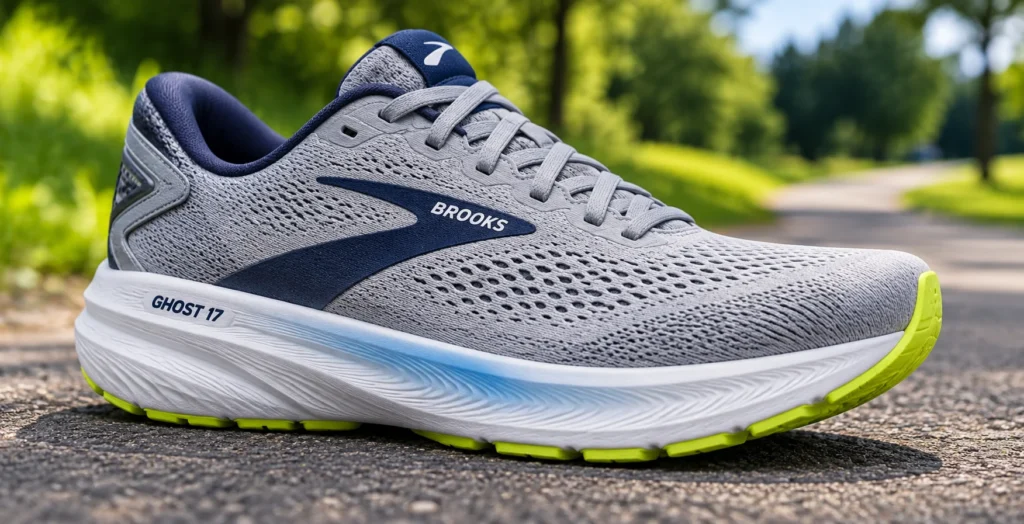
In short, the Brooks Ghost 17 is a neutral road shoe for comfortable everyday miles. It aims for a stable feel, a smooth heel-to-toe transition, and a familiar running-shoe fit. Brooks uses nitrogen-infused DNA LOFT v3 cushioning and a segmented rubber outsole. There is no carbon plate or dedicated motion-control system.
This makes it useful for easy runs, treadmill sessions, recovery jogs, and walking. Our daily running shoe guide covers how to match that role to your weekly routine. A runner who logs three relaxed road runs each week can use it as a main training shoe. A runner chasing short interval times should look for a lighter, more responsive design.
The Ghost line is popular because its ride rarely demands much attention. Brooks describes the generation changes in its official Ghost evolution guide. That does not mean every foot will love it. The toe shape narrows near the front, and the upper has more padding than some airy summer trainers. A good fit matters as much as the foam.
What Are the Brooks Ghost 17 Specifications?
The headline figures are a 10 mm drop, 286 g listed men’s weight, and DNA LOFT v3 midsole. These numbers explain its role as a traditional daily trainer. They do not prove it will feel soft to every runner. Independent lab measurements also change slightly with sample size and test method.
| Specification | Brooks Ghost 17 |
|---|---|
| Shoe type | Neutral road-running / daily trainer |
| Midsole foam | Nitrogen-infused DNA LOFT v3 |
| Advertised drop | 10 mm |
| Approximate stack | 36.5 mm heel / 26.5 mm forefoot (reviewer-reported) |
| Men’s listed weight | 10.1 oz / 286 g |
| Women’s listed weight | 9.0 oz / 255 g |
| Upper | Double-jacquard air mesh |
| Outsole | RoadTack rubber, with flex grooves |
| Common men’s widths | Narrow, medium, wide, extra wide; stock varies |
| Original U.S. retail price | $150 |
Brooks supplies the official drop, foam type, and weight. The stack estimate comes from independent reviewers, who may measure differently. Do not treat small differences between tests as signs of poor quality. They often reflect test methods and shoe sizes.
How Does the Brooks Ghost 17 Cushioning Feel Underfoot?
The Ghost 17 feels controlled and cushioned, not extremely soft or springy. Its DNA LOFT v3 foam absorbs the feel of regular road contact. Yet it does not deliver the sharp rebound of a light tempo shoe. That makes it better for steady effort than quick changes of pace.
Brooks added 1 mm of foam at the heel and 3 mm at the forefoot compared with the Ghost 16. The extra front cushioning is the more useful update. It can reduce the thin, abrupt feel some runners noticed under their toes in the older shoe. The shoe also rolls forward with less fuss.
Independent experts differ on how plush the result feels. Believe in the Run calls it a comfortable daily trainer. RTINGS measured low energy return and described the ride as firm and flat. Both can be true: a shoe may protect the foot during easy running without creating a bouncy sensation.
Is the Ghost 17 Soft Enough for Long Runs?
Yes for some runners, but not for everyone. Its extra forefoot foam helps on relaxed miles, and several wear testers liked it on longer runs. However, RTINGS found limited long-run cushioning in its lab assessment. If you enjoy a soft, deep landing after 10 miles, compare it against a more cushioned model before buying.
Does the 10 mm Drop Matter?
Yes, the 10 mm heel-to-toe drop changes the shoe’s shape compared with the Ghost 16. Drop is the height difference between the heel and forefoot. The older model used 12 mm. RunRepeat measured 10.4 mm on its Ghost 17 sample, close to Brooks’ advertised figure.
A 10 mm offset still feels heel-elevated. It is not a low-drop or barefoot-style shoe. Do not switch based on a single number if your current shoes already work. For more context, our heel-to-toe drop explained guide covers what the measurement means.
Does the Brooks Ghost 17 Fit True to Size?
Most buyers should start with their usual running-shoe length, then check toe room carefully. Independent fit tests call the length generally true to size. The concern is the front shape, not only the size number. A standard-width shoe can still pinch the toes when its tip narrows.
RunRepeat measured a 95.2 mm interior width at one forefoot point. That matches its sample average. But the same test measured only 69.6 mm near the toe area, versus a 73.2 mm category average. This gap explains why a shoe can feel fine at first and still crowd the toes after a longer run.
Try the Ghost 17 late in the day with your running socks. Stand, then jog for a short period if the store allows it. Your longest toe needs space without heel slip. If your little toe rubs, do not assume the foam will soften enough to solve the problem.
Is the Brooks Ghost 17 Good for Wide Feet?
It can work for wide feet when the correct width fits, but the toe shape remains important. Brooks offers narrow, medium, wide, and extra-wide men’s versions in select markets. These choices are helpful. Still, extra width does not always make a tapered toe box feel foot-shaped.
Try a wide version before going half a size longer. Extra length may create heel movement without fixing toe pressure. If your toes need more room to spread, compare the actual front shape with another brand. Fit is a stronger reason to switch shoes than a small difference in midsole foam.
How Good Are the Upper, Breathability, and Heel Hold?
The padded upper is comfortable and holds the heel well, although heat comfort varies by runner. Brooks uses a double-jacquard mesh with soft interior contact points. Reviewers at Believe in the Run praised the secure lockdown. OutdoorGearLab also liked the comfortable upper but reported sweaty feet on warm runs.
The lab evidence is not fully one-sided. RunRepeat’s controlled breathability test gave the Ghost 17 a strong 92 BR score, above its 75 BR comparison average. A shoe can move moisture well in one lab method yet feel warm to a particular tester. Humidity, sock thickness, pace, and personal sweat rate also affect comfort.
The tongue is padded but not gusseted. That means it is not stitched to the shoe sides along its length. Some runners prefer the easier fit. Others want a fixed tongue that never shifts. Reviewers generally report secure lacing, so the tongue is a minor trade-off rather than an automatic flaw.
How Does the Ghost 17 Perform on Roads and Wet Pavement?
The Ghost 17 offers dependable grip for normal roads, including damp pavement. Brooks uses RoadTack rubber under key contact areas and flex grooves to keep the shoe moving naturally. The outsole is not a mountain-trail tread. Its rubber pattern favors pavement over mud, deep gravel, and loose steep ground.
RunRepeat measured a 0.62 forefoot traction result, above its 0.53 comparison average. OutdoorGearLab also reported good grip on wet and cold pavement during wear tests. Those findings make it a sensible choice for morning road runs after light rain. They do not guarantee grip on ice or slick indoor floors.
The deep grooves can collect small stones on gravel paths. A short stretch of packed dirt is reasonable, but technical trails deserve a dedicated trail shoe. If your route includes roots, mud, or steep descents, do not rely on the Ghost 17 as your only option.
Is the Brooks Ghost 17 Good for Walking and Daily Wear?
Yes, the Ghost 17 can be a good walking shoe when its fit suits you. Its secure upper, balanced sole, and predictable landing can work for commuting, errands, and mixed run-walk days. The shape looks like a standard sports shoe, which also makes it easy to wear outside workouts.
A person who walks several miles on city sidewalks can benefit from the rubber coverage. A beginner who alternates two minutes of jogging with three minutes of walking may also enjoy its steady ride. You do not need racing foam for that kind of training. You do need enough room around the toes.
Long periods of standing are less certain. Standing comfort depends on foot shape, work surface, and how your feet respond to a raised heel. Test it on your normal floor before making it your all-day work shoe. The Ghost 17 is also not sold as a certified slip-resistant work model.
How Does the Ghost 17 Compare With the Ghost 16 and Ghost 18?
The Ghost 17 is the middle choice between the higher-drop Ghost 16 and the newer Ghost 18. Brooks improved forefoot cushioning when moving from the 16 to the 17. The 18 keeps a 10 mm drop but updates upper details, including its tongue and sockliner. None of those changes makes one model the right fit for every runner.
The Ghost 16 still appeals to fans of its 12 mm drop. The Ghost 17 offers more foam at the front, but its listed men’s weight is higher. The Ghost 18 provides the newer fit package at a $150 U.S. price. If you already love the old shape, a new release alone is not a reason to switch.
| Factor | Ghost 16 | Ghost 17 | Ghost 18 |
|---|---|---|---|
| Advertised drop | 12 mm | 10 mm | 10 mm |
| Main change | First Ghost with DNA LOFT v3 | More heel and forefoot foam | Refined tongue, upper, sockliner |
| Best reason to choose | You prefer its familiar fit and higher drop | A good discount and a comfortable fit | You prefer updated upper details |
For the older model’s fit and ride details, see our Brooks Ghost 16 review. Start by comparing the same size and width. A discounted wrong size is no bargain, even if the spec sheet looks close.
Is the Brooks Ghost 17 Worth the Price?
The Ghost 17 is most attractive at a clear discount from its original $150 price. A Zappos men’s listing showed $109.95 when checked, while Brooks listed the newer Ghost 18 at $150. That example creates a $40.05 price difference. It is an observed retailer comparison, not a promise that every color or size costs the same.
At about $110, the Ghost 17 offers credible everyday comfort and outsole durability. At $150, it is harder to ignore newer options. The price alone should not decide the purchase, though. A shoe that causes toe pressure after four miles loses value fast, no matter the discount.
Check the return window and verify the exact men’s or women’s model, width, size, and seller. Older colors may be cheaper than popular ones. Our guide to running shoe sale timing explains why prior-generation stock often drops after a successor launches.
Buying tip: Compare final checkout prices in the same size and width. Amazon prices could not be independently confirmed for every option, so the button links to a verified listing rather than promising a live price.
What Do Independent Reviewers and Buyers Say?
The broad agreement is that the Ghost 17 feels reliable, with mixed views on softness and toe fit. Believe in the Run praised its comfortable upper and easy everyday use. OutdoorGearLab liked its planted feel and grip but criticized breathability and pace versatility. RTINGS found strong stability but low energy return.
RunRepeat’s lab adds detail that broad praise cannot provide. The test measured just 0.8 mm of outsole wear against a 1.1 mm average. It also found a tapered toe area. Those results help explain why the Ghost 17 can last well yet still disappoint a runner with a wide forefoot.
Retail feedback shows the same split in practical use. Dick’s Sporting Goods displays comments praising comfort, width choices, and marathon training. That does not guarantee your fit. Buyers often report on different sizes, training loads, and personal preferences.
Evidence snapshot
- RunRepeat lab: 69.6 mm toe-box width and 0.8 mm outsole wear.
- RTINGS lab: 8.2 stability score and 2.2 energy-return score on its test scale.
- OutdoorGearLab: praises planted comfort; flags heat and limited speed range.
- Buyer reports: fit satisfaction varies across widths and foot shapes.
These are third-party results, not FootwearHiker hands-on testing or Amazon star ratings.
Who Should Buy the Brooks Ghost 17, and Who Should Skip It?
Buy the Ghost 17 if you want steady road comfort and the right fit at the right price. It is suitable for a neutral runner building a simple training routine. Its secure platform also makes sense for people who alternate walking and running. The shoe is less convincing when the workout is mostly fast intervals.
Do not buy by brand loyalty alone. A long-time Ghost owner may still prefer the 16’s higher drop. A new runner with a wide toe shape may want more front space. Someone needing dedicated stability features should compare Brooks models with GuideRails support instead of assuming every stable-feeling neutral shoe works the same way.
Good Match
- Easy road and treadmill runners
- Walkers who prefer a cushioned heel
- Heel strikers who like a 10 mm drop
- Buyers finding a meaningful discount
Consider Another Shoe
- Runners seeking a fast, lively ride
- People needing a broad toe shape
- Technical trail runners
- Anyone who needs certified slip resistance
A useful test is to run or walk in both candidate shoes, then remove them and check for pressure spots. The better shoe often feels less noticeable, not more exciting. If the Ghost 17 fits without rubbing and costs less, it earns a strong place on your shortlist.
How Durable Is the Ghost 17, and How Should You Care for It?
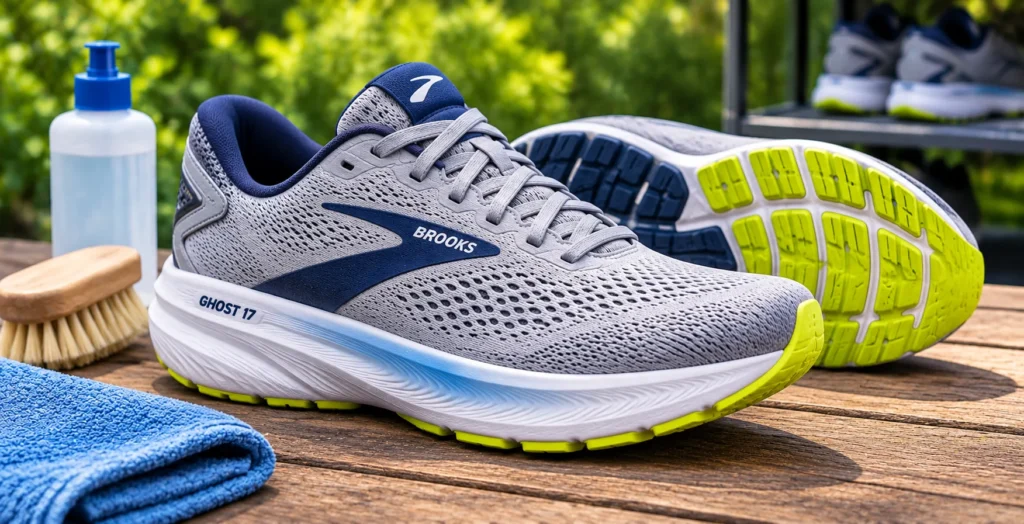
The Ghost 17 has strong outsole durability evidence, but no shoe lasts forever. RunRepeat recorded 0.8 mm of rubber wear in a controlled test. Its outsole thickness measured 4.0 mm, compared with a 3.1 mm category average. Those numbers support the impression of a tough daily trainer.
Brooks says performance running shoes typically last about 300 to 500 miles. Your range depends on body weight, running style, terrain, shoe rotation, and care. A person running 15 miles each week reaches 300 miles in 20 weeks. That is a planning example, not an exact replacement deadline.
Brush dirt from the outsole after a gritty run. Air-dry damp shoes away from direct heat, and avoid leaving them in a hot car. Watch for flattened foam, worn tread, damaged heel lining, or new discomfort. These signs matter more than counting miles alone.
Can You Use the Ghost 17 in Cold or Rainy Weather?
Yes for ordinary damp or cold roads, but not for ice, snow, or deep mud. Independent wear testers reported dependable wet-pavement grip. The standard Ghost 17 is not a waterproof winter boot. Wet socks and low temperatures can still affect comfort. Use weather-appropriate socks and choose grippier footwear for icy routes.
Final Verdict: Should You Buy the Brooks Ghost 17?
Yes, the Ghost 17 remains worth buying when you want a calm daily trainer at a good price. Brooks made practical changes to the midsole without turning the shoe into something unfamiliar. The added forefoot foam and lower drop make everyday movement smoother. The outsole also has encouraging durability evidence.
The two main limits are fit and speed. The toe box narrows toward the front, so a longer size is not always the fix. Its foam also favors control over sharp rebound. These are not hidden defects. They are design choices that match some runners better than others.
My recommendation is simple: try the Ghost 17 in your true width, check its price against the Ghost 18, and pay attention to how your toes feel. If it fits well and saves about $40, the older model can be the smarter purchase. If prices are close, test the newer shoe too.
Brooks Ghost 17 Men’s Neutral Running Shoe
Best for comfortable, regular road mileage when the fit and final price work for you.
Affiliate listing verified by product identifier; check size, seller, and current offer.
Frequently Asked Questions
Is the Brooks Ghost 17 good for beginners?
Yes, the Brooks Ghost 17 suits many beginners who run at easy paces on roads. Its secure upper, steady sole, and balanced cushioning help make training feel predictable. Start with your usual running-shoe size, check toe space, and walk or jog before committing to longer sessions.
Is the Brooks Ghost 17 good for plantar fasciitis?
The Ghost 17 can feel comfortable for some people with heel discomfort, but no shoe treats plantar fasciitis by itself. Its 10 mm drop and cushioning may suit certain feet. If you have ongoing pain, get advice from a qualified clinician and choose footwear based on your symptoms and fit.
Does the Brooks Ghost 17 run narrow?
The Ghost 17 has a fairly standard width through part of the forefoot, but its toe box tapers. RunRepeat measured 69.6 mm near the toes, below its comparison average. Brooks offers wide options in many markets. Try the correct width rather than buying extra length to solve side pressure.
Which is better, Brooks Ghost 16 or Ghost 17?
The Ghost 17 is the more cushioned choice at the forefoot, while the Ghost 16 has a higher 12 mm drop. Brooks added 3 mm of forefoot foam to the 17 and reduced the drop to 10 mm. Pick the fit and shape you prefer, then compare the prices in your size.
Is the Brooks Ghost 17 still worth buying after the Ghost 18?
Yes, the Ghost 17 remains useful for easy running and walking after the Ghost 18 launch. The newer shoe brings upper and sockliner updates rather than a completely new category. If the Ghost 17 fits well and costs meaningfully less, it can offer stronger value than paying full price for the latest version.
Affiliate Disclosure: As an Amazon Associate, I earn from qualifying purchases. If you click a link on this page and make a purchase, I may receive a small commission — at no extra cost to you. I only recommend products I genuinely believe will help you. This helps keep the site free and running. Thank you for your support.