

Quick Answer
The Brooks Hyperion Max 3 is the better choice for soft, energetic long-run cushioning. Its DNA GOLD foam and taller midsole offer more protection. The Hyperion Max 2 is lighter, firmer, and more stable. Choose the Max 3 for long training sessions, or the Max 2 for faster workouts and a more grounded feel.
What changed between the Max 3 and Max 2?
- Max 3: Approximately 46 mm of heel stack versus 36 mm.
- Max 3: Adds DNA GOLD PEBA cushioning for greater energy return.
- Max 2: About 0.8 oz lighter using Brooks’ listed weights.
Quick Verdict: Hyperion Max 3 vs Max 2
BROOKS HYPERION MAX 3
Editorial suitability assessment
$199.95
Original US retail price
Best for:
Long-distance training, cushioned tempo sessions, and runners who prefer a springy ride.
BROOKS HYPERION MAX 2
Editorial suitability assessment
$180.00
Original US retail price
Best for:
Tempo workouts, controlled transitions, and runners who prefer less foam beneath their feet.
Scores represent editorial assessments of suitability, based on published specifications and independent reviews. They are not Amazon customer ratings or firsthand wear-test scores. Retail prices are historical list prices, not guaranteed current offers.
| Category | Max 3 | Max 2 |
|---|---|---|
| Overall Pick | 🏆 | — |
| Best Value During Max 3 Sales | ✅ | ❌ |
| Long-Run Cushioning | ✅ | ❌ |
| Lighter Construction | ❌ | ✅ |
| Stable, Grounded Ride | ❌ | ✅ |
Bottom line: Choose the Hyperion Max 3 for softer, springier long runs; choose the Max 2 when lower weight, stability, or a substantial discount matters more.
- The Max 3 wins on cushioning depth and rebound.
- The Max 2 originally cost $19.95 less at retail.
- Both shoes have nylon SpeedVault plates, not carbon racing plates.
- The Max 2 weighs less and offers stronger stability in independent testing.
- The Max 3 adds DNA GOLD foam and substantially increases stack height.
Are you thinking about upgrading your Brooks running shoes? The Hyperion Max 3 looks like the natural next step from the Hyperion Max 2. However, these shoes offer two different running experiences.
The Hyperion Max 3 puts more cushioning beneath your feet. It also introduces a premium foam layer. The Hyperion Max 2 keeps a firmer, lighter design that feels more controlled.
That difference matters when you’re paying for a performance trainer. A shoe that feels comfortable during an easy run may not be your favorite during intervals.
I’m Steven Tyler, writing for FootwearHiker. This comparison uses Brooks’ published specifications, independent laboratory findings, and publicly available review evidence. It does not claim personal mileage testing.
I’ll explain the cushioning, stability, fit, durability, and buying value of both models. You’ll also learn which shoe suits your training style and which compromises deserve attention.
The goal is simple: help you avoid paying extra for features you won’t enjoy.
What Is the Brooks Hyperion Max 3 Designed to Do?
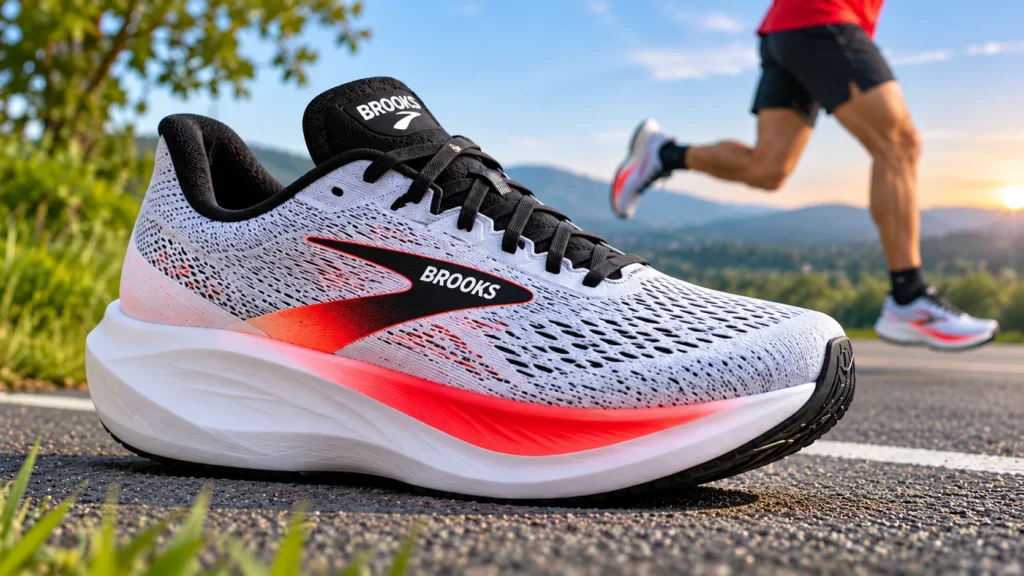
In short, the Brooks Hyperion Max 3 is a neutral, highly cushioned road trainer designed for fast training and long runs. Its biggest advantage is the blend of premium foam, deep cushioning, and rocker-assisted movement.
Quick verdict: Best for runners who want a protective, energetic training shoe without moving to an aggressive carbon-plated racer.
Brooks uses two cushioning materials in the Max 3. DNA GOLD is a premium foam based on PEBA, a lightweight and resilient polymer. DNA FLASH v2 provides another cushioning layer beneath it.
This combination delivers a different ride from the older model. The soft upper foam adds bounce, while the lower foam helps create a structured foundation.
The nylon SpeedVault plate adds stiffness. Meanwhile, the curved RapidRoll rocker helps your foot move forward through each step.
These features make the Max 3 useful for steady long runs, marathon training, and moderate tempo efforts. It also works for runners who want more cushioning during demanding training blocks.
However, the extra foam comes with tradeoffs. Brooks lists the men’s shoe at 9.9 ounces, or 280.7 grams. The Max 3 is not a featherweight racing shoe.
Its thick sole also places the foot higher above the ground. Some runners enjoy that feeling. Others prefer the stronger ground contact offered by lower shoes.
What Are the Main Advantages of the Hyperion Max 3?
The Max 3 offers better cushioning and energy return than the Max 2. Independent laboratory results support both advantages, especially for the forefoot.
- Dual-foam midsole with DNA GOLD and DNA FLASH v2.
- Deep cushioning for prolonged road sessions.
- Nylon SpeedVault plate for guided transitions.
- RapidRoll rocker for smooth forward movement.
- Breathable upper suited to performance training.
- Responsive ride for tempo and steady long runs.
What Are the Disadvantages of the Hyperion Max 3?
The Max 3’s main weaknesses are weight, elevated stack height, and reduced stability. These differences matter most during sharp turns and uneven landings.
- Heavier than the previous model.
- Less stable during side-to-side movement.
- Less suitable for runners wanting strong ground feel.
- High original retail price.
- Not a dedicated corrective stability shoe.
- May feel bulky during short, fast intervals.
Brooks Men’s Hyperion Max 3 Neutral Running Shoe
Original retail price: $199.95. Amazon pricing depends on size, color, seller, and availability.
What Is the Brooks Hyperion Max 2 Designed to Do?
The Brooks Hyperion Max 2 is a neutral, plated tempo trainer built for speed-focused workouts. It favors controlled cushioning and quick transitions rather than maximum softness.
Quick verdict: Best for runners who want a lighter, more stable, performance-oriented training shoe.
The Max 2 uses DNA FLASH v2 cushioning throughout its midsole. This nitrogen-infused foam balances protection with a moderately firm sensation.
Unlike the Max 3, it does not include the premium DNA GOLD layer. Its midsole is also substantially lower.
The Max 2 still includes a nylon SpeedVault plate. Its RapidRoll rocker also helps guide the foot through transitions.
Brooks lists the men’s model at 9.1 ounces, or 258 grams. That makes it about 22.7 grams lighter than the Max 3 using the manufacturer’s reference figures.
For runners who notice shoe weight during workouts, this difference can matter. It becomes especially relevant during repeated intervals or quick changes in pace.
Independent testing also found stronger stability in the Max 2. The lower platform helps keep the shoe more controlled during lateral movement.
For more details on the earlier design, see my Brooks Hyperion Max 2 review.
What Are the Main Advantages of the Hyperion Max 2?
The Max 2’s strengths are its lighter weight, controlled ride, and greater stability. Those qualities make it a capable shoe for structured workouts.
- Lower and lighter platform than the Max 3.
- Firm, responsive DNA FLASH v2 cushioning.
- Nylon SpeedVault plate for efficient transitions.
- Secure upper for faster sessions.
- Strong stability for its category.
- Potential savings when older stock is discounted.
What Are the Disadvantages of the Hyperion Max 2?
The Max 2 lacks the cushioning depth and rebound of the Max 3. Its firmer forefoot may also feel less forgiving during extended runs.
- Less cushioning for long-distance comfort.
- No DNA GOLD premium foam layer.
- Firmer ride than the Max 3.
- Less energetic rebound in independent testing.
- Performance-oriented fit may not suit wide feet.
- Older stock availability varies by size.
Brooks Men’s Hyperion Max 2 Neutral Running Shoe
Original retail price: $180.00. Compare current offers before selecting an older model.
How Do the Hyperion Max 3 and Max 2 Specifications Compare?
The biggest specification changes are cushioning composition, stack height, and weight. Both models retain a nylon plate, RapidRoll geometry, and a manufacturer-listed 6 mm drop.
The table separates manufacturer figures from independent measurements. These values may differ because brands and laboratories use different methods.
For help reading technical details, use my running shoe specification guide.
| Specification | Hyperion Max 3 | Hyperion Max 2 | Advantage |
|---|---|---|---|
| Category | High-stack road trainer | Tempo road trainer | Depends |
| Midsole | DNA GOLD + DNA FLASH v2 | DNA FLASH v2 | Max 3 |
| Plate | Nylon SpeedVault | Nylon SpeedVault | Tie |
| Advertised Drop | 6 mm | 6 mm | Tie |
| Published Stack | 46/40 mm | Approx. 36/30 mm | Max 3 for depth |
| Men’s Listed Weight | 9.9 oz / 280.7 g | 9.1 oz / 258 g | Max 2 |
| RTINGS Heel Stack | 45.4 mm | 36.7 mm | Max 3 for depth |
| RTINGS Forefoot Stack | 37.7 mm | 29.8 mm | Max 3 for depth |
| Rocker | RapidRoll | RapidRoll | Tie |
| Stability | Lower in lab testing | Higher in lab testing | Max 2 |
| Original US Price | $199.95 | $180.00 | Max 2 |
The weight figures above come from Brooks’ reference specifications. RTINGS recorded 290.0 grams for its Max 3 test sample and 263.7 grams for its Max 2 sample.
That measurement difference reinforces an important point. Compare matching sizes and measurement methods before judging weight.
Which Shoe Has Better Cushioning for Long Runs?
The Hyperion Max 3 clearly wins on cushioning depth and rebound. It has more foam beneath both the heel and forefoot. Its DNA GOLD layer also delivers a more energetic response.
RTINGS measured 45.4 mm beneath the Max 3 heel, compared with 36.7 mm in the Max 2. That’s an 8.7 mm difference in the tested samples.
The forefoot difference was also substantial. RTINGS measured 37.7 mm in the Max 3 and 29.8 mm in the Max 2.
These differences can influence comfort during long training sessions. More cushioning allows greater material depth beneath the foot, though comfort remains personal.
Independent energy-return testing also favored the newer shoe. RTINGS recorded 80.2% forefoot energy return for the Max 3 and 77.1% for the Max 2.
That doesn’t mean the Max 3 will automatically make you faster. Running economy depends on the runner, pace, and individual response to the shoe.
For a deeper explanation of thick midsoles, see my guide to max cushion running shoes.
Which Feels Faster During Tempo Runs and Intervals?
The Max 2 is the better choice for runners who favor a lighter, lower tempo trainer. The Max 3 offers stronger rebound, but its extra bulk can make fast turnover feel less natural.
The Max 2 places your foot closer to the road. Its firm midsole also gives a more direct sensation during push-off.
This can appeal to runners doing repeated 400-meter or 800-meter intervals. Short efforts often reward precise foot placement and a controlled stride.
The Max 3 follows a different approach. Its premium foam rebounds more strongly, while the rocker helps move the runner forward.
Both shoes use a SpeedVault nylon plate. Neither model should be confused with a dedicated carbon-fiber racing shoe.
The rocker also matters. A curved sole can reduce how much the shoe bends during the transition from landing to push-off.
My guide to rocker sole running shoes explains how this design influences movement.
For fast, sustained efforts, the Max 3 can still feel lively. The Max 2 simply has the advantage when lower weight and ground feel are priorities.
Which Offers Better Price and Value?
The Max 3 offers stronger performance value when discounted below the Max 2. At their original retail prices, the decision becomes more personal.
The Max 3 originally cost $199.95 in the United States. The Max 2 launched at $180.00.
That represents a $19.95 difference. For that increase, the Max 3 adds premium PEBA cushioning and significantly deeper foam.
However, retail prices no longer tell the complete story. A recent Amazon deal advertised selected men’s Max 3 sizes near $109.95.
By comparison, a separate older-model price tracker listed certain Max 2 offers near $179.95. These were different listings, with different availability conditions.
Such offers can change without notice. Compare the exact size, color, seller, and final checkout total.
If the Max 3 costs less than the Max 2, its value becomes hard to ignore. It delivers newer foam technology at a lower purchase price.
If the Max 2 costs substantially less, its controlled ride remains appealing. A meaningful discount can justify choosing an older performance shoe.
Which Shoe Has Better Stability, Fit, and Durability?
The Hyperion Max 2 wins on stability in independent testing. Its lower platform and broader midfoot contact create a more controlled ride.
RTINGS gave the Max 2 a stability result of 7.9 versus 5.8 for the Max 3. Those scores come from its testing system, not customer reviews.
The taller Max 3 has a narrower midfoot contact area. This helps explain why its deeper cushioning does not translate into stronger stability.
For runners on straight, smooth roads, the difference may be less noticeable. Sharp turns and uneven pavement create greater demands on balance.
Both shoes use performance-oriented uppers. Their fit is designed to keep the foot secure during faster running.
However, fit preferences vary. Runners with wide forefeet or high-volume feet should check for pressure across the midfoot and toes.
Durability also depends on where you run. Rough asphalt, aggressive foot strikes, and repeated abrasion affect outsole wear.
Independent reviews offer mixed perspectives on outsole durability. Some favor the Max 2’s construction, while both models receive positive feedback for training use.
Important: Neither shoe is designed to correct every stability problem. If you require specific support features, compare dedicated stability models instead of relying on stack height or plating alone.
Which Hyperion Max Works Best for Different Running Situations?
The Max 3 suits long, cushioned training, while the Max 2 suits lighter, controlled speed sessions. Your training schedule should decide which advantage matters more.
Which Is Better for Marathon Training?
The Max 3 wins for runners who prioritize cushioning during long marathon workouts. Its tall midsole and energetic foam provide more material beneath the foot.
A runner completing a two-hour steady session may appreciate that additional depth. However, comfort must still be checked during long practice runs.
Which Is Better for 5K and 10K Training?
The Max 2 wins for runners who prefer a lighter, more direct shoe. Its lower stack supports a controlled feeling during faster intervals.
The Max 3 remains capable at speed, but its added weight makes it less attractive to runners who want a minimal training feel.
Which Is Better for Easy Recovery Runs?
The Max 3 is the stronger choice for runners seeking soft, deep cushioning. Its foam can feel more protective during relaxed road mileage.
However, some runners dislike stiff, plated shoes at slow speeds. For them, a flexible daily trainer may feel more natural than either Max model.
Which Is Better for Running in Cold Weather?
Neither shoe is specifically designed for snow or ice. Both are primarily road-running shoes with performance-focused outsole construction.
Cold temperatures can change how midsole materials feel. Grip also depends on surface conditions. On icy routes, use suitable winter footwear rather than treating either Max model as a traction shoe.
Which Is Better for Treadmill Running?
The Max 2 is a practical choice for runners who prefer a firmer treadmill feel. Its lower platform supports controlled movement during changing speeds.
The Max 3 can also work on a treadmill, especially for steady training. Choose according to fit, cushioning preference, and comfort during turns or pace changes.
Which Is Better for High-Mileage Training?
The Max 3 offers more cushioning depth, but neither model guarantees greater durability. Mileage life depends on running form, body weight, surfaces, and maintenance.
Runners using either shoe daily should monitor outsole wear and changes in cushioning. A second training pair can also help distribute use across a rotation.
Is the Hyperion Max 3 Worth the Extra Money?
Yes, when you value its premium cushioning and the price gap is modest. The Max 3’s biggest upgrades are meaningful for runners who want a springier, deeper ride.
The original $19.95 retail difference is relatively small compared with the change in midsole design.
Still, newer technology is not always the best choice. Runners who love the Max 2’s stability may prefer its older construction.
Before ordering, compare the final prices. Avoid focusing only on a sale percentage. A 40% discount means little when the wrong size is the only option.
Check seller details, returns, shipping, and whether the listing represents a genuine new pair.
My guide on how to buy running shoes online covers the most important checks before placing an order.
Who Should Buy the Hyperion Max 3 or Max 2?
Buy the Max 3 for comfort-focused fast training, or the Max 2 for a lighter and more stable ride. Neither shoe is the right choice for every runner.
Buy the Hyperion Max 3 If:
- You prioritize long-run cushioning.
- You enjoy soft, energetic foam.
- You train for half marathons or marathons.
- You like pronounced rocker transitions.
- You find a favorable sale price.
Buy the Hyperion Max 2 If:
- You want less weight underfoot.
- You prefer firm, controlled cushioning.
- You run short, fast intervals.
- You value stability over extra softness.
- You find a substantial discount.
Consider neither shoe if: You need dedicated stability support, trail traction, a wide-fit option not available in your size, or an inexpensive basic trainer for walking and easy jogging.
Beginners should also consider whether a plated trainer fits their needs. A conventional daily shoe may be simpler for relaxed running.
If you already own the Max 2 and enjoy its ride, upgrading is not essential. Consider replacing it when wear, comfort, or your training goals justify a new pair.
What Do Real Buyers and Independent Testers Say?
Independent reviews generally favor the Max 3’s cushioning and the Max 2’s stability. These findings reflect meaningful differences in design rather than a universal winner.
RTINGS measured more cushioning and greater energy return in the newer shoe. Its testing also showed a notable stability advantage for the Max 2.
Running Shoes Guru highlighted the Max 3’s lively foam and smooth transitions. Its comparison also favored the Max 2 for a firmer, more controlled experience.
Feedback summaries for the Max 2 frequently praise its tempo-focused ride. Common concerns include forefoot firmness and limited comfort for wider feet.
Reviews of the Max 3 often highlight its deeper cushioning. Some testers also report that its increased weight reduces its appeal for short, fast racing.
These are summaries of published review evidence, not verified quotations from individual Amazon purchasers. Customer ratings also change across sizes, colors, and listings.
Published Review Consensus
| Review Theme | Max 3 | Max 2 |
|---|---|---|
| Cushioning | Deeper, softer | Firmer, lower |
| Rebound | More energetic | More restrained |
| Stability | More demanding | More controlled |
| Best Role | Long training | Speed sessions |
For source details, consult the official Brooks product pages and the independent RTINGS Hyperion Max 2 versus Max 3 comparison. These provide a stronger basis for judging technical differences than anonymous promotional claims.
How Should You Maintain Brooks Hyperion Max Running Shoes?
Clean both models gently, dry them naturally, and monitor midsole and outsole wear. Proper care can help maintain comfort and prevent avoidable damage.
Both shoes use performance-oriented cushioning and uppers. Harsh heat and aggressive cleaning are unnecessary.
How Should You Clean the Shoes?
Use a soft brush, mild soap, and lukewarm water. Start by removing loose dirt from the outsole and upper.
Clean stained areas gently. Avoid soaking the shoes for long periods or using strong cleaning chemicals.
After cleaning, remove excess moisture with a towel. Let the shoes dry in a ventilated area away from heaters.
How Should You Store Them?
Store the shoes in a dry area at a moderate temperature. Avoid leaving them inside a hot vehicle or directly beside a heater.
For damp shoes, remove the insoles when practical. Allow airflow to reach the interior before putting them away.
When Should You Replace Them?
Replace running shoes when wear begins to affect comfort, grip, or support. Mileage is useful, but it is not the only signal.
- Inspect the outsole for uneven or excessive abrasion.
- Check whether the midsole feels noticeably flatter.
- Look for tears around the upper and heel collar.
- Notice changes in how the shoes feel during familiar runs.
- Replace pairs that no longer provide reliable traction.
Don’t wait for a fixed mileage number if the shoes feel worn out. Equally, don’t replace a comfortable pair simply because it reaches an arbitrary distance.
Final Verdict: Is the Brooks Hyperion Max 3 Worth Buying?
Yes, the Brooks Hyperion Max 3 is worth buying if you want deeply cushioned, responsive training footwear. Its combination of DNA GOLD foam, a nylon plate, and RapidRoll geometry makes it a strong option for demanding road sessions.
The Max 3 improves cushioning depth and rebound. Those benefits matter most for runners who value long-run protection and a lively ride.
However, the Hyperion Max 2 remains a compelling alternative. Its lower weight and stronger stability suit runners who prefer firm, direct movement.
At similar prices, I would choose the Max 3 for most cushioning-focused training. A runner who prefers the Max 2’s controlled feel should not upgrade solely because the newer model has more foam.
My final buying rule is to prioritize fit and intended use. Compare current prices only after deciding which ride suits you.
Frequently Asked Questions
Is the Brooks Hyperion Max 3 Better Than the Max 2?
Yes, the Hyperion Max 3 offers better cushioning depth and stronger energy return. Its premium DNA GOLD foam provides a softer, springier experience. However, the Max 2 remains lighter and more stable. The better shoe depends on whether you prioritize cushioning or a controlled performance feel.
What Is the Biggest Difference Between the Hyperion Max 3 and Max 2?
The biggest difference is the midsole construction. The Max 3 combines DNA GOLD with DNA FLASH v2 and has a substantially taller stack. The Max 2 uses DNA FLASH v2 without the premium upper layer. This creates clear differences in cushioning, weight, and stability.
Does the Hyperion Max 3 Have a Carbon Plate?
No. The Brooks Hyperion Max 3 uses a nylon SpeedVault plate rather than a carbon-fiber racing plate. The plate supports stiffness and smooth transitions alongside the RapidRoll rocker. The Max 2 also includes a nylon SpeedVault plate, so the plate itself is not the main upgrade.
Is the Hyperion Max 3 Good for Marathon Training?
Yes, the Hyperion Max 3 is designed for long training sessions and faster road workouts. Its deep cushioning and responsive foam make it a strong marathon-training option. However, its high stack and weight may not suit everyone. Test the fit and ride during longer sessions before committing.
Should I Upgrade From the Hyperion Max 2 to the Max 3?
Upgrade if you want deeper cushioning, more energetic foam, and a different long-run feel. Keep the Max 2 if you enjoy its lighter, firmer, more stable construction. A newer model is not automatically better for your stride. Consider your current shoes’ condition and the latest prices.
Affiliate Disclosure:
As an Amazon Associate, I earn from qualifying purchases.
If you click a link on this page and make a purchase,
I may receive a small commission — at no extra cost to you.
I only recommend products I genuinely believe will help you.
This helps keep the site free and running. Thank you for your support.


