

Quick Answer
The HOKA Mach 6 wins for most road runners thanks to its lightweight 232-gram design and responsive foam. The Nike Pegasus Trail 5 weighs around 300 grams but offers better mixed-terrain versatility. Choose Nike for gravel and light trails, or HOKA for pavement, daily training, and faster workouts.
Which shoe fits your running terrain?
- HOKA Mach 6 is approximately 68 grams lighter in comparable reviewed sizes.
- Nike Pegasus Trail 5 offers dedicated road-to-trail traction.
- HOKA Mach 6 is the better choice for road speed training.
⚡ Quick Verdict — Nike Pegasus Trail 5 vs HOKA Mach 6
Nike Pegasus Trail 5
Editorial assessment
$150 (reference retail price)
Best for:
Runners who move between pavement, gravel roads, and easy woodland trails.
HOKA Mach 6
Editorial assessment
$140 (reference retail price)
Best for:
Road runners seeking light cushioning, smooth transitions, and faster training sessions.
| Category | Trail 5 | Mach 6 |
|---|---|---|
| Overall road-running winner | — | 🏆 |
| Best road-running value | — | ✅ |
| Trail versatility | ✅ | — |
| Speed workouts | — | ✅ |
| Gravel traction | ✅ | — |
Bottom line: HOKA Mach 6 wins for road runners who value speed and low weight, while Nike Pegasus Trail 5 is worth choosing when your routes include unpaved ground.
- HOKA Mach 6 offers better road-running performance through its lighter build.
- At reference retail prices, the Mach 6 costs $10 less.
- Nike Pegasus Trail 5 uses dedicated ATC rubber for mixed surfaces.
- Road-running beginners can benefit from the versatile Mach 6 platform.
- The biggest difference is outsole design, not cushioning alone.
Choosing between road and trail running shoes can feel tricky. You want comfort, grip, and a shoe that fits your daily routes.
The Nike Pegasus Trail 5 and HOKA Mach 6 both offer cushioned rides. However, their designs solve different running problems.
I’m Steven Tyler, and this comparison brings together published shoe specifications, independent laboratory findings, and professional runner feedback. The goal is to explain how each shoe fits your training needs without relying on marketing claims.
Imagine running three miles along pavement before reaching a gravel path. A road shoe feels light on the street but offers less grip on loose ground.
The Pegasus Trail 5 handles that change in surface. The Mach 6 takes a different approach by reducing weight for smoother road training.
Runners familiar with the Nike Pegasus Plus review will recognize how Nike separates road-focused designs from its trail models.
Your running surface matters more than brand loyalty. Understanding that difference can help you avoid buying the wrong shoe.
What Is the Nike Pegasus Trail 5 Designed to Do?
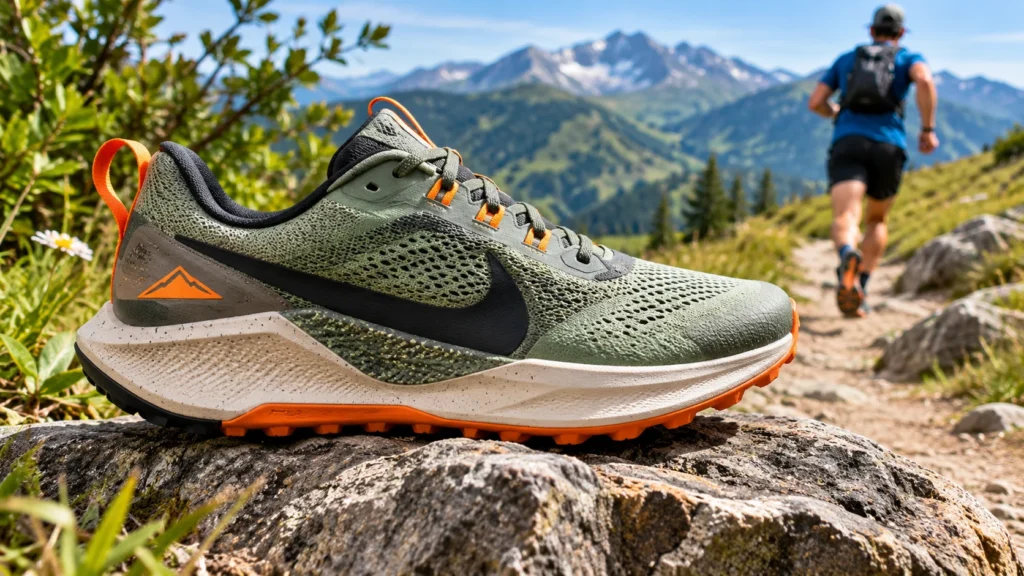
Overall
Versatility
Value
Scores reflect editorial assessment, not Amazon customer ratings.
Best for: Road-to-trail runs, gravel paths, walking, and light outdoor adventures.
Not ideal for: Technical mountain trails, deep mud, or dedicated road racing.
Reference price: $150.
The Nike Pegasus Trail 5 is a neutral road-to-trail running shoe. It combines soft cushioning with an outsole built for varied ground.
Nike uses ReactX foam to support comfortable daily miles. The midsole offers a balanced ride without a stiff racing plate.
The shoe has a stated 9.5 mm heel-to-toe drop. Its higher heel suits runners who prefer more cushioning toward the rear.
Nike’s All-Terrain Compound rubber adds grip when roads turn into gravel tracks. Shallow outsole lugs also help maintain a reasonably smooth ride on pavement.
A breathable mesh upper helps release heat during warm runs. The standard model does not include waterproof GORE-TEX protection.
The Pegasus Trail 5 makes sense for runners who dislike changing shoes between surfaces. It can also work as a travel shoe for active holidays.
Its main trade-off is weight. The extra outsole structure helps on loose ground but reduces its appeal for fast road workouts.
What Are the Nike Pegasus Trail 5 Pros and Cons?
- Versatile road-to-trail design.
- Comfortable ReactX cushioning.
- Dedicated all-terrain rubber outsole.
- Accommodating forefoot shape.
- Suitable for walking and travel.
- Comfortable for relaxed daily runs.
- Heavier than the HOKA Mach 6.
- Limited grip in deep mud.
- Not waterproof in standard form.
- Less suitable for road intervals.
- Not designed for technical mountain terrain.
ReactX cushioning, breathable mesh, and all-terrain traction for mixed-surface running.
Reference retail price: $150. Current prices vary by size, color, and seller.
What Is the HOKA Mach 6 Designed to Do?
Overall
Road Performance
Value
Scores reflect editorial assessment, not Amazon customer ratings.
Best for: Daily road runs, tempo workouts, and recreational road racing.
Not ideal for: Muddy trails, rocky routes, and runners needing dedicated stability support.
Reference price: $140.
The HOKA Mach 6 is a lightweight neutral running shoe for paved surfaces. It balances daily comfort with the ability to handle faster workouts.
HOKA uses supercritical EVA foam throughout the midsole. This foam creates a responsive ride without requiring a carbon plate.
The brand lists a 5 mm heel-to-toe drop. Independent laboratory measurements differ, so the stated figure should not be treated as universal.
The Mach 6 weighs around 232 grams in reviewed men’s samples. Its lighter design helps reduce the weight runners carry with every step.
Strategically placed rubber improves outsole protection while limiting excess weight. The curved sole shape also supports smooth forward movement.
Our detailed HOKA Mach 6 review provides additional context about its daily training performance.
The main limitation is its narrow toe shape. Runners who need extra room should compare the standard and wide versions before buying.
What Are the HOKA Mach 6 Pros and Cons?
- Lightweight road-running construction.
- Responsive supercritical EVA foam.
- Suitable for easy and faster runs.
- Smooth forward transitions.
- Available in selected wide sizes.
- Competitive reference retail price.
- Limited traction on loose trails.
- Standard toe box can feel narrow.
- Not a dedicated stability shoe.
- No waterproof membrane.
- Not ideal for technical terrain.
Lightweight supercritical foam cushioning for daily road training and faster running sessions.
Reference retail price: $140. Check the seller for the current price.
How Do the Nike Pegasus Trail 5 and HOKA Mach 6 Specifications Compare?
The HOKA Mach 6 has the advantage in weight and road-focused performance. Nike Pegasus Trail 5 offers a more suitable outsole for mixed terrain.
Both shoes use modern foam without a rigid carbon plate. Their geometry, grip, and intended surfaces create the biggest practical differences.
| Specification | Nike Pegasus Trail 5 | HOKA Mach 6 | Advantage |
|---|---|---|---|
| Reference retail price | $150 | $140 | HOKA |
| Category | Road-to-trail | Road running | Use dependent |
| Men’s sample weight | 300 g / 10.5 oz | 232 g / 8.2 oz | HOKA |
| Midsole foam | ReactX | Supercritical EVA | Use dependent |
| Stated heel stack | 37 mm | 37 mm | Tie |
| Stated forefoot stack | 27.5 mm | 32 mm | HOKA |
| Brand-stated drop | 9.5 mm | 5 mm | Preference dependent |
| RunRepeat measured drop | 9.6 mm | 9.6 mm | Tie in tested samples |
| Outsole | Nike ATC trail rubber | Road rubber | Terrain dependent |
| Upper | Breathable engineered mesh | Creel jacquard mesh | Preference dependent |
| Carbon plate | No | No | Tie |
| Support type | Neutral | Neutral | Tie |
| Standard waterproofing | No | No | Tie |
| Road intervals | Limited specialization | Suitable | HOKA |
| Gravel and easy trails | Suitable | Limited | Nike |
| Removable insole | Yes | Yes | Tie |
Weight and stack measurements vary with shoe size and testing methods. The figures above describe published specifications and reviewed samples.
A surprising detail is the measured heel-to-toe drop. RunRepeat recorded approximately 9.6 mm in both models despite their different advertised drops.
This finding shows why runners should consider actual fit and ride alongside brand specifications.
Which Shoe Offers Better Cushioning and Running Performance?
The HOKA Mach 6 wins for responsive road training and faster workouts. Nike Pegasus Trail 5 remains a strong choice for relaxed runs across varied surfaces.
Both shoes offer enough cushioning for regular training. However, the way each sole moves across the ground feels different.
How Does Nike ReactX Foam Perform?
ReactX foam provides a comfortable platform for steady road-to-trail running. The Pegasus Trail 5 places particular emphasis on rearfoot cushioning.
Independent testing by RunRepeat recorded a heel shock absorption result of 136 SA units. That figure describes impact absorption under the site’s test method.
The higher heel and curved geometry can help create smooth transitions for rearfoot runners. However, those features do not guarantee comfort for every foot shape.
ReactX works well when comfort and terrain variety matter more than pace. A relaxed run through a park is a better match than repeated track sprints.
How Does HOKA Supercritical Foam Perform?
HOKA’s supercritical EVA foam delivers a responsive ride suited to road training. Its lightweight platform encourages quicker transitions during faster sessions.
The foam can serve runners who want one shoe for several workout types. Easy runs, progression runs, and tempo workouts all fit its intended role.
RunRepeat recorded a heel shock absorption result of 135 SA units. That result is close to the Pegasus Trail 5 measurement.
Similar shock absorption figures do not mean both shoes feel identical. Weight distribution, sole shape, outsole rubber, and foot placement also influence ride quality.
Category winner: HOKA Mach 6 for paved running and speed-focused training.
Which Running Shoe Has Better Grip on Roads and Trails?
The Nike Pegasus Trail 5 wins on gravel, dirt paths, and loose surfaces. HOKA Mach 6 offers a more suitable outsole for everyday paved routes.
The Pegasus Trail 5 uses Nike’s All-Terrain Compound rubber. Its lugged outsole provides additional contact edges when the surface becomes uneven.
The Mach 6 uses a road-focused rubber layout. Its flatter design supports smooth movement across asphalt and concrete.
Consider a route that starts on sidewalks and ends on packed dirt. The Nike shoe offers more appropriate traction for the second half.
However, deeper mud creates a different challenge. The Pegasus Trail 5 does not have the aggressive lug design of a dedicated mud-running shoe.
Independent reviews also identify room for improvement in its grip on demanding wet surfaces. Neither model guarantees secure footing on wet rocks or ice.
Avoid relying on either shoe for icy slopes, deep mud, or exposed technical mountain routes. Choose footwear with traction designed for those specific conditions.
Category winner: Nike Pegasus Trail 5 for mixed-terrain grip.
Which Running Shoe Offers Better Value for Money?
The HOKA Mach 6 offers better value for runners who mainly train on pavement. Its $140 reference price is $10 lower than the Pegasus Trail 5.
Price alone cannot determine which model provides better value. A cheaper road shoe offers poor value when most of your runs involve loose ground.
The Pegasus Trail 5 includes outsole features that increase mixed-terrain usefulness. Those features matter when your weekly training takes you beyond paved paths.
For example, a runner completing five weekly road sessions gains little from trail lugs. The Mach 6 makes more practical use of that runner’s budget.
Someone alternating between two road runs and three park runs has different needs. The Nike model can cover those routes without requiring a second pair.
Both shoes have received newer-generation successors. Compare the price of available older stock with newer models before making a purchase.
Category winner: HOKA Mach 6 for road-running value; Pegasus Trail 5 for mixed-surface value.
Which Shoe Offers Better Durability, Protection, and Fit?
The Nike Pegasus Trail 5 offers more appropriate protection for varied terrain. HOKA Mach 6 provides a lighter fit for runners who stay on roads.
Trail running places different demands on an upper and outsole. Loose stones, dirt, and branches can increase wear in areas road shoes rarely encounter.
Nike’s trail-focused design addresses those conditions without becoming a heavy hiking shoe. Its outsole and upper balance flexibility with everyday outdoor use.
Which Shoe Fits Wide Feet Better?
The Pegasus Trail 5 has a more accommodating forefoot shape in independent assessments. The standard Mach 6 can feel narrower around the toes.
A narrow toe box becomes more noticeable when feet swell during longer runs. Downhill running can also push the toes toward the front.
HOKA offers the Mach 6 in selected wide sizes. That option may provide a better solution than choosing an unnecessarily long shoe.
Try both models with your usual running socks. Check heel security, toe movement, and pressure around the widest part of your foot.
Which Shoe Is Likely to Last Longer?
Neither shoe has a universal durability advantage across every surface. Running style, body weight, route conditions, and outsole wear all affect lifespan.
The Pegasus Trail 5 suits frequent gravel use better than the Mach 6. Meanwhile, the Mach 6 is designed to handle regular road mileage.
Do not judge durability by visible rubber alone. Cushioning can lose its useful feel before an outsole develops obvious damage.
Category winner: Nike Pegasus Trail 5 for mixed-terrain protection; fit depends on foot shape.
Which Shoe Wins in Real-World Running Situations?
The HOKA Mach 6 wins most pavement-based training scenarios. Nike Pegasus Trail 5 wins situations that require frequent changes in running surface.
| Running situation | Recommended shoe | Reason |
|---|---|---|
| Daily road training | Mach 6 | Lighter road-focused design |
| Gravel park runs | Pegasus Trail 5 | Dedicated trail traction |
| Tempo workouts | Mach 6 | Responsive lightweight platform |
| Travel and nature walks | Pegasus Trail 5 | Mixed-surface versatility |
| Cold, dry gravel paths | Pegasus Trail 5 | Trail-oriented outsole |
| Recreational road racing | Mach 6 | Lower weight |
| Technical mountain trails | Neither | Dedicated trail footwear preferred |
Which Shoe Is Better for Daily Road Runs?
The HOKA Mach 6 is the better choice for daily road running. Its lower weight makes it more appealing for varied paved workouts.
Runners interested in other road-focused Nike designs can compare our Nike Pegasus 42 review for another training option.
The Mach 6 can cover easy miles during the week. It also handles faster efforts without requiring a separate racing shoe.
Which Shoe Is Better for Beginner Trail Runners?
The Nike Pegasus Trail 5 is the better starting point for easy trails. Its design allows road runners to explore suitable unpaved routes.
Start with dry, well-maintained paths before attempting challenging terrain. Trail-specific shoes help with grip but cannot replace safe running technique.
Which Shoe Is Better for Winter Running?
The Pegasus Trail 5 is preferable for cold, dry, mixed-surface routes. However, neither standard model is designed specifically for snow or ice.
Consider a waterproof trail shoe when cold rain becomes a regular concern. For frozen ground, choose footwear or traction equipment intended for icy conditions.
Is the Nike Pegasus Trail 5 Worth the Extra Cost?
The Nike Pegasus Trail 5 is worth the additional $10 when you need mixed-terrain grip. Road-only runners receive more relevant features from the Mach 6.
The reference retail prices are $150 for Nike and $140 for HOKA. Current clearance prices can change that difference substantially.
Always compare identical product versions before evaluating discounts. The standard Pegasus Trail 5 and its GORE-TEX version offer different features.
Color, width, and size availability can also affect the price. An inexpensive shoe in the wrong size is not a useful bargain.
Check the seller’s return policy before placing an order. A retailer that allows suitable indoor fit checks can reduce purchase risk.
Consider the cost of owning multiple shoes as well. One mixed-terrain trainer can be practical if you alternate between roads and easy trails.
In contrast, runners targeting faster road sessions may gain more value from a dedicated road trainer.
Who Should Buy the Nike Pegasus Trail 5 or HOKA Mach 6?
Buy Nike Pegasus Trail 5 if your routes include regular unpaved sections. Choose HOKA Mach 6 if most of your running takes place on pavement.
Your usual running route should guide this choice before color, brand, or advertised foam technology. Both shoes perform best in their intended environments.
- You run on pavement and gravel.
- You enjoy relaxed outdoor runs.
- You want one shoe for active travel.
- You prefer a higher advertised heel drop.
- You need more trail-oriented traction.
Skip Nike if:
- Most of your workouts involve road speed.
- You need aggressive mud traction.
- Low shoe weight is your main priority.
- You run mainly on paved surfaces.
- You enjoy tempo and interval workouts.
- You prefer lightweight running shoes.
- You want a versatile neutral road trainer.
- You value responsive cushioning.
Skip HOKA if:
- You regularly run on loose terrain.
- The available widths feel restrictive.
- You need a dedicated stability shoe.
- You need aggressive grip for technical mountains. Consider HOKA Speedgoat or Nike Zegama.
- You require structured stability support. Consider a suitable stability running shoe.
- You want a dedicated carbon-plated racing shoe. Neither model fills that role.
- You need certified protection for occupational or industrial work.
Runners seeking a more cushioned road experience can also explore the Nike Pegasus Premium comparison before choosing a model.
What Are Real Runners Saying About Both Running Shoes?
Published independent reviews generally favor the Pegasus Trail 5 for versatility. The Mach 6 receives positive attention for its combination of weight and responsiveness.
Professional reviews also identify limitations that matter during long-term ownership. The Nike outsole does not excel on every trail surface.
The HOKA standard fit can create pressure around wider toes. This issue makes trying the shoe before running important.
Common praise
- Comfortable mixed-terrain cushioning.
- Useful road-to-trail transition.
- Accommodating forefoot fit.
Common concerns
- Weight increase compared with lighter trainers.
- Limited grip on demanding surfaces.
Common praise
- Light and responsive running experience.
- Versatile road-training performance.
- Improved rubber coverage over its predecessor.
Common concerns
- Narrow toe shape in the standard version.
- Limited suitability for loose trails.
These observations summarize independent professional reviews. They are not fabricated Amazon testimonials or verified Amazon customer ratings.
The main lesson from these reports is that both shoes have a clear purpose. Problems often arise when runners expect one design to perform outside that purpose.
How Should You Maintain the Pegasus Trail 5 and Mach 6?
Clean both running shoes with mild soap, cool water, and a soft brush. Proper drying helps protect the upper, cushioning, and bonded materials.
The Pegasus Trail 5 needs more attention after muddy runs. Its outsole grooves can collect dirt, grit, and small stones.
How Should You Clean the Nike Pegasus Trail 5?
Remove loose dirt from the outsole before washing the upper. Use a soft brush to reach between the lugs.
- Remove the laces and insoles when necessary.
- Brush away dry mud.
- Wipe the mesh with diluted mild soap.
- Remove soap residue with a damp cloth.
- Allow the shoes to air-dry fully.
Avoid sharp tools when removing stones from the outsole. They can damage the rubber or surrounding foam.
How Should You Clean the HOKA Mach 6?
Use gentle hand cleaning to preserve the Mach 6 upper and midsole. Remove surface dirt rather than soaking the entire shoe.
Road dust usually requires less cleaning than thick trail mud. A soft cloth can remove most surface marks after dry runs.
Keep both models away from direct heaters and clothes dryers. Excess heat can affect shoe materials and bonded components.
When Should You Replace These Running Shoes?
Replace either shoe when its grip, fit, or cushioning no longer supports comfortable running. Mileage offers a useful guide but cannot determine the exact replacement date.
Many runners use approximately 300 to 500 miles as a general inspection range. Actual lifespan depends on the shoe, runner, and running conditions.
Watch for uneven outsole wear, damaged mesh, or unusual midsole compression. Changes in how the shoe feels deserve attention too.
Record your running mileage and inspect the outsole regularly. Store dry shoes in a cool, ventilated area instead of a sealed sports bag.
How Was This Nike Pegasus Trail 5 vs HOKA Mach 6 Comparison Researched?

This comparison uses published product specifications, independent laboratory measurements, and professional running shoe reviews. It does not claim original hands-on wear testing by the author.
Manufacturer specifications establish each model’s intended use, foam technology, and advertised geometry. Independent reviews help identify practical strengths and weaknesses.
Measurements from different sources can vary because testing methods and shoe sizes differ. That is why brand-stated and laboratory-measured figures appear separately.
The editorial ratings reflect suitability for the intended running activities. They consider cushioning, fit, traction, weight, versatility, and reference retail value.
The overall recommendation prioritizes road-running performance because the Mach 6 targets that activity directly. Mixed-terrain runners should follow the terrain-specific recommendation instead.
Live Amazon prices and customer ratings could not be verified. Reference retail prices therefore provide a consistent basis for comparison.
Research sources:
- Nike — Pegasus Trail 5 official product specifications
- RunRepeat — Nike Pegasus Trail 5 laboratory review
- RunRepeat — HOKA Mach 6 laboratory review
- Believe in the Run — Nike Pegasus Trail 5 review
- Believe in the Run — HOKA Mach 6 review
- Running Shoes Guru — Nike Pegasus Trail 5 review
Final Verdict: Nike Pegasus Trail 5 vs HOKA Mach 6 — Which Should You Buy?
The HOKA Mach 6 is my overall recommendation for most road runners. Its lighter construction, responsive foam, and lower reference price make it a practical daily trainer.
The Nike Pegasus Trail 5 is the better purchase for mixed-terrain runners. Its trail-focused outsole offers advantages that a dedicated road shoe cannot match.
Neither shoe needs to outperform the other in every category. Their different designs help solve different training problems.
If you train for a road race, choose the Mach 6. Its lightweight platform better matches faster paved workouts.
If you regularly leave pavement for gravel paths, choose the Pegasus Trail 5. Its extra outsole structure serves a practical purpose during those runs.
The final decision should also account for foot shape. A shoe that matches your terrain but causes pressure is still the wrong purchase.
Choose the model that fits both your feet and your regular running routes. That combination matters more than a small difference in retail price.
Best for Road-to-Trail Running
Choose Nike for comfortable mixed-surface training and outdoor versatility.
Best Overall for Road Running
Choose HOKA for lightweight cushioning, daily road miles, and faster workouts.
Frequently Asked Questions
Which is better, Nike Pegasus Trail 5 or HOKA Mach 6?
The HOKA Mach 6 is better for road running and faster workouts. Nike Pegasus Trail 5 is better for gravel, light trails, and mixed surfaces. Both shoes offer comfortable neutral cushioning, but their outsole designs and weights suit different activities. Choose according to your normal running terrain.
What is the difference between Pegasus Trail 5 and Mach 6?
The main difference is terrain specialization. Nike Pegasus Trail 5 combines ReactX foam with a lugged all-terrain outsole. HOKA Mach 6 uses supercritical EVA foam and a lighter road-focused construction. Nike offers better mixed-surface versatility, while HOKA focuses on efficient paved running and faster daily training.
Can you use Nike Pegasus Trail 5 for road running?
Yes, Nike Pegasus Trail 5 can handle road running comfortably. Its shallow trail lugs and cushioned midsole support transitions between pavement and dirt. However, dedicated road trainers like the HOKA Mach 6 offer lower weight. Choose the Nike when your paved routes regularly connect with unpaved sections.
Can you use HOKA Mach 6 for trail running?
HOKA Mach 6 can handle short sections of smooth, dry, packed dirt. However, it is not a dedicated trail running shoe. Its outsole provides limited protection and grip on loose gravel, mud, and rocky terrain. Nike Pegasus Trail 5 offers a more appropriate design for regular easy trail running.
Is the Nike Pegasus Trail 5 waterproof?
The standard Nike Pegasus Trail 5 is not waterproof. Its mesh upper allows airflow but can admit water during rain or puddle crossings. Nike also offers a separate Pegasus Trail 5 GORE-TEX version with waterproof protection. Check the exact product name before purchasing if wet-weather performance is important.


