

Quick Answer
The Brooks Caldera 8 is the better fresh purchase for long trail runs because its updated upper and offset lacing improve the fit. The Caldera 7 is the better bargain when discounted. Both retain a 6 mm drop, a 10.6 oz listed men’s weight, and DNA LOFT v3 cushioning. The key difference is fit, not foam.
What changes from Caldera 7 to Caldera 8?
- Both models share the 6 mm advertised drop and plush midsole.
- Caldera 8 adds quick-drying mesh and a revised, offset lacing layout.
- Caldera 7 remains attractive when its older stock costs less.
Quick Verdict: Caldera 8 vs Caldera 7
Brooks Caldera 8
Customer rating: not independently verified
$119.95 Brooks US page checked; original $150
Best for
New buyers seeking secure comfort for long, runnable trails.
Brooks Caldera 7
Customer rating: not independently verified
$99.95 Brooks US page checked; listed size was unavailable
Best for
Budget-minded runners who already like the Caldera 7 fit.
| Category | Caldera 8 | Caldera 7 |
|---|---|---|
| Overall pick | 🏆 | — |
| Best value if available | ❌ | ✅ |
| Updated upper | ✅ | ❌ |
| Cushioning platform | ✅ | ✅ |
| Long, easy trail miles | ✅ | ✅ |
Bottom line: Pick Caldera 8 for the revised fit; choose Caldera 7 when it fits and costs much less.
- Caldera 8 wins for new buyers because its upper and lacing were revised.
- Brooks displayed a $20 difference between the checked sale listings.
- Both suit long training days and relaxed ultra-distance trail running.
- Caldera 7 offers better value only if your size remains available.
- The 6 mm drop, listed weight, and core cushioning stay essentially unchanged.
You’ve found a sale on the Brooks Caldera 7. But the Caldera 8 looks newer and more polished. Should you pay extra for the newer shoe? That depends less on speed and more on how the upper fits your foot.
I’m Steven Tyler of FootwearHiker. This review compares Brooks’ published details with independent trail tests and laboratory measurements. It does not claim personal test miles that I cannot document.
Both shoes target runners who value soft landings during long days outside. Their wide platforms help make a tall midsole feel controlled. Yet neither is a specialist for slick rock, deep mud, or short, fast races.
Most of the Caldera 8’s changes happen above the sole. That sounds small, but lace pressure and heel hold matter after several hours. A shoe that feels fine after ten minutes can pinch later.
The real buying question is simple: does the new upper solve a problem you have? If not, an available Caldera 7 at a good price remains a sensible option.
What Is the Brooks Caldera 8 Designed to Do?
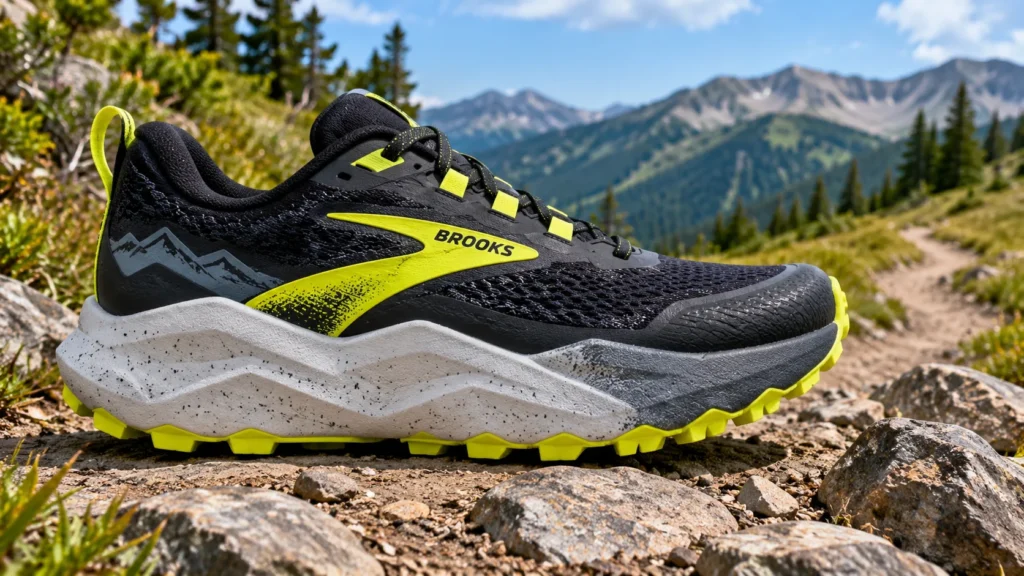
Quick verdict: A plush, stable-feeling trail shoe for long runs and ultra-distance efforts. Its best update is the upper, not a new cushioning system.
The Brooks Caldera 8 is a neutral trail-running shoe made for comfort over distance. Brooks calls out runs and races of 50 km or more. Its nitrogen-infused DNA LOFT v3 foam supports a cushioned ride. Raised sidewalls and a broad base help steady landings on uneven ground.
Brooks lists a 6 mm heel-to-toe drop and a men’s weight of 10.6 oz. The drop measures the height difference between heel and forefoot. You can learn how it affects shoe feel in this running shoe drop guide. A moderate drop does not tell you how soft the foam feels.
The updated upper uses quick-drying mesh and durable reinforcement. Offset lacing aims to reduce pressure on the top of the foot. It can also make the midfoot feel more secure without tighter knots. This is the strongest reason to consider the Caldera 8 over its predecessor.
The outsole uses TrailTack Green rubber for general trail grip. Independent lab testing measured lugs around 3.6 mm deep. That tread suits packed dirt and mixed terrain better than deep sludge. The tall foam stack also favors steady running over sudden, sharp direction changes.
The Caldera 8 makes most sense for a runner planning a long forest route or a steady 50K. It offers cushioning and an easy rhythm, not a race-day speed boost. The official Brooks Caldera 8 page confirms its listed weight, drop, and use case.
- Plush foam for long trail outings
- Broad, steady-feeling landing base
- Improved upper and secure lacing
- Comfortable for moderate trail paces
- Not a lightweight speed shoe
- Shallow tread for deep mud
- High platform can feel bulky
- Toe fit still needs careful checking
Brooks listed $119.95 for the checked US color option, down from $150. Amazon’s live price and stock were not independently verified. The linked ASIN represents a specific men’s color and size variant.
What Is the Brooks Caldera 7 Still Good For?
Quick verdict: Caldera 7 is still a strong long-distance trail shoe. It delivers much of the Caldera 8’s underfoot feel for less money when stock is available.
The Brooks Caldera 7 is the earlier version of Brooks’ max-cushioned trail model. Its purpose is much the same: comfortable running on trails for hours. It uses the same DNA LOFT v3 foam family and TrailTack Green outsole. Brooks also lists a 6 mm drop and 10.6 oz men’s weight.
The Caldera 7 pairs its thick cushioning with raised foam walls. This layout helps cradle the foot within a wide base. The result feels more controlled than a tall shoe’s height first suggests. It is still a neutral shoe, not a dedicated motion-control model.
Its mesh upper uses an external midfoot cage for hold. Many independent reviewers liked its stable ride and roomy feeling. Yet the shape will not suit every foot. Lace pressure, toe space, and downhill heel movement deserve a real fitting test.
The Caldera 7 is not an old shoe with outdated foam. Independent side-by-side reviews found the two generations close underfoot. That is useful news for shoppers. You can keep familiar comfort and spend less if the older shape already works for you.
Check the running shoe fitting checklist before ordering an older color or clearance pair. Return terms and width options matter more when sizes are scarce. Brooks’ published page also describes the Caldera 7 as a long-haul trail model.
- Same core cushioning platform
- Broad, stable-feeling base
- Comfortable for long easy runs
- Older stock can cost less
- Earlier upper and lace design
- Limited clearance size options
- Not ideal for fast technical racing
- Some buyers may prefer revised fit
Brooks displayed $99.95 against a $150 original price for the checked US listing. That page also showed an unavailable size option. Amazon’s live price and inventory were not independently verified.
How Do Brooks Caldera 8 and 7 Specifications Compare?
Caldera 8 does not deliver a big change in weight, drop, or cushioning. Both shoes use the same basic long-distance trail formula. The clearest differences appear in the upper, lacing, and recycled material content. The table separates confirmed manufacturer data from outside measurements.
| Specification | Caldera 8 | Caldera 7 | Winner |
|---|---|---|---|
| Original US list price | $150 | $150 | Tie |
| Brooks page sale price checked | $119.95 | $99.95; size unavailable | 7 if in stock |
| Advertised drop | 6 mm | 6 mm | Tie |
| Listed men’s weight | 10.6 oz / 300.5 g | 10.6 oz / 300.5 g | Tie |
| Midsole | DNA LOFT v3 | DNA LOFT v3 | Tie |
| Outsole | TrailTack Green | TrailTack Green | Tie |
| Upper | Revised quick-dry mesh | Air mesh with cage | 8 |
| Lacing layout | Offset lacing | Traditional layout | 8 for fit options |
| Upper recycled content | 52.9% | 42.1% | 8 |
| Raised sidewalls | Yes | Yes | Tie |
| Waterproof membrane | No | No | Tie |
| Warranty / returns | Seller policy applies | Seller policy applies | Check seller |
| Live Amazon customer rating | Not verified | Not verified | Undetermined |
Brooks’ product pages provide the core figures. A lab’s sample can measure differently from the brand’s advertised drop. This does not change the listed specification. If you compare footwear numbers, start with the running shoe specifications guide and use like-for-like measurements.
Which Has Better Cushioning and Stability on Long Runs?
Neither Caldera wins clearly on cushioning alone. Both use nitrogen-infused DNA LOFT v3 foam and broad midsole sidewalls. The Caldera 8 keeps the family feel rather than replacing it with a new platform. That makes upgrading only for softness hard to justify.
These shoes have a high stack of foam underfoot. Their broad bases spread the landing area. The sidewalls cradle the shoe’s edges and help the foot feel held. This design works well on forest paths, gravel roads, and long rolling routes.
Independent lab tests found the Caldera 8 notably wide at the heel. RunRepeat measured a 104 mm heel platform. That figure helps explain the calm rearfoot feeling reported by testers. It does not promise ankle stability on slanted rocks or roots.
The same tests also found the Caldera 8’s foam firmer than its predecessor. Another review group found the ride change hard to detect. Those results are not identical, and both can be true. Small foam changes may show on equipment but not dominate a real run.
For a long, steady 50K, I would choose the Caldera 8 if both shoes fit equally well. The new upper can make hours of wear easier. For a runner happy in the Caldera 7, the sole is not enough reason to replace a usable pair.
One counterpoint matters: more foam does not always mean less fatigue. A heavy shoe can feel tiring at high speed. A narrow trail can also demand more precise steps than a wide, tall platform allows.
Which Brooks Caldera Has Better Grip on Dirt, Rocks, and Mud?
Grip is effectively a tie for the trails these shoes target. Both use TrailTack Green rubber and moderate trail lugs. Neither is built as a specialist deep-mud shoe. The tread is most useful on packed earth, gravel, and mixed dry paths.
A RunRepeat laboratory test measured the Caldera 8’s lug depth at about 3.6 mm. Moderate lugs make a smooth transition between dirt and short paved links. They do not dig into thick mud like long, spaced-out cleats.
Wet stones and roots call for extra care. Rubber can help, but no tread removes slipping risk. Slow your pace and shorten steps when the ground turns slick. Avoid treating a successful dry trail run as proof of wet-rock safety.
On rocky tracks, the tall foam helps filter sharp ground feel. Yet the wide footprint can feel less exact on narrow edges. A shoe that feels stable on broad gravel may feel clumsy on steep, angled ground.
For technical trails with many sharp turns, consider the Brooks Cascadia 19 instead. Its trail-focused protection makes it another model worth trying. Pick by terrain and fit rather than assuming either Caldera handles every condition.
Does the Brooks Caldera 8 Offer Better Value for Money?
The Caldera 7 wins on price when it is truly available for less. Brooks showed $99.95 for one Caldera 7 listing and $119.95 for a Caldera 8 listing. That is a $20 difference at the checked prices. Both originally carried a $150 US list price.
That extra $20 mainly pays for an updated upper and lacing design. It does not buy a lighter shoe, lower drop, or brand-new foam. For a new buyer, better foot hold can justify the small gap. For a loyal Caldera 7 runner, it may not.
Clearance listings require care. A low price can belong to one color or a size nobody needs. The checked Caldera 7 page even displayed an out-of-stock notice. Always compare your actual size and the return policy.
I would not use an unverified historical low price as a buying target. Promotions move, and Amazon changes prices by variant. Check the current total before paying, including delivery and returns. A modest discount is not worth an uncomfortable fit.
Which Upper Fits Better, and What Safety Limits Matter?
Caldera 8 wins for buyers who want a revised upper and a different lace feel. Its quick-dry mesh and offset eyelet layout aim to reduce pressure across the top. The Caldera 7 still holds the midfoot well, but its structure feels more traditional.
Independent testers praised the Caldera 8 upper’s flexibility and drying performance. They also reported varied fit impressions. That difference matters: your own foot shape decides whether the update helps. A secure midfoot is useful only when your toes still move.
Try each shoe with the socks you plan to run in. Check the heel on an incline and the toe space on a descent. Feet can swell during long trail days. A shoe that starts snug can become painful after hours outside.
Brooks recommends around a thumbnail’s space ahead of the longest toe. Do not size up by habit alone. Extra length can make your foot slide on downhill trails. The better fit holds the heel without squeezing the forefoot.
Neither standard Caldera model is waterproof or designed for ice. Use care on slick roots, wet rock, and steep muddy slopes. Choose terrain-specific traction when conditions demand it.
There is another limit: the Caldera is a neutral trail shoe. Its wide platform can feel supportive, but it is not medical treatment. Choose a model based on fit, movement, and your terrain rather than a foot label alone.
Which Caldera Wins for Real-World Trail Running?
The Caldera 8 is my pick for new buyers across most long-distance uses. Caldera 7 wins when a lower price meets a proven good fit. These are use-case judgments drawn from specs and independent reviews, not claimed personal race results.
- First 50K trail race: Caldera 8. The revised upper adds a useful fit option. Check it during long training runs before racing.
- Long, easy weekend trails: Tie. Both have the same core cushioning design. Pick the one that stays comfortable for hours.
- Budget ultra training: Caldera 7. Its familiar midsole can save money. The discount only helps if your size is available.
- Dry gravel and park loops: Tie. Both use moderate lugs and broad platforms. Neither needs aggressive tread for easy routes.
- Cool, dry winter trails: Caldera 8. A secure upper can help with layered socks. Neither shoe replaces ice traction.
- Steep mud and exposed rock: Neither. Try a more technical trail shoe. The Caldera’s tall base and moderate lugs create limits.
Think about your normal route, not your hardest trail once a year. A shoe for five days of easy paths should suit those paths first. For more general selection help, use the Brooks running shoe alternatives discussion to identify what matters before trying models.
Is the Caldera 8 Worth $20 More Than the Caldera 7?
Yes for a new buyer who benefits from the upper; no for someone already happy in the Caldera 7. The $20 gap reflects the Brooks US prices checked, not verified current Amazon offers. The same comparison can reverse if a different size changes the sale.
Both shoes launched at $150. The checked Caldera 8 listing displayed $119.95. The checked Caldera 7 listing displayed $99.95 but showed an unavailable size. A price without stock is not a usable offer.
The older version sometimes appears at wider discounts. Yet clearance inventory can have fewer size and color choices. A newer shoe may be a better buy if it has easier returns or a more reliable fit.
There is no confirmed universal lowest-ever Amazon price for either shoe in this review. Avoid judging the purchase against a guessed record low. Compare final checkout totals on the day you shop. The running shoe sale guide explains how to approach seasonal discounts.
Value verdict: Save with the Caldera 7 if it fits; otherwise spend the modest premium on the Caldera 8.
Who Should Buy the Caldera 8, Caldera 7, or Neither?
Buy the Caldera 8 if your main goal is secure comfort on long, runnable trails. Choose the Caldera 7 if you already know its fit and find a worthwhile discount. Neither makes sense for someone mainly chasing speed or tackling deep mud.
- Run long, steady trail sessions
- Want the revised lacing layout
- Prefer an updated quick-dry upper
- Can get your size at a fair price
- Already know the old fit works
- Find a real clearance discount
- Value cushioning over new details
- Need a spare long-run pair
- You need sharper technical control: try Brooks Cascadia 19.
- You need a lighter race feel: consider Brooks Catamount 4.
- You mainly run pavement: compare Brooks Ghost 17.
Your training use matters more than a model number. A trail shoe should match the ground beneath you and the way your foot moves. No online review can replace a comfortable test fit.
What Do Real Buyers and Independent Testers Say?
Both generations earn praise for long-run cushioning and secure, broad platforms. The Caldera 8 draws mixed comments about its changed upper and relatively bulky feel. The Caldera 7 remains popular among runners who like a familiar, plush ride.
How to read the feedback: Fit reports are personal. A complaint about narrow toe space can be true for one foot and irrelevant to another. Check sample sizes and terrain before treating any opinion as universal.
Road Trail Run’s testers saw only a small difference between the two shoes. Their comparisons highlighted how similar the rides remain. Believe in the Run described the Caldera 8’s mesh and offset lacing as meaningful improvements, but opinions differed among testers.
RunRepeat’s lab measurements add a useful check. Its Caldera 8 sample showed a 104 mm heel width and about 3.6 mm lugs. The lab also recorded modest toe-bumper abrasion performance. Those results explain both the broad platform and one durability concern.
Public runner discussion is less consistent. Some users praise downhill confidence and comfort. Others mention toe space and scratchy insoles. An online review rarely reveals foot shape, fit preference, or trail surface, so treat it as a clue.
I could not independently confirm live Amazon average ratings or buyer counts for both specific linked variants. For that reason, the product cards do not invent star scores. Read recent size-specific reviews directly before ordering.
How Should You Maintain Brooks Caldera Trail Shoes?
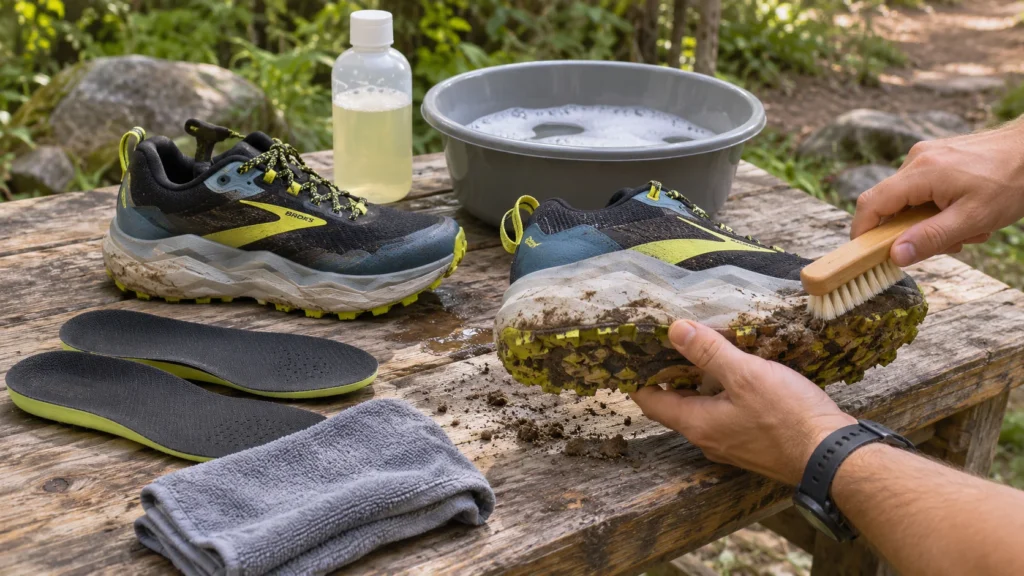
Clean mud before it hardens, then let the shoes air-dry. Both Caldera models depend on open tread for traction. Packed dirt can reduce grip and add needless weight. Gentle cleaning also helps you spot cuts and worn rubber.
- Brush the outsole. Remove mud, stones, and grit after each muddy run.
- Wipe the upper. Use a soft brush or cloth with mild soap and warm water.
- Remove the insoles. Clean them gently and let the inside dry.
- Air-dry away from heat. Stuff paper inside to hold the shoe’s shape.
- Check wear often. Look at lug edges, heel lining, and foam creases.
Brooks advises against washing machines and dryers. Heat and heavy soaking can weaken shoe materials. Its official shoe cleaning instructions recommend gentle hand cleaning instead.
Do not judge life only by distance. Brooks often gives 300 to 500 miles as a broad replacement reference for running footwear. Trail damage and foot strike can shorten that range. Replace shoes when cushioning, traction, or upper structure no longer feel safe.
Store clean shoes in a dry, ventilated area. Avoid hot car trunks and direct heaters. Rotate shoes when possible so each pair has time to dry after wet runs.
Final Verdict: Should You Upgrade from Caldera 7 to 8?
The Brooks Caldera 8 is my overall pick for someone buying a fresh max-cushioned trail shoe. It keeps the proven DNA LOFT v3 cushioning, 6 mm drop, and stable-feeling wide base. The revised quick-dry upper and offset lacing are its main advantages. They matter most on long runs, when pressure and rubbing become harder to ignore. However, the Caldera 7 remains a good choice for runners who know its fit. Its basic ride remains close, so there is little reason to replace a sound pair only for the new number. If your preferred Caldera 7 size is on a real sale, save the money. If the prices are close, choose Caldera 8 and compare both fits. Neither shoe is the best option for aggressive mud, icy trails, or short, fast races.
A comfortable fit is worth more than a small price gap. Check the width, heel hold, and return terms before buying. An attractive sale does not help if the shoe rubs after the first long run.
Brooks Men’s Caldera 8 Ultra Trail Running Shoe
The stronger choice for new buyers who want the revised upper.
Brooks Men’s Caldera 7 Trail Running Shoe
The value choice when your size fits and the discount is real.
Frequently Asked Questions
Is Brooks Caldera 8 better than Caldera 7?
Caldera 8 is the better new purchase when both models cost about the same. Its revised mesh and offset lacing may improve comfort and foot hold. Yet both share the same cushioning family, advertised drop, and listed men’s weight. A well-fitting discounted Caldera 7 can be the smarter buy.
What is the biggest difference between Caldera 8 and 7?
The biggest difference is the upper, not the foam. Caldera 8 uses revised quick-dry mesh and an offset lacing design. Caldera 7 keeps its earlier air-mesh construction and external hold system. Both retain DNA LOFT v3 cushioning and TrailTack Green rubber, so their basic trail purpose is similar.
Is the Brooks Caldera 8 good for 50K and ultra trails?
Yes, Brooks positions the Caldera 8 for ultra trail runs and races of 50 kilometers or more. It favors cushioned comfort and steady footing over racing speed. The broad platform works well on runnable terrain. Test it on long training runs before using it for an event with steep, technical ground.
Are Brooks Caldera 8 trail shoes waterproof?
No, the standard Caldera 8 uses breathable, quick-drying mesh rather than a waterproof membrane. Water can enter during rain, stream crossings, or wet grass. The upper is designed to dry, not keep every drop out. Choose a suitable waterproof shoe if your trips demand a membrane and careful moisture control.
Should I size up in Brooks Caldera 8 or 7?
Do not automatically size up in either Caldera model. Start with your normal running-shoe size and test toe space, midfoot pressure, and heel hold. Brooks recommends roughly a thumbnail of room ahead of the longest toe. On downhills, your toes should not hit the front or your heel lift excessively.
Affiliate Disclosure:
As an Amazon Associate, I earn from qualifying purchases.
If you click a link on this page and make a purchase,
I may receive a small commission — at no extra cost to you.
I only recommend products I genuinely believe will help you.
This helps keep the site free and running. Thank you for your support.


