

Quick Answer
The Nike Zegama 2 wins for trail running because it combines ZoomX cushioning with Vibram Megagrip traction and 4 mm lugs. The HOKA Mach 6 wins for road running because it weighs about 232 g and uses responsive supercritical EVA foam. Choose based on your main running surface.
Which shoe handles your running terrain better?
- Nike Zegama 2: Better grip and protection on trails.
- HOKA Mach 6: Lighter for everyday road training.
- Biggest difference: Trail traction versus road-running efficiency.
Quick Verdict — Nike Zegama 2 vs HOKA Mach 6
NIKE ZEGAMA 2
Original retail reference
Rocky trails, long-distance mountain running and technical terrain.
HOKA MACH 6
Original retail reference
Daily road running, tempo sessions and lightweight training.
| Category | Zegama 2 | Mach 6 |
|---|---|---|
| Overall terrain versatility | 🏆 | — |
| Best value | — | 🏆 |
| Trail traction | 🏆 | ❌ |
| Lightweight road training | ❌ | 🏆 |
| Road workout versatility | — | 🏆 |
Bottom line: Nike Zegama 2 wins for trail runners because of its Vibram outsole. HOKA Mach 6 wins for road runners who want a lighter daily trainer.
Editorial scores are research-based assessments, not Amazon star ratings or controlled tests by FootwearHiker. Prices shown are original retail references.
- Nike Zegama 2 offers Vibram Megagrip and 4 mm trail lugs.
- HOKA Mach 6 originally cost $40 less at retail.
- Zegama 2 suits rocky routes and long mountain runs.
- Mach 6 suits daily road miles and tempo training.
- The biggest difference is the outsole and intended running surface.
Why Are Runners Comparing Nike Zegama 2 and HOKA Mach 6?
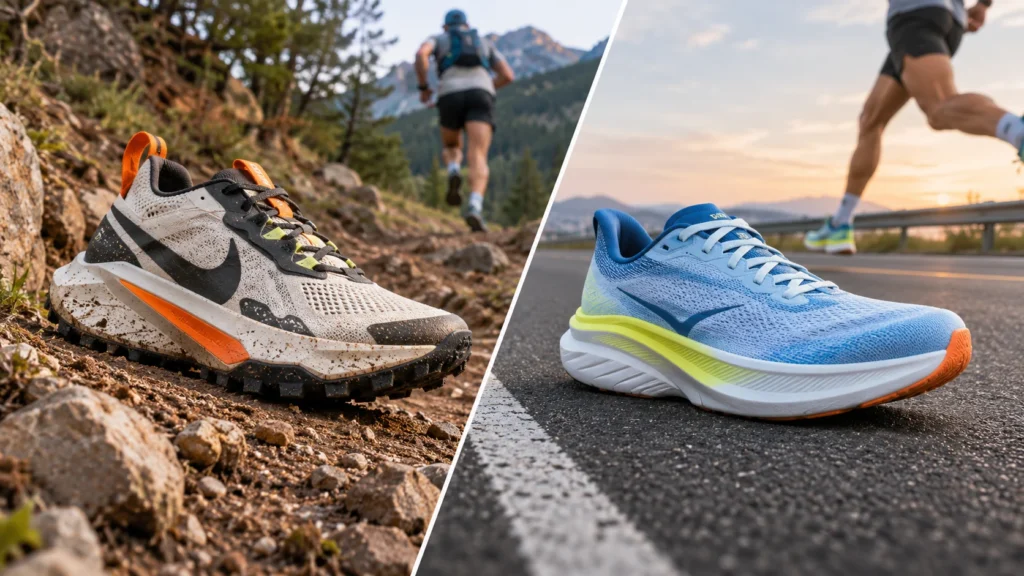
Nike Zegama 2 and HOKA Mach 6 target different types of runners. Both offer cushioning, a rocker-shaped ride and modern upper materials. However, their outsole designs create two very different running experiences.
I’m Steven Tyler, writing for Footwear Hiker. This comparison uses manufacturer specifications, independent laboratory results and published runner feedback. I have not personally completed a mileage test on either shoe.
The Nike Zegama 2 uses ZoomX foam with a supportive carrier. Its Vibram Megagrip outsole targets uneven trails and rocky routes. The HOKA Mach 6 uses supercritical EVA foam for road training.
Independent testing also shows a clear weight difference. The Mach 6 weighs around 232 to 234 grams in tested men’s samples. The Zegama 2 weighs around 302 to 320 grams, depending on size and source.
That difference matters during long runs. A lighter shoe can feel easier to move at faster road paces. A heavier trail shoe can offer features that matter more on rough ground.
So, which one deserves your money? The answer starts with the surface beneath your feet.
What Is the Nike Zegama 2 Designed to Do?
Editorial overall
Trail grip
Road value
Best for: Long-distance trail runners who need cushioning and dependable grip.
Not ideal for: Runners who mainly train on pavement or prefer lightweight shoes.
Original retail price: $180.
The Nike Zegama 2 is a maximum-cushion trail running shoe. It combines Nike ZoomX foam with a firmer SR-02 carrier layer. This construction aims to balance softness, responsiveness and underfoot protection.
Nike adds Vibram Megagrip rubber to the outsole. Its traction lugs help runners handle changing trail surfaces. The shoe also has an integrated ankle gaiter that helps limit dirt and small debris.
The men’s US size 10 weighs approximately 320 grams. Nike lists a 4 mm heel-to-toe drop. The design targets moderately technical and highly technical trails.
The upper uses engineered mesh with protective toe overlays. These features help protect the shoe during contact with rocks and rough trail debris. Nike also designed the forefoot to allow more room during longer runs.
The Zegama 2 is not a lightweight road trainer. Its stronger trail focus brings extra weight and bulk. However, that trade-off makes sense for runners who value grip and protection.
See the official Nike Zegama 2 specifications for the manufacturer’s construction details.
What Are the Nike Zegama 2 Pros and Cons?
The Nike Zegama 2’s biggest strengths are trail cushioning and traction. Its main weaknesses are weight and limited road efficiency. Independent reviews praise its grip, but some runners dislike its bulky feel.
Nike Men’s Zegama 2 Trail Running Shoes
A maximum-cushion trail shoe with ZoomX foam, Vibram Megagrip and an integrated ankle gaiter.
Original retail price: $180.
Best for: Mountain routes, rocky trails and long-distance off-road running.
Check the selected size, color, seller and current price.
What Is the HOKA Mach 6 Designed to Do?
Editorial overall
Road versatility
Weight and value
Best for: Neutral runners who want one lightweight shoe for several road workouts.
Not ideal for: Technical trail runners and people who need a roomy toe box.
Original retail price: $140.
The HOKA Mach 6 is a lightweight neutral road running shoe. It uses full-length supercritical EVA foam for responsive cushioning. Its design supports easy runs, tempo sessions and everyday road training.
HOKA lists an approximate men’s weight of 232 grams. The official heel-to-toe drop is 5 mm. Its published stack height measures around 37 mm at the heel and 32 mm at the forefoot.
The shoe has a creel jacquard mesh upper. A gusseted tongue helps hold the foot in place. Strategic rubber coverage protects key areas of the outsole.
Unlike the Nike Zegama 2, the Mach 6 has no Vibram trail outsole. Its rubber pattern focuses on road contact rather than deep trail traction.
The Mach 6 works well for runners who want a versatile daily trainer. It can handle steady miles, tempo workouts and shorter faster sessions. However, it does not replace a dedicated trail shoe.
Independent reviews also highlight its snug forefoot shape. Runners with wide feet should test the available wide version before buying.
For more fit details, read our HOKA Mach 6 review.
What Are the HOKA Mach 6 Pros and Cons?
The Mach 6 wins on weight and road-training versatility. Its supercritical EVA foam offers a responsive daily ride. However, the tapered toe box and limited trail grip create clear limits.
HOKA Mach 6 Running Shoes
A lightweight road trainer with supercritical EVA cushioning, a jacquard upper and strategic outsole rubber.
Original retail price: $140.
Best for: Daily road training, tempo runs and mixed-pace workouts.
Check the listing carefully. Confirm the Mach 6 model and selected size.
How Do Nike Zegama 2 and HOKA Mach 6 Specifications Compare?
The Nike Zegama 2 wins on trail-specific construction, while the HOKA Mach 6 wins on weight. The Zegama 2 weighs approximately 320 grams in men’s US 10. The Mach 6 weighs approximately 232 grams in men’s US 9, although these are different reference sizes.
Both shoes use cushioned midsoles and rocker-shaped geometry. However, Nike uses ZoomX and Vibram Megagrip for off-road use. HOKA uses supercritical EVA and road-focused rubber coverage.
| Specification | Nike Zegama 2 | HOKA Mach 6 | Winner |
|---|---|---|---|
| Category | Trail | Road | Depends |
| Midsole | ZoomX + carrier | Supercritical EVA | Depends |
| Weight | 320 g, US 10 | 232 g, US 9 | Mach 6 |
| Heel-to-toe drop | 4 mm | 5 mm official | Depends |
| Heel stack | 36 mm | 37 mm | Tie |
| Forefoot stack | 32 mm | 32 mm | Tie |
| Outsole | Vibram Megagrip | Strategic rubber | Zegama 2 |
| Lug depth | 4 mm | Road tread | Zegama 2 |
| Upper | Engineered mesh | Creel jacquard mesh | Depends |
| Ankle gaiter | Yes | No | Zegama 2 |
| Gusseted tongue | Yes | Yes | Tie |
| Carbon plate | No | No | Tie |
| Original retail price | $180 | $140 | Mach 6 |
| Warranty | Manufacturer terms | Manufacturer terms | Tie |
| Amazon rating | Not verified | Not independently verified | Not scored |
Note: Weight and stack figures depend on shoe size and measurement method. Published brand specifications and independent laboratory measurements may differ. Neither shoe has a carbon plate.
Which Shoe Performs Better on Different Running Surfaces?
The Nike Zegama 2 wins on technical trails because its Vibram Megagrip outsole has deeper lugs. RunRepeat measured 4 mm lug depth. The HOKA Mach 6 performs better on paved roads because its lighter build and road-focused outsole suit regular training.
Trail shoes need more than soft cushioning. They need grip, protection and a secure connection with uneven ground. The Zegama 2 brings those features together through its outsole and protective upper.
The Mach 6 takes another approach. Its lighter weight makes it easier to use during road workouts. The outsole uses strategic rubber coverage rather than deep trail lugs.
Which Shoe Is Better on Rocky Trails?
The Nike Zegama 2 wins on rocky trails. Its Vibram Megagrip rubber and protective toe overlays help runners handle uneven ground. The integrated ankle gaiter also limits small stones and dirt from entering the shoe.
The Mach 6 lacks these trail-specific features. Its thinner road tread cannot provide the same level of grip on loose stones. A runner should not choose it for technical mountain routes.
Which Shoe Is Better on Gravel Paths?
The Nike Zegama 2 is the better option for loose gravel. Its lugged outsole gives runners more contact with uneven surfaces. The Mach 6 can manage smooth, compact gravel at easy paces, but it is not built for rough routes.
For a short park path with packed gravel, the Mach 6 can still work. For loose stones and steep sections, the Zegama 2 offers more confidence.
Which Shoe Is Better for Pavement?
The HOKA Mach 6 wins on pavement because it weighs less. Its supercritical EVA foam and curved sole suit road training. The Zegama 2 can handle occasional pavement, but its trail outsole and heavier construction make it less efficient.
Long stretches of pavement can also increase wear on trail lugs. Using a road shoe for road training helps preserve your trail shoe for rougher ground.
Which Shoe Provides Better Cushioning and Comfort?
The Nike Zegama 2 wins for cushioned trail protection, while the HOKA Mach 6 wins for lightweight road comfort. ZoomX gives the Nike a soft and energetic feel. Supercritical EVA gives the HOKA a lighter, responsive ride.
Nike uses a ZoomX foam core inside a firmer carrier. This design aims to balance cushioning and stability. It also helps protect the foot during long trail sessions.
RunRepeat measured the Zegama 2’s heel energy return at 60.2%. Its heel shock absorption reached 130 SA in laboratory testing. These figures support its strong cushioning profile.
The Mach 6 uses full-length supercritical EVA. RTINGS measured 7.3/10 for cushioning and 6.8/10 for energy return. Those scores suggest a balanced daily trainer rather than a highly specialized racing shoe.
Which Midsole Feels Softer?
The Nike Zegama 2 has a softer measured midsole in RunRepeat’s testing. Its ZoomX foam provides a cushioned feel underfoot. However, the firmer carrier helps control the soft foam on uneven surfaces.
The Mach 6 feels more connected to the road. Some runners prefer this firmer response because it supports faster transitions. Others may prefer the deeper trail cushioning of the Zegama 2.
Which Shoe Is Better for Long Runs?
The answer depends on terrain. The Zegama 2 is better for long trail runs because its outsole protects against changing surfaces. The Mach 6 is better for long road runs because it has a lighter construction.
For a 20 km mountain route, the Zegama 2 offers a more suitable design. For a 20 km pavement run, the Mach 6 makes more sense for runners who enjoy its fit.
Choose cushioning based on your route. A soft shoe cannot replace proper trail traction.
Which Shoe Offers Better Value for Money?
The HOKA Mach 6 offers better original retail value because it launched at $140. The Nike Zegama 2 launched at $180, creating a $40 price gap. However, the Zegama 2’s higher cost buys dedicated trail features rather than simply more cushioning.
The Zegama 2 includes Vibram Megagrip, protective overlays and an ankle gaiter. Those features matter when running over rocks and uneven trails. The Mach 6 costs less and provides a lighter road-running package.
Neither original retail price represents a confirmed live Amazon offer. Current prices can change with size, color, seller and stock. Check the linked listings before making a purchase.
Is the Nike Zegama 2 Worth $40 More?
Yes, the Zegama 2 is worth the extra $40 for regular trail runners. Its outsole and protective design address problems that road shoes do not solve. However, road runners should not pay extra for trail features they rarely use.
Is the HOKA Mach 6 Better for Budget Buyers?
The Mach 6 is the lower-cost choice at original retail pricing. It also weighs less and supports several road workouts. Buyers should compare its current price with the newer Mach 7 before ordering.
Historical low prices for the two models could not be verified from a complete, reliable price record for both shoes. Therefore, this comparison does not claim a specific all-time low.
Value verdict: Mach 6 wins for road runners, while Zegama 2 justifies its premium for trail runners.
Which Shoe Has Better Grip, Stability and Durability?
The Nike Zegama 2 wins for trail grip because it uses Vibram Megagrip and 4 mm lugs. The Mach 6 has road-focused rubber coverage. Both designs can handle their intended surfaces, but they do not offer equal traction on loose terrain.
RunRepeat found that the Zegama 2 performs well in wet and dry trail conditions. Its outsole provides a clear advantage over ordinary road rubber. The large exposed foam areas still need care on rough ground.
The Mach 6 has rubber in selected outsole areas. This helps protect key contact zones without adding unnecessary weight. It is a practical design for regular pavement use.
Which Shoe Provides Better Stability?
The Zegama 2 has a wide platform and a firmer carrier around its ZoomX foam. This helps control the soft midsole on trails. However, the high cushioning can still feel unstable to some runners.
The Mach 6 has a neutral road platform. It does not include a dedicated motion-control system. Runners who need strong stability support should consider a stability-focused model instead.
Which Shoe Lasts Longer?
Durability depends on mileage, surface, body weight and running style. The Zegama 2 has protective mesh and reinforced toe overlays. The Mach 6 has strategic rubber coverage for repeated road contact.
Running the Zegama 2 mainly on pavement can wear its trail tread faster. Running the Mach 6 on sharp rocks can damage its road-focused outsole. Using each shoe for its intended surface helps extend its life.
Which Shoe Has Better Fit and Upper Comfort?
The HOKA Mach 6 suits runners who prefer a secure, close-fitting road shoe. The Zegama 2 offers trail-focused protection and a slightly wider design than its predecessor. Neither shoe fits every foot shape equally well.
The Zegama 2 uses engineered mesh and a built-in ankle gaiter. Its toe overlays help protect against trail contact. The design also aims to accommodate foot expansion during long runs.
The Mach 6 uses creel jacquard mesh and an internal tongue gusset. The upper holds the midfoot securely. However, its tapered toe box can feel restrictive to some runners.
Which Shoe Is Better for Wide Feet?
The Zegama 2 has a slightly roomier forefoot design than the first model. However, its shape still needs to suit your foot. The Mach 6 has wide sizing options, which can help runners who need extra width.
Do not assume that a wide shoe will solve every fit issue. Toe height, arch shape and heel lockdown also affect comfort. Try both shoes with your normal running socks when possible.
Should You Buy the Same Size in Both Shoes?
Not automatically. Shoe sizing can differ between brands and models. Check the brand’s size chart and test the fit with enough toe room for longer runs.
Allow your toes to spread without pressing against the front. Your heel should stay secure during turns and downhill movement. A shoe that feels tight in the store can become uncomfortable after several kilometres.
Are There Safety and Unique Feature Differences?
The Nike Zegama 2 wins on trail-specific safety features because it has deeper lugs, protective overlays and an ankle gaiter. The Mach 6 wins on lighter road movement. Neither shoe replaces proper footwear for severe terrain or hazardous weather.
The Zegama 2 has features the Mach 6 does not. Its Vibram outsole targets trail traction. Its ankle gaiter helps keep debris outside. Its toe overlays protect the upper from repeated contact with rocks.
The Mach 6 has a different advantage. Its lower weight supports road training and quicker sessions. Its supercritical EVA foam gives a lively feel without a carbon plate.
Neither shoe is waterproof or personal protective equipment. Avoid assuming that either model protects against deep water, sharp objects or dangerous trail conditions. Use suitable equipment and slow down on slippery terrain.
For trail planning, check route conditions before running. Loose stones, mud and steep descents can increase fall risk. Even a strong outsole cannot guarantee grip on every wet surface.
Read the Nike Zegama 2 product details and the manufacturer’s HOKA official website for product and care information.
Most importantly, replace shoes when the outsole, upper or midsole shows serious wear. Do not continue running in shoes that no longer provide a secure fit.
Which Shoe Wins in Real-World Running Situations?
The Nike Zegama 2 wins for technical trail situations. The HOKA Mach 6 wins for regular road training. Each shoe performs best when the running surface matches its design.
| Running situation | Winner | Reason |
|---|---|---|
| Rocky mountain trails | Nike Zegama 2 | Vibram Megagrip and trail lugs. |
| Daily pavement runs | HOKA Mach 6 | Lighter road-focused construction. |
| Loose gravel trails | Nike Zegama 2 | Better traction on loose ground. |
| Tempo workouts | HOKA Mach 6 | Lower weight and responsive foam. |
| Long mountain races | Nike Zegama 2 | Cushioning and trail protection. |
| Road half-marathon training | HOKA Mach 6 | Versatile road-running design. |
Which Shoe Is Better for Beginners?
The HOKA Mach 6 is better for beginners who mainly run on roads. Its lightweight construction supports easy training and faster sessions. Beginners who plan to run on rocky trails should choose the Zegama 2 instead.
Which Shoe Is Better for Cold Weather?
The Zegama 2 is the more suitable choice for many off-road winter routes because of its trail outsole. However, neither shoe is a dedicated winter shoe. Ice, packed snow and freezing rain require additional traction and careful route choices.
The Mach 6 can work during cold road runs on clear pavement. Its road outsole does not provide the same confidence on mud or loose snow. Always adjust your pace when conditions become slippery.
Is the Nike Zegama 2 Worth Buying Over the HOKA Mach 6?
The Nike Zegama 2 is worth buying over the Mach 6 when your training includes rocky trails and mountain routes. Its $40 higher original retail price buys more trail-specific features. The Mach 6 remains the better buy for road runners.
The price difference alone should not decide your purchase. A cheaper road shoe is not better value when you need trail grip. Likewise, a premium trail shoe wastes money if you run only on pavement.
Check current prices and stock before ordering. The Mach 6 has a newer successor, so some sizes and colors may become harder to find. Compare the Mach 7 if the Mach 6 price approaches the newer model.
For the Zegama 2, look for discounts on older colorways. Check the seller, size and return policy before buying. A good price matters only when the shoe fits your feet.
Who Should Buy the Nike Zegama 2 or HOKA Mach 6?
Buy the Nike Zegama 2 if you run on rocky trails, steep paths or mountain routes. Buy the HOKA Mach 6 if you train mainly on roads and want a lighter daily shoe. Both models serve a clear purpose, but neither replaces the other.
- Run technical mountain trails.
- Need dependable trail grip.
- Prefer maximum trail cushioning.
- Want an integrated ankle gaiter.
- Run mostly on pavement.
- Want a lightweight trainer.
- Do regular tempo sessions.
- Prefer a responsive road ride.
- You need maximum road cushioning: consider ASICS GEL-Nimbus 27.
- You need a dedicated technical mountain racer: consider HOKA Speedgoat 6.
- You need strong stability support: consider Brooks Adrenaline GTS 25.
What Are Real Buyers Saying About Both Shoes?
Both shoes receive positive feedback for their intended use. The Zegama 2 is widely praised for cushioning and grip. Mach 6 reviews highlight its lightweight feel and road versatility. Common complaints involve weight, fit and surface limitations.
Buyer feedback should be read with care. Different shoe sizes, running styles and terrain can change the experience. A positive review from a road runner does not prove a shoe works on technical trails.
The main lesson is simple. Do not judge either shoe by star ratings alone. Read reviews from runners who use similar surfaces and distances.
How Should You Maintain Your Running Shoes?
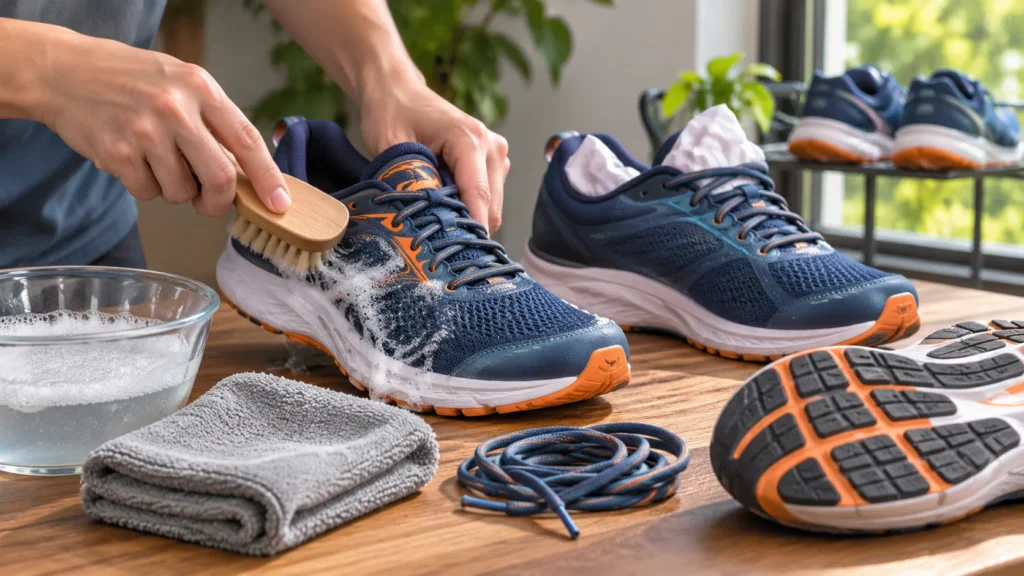
Clean mud after trail runs and let both shoes dry naturally. Avoid direct heat, which can damage shoe materials and adhesives.
Both shoes last longer when you clean them correctly. Remove loose dirt before it builds up around the outsole and upper. Use a soft brush and mild soap for routine cleaning.
How Should You Clean the Nike Zegama 2?
Remove loose mud from the Vibram outsole after each muddy run. Use a soft brush to clean the spaces between the lugs. This helps maintain the outsole’s contact with the ground.
Clean the engineered mesh with a damp cloth. Remove the insole if needed and let both parts air dry. Avoid putting the shoes near a heater or in a clothes dryer.
How Should You Clean the HOKA Mach 6?
Wipe the mesh upper with a soft damp cloth. Remove small stones from the outsole rubber areas. Let the shoe dry at room temperature after wet runs.
Do not use strong chemicals or bleach. Harsh cleaners can affect the upper and adhesive. Keep the shoes in a cool, dry place away from direct sunlight.
When Should You Replace Your Running Shoes?
Replace your shoes when the outsole loses grip or the midsole feels worn. A damaged upper can also reduce support. Check for uneven wear, loose bonding and repeated discomfort.
There is no perfect replacement mileage for every runner. Body weight, terrain, pace and running form affect shoe life. Use the shoe’s condition rather than a fixed number alone.
Final Verdict: Should You Choose Nike Zegama 2 or HOKA Mach 6?
The Nike Zegama 2 is the better choice for trail running because it has Vibram Megagrip, protective overlays and a trail-focused cushioning system. The HOKA Mach 6 is the better road shoe because it weighs less and handles daily training and tempo sessions. Most buyers should choose the model that matches their main running surface.
The Zegama 2 makes more sense for mountain runners. Its ZoomX cushioning and trail outsole help on rocky routes. The integrated ankle gaiter also helps keep debris out during longer sessions.
The Mach 6 makes more sense for pavement. Its lightweight build supports regular road mileage. The supercritical EVA midsole offers a responsive ride without a carbon plate.
There is no universal winner here. A trail shoe cannot replace a road trainer in every workout. A lightweight road shoe cannot provide the same trail protection as a dedicated off-road model.
Our Final Recommendation
Choose Nike Zegama 2: If you regularly run rocky trails, mountain paths and uneven terrain.
Check Nike Zegama 2 Price on Amazon
Choose HOKA Mach 6: If you want a lightweight daily trainer for pavement and faster workouts.
Frequently Asked Questions
Which is better, Nike Zegama 2 or HOKA Mach 6?
The Nike Zegama 2 is better for trail running, while the HOKA Mach 6 is better for road running. Nike offers Vibram Megagrip, 4 mm lugs and protective trail features. HOKA offers a lighter build and responsive supercritical EVA cushioning for everyday pavement training.
Can you use the Nike Zegama 2 for road running?
Yes, you can use the Nike Zegama 2 on roads for short sections. However, its heavier construction and trail-focused outsole make it less efficient for regular pavement training. The HOKA Mach 6 is a better choice for runners who spend most of their time on roads.
Can the HOKA Mach 6 handle trail running?
The HOKA Mach 6 can handle smooth, dry paths and compact gravel. However, it lacks the deep trail lugs and Vibram Megagrip outsole found on the Zegama 2. Avoid using it for steep, muddy or technical trails where stronger traction is needed.
Which shoe has better cushioning for long runs?
The Nike Zegama 2 provides maximum-style cushioning for long trail routes. Its ZoomX foam and carrier layer help protect the foot on uneven terrain. The HOKA Mach 6 offers responsive road cushioning and a lighter feel, making it better suited to long pavement runs.
Is the Nike Zegama 2 worth the extra $40?
The Nike Zegama 2 is worth the original $40 premium if you need trail-specific grip and protection. Its Vibram outsole and ankle gaiter add useful features for mountain running. Road runners should save money and choose the HOKA Mach 6 instead.
Affiliate Disclosure:
As an Amazon Associate, I earn from qualifying purchases.
If you click a link on this page and make a purchase,
I may receive a small commission — at no extra cost to you.
I only recommend products I genuinely believe will help you.
This helps keep the site free and running. Thank you for your support.


