Quick Answer
The most common signs running shoes are worn out include flattened cushioning, worn tread, uneven soles, damaged uppers, reduced comfort, and new slipping or rubbing. Many everyday trainers need a replacement check around 300–500 miles (480–800 km), but actual lifespan varies. If you’re unsure, compare their condition with a newer pair and review the REI running shoe replacement guide.
Six Important Warning Signs
- Flattened cushioning: The midsole feels less comfortable or responsive than before.
- Worn outsole: Important tread areas become smooth or expose underlying foam.
- Uneven wear: One side becomes significantly more worn or unstable.
- Damaged upper: Holes, tears, or worn heel lining affect fit.
- Reduced comfort: Familiar runs start feeling unusually uncomfortable.
- Lost support: The shoe feels loose, unstable, or structurally different.
Quick Verification Tip
- Compare both shoes: Check tread, cushioning, heel shape, and fit against a newer pair when possible.
Running shoes rarely stop working overnight. I’ve found that gradual changes in comfort can be easier to miss than visible damage.
That’s why checking both the shoe and your running experience matters. This guide explains ten warning signs, simple inspection methods, and how to decide when replacement makes sense in 2026.
What Does It Mean When Running Shoes Are Worn Out?
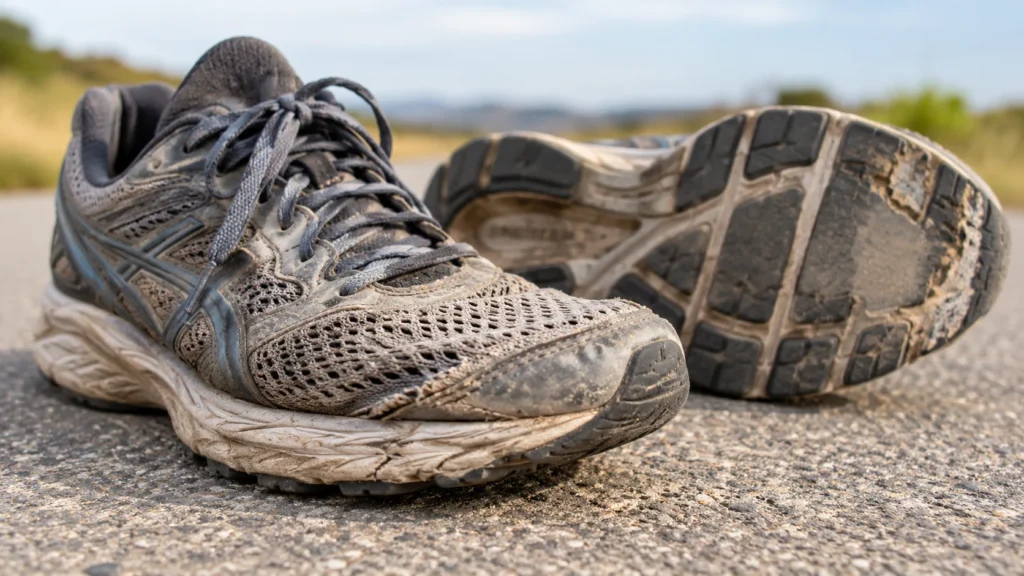
Worn-out running shoes are footwear whose cushioning, grip, structure, or fit has deteriorated enough to affect its intended use. A shoe can reach this point even when its exterior still looks acceptable.
Running shoes contain several components that experience repeated loading. Each component can deteriorate at a different rate.
- Outsole: The bottom rubber layer that provides traction and protects the foam.
- Midsole: The cushioning layer between your foot and the ground.
- Upper: The fabric and supporting material surrounding your foot.
- Heel counter: A structured heel component that helps maintain the shoe’s shape.
- Insole: The removable or fixed layer directly beneath your foot.
Not all visible aging means a running shoe has failed. Surface dirt, minor scuffs, and ordinary foam creases can appear well before replacement becomes necessary.
The important question is whether the shoe still provides suitable comfort, grip, and structural integrity.
What Are the 10 Signs Running Shoes Are Worn Out?
The strongest replacement clues involve changes in cushioning, traction, fit, and overall structure. One serious problem can justify replacement, while several smaller changes together strengthen the case.
1. The Midsole Cushioning Feels Flat
Flattened cushioning is one of the most meaningful signs of shoe deterioration. The shoe may feel noticeably firmer, less responsive, or simply different from its original ride.
The midsole compresses repeatedly during running. Over time, some foam materials lose part of their original resilience.
- The shoe feels unusually flat during familiar runs.
- Landings seem less comfortable than before.
- The foam stays compressed in heavily loaded areas.
- A newer pair feels noticeably more comfortable.
My practical recommendation: Compare an older shoe with a newer version of the same model if possible. This can reveal gradual changes that are difficult to notice from memory alone.
However, different shoes naturally have different cushioning characteristics. A firmer feel isn’t automatically evidence of wear.
2. The Outsole Tread Is Smooth or Worn Through
The outsole provides grip and protects the softer midsole beneath it. Significant rubber loss can reduce traction and expose vulnerable foam.
Turn your shoes upside down and inspect their main contact areas.
- Check the heel for heavily worn rubber.
- Inspect the forefoot for missing tread.
- Look for areas where the foam has become exposed.
- Compare the left and right shoes.
Some road-running shoes have intentionally shallow tread patterns. Judge wear against the original design rather than expecting deep grooves everywhere.
If the shoe frequently slips on surfaces where it previously gripped well, replacement deserves consideration.
3. One Side of the Sole Is Wearing Down Unevenly
Uneven wear becomes concerning when it significantly changes the shoe’s shape or stability. Minor differences between the inner and outer edges are common.
Every runner loads footwear differently. Heel striking, stride characteristics, and running surfaces can influence outsole patterns.
- One heel becomes noticeably lower than the other.
- The sole develops a pronounced sideways tilt.
- A section of outsole wears through much earlier.
- The shoe feels unstable despite secure lacing.
Place both shoes on a flat surface and inspect them from behind. Significant asymmetry, combined with poor comfort or instability, may indicate structural wear.
Remember that wear patterns alone cannot diagnose overpronation or an underlying foot problem.
4. The Heel Counter Has Lost Its Shape
The heel counter helps maintain structure around the rear of your foot. A damaged counter may allow movement that wasn’t present when the shoe was new.
Look for collapsed heel walls, broken components, or obvious deformation.
- The heel area folds inward unusually.
- The back of the shoe appears permanently crushed.
- The heel moves excessively despite appropriate lacing.
- The internal lining has worn away significantly.
A flexible heel design isn’t automatically defective. Compare the shoe with its intended construction before judging it.
5. Your Feet or Legs Feel Unusually Sore After Runs
New discomfort during familiar runs can be a clue that your shoes have changed. However, soreness has many possible causes unrelated to footwear.
Training intensity, recovery, running surfaces, and other physical factors can affect how your body feels.
- Consider whether your training volume recently increased.
- Check whether your running route or surface changed.
- Compare comfort with another suitable pair.
- Inspect the outsole and midsole for visible deterioration.
Don’t assume buying new shoes will solve every ache. Persistent, worsening, or significant pain deserves assessment from an appropriate healthcare professional.
6. The Upper Mesh Has Holes or Tears
The upper helps hold your foot in place while allowing movement and ventilation. Significant tearing can affect the secure fit of a running shoe.
Small cosmetic marks are different from damage around important support areas.
- Holes appear around the toe box.
- Fabric separates from supporting overlays.
- Seams split along the sides.
- Damaged material changes how securely the shoe fits.
Repeated toe-box holes in otherwise new shoes may indicate a sizing or fit problem. Consider toe clearance and foot shape before replacing them with an identical size.
7. The Shoes Cause New Blisters or Rubbing
A change in fit can signal deterioration in the upper, heel lining, or internal structure. Shoes that previously felt secure may start rubbing unexpectedly.
Common warning signs include:
- New heel blisters with your usual socks.
- More movement inside the shoe.
- Rubbing along damaged inner lining.
- Pressure from a distorted upper.
Before replacing the shoe, check your socks, lacing, and foot condition. A simple fit adjustment may solve the issue when the shoe remains structurally sound.
If you’re evaluating alternatives, start with this running shoe buying guide.
8. The Shoe Looks Tilted or Misshapen
A shoe that has developed an obvious lean can indicate uneven compression or structural damage. This matters most when the shape differs significantly from its original design.
Place both shoes on a stable, level surface and view them from the rear.
- Look for unusual sideways leaning.
- Compare the height and condition of both heels.
- Inspect the midsole for collapsed sections.
- Check for separation between sole layers.
Some running shoes have angled or asymmetrical designs when new. Use the original design as your reference.
9. The Shoes Have Lost Their Original Grip
Grip deterioration may become noticeable before all outsole rubber disappears. This is especially relevant on wet pavement, smooth flooring, and uneven terrain.
A shoe that repeatedly slips under familiar conditions deserves close inspection.
- Check for polished or unusually smooth rubber.
- Remove mud and debris that may interfere with traction.
- Inspect separated or missing outsole sections.
- Replace footwear when inadequate grip creates a safety concern.
Road and trail shoes use different traction designs. Learn how to match an outsole to your routes in this road versus trail running shoe guide.
10. The Shoes Have Accumulated High Mileage
Running distance is a useful reminder to inspect your shoes. It shouldn’t be the only reason you replace them.
Brooks and REI commonly recommend checking conventional running footwear around 300–500 miles. That’s approximately 480–800 kilometers.
Actual durability depends on several factors:
- Construction and midsole materials.
- Body loading and individual running mechanics.
- Road, treadmill, or trail surfaces.
- Training frequency and running distance.
- Casual walking and other additional use.
Keep a mileage log if you run frequently. It makes sudden changes in footwear performance easier to investigate.
How Can You Tell Whether Running Shoes Need Replacing?
A useful inspection combines visible condition, comfort, and estimated mileage. No single home test can precisely measure remaining cushioning life.
Use the following five-step process before deciding.
Five-Step Running Shoe Wear Inspection
- Check the outsole: Inspect the heel and forefoot for major tread loss or exposed foam.
- Inspect the midsole: Look for unusual compression, structural cracking, or separation.
- Examine the upper: Check the toe box, heel lining, seams, and supporting fabric.
- Compare both shoes: Look for major asymmetry, deformation, or instability.
- Review your comfort: Consider whether the same running routine now feels noticeably different.
A gentle hand-pressure check may help you notice obvious foam deterioration. However, squeezing the midsole cannot reliably measure its remaining service life.
If available, compare an older pair against a newer version of the same model. This is often more informative than relying on an isolated visual clue.
Worn-Out Running Shoes vs Normal Wear: What’s the Difference?
Normal wear includes cosmetic changes that don’t meaningfully affect the shoe’s function. More serious wear changes grip, cushioning, structure, or secure fit.
| Area | Normal Wear | Replacement Warning |
|---|---|---|
| Outsole | Light surface scuffing | Worn-through rubber or inadequate grip |
| Midsole | Minor cosmetic creasing | Persistent collapse or major comfort change |
| Upper | Discoloration or dirt | Significant tears affecting fit |
| Heel | Minor lining wear | Collapsed counter or severe rubbing |
| Mileage | Mileage alone, without problems | High mileage plus functional deterioration |
Important: Visible dirt doesn’t mean your running shoes are worn out. Likewise, clean-looking shoes can have degraded cushioning.
How Many Miles Do Running Shoes Usually Last?
Many conventional running shoes are commonly evaluated for replacement around 300–500 miles. That range isn’t a manufacturer guarantee for every model.
Some shoes develop meaningful wear earlier, while others remain comfortable beyond that distance. Construction, surfaces, and use all matter.
Estimated Replacement Timing by Weekly Mileage
| Weekly Mileage | 300 Miles | 500 Miles |
|---|---|---|
| 10 miles | 30 weeks | 50 weeks |
| 15 miles | 20 weeks | 33 weeks |
| 20 miles | 15 weeks | 25 weeks |
| 30 miles | 10 weeks | 17 weeks |
These values are arithmetic estimates based on consistent weekly running distances. They don’t predict exactly when a shoe will fail.
For example, a runner covering 20 miles weekly reaches 300 miles in approximately 15 weeks. That’s a sensible time for a detailed inspection.
The Brooks running shoe replacement guidance also emphasizes checking wear, comfort, and support.
Can Running Shoes Be Worn Out Even If They Look New?
Yes. Midsole cushioning can change through repeated use without obvious external damage.
This is one reason mileage records and comfort comparisons are useful.
- Appearance: Check structural components, not just the outside color.
- Comfort: Compare similar runs and training conditions.
- Mileage: Review total running and casual-use distance.
- Age: Consider how the footwear was stored and used.
The ASICS replacement guidance highlights midsole and structural deterioration as useful warning signs.
An unworn older shoe may also suffer material deterioration during storage. Inspect adhesives, foam, and rubber before running in long-stored footwear.
What Makes Running Shoes Wear Out Faster?
Running shoes don’t all wear at the same rate. Their construction and daily use influence how quickly different components deteriorate.
Running Surface
Rough pavement, gravel, and abrasive surfaces can contribute to outsole wear. However, the exact effect depends on rubber composition and shoe design.
Choose footwear suited to your usual running surface. Using the wrong outsole for demanding conditions can also reduce traction.
Training Volume
Higher mileage exposes shoes to more repeated loading. Track distance separately for each pair when you rotate footwear.
Runners preparing for longer distances can also review this long-distance running shoe selection guide.
Individual Running Mechanics
Different runners load specific outsole and midsole areas differently. This can explain why two people experience different wear patterns in identical shoes.
Uneven tread wear alone doesn’t prove something is wrong with your running form.
Storage and Maintenance
Repeated exposure to excessive heat and poor drying conditions can damage footwear materials. Leaving shoes wet for long periods may also affect comfort and hygiene.
Basic cleaning and appropriate storage help maintain usable footwear.
How Can You Make Running Shoes Last Longer?
Good maintenance can help preserve shoe condition, although it cannot prevent eventual material fatigue. Focus on simple habits rather than complicated treatments.
- Untie your shoes: Avoid crushing the heel when taking footwear off.
- Clean excessive dirt: Remove buildup from outsole grooves and upper materials.
- Air-dry naturally: Let damp footwear dry in a ventilated area away from direct heat.
- Use appropriate footwear: Match your shoes to your primary running surfaces.
- Monitor mileage: Record the distance covered in each pair.
- Inspect monthly: Check tread, foam, upper condition, and heel structure.
- Consider rotation: Use a second suitable pair when your training schedule justifies it.
Rotating shoes also allows a damp pair to dry between sessions. However, a second pair doesn’t guarantee more usable miles from each individual shoe.
The REI footwear care recommendations discuss rotation and proper shoe removal as maintenance habits.
Should You Replace Running Shoes Immediately When They Show Wear?
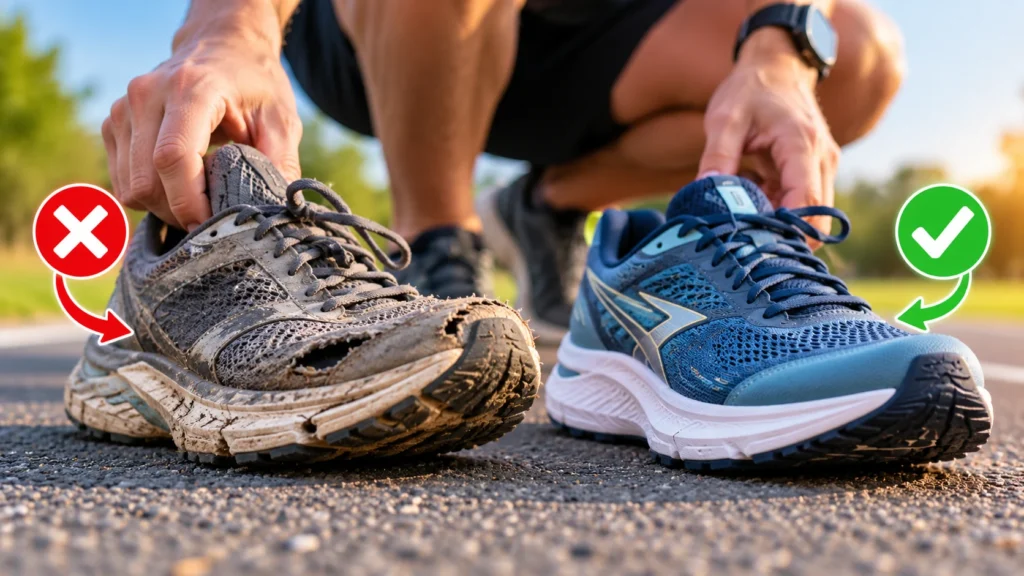
Not every scuff or cosmetic crease requires immediate replacement. Prioritize functional damage and changes that affect safe, comfortable running.
The following categories offer a practical decision framework.
- Continue monitoring: Minor cosmetic wear with secure fit, good traction, and normal comfort.
- Inspect more closely: High mileage, increasing outsole wear, or noticeable cushioning changes.
- Replace for running: Worn-through outsole rubber, major structural damage, unreliable traction, or significant instability.
- Seek professional advice: Persistent pain, recurrent injuries, or discomfort without an obvious footwear explanation.
If the shoes remain structurally sound, you may be able to use them for suitable light activities. Avoid reusing severely damaged or slippery shoes for situations requiring dependable traction.
Which Running Shoes Are Worth Considering as Replacements?
If your current shoes are genuinely worn out, choose replacements based on fit, cushioning preference, and intended use. There’s no need to select an expensive racing model for ordinary daily runs.
These three established trainers offer different characteristics worth comparing. The suitability ratings below are editorial category assessments, not customer-review averages or claims of personal testing.
🏆 Best for Everyday Training
Brooks Ghost 17
★★★★☆ — 4.5/5 editorial category fit
A neutral daily trainer featuring DNA Loft v3 cushioning and a 10 mm listed heel-to-toe drop. I’d shortlist it for runners who prefer a familiar, balanced daily-training design.
☁️ Comfortable Daily Cushioning
ASICS Gel-Cumulus 27
★★★★☆ — 4.4/5 editorial category fit
A neutral trainer using FF Blast Plus cushioning, PureGEL technology, and a FluidRide outsole. I’d consider it for runners seeking a cushioned shoe for relaxed daily mileage.
⚡ Versatile Training Option
Saucony Ride 18
★★★★☆ — 4.3/5 editorial category fit
A versatile neutral trainer with an 8 mm listed drop and PWRRUN+ cushioning. I’d compare it with the Ghost when choosing a daily shoe for mixed easy and steady training.
Affiliate disclosure: As an Amazon Associate, this website may earn from qualifying purchases. Prices, sizes, and availability can change.
Frequently Asked Questions About Worn-Out Running Shoes
How do I know if my running shoes have lost their cushioning?
Compare how the shoes feel during familiar runs and inspect the midsole for significant deformation. A flatter ride, lasting compression, or major difference from a newer matching pair may indicate cushioning deterioration. Visual creases alone are not a reliable measure.
Can worn-out running shoes cause knee pain?
Worn footwear may contribute to discomfort for some runners, but knee pain has many possible causes. Changes in training load, strength, recovery, and running mechanics also matter. If pain persists or worsens, seek appropriate professional assessment rather than assuming replacement shoes will fix it.
Should I replace running shoes after 300 miles?
Not automatically. Three hundred miles is a useful point to inspect many conventional running shoes, not a universal expiration limit. Assess outsole traction, cushioning, upper condition, and comfort before deciding whether the pair needs replacing.
Can running shoes last longer than 500 miles?
Some shoes remain usable beyond 500 miles, depending on their construction and use. However, distance alone cannot confirm their condition. Continue inspecting footwear regularly and replace it when grip, fit, cushioning, or structural integrity becomes inadequate.
Can I still walk in running shoes after retiring them?
Possibly, if the shoes remain secure, comfortable, and sufficiently grippy for light walking. Avoid continuing to use footwear with severe sole damage, unstable structure, or significant slipping. A shoe that’s unsuitable for running isn’t automatically safe for every other activity.
Final Verdict: When Should You Replace Your Running Shoes?
The clearest signs running shoes are worn out involve lost cushioning, poor traction, damaged structures, and changes in fit. Mileage provides a useful reminder, but it shouldn’t replace a physical inspection.
For 2026, my recommendation is to begin checking conventional daily trainers more carefully around 300 miles. Make your replacement decision using the shoe’s actual condition and your running comfort.
If your shoes are nearing retirement, compare their wear and then choose a comfortable replacement suited to your normal running routine. You can start with this daily training shoe selection guide.


Steven is a former sportsperson and now a full-time businessman and research writer. He is the mastermind of this site, and he created this site to help people who need specialized shoes for different activities. When he was a sportsperson, he was very passionate about different types of shoes for his sports purpose. The passion he had for shoes at that time now turned into his profession. Besides his shoe business, he loves sharing his knowledge and experience with people and helping them maintain healthy feet.
More Posts