

Quick Answer
The Under Armour Charged Pursuit 3 is worth buying for walking, short runs, and everyday wear when the price is low. Its roomy forefoot, flexible build, and padded collar suit casual use. However, its firm foam and thin forefoot cushioning make it a poor match for runners who want soft landings over long distances.
What matters most about this budget running shoe?
- Reference retail price: $70 in the United States.
- Brand specifications: 8 mm heel drop and 10 oz listed weight.
- Independent testing found a firm ride, broad forefoot, and thick outsole.
Quick Verdict: Under Armour Charged Pursuit 3
BEST FOR BUDGET CASUAL USE
Good value, firm ride
Reference MSRP: $70 USD
Best for: Walking, beginner jogs, gym warmups, and casual wear.
Skip if: You need plush cushioning, strong motion control, or trail grip.
Link points to a tracked men’s color/size listing. Check model, fit, price, and stock before ordering.
At a glance
- Neutral road running design
- Breathable performance mesh upper
- Charged Cushioning foam midsole
- Padded tongue, collar, and sockliner
- Flexible rubber-covered outsole
- Not a dedicated stability or racing shoe
Bottom line: Buy the Charged Pursuit 3 for flexible, low-cost daily wear; choose a softer running shoe for high-mileage training.
- The Pursuit 3 works best as a low-cost walking and occasional running shoe.
- Its $70 reference retail price is modest, but discounts change by size.
- Under Armour lists an 8 mm drop; a lab measured 9.6 mm.
- The broad forefoot helps width, yet vertical toe space can feel tight.
- A thick outsole adds protection while making the underfoot ride firmer.
Shopping for a cheap running shoe can feel harder than buying a premium pair. You want comfort and grip without paying for features you will never use. That is where the Under Armour Charged Pursuit 3 enters the picture.
I’m Steven Tyler, and I write practical footwear guides for FootwearHiker. For this review, I checked Under Armour’s product details, independent lab findings, and published customer feedback. This is a researched buying review, not a claim that I personally ran in this pair.
The Charged Pursuit 3 looks like a straightforward daily trainer. It has mesh on top, foam below, and rubber where the shoe meets the road. The design sounds ideal for an easy jog. Yet the feel underfoot matters more than the feature list.
Many buyers like the simple fit and reasonable cost. Some runners, however, will find the foam harder than expected. The sections below explain who gets the best value, what to check before buying, and when another shoe makes more sense.
What Is the Under Armour Charged Pursuit 3 Best For?
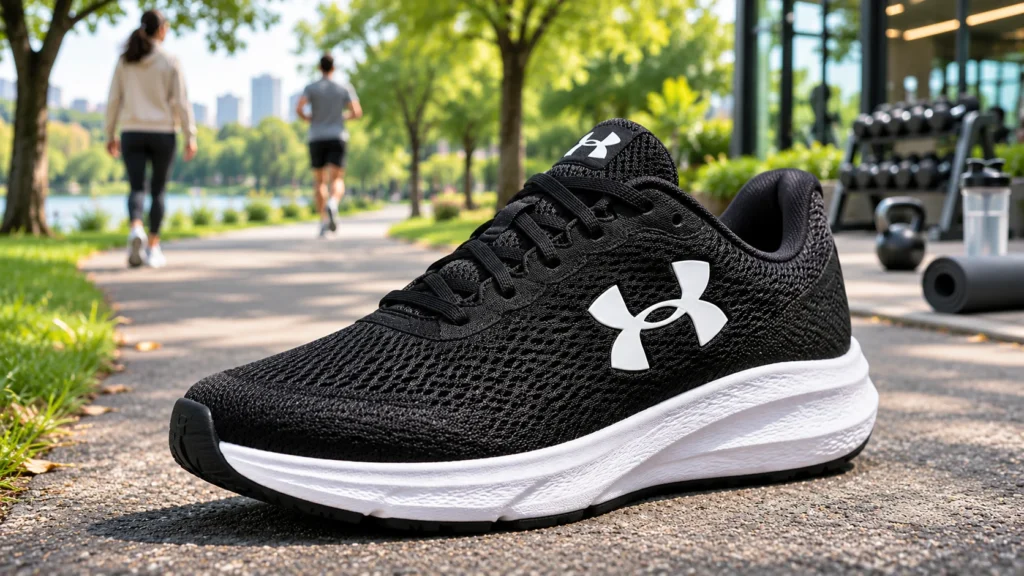
In short, the Charged Pursuit 3 is best for walking, casual workouts, and short road runs. Under Armour calls it a neutral running shoe. That means it does not use a firm support system to guide feet that roll inward too far.
The men’s shoe carries style number 3024878. It has a performance mesh upper and a compression-molded foam midsole. Under Armour calls that foam Charged Cushioning. Its goal is to offer basic impact protection without a premium price.
Think about a person who walks to work, spends time on their feet, and jogs once or twice each week. This shoe covers those jobs with one simple design. The flexible forefoot also feels less rigid during normal walking steps.
It is not built as a fast racing shoe or a soft marathon trainer. Runners who spend hours training each week should place comfort and long-run cushioning ahead of price. Our running shoe selection guide explains how to match a shoe to a running routine.
What Are the Full Under Armour Charged Pursuit 3 Specifications?
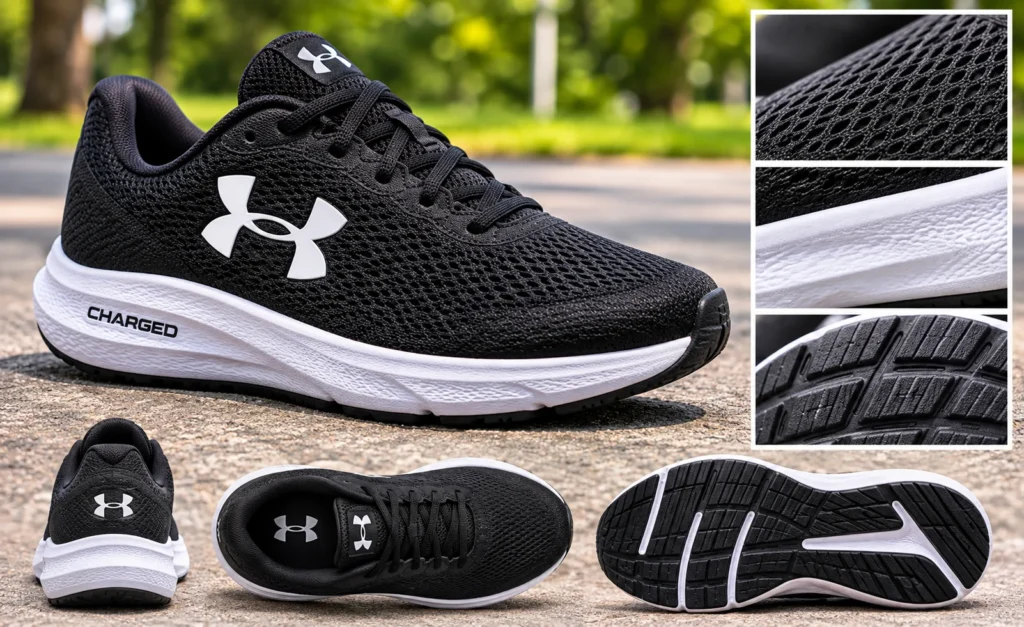
Primarily, the Charged Pursuit 3 uses an 8 mm stated heel drop, mesh upper, and neutral support. The brand lists a men’s weight of 10 oz. Independent measurements can differ because labs use a set test size and their own methods.
The table separates Under Armour’s product claims from outside test results. That difference matters most for the heel drop, weight, and cushioning measurements.
| Feature | Specification or finding |
|---|---|
| Brand and model | Under Armour Charged Pursuit 3, men’s style 3024878 |
| Shoe category | Neutral road running and everyday training |
| Upper | Performance mesh |
| Midsole | Compression-molded Charged Cushioning foam |
| Heel drop | 8 mm stated; 9.6 mm independently measured |
| Men’s weight | 10 oz (283 g) stated; 9.3 oz (264 g) lab sample |
| Heel / forefoot stack | 30.8 mm / 21.2 mm in independent lab testing |
| Tongue padding | 9.6 mm in independent lab testing |
| Outsole rubber thickness | 4.0 mm in independent lab testing |
| Lacing | Standard tie |
| Reference US retail price | $70; current shop prices vary |
These figures describe the men’s model and one independent test sample. Women’s versions and special wide versions can differ. For official features, see Under Armour’s product specifications. You can also compare measurement terms in our running shoe specification guide.
How Comfortable Is the Charged Pursuit 3 for Walking?
The Charged Pursuit 3 is a sensible walking choice for buyers who like a firm base. Its padded collar and thick tongue soften pressure around the ankle. The flexible sole allows the foot to bend during each step.
Independent testers measured 9.6 mm of tongue padding. That is generous for a low-cost shoe. They also found a soft sockliner resting above the firmer midsole. This mix gives a comfortable first step without making the whole shoe soft.
The result is a useful split. Padding feels plush against the top and back of the foot. The foam beneath the heel feels firmer against the ground. Those two feelings can exist in the same shoe.
For an easy neighborhood walk or a quick shopping trip, that trade-off can work well. Someone who stands on concrete for a full shift may prefer more cushioning. Comfort also depends on body weight, walking pace, and foot shape.
How Does Under Armour Charged Cushioning Feel When Running?
In short, Charged Cushioning in this model feels firm rather than soft and springy. That matters more than the name of the technology. A firm midsole gives a clear sense of the ground, but it absorbs less of the harsh feel some runners dislike.
RunRepeat measured the foam at 29.5 HA using its earlier test method. Higher readings in that method mean firmer foam. The lab’s comparison average was lower. Its testers also measured only 21.2 mm of foam and outsole height under the forefoot.
Those figures explain the mixed use case. Short, steady jogs can feel direct and controlled. Long runs bring many repeated impacts, so the thinner front platform becomes easier to notice. The shoe also lacks the rolling shape found on some premium trainers.
Do not confuse a low shoe weight with soft landings. A light shoe can still feel hard underfoot. Anyone training for a half marathon should test the Pursuit 3 on a short run before using it for longer sessions.
Does the Charged Pursuit 3 Fit True to Size?
Mostly, buyers report a normal fit, but a short-feeling length is worth checking. Zappos reports that 76% of its surveyed reviewers felt the shoe ran true to size. An independent lab described its test pair as slightly small.
Width and length are separate problems. The lab measured a broad area across the forefoot, at 100.9 mm. It also noted limited height above the toes. So a shoe can feel wide at the sides yet press down on the toes.
Try your usual running-shoe size first when a free return is available. Check that your longest toe does not touch the front while standing. Then walk downhill or step forward to see whether your foot slides.
Do not size up only because a shoe feels snug over the toes. A longer shoe can create heel slip without fixing a low toe box. Our running shoe width guide explains the difference between broad toe space and a true wide fit.
Is the Charged Pursuit 3 Good for Wide Feet?
Yes, the Charged Pursuit 3 has more forefoot width than many standard running shoes. That makes it worth trying for feet that need extra room across the ball. However, it is not a guaranteed match for every wide foot.
The independent sample measured 100.9 mm at its widest forefoot point. Its toe area measured 79.8 mm at a second point. Both figures exceeded the tester’s comparison averages under the same older method.
Here is the catch: the upper does not offer unlimited room above the toes. People with high-volume feet or tall toes may feel pressure despite the generous side-to-side shape. Some men’s versions also come in dedicated wide widths, depending on the seller.
If your little toe rubs the outer edge, compare the standard fit with a wide version. If the shoe presses on top, check upper height instead. A better width does not fix every fit issue.
How Breathable Is the Charged Pursuit 3 Mesh Upper?
The mesh upper provides moderate airflow, not class-leading ventilation. Under Armour uses performance mesh to keep the shoe light. However, independent testing found a second layer below the outer mesh that reduces open airflow.
RunRepeat gave its test sample a breathability score of 3 out of 5. That score suggests the upper can handle regular use in mild weather. It is not the best pick for hot runs when your feet sweat heavily.
The extra material has a purpose. It gives the upper structure and can help it hold shape. The trade-off is less free movement of air. The padded tongue can also trap some warmth against the top of the foot.
For warm afternoons, choose thin running socks and allow the pair to dry after each wear. In rain, remember that ordinary mesh does not keep water out. Treat this as a ventilated road shoe, not a waterproof trainer.
How Durable Are the Outsole and Upper?
The Pursuit 3 has a strong point underfoot but weaker areas around the upper lining. Its outsole uses thick rubber. Independent wear tests found respectable outsole resistance, but the heel lining wore down quickly in abrasion tests.
RunRepeat measured 4.0 mm of outsole rubber and 1.0 mm of wear in its test. That supports moderate durability for normal pavement use. Yet its heel padding earned only 1 out of 5 for abrasion resistance. The toe mesh received 2 out of 5.
This difference affects real ownership. A runner who drags their heel collar while putting on shoes may damage the lining before the outsole wears out. Pulling the heel back by hand can reduce that strain.
No lab test can promise a fixed lifespan for your pair. Your weight, route, stride, and use pattern all matter. Check both the tread and inside heel every month. Do not judge shoe life from rubber thickness alone.
Is the Traction Good on Roads and Wet Pavement?
The Charged Pursuit 3 is intended for normal road use and gym floors. Under Armour describes its outsole as flexible, with a tread pattern for traction. That does not make it a specialist wet-weather or trail shoe.
The rubber scored 84.3 HC for hardness in independent testing. This firm material helps explain its modest wear result. Hardness alone, however, does not prove strong wet grip. Road texture, water, and dirt all affect traction.
For dry sidewalks and clean indoor surfaces, the design fits the intended job. On wet painted lines, smooth tile, or steep muddy paths, slow down and use care. A real trail shoe has a different tread built for loose ground.
Inspect the outsole when the channels begin to look smooth. If you start slipping on familiar dry surfaces, replace the shoe instead of pushing its life further. Safety is more important than squeezing out another month.
Does the Charged Pursuit 3 Offer Enough Stability?
The Charged Pursuit 3 offers basic neutral support, not motion-control support. Its firm foam can feel steady during straight walking. However, the platform lacks the specialized support features found in stability running shoes.
Independent measurements found a forefoot midsole width of 110.3 mm and a heel width of 89.0 mm. Those figures are narrower than the tested category averages. A broad toe box should not be mistaken for an equally broad base underfoot.
That distinction matters for runners who want extra guidance while landing. If your ankles roll inward sharply or you use prescribed support, the Pursuit 3 needs a careful fit check. A wider upper alone cannot control foot motion.
For casual gym work, it can handle walking and gentle cardio. For heavy barbell lifting or sharp sideways cuts, use shoes made for those tasks. No single cheap trainer excels at every movement.
Is the Charged Pursuit 3 Suitable for Gym Workouts?
Yes, the shoe works for treadmill walking, easy jogging, and basic gym sessions. Its flexible sole moves well during warmups and light exercise. The firm feel can also appeal to people who dislike sinking into thick foam.
Still, gym sessions vary. Ten minutes on a treadmill is not the same as a circuit with repeated side jumps. The Charged Pursuit 3 was built as a road running model, so it does not offer the lateral support of a dedicated cross-training shoe.
For machine work, walking, and simple bodyweight exercises, its comfort and low price make sense. For heavy squats, firm lifting shoes offer a more secure base. For fast court sports, choose footwear with side-to-side support.
Use the Pursuit 3 for the workouts it handles well. Avoid treating its flexible running shape as proof that it fits every sport. Matching shoes to movement helps both comfort and safety.
What Are the Pros and Cons of the Under Armour Charged Pursuit 3?
The biggest strengths are value, foot width, and daily versatility. The main drawbacks are firm cushioning, shallow toe height, and vulnerable heel lining. These trade-offs explain why the shoe suits casual users more than high-mileage runners.
Advantages
- Accessible $70 reference retail price.
- Roomy forefoot in independent fit testing.
- Soft padding around the tongue and heel.
- Flexible feel for walking and short runs.
- Thick outsole rubber with fair lab wear results.
Disadvantages
- Firm foam with limited plush cushioning.
- Low vertical space around some toes.
- Heel lining scored poorly for abrasion.
- Only moderate upper breathability.
One useful lesson comes from the outsole. Thicker rubber can improve wear resistance, yet it can also make a shoe feel harder. That is why good durability does not always mean good running comfort.
What Do Real Buyers Say About the Charged Pursuit 3?
Buyer feedback is mostly positive about comfort and price, with some mixed views on fit and durability. Zappos lists 55 reviews for this model. Its survey reports 76% felt true-to-size fit and 83% felt true-to-width fit.
Several buyers describe light, comfortable daily wear and repeat purchases. One reviewer used the shoe for walking and cross-training. Another reported that the fit softened after about three weeks. These are individual experiences, not controlled test results.
Other reports highlight weaknesses. One customer reported outsole problems after two months, while another could not use their preferred support insole. Independent testing also found weak heel-lining durability. Fit and quality experiences are not uniform.
Before buying, read comments for your chosen color and size. Reviews for several variants may be grouped together. You can check the published Zappos customer reviews and compare them with independent testing.
How Much Does the Charged Pursuit 3 Cost, and Is It Good Value?
The Charged Pursuit 3 has a $70 US reference retail price, but current offers vary by seller, color, and size. That makes the final checkout price more important than the original tag. The model is older, so some listings may have limited stock.
At around $40 to $50, the Pursuit 3 can be a strong value for walking and occasional runs. At its full $70 reference price, compare it with current budget shoes before deciding. You may find a newer model with softer foam or better upper durability.
Don’t chase the lowest listing if returns are difficult. A wrong size costs more in time and shipping than a modest discount saves. Use our running shoe discount guide to assess sales and return terms.
Price note: The $70 figure is a reference price, not a confirmed live Amazon offer. An identified men’s Amazon listing uses ASIN B09LS9TTV6. Stock and prices can change, so check the exact variant before ordering.
Who Should Buy the Under Armour Charged Pursuit 3?
Buy the Charged Pursuit 3 if you need one affordable shoe for daily walking and light running. Its padded upper, flexible shape, and broad forefoot offer useful comfort without a premium price.
- New runners: Best for short, easy sessions while building a routine.
- Daily walkers: Good for errands and regular pavement walks if firm cushioning suits you.
- Budget shoppers: Worth considering when a genuine, returnable pair is discounted.
- Casual gym users: Suitable for treadmill warmups and general fitness work.
- Wide-forefoot buyers: Worth a try, but check toe height and total foot volume.
The ideal buyer wants a useful shoe, not a specialist training tool. If a pair fits well and feels comfortable in a short test, that is a better sign than any marketing promise.
Who Should Skip the Charged Pursuit 3?
Skip the Charged Pursuit 3 if you need plush cushioning, long-distance comfort, or firm motion control. Its forefoot stack and heel padding durability are weak points for demanding use.
- High-mileage runners: Look for more forgiving foam and a stronger heel lining.
- Soft-shoe fans: Compare cushioned daily trainers before paying full price.
- Trail runners: Choose an outsole with lugs made for dirt and mud.
- People using orthotics: Confirm that the sockliner lifts out in your actual pair.
- Night runners: Add separate visibility gear, since lab testing found no reflective elements.
Some models worth comparing include the Under Armour Charged Assert 10 and ASICS Gel Contend 9. They occupy a similar budget category. Fit, price, and cushioning differ, so test the choice that fits your foot best.
How Should You Clean and Maintain the Charged Pursuit 3?
Keep the shoe clean, dry, and away from direct heat. That helps protect the mesh upper, foam lining, and outsole bond. Normal care cannot fix worn cushioning, but it can prevent avoidable damage.
Care tip: Dry wet shoes at room temperature. Avoid radiators, strong sunlight, and tumble dryers.
- Brush dry dirt from the mesh and rubber after outdoor wear.
- Wipe stains with a damp cloth and a small amount of mild soap.
- Remove the sockliner only if your actual pair allows it without force.
- Air-dry the shoes with the laces loosened and tongues pulled forward.
- Check heel lining, outsole wear, and foam feel every month.
Store pairs in a cool, airy place after they are dry. Do not leave damp shoes sealed in a gym bag. For more detail, see our running shoe storage guide.
Replace the shoe when its grip falls, the foam loses its feel, or the upper no longer holds your foot. A visible hole in the heel lining also deserves attention. A shoe does not need to look destroyed to become uncomfortable.
Final Verdict: Is the Under Armour Charged Pursuit 3 Worth Buying?
Yes, the Charged Pursuit 3 is worth buying at a fair discount for walking and light exercise. It has a broad forefoot, comfortable collar padding, and useful flexibility. Those strengths make sense for casual buyers watching their budget.
The bigger issue is what it does not offer. The firm foam lacks the plush feel many runners want. The low forefoot stack and fragile heel lining also reduce its appeal for demanding training. These are meaningful limits, not small details.
My recommendation is to prioritize fit and actual sale price. Choose the Pursuit 3 for easy use when it feels good on your feet. If you run long distances each week, invest in better cushioning and stronger interior materials.
Ready to compare current listings?
Check the listing’s size, color, seller, stock, and return policy. Live Amazon pricing was not independently confirmed.
Frequently Asked Questions
Is the Under Armour Charged Pursuit 3 good for beginners?
Yes. The Charged Pursuit 3 can work for beginners who run short distances and also walk often. It offers a flexible neutral design and a low reference price. However, its firm foam may feel harsh as mileage grows. Test its comfort before making it your main training shoe.
Is the Charged Pursuit 3 good for all-day standing?
The shoe can work for some people who stand through normal daily tasks. Its collar and tongue have generous padding. However, the midsole feels firm in independent testing. People who spend long shifts on hard floors may want a softer shoe with more forefoot cushioning.
Does the Charged Pursuit 3 run small or wide?
The fit is roomy across the forefoot, but length can feel slightly short. Independent tests also found limited height above the toes. Most surveyed Zappos buyers reported normal sizing. Try your usual size first, then check toe clearance and heel hold before deciding whether to change sizes.
Can you remove the insole from the Charged Pursuit 3?
Insole information is mixed across sources and versions. RunRepeat removed the sockliner from its tested pair, while some product support information and buyers report otherwise. Do not force the liner out. If you use an orthotic, confirm removal and fit with the seller before ordering.
Is the Charged Pursuit 3 better than a premium running shoe?
No, not for most high-mileage runners who need soft cushioning and better long-run comfort. The Pursuit 3 offers basic value for walking and short jogs. A premium trainer may justify its price when you run often, but fit should still guide the final choice.
Affiliate Disclosure: As an Amazon Associate, I earn from qualifying purchases. If you click a link on this page and make a purchase, I may receive a small commission — at no extra cost to you. I only recommend products I genuinely believe will help you. This helps keep the site free and running. Thank you for your support.


