

Quick Answer: Brooks Glycerin 23 Review
The Brooks Glycerin 23 is the better choice for runners seeking extra forefoot cushioning and smooth daily runs. Its 8 mm drop and updated knit upper offer a different feel from the Glycerin 22. However, the older shoe delivers better value when heavily discounted. Your ideal choice depends on comfort, fit, and price.
What makes the Glycerin 23 worth considering?
- Extra 2 mm of forefoot DNA TUNED cushioning.
- A lower 8 mm drop for a more balanced underfoot feel.
- Updated triple-jacquard knit upper for a flexible, secure fit.
Quick Verdict: Brooks Glycerin 23 vs Glycerin 22
BROOKS GLYCERIN 22
Editorial assessment, not Amazon rating
$114.95
Observed Brooks sale price; selected variant
Best for:
Budget-conscious runners who want plush daily comfort and a traditional 10 mm drop.
BROOKS GLYCERIN 23
Editorial assessment, not Amazon rating
$175.00
Brooks US listed retail price
Best for:
Comfort-first runners seeking extra forefoot protection and a refreshed everyday trainer.
Prices vary by size, color, seller, and availability. The listed prices above are retailer observations, not guaranteed Amazon checkout prices. Editorial scores reflect published specifications and independent reviews, not personal laboratory testing.
| Category | Glycerin 22 | Glycerin 23 |
|---|---|---|
| Overall Winner | — | 🏆 |
| Best Value at Observed Prices | ✅ | ❌ |
| Forefoot Cushioning | ❌ | ✅ |
| Lower Listed Weight | ✅ | ❌ |
| Updated Upper | ❌ | ✅ |
Bottom line: The Glycerin 23 wins for comfort-focused runners seeking improved forefoot cushioning, while the Glycerin 22 offers better value when its discount is substantial.
- The Glycerin 23 adds 2 mm of forefoot cushioning for improved long-run protection.
- The Glycerin 22 can save $60.05 against the newer model’s list price at the observed Brooks sale price.
- The Glycerin 23 suits longer easy runs and comfort-focused daily mileage.
- The Glycerin 22 is a practical starting point for runners seeking a discounted premium trainer.
- The biggest change is under the forefoot, not a complete redesign of the ride.
Finding a running shoe that stays comfortable through long miles is not easy. Some shoes feel soft at first but grow tiring as your run continues. Others provide enough cushion yet feel heavy when you pick up the pace.
That is why this Brooks Glycerin 23 review matters. Brooks has updated one of its best-known cushioned running shoes, but the older Glycerin 22 remains a strong option at a discount.
I’m Steven Tyler, and I write about footwear, fit, and practical buying decisions at Footwear Hiker. Here, I use published Brooks specifications, independent running-shoe tests, and documented buyer feedback to judge both models.
This is a research-based comparison, not a claim that I personally logged test miles in both shoes. The aim is to help you choose a pair that fits your feet, running style, and budget.
What Is the Brooks Glycerin 23 Running Shoe?
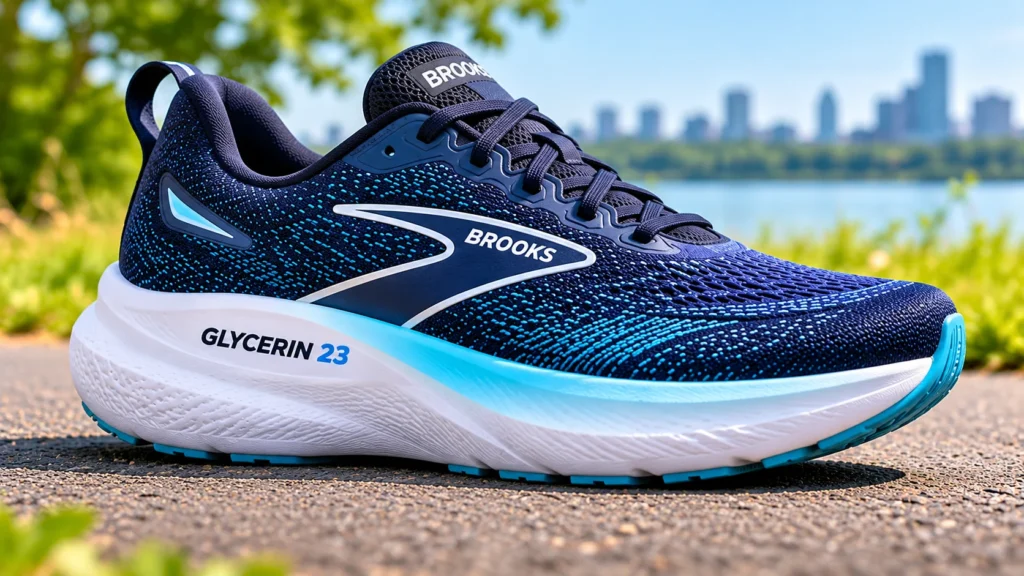
Quick Verdict: The Glycerin 23 is a premium neutral road-running shoe built for soft landings, stable transitions, and comfortable daily mileage.
The Brooks Glycerin 23 is designed for runners who value cushioning more than outright speed. Its nitrogen-infused DNA TUNED midsole combines different foam-cell structures to balance soft landings with controlled toe-offs.
Brooks also adds 2 mm of cushioning beneath the forefoot. That change reduces the heel-to-toe drop to 8 mm and gives the front of the shoe more protection.
The updated triple-jacquard knit upper aims to improve flexibility and security. A broad sole platform helps keep the shoe steady during regular road running.
Independent reviewers generally describe the Glycerin 23 as comfortable and smooth. However, they also highlight its weight and limited performance during faster efforts.
For someone running five miles at an easy pace, comfort may matter more than speed. A runner chasing a fast 5K personal best will likely want something lighter.
The Glycerin 23 also works as an everyday walking shoe when the fit feels right. Its cushioned construction can appeal to people who spend long periods moving on firm surfaces.
What Are the Main Pros and Cons of the Glycerin 23?
The main strengths are its forefoot cushioning, secure upper, and steady road-running platform. Its weaknesses include weight, upper warmth, and a premium price.
- Extra forefoot cushioning
- Soft and controlled landings
- Secure, flexible knit upper
- Stable everyday running platform
- Suitable for easy and long runs
- Premium retail price
- Heavier than many fast trainers
- Thick upper can feel warm
- Limited racing-focused propulsion
Brooks Men’s Glycerin 23 Neutral Running Shoe
DNA TUNED cushioning | 8 mm drop | 10.6 oz men’s listed weight
Brooks retail price: $175.00
Check the listing’s model, size, width, price, and seller before purchasing.
What Makes the Brooks Glycerin 22 Different?
Quick Verdict: The Glycerin 22 offers much of the same premium cushioning approach, with a higher 10 mm drop, slightly less weight, and potentially better sale pricing.
The Brooks Glycerin 22 introduced DNA TUNED foam to the standard Glycerin line. It uses larger foam cells near the heel and smaller cells beneath the forefoot.
This design aims to create a soft landing without making every step feel unstable. Its broad sole also helps the runner maintain a predictable motion through each stride.
The men’s Glycerin 22 weighs about 10.2 oz according to Brooks. That makes it approximately 0.4 oz lighter than the newer model using the brand’s published figures.
Its 10 mm drop feels familiar to runners who prefer a traditional heel-elevated trainer. The Glycerin 23 changes that balance by adding foam beneath the forefoot.
For a deeper explanation of the older shoe, my Brooks Glycerin 22 review covers its cushioning, sizing, strengths, and drawbacks.
One useful distinction is that the Glycerin 22 is not simply an inferior shoe. A familiar fit or preferred heel-to-toe drop can make an older model the better personal choice.
What Are the Pros and Cons of the Glycerin 22?
The Glycerin 22 combines dependable cushioning with lower weight and discount potential. However, its forefoot has less cushioning than the newer model.
- Premium DNA TUNED cushioning
- Slightly lower listed weight
- Familiar 10 mm drop
- Comfortable padded upper
- Strong value at a discount
- Less forefoot cushioning
- Less updated upper construction
- Not intended for fast racing
- Older sizes may be harder to find
Brooks Men’s Glycerin 22 Neutral Running Shoe
DNA TUNED cushioning | 10 mm drop | 10.2 oz men’s listed weight
Original retail price: $165.00
Selected Brooks listings have shown a $114.95 sale price.
Amazon pricing and stock can differ from Brooks’ listed offers.
How Do the Brooks Glycerin 23 and 22 Specifications Compare?
The Glycerin 23 changes three key specifications: forefoot cushioning, heel-to-toe drop, and listed weight. Both shoes remain cushioned neutral road trainers.
The following specifications use published Brooks product information. Weight may vary by shoe size, width, and production variation.
| Specification | Glycerin 23 | Glycerin 22 |
|---|---|---|
| Category | Neutral daily trainer | Neutral daily trainer |
| Midsole | DNA TUNED | DNA TUNED |
| Heel-to-toe drop | 8 mm | 10 mm |
| Men’s listed weight | 10.6 oz / 300.5 g | 10.2 oz / 289.2 g |
| Upper | Triple-jacquard knit | Double-jacquard knit |
| Cushioning difference | 2 mm more forefoot foam | Previous forefoot geometry |
| Support style | Balanced neutral support | Balanced neutral support |
| Dedicated stability system | No GuideRails | No GuideRails |
| Forefoot cushioning | Higher | Lower |
| Speed focus | Easy and steady runs | Easy and steady runs |
| Original US retail price | $175 | $165 |
Most important difference: The 2 mm forefoot increase gives the Glycerin 23 more cushioning where the foot moves toward toe-off.
However, more foam does not automatically mean more speed. Cushioning depth, foam rebound, shoe shape, and running mechanics all influence how energetic a shoe feels.
Which Shoe Has Better Cushioning for Long Runs?
Winner: Brooks Glycerin 23. Its additional forefoot foam delivers greater cushioning protection during longer runs, according to independent laboratory comparisons.
The Glycerin 22 already provides substantial cushioning. Its DNA TUNED midsole was designed to balance a softer heel with a controlled forefoot.
The Glycerin 23 builds on that approach rather than replacing it. Brooks increases the front cushioning while retaining the same broad design philosophy.
How Does DNA TUNED Cushioning Work?
DNA TUNED is a nitrogen-infused midsole system that uses different foam-cell sizes across the shoe. Larger heel cells help create softer landings.
Smaller cells toward the forefoot aim to produce a firmer, more responsive push-off. Brooks uses this approach in both Glycerin models.
Think about a steady six-mile run. You need cushioning that remains comfortable as your feet repeatedly land and roll forward.
The Glycerin 23 offers more cushioning depth beneath the front of your foot. That can be useful as fatigue builds during longer sessions.
Does the Glycerin 23 Feel Bouncier?
Not necessarily. The Glycerin 23 provides improved forefoot protection, but independent energy-return measurements do not show a dramatic gain in rebound.
RTINGS measured heel energy return at approximately 68.3% for the Glycerin 23 and 68.5% for the Glycerin 22. Those results are close.
Its laboratory measurements also found greater forefoot energy absorption in the newer shoe. That supports the idea of improved cushioning rather than a major speed upgrade.
This difference matters when choosing between soft running shoe cushioning and a firmer, faster training experience.
My assessment: Choose the Glycerin 23 for added forefoot comfort, not because you expect it to behave like a racing shoe.
Which Has the Better Fit and Upper?
Winner: Glycerin 23 for updated upper construction. Its triple-jacquard knit provides a secure, flexible fit. However, the Glycerin 22 can be preferable for certain foot shapes.
Both models use padded uppers designed for comfort. Neither should be chosen by size label alone, because toe shape and internal volume also matter.
Independent reviews praise the Glycerin 23’s heel hold and flexible upper. Some reviewers also report warmth due to its relatively thick knit material.
Does the Brooks Glycerin 23 Run True to Size?
Most independent reviews describe the Glycerin 23 as fitting close to standard running-shoe sizing. However, fit varies with foot length, width, and toe volume.
Start with your usual Brooks running-shoe size. Then check whether your toes have enough room to move while the heel remains secure.
For a reliable starting point, use this running shoe fitting guide before buying online.
A comfortable shoe should not squeeze the toes or allow the heel to slide repeatedly. You should also avoid excess movement when turning or walking downhill.
Is the Glycerin 23 Good for Wide Feet?
The Glycerin 23 comes in multiple width options in selected markets, including wide and extra-wide men’s versions. Availability depends on the seller and color.
However, width alone does not solve every fit problem. Some runners need more vertical room above their toes rather than simply a wider sole.
Try the shoe while wearing your usual running socks. Check the front, sides, instep, and heel before deciding that it fits correctly.
Which Shoe Is Better in Hot Weather?
The Glycerin 22 can be the better choice for runners sensitive to upper warmth. The Glycerin 23’s thicker knit may retain more heat during humid runs.
That does not make the newer shoe unsuitable for summer. It does mean breathability deserves attention if you regularly train in high temperatures.
For example, a runner exercising at midday in humid weather may prioritize airflow over a softer upper. An early-morning runner may not notice the same trade-off.
Which Brooks Glycerin Offers Better Price and Value?
Winner: Glycerin 22 when discounted. The older model offers much of the same cushioning technology for significantly less money at some retailers.
Brooks lists the Glycerin 23 at $175. The Glycerin 22 originally retailed for $165, but selected Brooks listings have shown a reduction to $114.95.
That creates a potential $60.05 difference between the observed discounted Glycerin 22 and the newer model’s regular price.
However, this is not a universal price gap. Different sizes, colors, and sellers can change the comparison immediately.
If both shoes cost nearly the same, the Glycerin 23 becomes more appealing. You receive the updated upper and increased forefoot cushioning without much additional expense.
If the Glycerin 22 costs $60 less and fits you well, the upgrade becomes harder to justify. The improvement is meaningful but not revolutionary.
Is Paying More for the Glycerin 23 Worth It?
Yes, when you value the revised forefoot cushioning and lower drop. Those are the two clearest performance-related reasons to pay more.
For runners replacing a worn-out Glycerin 22, the Glycerin 23 offers a sensible next step. The updated model preserves much of the familiar Glycerin character.
However, anyone with a comfortable, lightly used Glycerin 22 should not feel forced to replace it. A new version is not automatically a necessary purchase.
Which Shoe Wins for Stability, Safety, and Durability?
Result: Close comparison. Both shoes offer stable neutral platforms, while the Glycerin 23 provides better forefoot cushioning and a revised upper.
The Glycerin series is designed for neutral running support. Its broad platform can help create a steady feel without dedicated motion-control features.
However, neither standard Glycerin model uses Brooks GuideRails technology. Runners who prefer additional movement guidance should investigate the Glycerin GTS versions.
Are the Glycerin 23 and 22 Good for Overpronation?
Neither shoe is specifically designed as a structured stability trainer. Both offer inherent stability through their geometry and wide base.
Some runners with mild inward foot movement can feel comfortable in neutral shoes. Others prefer more guidance, particularly during longer efforts.
If you have recurring pain or significant stability concerns, seek an individual assessment rather than relying on a general shoe recommendation.
How Durable Is the Glycerin 23 Outsole?
Independent testing points to solid outsole durability, although individual wear experiences vary. Surface type, body weight, gait, and weekly mileage all affect shoe lifespan.
Brooks gives a general running-shoe lifespan of 300 to 500 miles. This is a guide, not a guarantee for either Glycerin model.
Watch for smooth outsole patches, uneven wear, reduced cushioning comfort, or changes in your stride. Those signs can matter more than mileage alone.
Can You Use Either Shoe on Wet Roads?
Both models are intended primarily for road running. They can handle normal paved surfaces, but wet grip depends on the specific surface and conditions.
A wet painted crossing, polished tile, or icy sidewalk can be slippery despite a shoe’s rubber outsole. Slow down when conditions reduce traction.
Neither model should replace a dedicated trail shoe on technical, muddy, or icy routes. Choose footwear based on the ground you actually use.
Which Glycerin Wins in Real-World Running Situations?
The Glycerin 23 wins for runners prioritizing forefoot cushioning during long sessions. The Glycerin 22 wins when budget, familiar fit, or slightly lower weight matters more.
Here are six situations that make the choice easier.
| Use Case | Recommended Shoe | Reason |
|---|---|---|
| Long easy runs | Glycerin 23 | Greater forefoot cushioning |
| Budget daily training | Glycerin 22 | Better discounted value |
| Easy recovery running | Glycerin 23 | Cushioned and controlled ride |
| Hot-weather training | Glycerin 22 | Potentially less upper warmth |
| Cold-weather road runs | Fit-dependent | Neither replaces winter-specific traction |
| Walking or long work shifts | Glycerin 23 | Additional forefoot cushioning, if comfortable |
Is the Glycerin 23 Good for Marathon Training?
Yes. The Glycerin 23 can suit marathon training that includes easy runs, steady mileage, and long road sessions.
Its cushioning and predictable transitions make sense for comfort-focused runners. However, runners seeking faster workouts may benefit from a lighter second pair.
For example, you could use the Glycerin 23 for relaxed Sunday mileage. A lighter performance trainer could then handle your faster interval sessions.
Is the Glycerin 23 Good for Walking All Day?
Yes, provided the shoe fits correctly. Its cushioned platform can feel comfortable during walking, errands, and time spent standing.
Still, a running shoe does not automatically suit every job. Workers who need slip-resistant or protective footwear should follow their workplace requirements.
Someone working indoors for eight hours may value cushioning and heel security. A worker on slippery commercial floors may need a certified work shoe instead.
How Much Should You Pay for the Glycerin 23?
The Glycerin 23’s standard US price is $175, while the Glycerin 22 launched at $165. Discounts can change the better purchase.
At the time of this review, a recent Amazon deal report showed the men’s Glycerin 23 at $138.18. Another tracked listing showed a specific men’s Glycerin 22 variant at $84.95.
These offers relate to specific listings and can expire without notice. They should not be treated as guaranteed prices for every size.
A useful way to judge value is to compare the final checkout price for both shoes in your actual size and width.
- Small price gap: The Glycerin 23 is worth prioritizing if the updated fit feels comfortable.
- Large price gap: The Glycerin 22 becomes the value choice if its fit works for you.
- Limited stock: Avoid buying the wrong width simply because a discounted color remains available.
- Uncertain sizing: Favor a seller with clear exchange and return terms.
Discount shopping also requires patience. This guide to running shoes sale timing explains how to assess markdowns without choosing the wrong pair.
Who Should Buy the Glycerin 23 or Glycerin 22?
The Glycerin 23 suits runners who prioritize cushioning improvements and updated fit. The Glycerin 22 suits those seeking similar everyday comfort at a lower price.
Before deciding, check your actual foot measurements using a running shoe fitting checklist. Comfort and secure fit should come before model preference.
- Want greater forefoot cushioning.
- Prefer an 8 mm drop.
- Run longer easy sessions.
- Like the updated knit upper.
- Don’t mind its premium price.
- Find a substantial discount.
- Prefer a familiar 10 mm drop.
- Already know its fit works.
- Want a slightly lighter shoe.
- Prioritize practical everyday value.
Skip both if your main goal is racing speed, technical trail grip, or specialized stability support. A lighter performance shoe, trail model, or GTS stability version may fit your needs better.
What Are Real Runners Saying About the Glycerin 23?
Runner feedback generally highlights comfort, cushioning, and the secure feel of the newer upper. Complaints focus on warmth, weight, fit variation, and expectations about speed.
Reviews from Fleet Feet and RunToTheFinish support the shoe’s comfort-focused role. They also show that softness and a fast, springy sensation are not the same.
Some retail customer feedback praises the shoe for walking and long periods of standing. Other comments raise concerns about toe-box fit or whether the price feels justified.
What Do Runners Like Most?
The Glycerin 23’s main appeal is its dependable cushioning during normal daily use. The plush feel makes it attractive for steady running rather than aggressive speed sessions.
Reviewers also appreciate its secure heel and comfortable upper. For runners who struggle with heel movement, that combination can improve confidence.
However, no shoe can guarantee the same fit for every foot. A positive review from someone else should guide your search, not replace your own fit check.
What Are the Most Common Complaints?
Weight and warmth are recurring concerns in professional reviews. The Glycerin 23 is a substantial trainer, and its knit upper can feel warm in humid conditions.
Some buyers also question value when lighter or more responsive alternatives cost similar amounts. These concerns matter more for runners focused on pace than comfort.
Fit opinions vary as well. Some runners enjoy the accommodating upper, while others prefer the shape of the older Glycerin 22.
The feedback above summarizes available professional reviews and retailer-reported customer sentiment. It does not represent a new survey or first-hand wear test by the author.
For independent measurements, consult the published RTINGS Glycerin comparison.
How Can You Make Your Brooks Glycerin Shoes Last Longer?
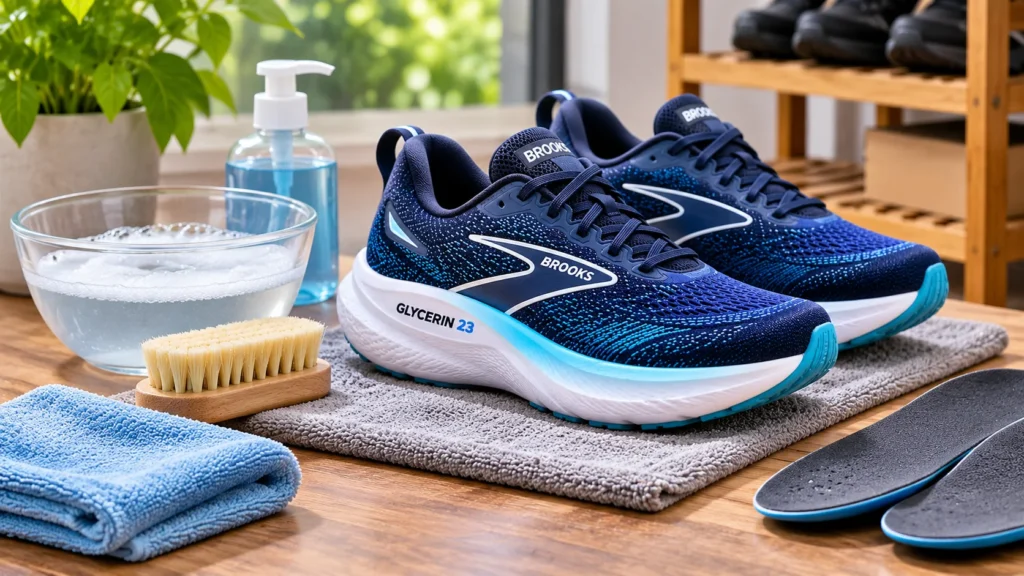
Regular cleaning, proper drying, and sensible storage can help protect both Glycerin models. Avoid excessive heat and check outsole wear regularly.
Running shoes experience repeated pressure as the midsole compresses and rebounds. Over time, foam, rubber, and upper materials gradually lose their original properties.
Care matters even when a shoe looks clean. A pair can lose cushioning performance before the upper develops visible holes.
How Should You Clean the Glycerin 23?
Remove loose dirt with a soft brush. For tougher marks, use mild soap, cool water, and a soft cloth or brush.
Clean gently rather than soaking the entire shoe. Remove the insoles when practical, then let the shoes dry naturally in a ventilated place.
Avoid placing them near heaters or in direct high heat. Excessive temperatures can damage adhesives and footwear materials.
How Should You Store Your Running Shoes?
Store both models in a cool, dry, ventilated place. Avoid leaving them inside a hot car or closed damp bag.
If your shoes become soaked, allow enough time for the upper and internal padding to dry. Rotating pairs can be helpful for frequent runners.
Also inspect the outsole after road runs. Small stones and debris can become trapped in grooves and increase localized wear.
When Should You Replace Your Glycerin Shoes?
Brooks recommends checking running shoes around the general 300-to-500-mile lifespan. The actual replacement point depends on use and wear.
Look for changes such as uneven outsole wear, reduced cushioning comfort, repeated heel movement, or new discomfort during familiar routes.
Do not rely only on the calendar. Someone running 40 miles weekly wears shoes differently from someone walking occasionally.
For additional care information, consult Brooks’ official replacement guidance.
Final Verdict: Is the Brooks Glycerin 23 Worth Buying?
Yes, the Brooks Glycerin 23 is worth buying if you prioritize forefoot cushioning, daily comfort, and a smooth neutral running experience. It offers a clear, though modest, update from the Glycerin 22.
The 2 mm increase in forefoot foam is its strongest technical improvement. The lower 8 mm drop and updated knit upper also change how the shoe feels and fits.
However, the Glycerin 23 is not a major speed upgrade. Independent testing suggests that its greatest advantage comes from cushioning protection rather than exceptional energy return.
The Glycerin 22 remains appealing when discounted. If its 10 mm drop works for you and the savings are substantial, there is little reason to dismiss it.
My recommendation: Choose the Glycerin 23 for the newer cushioning geometry and updated fit. Choose the Glycerin 22 when its lower price and proven comfort matter more.
The best running shoe is the one that fits your feet and supports your training. Spending more only makes sense when the difference improves your actual experience.
Frequently Asked Questions About the Brooks Glycerin 23
Is the Brooks Glycerin 23 good for beginners?
Yes. The Glycerin 23 can be a good beginner shoe because it offers substantial cushioning, a steady platform, and comfortable daily-running characteristics.
However, beginners do not need to spend $175 to get a capable shoe. A less expensive model that fits comfortably can be equally suitable for starting a running routine.
Is the Brooks Glycerin 23 better than the Glycerin 22?
The Glycerin 23 is better for runners seeking extra forefoot cushioning and an updated upper. It also uses a lower 8 mm drop instead of the older model’s 10 mm.
However, the Glycerin 22 can offer better value at a discount. Neither is automatically better for every individual foot or running style.
Can you run a marathon in the Brooks Glycerin 23?
Yes. The Glycerin 23 can be used for marathon training and running longer distances, especially by runners who prefer a cushioned, steady ride.
However, runners focused on maximum racing efficiency may prefer a lighter performance shoe. Comfort and successful long-run testing should guide the final choice.
Is the Brooks Glycerin 23 good for plantar fasciitis?
Some people with heel discomfort may find the Glycerin 23’s cushioning comfortable. However, the shoe is not a treatment for plantar fasciitis.
Persistent heel pain requires individual assessment. A qualified healthcare professional can help identify the cause and advise on suitable treatment and footwear.
Does the Brooks Glycerin 23 run true to size?
Independent reviews generally describe its sizing as close to standard. Nevertheless, toe-box shape, foot width, and instep volume can affect the fit.
Start with your usual Brooks size and measure your feet if uncertain. Confirm that the heel stays secure and the toes have comfortable space.
Affiliate Disclosure: As an Amazon Associate, Footwear Hiker earns from qualifying purchases. Some links in this article are affiliate links, which means we may receive a commission at no additional cost to you. Our recommendations are based on product specifications, independent testing, and relevant buyer considerations.